Native Americans grew a wide range of food crops across North America, but the short answer is this: corn (maize), beans, and squash were the backbone of Indigenous agriculture across most of the continent, with dozens of regional crops filling in around them depending on climate, soil, and geography. If you want the practical breakdown, that's exactly what this guide covers, region by region.
What Crops Did Native Americans Grow by Region

Samuel Rourke
9 Apr 2026
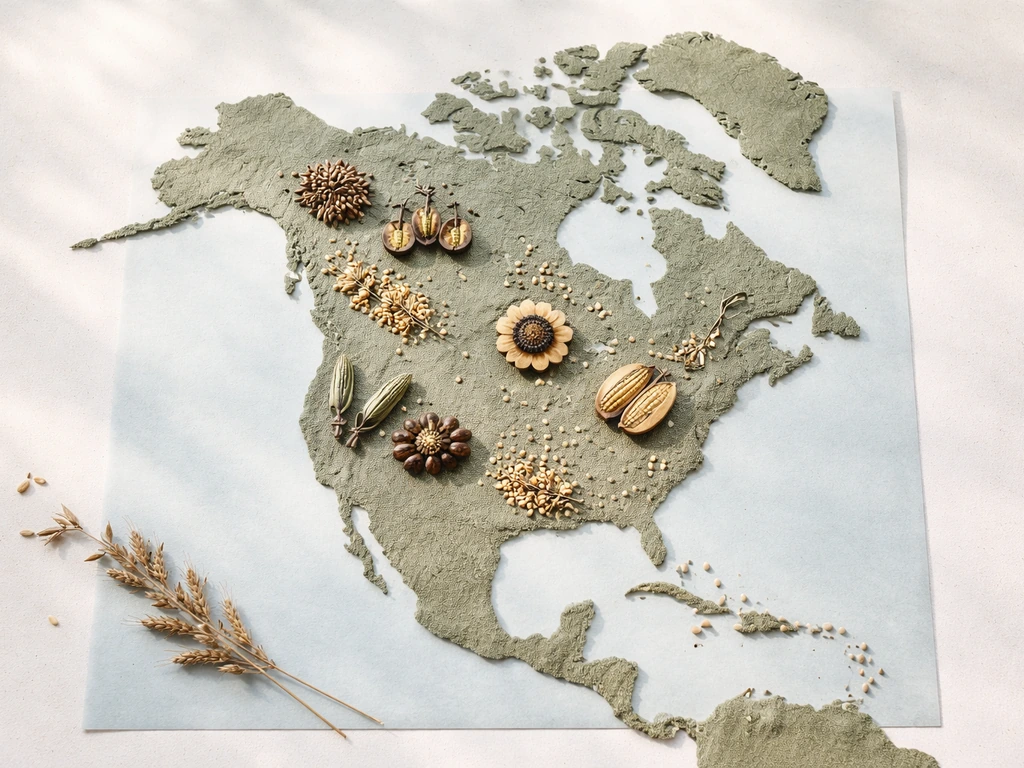
The main crop groups at a glance
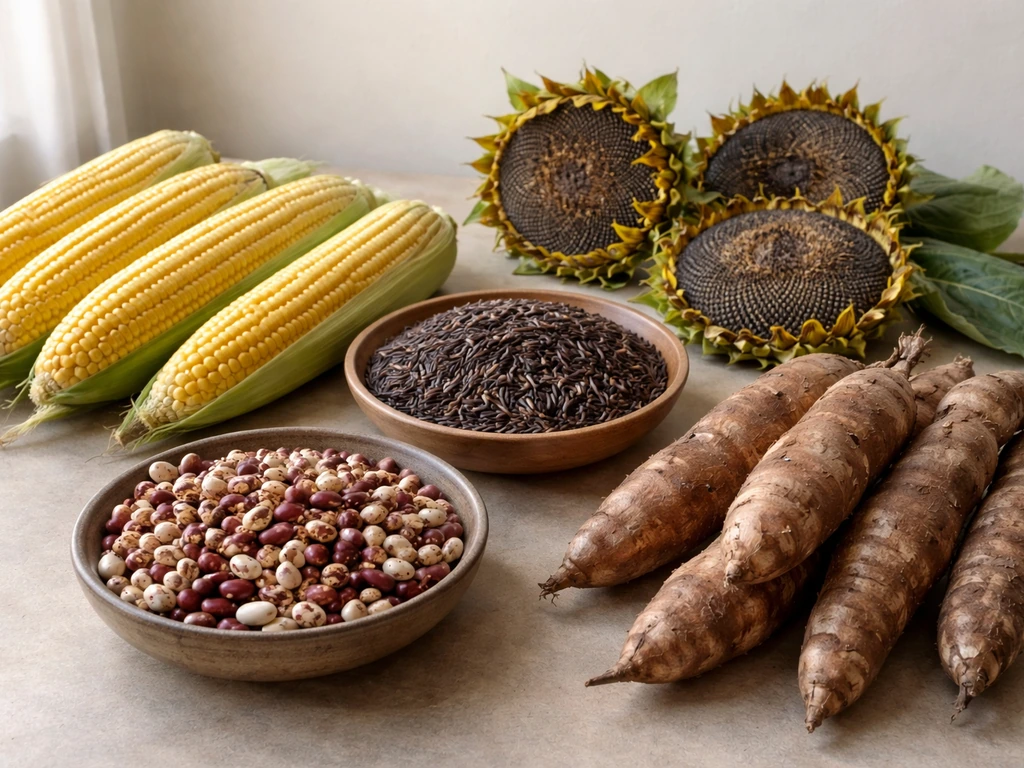
Indigenous agriculture in North America wasn't one system. It was hundreds of regionally adapted systems, but you can sort most of the major crops into a handful of groups. Understanding these groups first makes the regional details a lot easier to absorb.
- Staple grains and starchy crops: maize (corn), little barley, maygrass, wild rice (harvested/managed rather than planted in many areas)
- Legumes: common beans, tepary beans, scarlet runner beans, lima beans, jack beans
- Cucurbits: squash, pumpkins, gourds (including bottle gourd)
- Oilseed and seed crops: sunflower, marshelder (sumpweed), goosefoot (chenopod)
- Root and bulb crops: camas (Pacific Northwest), bitterroot, groundnut
- Fiber and other crops: cotton (Southwest), tobacco
- Tree and shrub fruits: plums, persimmons, and various regional berries (often managed rather than formally cultivated)
These crops weren't all grown everywhere, and not all of them were "farmed" in the way we think of farming today. Some were tended, encouraged, and selectively harvested over generations, which counts as deliberate cultivation even if there were no plowed rows.
The Three Sisters: how corn, beans, and squash work together
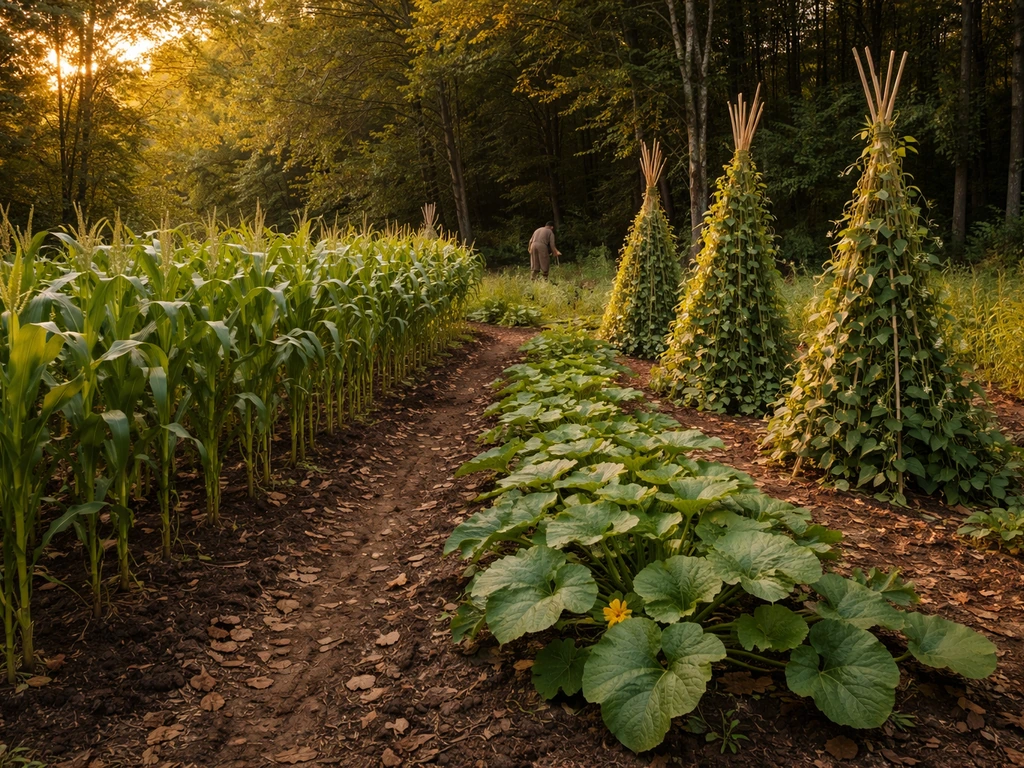
The Three Sisters system is probably the most famous piece of Indigenous agriculture, and for good reason. It's a companion planting approach that puts maize, beans, and squash in the same plot intentionally, and each plant does something the others need. Corn stalks grow tall and give the bean vines something to climb. Beans fix nitrogen from the air through rhizobia bacteria on their roots, feeding the soil for the corn and squash. Squash vines spread across the ground, shading out weeds and holding soil moisture in place. It's elegant, and it's genuinely functional.
Archaeological dating puts the adoption of the Three Sisters complex in North America at around 1070 AD, though the individual crops were cultivated separately long before that, and the system was refined and locally adapted for centuries before European contact. By the time Europeans arrived in the northeast, Indigenous farmers had been planting these three crops together for at least 300 years. The system also extended well beyond the northeast: versions of it appeared across Mesoamerica, the Plains, the Southwest, and as far north as southern Quebec and Ontario.
What made the Three Sisters resilient wasn't just the biology, it was the diversity. If one crop failed because of drought or pests, the others could still carry the season. That kind of built-in food security is one reason the system spread so widely and persisted for so long.
What grew where: a region-by-region breakdown
Here's where things get interesting from an agricultural geography standpoint. The crops Native Americans grew were tightly linked to climate and growing conditions, just like crops today.
Eastern Woodlands
The Eastern Woodlands region, covering roughly the area from the Atlantic coast to the Mississippi River and up into the Great Lakes, had some of the most developed Indigenous agriculture on the continent. The Three Sisters (corn, beans, squash) were the principal crops here. But before the maize-bean-squash complex took hold fully, Indigenous farmers in this region were cultivating a different set of plants. By about 5,000 years ago, people in what is now Illinois and the broader eastern woodlands were deliberately growing sumpweed (Iva annua), goosefoot, common sunflower, and squash. Beans came into domestication more recently, roughly 700 years ago, and after that the Three Sisters complex increasingly replaced those earlier crop sets.
Nations like the Cherokee were sophisticated farmers who adapted these crops to their specific landscapes in the southern Appalachian region. If you want to go deeper on one specific group, the article on what crops did the Cherokee grow covers their agricultural practices in detail.
The Great Plains
People often picture Plains nations as purely nomadic hunters, but many Plains peoples were also serious farmers, particularly villages along river floodplains where reliable water made cultivation possible. Maize became the most economically important crop on the central Plains, usually planted alongside beans and squash. But Plains farmers also managed a range of other plants: sunflower, goosefoot, tobacco, gourds, plums, little barley, and marsh elder. Archaeological evidence from the central Plains shows domesticated or managed marshelder, sunflower, gourd (Cucurbita pepo var. ovifera), goosefoot, little barley, maygrass, erect knotweed, and tobacco going back well before maize arrived and dominated.
The Comanche are a good example of a Plains nation whose relationship with agriculture was shaped by their mobile lifestyle and trade networks rather than settled farming. You can read more about that in the guide to what crops did the Comanche grow.
The Southwest and Sonoran Desert
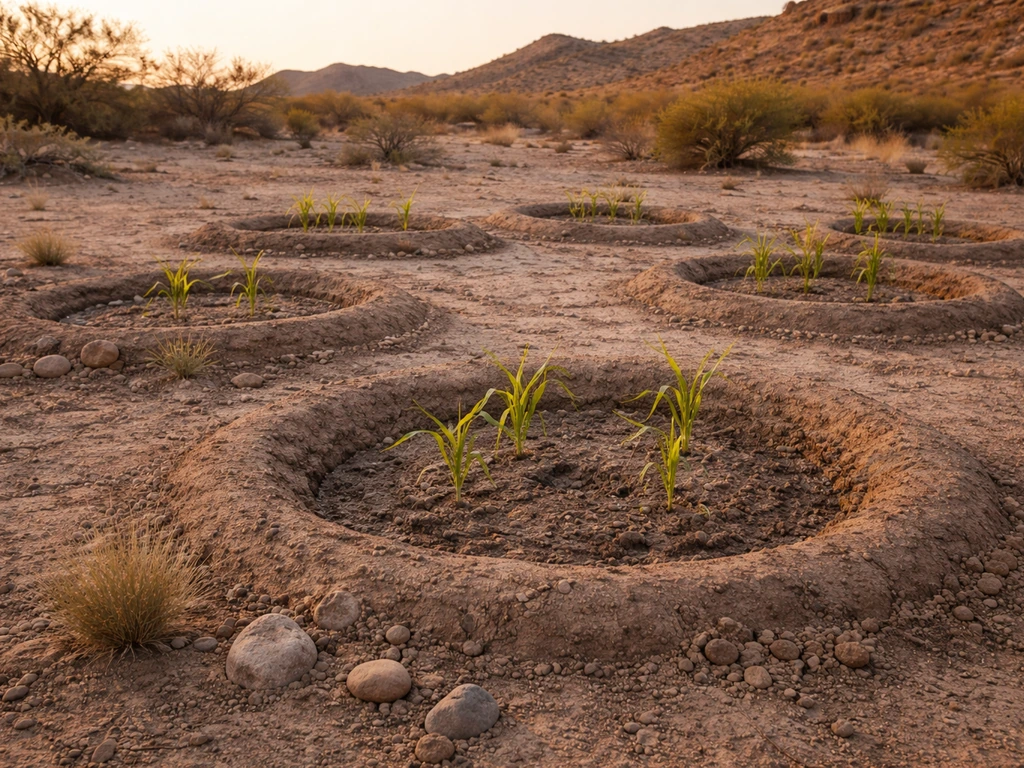
The Southwest is where Indigenous agriculture got genuinely impressive from an engineering standpoint. Farmers here were growing crops in some of the driest conditions on the continent, using irrigation canals, floodplain fields, and drought-adapted varieties. Britannica describes two overlapping crop complexes in the Sonoran region. The "Upper Sonoran complex," in areas with rainfall above about 200 mm per year, centered on corn, squash, bottle gourd, and common bean. The "Lower Sonoran complex," in drier zones, included corn, squash, cotton, and a remarkable range of heat-tolerant beans: tepary, lima, scarlet runner, and jack beans. Tepary beans in particular were bred over generations to survive extreme heat and minimal water.
Maize in the Southwest has a deep history. DNA analysis of ancient corn cobs points to maize's presence and evolution in the region going back roughly 4,100 years, spreading from Mesoamerica through group-to-group diffusion rather than a single migration event. The Pueblo peoples were among the most skilled farmers in the Southwest, growing regionally adapted varieties of corn, beans, and squash that could thrive at higher elevations and in shorter growing seasons. Modern Pueblo communities still maintain heritage varieties of these crops, many of which are now considered endangered. The article on what crops did the Pueblo grow goes into their specific agricultural traditions in much more detail.
The Navajo and Apache also farmed in the Southwest, each with their own distinct approaches to working with the land. The Navajo in particular developed agriculture around corn, beans, squash, and eventually introduced crops like peaches and wheat after Spanish contact. If you're researching Navajo agriculture specifically, the guide on what did the Navajo grow covers their crops and farming methods thoroughly. For the Apache, whose relationship with farming varied significantly between different Apache groups and territories, the article on what crops did the Apache tribe grow is a useful starting point.
The Pacific Northwest
The Pacific Northwest is the region that most challenges the idea that Native Americans only practiced "farming" in a European sense. Here, the dominant food economy was built around salmon, other fish, and managed plant gathering rather than field cultivation. But management is the key word. OSU research found evidence that Indigenous groups in the Pacific Northwest were intentionally harvesting camas bulbs at optimal maturation stages going back at least 3,500 years. Camas (Camassia quamash) was a starchy, calorie-dense bulb that functioned as a staple food, and its harvesting grounds were carefully managed over generations. Other gathered and managed plants included wapato, tarweed seeds, bracken fern, and various berries.
California
California Indigenous peoples were similarly oriented toward managed harvesting rather than field agriculture in most areas, though the results were just as intentional. One of the most important tools was controlled burning. Nations like the Karuk Tribe in Northern California used low-intensity cultural burns to manage landscapes, encourage regrowth of food plants, and maintain the patchwork of habitats that supported a wide range of edible species. The Chumash practiced similar burns in Southern California. This wasn't passive foraging. It was active, multigenerational landscape management that shaped which plants thrived and where.
How Indigenous farming practices shaped what could be grown
Indigenous farmers weren't just choosing from a fixed menu of available crops. They were actively creating new varieties, adapting crops to new climates, and developing farming systems that made agriculture possible in environments where it shouldn't have worked. The corn grown at high elevations in the Southwest was not the same corn as the corn grown in the Mississippi River floodplain. Indigenous breeders selected for shorter growing seasons, drought tolerance, disease resistance, and flavor over hundreds of generations. The same is true for beans and squash.
Companion planting systems like the Three Sisters reduced the need for external inputs. Nitrogen-fixing beans meant the soil stayed productive without manure or fertilizer. Squash ground cover reduced water loss, which mattered enormously in dryland farming. Intercropping also reduced pest pressure compared to monocultures. These weren't accidental outcomes. They were the result of accumulated agricultural knowledge passed down and refined over centuries.
Fire management was another farming tool that gets overlooked. Controlled burns in California, the Pacific Northwest, and parts of the Southeast weren't just about clearing land. They were used to encourage specific food plants, improve berry production, manage camas meadows, and maintain open hunting grounds near agricultural areas. The ethnobotanical record shows that timing, intensity, and location of burns were managed with real precision.
Native crops versus modern crops: what's changed and what hasn't
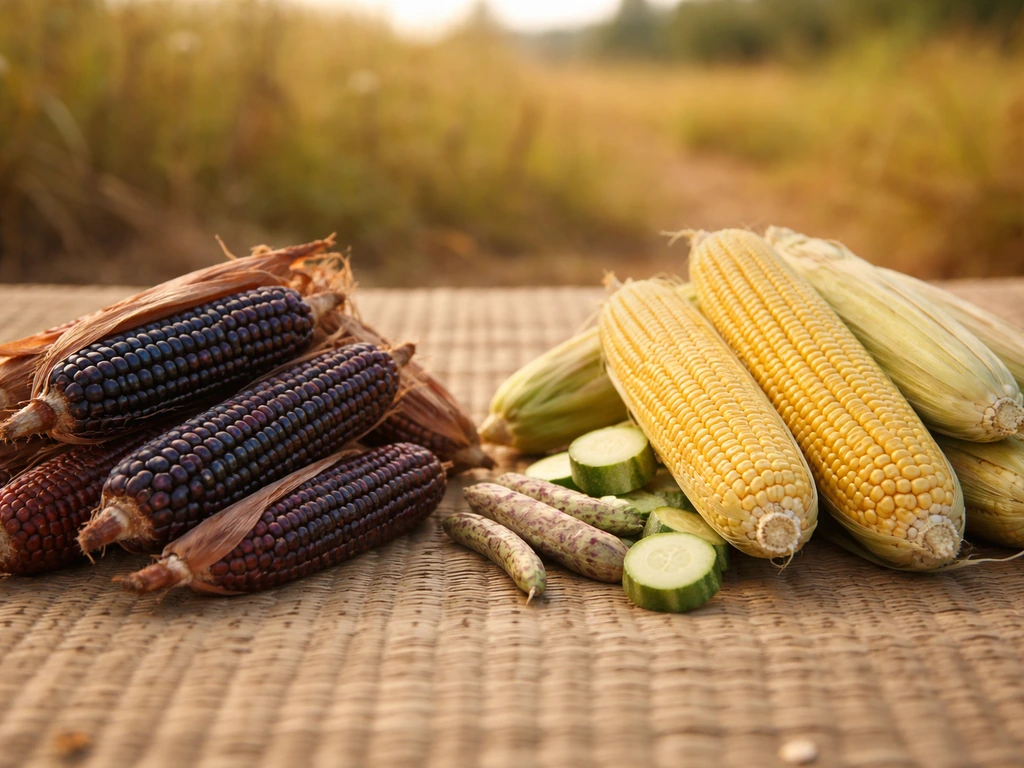
A lot of the crops Indigenous peoples developed are crops you already know. Corn, beans, squash, sunflowers, and tomatoes (from Mesoamerica) are now global staples precisely because they were so productive and adaptable. The differences today are mostly in variety, scale, and method.
| Crop | Indigenous use/variety | Modern equivalent | Key difference |
|---|---|---|---|
| Corn (maize) | Hundreds of locally adapted varieties: flint, flour, dent, pop, sweet | Hybrid commodity corn (dent), sweet corn varieties | Modern corn is optimized for yield and mechanization; Indigenous varieties prioritized adaptability and nutrition |
| Beans | Common bean, tepary, scarlet runner, lima, jack bean | Common bean, navy, kidney, pinto (same species, different selections) | Tepary bean largely lost from commercial agriculture despite superior drought tolerance |
| Squash/pumpkin | Cucurbita pepo, C. maxima, C. moschata (diverse forms) | Acorn squash, butternut, pumpkin | Heritage forms maintained by some tribes are now considered endangered |
| Sunflower | Oilseed crop, seed crop, managed stands | Commercial sunflower (hybrid, oil and confection types) | Scale and genetic narrowing; Indigenous varieties had more diversity |
| Cotton | Grown in Southwest, short-staple native varieties | Upland cotton (Gossypium hirsutum) | Same genus, heavy industrial modification for fiber yield |
| Camas | Staple bulb crop, Pacific Northwest | Not commercially grown; niche specialty only | Essentially absent from modern agriculture despite high caloric value |
| Tobacco | Ceremonial and medicinal, many species/varieties | Commercial Nicotiana tabacum (different from many Indigenous types) | Indigenous varieties and use context very different from commercial product |
The biggest practical difference is variety loss. Many of the regionally adapted Indigenous crop varieties that thrived in specific microclimates no longer exist in commercial agriculture. The heritage garden at Aztec Ruins National Monument was specifically established to preserve varieties bred by modern Pueblo peoples because so many are now endangered. From a practical farming standpoint, some of those lost varieties (especially drought-tolerant beans and cold-adapted corn) would be genuinely valuable today.
Why crop patterns varied so much across nations and time
The variation in what different Indigenous nations grew comes down to a few overlapping factors: climate, available water, trade networks, and time. Maize is a good case study. It spread from Mesoamerica into the Southwest roughly 4,100 years ago, but it didn't arrive everywhere at once or in the same form. Each region it entered got a locally adapted version, and it integrated into existing food economies differently depending on what was already being grown.
Climate shifts also played a major role. High-resolution paleoclimate records show that drought conditions had serious impacts on agriculturally based pre-Columbian cultures in the midcontinental U.S. The abandonment of major agricultural centers like Cahokia coincided with severe drought during the Little Ice Age period. Similarly, increasingly cold conditions during the Little Ice Age corresponded with declines in maize consumption in some regions, as isotopic evidence from multiple sites suggests. Agriculture didn't operate in a vacuum, and when climate shifted, crop patterns shifted with it.
Trade networks also spread crops far beyond where they were originally developed. The Three Sisters complex moved north into Canada partly through trader and migrating farmer networks. Cotton moved into the Southwest through Mesoamerican trade connections. Tobacco, which was grown across an enormous geographic range, spread through both trade and deliberate cultivation by nations who valued it for ceremonial purposes. Crops followed people, and people followed opportunity.
How to research what Indigenous peoples grew in your specific area
If you want to go beyond the general picture and find out what specific nations cultivated in your region or state, there are practical steps you can take right now.
- Start with the Native American Ethnobotany Database (BRIT), which is a searchable database of foods, medicines, dyes, and fibers derived from plants used by Native peoples. You can search by plant or by cultural group, which makes it very useful for connecting specific crops to specific nations.
- Use the NPS ethnobotany and archaeobotany resources for your region. The National Park Service maintains plant-use information for many historic trails and monuments, and these often include regionally specific crop and plant data tied to documented Indigenous groups.
- Search by state or region on this site to find crop-by-region breakdowns that connect historical agricultural patterns to specific climates and geographies. The articles on specific nations (like the ones linked throughout this guide) are a good starting point if you know which nation historically occupied your area.
- Contact your state's historical society or a nearby university archaeology or anthropology department. Many states have published detailed archaeobotanical surveys that document exactly which plant remains have been found at local sites, and those records are often publicly available.
- Look for tribal cultural departments or tribal colleges in your region. Many tribes maintain their own agricultural and ethnobotanical records, and some have public-facing educational resources about their traditional crops and farming practices.
The key to getting useful results is being specific about geography. "What did Native Americans grow in the Southwest" will give you very different answers than "what did Native Americans grow in coastal Maine," and both of those answers are worth knowing if your goal is to understand historical crop patterns in a particular place or to grow historically appropriate crops in your own garden.
FAQ
Did Native Americans grow crops in the same way as European farmers?
In many parts of North America the most important “crops” were not grown in large, fenced fields. People often tended plants, transplanted or selectively harvested at certain ripeness stages, and managed key stands for repeated harvest (for example, camas bulbs in the Pacific Northwest, and burned or maintained plant patches in California). So if you are expecting a European-style list of field crops, the answer will vary by region and by local practice (tending and harvesting can count as agriculture).
Were corn, beans, and squash the only crops grown across North America?
The big three named in the article, maize (corn), beans, and squash, were the backbone in many areas, but they were not the only staples everywhere. For instance, the Eastern Woodlands had earlier, different crop sets before the three-crop complex became dominant, and Plains communities mixed maize with other managed plants. A good way to think about it is “core staples” plus “regional companions,” rather than one universal menu.
How did the Three Sisters system help when drought or pests happened?
If one crop failed, the system could still work because the other crops provided a buffer. Corn and beans supported each other through structure (climbing beans on corn) and soil fertility (nitrogen fixation by beans), while squash shaded the ground to reduce water loss and suppress weeds. That resilience is why companion planting spread, but it was strongest where the growing conditions supported all three crops together.
Were the same varieties of corn and beans grown everywhere the crops appeared?
For most of the continent, “native American crops” were made up of locally adapted varieties, not just the same named crops. Even within corn, beans, and squash there were differences shaped by elevation, length of growing season, heat, and disease pressure. If you are trying to grow historically appropriate crops today, prioritize heritage varieties from similar latitudes or elevations, because a Plains or high-desert version of a crop is often different from an Eastern or lowland version.
What most influenced which crops could be grown in a region?
Across regions, water availability determined what worked. In wetter zones, field cultivation was more feasible, while in drier areas farmers relied more on irrigation canals, floodplain farming, and drought-tolerant crop types or local breeding. So the practical answer to what was grown depends heavily on rainfall and access to seasonal water, not just on whether a crop was known.
Does landscape burning count as agriculture, and did it affect which edible plants thrived?
Yes, controlled burning and other landscape management could be part of crop production, especially in areas where “field farming” was less dominant. Burning was used to shape plant regrowth, maintain habitat mosaics, and improve productivity of certain edible species. If your goal is historical understanding or garden replication, the takeaway is that management practices like fire timing can matter as much as the plant species.
Why do different sources give different answers for the same state or region?
To avoid misleading answers, narrow your question by both region and time period. A modern state boundary can cut through different agricultural zones, and crop patterns changed as drought conditions and colder phases affected the midcontinent, including maize use in some places. If you want accuracy, search for “Indigenous agriculture” plus the broad region and a specific era, rather than only a single blanket time like “pre-Columbian.”
Can I use Indigenous crop lists to choose crops for a modern home garden?
If you are using this information for planting, don’t assume that “Native” crop means “easy to grow everywhere.” Many Indigenous-adapted varieties were selected for specific stresses, like heat tolerance in dry regions or cold tolerance in colder areas. Start with varieties sourced from comparable climates to your location, and expect that yield and disease pressure may differ from historical conditions.
What is the difference between domesticated crops and managed edible plants?
A common mistake is treating “domesticated” and “managed” plants as a binary. Some plants were fully domesticated and integrated into planting systems, while others were managed through tending, selective harvesting, and habitat management. The practical decision aid is to look for evidence of repeated, planned harvesting or cultivation behavior in that region, not only for classic field-plant domestication.
Did trade routes influence which crops arrived in different Indigenous regions?
Trade mattered because it moved crop knowledge and seed types across large distances, and it also changed what people were willing to adopt based on local needs. For example, maize spread into the Southwest through regional networks and later integrated into existing food economies, and cotton spread through Mesoamerican connections. If you are comparing regions, consider whether they sat on major trade corridors, because that can explain crop overlaps.
Next Articles
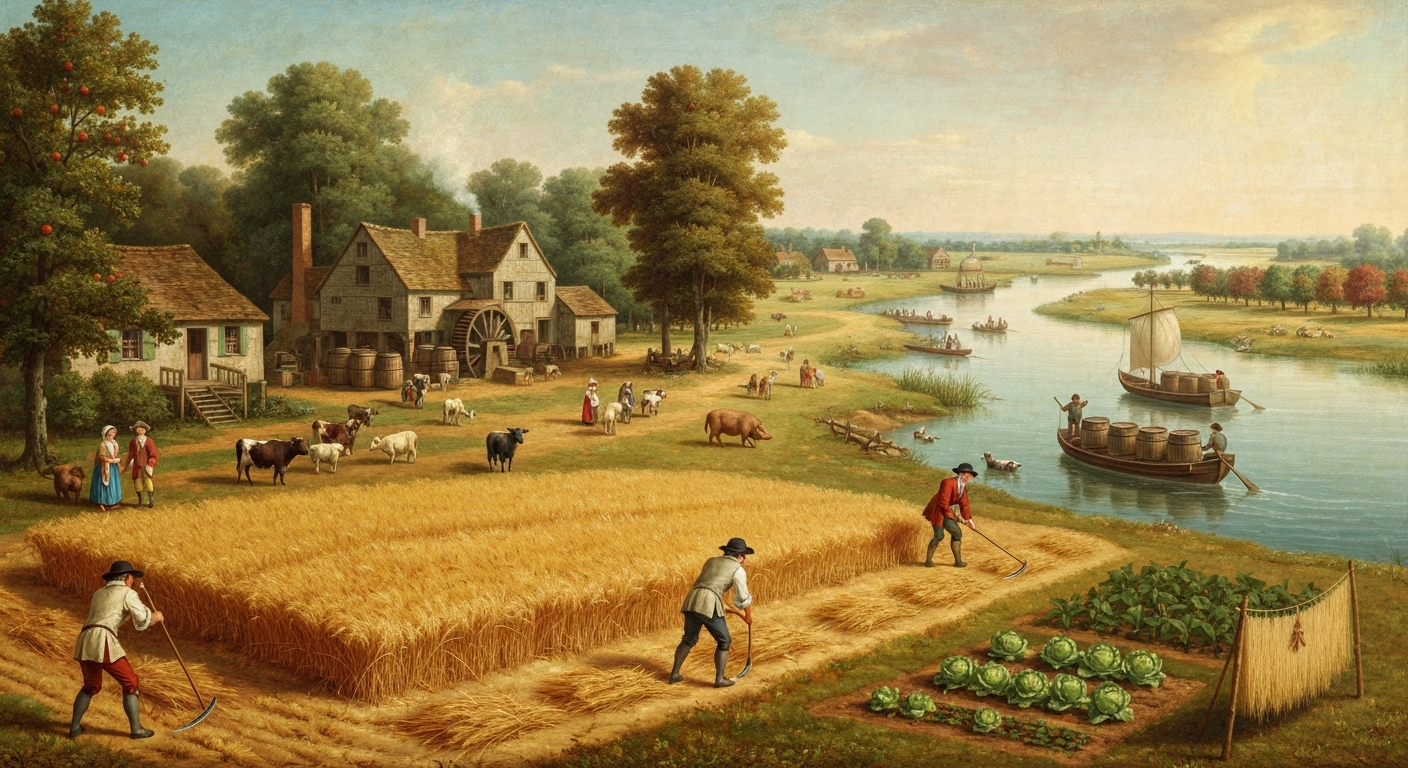
What Did the Delaware Colony Grow: Crops, Uses & Legacy
Colonial Delaware’s main crops, grains, hay, flax, fruits, vegetables, livestock, why they thrived and how they were sold.
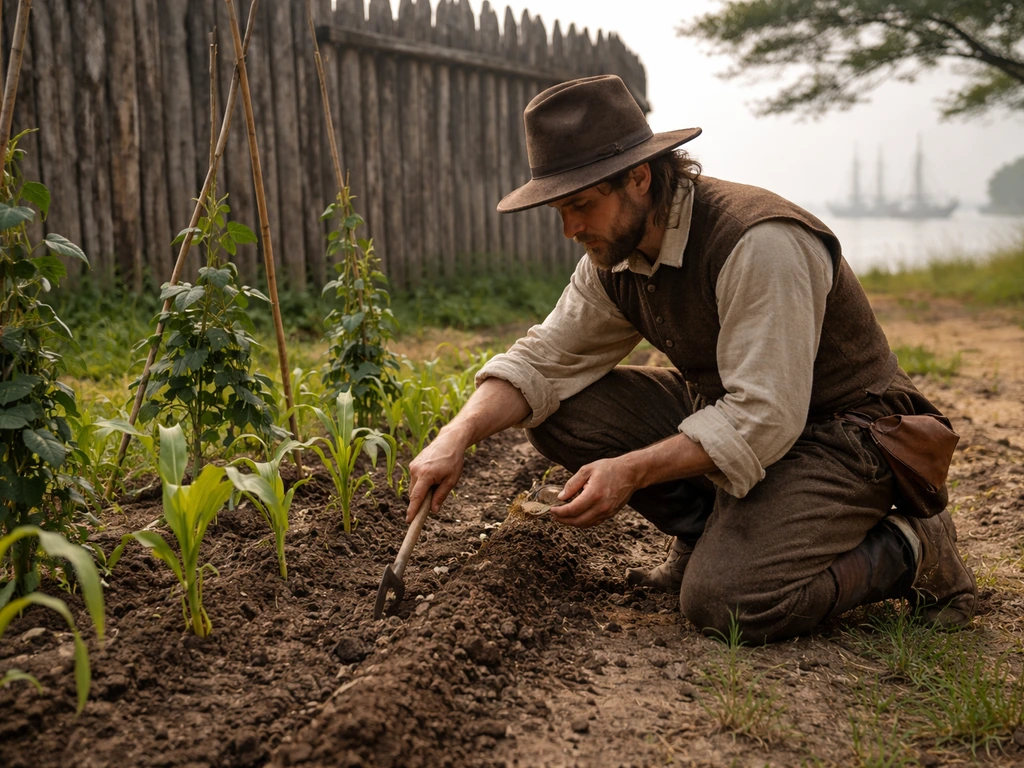
What Did Jamestown Grow and How They Farmed It
Learn what Jamestown colonists grew and the methods they used to plant, harvest, and adapt crops to Virginia conditions.
What Did the New England Colonies Grow? Major Crops
Major New England colonial crops explained by climate and soil, from corn and wheat to beans and hay, plus today’s paral