
Roman farmers built their entire agricultural system around three core crops: wheat, grapes, and olives. Those three formed what historians call the "Mediterranean triad," and they show up in the archaeobotanical record from Italy to North Africa to Iberia. Beyond that foundation, Romans also grew barley, millet, a wide range of legumes (beans, lentils, chickpeas, lupines), flax for oil and fiber, and orchard fruits including figs, apples, pears, quinces, and pomegranates. The exact mix shifted by province and climate, but the triad was nearly universal wherever Roman agriculture took hold.
What Crops Did the Romans Grow? A Practical Guide

Samuel Rourke
25 Apr 2026
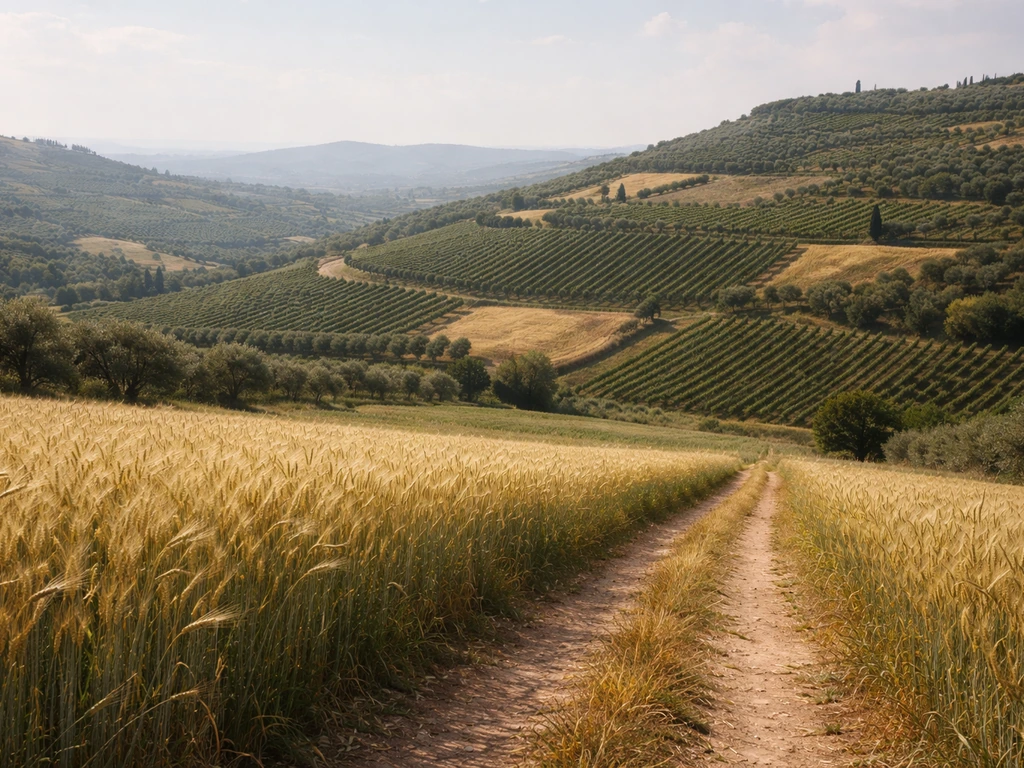
The main crops Roman farmers grew
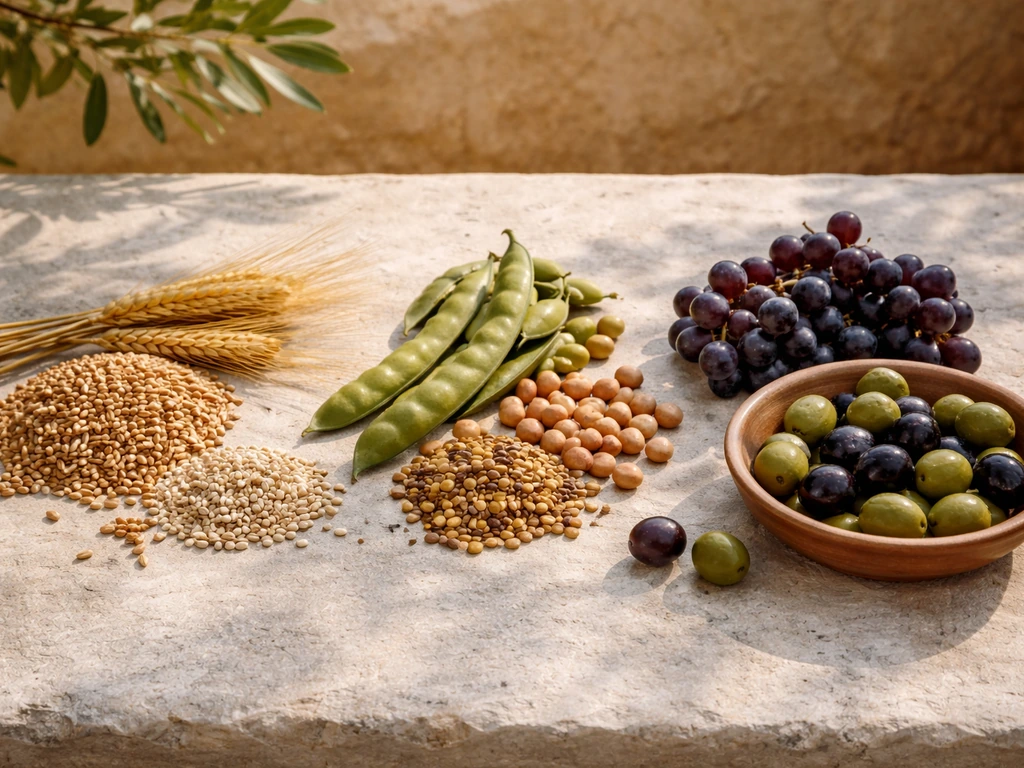
If you want the quick list before diving deeper, here are the major crop categories Roman farmers cultivated across the empire:
- Grains: bread wheat (Triticum aestivum), emmer wheat, barley, millet, and in cooler northern provinces, some rye and oats
- Legumes: fava bean (Vicia faba), lentil, chickpea, and lupine
- Oil and fiber crops: olive (primarily for oil), flax/linseed (oil and fiber)
- Vineyard crops: grapes for wine, table use, and raisins
- Orchard fruits: figs, apples, pears, quinces, pomegranates, and (later in the imperial period) peaches
- Garden crops: turnips, cabbage, leeks, and various herbs grown close to the farmstead
Staple grain crops and why they mattered
Wheat was the backbone of Roman food supply. The state provisioning system known as the annona ran almost entirely on grain, and in places like Egypt, wheat functioned as a direct tax collected from farmers. Bread wheat and emmer were the main varieties; emmer is a hulled wheat that stores well, which matters a lot when you're supplying a city the size of Rome. Barley was nearly as important. Columella wrote about barley specifically because it produces ptisana, a barley gruel that was a dietary staple. It also performed better than wheat on thinner, sandier soils and in drier conditions, which made it the grain of choice across much of North Africa and the eastern Mediterranean.
Millet deserves more credit than it usually gets in discussions of Roman crops. The Pompeii archaeobotanical record shows millet was cultivated in Roman Italy on marginal soils and used as a summer crop rotated after wheat and barley had been harvested. That rotation pattern made practical sense because millet is drought-tolerant and fast-growing. It filled the calendar gap and kept marginal land productive. Rye was a minor player in the Mediterranean core but became significant in northern provinces, including along the Rhine, the Danube, and in Roman Britain. A 2025 study found evidence of charred rye grains from Roman-era contexts in northern Central Europe, arguing that rye spread partly because it thrived on nutrient-poor sandy soils where wheat and barley struggled. Romans didn't choose rye out of preference; they chose it because the local soil and climate made it the practical option.
Legumes, oil crops, and fiber crops in the Roman system
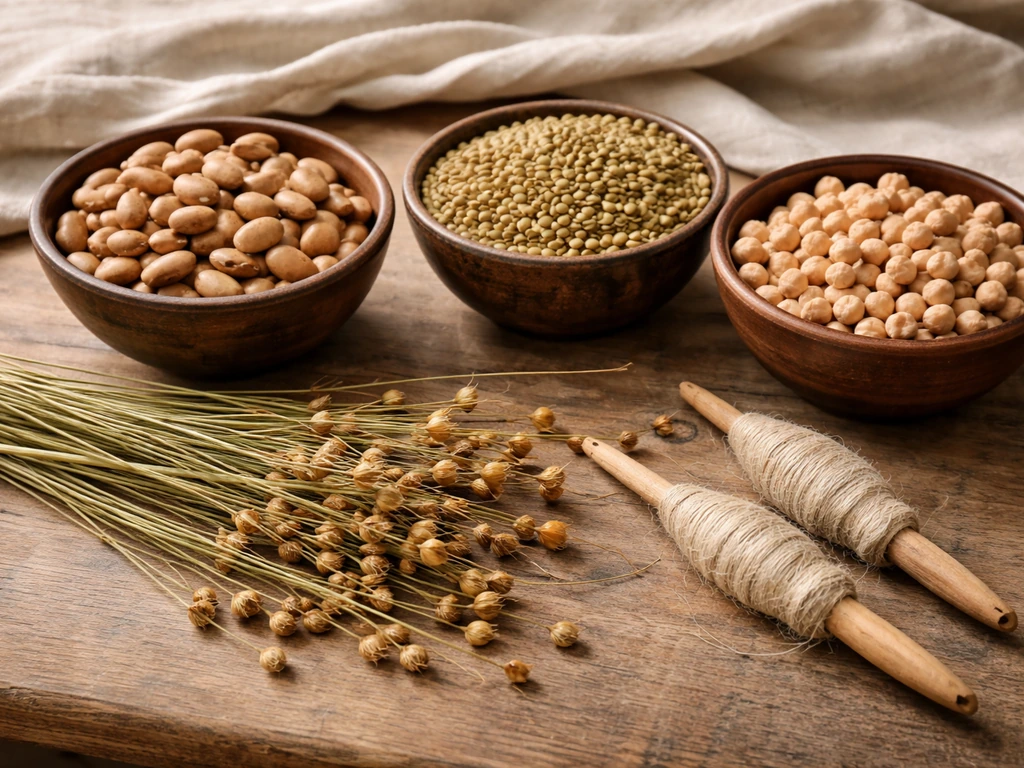
Columella's De Re Rustica lists the key legumes in detail: fava bean, lentil, chickpea, and lupine. These weren't side notes in Roman agriculture. Legumes fixed nitrogen in the soil, which made them a critical part of rotation systems alongside cereal crops. Lupine in particular was broadcast-sown into fields that needed soil restoration. Columella even cautions against hoeing lupine seedlings too aggressively because the plant has a single taproot that can be damaged easily. That level of agronomic detail in a Roman farming manual tells you how seriously they took legume management.
Flax (Linum usitatissimum) was the primary fiber crop in the Roman world, grown both for linseed oil and for the bast fiber used to make linen textiles. The Iberia archaeobotanical record confirms flax cultivation going back to prehistoric times, well before Roman influence, but it was firmly integrated into Roman-era farming systems. Hemp is mentioned by Columella alongside other plant types, though the Iberian record suggests hemp became more significant in medieval contexts rather than as a mainstream Roman crop. If you're trying to distinguish what Romans reliably grew versus what came later, flax is the safe answer for fiber; hemp is less certain for the Roman period specifically.
Olive oil wasn't just a food. During the Roman Imperial period it functioned as the primary dietary vegetable oil, a lamp fuel, a medicine, and a cosmetic. That multi-use demand drove olive cultivation across the entire Mediterranean basin, and the archaeological evidence is striking: Monte Testaccio in Rome is a hill built almost entirely from broken olive oil amphorae, with blank" rel="noopener noreferrer">painted inscriptions (tituli picti) that recorded the origin district and weight of oil in each vessel. More than 2,500 examples of those inscriptions have been catalogued in the Corpus Inscriptionum Latinarum. That mountain of broken pottery represents the scale of Roman olive oil commerce and, indirectly, the scale of olive cultivation across Iberia, North Africa, and the eastern Mediterranean.
Vineyard and orchard crops
Grapes were the third leg of the Mediterranean triad, and Roman viticulture was highly systematic. Columella's Book III of De Re Rustica goes into detailed rules for transplanting vine stock, managing pruning, and positioning vines relative to wind and sun during establishment. Roman farmers weren't growing vines casually; they were managing them with the same precision a modern commercial viticulturist would apply. Wine was a caloric staple for laborers, a trade commodity shipped across the empire in amphora, and a cultural marker of Roman civilization. Where the empire went, viticulture usually followed.
For orchard crops, both Cato's agricultural manual and the broader Greco-Roman pomological record point to the same core list: figs, apples, pears, quinces, pomegranates, and citron. Cato specifically discusses quinces, apples, pears, and pomegranates alongside grape and olive practice. Peaches and certain pear varieties became more common later in the Greco-Roman period as cultivation techniques improved and trade networks spread plant material. Figs were probably the most reliable orchard crop for ordinary farmers because the tree requires almost no irrigation once established and tolerates poor, rocky soils well, which describes a lot of the Roman countryside.
How crop choices varied by region and climate
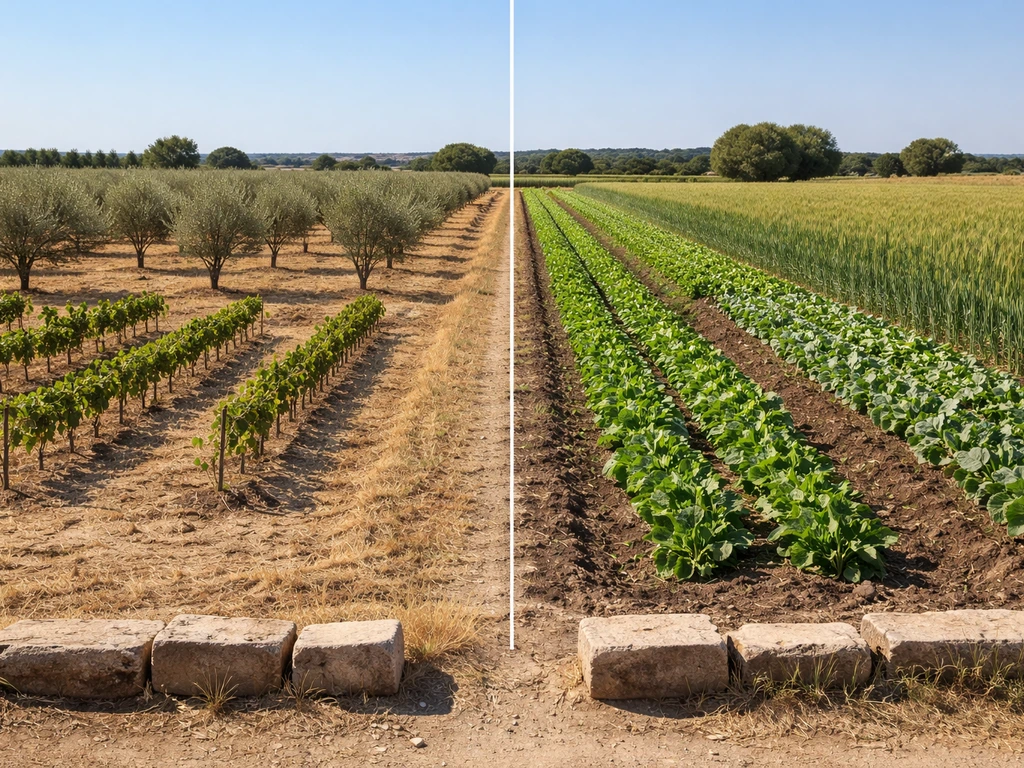
The Roman world spanned an enormous range of climates, and crop choices reflected that directly. The Köppen classification for Mediterranean climates (Csa for hot summers, Csb for cooler coastal summers) describes the core of Roman agricultural territory: Italy, southern Iberia, North Africa, Greece, and the Levant. In these zones, the wheat-grape-olive triad worked reliably because all three are adapted to dry summers and mild, wet winters. Irrigation from aqueducts and local water management extended what was possible, and Columella specifically recommended that a well-managed estate have a reliable water source year-round.
Outside the Mediterranean core, Roman farming adapted significantly. Here's how the main provinces differed:
| Region | Primary Cereals | Key Differences from Core |
|---|---|---|
| Italy (Mediterranean core) | Bread wheat, emmer, barley, millet | Full triad (wheat, grapes, olives); millet on marginal summer soils |
| North Africa / Cyrenaica | Wheat, barley | Major wheat surplus region; rich loam yielded heavy harvests; sowing after first autumn rains |
| Iberia (Hispania) | Hulled and naked wheats, barley, millet; rye introduced in Roman period | Strong olive oil export economy; rye appeared as a new crop during Roman era |
| Gaul and Rhine frontier | Wheat, barley, oats, rye | Cooler and wetter; rye and oats more viable; olive and grape cultivation limited to southern Gaul |
| Roman Britain and Danube provinces | Barley, oats, some rye | Rye on sandy nutrient-poor soils; limited viticulture; pulse crops (beans, lentils) continued |
| Egypt | Wheat (primary) | Grain basket of the empire; wheat collected as tax; Nile flood irrigation replaced rainfall dependence |
The pattern is clear: the further you move from the Mediterranean climate zone, the more the Romans had to substitute cold-tolerant and moisture-tolerant crops for the classic triad. Rye's rise in the north is a perfect example of pragmatic crop adaptation. It wasn't part of the Roman agricultural ideal; it was what worked on the land they were actually farming.
How to find and verify crops for a specific Roman area
If you need to pin down what was grown in a specific Roman province or region, the most reliable approach combines three types of evidence: ancient written sources, archaeobotanical finds, and modern climate analogs. Each has strengths and limits.
Ancient written sources
Cato's De Agricultura and Columella's De Re Rustica are the two best primary sources for Roman crop practice. They describe not just what was grown but how and why, which helps you understand whether a practice was typical or specialized. Pliny the Elder's Naturalis Historia also covers agricultural topics and includes geographic notes on where specific crops thrived. These texts are freely available in English translation online through sources like LacusCurtius.
Archaeobotanical evidence
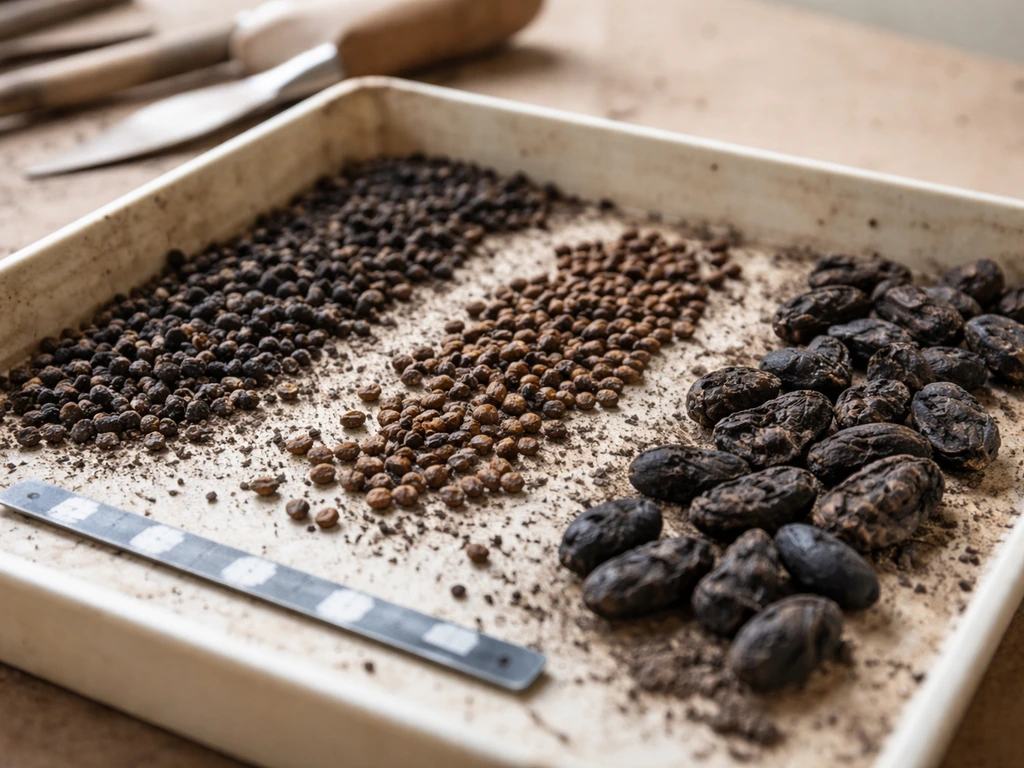
Archaeobotany is the most direct verification tool. Excavations at Roman-period sites often recover charred seeds, grape pips, olive stones, and cereal grains that directly confirm what was being grown or processed locally. The Naples archaeological collection from the AD 79 Vesuvius eruption is a famous example: it preserves charred food remains including bread wheat, millet, grape seeds, and olive stones. Conference proceedings and academic journals on Mediterranean archaeology regularly publish this kind of site-specific data. If you're researching a specific region, searching for "archaeobotany" plus the region name and "Roman period" in Google Scholar will surface relevant studies quickly.
Modern climate analogs
If you can't find direct historical evidence for a specific area, use modern climate analogs as a guide. Check the Köppen climate classification for the region you're investigating. If it's Csa or Csb, the Mediterranean triad is a reasonable baseline assumption. If it shifts toward a continental or oceanic climate (further north or inland), assume more barley, oats, and potentially rye, with grapes and olives fading out. Be cautious though: a 2026 global modeling study found that crop suitability doesn't always match where crops were actually cultivated historically. Suitability is a starting point, not a confirmation.
Amphora evidence and trade records
For oil and wine specifically, Roman amphora inscriptions (tituli picti) recorded the origin district and contents of commercial shipments. The concentration of olive oil amphora from Iberian Spain at Monte Testaccio, for instance, tells you that Baetica (modern Andalusia) was a major olive-producing region under Roman rule. If you can trace amphora production or distribution in a region, you're often tracing the crop that filled them.
What this means for modern gardeners and farmers
If you're a gardener or small farmer interested in growing Roman-style crops today, the good news is that most of them are still widely available and well-suited to Mediterranean-type climates. Fava beans, lentils, chickpeas, and emmer wheat are all commercially available as seed. Emmer (also sold as farro) in particular has seen a revival among heritage grain growers. Lupines are underused as a cover crop in North America but are excellent nitrogen fixers on poor soils, exactly as Roman farmers knew.
If you live in a Mediterranean climate zone (coastal California, parts of the Pacific Northwest, the Mediterranean basin itself, parts of Chile and South Africa), the Roman crop list maps almost directly onto your growing conditions. The triad of wheat, grapes, and olives will perform well. Figs, pomegranates, and quinces are highly drought-tolerant once established and worth adding to any orchard in a dry-summer climate.
If you're in a cooler, wetter region and want to grow Roman-inspired crops, follow the northern provinces model: lean toward barley, oats, fava beans, and lentils. Rye was the Roman-era answer to nutrient-poor sandy soils in the Rhine and Danube regions, and it's still a sensible cover crop or grain crop in similar conditions today. The Roman agricultural playbook is, in many ways, a climate-based decision tree, and it holds up well when you apply it to modern analogous regions.
For students and historians comparing Roman crop patterns to other ancient agricultural systems, it's worth noting that while Romans and their contemporaries like the Anglo-Saxons, Vikings, and medieval peasants all worked with many of the same crop families, the Mediterranean triad and the sophisticated legume rotation systems are what set Roman agriculture apart as a deliberately managed, commercially oriented system rather than purely subsistence farming. Vikings also relied heavily on cereals such as barley and oats, along with hardy vegetables suited to northern climates what crops did vikings grow. Pilgrims in the seventeenth century typically relied on crops like corn, beans, and squash, adapted to New England’s growing conditions what crops did vikings grow. Anglo-Saxons grew a range of cereal grains such as wheat and barley, along with peas, beans, and other legumes suited to their local soils and climate what types of food did anglo-saxons grow.
Recommended next steps for deeper research
- Read Columella's De Re Rustica Books II and III (free in English on LacusCurtius) for the most detailed agronomic guidance written by a Roman farmer in his own era
- Search Google Scholar for "archaeobotany Roman" plus your region of interest to find peer-reviewed excavation data
- Use the Köppen climate map to classify your target Roman province and use that as a baseline for likely crop suitability
- Look up Monte Testaccio and the CIL IV tituli picti if you want to trace Roman olive oil or wine trade routes back to their agricultural origins
- Check heritage grain suppliers for emmer (farro), einkorn, and hulled barley if you want to grow Roman staple grains yourself today
FAQ
Were wheat, grapes, and olives the only crops the Romans grew?
Although the “Mediterranean triad” (wheat, grapes, olives) is the headline, Roman regions often relied on different grains as practical staples. North and inland areas typically had more barley, and some cooler, nutrient-poor sandy regions favored rye. If you want a province-specific answer, don’t assume triad crops always dominated, use archaeobotany plus climate context.
Did Roman farmers choose crops randomly, or was there a system behind the crop list?
Yes, but usually indirectly. Romans rarely needed to “invent” a new crop, because they emphasized crop choice and rotation based on local soils and rainfall. For example, millet was used as a fast summer fill crop on marginal land, and legumes were managed specifically for soil fertility, especially nitrogen restoration.
What limited crop growing in Roman agriculture (water, soil, or something else)?
Two big constraints were water reliability and soil type. Where irrigation and year-round water sources existed, vineyards and orchards could be more consistent. Where soils were thinner or drier, farmers leaned harder on barley and hardy crops, and in sandy, nutrient-poor zones rye became more realistic than wheat.
How can I tell whether a Roman crop was common or just discussed in sources?
If you see a crop mentioned in Roman texts, it doesn’t guarantee it was grown everywhere or by most farmers. Some crops were regionally important, others appeared more in estates or specialized production. The best way to confirm what was common in a specific area is to look for charred seeds and pits in local Roman-period layers, then compare to written accounts.
Can amphora inscriptions tell me what crops people grew, or only what they exported?
Amphora data is strongest for oil and wine, less so for grains. “Tituli picti” often helps identify where packaged commodities were produced or shipped, but it does not always reveal how much of the surrounding countryside grew the commodity. It is a useful clue for cultivation, especially for olive oil, but you still want archaeobotanical confirmation for local growing.
If I want to grow Roman crops today, what should I start with?
For most readers, the simplest “Roman-style starter” approach is to target crops that match Mediterranean-type seasonality: wheat or emmer for grains (or barley if you want a tougher option), plus grapes and olives if your climate allows. Add legumes like lentils or chickpeas for soil support, and consider drought-tolerant orchard crops such as figs or pomegranates.
Are Roman legumes like lupines easy to grow, or do they have special requirements?
Not necessarily. Lupines were valued in Roman systems, but they need careful handling because their seedlings are sensitive and the plant has a taproot that can be damaged by over-aggressive hoeing. If you’re using lupines as a cover crop, plan for gentler establishment and match sowing timing to your growing season.
Did the Roman orchard crop list stay the same over time, or did it change?
Yes. Some orchard crops became more prominent later as cultivation methods and trade networks improved, peaches being a common example in the broader Greco-Roman arc. If you’re aiming for “most likely common in the typical Roman countryside,” prioritize the core drought-tolerant options like figs and pomegranates once established.
Why can climate models disagree with what Romans actually cultivated?
A typical mistake is treating “suitable climate” as “historically cultivated.” A region may be able to grow a crop in theory, but local practice can diverge due to labor needs, market demand, existing land use, and soil management. Use modern climate analogs as a baseline, then verify with archaeological evidence when possible.
What’s the best method to figure out what was grown in a particular Roman region when evidence is incomplete?
When evidence is missing for a specific site or province, combine three checks: local written references (for what was intended or known), archaeobotanical finds (for what was actually present in deposits), and climate analogs (for what was feasible). If the results don’t align, you usually should trust physical plant remains more for confirming local cultivation.
Next Articles
What Crops Did They Grow? How to Identify Likely Crops
Learn how to answer what crops did they grow using climate, geography, era clues, and evidence based research steps.
What Types of Food Did Anglo-Saxons Grow? Crops by Region
Crops Anglo-Saxons grew by region: grains, legumes, vegetables, fruit and nuts, shaped by soil and climate.
What Did the Delaware Colony Grow: Crops, Uses & Legacy
Colonial Delaware’s main crops, grains, hay, flax, fruits, vegetables, livestock, why they thrived and how they were sold.