Anglo-Saxons in early medieval England (roughly 5th to 11th centuries) grew a surprisingly varied mix of crops considering the era's limited tools and knowledge. Their diet rested on grains above everything else, but they also cultivated legumes, leafy vegetables, herbs, and fruit. If you want a quick answer: wheat, barley, rye, oats, peas, and beans were the backbone of the Anglo-Saxon food system. Everything else built around those staples.
What Types of Food Did Anglo-Saxons Grow? Crops by Region

Samuel Rourke
12 Apr 2026
Anglo-Saxon farming in context
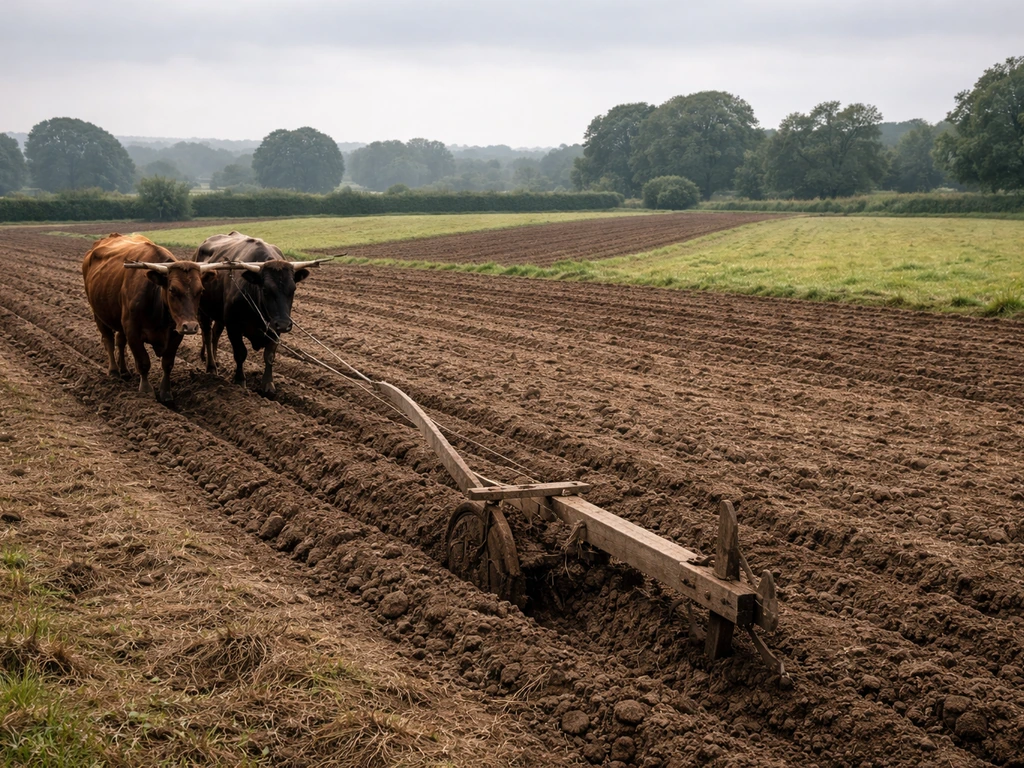
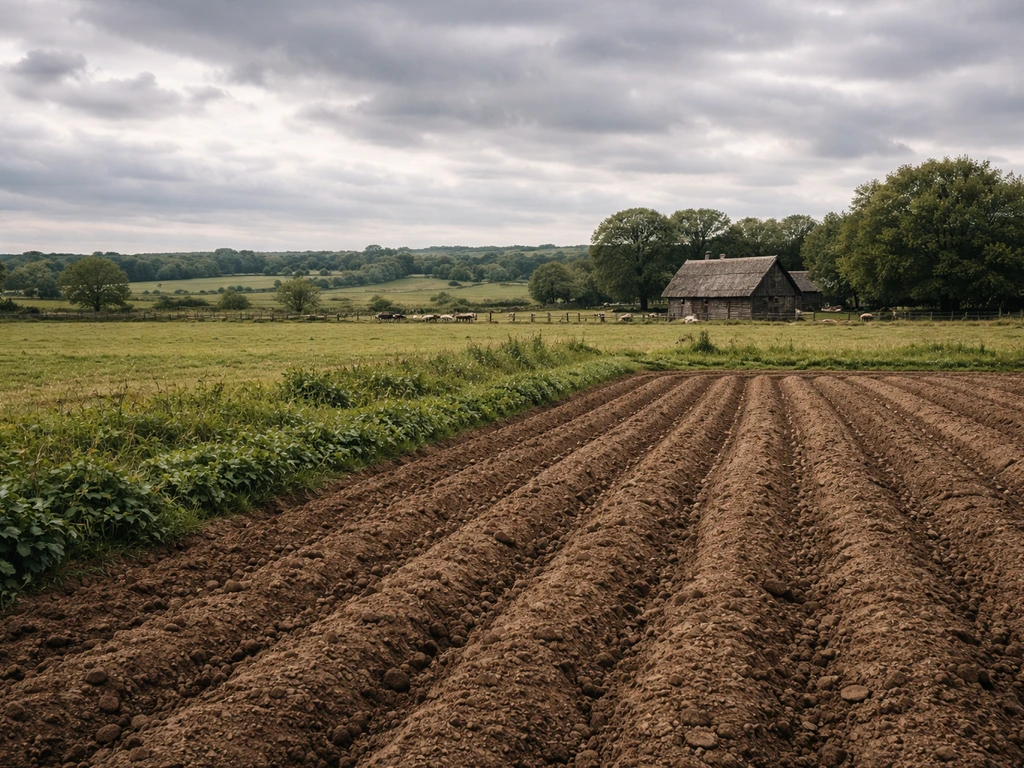
Anglo-Saxon England stretched from the collapse of Roman rule in the early 5th century to the Norman Conquest in 1066. That's over 600 years of farming, and the agriculture changed significantly across that span. Early Anglo-Saxon farmers worked lighter, well-drained soils with simple ard ploughs. By the 9th and 10th centuries, the mouldboard plough had become more widespread, which was a genuine game-changer. It could turn heavier clay soils that ard ploughs couldn't handle, opening up large areas of lowland England to arable cultivation for the first time.
Alongside the plough, two- and three-field crop rotation became more systematic, especially from around the 10th century onward. Archaeological evidence, including stable isotope analysis of crop remains, shows a growing uniformity in crop growing conditions from this period, which is consistent with farmers rotating fields more deliberately. Livestock, especially sheep, grazed on stubble and waste ground and deposited manure as they went, helping maintain soil fertility without relying entirely on intensive manual composting. This combination of better tools, smarter rotation, and integrated livestock grazing is what researchers point to when describing an "agricultural revolution" in Anglo-Saxon England.
One important turning point was around 700 CE. Historical and archaeological evidence suggests a shift after this date when more land was actively brought under the plough and bread wheat became a much more prominent crop. Before that, the crop mix leaned more heavily on hardier, lower-yielding grains. Understanding that shift helps explain why the crop list looks different depending on whether you're looking at early or late Anglo-Saxon periods.
The staple crops: grains and legumes
Grains made up the core of the Anglo-Saxon diet and the bulk of agricultural land use. Here's what they grew most commonly:
- Bread wheat (Triticum aestivum): became more prominent after around 700 CE, especially on better-drained, fertile soils in the south and east of England. It was the prestige grain, used for finer bread.
- Emmer and spelt wheat: older varieties that hung around, particularly in areas where poorer soils or colder conditions made them a safer bet than bread wheat.
- Barley: one of the most widely grown grains across the whole period. It went into porridge and flatbreads, but its biggest role was likely in ale, which was a daily caloric staple for Anglo-Saxons of all ages.
- Rye: important in wetter, heavier, or more acidic soils where wheat struggled. It was a reliable crop in the north and west, and rye bread was a common food for poorer communities.
- Oats: cultivated widely, especially in northern England and wetter upland areas. Oats also served as animal fodder, making them a dual-purpose crop.
- Peas and beans (field peas and broad beans): legumes were grown alongside grains as essential protein sources and as a practical rotation crop, since legumes fix nitrogen and improve soil for the following grain crop. This wasn't a coincidence, Anglo-Saxon farmers understood the benefit even if they didn't call it nitrogen fixation.
The grain-legume combination was the foundation. If you're trying to understand what an Anglo-Saxon village fed itself on day to day, picture bread, porridge, pottage (a thick stew), and ale, all made from these crops. Legumes added protein and variety to that otherwise grain-heavy diet.
What grew in the kitchen garden
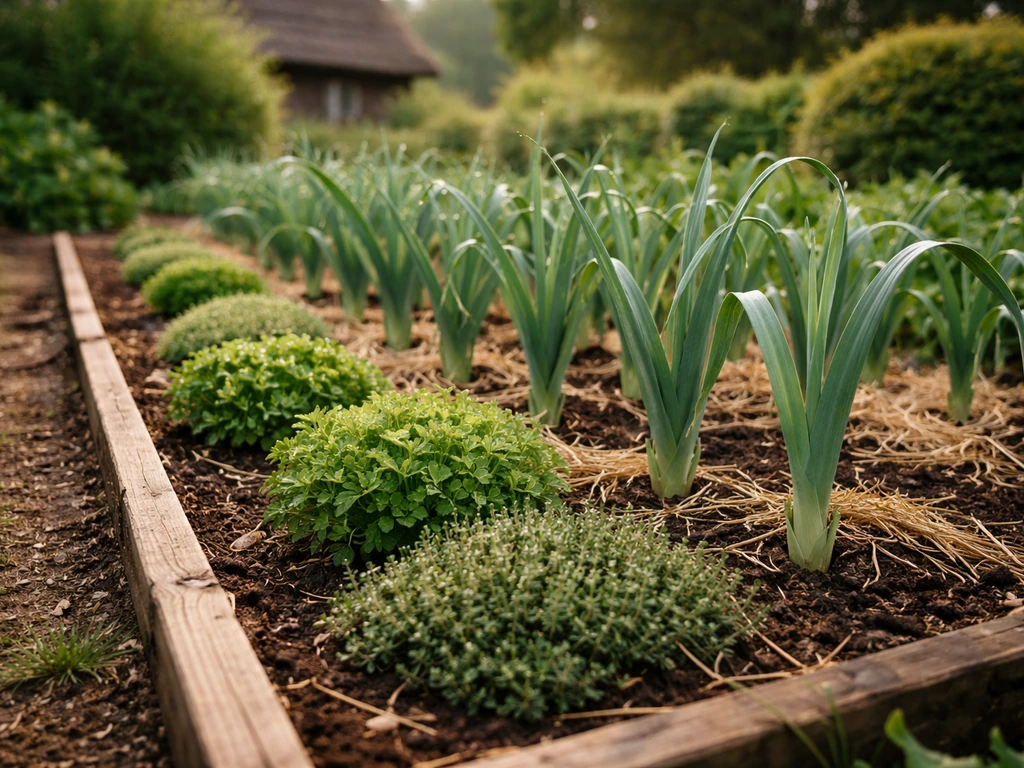
Beyond the open fields, Anglo-Saxon households maintained what we'd recognize as a kitchen garden or cottage garden. These small plots near the home grew vegetables and herbs for daily cooking and medicine. The archaeological and documentary record (including plant remains from excavations and references in texts like Aelfric's Colloquy) gives us a reasonable picture of what was in them.
- Leeks: one of the most commonly referenced vegetables in Anglo-Saxon texts. They were hardy, grew well in the English climate, and added flavor to pottage.
- Onions and garlic: widely cultivated and used both as food and medicine.
- Cabbage and kale: leafy brassicas that tolerated cold and wet conditions well, making them reliable in the British climate.
- Parsnips and turnips: root vegetables that could be stored through winter, which made them especially valuable.
- Celery (wild or semi-cultivated): used mainly as a herb and flavoring.
- Herbs including parsley, coriander, dill, fennel, mint, and wormwood: grown for cooking, preserving, and treating illness. Anglo-Saxon herbal manuscripts like Bald's Leechbook list dozens of plants grown or gathered for medicinal use.
- Flax: grown both for linseed oil (a food source) and for its fiber, which was woven into linen cloth. It's a good example of a crop that served multiple purposes.
These kitchen plots were typically managed by women in the household and were distinct from the communal open fields where grain was grown. The crops grown here were lower-yield but high-value in terms of nutrition and daily cooking versatility.
Fruit, nuts, and crops tied to livestock
Anglo-Saxons also grew and gathered a range of fruits and nuts, and some crops existed specifically to support the animals that were central to the farming system.
- Apples: cultivated and gathered from wild or semi-wild trees. Cider-making evidence is debated for this early period, but apples were certainly eaten and preserved.
- Plums and sloes: grown or harvested from hedgerows. Sloe berries (blackthorn) were used for flavoring drinks and preserves.
- Cherries and pears: less common, but present in wealthier estate gardens.
- Hazelnuts and walnuts: gathered more than cultivated, but hazel coppices were actively managed in some areas.
- Hops and woad: hops appeared in later Anglo-Saxon cultivation and were used in ale; woad was grown as a dye crop, which was an agricultural product rather than food but part of the same farming economy.
- Hay and fodder crops: not food for humans directly, but growing hay (from managed meadows) and legume hay was critical to keeping livestock alive through winter. Without livestock, the ploughing, manuring, and protein supply of the whole system collapsed.
It's worth noting that Anglo-Saxon agriculture wasn't purely plant-based. Pigs, cattle, sheep, and chickens were all kept, and those animals depended on pasture and stored crops. The livestock and crop systems were inseparable, which is why some crops that look minor on a list, like oats or hay, were actually just as important as wheat in keeping the whole system running. This integration of animals and crops is something you also see explored when looking at what crops medieval peasants grew, where the same pattern of grain-legume-livestock interdependence held across much of northern Europe.
Where each crop grew and why
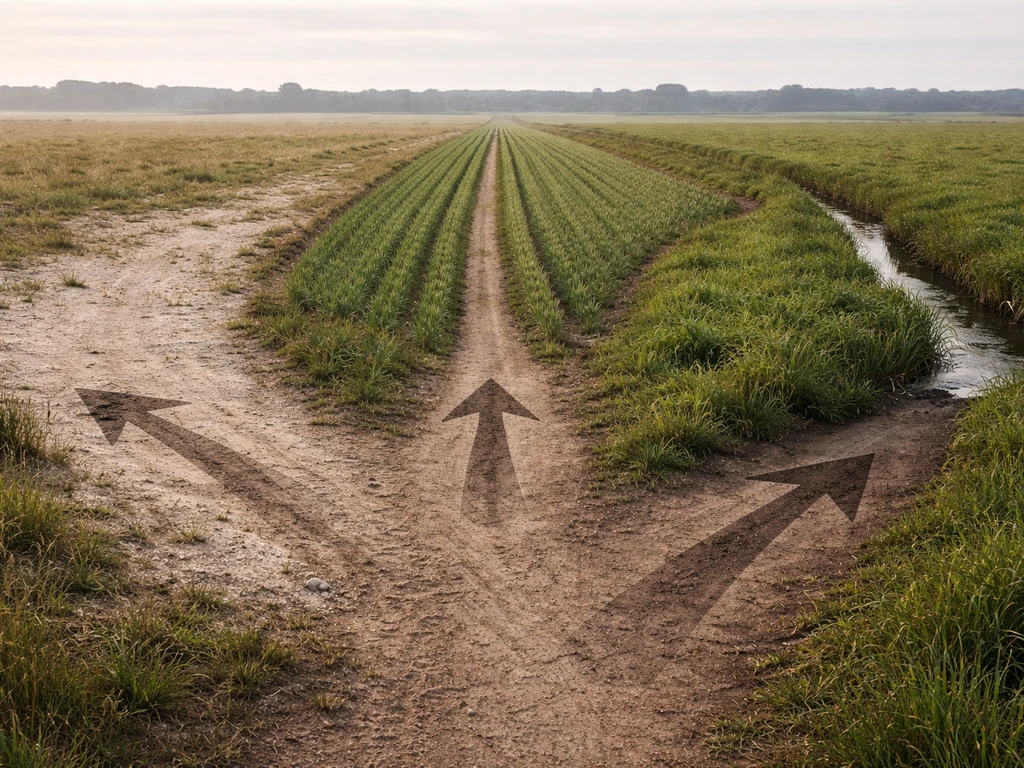
Crop choices in Anglo-Saxon England weren't random. They tracked closely with soil type, drainage, rainfall, and elevation. Here's how the geography broke down:
| Region / Soil Type | Primary Crops Grown | Why It Worked |
|---|---|---|
| Southern and eastern England (chalk, loam, well-drained) | Bread wheat, barley, peas, beans | Warmer, drier conditions; lighter soils easy to plough; longest growing season |
| Midland clays (heavier soils) | Rye, oats, emmer/spelt wheat | Mouldboard plough opened these soils post-700; wetter and heavier conditions suited hardier grains |
| Northern England and uplands | Oats, rye, barley | Shorter growing season, cooler and wetter; oats and rye tolerate these conditions well |
| River valleys and wetland margins | Hay, reed (for thatch), some vegetables | Too wet for arable grain; used for meadow hay and managed as pasture |
| Settlement kitchen plots (everywhere) | Leeks, cabbage, onions, herbs, flax | Small-scale, intensive, hand-managed; near homes for easy access and watering |
This regional patterning is similar to what you find across other early medieval farming cultures in northwestern Europe. Viking crop choices, for example, followed the same logic of matching grain hardiness to climate, with oats and rye dominating colder Scandinavian conditions while barley remained the most universally grown grain across the Norse world.
The Romans had earlier introduced some crops to Britain, including spelt wheat and some garden vegetables, so Anglo-Saxon agriculture partially inherited and partially departed from what came before. If you want to understand that transition better, it helps to look at what crops the Romans grew in Britain, since some of those choices persisted into the early Anglo-Saxon period before the crop mix shifted.
How to verify what you're reading
If you're a student or researcher trying to confirm these details, here's a practical method for checking sources and narrowing down to a specific time or place.
- Start with archaeobotanical evidence. Charred plant remains from excavated Anglo-Saxon settlements are the most direct evidence of what was actually grown and eaten. Sites like West Stow in Suffolk and Mucking in Essex have produced grain assemblages that directly confirm the crop list above.
- Check stable isotope analysis. More recent bioarchaeological research uses stable carbon and nitrogen isotopes from crop remains to reconstruct soil management practices (like manuring) and rotation patterns. This is how researchers identified the shift toward more systematic rotation from the 10th century onward.
- Use documentary sources carefully. Old English texts like the Rectitudines Singularum Personarum (a late Anglo-Saxon estate management document) describe crop obligations and farming duties. These are valuable but reflect wealthier estate conditions, not necessarily typical peasant farming.
- Match the source to the period. "Anglo-Saxon" covers 600 years. A source about 6th-century Kent may not apply to 11th-century Yorkshire. Always check the date and location of the evidence being cited.
- Cross-reference with place-name evidence. English place names containing elements like -field, -ley (clearing), -worth (enclosure), or crop-related names like Ryton (rye farm) or Barton (barley farm) provide geographic clues about what was grown in specific areas.
- Look for peer-reviewed agricultural history journals. Work published in journals like Antiquity, Agricultural History Review, and chapters from Oxford Academic's Anglo-Saxon farming volumes are the most reliable sources for this topic.
One thing to watch out for: a lot of general history sources oversimplify Anglo-Saxon farming by focusing only on wheat and barley. The real picture, as the bioarchaeological evidence shows, includes a much wider range of crops adapted to very different local conditions. If a source doesn't mention rye, oats, or legumes, it's probably giving you an incomplete answer.
Anglo-Saxon vs. other historical farming cultures
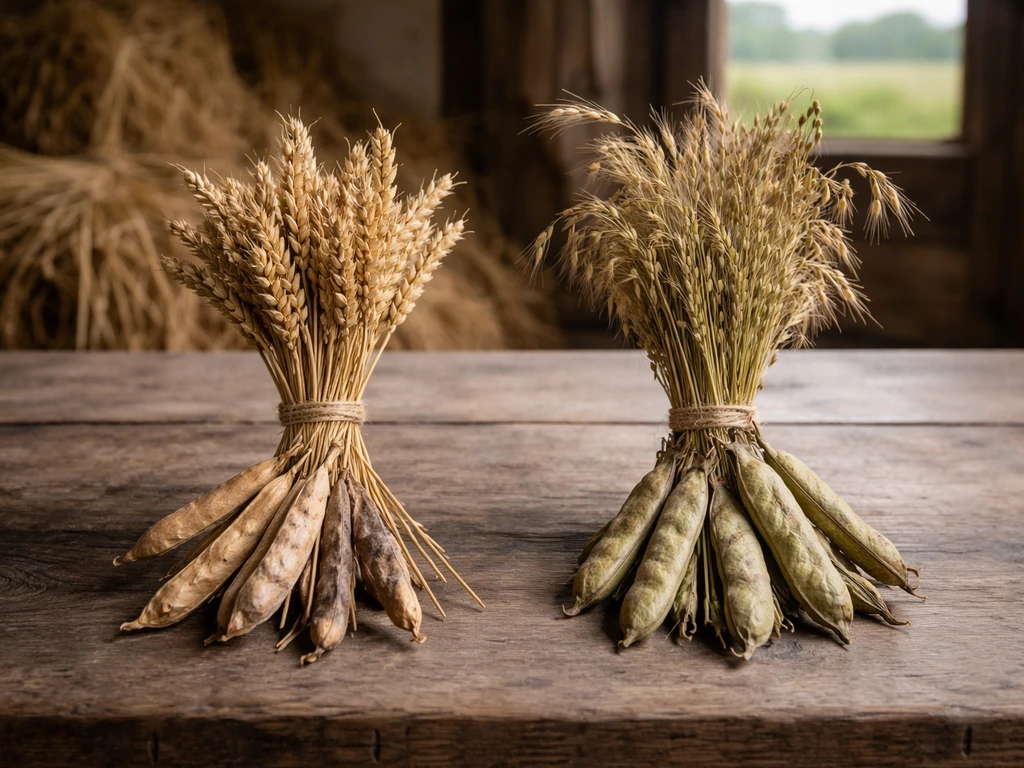
Putting Anglo-Saxon crop choices into comparative context helps make sense of what was typical for the era and what was specific to England's climate and history.
| Culture / Period | Core Grains | Key Legumes | Notable Difference |
|---|---|---|---|
| Anglo-Saxon England (5th–11th c.) | Wheat, barley, rye, oats | Peas, broad beans | Mouldboard plough enabled heavy soil cultivation; rotation intensified after 10th c. |
| Vikings (8th–11th c.) | Barley, oats, rye | Peas, some beans | Colder climate = less wheat; barley dominant for ale and food |
| Romans in Britain (1st–4th c.) | Spelt wheat, emmer, barley | Lentils, peas | More Mediterranean crops introduced; larger-scale estate farming |
| Medieval peasants (12th–14th c.) | Wheat, rye, oats, barley | Peas, beans, vetches | Three-field rotation more formalized; more written records available |
Anglo-Saxon farming sits squarely in the middle of this timeline, inheriting some Roman crop introductions while developing the rotation and soil management systems that later medieval farming would refine further. The comparison with what crops were grown across different historical periods shows just how consistent the grain-legume-livestock combination was as a foundation, regardless of culture or century.
What this means for gardeners and history enthusiasts today
If you're a gardener trying to grow a historically accurate Anglo-Saxon plot, the practical takeaway is straightforward. Focus on emmer or spelt wheat if you can source the seed (heritage varieties are available through seed libraries in the UK and US). Grow broad beans as your legume, add leeks, kale, and onions for the vegetable patch, and plant some herbs like fennel, dill, and mint. Regia Anglorum’s research on Anglo-Saxon food items also discusses onions and leeks as flavourings, alongside other kitchen plants like sloe and garlic blank" rel="noopener noreferrer">leeks, kale, and onions. Internet Archaeology reports leek (Allium sp.) evidence, including epidermis recovered from faecal concretions from Coppergate, York, and notes that preservation of vegetables can vary by deposit type blank" rel="noopener noreferrer">leek (Allium sp.) epidermis recovered from faecal concretions. That combination is as close to an authentic Anglo-Saxon kitchen garden as you'll get.
For students writing history papers, the key framing is this: Anglo-Saxon food production was a system, not just a list of crops. The grains, legumes, livestock, and kitchen garden plants all worked together in a way that adapted to local soils and climate. That's why the answer to "what did Anglo-Saxons grow" isn't the same in Kent as it is in Northumbria. Location mattered then just as it does now.
If you want to extend this comparison across the Atlantic and into more recent history, it's interesting to see how different the crop priorities became once farming shifted to new environments. The crops the Pilgrims grew in New England reflected a completely different soil and climate reality, even though they brought some European grain-growing knowledge with them. And pioneer farmers on the American frontier faced yet another set of conditions that reshaped which crops made practical sense. The Anglo-Saxon framework of matching crop choice to place holds up across all of them.
FAQ
What’s the simplest list of foods people ate most often in Anglo-Saxon England, not just what farmers grew?
Food stayed grain-led, so wheat, barley, rye, and oats turned into bread, porridge, and thicker stews, with peas and beans added for protein. Ale and some fermented grain drinks typically accompanied meals, meaning “food” and “drink” were tightly linked to the same grain crops.
Did Anglo-Saxons mainly grow wheat, or did they rely on other grains more often?
They relied on a broader grain base than many modern summaries suggest. Barley was widely adaptable, rye and oats mattered in harsher or wetter areas, and rye or oats could be especially important where bread wheat struggled. Wheat became more prominent in later centuries, but it was not the only staple.
Were legumes always the same kind of legume, or did farmers choose based on local conditions?
Legume choices could vary, but broad beans and peas are key examples of what reliably fit a grain-heavy rotation. Farmers tended to match legume types to soil and drainage, because legumes benefit rotation and soil structure, but their performance still depends on local growing conditions.
What vegetables and herbs were grown in the kitchen gardens, and were they different from open-field crops?
Yes, kitchen gardens focused on smaller, high-value plants for daily use, including leeks, kale, onions, and culinary or medicinal herbs like fennel, dill, and mint. Open fields prioritized arable staples, while kitchen plots were about variety and flavor, not maximizing bulk yield.
How did crop rotation actually work in practice, and what should I assume about field use?
A common pattern was alternating arable and non-arable uses across multiple fields so soils recovered and legumes could be integrated. The key practical point is that rotation reduced long-term soil exhaustion, and the system became more structured by the later Anglo-Saxon period.
If someone says “Anglo-Saxons grew hay,” what does that mean for their food system?
Hay functioned as stored animal feed, keeping livestock productive through seasons when pasture was limited. Even if hay is not “eaten” directly by people, it indirectly supports milk, meat, and manure, which feeds back into crop fertility.
Did livestock change which crops were worthwhile to grow?
Definitely. Farmers grew crops and stubble-grains partly because they could feed animals and generate manure. That means crop decisions were not only about human food, they also supported grazing, stored feed, and fertilization needs across the year.
Were oats or rye just backup crops, or could they be central in some regions?
They could be central depending on location. In cooler or more challenging conditions, oats and rye were often more reliable than bread wheat, so a “minor” crop on a generic list could become a primary staple in specific areas.
What changed around 700 CE that affected the crop mix?
After this period, more land was actively brought under cultivation and bread wheat rose in prominence. That shift suggests a change in farming intensity and crop preference, so the answer can differ when comparing early versus later Anglo-Saxon farming.
How much can I trust broad history books that only mention wheat and barley?
Be cautious. Oversimplified summaries often miss legumes, oats, and rye, which are important for understanding protein balance, rotation, and regional adaptation. If a source gives only wheat and barley, it may not reflect the full range of evidence from crop remains and bioarchaeology.
Can I create a historically plausible Anglo-Saxon garden plan at home?
You can, but aim for heritage grain and garden plants rather than modern uniform varieties. A practical approach is to choose spelt or emmer wheat if you can source seed, add a legume like broad beans, and include kitchen-garden vegetables and herbs for culinary and medicinal uses.
For a paper, how should I frame “what did Anglo-Saxons grow” so it isn’t misleading?
Treat it as a system, not just a list. Emphasize the interaction between grains, legumes, livestock feeding, and kitchen-garden plants, and note that crop choices varied by soil, rainfall, and elevation, which changes the answer from region to region.
Next Articles
What Did the Delaware Colony Grow: Crops, Uses & Legacy
Colonial Delaware’s main crops, grains, hay, flax, fruits, vegetables, livestock, why they thrived and how they were sold.
What Did Jamestown Grow and How They Farmed It
Learn what Jamestown colonists grew and the methods they used to plant, harvest, and adapt crops to Virginia conditions.
What Did the New England Colonies Grow? Major Crops
Major New England colonial crops explained by climate and soil, from corn and wheat to beans and hay, plus today’s paral