The Iroquois (Haudenosaunee) grew corn, beans, and squash as their primary crops, a combination so central to their agriculture and diet that it earned the name the Three Sisters. Beyond those, they also cultivated sunflowers, tobacco, and a range of other plant foods. Corn, beans, and squash together weren't just a menu choice, they were a carefully engineered growing system that fed communities across what is now upstate New York and the Great Lakes region for centuries.
What Did the Iroquois Grow: Crops and Planting Logic

Samuel Rourke
15 May 2026
The core crops the Iroquois cultivated
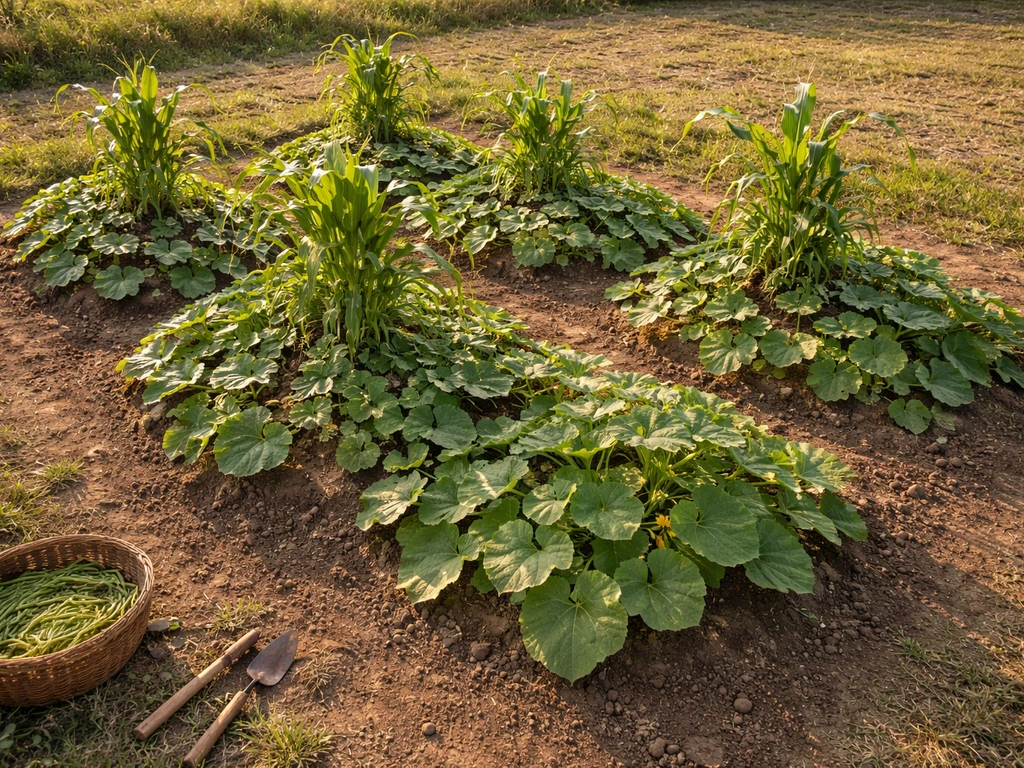
When European settlers arrived around 1600, they documented corn, beans, and squash as the blank" rel="noopener noreferrer">principal crops of the Haudenosaunee and neighboring Northeastern Native peoples. But calling those three crops the whole story undersells the agricultural depth here. blank" rel="noopener noreferrer">Haudenosaunee women, who were the primary farmers, cultivated more than fifteen varieties of maize, sixty types of beans, and eight kinds of squash. That level of diversity within just the Three Sisters points to a sophisticated agricultural tradition, not a simple subsistence garden.
Beyond the Three Sisters, sunflowers were a common crop grown for seeds and oil. Tobacco was cultivated as well, primarily for ceremonial use rather than food. Jerusalem artichokes (a native tuber), wild rice in suitable wetland areas, and various gourds also appeared in Haudenosaunee agriculture depending on the specific community and its local geography.
- Corn (maize): the caloric backbone, dried and stored for winter
- Beans: multiple varieties including kidney, navy, and pole types
- Squash: summer and winter varieties including pumpkins
- Sunflowers: grown for seeds and cooking oil
- Tobacco: primarily ceremonial, not dietary
- Jerusalem artichokes: native tuber, harvested in fall
- Gourds: used as containers and tools as well as food
The Three Sisters: why corn, beans, and squash go together
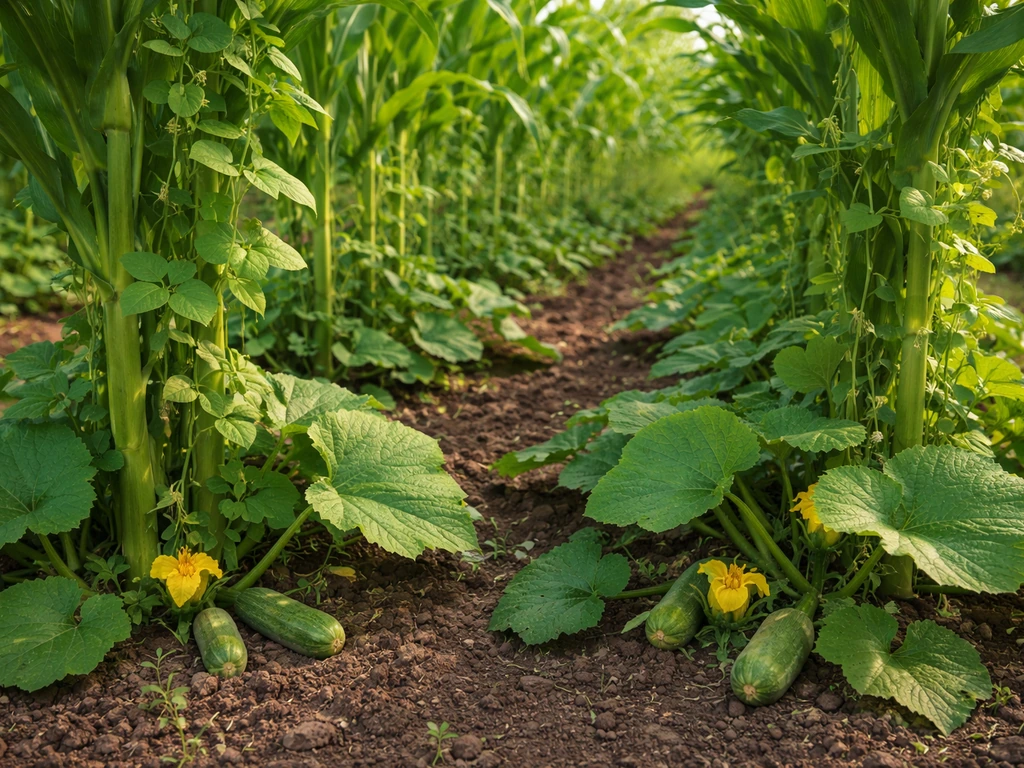
The Three Sisters work as a planting system because each crop solves a problem for the others. Corn grows tall and provides a natural trellis for bean vines to climb, eliminating the need for separate support structures. In the Nile region, seasonal floods similarly helped farmers enrich and moisten fields, making it easier to grow crops natural trellis. Beans fix nitrogen from the air into the soil, which directly feeds the heavy nitrogen demands of corn.
Squash spreads wide along the ground, its broad leaves shading out weeds and locking moisture into the soil. Together the three crops also create a nutritionally complete diet: corn provides carbohydrates, beans supply protein and amino acids that corn lacks, and squash delivers vitamins, minerals, and additional calories.
According to the USDA National Agricultural Library, the Haudenosaunee planted these crops using a hill or mound method. Corn goes in first, planted in raised mounds. Two to three weeks later, once the corn has a head start, beans are planted in the same mounds. Squash is then interspersed throughout the field, not in the mounds themselves but in the spaces between them. That timing gap matters because you want the corn stalks sturdy enough to support bean vines before those vines start climbing.
Crop diversity within the Three Sisters
Those fifteen-plus varieties of maize weren't all the same crop in different colors. Some varieties were optimized for drying and long-term storage, others for roasting or grinding into flour. The sixty types of beans ranged from small quick-maturing types to large pole beans suited for a longer growing season. This diversity was a form of agricultural insurance, if one variety failed due to drought, pests, or early frost, others in the same field might still produce. That's a strategy that modern seed-saving gardeners and heritage farmers actively return to today.
Other staple foods beyond the Three Sisters
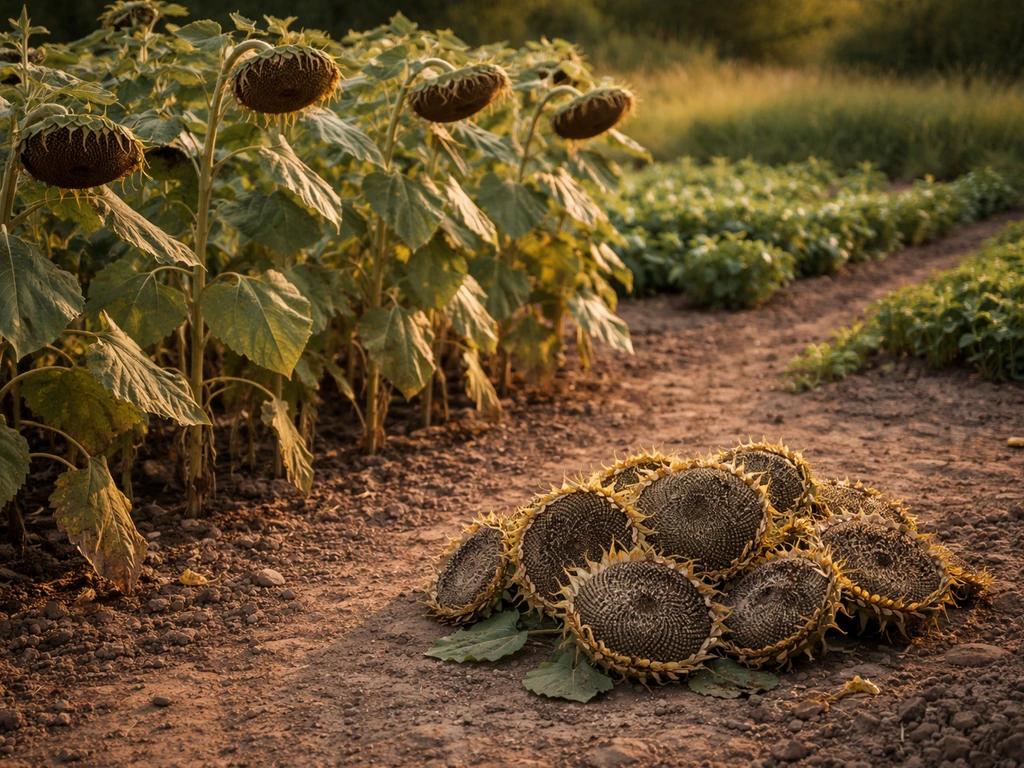
Sunflowers deserve more attention than they typically get in discussions of Iroquois agriculture. They were cultivated as a true crop, not just foraged opportunistically. The seeds were eaten directly, pressed for oil used in cooking and on hair, and the plants themselves served as windbreaks in fields. As a tall annual that tolerates a range of soil conditions, sunflowers fit naturally into the same agricultural zones where corn and beans were grown.
Jerusalem artichokes (Helianthus tuberosus) are a North American native tuber that Haudenosaunee communities harvested. Unlike imported root crops, Jerusalem artichokes grow aggressively in the Northeast, store well in the ground through early winter, and can be eaten raw or cooked. They are essentially a wild-domesticated crop that required minimal cultivation effort compared to the Three Sisters.
Wild rice was also significant in the Great Lakes portions of Haudenosaunee territory, gathered from lake and river margins rather than planted in fields, but it functioned as a genuine dietary staple in those regions. This matters because rivers and wetlands provide reliable water and rich margins where crops like wild rice can thrive, which is one reason many ancient civilizations grew near waterways.
How Iroquois farming actually worked through the seasons
Haudenosaunee agriculture was organized around a clear seasonal calendar, and understanding it matters if you want to replicate or study these growing methods. Spring meant land preparation and the planting of corn in mounded hills, typically after the last frost risk had passed (roughly late May in upstate New York). The mound method improved drainage and soil warmth in the relatively short Northeast growing season. Women and older children did most of the planting, weeding, and harvesting, while men contributed by clearing new fields through controlled burning, which also improved soil fertility.
Summer was a cycle of weeding and tending. Squash required monitoring because its vines sprawl and can crowd out corn if not managed. By late summer and early fall, beans were being harvested fresh or left to dry on the vine. Squash was harvested in late September to October, before hard frosts. Corn was the last major harvest, dried on the stalk, then stored in large quantities in bark-lined storage pits or longhouse granaries for winter use. That storage capability, dried corn keeps for years under the right conditions, was what made large, settled communities in the Northeast viable. This kind of careful, diversified farming is what helped those kingdoms grow as they did.
Field rotation was practiced as well. When a field's fertility declined after years of cultivation, communities would clear new land and allow the old fields to rest or return to scrub growth. This is an early form of fallowing, and it kept the agricultural system productive without the soil amendment inputs that later European farming relied on.
Regional and time-period differences in crop choices
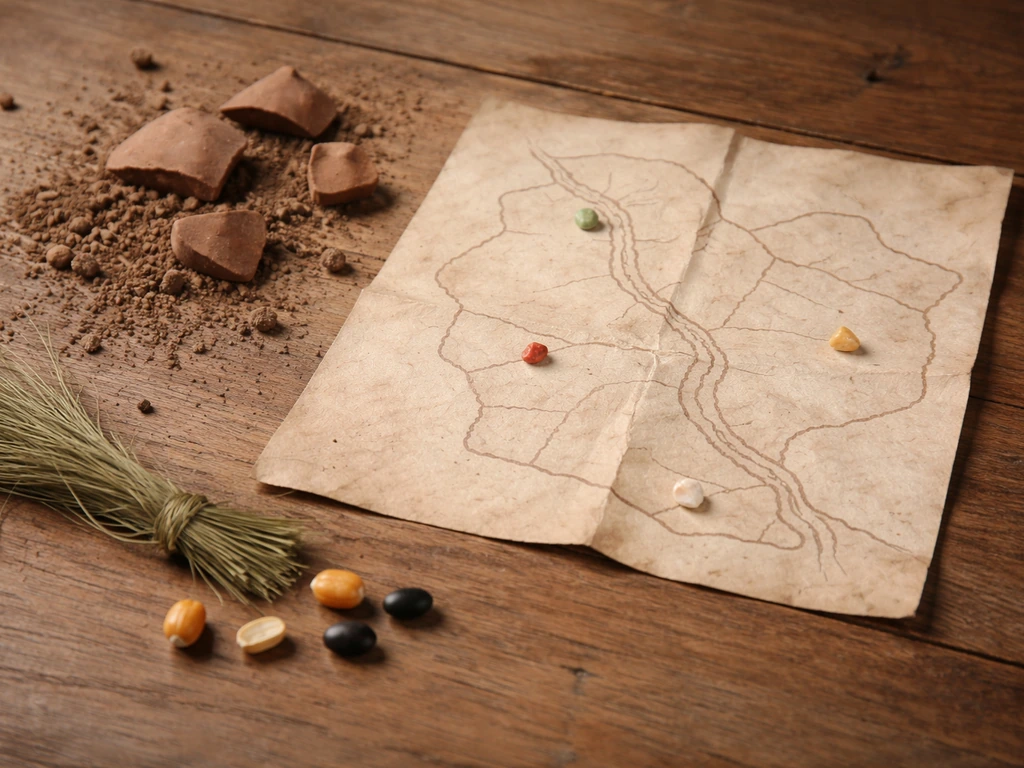
The Haudenosaunee Confederacy spanned a large territory, from the Mohawk Valley in eastern New York westward to the Seneca territory near modern-day Buffalo, and confederacy membership expanded over time. The crops grown in a Mohawk community near the Hudson River drainage weren't identical to those in Seneca territory near the Great Lakes. Proximity to river valleys, as is generally true across most agricultural civilizations, made certain areas far more productive. Floodplain soils in the river valleys of the Finger Lakes region and along the Mohawk and Susquehanna rivers were particularly fertile and well-suited to intensive Three Sisters cultivation.
Time period also changes the picture significantly. Pre-contact Haudenosaunee agriculture (before roughly 1600) developed over centuries without European crops or tools. Post-contact agriculture incorporated new crops, metal tools, and eventually horses, all of which altered what was planted and how. By the 1700s some Haudenosaunee communities were also growing European-introduced crops like wheat and rye, alongside their traditional Three Sisters plantings. If you're researching a specific community or era, that distinction matters enormously for accuracy.
| Region/Nation | Key crops documented | Notable conditions |
|---|---|---|
| Mohawk (eastern NY) | Three Sisters, sunflowers, tobacco | Mohawk River valley soils, shorter growing season |
| Oneida/Onondaga (central NY) | Three Sisters, Jerusalem artichokes | Finger Lakes proximity, mixed forest soils |
| Cayuga/Seneca (western NY) | Three Sisters, wild rice, gourds | Great Lakes influence, longer frost-free period |
| Post-1700 communities | Three Sisters plus wheat, rye (European introductions) | Metal tools, trade economy changes planting priorities |
How to verify crop details with primary sources and archaeological evidence
The term 'Iroquois' is broad enough that you should always try to pin down which nation, which region, and which time period you're actually researching. A crop list for the Seneca in 1650 is not the same as a crop list for the Mohawk in 1750. Here's how to build an accurate picture for the specific community you care about.
- Start with the New York State Museum's Haudenosaunee materials and Cornell University Press publications on Iroquoia (1630–1783), both of which synthesize ethnohistoric records with archaeological findings.
- Look for Jesuit Relations records from the 1600s and 1700s — French missionaries documented Haudenosaunee agriculture in detail, including crop types and farming practices, though their accounts carry observer bias worth noting.
- Archaeological site reports from known Haudenosaunee village sites (available through the New York State Office of Parks, Recreation and Historic Preservation) include plant macrofossil analyses that directly identify which crop species were present at specific sites and time periods.
- The USDA National Agricultural Library has accessible summaries of Indigenous farming systems including Haudenosaunee Three Sisters cultivation, useful for understanding planting methods in modern practical terms.
- Cross-reference ethnobotanical studies: researchers like William Engelbrecht (on Iroquoian archaeology) and Matthew Dennis have published on Haudenosaunee agriculture with citations back to primary documents.
- If you're a gardener or farmer trying to replicate these methods, look for seed banks preserving heritage Haudenosaunee varieties — the Iroquois White Corn Project and Native Seed/SEARCH maintain historically documented varieties you can actually grow.
Archaeological plant evidence (seeds, pollen, and charred remains found in storage pits and longhouse floors) is ultimately more reliable than early European written accounts for pre-contact agriculture, because European observers sometimes misidentified crops or recorded what they expected to see rather than what was actually there. A good source will use both: written accounts for context and intention, archaeological plant data for what was actually cultivated.
For students working on history projects, the simplest credible answer is: corn, beans, and squash were the foundation, sunflowers and tobacco were consistent additions, and the specific mix varied by community and era. Inland port cities in the Midwest grew as inland transportation and grain markets expanded in the mid-1800s, turning farm output into commercial demand where did inland port cities grow in the midwest. For historians or gardeners wanting more precision, the archaeological record is where the most accurate crop inventory lives, and it keeps getting updated as new sites are excavated.
FAQ
If someone asks, “What did the Iroquois grow?” is it always just the Three Sisters?
Not always. The foundation was corn, beans, and squash, but many communities also regularly cultivated sunflowers (for seeds and oil), tobacco (often ceremonial), and additional local staples like Jerusalem artichokes or wild rice depending on wetlands and river access.
Were all three crops planted together in the same spot, every time?
The typical pattern was corn first in mounds, beans a few weeks later in the same mounds, and squash in the spaces between mounds. That sequencing mattered so bean vines had a strong corn trellis before climbing.
Did every Haudenosaunee nation grow the exact same mix of crops?
No. Crop emphasis varied by community and geography. River valley soils and local water access often pushed different “extra” crops, for example wild rice in regions with suitable wetlands, while other areas leaned more on tubers, gourds, or sunflower plantings.
How did they handle short Northeast growing seasons and crop failures?
They used many varieties within the Three Sisters, including types optimized for different uses like storage or processing. This diversity acted like agricultural insurance, so if drought, pests, or early frost hit one variety, others could still produce.
Was wild rice actually planted, or was it only gathered?
In many Great Lakes areas it was gathered from lake and river margins rather than grown in field plantings. It still functioned as a major dietary staple, especially where water margins were reliable.
Did they grow Jerusalem artichokes as a cultivated crop or just forage them?
Jerusalem artichokes were harvested from native stands, described as wild-domesticated in practice, with relatively low cultivation needs. That means they were managed enough to be dependable but not handled like heavily maintained row crops.
Were sunflowers part of the diet only, or did they serve other roles?
They were grown as a purposeful crop. Seeds were eaten and pressed for oil, and the tall plants could also act as windbreaks that protected field edges and other plantings.
What was the easiest way to answer accurately for a school project?
Give the core list (corn, beans, squash), then add the most commonly documented consistent additions (sunflowers, tobacco). If the project requires precision, specify nation, region, and time period, because later decades could include European-introduced crops like wheat or rye.
Why do modern sources sometimes disagree on what the Iroquois grew?
Early European observers could record what they expected to see or misidentify plant species. For pre-contact crop inventories, archaeological evidence like seeds, pollen, and charred remains in storage contexts is generally more reliable.
If I want to “replicate” the planting method, what timing detail is most important?
Don’t plant beans at the same time as corn. Wait roughly a couple of weeks so the corn is established and the stalks can support bean vines when climbing begins.
Next Articles
Which Industry Allowed These Kingdoms to Grow as They Did
Pin down which kingdoms you mean, then identify the industry and agriculture that drove surplus, trade, and power growth
What Did the Delaware Colony Grow: Crops, Uses & Legacy
Colonial Delaware’s main crops, grains, hay, flax, fruits, vegetables, livestock, why they thrived and how they were sold.
What Did Jamestown Grow and How They Farmed It
Learn what Jamestown colonists grew and the methods they used to plant, harvest, and adapt crops to Virginia conditions.