The New England colonies grew corn (Indian corn), rye, barley, oats, wheat, peas, and beans as their core field crops. On top of that, most farms produced vegetables like cabbages, turnips, carrots, parsnips, squash, and pumpkins, and many households also grew flax and hemp for fiber. That's the short answer. what did jamestown grow. The longer answer is about why those specific crops, and not others, took hold in a region famous for its rocky soil, cold winters, and growing seasons that could be as short as three months in some areas.
What Did the New England Colonies Grow? Major Crops

Samuel Rourke
18 Apr 2026
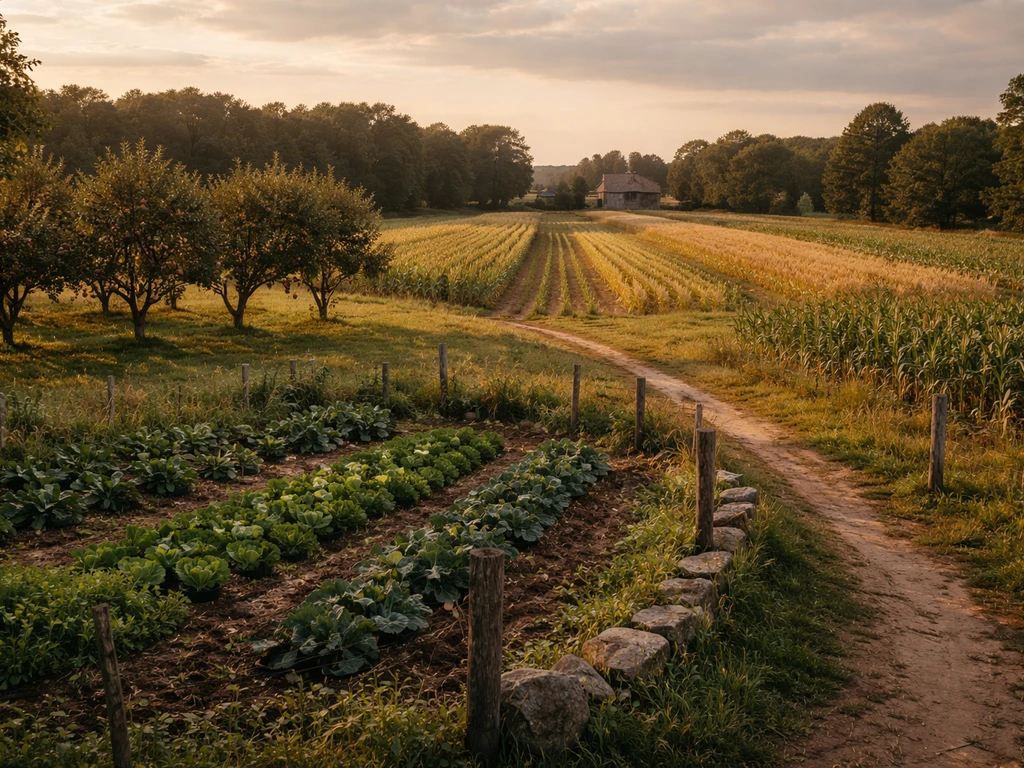
The quick answer: main crops grown in colonial New England
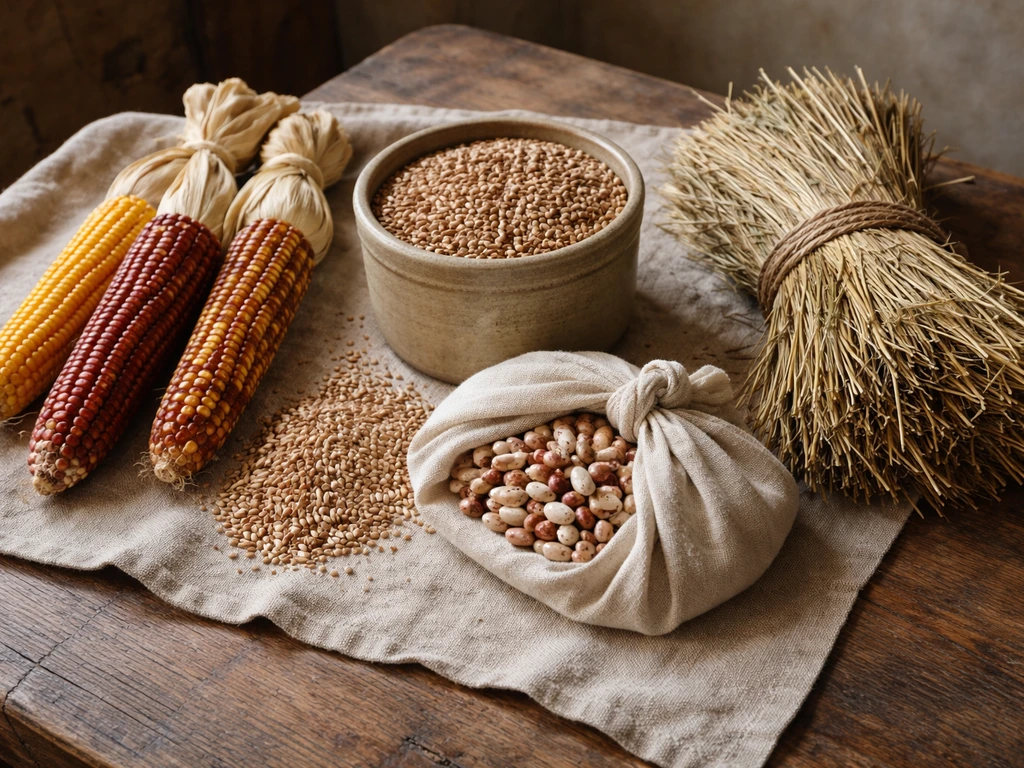
If you pulled a colonial-era inventory from Massachusetts Bay, Plymouth, Connecticut, or Rhode Island, you'd see the same crops appear again and again. Massachusetts Bay court records and prize schedules specifically list corn, rye, barley, peas, and wheat as valued commodities with set bushel prices. Plymouth Colony settlers grew Indian corn, wheat, barley, oats, peas, and beans in their fields, with corn described as part of almost every meal. Rhode Island taxation records show acceptable payments included pork, peas, wheat, Indian corn, oats, rye, barley malt, wool, and butter. The pattern is consistent across all four major colonies.
| Crop | Crop Type | Colonies Where Documented | Primary Use |
|---|---|---|---|
| Indian corn (maize) | Grain | All four colonies | Food, animal feed, trade |
| Rye | Grain | MA, CT, RI, Plymouth | Bread, porridge, trade |
| Barley | Grain | MA, CT, RI, Plymouth | Bread, malt/brewing, trade |
| Oats | Grain | MA, RI, Plymouth | Porridge, animal feed |
| Wheat | Grain | MA, CT, Plymouth (limited in RI) | Bread, trade |
| Peas | Legume | MA, RI, Plymouth | Food, trade |
| Beans | Legume | MA, Plymouth | Food |
| Squash / pumpkins | Vegetable | MA, RI, Plymouth | Food |
| Cabbages, turnips, carrots, parsnips | Vegetables | MA (inventory records) | Food |
| Flax | Fiber crop | CT, RI, MA | Linen, rope, export |
| Hemp | Fiber crop | CT, MA | Rope, cloth (legally required in some areas) |
Climate and geography: why these crops worked there
New England's geography shaped every farming decision colonists made. The growing season ranged from roughly three to seven months depending on location, which ruled out crops that needed a long, warm stretch to mature. The soil across much of the region was rocky, thin, and in many areas acidic, which meant crops that tolerated or even thrived in low-fertility conditions had a natural edge. Compared to what farmers were producing in the Middle Colonies (Pennsylvania, New York, New Jersey, Delaware), New England simply could not match the grain output per acre. Compared to the Middle Colonies, where the question of what did the Middle Colonies grow often centers on different grains and field crops, New England leaned more heavily on short-season staples like corn and rye. The land wasn't as deep or as fertile, and the frost came earlier.
Indian corn was the great equalizer. It had already been bred by Indigenous peoples over centuries to perform in exactly these conditions, and when Plymouth and Massachusetts Bay settlers adopted it, it became the backbone of the colonial diet. Rye was another smart fit: it tolerates cold, grows on poor soils, and can handle early frosts better than wheat. Barley also worked well, particularly for the brewing of ale, which was safer to drink than often-contaminated water. Peas and beans brought nitrogen back to tired soil and provided protein without requiring ideal growing conditions.
Wheat was grown throughout the region, but it was always a more difficult crop in New England than in the Middle Colonies. Rhode Island sources specifically note that wheat was hard to establish reliably because of soil conditions, which is why corn, pumpkins, squash, rye, and beans dominated Rhode Island fields instead. Connecticut and Massachusetts Bay saw more success with wheat, but it still couldn't compete in volume with what farmers in Pennsylvania or the Hudson Valley were producing.
Staple grains and field crops
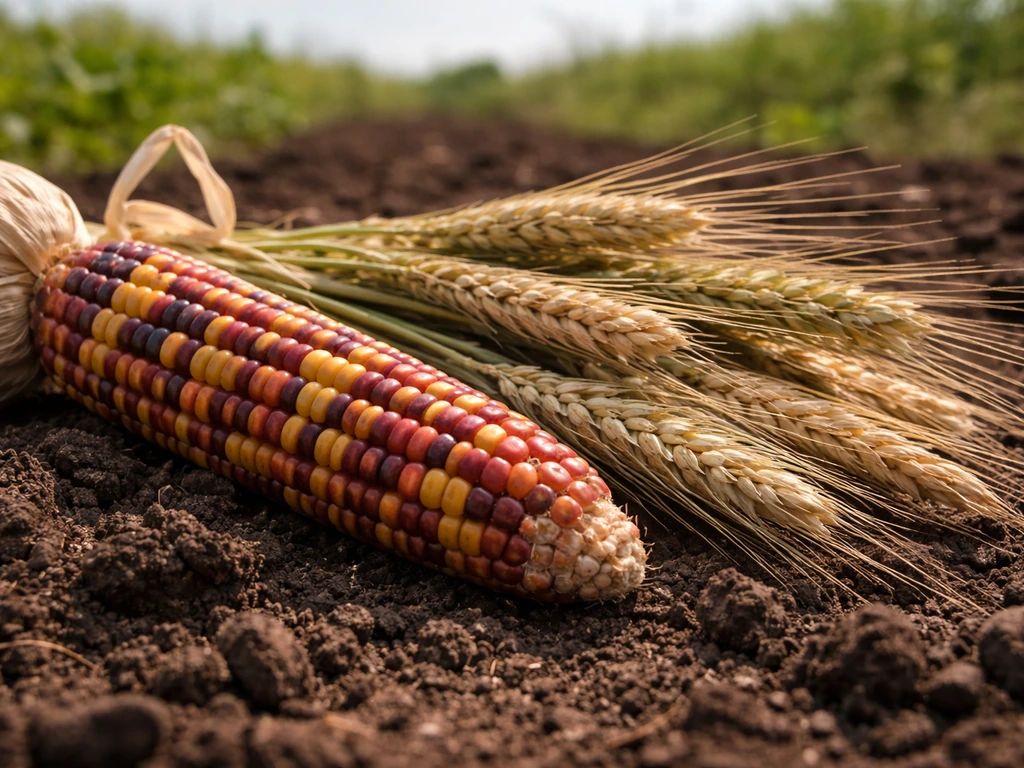
Indian corn was grown everywhere and eaten at nearly every meal in Plymouth Colony. It was ground into meal, boiled into porridge, baked into bread, and fed to livestock. It was also used as currency in early trade. Court records and inventory lists from Massachusetts Bay consistently place corn alongside rye and barley as the most commonly recorded grains.
Rye was probably the second most important grain across the region. It worked on the rocky upland soils that defeated other crops, survived cold snaps, and could be used for bread or distilling. Barley came right alongside it, especially valued for malting into beer. Oats showed up in inventories and taxation records across Rhode Island and Massachusetts, primarily as animal feed and porridge. Wheat appeared on most colonial farms as well, though its yields were less reliable, and by the early 18th century, many New England farmers were leaning harder on corn and rye as their main bread grains.
Buckwheat deserves a mention here even if it doesn't dominate the court records. It is a short-season crop that thrives in low-fertility, acidic soils, which describes large portions of New England precisely. It fills a growing-season gap that longer-maturing grains can't cover, making it a logical fit for the region even when documentary evidence is thinner than for corn or rye.
Peas were treated as a significant commodity in Massachusetts Bay, receiving their own pricing in General Court schedules alongside wheat. Plymouth Colony records also show peas as a field crop grown in quantity. They were eaten fresh, dried for winter storage, and traded. Beans followed similar logic, stored easily, fed colonists through winter, and improved soil for the following season's grain crop.
Vegetables, herbs, and orchards in colonial New England
Probate inventories from Massachusetts Bay Colony, compiled from estate records between roughly 1635 and 1655, paint a clear picture of the kitchen garden. Cabbages, turnips, carrots, parsnips, squash, and pumpkins all appear regularly. These were the workhorses of winter storage: root vegetables that could be kept in root cellars through the cold months and pumpkins that dried or stored well into the season.
Squash and pumpkins (often recorded as 'pumpions' in period documents) were grown alongside corn in many fields, borrowing from the Indigenous farming practices that paired the Three Sisters: corn, beans, and squash together in the same plot. The combination made excellent use of limited space and maintained soil health. This wasn't an accident; Plymouth settlers learned these methods directly from the Wampanoag people.
Herbs were grown in nearly every household garden, though they show up less in the formal court and inventory records because they were considered household basics. Apple orchards became increasingly important as the colonial period progressed. Apples were pressed into cider, which was a staple drink across New England by the late 17th century, and dried or stored for winter eating. Pear trees also appeared on wealthier estates. Orchards were a long-term investment, but one that colonists made early and took seriously because cider was genuinely safer to drink than much of the available water supply.
Other important farm products: fiber crops, pasture, and local variations
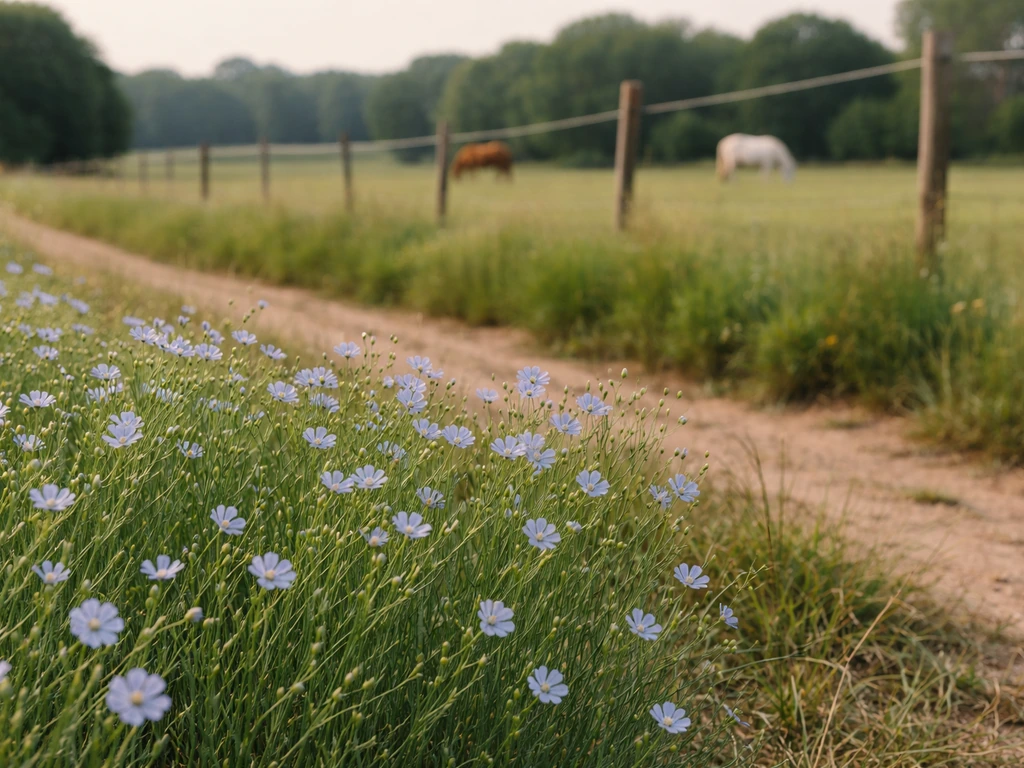
Flax and hemp were grown across all four colonies, though with varying emphasis. Connecticut's agricultural heritage documentation shows flax appearing as early as the 17th century, and some Connecticut communities had legal requirements for families to grow flax or hemp depending on their livestock holdings. This wasn't optional production; it was mandated at the colony level because cloth production was essential and importing linen was expensive. Rhode Island records similarly show flax production increasing through the colonial period, and by the early 18th century, flax was being exported to the British Isles. Hemp served a parallel role, providing rope fiber for the fishing and maritime industries that were already becoming central to New England's economy.
Livestock were a major part of the agricultural picture too, and pastureland was deliberately maintained for cattle, sheep, pigs, and oxen. Wool, butter, and pork all appear in Rhode Island taxation records as acceptable payment forms, which tells you those products were common enough to be treated like currency. This means hay and forage crops were also being grown to support animal herds, even if hay doesn't appear in grain price lists the way corn and rye do.
How the colonies differed from each other
Massachusetts Bay and Plymouth (which merged in 1691) had the most documented variety, largely because they left more detailed court and inventory records. Connecticut's agricultural profile was similar, with corn, rye, wheat, barley, oats, and flax all established by the later 17th century. Rhode Island stands out for its soil challenges, with wheat notably harder to establish there than elsewhere. Rhode Island farmers leaned more heavily on corn, rye, pumpkins, squash, and beans as a result. Compared to what was being grown in the Southern Colonies (tobacco, rice, indigo) or even in Delaware, New England's crop list looks much more focused on subsistence and small-market grains rather than export cash crops. In the Caribbean colonies, a different set of crops dominates the story, including crops like sugar and tobacco rather than the grain-and-vegetable staples seen in New England. In Delaware, farming focused more on different field crops than New England’s short-season grain-and-vegetable mix. In contrast, the Southern Colonies focused far more on export cash crops like tobacco and rice than on small-grain subsistence farming Southern Colonies (tobacco, rice, indigo).
How these crops translate to modern New England gardening
The crops that worked in colonial New England work in modern New England for exactly the same reasons. If you're gardening or farming in Massachusetts, Connecticut, Rhode Island, or the surrounding area today, the climate logic hasn't changed. Corn, beans, squash, rye, oats, peas, root vegetables, and brassicas like cabbage and turnips all remain reliable performers in the region's short growing season and variable soils. Flax is still grown as a specialty crop by fiber artists and small farms.
Apple orchards remain deeply tied to New England's agricultural identity. The cider-focused variety selection has expanded dramatically since colonial times, but the underlying reason apples thrived here, which is the cold winters and distinct seasons that produce excellent fruit flavor and disease resistance, is the same as it was in 1650. If you're choosing crops for a New England garden and you want to think the way colonial farmers thought, ask two questions: Can this crop mature in under five months? Can it handle acidic, rocky, or sandy soil? If yes to both, you're working with colonial logic.
Digging deeper by colony, year, and location
The broad crop list above is accurate across the colonial period roughly from the 1620s through the 1770s, but specific crops shifted in importance by decade and by colony. If you want to narrow it down, here's how to think about it:
- Start with the colony: Massachusetts Bay and Plymouth left the richest inventory and court records, making crop verification easier. Rhode Island and Connecticut records are thinner but still document the major grains and fiber crops.
- Look at the time period: Early Plymouth (1620s to 1640s) was heavily focused on survival crops like corn and beans. By the 1660s to 1700s, farms had diversified into more grain production, orchards, and fiber crops as markets developed.
- Consider the local geography: Coastal towns often prioritized fishing and trade over farming, while inland towns in the Connecticut River Valley had better soils and produced more grain. The Valley was one of the most productive agricultural zones in all of New England.
- Use climate as a filter: If a crop needs more than five to six frost-free months, it likely didn't succeed widely in New England. Cross-reference any crop claim against the region's frost dates before accepting it.
- Check probate inventories and taxation records: These are among the most reliable primary sources for what was actually grown because they record what people owned and what they paid taxes with, not just what they intended to grow.
For modern gardeners, the USDA Plant Hardiness Zones for New England (mostly Zones 5 and 6, with some Zone 4 in northern areas) map almost directly onto what the colonial farmers were dealing with. Any crop variety rated for Zone 5 or colder and listed as early-maturing is essentially following the same rules the Pilgrims and Puritans worked out through trial and error. The colonial crop record is, in many ways, a long field trial for exactly what the New England climate can reliably support.
FAQ
Were the New England colonies growing the exact same crops everywhere in the region?
No. New England farmers were producing several core grains and protein crops (corn, rye, oats, barley, peas, beans, and sometimes wheat), plus vegetables for storage and household fiber crops like flax and hemp. The “main grains” were not always identical across the four colonies, but the list of short-season staples repeats in inventories and court records.
Why did wheat seem less important in Rhode Island compared with Massachusetts Bay and Connecticut?
Yes, but with local emphasis. Rhode Island inventories and tax sources suggest wheat was less reliable there, so corn, pumpkins/squash, beans, and rye tended to dominate fields. In contrast, Massachusetts Bay and Connecticut had more success establishing wheat, even if wheat yields still lagged behind corn and rye in consistency.
Did vegetable gardening in New England focus more on storage or on fresh eating?
For many households, vegetables were about winter supply, not just summer harvest. Root crops like turnips, carrots, and parsnips were typically kept in root cellars, and pumpkins or “pumpions” were stored or dried. That’s different from a crop meant to be sold immediately, because cold storage influenced what people planted.
How should I interpret buckwheat when it is mentioned but not in the main crop lists?
Buckwheat fits the short-season gap, but it shows up less often in formal grain pricing records than corn or rye. If you are seeing buckwheat mentioned in a local context, it usually complements the main grains rather than replacing them, because it can mature quickly on poorer soils.
When records say “beans,” were they garden beans or field beans?
If you see “beans” and you want a practical answer for what was actually planted, think dried field beans more than garden beans. Dried beans store well through winter, and they also help refresh soil for the next grain crop, so they align with the winter survival strategy described in New England inventories.
Why did barley matter beyond being another grain?
Barley was often valued for malting into beer, not only for bread flour. That matters because barley’s role linked to household and community needs (brewing), so it could remain important even when other grains faced risk from cold snaps or poor soil.
Did farmers have to grow extra crops because they kept livestock?
Yes, because livestock needs drove additional planting. Even if hay or pasture forage is not always priced like corn or rye, maintaining cattle, sheep, pigs, and oxen required feed, which pushes farms to grow or secure forage and pasture.
How did colonists decide which crops could work with a short growing season?
They typically adapted crop choice to the shortest viable window. A useful rule from the colonial logic is whether the crop can mature in under about five months. If it can’t, farmers relied more on earlier or cold-tolerant crops such as rye and corn varieties bred for shorter seasons.
How was Indian corn typically used on farms and in households?
Corn in colonial New England was used in multiple ways, not just as a “grain.” It was ground into meal, used for porridge, and baked into breads, plus it fed livestock. That flexibility helped it stay central even when individual years were uneven.
Why did apple orchards become increasingly important over time?
In many periods, apples mattered because cider became a regular safer-drink option compared with often-contaminated water. Colonial orchard planting was also a long-term investment, since fruit trees take years to produce, so you usually see orchards becoming more prominent as communities stabilized.
Was flax or hemp growing required by the colonies, or was it mainly optional?
The flax or hemp requirement depended on the colony and local economics. Connecticut documentation points to legal or community-level expectations to grow flax or hemp depending on circumstances, because cloth production and rope needs were expensive to replace through imports.
Did New England farmers always plant corn, beans, and squash together the same way?
Not exactly. The “corn, beans, squash” pairing is a common comparison, but the key idea for New England is matching crops to limited space and soil health. Colonists adapted Indigenous methods in their own plots, so you will often see overlap between corn and storage vegetables like squash/pumpkins rather than a single universal pattern.
How can I use the colonial crop logic to choose crops for a modern New England garden?
Two practical checks for today’s planting: (1) maturity in roughly the colonial timeframe (under about five months), and (2) tolerance of acidic, rocky, or sandy soil. If a crop variety reliably performs under those constraints, it is closer to the colonial-style decision than choosing based on peak yield in ideal farmland.
Next Articles
What Europeans Mostly Grew in Caribbean Colonies
Learn which crops Europeans dominated in Caribbean colonies, especially sugarcane, plus key supporting estate plants by
What Did the Middle Colonies Grow and Why It Thrived
Learn what the Middle Colonies grew and why their crops thrived fast, from grains to cash crops and feed plants.
What Did the Southern Colonies Grow Main Crops Explained
What Southern colonies grew: tobacco, rice, indigo, and more, plus how climate, soil, and plantations shaped crops