Civilizations grew where food was reliable, and food was reliable where the environment made it easy to farm the same land year after year. The core factors are water access, fertile soil, a forgiving climate, workable terrain, and a useful local ecology. When those lined up, people could grow enough surplus to stop moving, feed specialists, and build something lasting. When one factor was missing, populations stayed small or eventually collapsed. The same environmental logic that explains why ancient Egypt or Mesopotamia thrived still helps you evaluate why one region produces abundant crops today and another struggles.
What Environmental Factors Helped Civilizations Grow

Samuel Rourke
16 May 2026
Environment, food surplus, and why cities happened at all
The chain from environment to civilization is pretty direct. A favorable environment produces reliable harvests. Reliable harvests let households store food across seasons and years, which buffers against bad years. Once families can smooth out production risk through storage, the population can grow and stabilize rather than crash with each drought or flood. Researchers studying prehistoric agrarian societies describe this pattern as generating a "normal agrarian surplus," where households set aside reserves specifically because they know yield varies year to year. Seasonal prehistoric agrarian societies could produce a "normal agrarian surplus" when households stored and set aside food to smooth inter-annual production risk, but density-dependent Malthusian dynamics limited how much surplus smoothing helped outside famine events. At the community level, that surplus is what feeds people who are not farming: potters, priests, soldiers, scribes.
The transition from foraging to farming didn't just change what people ate. It changed how many people a landscape could support. Modeling work suggests that shifts to food production can increase a region's carrying capacity by roughly four times compared to foraging alone, depending on the environmental conditions. That population multiplier is what allowed small villages to become towns and eventually cities. But the multiplier only works where the environment cooperates. Thin soils, unpredictable rainfall, or short growing seasons put a hard ceiling on how far intensification can go, no matter how motivated the farmers are.
Water: the single biggest constraint on where farming takes root
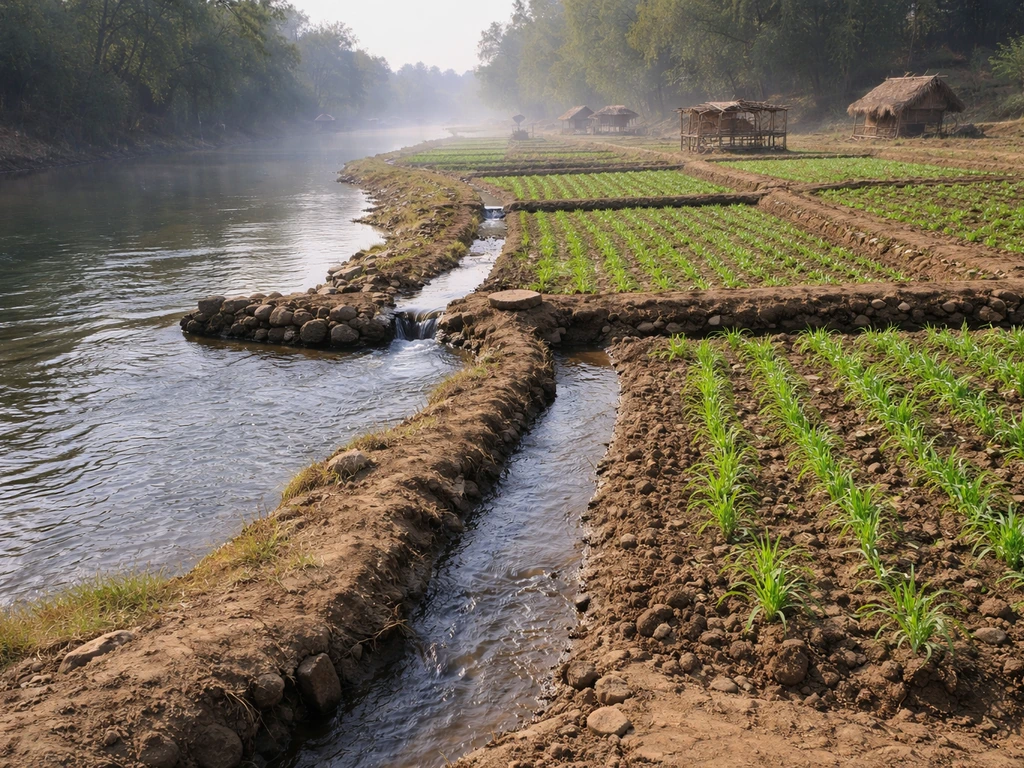
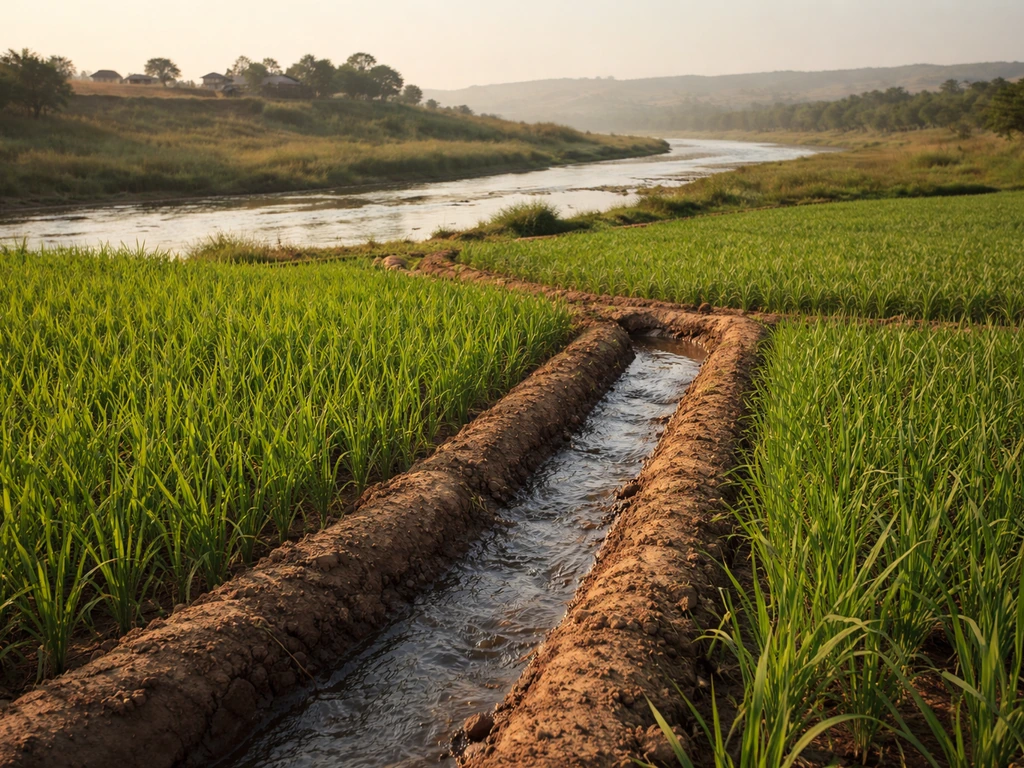
Every major early civilization grew up next to a reliable water source, and that's not a coincidence. The Nile, the Tigris and Euphrates, the Indus, the Yellow River: all of them delivered water predictably enough that farmers could plan around them. But the type of water access matters as much as the presence of water. Annual river floods deposited fresh silt and recharged soil nutrients, essentially fertilizing fields for free. Recession agriculture, where crops are planted into the moist, silty soil left behind after a flood retreats, produced reliable yields with minimal irrigation infrastructure. The Nile's flood cycles are one of the clearest examples of how a river's seasonal rhythm directly shaped what crops Egyptian farmers could grow and when.
Where rivers weren't available, civilizations depended on rainfall patterns. Consistent monsoon rains in South and Southeast Asia supported dense rice agriculture. The Mediterranean climate, with its wet winters and dry summers, drove the classic wheat-barley-olive-vine system across Greece, Rome, and the Levant. The key word in both cases is consistency. Farmers can adapt to a dry season if it comes at the same time every year, but erratic rainfall that varies unpredictably between years is far more damaging than a reliably dry climate, because you can't plan around randomness. Irrigation helped extend water access into drier zones, but it only became viable where the terrain allowed canals to be dug and maintained, which brings in the role of topography.
Soils that keep giving: fertility, alluvium, and the risk of degradation
Good soil is not just a starting condition. It has to stay productive season after season. The civilizations that lasted longest were usually the ones farming soils that replenished themselves. Alluvial soils, the sediment deposited by rivers in floodplains and deltas, are the classic example. They are typically high in minerals, well-structured, and naturally recharged by periodic flooding. The Fertile Crescent got its name precisely because these river-deposited soils in the Tigris-Euphrates valley were extraordinarily productive. Mesopotamian farmers were working some of the richest agricultural land on earth.
Volcanic soils are another example of high-fertility land that attracted dense settlement. Regions near active or dormant volcanoes in Java, the Italian peninsula, and Central America developed productive farming partly because volcanic ash breaks down into mineral-rich topsoil over time. In contrast, soils formed from ancient sandstone or heavily leached tropical soils (like many found in the Amazon basin) look lush but are actually nutrient-poor, with most nutrients locked up in the vegetation itself rather than the soil. Clear the trees and you lose the nutrient cycle.
Degradation is the flip side of fertility. Some of Mesopotamia's long-term agricultural problems came from salt accumulation in irrigated fields, a process called salinization that slowly poisons soil productivity. Overworked soils in the Roman Mediterranean experienced erosion as hillside forests were cleared for farmland. Understanding soil type is not just a historical curiosity. It's the same analysis a farmer or gardener runs today when deciding what to grow and how to manage a plot over time.
Climate stability and the growing season window
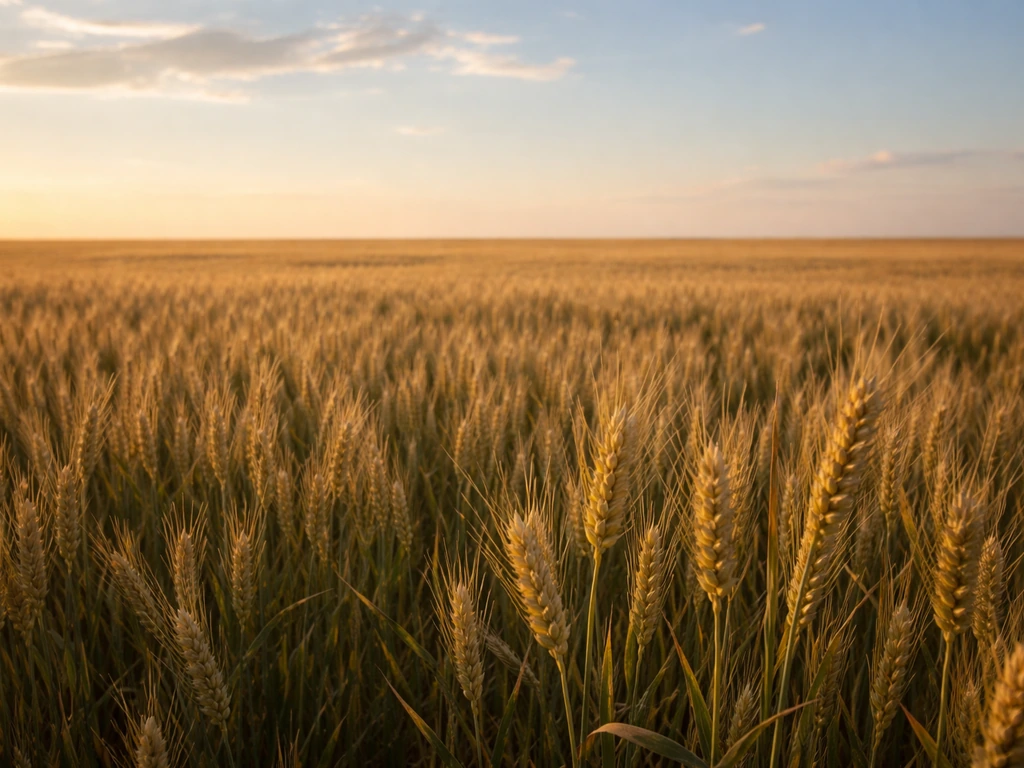
A long growing season with relatively stable temperatures is a massive agricultural advantage. The reason wheat dominated the ancient Middle East and Mediterranean is partly because it tolerates a wide temperature range and can be grown through a mild winter into spring in those climates. Maize, which became a staple from Mesoamerica northward through North America, requires warmer summers and a frost-free growing season long enough to complete its cycle. The length and reliability of that window determined how far each crop could spread and how productive it could be.
Drought variability deserves special attention. Short-term drought is manageable with storage and surplus. Multi-year drought is civilization-threatening. There is strong archaeological evidence linking prolonged droughts to the collapse of several Bronze Age civilizations around 1200 BCE and the Classic Maya collapse around 900 CE. In both cases, a population that had grown to match its environmental ceiling was hit by climate shifts that reduced that ceiling. The societies with better diversified crop systems or wider trade networks survived longer. This is why climate stability over decades and centuries matters as much as seasonal conditions in any given year.
Landforms: why valleys and plains beat mountains and deserts
Flat or gently sloping land is far easier to farm than steep terrain. It holds water longer, resists erosion, allows plowing with animal traction, and makes irrigation feasible. River valleys combine these advantages: they are typically flat, moist, and lined with the most fertile soils in the region. This is exactly why so many discussions of where ancient settlements grew focus on river valleys. The floodplain isn't just convenient. It's an agricultural system in itself, delivering water, nutrients, and workable soil year after year.
Plains and grasslands offered a different kind of advantage. The North American Great Plains, the Eurasian steppe, and the Pampas of South America all sit on deep, organically rich soils built up over thousands of years by grasses and their root systems. Those soils, once turned by modern plows, became some of the most productive grain-growing regions on earth. But mountain ranges acted as barriers in multiple directions: they blocked moisture-laden winds (creating rain shadows), separated trade networks, and made large-scale agriculture difficult. The Andes are a notable exception, where civilizations like the Inca developed sophisticated terracing to carve farmable land out of steep slopes, but that required enormous labor investment.
Local ecology: wild plants, pollinators, and what grows nearby
The wild plant species already present in a region shaped what crops could be domesticated there in the first place. The Fertile Crescent had a uniquely high concentration of wild cereals and legumes that were easy to domesticate: emmer wheat, einkorn, barley, lentils, peas, and chickpeas all originated in that zone. Mesoamerica had teosinte (the wild ancestor of maize), squash, and beans. China had wild rice and millet. Regions with fewer domesticable wild plants, like sub-Saharan Africa or the eastern United States, developed agriculture later and from a narrower initial crop base.
Wild food sources also provided a critical buffer during the transition to farming and during bad harvest years. A region rich in edible wild plants, game, and fish gave early farmers a fallback that reduced the catastrophic risk of crop failure. Wild pollinators supported fruit and seed crops. Grasslands and open woodlands supported the wild ancestors of domesticated livestock: cattle, sheep, goats, and pigs in Eurasia. Access to domesticable animals was itself an environmental advantage, because draft animals multiplied agricultural labor and provided manure to maintain soil fertility.
This ecological richness also connected different crop systems across regions. The Iroquois, for example, developed the Three Sisters system of corn, beans, and squash, a crop combination that was ecologically self-reinforcing and well-matched to the forests and soils of the northeastern woodlands. The specific ecology of that region shaped what crops were grown and how.
How to apply this when evaluating a region today
The same framework that explains ancient civilization growth is exactly what a farmer, student, or gardener should use when thinking about crop potential in any region, historical or current. You are essentially asking: does this place have reliable water, good soil, a long enough growing season, workable terrain, and a supportive ecology? If the answer to all five is yes, the region likely has a strong agricultural base. If one factor is missing, that's your constraint, and understanding it tells you what crops to avoid and what management practices might compensate.
Here is a practical checklist for evaluating any region's agricultural potential using these environmental factors:
- Water access: Identify rivers, annual rainfall totals, and rainfall seasonality. Is rainfall concentrated in the growing season or offset from it? Is irrigation feasible given the terrain?
- Soil type: Look up the dominant soil classification for the region (USDA soil surveys or equivalent). Alluvial, loamy, and volcanic soils are high-fertility signals. Sandy, heavily leached, or saline soils are constraints.
- Climate and growing season: Use USDA hardiness zones or Koppen climate classifications to determine frost-free days, average summer highs, and drought risk. Match those to the temperature and moisture requirements of target crops.
- Topography: Check whether the land is flat enough for tillage and irrigation, and whether slopes create erosion or drainage problems.
- Local ecology: Research which native plants are present. Native grasses and legumes often indicate good soil biology. A diverse native flora typically signals a functioning pollinator and soil microbiome community.
- Historical crop record: Check what crops have historically been grown in the region. Long-standing agricultural traditions are strong evidence of environmental suitability. They also reveal which cropping systems have proven durable over time.
A quick comparison: how environmental factors shaped different crop civilizations
| Civilization / Region | Key Water Source | Soil Advantage | Primary Crops | Limiting Factor |
|---|---|---|---|---|
| Ancient Egypt | Nile floods (annual recession) | Alluvial silt, naturally recharged | Emmer wheat, barley, flax | Narrow cultivable strip, desert edges |
| Mesopotamia (Fertile Crescent) | Tigris and Euphrates irrigation | Alluvial, mineral-rich | Barley, wheat, lentils, dates | Salinization from irrigation over centuries |
| Indus Valley | Monsoon + river systems | Alluvial floodplains | Wheat, barley, cotton, sesame | Monsoon variability, eventual drying |
| Mesoamerica (Maya / Aztec) | Seasonal rainfall, wetland chinampas | Volcanic and raised-bed soils | Maize, squash, beans, cacao | Drought vulnerability, thin upland soils |
| Yellow River China | Yellow River floods + loess soils | Deep loess, highly fertile | Millet, rice (south), wheat | Catastrophic flooding risk |
| Great Plains (North America) | Seasonal rain, groundwater | Deep mollisol prairie soils | Wheat, maize, sorghum, sunflower | Drought cycles, wind erosion (Dust Bowl) |
The pattern across all of these is the same: where water, soil, and climate aligned, agriculture intensified, populations grew, and complex societies followed. Where one factor degraded, whether through salinization, drought, or soil erosion, civilizations contracted or shifted. That same logic applies to modern regional agriculture, which is why understanding these environmental drivers is as relevant for planning a farm today as it is for studying why ancient kingdoms rose where they did.
If you want to go deeper on specific cases, looking at how Nile flood cycles shaped Egyptian crop calendars, or why so many early settlements concentrated in river valleys rather than uplands, gives you concrete examples of these principles in action. As industrial trade networks and river and rail corridors expanded, inland port cities in the Midwest grew where water transport could reliably move grain and goods. The connection between environmental conditions and which specific crops thrived in each region is the throughline across all of agricultural history, from ancient floodplains to modern crop belts.
FAQ
If a region has water and fertile soil, why did some places still not develop large civilizations?
Not always. Even with fertile soil and water, civilizations can stagnate if farming becomes socially or politically destabilized, if labor is repeatedly disrupted by warfare, or if trade routes that move surplus and inputs fail. Environmental suitability is a necessary base for surplus, but it still has to be organized and protected.
How do environmental factors turn from “helping growth” into “causing collapse”?
Usually through a mismatch between production and consumption risk. Multi-year droughts, repeated crop failures, or seasonal timing shifts can overwhelm storage, especially if there is limited crop diversity or restricted access to alternative food sources. When households cannot buffer bad years, population growth stalls or reverses.
Does having rivers or irrigation automatically benefit civilizations?
One big edge case is that too much of the wrong water can hurt. Flooding that is too extreme can destroy fields, while irrigation that concentrates salts can later reduce yields. So “water access” needs to be reliable within a workable range, not just present.
What if the soil is fertile, but the terrain is difficult?
Yes. If soil fertility is high but the land is hard to farm, the effective advantage can shrink. Steep slopes, heavy vegetation cover, shallow soils over bedrock, or soils that crust after rain can force higher labor costs and reduce how much surplus farmers can generate.
Why is rainfall “consistency” more important than average rainfall?
Crop calendars can fail when rainfall timing shifts, even if total annual rainfall stays similar. For planning, what matters is the month-to-month pattern (for planting and harvest) as much as the long-term average.
What practical strategies helped civilizations withstand drought variability?
Consider multi-layer resilience. A society often survives shocks by combining drought-tolerant varieties, staggered planting dates, diversified crops (for different growing windows), and reliable exchange partners. Storage alone helps with single bad seasons, but it struggles against prolonged climate stress.
Why can some “green” regions have weak agricultural potential?
You need to distinguish nutrient availability from nutrient management. For example, some seemingly lush tropical soils are nutrient-poor because nutrients are locked in biomass. Without proper land-use practices (like maintaining ground cover or managing fallow), intensification can degrade the soil faster than expected.
How do environmental factors interact with transportation and trade?
A key issue is whether surplus can reach people reliably and whether incentives keep producers farming. River transport can reduce spoilage and bulk costs, but if political control over routes is unstable, or if banditry and tolls rise, the surplus system breaks.
Do soil problems like salinization or erosion just reduce yields temporarily?
Yes, and the direction can surprise people. After salinization or erosion, yield may decline, which pushes expansion into riskier land, increasing degradation. Over time, this feedback can lower the ceiling for population even if the climate stays similar.
How does local wild biodiversity shape long-term resilience?
The environment also affects how many new crops can be adopted. Regions with a broader pool of domesticated or domestication-ready plants can diversify faster after shocks, while regions with a narrow initial crop base may be more vulnerable to a single crop failing.
When climate stress hits, do people always stay put, or can movement change the outcome?
Migration is an edge case. People may move to nearby better-water or better-soil zones when local ceilings drop, but that can delay collapse rather than prevent it. If many groups depend on the same ecological corridor, environmental stress can still scale into regional instability.
When evaluating a region today, what should I check first if I only have time for a quick assessment?
Use a “limiting factor” approach. If you already have reliable water, the next constraint is often soil staying power (degradation rates), then the length of the frost-free or growing window, then terrain constraints on irrigation and mechanized-like labor, and finally whether local ecology supports multiple crops or livestock options.
Next Articles
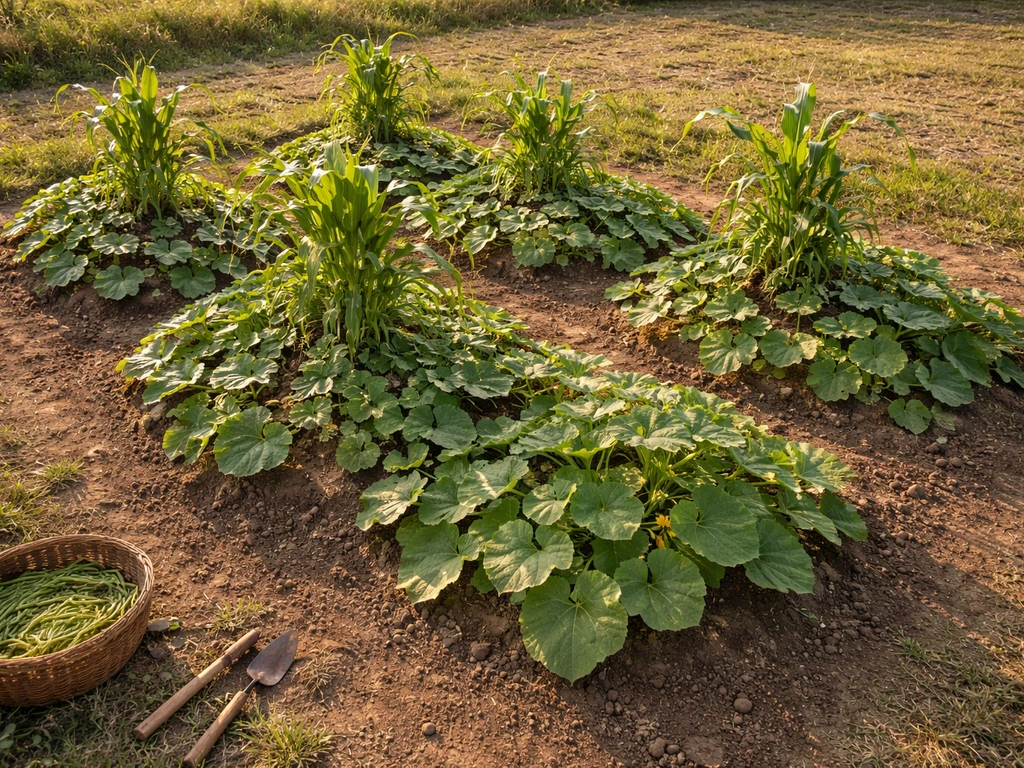
What Did the Iroquois Grow: Crops and Planting Logic
Learn what Iroquois and Haudenosaunee people grew, from Three Sisters to staples, with planting logic and seasonal rhyth
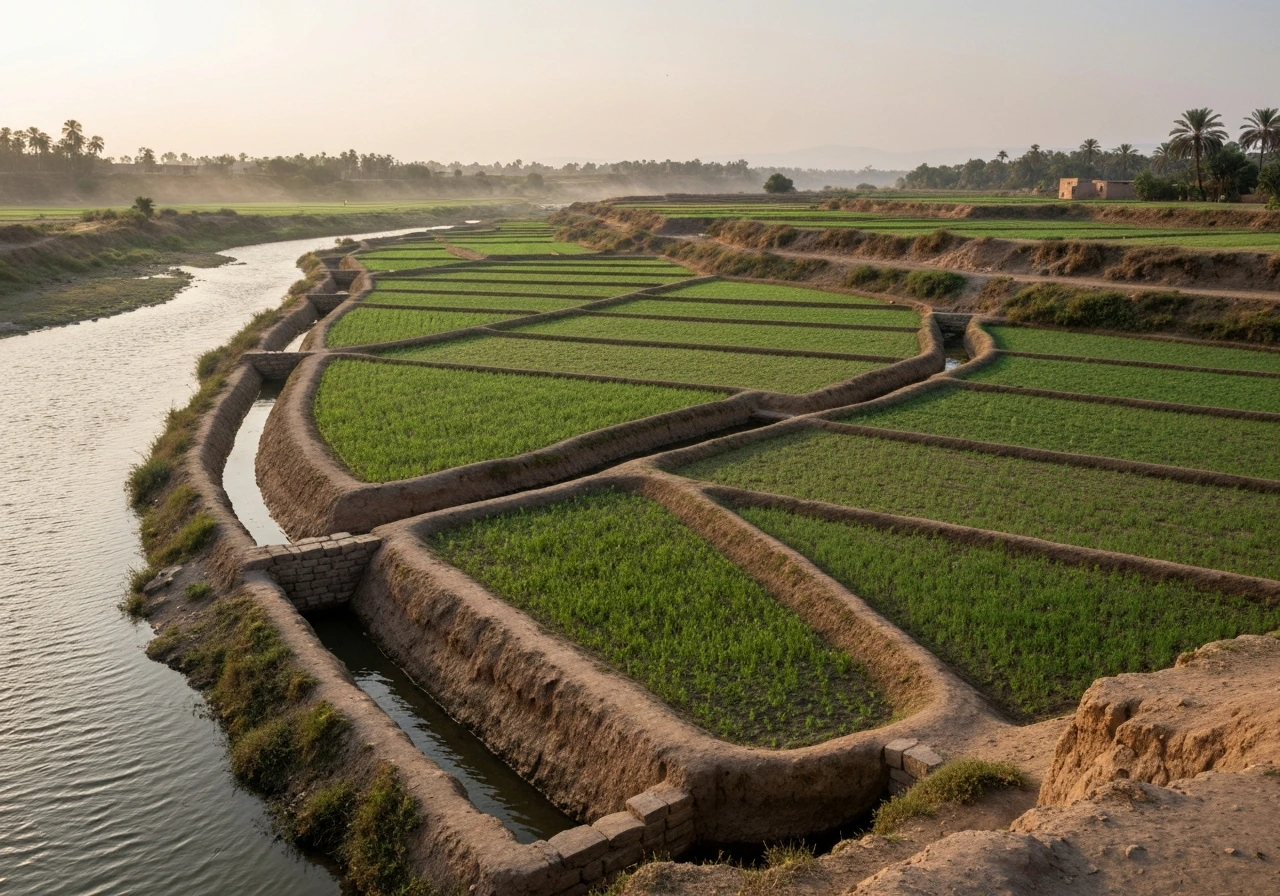
Which Industry Allowed These Kingdoms to Grow as They Did
Pin down which kingdoms you mean, then identify the industry and agriculture that drove surplus, trade, and power growth
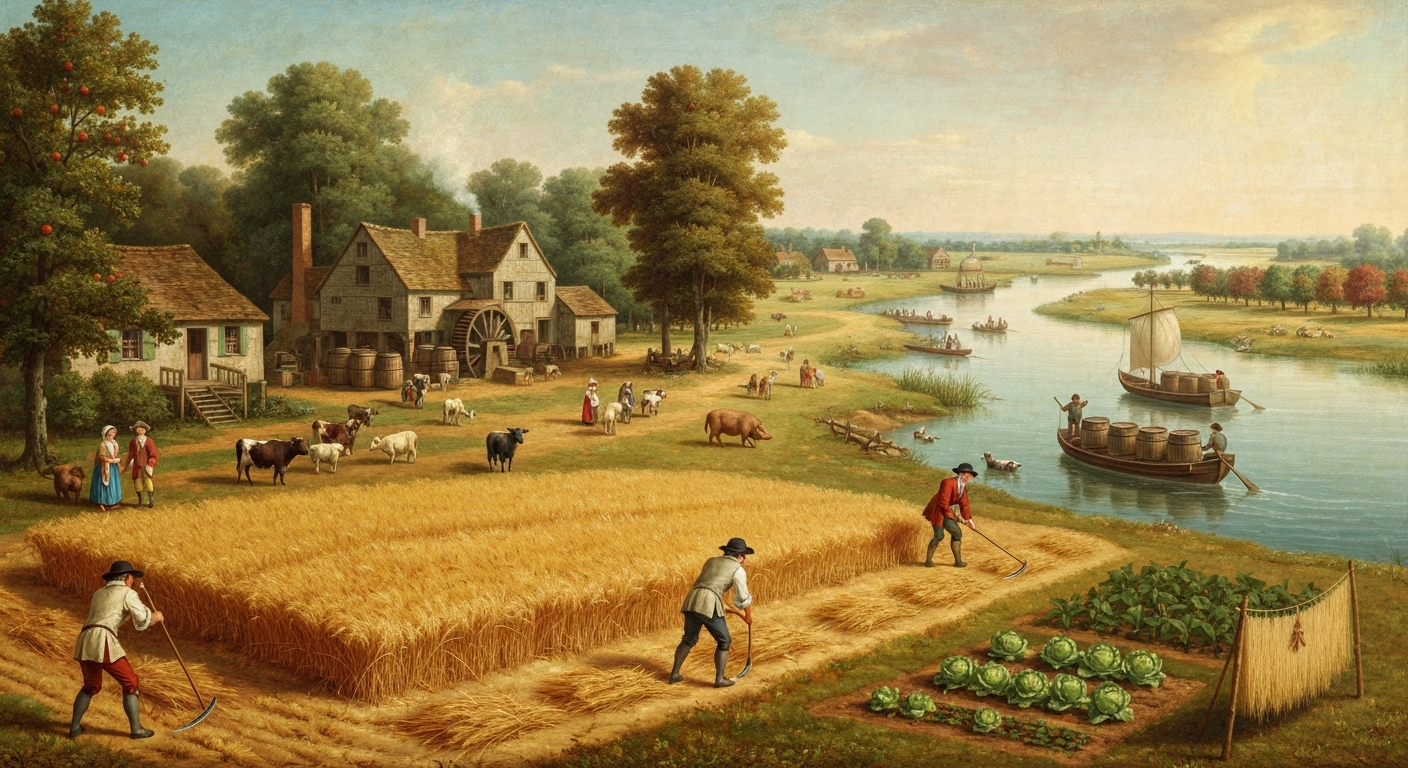
What Did the Delaware Colony Grow: Crops, Uses & Legacy
Colonial Delaware’s main crops, grains, hay, flax, fruits, vegetables, livestock, why they thrived and how they were sold.