Cotton didn't have one single birthplace. It was independently domesticated on at least two continents, from completely different species, by people who had no contact with each other. The Old World story centers on the Indian subcontinent and nearby regions, with the earliest confirmed fiber evidence coming from Mehrgarh in present-day Pakistan, dating back roughly 6,000 or more years.
Where Did Cotton First Grow? Early Cultivation Regions

Samuel Rourke
28 Apr 2026
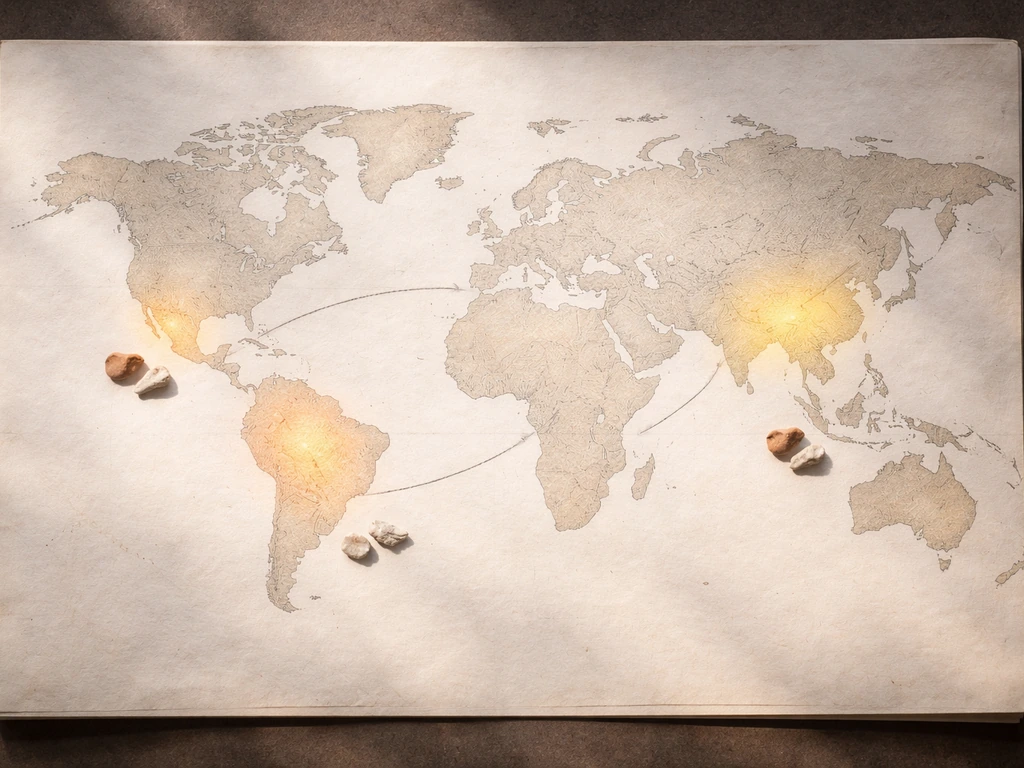
The New World story points to coastal Peru and Mesoamerica, with cotton textiles from Huaca Prieta in northern Peru dated to around 6,000 BCE, and cotton bolls from Mexico's Tehuacán Valley potentially pushing cultivation back to around 5,500 BCE. If you're trying to pin down where cotton first grew, you need to know which species you're talking about, because the answer is genuinely different depending on that.
Why cotton has multiple origins, not one
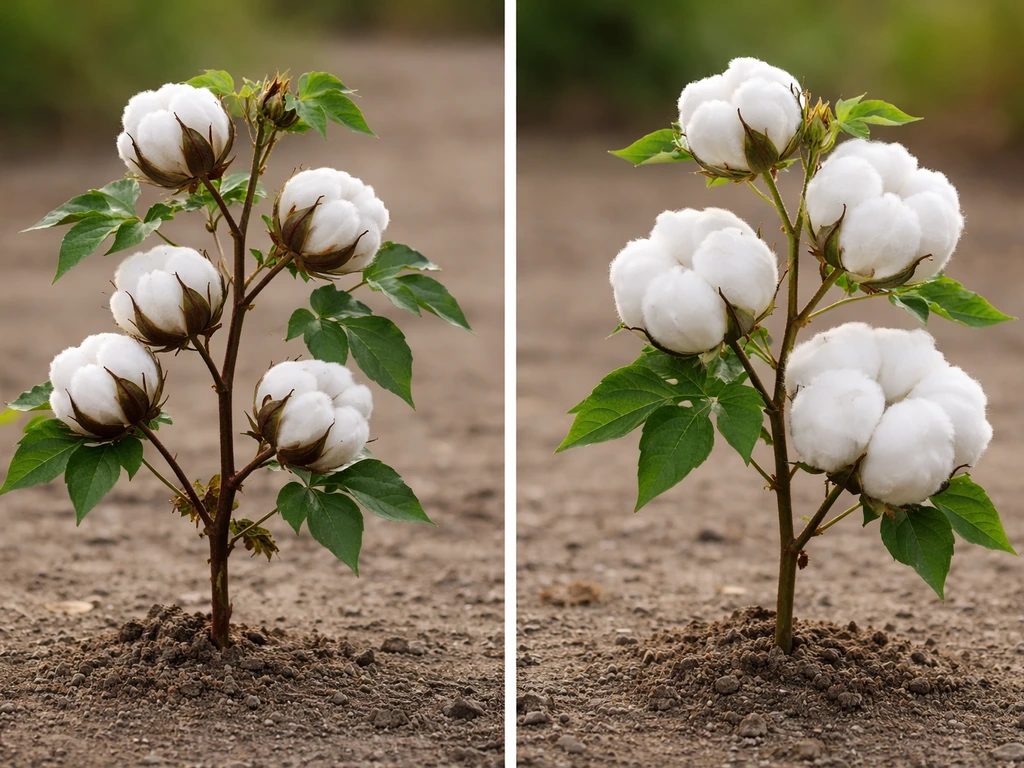
The word 'cotton' actually covers several distinct species in the genus Gossypium, and that's the root of all the confusion around its origins. The major domesticated cottons fall into two groups: Old World diploids and New World allotetraploids. Each group was domesticated independently, and genomic research confirms these were not a single event that spread outward from one place.
On the Old World side, the two key species are Gossypium arboreum (tree cotton) and Gossypium herbaceum (Levant cotton). Genetic analyses show these two species were domesticated separately, meaning there wasn't one shared ancestor crop that humans spread around. They have different geographic stories and different likely domestication regions.
On the New World side, the dominant species are Gossypium hirsutum (upland cotton, which is what most of today's commercial cotton industry runs on) and Gossypium barbadense (the source of Sea Island and Pima-type cottons). These are allotetraploids, meaning they carry a more complex genome, and they were domesticated in Mesoamerica and South America respectively.
Four domesticated species, at least two genuinely independent domestication events, across two hemispheres: that's why 'where did cotton first grow' doesn't have a clean single answer.
The earliest Old World cultivation centers
For the Old World, the best-supported early location is the Indus Valley region, covering what is now Pakistan and northwestern India. The single most compelling physical evidence is from Mehrgarh, a Neolithic site in Pakistan, where mineralized cotton fibers were found preserved inside a copper bead. That discovery pushed the earliest confirmed Old World cotton use back by more than a millennium compared to previous estimates. The Indus Valley also shows up consistently in genomic analyses as a candidate for the origin or a major early diversity center of Gossypium arboreum, though researchers are careful to note it could reflect a secondary center of diversity after domestication happened somewhere slightly earlier or elsewhere.
Madagascar has been floated as another candidate for G. arboreum origins in some genomic syntheses, though this is less settled than the Indus Valley connection. For Gossypium herbaceum, the evidence points more toward the Arabian Peninsula and sub-Saharan Africa as the relevant early geography, though reconstructing exact domestication sites for diploid Old World cotton is complicated by thousands of years of human movement and trade.
Moving slightly westward, cotton fibers turn up in eastern Jordan at Dhuweila, where microscopic cotton fibers were found preserved in lime plaster and radiocarbon-dated to approximately 4,450 to 3,000 BCE. That's Late Chalcolithic to Early Bronze Age, which fits with the idea that cotton was already moving through trade or agriculture networks from its South Asian heartland into the Near East by that period.
The earliest New World cultivation centers
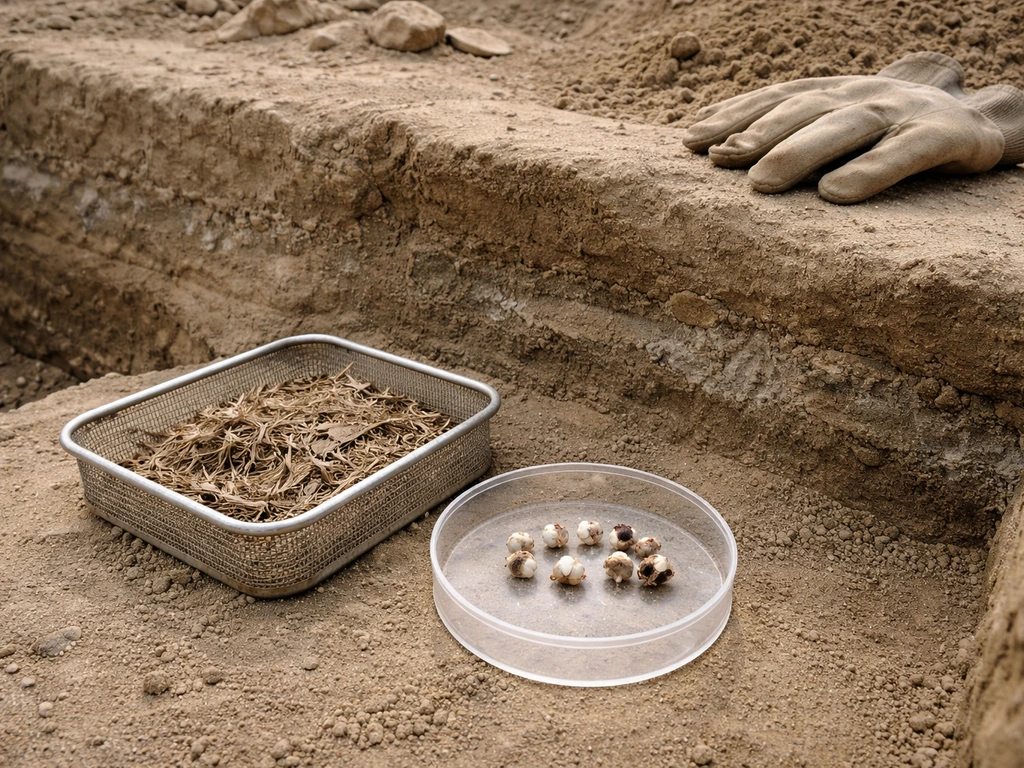
In the Americas, two regions stand out for very early cotton evidence. The first is coastal Peru, specifically the sites of Huaca Prieta and surrounding central coastal areas. Huaca Prieta has yielded cotton textile fragments believed to be around 6,200 years old, and some of those scraps were even dyed with indigo, which tells you these weren't just raw experiments with a wild plant: people were already integrating cotton into a sophisticated textile tradition.
Research on Gossypium barbadense specifically identifies central coastal Peru as a key early domestication and cultivation zone, with archaeological samples showing diagnostic boll and fiber characteristics that mark the transition from wild to domesticated forms. Genetic analyses in domestication-genetics research report that domestication of Gossypium hirsutum occurred roughly 5,000 years ago, framing both phenotypic domestication changes and timing based on genetic evidence [transition from wild to domesticated forms](https://pmc. ncbi. nlm.
nih. gov/articles/PMC7003101/).
The second major New World location is Mesoamerica, particularly the Tehuacán Valley in central Mexico. Cotton bolls recovered from caves there have been dated to roughly 5,500 BCE, making this one of the earliest known cultivation records for what would become Gossypium hirsutum. The exact dating and identification details have been debated by researchers over the years, but Tehuacán consistently appears in the literature as a foundational reference point for New World cotton cultivation.
What the evidence actually looks like
When you're reading about early cotton origins, it helps to know what types of evidence researchers are working with, because not all evidence carries the same weight or answers the same question.
| Evidence Type | What It Shows | Key Limitation |
|---|---|---|
| Cotton seeds or bolls in excavations | Direct cultivation evidence, morphological signs of domestication | Plant material degrades; dry/arid contexts preserve best |
| Mineralized fibers (e.g., Mehrgarh copper bead) | Cotton was present and used at that location and time | Doesn't confirm local cultivation vs. traded/imported fiber |
| Fiber impressions in plaster or ceramics | Cotton textiles were in use nearby; radiocarbon datable | Indirect; preservation is patchy and context-dependent |
| Dated textile fragments | Secure presence of cotton fiber at a specific time and place | Doesn't always clarify wild vs. cultivated source |
| Genomic/ancient DNA analysis | Reconstructs domestication timing, geography, and relationships between species | Calibration uncertainty; incomplete geographic sampling; gene flow blurs signals |
The Mehrgarh mineralized fibers are a good example of the nuance involved. The preservation is remarkable and the date is secure, but researchers note that the cotton could have been locally grown or traded in from somewhere else. Similarly, the Dhuweila fiber impressions give a clear date range but leave open the question of whether cotton was being farmed in eastern Jordan or just arriving there through exchange networks. Genomic data helps resolve some of this by pointing to where cultivated varieties most likely originated and diverged, but ancient DNA calibration has its own uncertainties. The honest picture is a combination of converging lines of evidence, none of them perfect on their own.
Why those specific regions were first
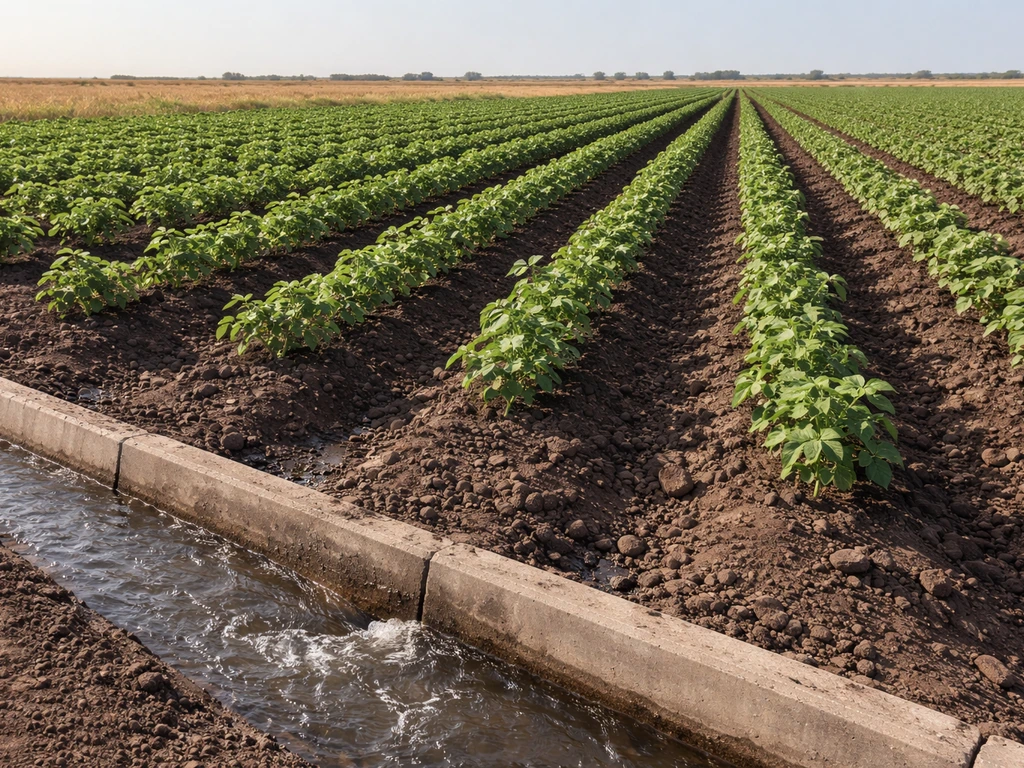
Cotton is a demanding crop in terms of climate, and its early cultivation centers make a lot of sense once you understand what it needs. Photo imagery can help farmers in California monitor plant stress early, so they can adjust irrigation and protect developing cotton bolls before quality drops Cotton is a demanding crop. The FAO puts it clearly: cotton requires a minimum of 200 frost-free days, and its total growing period runs about 150 to 180 days.
That rules out any location with meaningful cold winters or short growing seasons. The big question of whether cotton was the first plant to grow on the moon is very different from these early Earth cultivation centers was cotton the first plant to grow on the moon. The Indus Valley, coastal Peru, and the Tehuacán Valley all sit in subtropical to tropical climate zones with long frost-free periods, which is exactly why they appear at the top of this list.
Rainfall requirements add another filter. Cotton generally needs around 500 to 1,500 mm of rainfall during the growing season, but critically it needs dry conditions during boll ripening because moisture after the bolls open damages fiber quality. This means regions with a pronounced dry season after a wetter growing period are naturally well-suited. The Indus Valley (with its monsoon-then-dry cycle), the coastal deserts of Peru (irrigated river valleys with reliable dry seasons), and the semi-arid Tehuacán region all fit that pattern. These weren't random choices by early farmers. The climate was doing a lot of the selecting.
How cotton spread from those first regions
Once cotton was established in the Indus Valley, it moved outward through trade and agricultural diffusion over centuries. One well-supported model describes two routes by which cotton reached West Africa: an 'oasis route' connected to Gossypium herbaceum and a 'savannah route' tied to Gossypium arboreum. This kind of dual-pathway spread reflects both the geography of trans-continental trade and the different ecological niches the two species fit into. The Indian subcontinent also became a major export hub for cotton fiber and textiles, with evidence of that trade reaching the Mediterranean world well before the common era.
In the New World, spread followed Mesoamerican and South American agricultural networks. Gossypium hirsutum from Mesoamerica diffused through the Caribbean corridor and into North America, while Gossypium barbadense spread through coastal and highland networks along South America. Genetic population studies note that repeated escapes from domestication complicate the picture: some populations that look 'wild' are actually feral, descended from cultivated plants that reverted after human management stopped. That's a reminder that tracing cotton's spread is messier than a clean diffusion map suggests.
It's also worth noting that the question of which country first grew cotton as a formal agricultural crop intersects with this spread story, since some early regions like the Indus Valley make strong claims as the first national-scale cultivation zone. If you are looking at cotton production in a specific place and year, you also need the historical yield or output figures, such as how much cotton they grew in 1860 how much cotton did they grow in 1860. There is no single agreed answer because cotton was domesticated in multiple places, and different species appeared in different regions at different times which country first grew cotton. And while the question of cotton on the moon is a modern curiosity (a Chinese lunar experiment tested cotton seed germination aboard Chang'e 4 in 2019), that experiment was about plant biology in space rather than agricultural history.
How to verify early cotton origin claims yourself
If you want to dig into this topic beyond a summary article, the most important thing you can do is separate four distinct types of claims, because sources frequently blur them together. Here's how to keep them straight:
- Species geographic origin: Where did the wild ancestor of a cotton species evolve? This is answered primarily by phylogenetics and modern genomic surveys of wild Gossypium populations. Look for peer-reviewed papers in journals like Genome Biology and Evolution or Nature Genetics.
- Domestication center: Where did humans first select for cultivated traits? This is answered by a combination of genomic divergence analysis and archaeobotanical evidence showing morphological domestication traits (like larger bolls or fiber changes). The two are related but not identical.
- Earliest archaeological evidence in a region: What is the oldest dated physical cotton material from a specific location? This is answered by excavation reports with radiocarbon dates, microscopic fiber identification, and stratigraphic context. Look for the original excavation papers, not just summaries.
- Spread and later cultivation: When and how did cotton arrive in regions that weren't its origin? This is answered by comparing archaeological dates across regions, historical records, and phylogeographic modeling. When a source says cotton 'was grown' in ancient Egypt or Rome, that's usually spread, not origin.
For climate verification, the FAO crop information pages and resources like the PROSEA plant ecology database are reliable references. If a claimed early cultivation site doesn't meet the basic requirements of 200 frost-free days and appropriate rainfall seasonality, that's a reason to look more closely at the evidence before accepting the claim. Cross-referencing climate data with archaeological location coordinates is a useful quick check.
For the archaeological side, prioritize studies that describe the identification method for the cotton fibers (microscopy, seed morphology, genetic analysis of ancient material) and include explicit radiocarbon dates or secure stratigraphic context. The Mehrgarh mineralized-fiber study and the Dhuweila plaster-impression studies are good examples of the standard to look for. Studies that just say 'cotton was found at site X dated to Y' without explaining the identification methodology are worth treating with more skepticism. The literature on early cotton is genuinely good at flagging its own uncertainty when you read the primary sources, which is reassuring.
On crop-mapping and distribution references, look for layers that distinguish between 'native range,' 'earliest cultivation,' and 'historical spread.' Many maps show modern or historical cultivation extent without distinguishing origin zones from later adoption areas. When you're trying to answer where cotton first grew rather than where it has been grown, those distinctions matter a lot.
FAQ
Why can’t I get one single answer for where cotton first grew?
It depends on whether you mean “first domesticated,” “earliest evidence of use,” or “earliest cultivation of a specific domesticated species.” Mineralized fibers can indicate use or processing, but they do not always prove local farming, and genetic signatures can point to likely origin or a secondary diversity hub. A careful answer usually names the Gossypium species and the evidence type (archaeology, genetics, or both).
Can I treat all cotton as coming from one original region?
Yes, but only within a species. The article’s early locations are best treated as candidate origins or early cultivation zones for particular domesticated cotton types (Old World diploids versus New World allotetraploids). If you lump tree cotton, Levant cotton, upland cotton, and Sea Island cotton together, you will create a misleading “single birthplace” narrative.
How do I tell if cotton evidence at an archaeological site means local farming or trade?
Many claims are about “cotton present at a site” rather than “cotton grown there.” For example, fiber evidence can result from trade, craft imports, or use of locally available materials that originated elsewhere. When reading, check whether the study argues for cultivation (farm-like context, cultivation indicators) versus just textile use or exchange.
What makes an early cotton dating claim reliable?
Radiocarbon dates alone are not enough, because cotton identification methods matter. Higher-confidence studies use microscopy or diagnostic fiber/boll traits, secure stratigraphy, or genetic analysis tied to ancient material. Evidence that lacks a clear identification technique, or relies on loosely constrained dating, is more likely to be misinterpreted.
Could an area with wild cotton still be connected to domestication?
Cotton can look “wild” even when it descends from cultivated plants that went feral after people stopped managing them. That means a location with wild-looking Gossypium is not automatically a domestication origin, and “native” versus “secondary wild” needs to be separated using genetic and ecological context.
If cotton requires a certain climate, why do different early regions still show up?
For climate suitability, the key filters are frost-free growing time (about 200 frost-free days), a long enough growing period (around 150 to 180 days), sufficient seasonal rainfall, and dry conditions during boll ripening so fiber quality is not degraded. A region can have cotton-like plant remains but still be a poor agronomic match if it lacks a frost-free season or has the wrong post-ripening moisture pattern.
Could cotton have grown earlier than the dates we have because of preservation or research gaps?
It helps to separate “climate feasibility” from “earliest evidence.” Even if a region could grow cotton agriculturally, the earliest confirmed domestication or earliest datable fiber record might occur elsewhere due to preservation differences, research focus, or trade routes that moved finished textiles before local cultivation took off.
Does the earliest cotton location differ depending on whether I care about today’s commercial cotton?
Species identification and genomic group matter. The most common modern commercial cotton (upland cotton) is associated with New World allotetraploids, but its earliest cultivation evidence should not be used to answer when diploid Old World cotton was domesticated. When asking “where did cotton first grow,” always specify which species you mean.
How should I interpret questions like “which country first grew cotton”?
Yes, especially when the claim is about “country first” or “national first cultivation.” Early cotton spread involved multiple routes and repeated adoptions, and national borders did not exist in the same way in antiquity. A stronger approach is to use species, time window, and evidence type, then map it to a modern country as a secondary interpretation rather than a primary historical fact.
What’s a practical checklist for evaluating a “cotton first grew here” claim?
If you are evaluating a new claimed origin site, run a quick checklist: (1) does the study specify the Gossypium species or at least justify the identification, (2) is there an explicit dating method and context (radiocarbon plus secure stratigraphy), (3) does the paper argue for local cultivation versus trade use, and (4) does the region match the frost-free and rainfall seasonality constraints for cotton. If one of these is missing, treat the claim as tentative.
Next Articles
What Did the Delaware Colony Grow: Crops, Uses & Legacy
Colonial Delaware’s main crops, grains, hay, flax, fruits, vegetables, livestock, why they thrived and how they were sold.
What Did Jamestown Grow and How They Farmed It
Learn what Jamestown colonists grew and the methods they used to plant, harvest, and adapt crops to Virginia conditions.
What Did the New England Colonies Grow? Major Crops
Major New England colonial crops explained by climate and soil, from corn and wheat to beans and hay, plus today’s paral