Europeans mostly grew sugarcane in their Caribbean colonies. That's the short answer. But the full picture is more interesting: sugar dominated because of a specific combination of tropical climate, fertile volcanic soils, forced labor systems, and transatlantic market demand that made the Caribbean one of the most intensively farmed regions in world history. Alongside cane, colonists also cultivated coffee, cacao, cotton, indigo, tobacco, and ginger depending on the island, the colonial power, and the era. If you're researching this for school, comparing historical and modern agriculture, or trying to understand what crops actually thrived in tropical Caribbean conditions, this guide lays it all out clearly.
What Europeans Mostly Grew in Caribbean Colonies

Samuel Rourke
14 Apr 2026
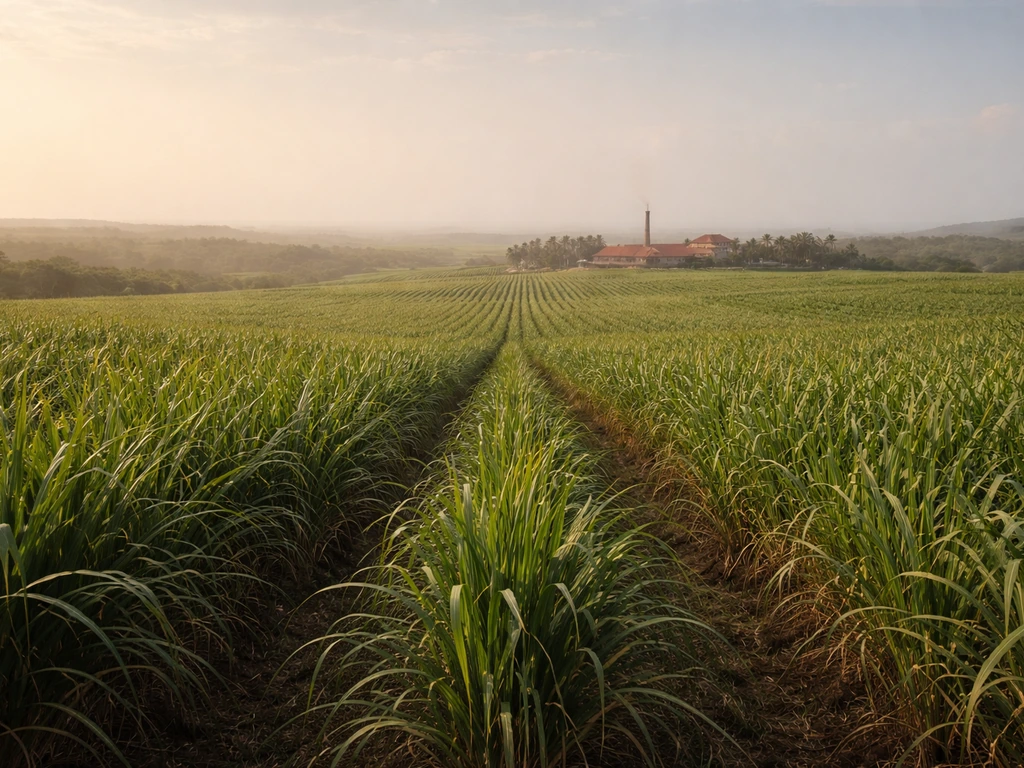
The main crops Europeans planted across Caribbean colonies
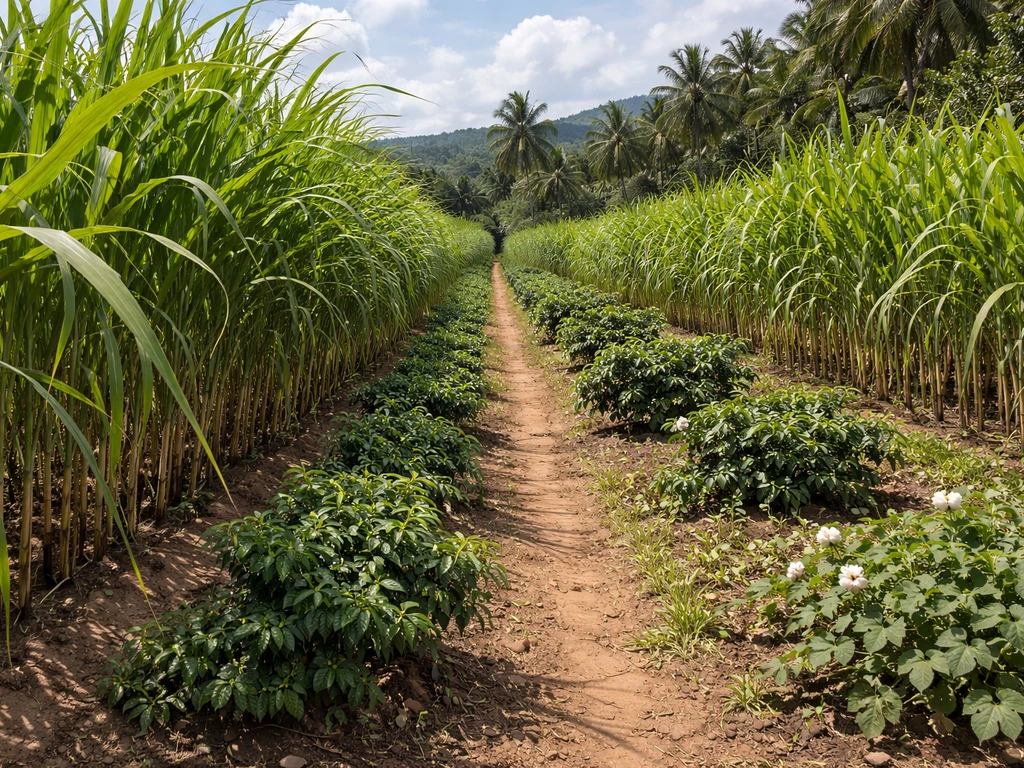
Sugarcane was the flagship export crop across virtually every European-controlled Caribbean colony, especially as plantation economies intensified through the 17th and 18th centuries. A 1964 USDA Economic Research Service report on the French West Indies states plainly that "during the last 300 years, sugar has been the principal crop" in those islands. That pattern held broadly across British, Dutch, Danish, and Spanish holdings as well. But sugar wasn't the only player. The secondary tier of plantation crops typically included:
- Coffee: a major export in Saint-Domingue (present-day Haiti) and across the French Antilles
- Cacao: grown in Martinique and other islands, often before sugar fully displaced it
- Cotton: cultivated in Saint-Domingue, Martinique, and several British islands
- Indigo: an early dye crop grown in Antigua, Martinique, and Saint-Domingue before sugar took over
- Tobacco: one of the earliest cash crops across the Caribbean before plantations shifted to cane
- Ginger: grown notably in Antigua and other islands as part of the early export mix
- Vanilla: listed as an important secondary crop in the French West Indies
The sequence mattered. Tobacco, ginger, and indigo were often the first commercial crops Europeans tried. Sugar came later, but once it arrived, it tended to absorb almost all available land and labor, pushing everything else to marginal plots or different islands entirely.
Why the Caribbean was such a good fit for those crops
The Caribbean's climate isn't just warm, it's the specific kind of warm and wet that tropical plantation crops need. Sugarcane requires temperatures above 70°F (21°C) for most of its growth cycle, high humidity, and at least 40 to 50 inches of rainfall per year, or accessible irrigation. The Caribbean delivers all of that, with average temperatures between 75°F and 85°F year-round across most islands, and a distinct wet season that floods lowland fields with enough moisture to drive cane to maturity.
Soils played a big role too. Many Caribbean islands have deep, well-drained volcanic or alluvial lowland soils that hold nutrients well and tolerate the heavy mechanical pressure of sugarcane harvesting. Coffee and cacao, by contrast, thrive on slightly higher elevation slopes with rich organic soils and partial shade, which explains why those crops often occupied the hillier inland zones while sugar colonized the coastal plains.
The islands' position in the Atlantic trade wind belt also mattered for colonial economics. Ships could leave Europe heading west on reliable trade winds, load up on sugar or coffee, and catch westerly winds back east. That circulation made the Caribbean commercially accessible in a way that deeply interior regions were not, which reinforced European investment in plantation agriculture there over anywhere else.
Sugarcane and the plantation system: why it took over everything
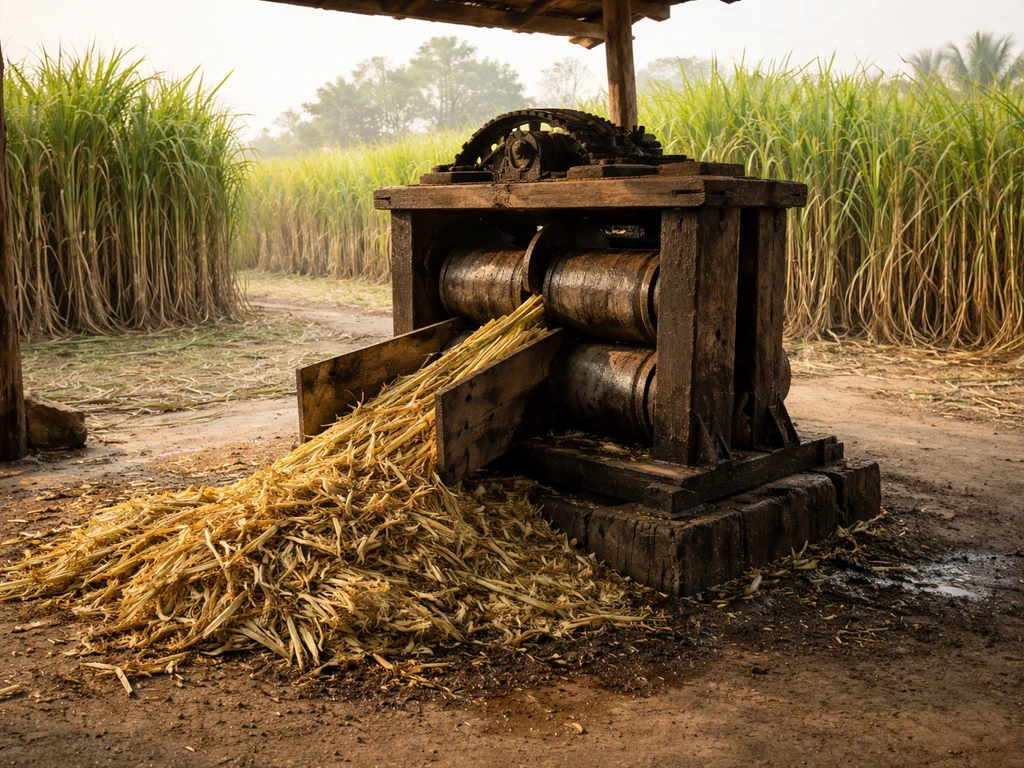
Sugarcane didn't just succeed in the Caribbean. It restructured entire societies around its production. By the late 18th century, Saint-Domingue (the French colony that became Haiti) had become one of the wealthiest plantation economies in the world, with sugar ensuring its dominant position. That wealth was built on a brutal plantation system dependent on enslaved African labor, which supplied the intensive year-round workforce cane demands.
From a purely agricultural standpoint, sugarcane is a heavy-input, large-scale crop. You can't grow it profitably in small garden plots. It takes 10 to 18 months from planting to first harvest, requires significant processing infrastructure (mills, boiling houses, curing facilities), and needs continuous replanting or ratooning (letting cut stalks regrow). All of that demanded large land areas, massive labor forces, and capital investment, exactly the conditions the colonial plantation model provided through forced labor and imperial financing.
The economic pull was enormous. Refined sugar commanded high prices in European markets because it was a luxury item that became a staple as production scaled up. This created a feedback loop: high sugar profits funded more land clearing, more enslaved people were brought over, more cane was planted, prices stayed manageable for European consumers, and demand kept growing. No other Caribbean crop generated that same loop at that scale, which is why cane came to dominate land use across islands that could grow it.
Other cash crops that shared space with sugar on Caribbean estates
Even on heavily sugar-focused islands, planters diversified somewhat, either by necessity or opportunity. In Saint-Domingue, the 18th-century export economy rested on sugar, coffee, cotton, and indigo as its four main pillars. Coffee in particular was a massive earner, occupying the mountain interiors where cane didn't grow as well. The French West Indies more broadly saw vanilla, cocoa, and coffee listed as important secondary crops alongside sugar, and Martinique's colonial history includes a clear progression from early tobacco and indigo cultivation into cacao and cotton, before sugar eventually centralized production.
Antigua tells a similar story. Early English colonists there used slave labor to raise tobacco, indigo, ginger, and sugarcane side by side. Over time, as market conditions shifted and plantation infrastructure matured, sugar became the dominant cash crop and the others were reduced or dropped. That kind of crop consolidation around the most profitable export happened repeatedly across the Caribbean as colonial economies matured.
It's worth knowing these secondary crops when you're trying to understand a specific island's agricultural history, because what a colony "mostly" grew could look quite different depending on whether you're looking at the 1650s or the 1780s.
How island-to-island and era differences changed the "mostly grown" list
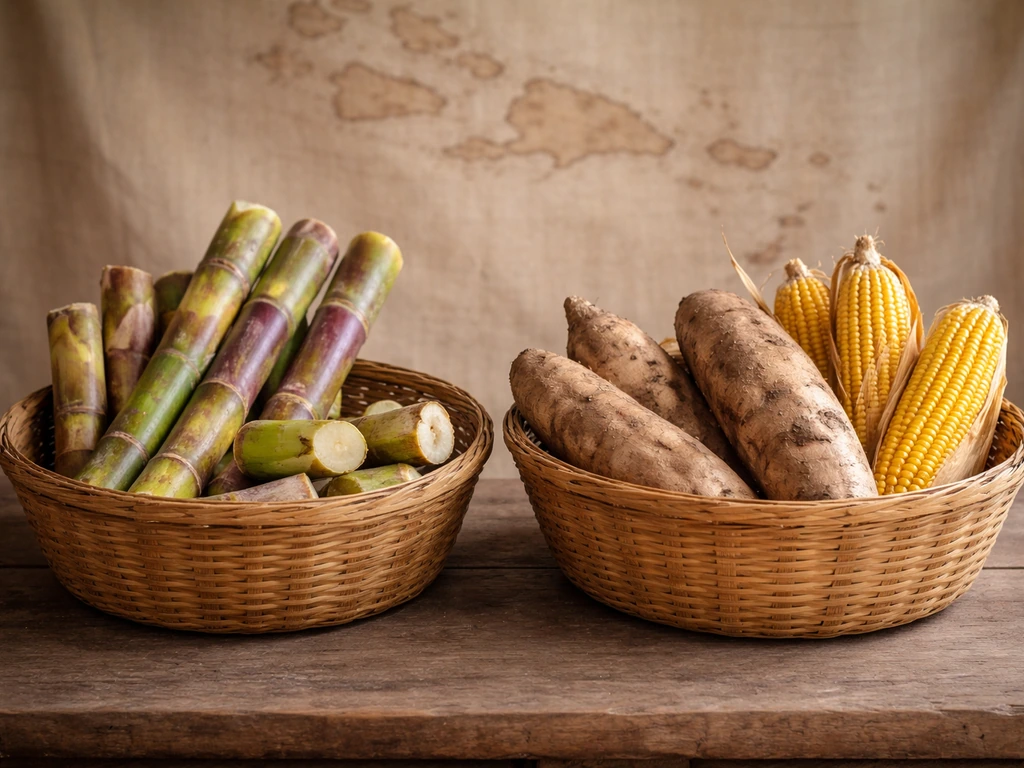
There was no single Caribbean crop list. The mix varied by colonial power, island geography, timing of settlement, and global commodity prices. Here's a quick comparative breakdown of how major Caribbean colonial territories differed:
| Colony / Island | Colonial Power | Primary Crop(s) | Notable Secondary Crops | Key Era |
|---|---|---|---|---|
| Saint-Domingue (Haiti) | French | Sugar | Coffee, cotton, indigo | 18th century peak |
| Martinique | French | Sugar | Indigo, tobacco, cacao, cotton | 17th–18th century |
| Guadeloupe | French | Sugar | Coffee, vanilla, cocoa | 18th–19th century |
| Antigua | British | Sugar (later) | Tobacco, indigo, ginger, sugarcane (early) | Shifted mid-17th century |
| Barbados | British | Sugar | Tobacco (early), cotton | Sugar dominant from 1640s |
| Jamaica | British | Sugar | Coffee, cocoa, pimento | 18th–19th century |
| Cuba | Spanish | Sugar (later) | Tobacco, coffee | Sugar dominant 19th century |
| Trinidad | British/Spanish | Sugar, cocoa | Coffee, cotton | 18th–19th century |
The Spanish colonies followed a somewhat different trajectory. Cuba, for instance, became a sugar powerhouse later than the British and French islands, with tobacco holding a prominent place for much longer. The Dutch focused heavily on trade facilitation through ports like Curaçao, but their productive colonies still leaned into sugar and cotton. Even within a single island, crops shifted as soil fertility declined in some areas, prices changed, and plantation owners responded to market conditions. Understanding which era you're researching is just as important as knowing which island.
How to research the exact crops for a specific colony or island today
If you need to go beyond the general answer and pin down exactly what a specific colony grew in a specific period, here's a practical research approach that actually works.
- Start with island-specific histories: Search for the island name plus terms like "plantation crops," "colonial agriculture," or "export economy." Wikipedia island history pages are often surprisingly well-cited starting points for a crop timeline, and they link out to academic sources.
- Use colonial power as a filter: French, British, Spanish, and Dutch colonial records are held in different archives. The British National Archives, France's Archives Nationales d'Outre-Mer (ANOM), and Spain's Archivo General de Indias all have digitized records. USDA and FAO historical reports (like the 1964 French West Indies ERS report) are accessible through government document archives.
- Search JSTOR and Google Scholar for terms like '[island name] plantation economy 18th century' or '[island name] colonial exports sugar.' Academic articles on Caribbean history consistently include crop lists and timelines.
- Check encyclopedias of Caribbean history: The Encyclopedia of the African and African-American Experience and the Oxford Encyclopedia of Latin American History both have island entries that detail crop histories.
- For modern cultivation context: FAO country profiles and USDA Foreign Agricultural Service reports break down current crop production by country and island, which helps you compare colonial-era crops with what's still grown today.
- Cross-check across at least two sources: A crop mentioned in one secondary source should appear in primary documentation (ship manifests, plantation records, trade reports) before you treat it as confirmed.
If you've been researching North American colonial agriculture alongside this, it's worth knowing that Caribbean plantation agriculture operated quite differently from mainland colonies. For comparison, what the southern colonies grew shows how tobacco and rice dominated a different climate zone using a somewhat parallel plantation labor system, while the Caribbean went all-in on sugarcane at a scale the mainland never matched.
You can also see how crop choices shifted with geography by looking at what the middle colonies grew, where cooler temperatures pushed farmers toward grains and livestock rather than tropical cash crops entirely. The contrast reinforces why climate is always the first filter when you're trying to understand any historical crop pattern.
What these historical crops can tell modern growers and gardeners
The colonial plantation record is essentially a centuries-long trial of which tropical crops can survive and produce at scale in the Caribbean climate. That's genuinely useful information for anyone farming or gardening in a similar climate today, whether that's the Caribbean itself, South Florida, Hawaii, coastal Central America, or comparable tropical zones worldwide.
Sugarcane is still commercially grown across the Caribbean and remains viable for small-scale growers with enough land and water. Modern varieties are higher-yielding and more disease-resistant than historical ones, but the basic growing requirements haven't changed much: full sun, well-drained fertile soil, consistent moisture, and frost-free winters. If you're in USDA hardiness zone 9b or warmer, small-plot cane is achievable. Coffee and cacao are both increasingly popular among specialty growers in tropical climates, and the mountain terroir of Caribbean islands (especially Jamaica's Blue Mountains for coffee) is recognized globally for quality production.
Indigo has seen a modest revival among natural dye enthusiasts and textile farmers. It's easy to grow in tropical and subtropical conditions, fixes nitrogen in the soil, and the dye extraction process is approachable at small scale. Ginger and its relatives (turmeric, galangal) thrive in the same warm, humid conditions that made the Caribbean productive for colonial planters and are highly practical for home growers today.
The broader lesson is that climate fit, not colonial ambition, is what made those crops succeed. When Europeans chose what to plant, they were (sometimes inadvertently) selecting for crops that the environment could actually support. That same selection logic applies today: if a crop thrived at scale in the colonial Caribbean, it's a strong signal that it's well-adapted to tropical maritime conditions. You can use that historical record as a practical planting guide for any similar climate zone.
For a parallel look at how early colonial growers in North America matched crops to climate further north, the records of what Jamestown grew are instructive. The Virginia colonists cycled through several failed crops before tobacco proved climate-suitable, mirroring the Caribbean pattern of early experimentation before a dominant cash crop emerged. Similarly, what the New England colonies grew shows how a completely different climate set produced a completely different agricultural system centered on subsistence grains rather than export crops, a useful counterpoint to Caribbean plantation monoculture.
Understanding colonial crop choices isn't just a history exercise. It's a map of what the land can do. If you're selecting crops for a tropical or subtropical growing space, the Caribbean colonial record, cross-referenced with modern agronomic data, gives you a strong evidence base for what's worth trying. And if you're a student or researcher, knowing that sugarcane was the dominant crop, why it dominated, and how other crops fit around it gives you a reliable framework for any Caribbean colonial agriculture question. For a closer look at how individual colonies developed distinct agricultural identities even within the same colonial system, the story of what the Delaware colony grew offers a useful North American comparison showing how local conditions shaped planting decisions even under the same imperial power.
FAQ
Did Europeans grow only sugarcane in the Caribbean colonies?
No. Sugarcane was the dominant cash crop, but many islands also produced other plantation crops such as coffee, cacao, cotton, tobacco, indigo, ginger, and sometimes corn or other subsistence foods. The mix depended heavily on island geography (coastal plains versus hills) and the time period.
Why did sugarcane usually come later than earlier crops like tobacco or indigo?
Early on, planters often tested crops that were easier to start and did not require the same level of processing infrastructure as sugar. Once sugar mills and boiling houses were established and profitability became clear, sugar tended to expand quickly, pushing other crops to less favorable land or out of the main export system.
Could European settlers grow sugarcane on every Caribbean island?
Not equally. Sugarcane required consistent warmth, high humidity, and enough rainfall (or irrigation), plus soils that could handle heavy harvesting and processing needs. Islands with limited coastal lowlands or less suitable moisture patterns often relied more on hill crops like coffee and cacao or on cotton and other alternatives.
What is the difference between crops that “thrived” and what a colony “mostly grew”?
A crop could survive in local conditions but still not dominate the export economy if it was less profitable, harder to scale, or slower to produce reliable market returns. Sugarcane’s advantage was not only agronomic, it was also economic, because profits supported plantation expansion and the machinery needed for large-scale processing.
How did elevation affect whether Europeans planted sugar versus coffee or cacao?
Sugarcane was typically concentrated on lowland coastal plains where the climate and soils supported fast, heavy growth and large-scale harvesting. Coffee and cacao were more common on higher, hillier areas with deeper organic soils, partial shade, and better drainage.
Did crop patterns change over time within the same colony?
Yes. Even within one island, planting shifted across decades due to soil exhaustion in specific zones, outbreaks and crop failures, and changes in global commodity prices. That means the answer to “what did they mostly grow” can look different in the 1650s compared with the 1780s.
Were crops always grown on the same land, year after year?
Plantations were often reorganized. Sugarcane typically relied on continuous replanting or ratooning, but plantations could still expand into new areas, abandon less productive plots, or shift fields to secondary crops when costs, yields, or market prices changed.
How do I figure out what a particular island grew in a particular decade?
Narrow your research by both location and timeframe, then look for plantation export records, port shipping lists, and estate descriptions from that era. These sources help confirm what was actually shipped as an export, not just what was possible to grow.
Was indigo, tobacco, or ginger ever more important than sugar?
Sometimes temporarily. These crops were often early commercial trials and could be economically significant depending on the period and the colony’s development stage. But they generally lost ground when sugar proved capable of dominating land and labor at scale.
Could modern small-scale farmers grow the same crops Europeans grew, like sugarcane?
Yes, but with practical constraints. Sugarcane can work for small growers in suitable tropical or warm-subtropical climates, but you still need full sun, good drainage, reliable moisture, and frost-free conditions. Also, disease resistance and cultivar choice matter more today than they did historically.
Next Articles
What Did the Middle Colonies Grow and Why It Thrived
Learn what the Middle Colonies grew and why their crops thrived fast, from grains to cash crops and feed plants.
What Did the Southern Colonies Grow Main Crops Explained
What Southern colonies grew: tobacco, rice, indigo, and more, plus how climate, soil, and plantations shaped crops
What Environmental Factors Helped Civilizations Grow
Explore how water, fertile soils, stable climate, landforms, and native ecosystems enabled reliable farming and growth.