
Growing crops for sale rather than household consumption was almost always more profitable because markets rewarded specialization, scale, and timing in ways that growing a little of everything for your own table simply could not. When a farmer could sell into a buyer network, negotiate forward contracts, store grain until prices rose, and cut per-unit costs by farming more acres of one crop, the income potential was in a different league from subsistence production. That advantage was not automatic, though. It depended on the right crop meeting the right climate, accessible transport, functioning markets, and sometimes favorable government policy. Understanding exactly why those factors combined to make commercial cropping more profitable is what this article is about.
Why Commercial Crops Were More Profitable Than Subsistence Farming

What commercial crops actually are (and how they differ from subsistence crops)
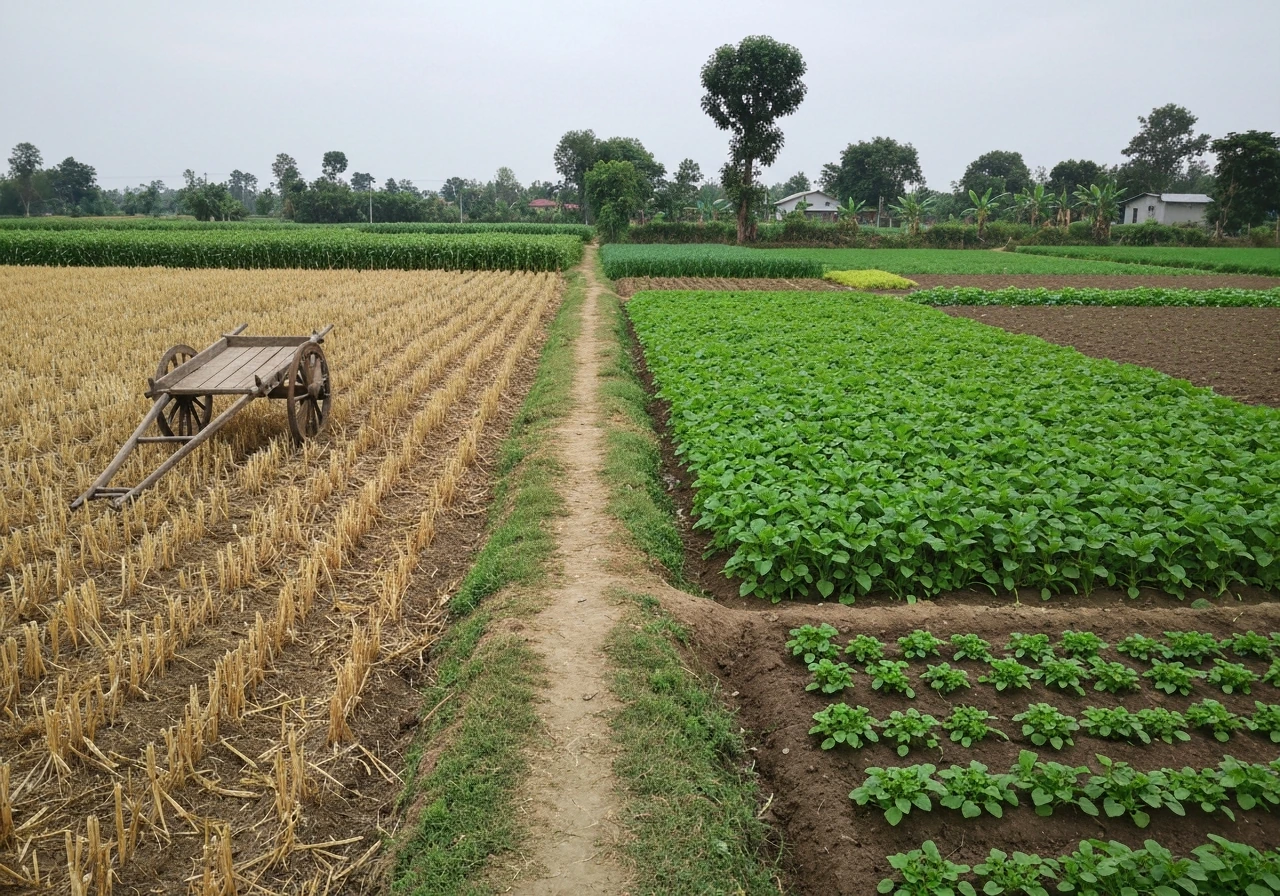
A commercial crop is grown primarily to sell, not to eat at home. The farmer's goal is cash income, and every decision about what to plant, how much to plant, and when to harvest is shaped by market prices and buyer demand. Subsistence farming is the opposite: families grow enough food to feed themselves, with little or no surplus intended for sale. The World Bank frames subsistence agriculture as production oriented toward household needs, and notes that transitioning toward commercial farming requires assets, market access, infrastructure, and protection against risk. Most traditional smallholder farms worldwide have historically sat closer to the subsistence end, with only a small fraction showing what researchers call strong market orientation.
The practical difference shows up in how you manage your farm. A subsistence farmer chooses variety and diversity to make sure the family eats through the year. A commercial farmer chooses the crop with the best margin, invests in inputs that maximize yield and quality for a buyer, and organizes everything around getting product to market at the right time. Commercial farming also relies heavily on scientific improvements, including hybrid seeds, fertilizers, and herbicides, to generate the higher yields that make market-oriented production worthwhile. Those two mindsets create very different cost structures and very different profit potential.
Why markets, prices, and buyer networks drive profit
The most fundamental reason commercial crops were more profitable is price. When output prices rise, farm profit improves sharply because many production and marketing costs are essentially fixed in the short run. That is a basic insight from agricultural economics: fixed costs do not change when you sell at a higher price, so a bigger share of revenue flows straight to profit. Subsistence farmers never access this leverage because they are not selling into a price market at all.
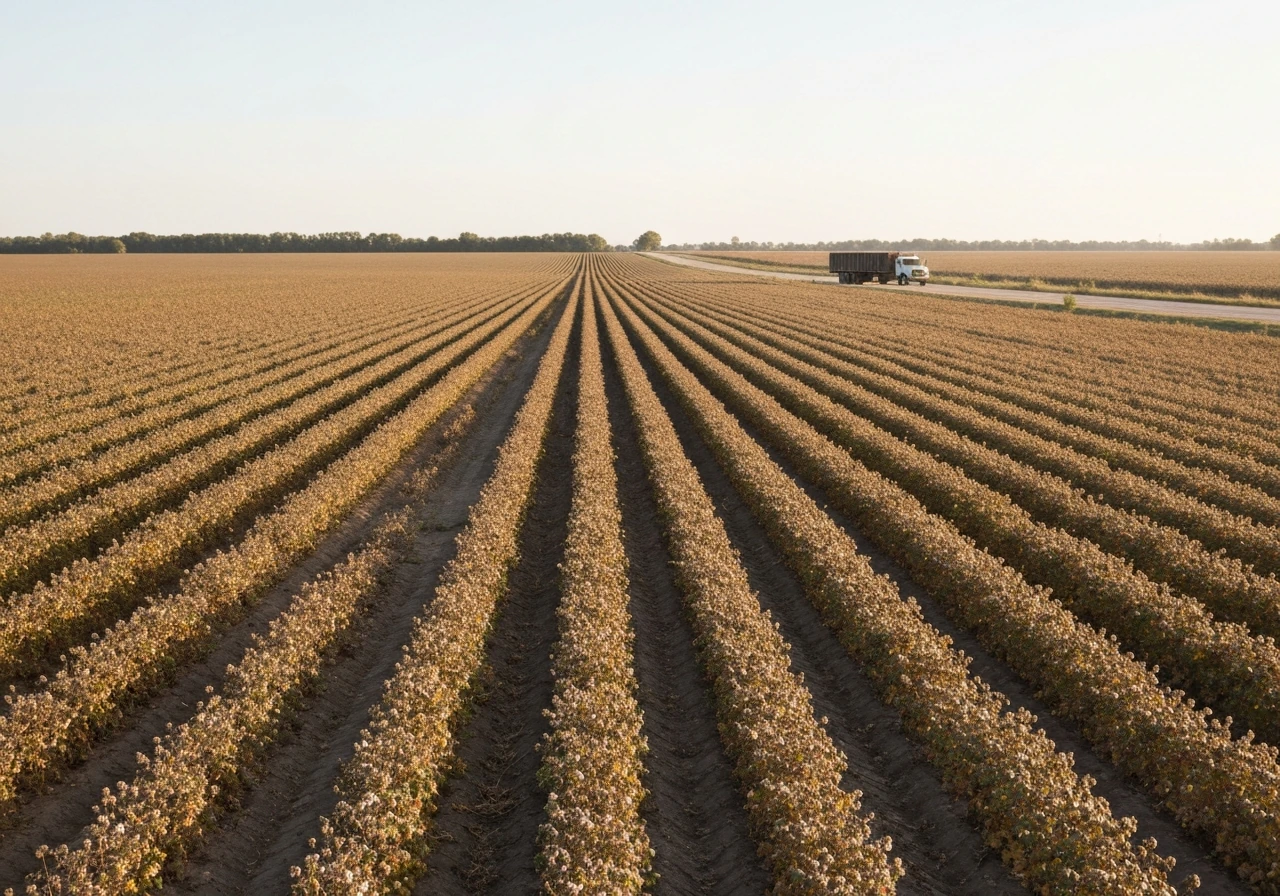
Beyond basic price levels, buyer networks and demand depth matter enormously. Cotton in the antebellum American South became profitable not just because the plant grew well in warm, humid conditions but because textile mills in Britain and the northeastern United States created enormous and growing demand. In contexts like colonial and plantation agriculture, enslaved labor was often used to raise cash crops such as cotton and tobacco for distant markets.
By the mid-1800s, cotton was the single most important cash crop in the southern economy precisely because global industrial demand was expanding fast enough to absorb huge increases in production at prices that kept farmer margins positive. That kind of deep, reliable demand does not exist for every crop a subsistence farmer might grow.
Commodity pricing structures also matter. Commercial crops like cotton, tobacco, wheat, and sugar have historically traded on organized markets with published prices, which gives buyers and sellers a shared reference point. This transparency reduced transaction costs and made it easier for farmers to plan. Contract farming arrangements, where buyers agree to purchase a set quantity at a set price before the crop is even in the ground, took that one step further. FAO notes that contracts can stabilize and increase income through guaranteed pricing and reduced risk, which made commercial crop income more reliable than the unpredictable surpluses a subsistence farm might occasionally generate.
Yield, efficiency, and the power of doing one thing well
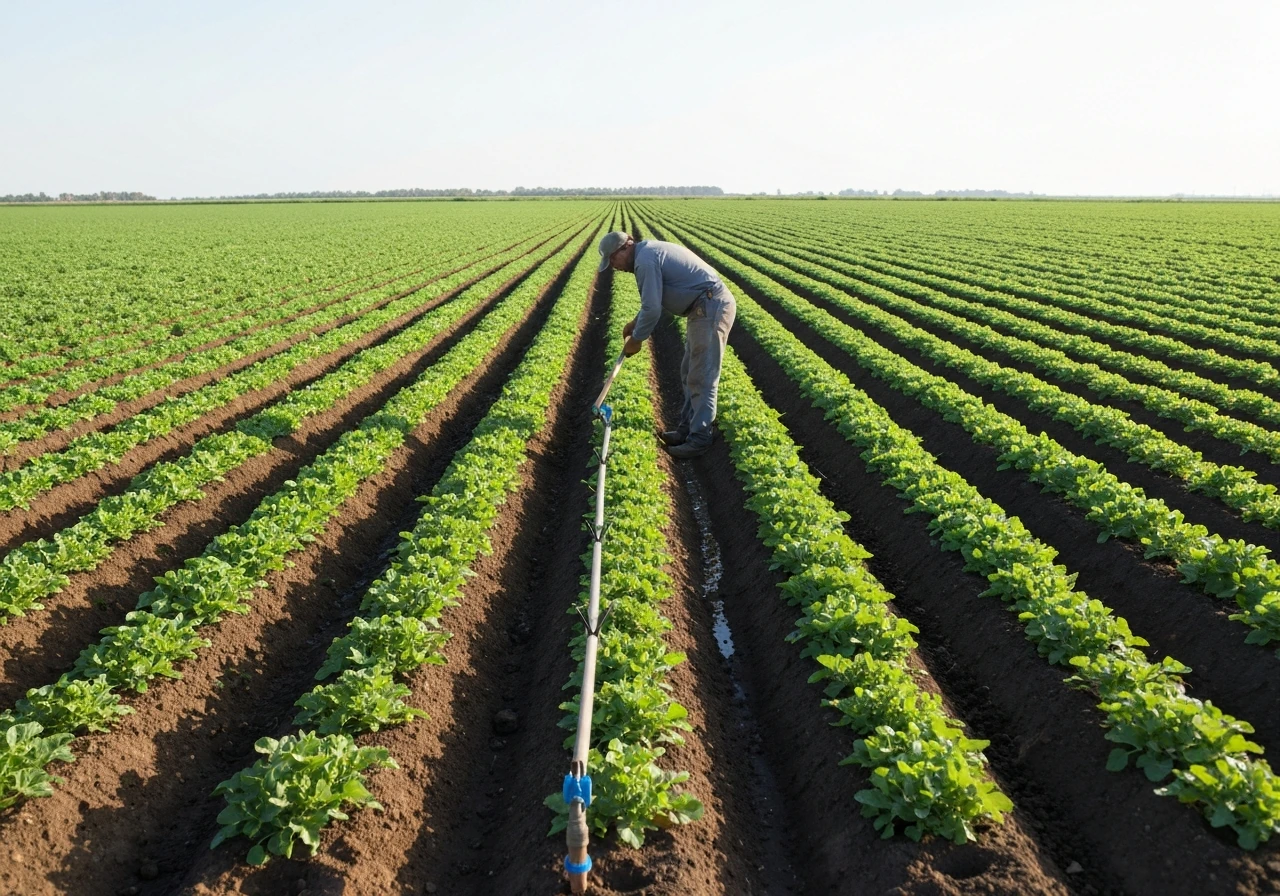
Specialization lets farmers get very good at one crop, and that translates directly into higher yields and lower per-unit costs. When you grow the same crop on every acre, you can justify buying (or renting) specialized equipment, you learn exactly how that crop responds to soil and weather on your specific land, and you can time every input precisely. Research on farm size consistently finds that productivity can rise with farm scale after a threshold because larger operations can better exploit machinery and processing capacity. A small diversified subsistence plot simply cannot take advantage of a mechanical cotton picker or a grain combine.
Economies of scale also reduce per-unit costs in ways that make commercial production look even more attractive by comparison. Producer organizations and farmer clusters can achieve what individual smallholders cannot, including joint purchasing of inputs, shared transport, and group negotiations with buyers. FAO highlights group purchasing as a way to cut both input and marketing costs meaningfully. The World Bank makes the same point about producer organizations creating efficiency gains that raise income reliability. For subsistence farmers operating alone on fragmented plots, none of those cost advantages are available.
How storage, processing, and contracts made profits more dependable
One of the biggest practical advantages of commercial cropping was the ability to manage when you sold. A subsistence farmer who grows a surplus has limited ability to hold it: without proper storage, grain degrades quickly, and selling everything at harvest floods local markets and depresses prices. Commercial crop systems invested in solving that problem. Research from Bihar, India found that improved storage technology (specifically hermetic bags) reduced quantity losses, allowed farmers to store grain longer, and enabled them to sell at higher post-harvest prices rather than dumping everything at once. That simple storage improvement turned a variable income stream into a more reliable one.
Warehouse receipt systems extended that logic further. By depositing grain in a licensed commercial warehouse, farmers could receive a receipt that served as collateral for post-harvest financing. The IMF described warehouse receipts as a mechanism for inventory financing and for reducing lender risk, which in turn lowered financing costs for farmers. In the United States, federal law has long provided the legal infrastructure for licensed warehouse receipt issuance, underpinning the agricultural finance markets that commercial crop farmers relied on. None of this is accessible to a purely subsistence producer.
Downstream processing infrastructure added another layer of profit reliability. Cotton gins, sugar mills, and grain elevators were not just conveniences: they were essential infrastructure that allowed raw farm output to be converted into a form that buyers could use and transport efficiently. In Texas, improvements in cotton ginning technology and the development of cotton compress facilities dramatically reduced the cost and friction of moving cotton from farm to market. Without that processing capacity, raw output sat on farms losing value. With it, commercial farmers could move larger volumes at lower cost per unit.
Why government policy and infrastructure tilted the playing field
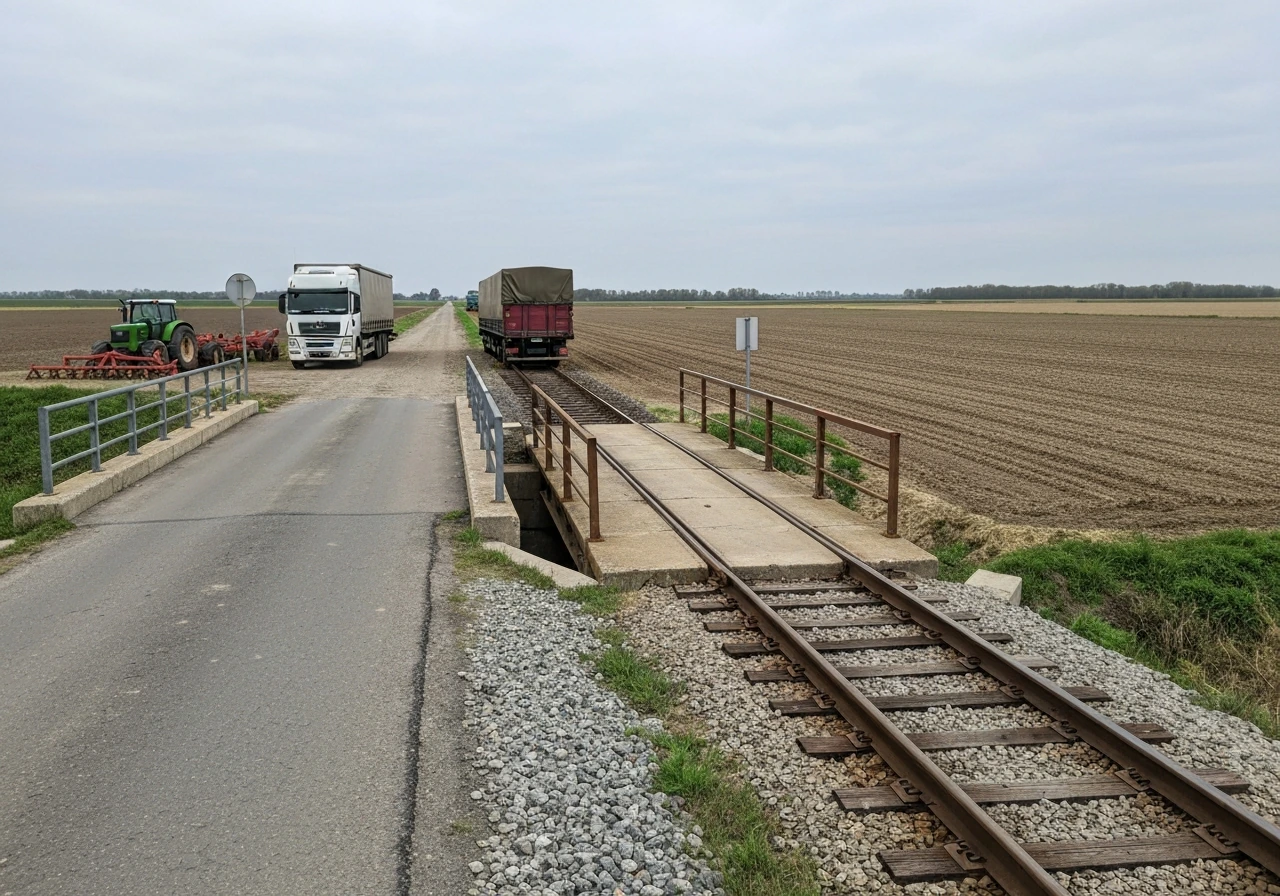
No commercial crop system thrived without infrastructure, and in most historical periods that infrastructure required either government action or government-backed private investment. Roads, canals, and railroads were the most visible examples. The U.S. federal government used railroad land grants to incentivize construction of rail lines across the country, letting railroads profit from land sales while dramatically expanding market access for farmers in interior regions. The effect on commercial crop profitability was immediate and measurable: when a rail line reached a cotton-growing region in Texas, it connected farmers to buyers hundreds of miles away at a cost that made commercial cultivation viable where it had not been before.
Transport costs are not an abstract concern. Research consistently shows that distance to market raises effective input costs and lowers the price farmers receive for their output, directly reducing profitability. FAO's rural marketing guidance frames transport costs as a direct subtraction from farm-gate price. The World Bank reports that transport and logistics interventions reduce post-harvest losses, lower price volatility, and improve access to agricultural inputs. Every improvement in transportation infrastructure was, in effect, a direct subsidy to commercial crop profitability by closing the gap between what the market would pay and what the farmer actually received.
Colonial and government agricultural policies also shaped which crops were commercially viable by design. Plantation systems in the American South and colonial tobacco economies in places like Malawi were structured around forcing or incentivizing large-scale production of specific crops for export markets. Credit arrangements from cotton factors, brokers who extended loans to planters until harvest, were a key part of how the antebellum Texas cotton economy functioned.
Planter wealth in Texas during the 1850s grew directly from this combination of fertile land, slave labor, expanding rail access, and credit networks that bridged the gap between planting and payday. Related patterns show up in what tenant farmers grew and how colonial labor arrangements shaped crop choices across the American South and beyond.
Regional climate and soil: why some places had no choice but to go commercial
Commercial profitability is never just about markets and policy. The underlying biophysical reality of a region determines which crops can even be grown, and that shapes which commercial options are available. FAO's agro-ecological zoning methodology combines crop requirements with constraints including moisture stress, pest and disease pressure, soil characteristics, and growing season length to determine land suitability. The USDA Plant Hardiness Zone Map does something similar for perennial crops, defining where minimum winter temperatures allow certain species to survive. These frameworks explain why certain crops clustered in certain regions historically and why that clustering persisted.
Growing season length is especially important for annual commercial crops. A longer frost-free period allows crops like cotton, tobacco, and sugarcane to reach the yield levels that make commercial production worthwhile. Crops with shorter growing requirements, like wheat and oats, expanded into higher-latitude regions that could not support cotton. Rainfall reliability and irrigation potential played equally large roles. FAO's AQUASTAT framework defines irrigation need as the gap between potential evapotranspiration and effective precipitation over the growing period. Where that gap was large and irrigation was unavailable, commercial crop production was risky and often uneconomical. Where rainfall was reliable or irrigation feasible, commercial specialization became rational.
Pest and disease pressure modified all of this. FAO's agronomic guidance explicitly flags pests, diseases, and weeds as yield-reducing constraints that must be factored into any realistic land suitability assessment, and notes that ignoring them has undermined many historically optimistic cropping plans. A crop that looked profitable on paper in a new region could fail commercially if local pest pressure was not accounted for. This is one reason why successful commercial crops tended to concentrate in regions where growers had accumulated local knowledge over generations, not just in areas with favorable climate on a map.
Historical snapshots that make the "why" concrete
Cotton in the American South and Texas
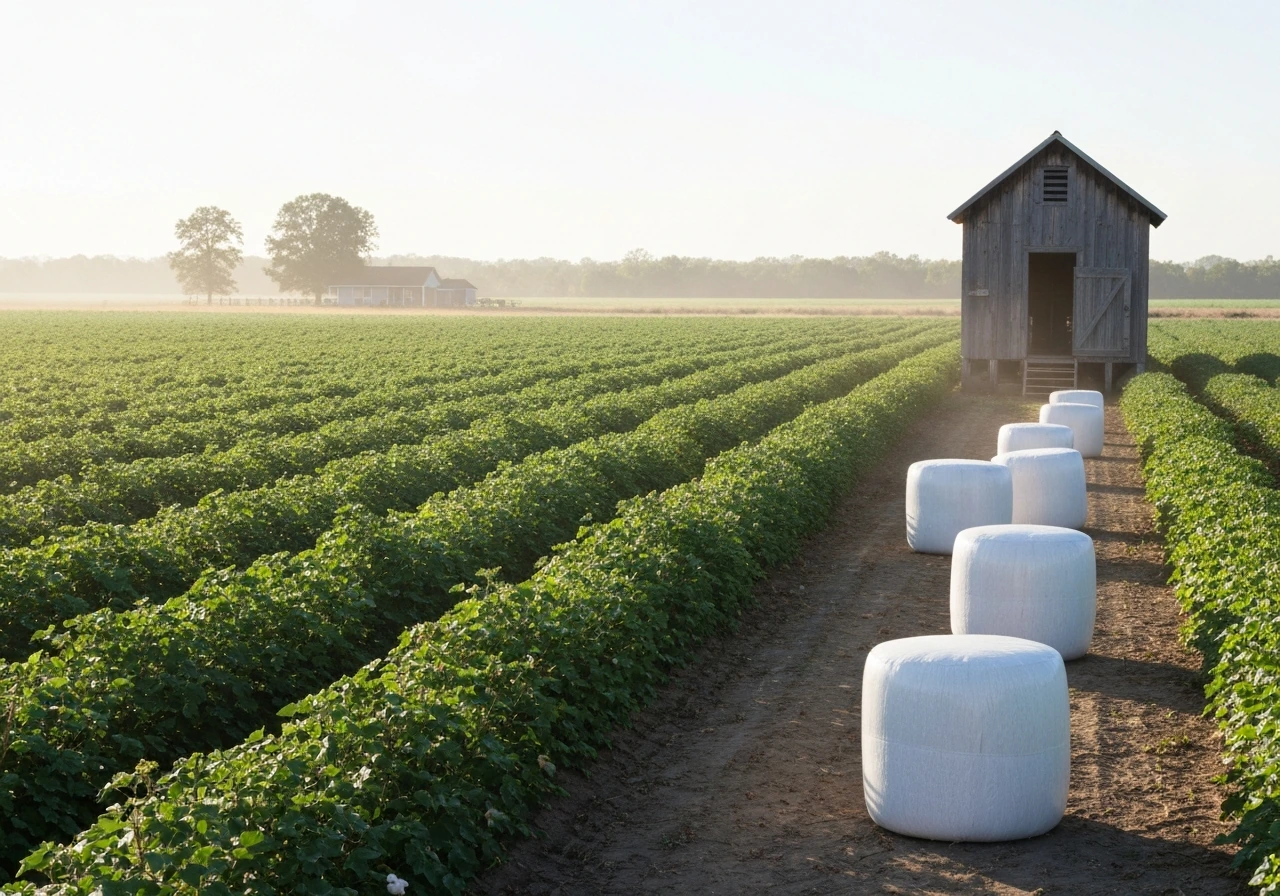
Cotton is probably the clearest example of commercial crop profitability in American history. The warm, humid climate of the Deep South, with its long growing season and well-drained sandy loam soils, was nearly ideal for short-staple cotton. International demand from British textile mills created a massive, price-supported market. Infrastructure developed to serve it: gins processed raw fiber, compresses reduced bale volume for shipping, and railroads extended the cotton frontier westward into Texas.
Texas's economy shifted explicitly from subsistence herding toward cotton cultivation as rail lines reached fertile inland regions in the 1850s and credit networks through cotton factors made large-scale planting financially feasible even before harvest. The combination of climate suitability, global demand, infrastructure, and credit made cotton enormously profitable for those who controlled the land and labor.
Tobacco in Malawi
Malawi's tobacco economy illustrates how infrastructure improvements can trigger commercial crop specialization even in a low-income country. Research published in the European Review of Agricultural Economics found that reduced transport costs and improved marketing infrastructure lowered transaction costs enough to make tobacco production for world markets commercially viable for smallholders. Before those improvements, distance to market absorbed too much of the price premium that tobacco commanded, and subsistence or mixed farming was the default. This is a case where the crop's commercial potential was always there, locked in the climate and soil of Malawi's highlands, but only became realizable when infrastructure closed the gap.
Grain storage in Bihar, India
In Bihar, one of India's poorest agricultural states, a field experiment on improved grain storage showed how even a modest infrastructure investment can shift the economics of commercial crop production. Smallholders who received hermetic storage bags reduced post-harvest losses, stored grain longer, and sold at higher prices than those who sold immediately at harvest. This is not an exotic intervention: it is the same logic that drove the development of grain elevators and warehouses in the American Midwest in the nineteenth century. The ability to hold your crop and sell when prices improve is a core advantage of commercial farming, and it is only available when storage infrastructure exists.
Cotton and commodity risk management
Commercial crops are not risk-free. Commodity price volatility is a real and measurable hazard, and the World Bank has documented its financial impact on cotton farmers specifically. The same price transparency that makes commercial markets attractive also exposes farmers to sharp price swings that can wipe out a season's profit. This is why the development of hedging instruments, forward contracts, and price risk management mechanisms accompanied the growth of commercial crop economies. Farmers and trading houses who could lock in prices in advance were more willing to invest in the specialization and scale that made commercial production profitable in the first place. Risk management was not a luxury: it was part of the infrastructure that made commercial agriculture work.
How to think about commercial crop profitability today
If you are trying to evaluate whether a commercial crop makes sense for your situation, the historical and structural lessons above translate into a practical checklist. The fundamental questions have not changed much in two centuries.
- Is there a real market nearby, or one you can reach at reasonable transport cost? Distance to market is a direct subtraction from your farm-gate price. Map the buyers, processors, and storage facilities within your reach before choosing a crop.
- Does your climate, soil, and rainfall pattern actually suit the crop you are considering? FAO's agro-ecological zoning tools and the USDA Plant Hardiness Zone Map are starting points, but local extension knowledge and grower experience in your specific area matter more.
- What is the realistic yield you can achieve, and what does it cost per unit to produce and deliver? Scale and specialization reduce per-unit costs, but only if your operation reaches the threshold where those advantages kick in.
- Can you manage price risk? Forward contracts, buyer agreements, and marketing cooperatives all reduce exposure to price swings that can make an otherwise profitable crop a loss in a bad year.
- Do you have access to storage, or can you create it? Even low-cost improved storage can shift when you sell and therefore the price you receive, turning a commodity glut at harvest into a better-timed sale.
- What credit and input supply networks exist? Commercial crop production requires inputs in advance of income. Understanding who will extend credit, on what terms, and whether input supply is reliable is essential before committing to a commercial crop.
The historical record is consistent: commercial crops generated more reliable and higher income than subsistence production when markets were accessible, climate was suitable, infrastructure reduced friction, and risk was manageable. When any of those conditions was missing, the advantage narrowed or reversed. The same logic applies today, whether you are a student analyzing colonial agricultural economies, a historian tracing crop patterns across U.S. states, or a farmer deciding what to plant next season.
FAQ
If commercial crops are more profitable, why doesn’t every farmer switch from subsistence production?
Because the profit advantage depends on access, not just crop choice. Farmers often lack reliable buyers, storage, transport, working contracts, or the ability to manage price risk. Without those, the same crop can become no more profitable than subsistence once costs, losses, and price swings are counted.
Was profitability mainly about higher prices, or did costs also matter a lot?
Prices were the biggest lever, but costs mattered through fixed-cost leverage and per-unit reductions. Commercial systems typically shift costs into inputs, transport, and marketing that do not rise much with small output changes, so higher market prices convert more revenue into profit. In practice, marketing costs and post-harvest losses are often what decide whether higher prices show up in farmers’ income.
How do price swings hurt commercial crop farmers compared with subsistence farmers?
Commercial farmers sell into transparent commodity markets, so they can face sudden price drops after investing in planting. Subsistence producers may still “survive” a bad price season by consuming part of the harvest and selling only small surpluses. Commercial operations need mechanisms like forward contracts, hedging, or savings to avoid getting forced to sell at the worst time.
What market access requirements are most critical for commercial crops to be profitable?
Farmers need more than local buyers, they need demand depth and timing. In many cases the deciding factors are predictable buyer pickup, published prices or contract terms, and the ability to deliver when the crop is at quality grade. If buyers buy only sporadically or reject inconsistent quality, margins shrink fast.
Does specialization always increase profits, or can it backfire?
It can backfire when farmers face pests, disease, or weather shocks that specifically affect the chosen crop. Specialization also concentrates risk, so a bad season can wipe out income. Historically, successful commercial growers combined specialization with local knowledge, soil adaptation, and risk management tools like storage and contracts.
How important are storage and selling timing in determining profitability?
Very important, especially for crops that are bulky, perishable, or prone to quality decline. Storage lets farmers avoid harvest-time price collapse and sell later when prices rise. If storage is poor, even a profitable crop on paper becomes unprofitable because quantity loss and forced selling destroy margins.
What is the typical mistake farmers make when estimating profitability of commercial crops?
They often estimate revenue using average farm-gate prices while ignoring marketing costs, transport distance, grading/quality deductions, and post-harvest losses. Another common error is using yield potential from ideal conditions, rather than realistic yields under local pest pressure, input timing constraints, and soil limits.
Can a warehouse receipt system help smallholders, or does it mainly benefit large farms?
It can help smallholders, but only if they can reliably deposit grain in licensed facilities and access affordable credit based on receipts. If warehouses are far, loading capacity is limited, fees are high, or enforcement is weak, the system may not translate into lower financing costs or better sale timing for small plots.
Why do transport improvements often increase profits even if farms are the same?
Because transport changes the gap between what buyers pay and what farmers actually receive. Lower distance and logistics costs also reduce delivery delays, which helps preserve quality and reduces post-harvest losses. The net effect is often a higher effective farm-gate price and less price volatility during marketing.
What role do government policies play, beyond building roads and railways?
Policy can determine who can access credit, whether contracts are enforceable, and which crops receive incentives or protections. In export-oriented histories, plantation or colonial systems also shaped crop choice through labor and financing arrangements, not just through infrastructure. Without supportive rules, farmers may face transaction costs and uncertainty that prevent commercial scaling.
How should someone decide whether climate and soils will support a commercial crop?
They should check agronomic suitability, not just temperature or rainfall totals. Growing season length, frost-free days, moisture stress risk, irrigation feasibility, and soil constraints matter together. It is also essential to include pest and disease pressure, since a crop that survives but fails quality targets can still be commercially unviable.
Is hedging or forward contracting only for wealthy traders, not farmers?
Historically, it helped both trading houses and growers, but implementation can vary. Many smallholders access price stability through aggregators, cooperatives, or contract schemes that standardize grades and delivery schedules. If a farmer lacks the ability to deliver on contract or is excluded from risk-sharing arrangements, hedging benefits may not reach them.
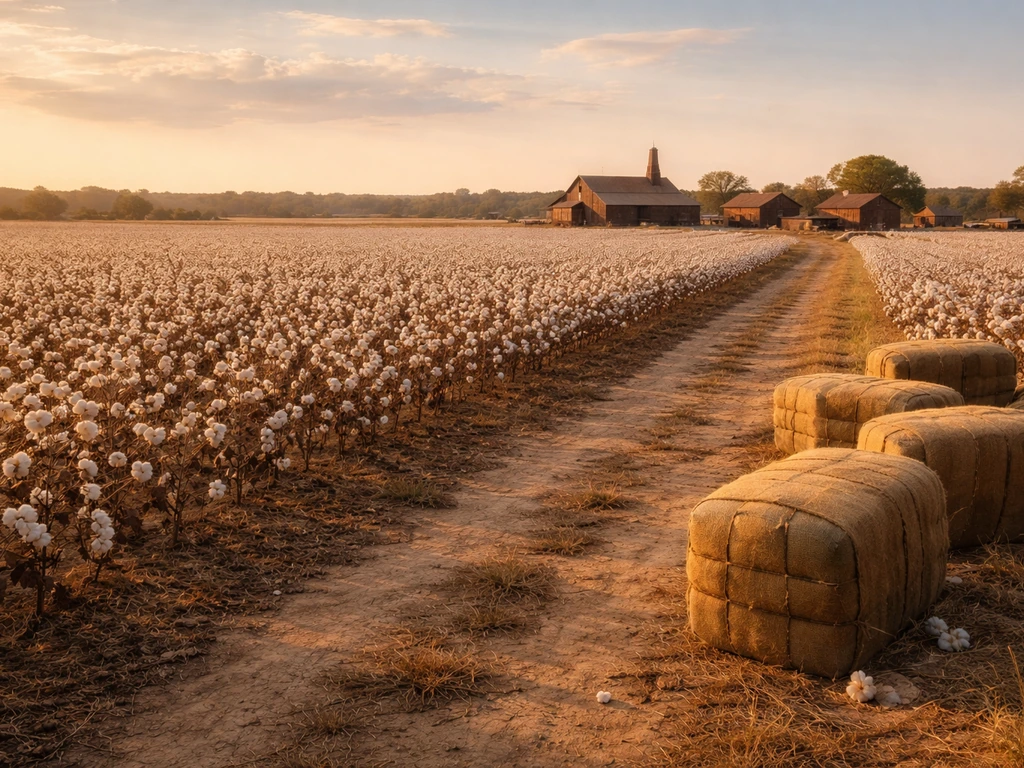
Why Texas planters got rich in the 1850s: cotton boom, land and labor systems, financing, markets, and evidence sources.
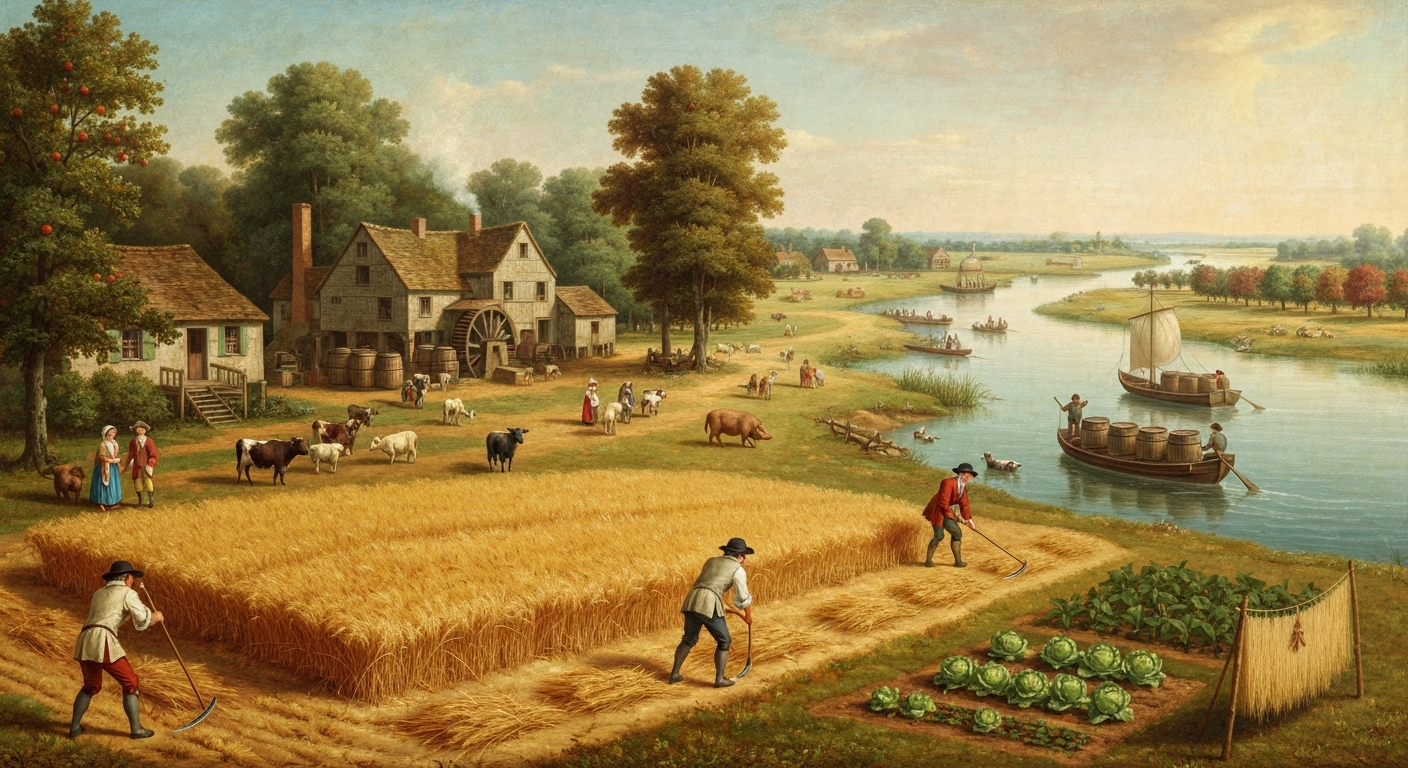
Colonial Delaware’s main crops, grains, hay, flax, fruits, vegetables, livestock, why they thrived and how they were sold.

Learn what Jamestown colonists grew and the methods they used to plant, harvest, and adapt crops to Virginia conditions.