Jamestown colonists grew corn (maize), beans, squash, peas, tobacco, and European cereals like wheat and oats. Corn was the most important survival crop from day one, beans and squash were close behind, and tobacco eventually became the cash crop that defined the colony's economy. If you are wondering what the southern colonies grow in general, Jamestown's experience is a useful nearby comparison point, since tobacco and other warm-climate crops mattered as the economy shifted. That is the short answer. The longer answer explains why those specific crops, how the colonists actually grew them, and how the whole agricultural picture shifted dramatically between 1607 and the 1620s.
What Did Jamestown Grow and How They Farmed It

Samuel Rourke
21 Apr 2026
The crops Jamestown actually grew
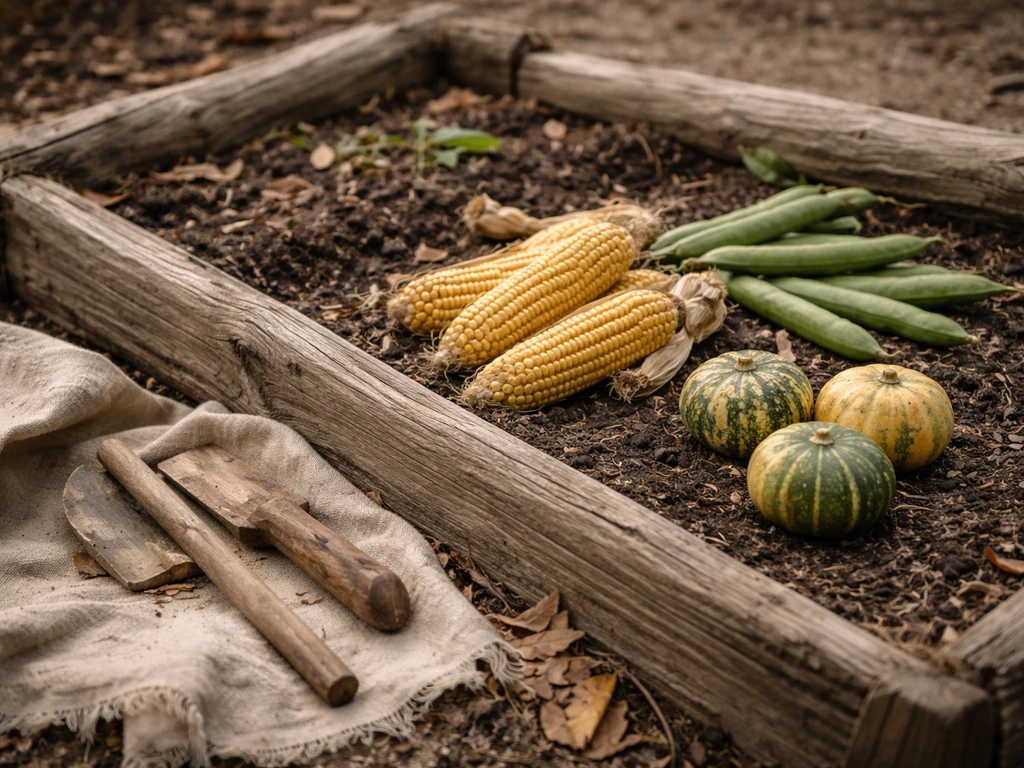
Archaeological and documentary evidence from James Fort points to a consistent set of crops. Archaeobotanical analysis of feature fill from three James Fort periods identified maize (Zea mays), common bean (Phaseolus vulgaris), and wheat or oats (Triticum/Avena) directly in the soil record. Analysis of the 1611 well at the fort also turned up maize cob fragments, squash fragments, and common bean remains, plus a single tobacco seed. An ARC report examined century-old Jamestown seeds from a well and found that undamaged tobacco seeds are rare a single tobacco seed. That physical evidence lines up well with what the written sources describe.
- Corn (maize): the primary staple, present from the first planting season in 1607 and confirmed by both pollen and whole cobs recovered from the fort site
- Beans (common bean, Phaseolus vulgaris): grown alongside corn, with cotyledons recovered from early fort contexts
- Squash: fragments found in the 1611 well, consistent with its role in Native American polyculture alongside corn and beans
- Peas: referenced in the NPS historical record as one of the 'Indian crops of peas, corn, and beans' that matured and helped relieve early subsistence pressure
- Wheat and oats: European cereals the colonists attempted to grow; identified in archaeobotanical analysis, though they were far less reliable in the Virginia climate than Native crops
- Tobacco: experimentally grown by John Rolfe by 1612, spreading beyond the fort by 1617 and rapidly becoming the dominant commercial crop
Two distinct types of corn have been identified at the James Fort site: Eastern eight-row flint corn and Southern Dent (also called Gourdseed or Shoepeg) corn. Both were varieties already known to Virginia Indians before English contact, which tells you something important about where the colonists got their seed and their growing knowledge.
How they actually grew those crops
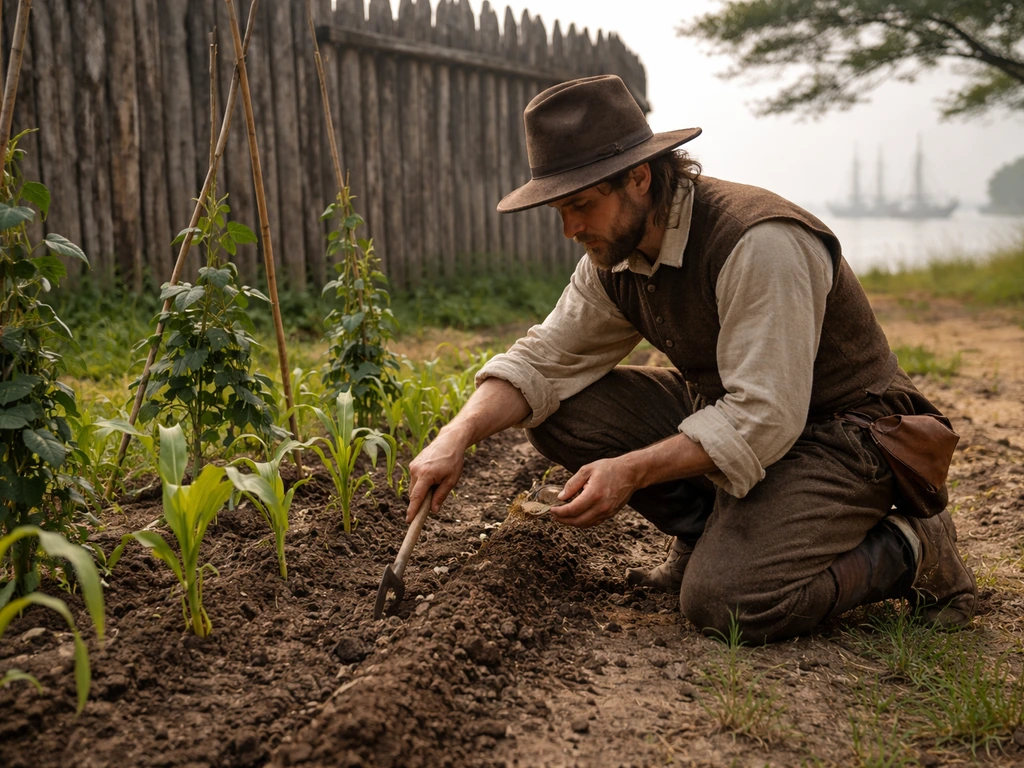
The colonists did not arrive with a ready-made farming operation. George Percy's 1607 account records that the settlers sowed most of their corn on two 'Mountaines' (elevated ground near the fort) shortly after completing the fort in June 1607. That timing is late by any standard, and the first harvests reflected it. Archaeologists have also found planting furrow evidence inside and around the fort area, physical proof that ground preparation was happening in the earliest years and that it aligns with the documentary record.
The cultivation methods drew heavily on what the Powhatan Confederacy was already doing. Native corn varieties were planted in hills, not rows, often intercropped with beans and squash in the 'Three Sisters' style. Beans fix nitrogen and benefit the corn; squash shades the ground and reduces weeds. The colonists, most of whom had no farming background at all, learned this approach by necessity. European plowing techniques were less suited to Virginia's soil and climate than Native mound-hill methods, at least in the early years.
Labor was the constant problem. Many of the original settlers were gentlemen or craftsmen, not farmers. The Virginia Company's response was strict governance. Between 1609 and 1612, leaders imposed martial law under the 'Lawes Divine, Morall and Martiall,' which compelled colonists to work specified tasks. Ralph Hamor later credited the restoration of that discipline with preventing the colony's total ruin. Governor Thomas Dale also introduced a system of semi-private land grants around 1615, giving individual colonists small plots and a personal stake in their own harvests, which improved productivity meaningfully.
Seasons, soil, and what fit Virginia's conditions
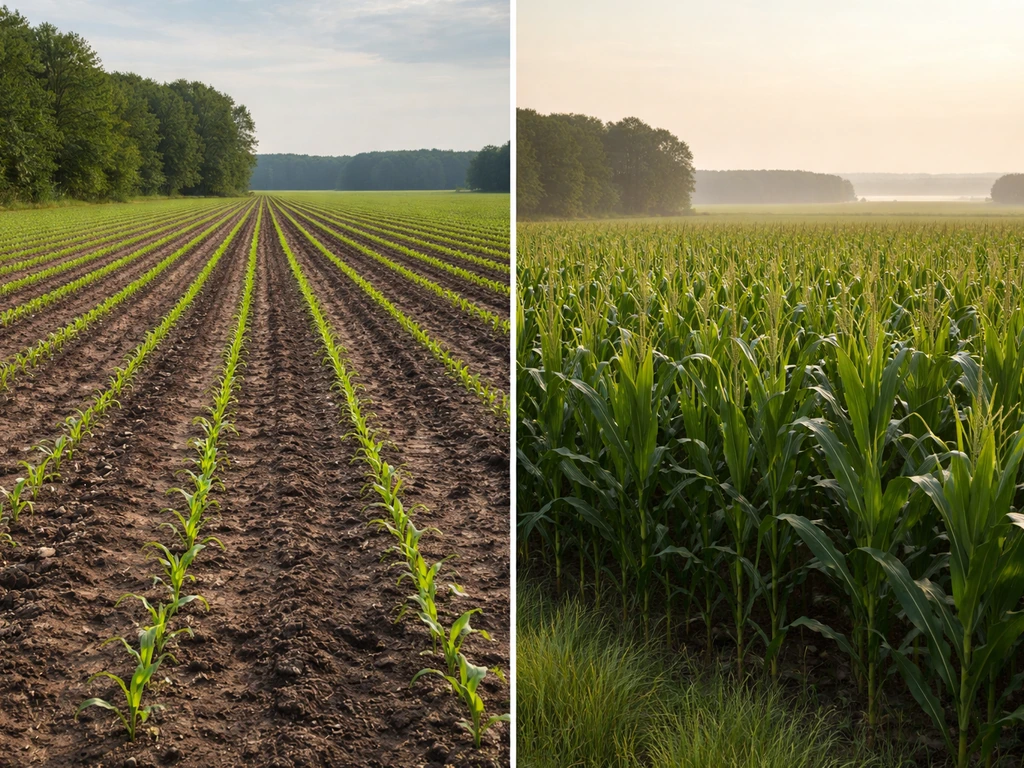
Jamestown sits at roughly 37 degrees north latitude in the tidewater region of Virginia, with hot, humid summers, mild winters, and a growing season of roughly 200 days. That climate is well-suited to corn, beans, squash, and tobacco, all of which thrive with heat and adequate moisture. It is not particularly well-suited to European small grains like wheat, which prefer cooler, drier conditions during grain fill. That mismatch explains why wheat and oats show up in the archaeological record but never became reliable staples at Jamestown the way they were in England.
Corn planting in Virginia follows a spring window, typically after the last frost in late March to mid-April, with harvest in late summer to early fall. Because the colonists arrived and built their fort through the spring and early summer of 1607, the June planting Percy describes was already pushing the seasonal limits, which hurt those first yields. Later years saw more organized spring planting aligned with the actual growing window.
Tobacco, once Rolfe refined his hybrid using Caribbean seed around 1612, fit the Virginia summer beautifully, maturing in approximately 90 to 120 days and cured through the fall. The NC Historic Sites “From Seed to Leaf” page also notes that in 1612 John Rolfe brought tobacco seeds from the West Indies or Spanish variety and that Virginia soil helped the tobacco succeed Tobacco, once Rolfe refined his hybrid using Caribbean seed around 1612.
Why those crops and not others
Survival drove the early crop choices. Corn and beans were already growing across the region, and the Powhatan had refined varieties adapted to local soils and rainfall over generations. The colonists could obtain seed, observe cultivation methods, and trade for food when harvests failed. Trying to start entirely from scratch with European crops in an unfamiliar environment would have been far more dangerous, and the record shows they leaned on Native crops precisely because European cereals underperformed.
Tobacco's rise was about trade and profit, not food security. John Rolfe is credited with crossing Caribbean tobacco varieties with local Nicotiana rustica to produce a milder, more commercially viable leaf. Virginia's clay-loam tidewater soils, combined with the long hot growing season and adequate rainfall, turned out to be nearly ideal for tobacco curing quality. By 1617, a contemporary account described the colonists dispersed about and blank" rel="noopener noreferrer">'planting tobacco' across the wider region, not just within the fort. That geographic spread signaled the shift from survival farming to commercial agriculture.
Where the farming happened inside and around the settlement
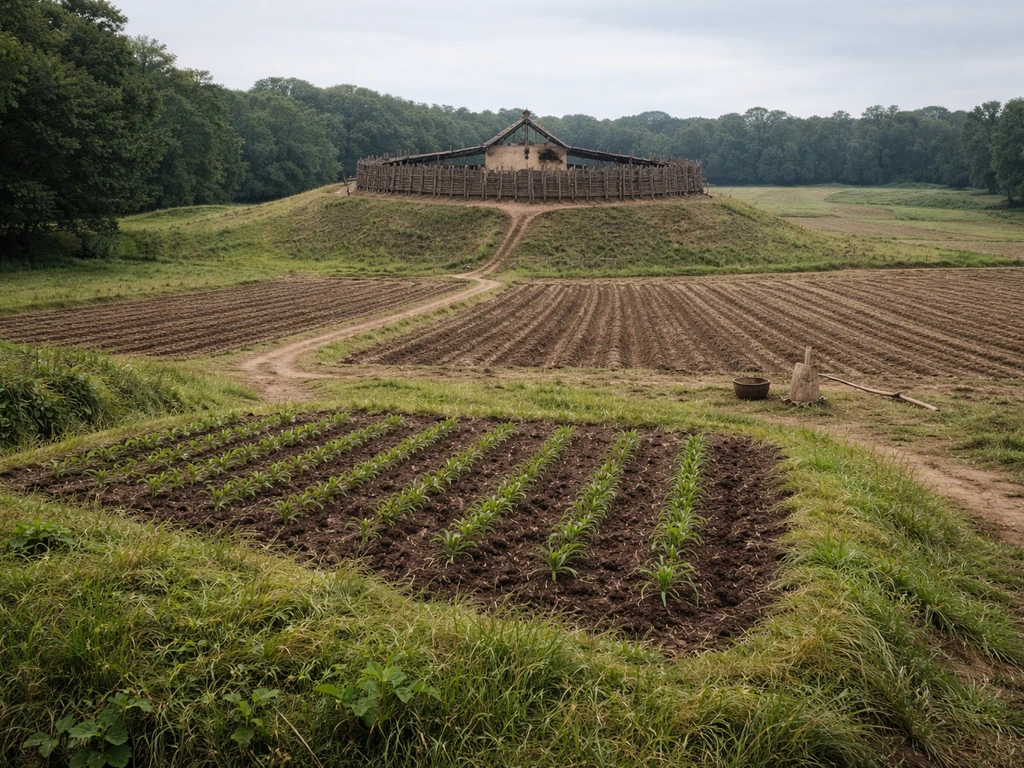
Early planting happened on elevated ground close to the original triangular fort, where the colonists could work while remaining close to their defensive perimeter. Percy's reference to planting on 'two Mountaines' points to cleared upland spots near the fort that offered better drainage than the low marsh ground surrounding much of Jamestown Island. The furrow evidence found archaeologically inside and adjacent to the fort supports this picture of small, closely held garden plots in the earliest years.
As the population grew and governance stabilized, farming expanded outward. Dale's semi-private land grants around 1615 pushed cultivation beyond the immediate fort area onto individual household plots. By the late 1610s, tobacco cultivation had spread well beyond Jamestown Island itself, with planters claiming land along the James River and its tributaries wherever cleared, well-drained soil was available. The settlement shifted from a defended compound with a kitchen garden to an agricultural colony radiating outward along waterways.
How Jamestown farming changed from 1607 to the 1620s
| Period | Primary crops | Labor system | Scale and organization |
|---|---|---|---|
| 1607 to 1609 (early survival) | Corn, beans, squash, peas; attempted wheat/oats | Communal/company labor, largely unstructured and poorly motivated | Small plots adjacent to fort; irregular planting tied to fort construction timeline |
| 1610 to 1614 (martial law era) | Corn, beans, peas; tobacco emerging experimentally | Compelled communal labor under Lawes Divine, Morall and Martiall; strict work assignments | Slightly expanded planting areas; better seasonal timing; first structured agricultural effort |
| 1615 to early 1620s (private plots and tobacco expansion) | Tobacco as dominant cash crop; corn and food crops maintained alongside | Semi-private land grants under Dale; individual household farming; later reliance on indentured labor | Expansion along the James River; farming spread well beyond Jamestown Island; tobacco monoculture tendencies emerging |
The shift from subsistence to commercial agriculture happened faster than most people expect. Within ten years of the 1607 founding, tobacco had moved from a single experimenter's plot to a colony-wide preoccupation. The food crop infrastructure, particularly corn and beans, did not disappear, but it increasingly played a supporting role rather than the starring one. That same tobacco-driven expansion created growing land and labor pressures that defined Virginia agriculture for the next two centuries.
Misconceptions worth clearing up
The biggest misconception is projecting the later Virginia plantation model backwards onto early Jamestown. The image of vast tobacco fields worked by enslaved labor belongs to a later period. In 1607 to 1615, Jamestown was a struggling fort where people were mostly trying not to starve. Tobacco did not dominate until the 1610s, and the large-scale enslaved labor system did not take hold in Virginia until the second half of the 1600s. Early Jamestown farming was small, desperate, and heavily dependent on Native crops and knowledge.
A second misconception is that European crops like wheat were central to Jamestown's food supply. They were tried, and archaeobotanical analysis does confirm their presence, but they were unreliable. The crops that actually kept people alive were the Native staples: corn, beans, squash, and peas. These Native staples were also the core crops grown by the Delaware colony. To answer what the New England colonies grew, look at which crops could reliably handle local winters and soil across the region corn, beans, squash, and peas. These were the main crops that also shaped farming across the middle colonies during the colonial era. European cereals mattered more once agriculture and infrastructure matured later in the 1600s.
A third issue is treating what was 'attempted' as equivalent to what was 'reliably produced.' Colonists tried many things that failed. The archaeological record and the survival accounts together show which crops actually made it into the food supply consistently. Cross-checking documentary sources like Percy's 1607 observations, the NPS historical handbook, and the archaeobotanical feature analysis from Historic Jamestowne gives you three different lines of evidence pointing to the same short crop list.
How to verify this for your own research
- Start with Historic Jamestowne's online collections, particularly the archaeobotanical analysis reports, which document plant remains from specific dated contexts and give you physical evidence rather than just narrative accounts
- Read George Percy's 1607 account ('Observations by Master George Percy') as a primary source for what colonists planted and when in that first year
- Use the NPS Historical Handbook for Jamestown for a solid overview that connects agricultural history to governance and labor changes
- Cross-reference the Encyclopedia Virginia entry on the 'Lawes Divine, Morall and Martiall' to understand how labor organization shaped who was farming and under what conditions
- For tobacco specifically, the NPS Historic Jamestowne tobacco history page traces Rolfe's work from 1612 forward and is well-sourced
- If you are mapping crop patterns by region and period, compare Jamestown's profile against what other colonial settlements were growing: the Southern Colonies more broadly, the Middle Colonies, and the New England Colonies all show distinctly different crop mixes driven by climate and soil differences
For students writing history papers, the key is to anchor your claims to either primary accounts (Percy, Hamor, Rolfe's letters) or to the archaeobotanical reports, which are peer-reviewed and physically grounded. For gardeners or historical reenactors trying to recreate a Jamestown-era planting, focus on Eastern flint corn, common beans, squash, and peas. If you want a quick answer to what the middle colonies grew, start by looking at the region’s grains and dairy-friendly crops what did the middle colonies grow. Those four crops, grown in the Native hill-planting style, are the closest thing to what actually fed the colony in its first decade.
FAQ
What did Jamestown grow for food in the earliest years, before tobacco took off?
In the first decade, the most reliable food base was corn (maize) plus beans and squash, with peas showing up as well. Tobacco appears only as a seed find in early fort contexts, so it was not yet the dependable calorie source.
Did they grow wheat and oats at Jamestown, and was it a staple?
Wheat or oats were present in the archaeological soil record, but they were not consistent staples. The local climate favored heat-tolerant crops, so European small grains were more marginal than corn and Native staples.
How late in the year did Jamestown planting happen, and did it affect harvests?
Documentary accounts describe planting soon after the fort was finished in June 1607, which was late compared with typical Virginia field timing. That timing pushed early yields down, and later years aligned more closely with the spring planting window.
Were Jamestown’s corn and beans grown in European rows or Native style?
The cultivation approach leaned on Native hill planting, including intercropping corn with beans and squash. This mattered because the settlers lacked farming experience and European plowing methods were less suited early on.
What kinds of corn did Jamestown grow, and did that change over time?
Two distinct corn types are identified at the James Fort site: Eastern eight-row flint and Southern Dent (often associated with “Gourdseed” or “Shoepeg”). That suggests they were using multiple locally adapted varieties rather than a single uniform crop.
Where did Jamestown get its seed and cultivation knowledge?
Evidence indicates the corn varieties were known to Virginia Indians before English contact, implying Jamestown relied heavily on Native seed and know-how. Trade, observation, and borrowing practices were key when European farming expertise did not translate well to local conditions.
Did Jamestown farm on the marshy lowlands or higher ground?
Early planting emphasized elevated cleared areas near the fort, often linked to the “Mountaines” mentioned in contemporary writing. Better drainage on upland plots reduced risk from wet soils around the island.
Was tobacco grown only within the fort, or did it spread outward?
It started as limited experiments but expanded outward across the wider region. By the late 1610s, accounts describe colonists planting tobacco beyond the immediate fort area, signaling a shift from survival work to commercial production.
How fast did tobacco mature and how was it handled after harvest?
After Rolfe’s refinement using Caribbean-derived tobacco seed around 1612, the leaf matured roughly in a 90 to 120 day window and was cured through the fall. Curing time and seasonal fit were part of why tobacco succeeded where wheat did not.
Did Jamestown rely on enslaved labor for farming during its first years?
No, that plantation-style enslaved labor system belongs to a later period in Virginia. Early Jamestown farming was small-scale and survival-oriented, with major governance and labor organization changing before the later large-scale labor model developed.
How did Jamestown increase farming productivity as the colony stabilized?
After periods of crisis, governance became more structured and leaders introduced semi-private land grants around 1615. Giving individuals smaller plots created a personal stake in output, which improved productivity compared with strictly assigned work.
If I want to recreate “Jamestown-era” planting for a garden or reenactment, what crop set is most accurate?
Focus on Eastern flint corn, common beans, squash, and peas, using the Native hill-style interplanting approach. Those four crops align best with what physically and textually appears as the reliable early food supply.
Why do some sources claim wheat was important, even if it wasn’t a staple?
Wheat and oats can appear in the record because colonists tried European cereals, and remains confirm they were planted at least sometimes. The key distinction is that “attempted” crops can show up without becoming dependable everyday food compared to Native staples.
Next Articles
What Did the New England Colonies Grow? Major Crops
Major New England colonial crops explained by climate and soil, from corn and wheat to beans and hay, plus today’s paral
What Europeans Mostly Grew in Caribbean Colonies
Learn which crops Europeans dominated in Caribbean colonies, especially sugarcane, plus key supporting estate plants by
What Did the Middle Colonies Grow and Why It Thrived
Learn what the Middle Colonies grew and why their crops thrived fast, from grains to cash crops and feed plants.