Farmers on the Great Plains grow wheat, corn, grain sorghum, soybeans, sunflowers, canola, dry beans, and a wide range of hay and forage crops. Which ones show up in any given county depends heavily on three things: how much rain falls naturally, whether the land sits over an irrigable aquifer like the Ogallala, and how far north or south you are on the Plains. Wheat dominates the drier west and the southern tier from Texas through Kansas and Oklahoma.
What Do Farmers Grow on the Great Plains? Crops Today

Samuel Rourke
7 May 2026
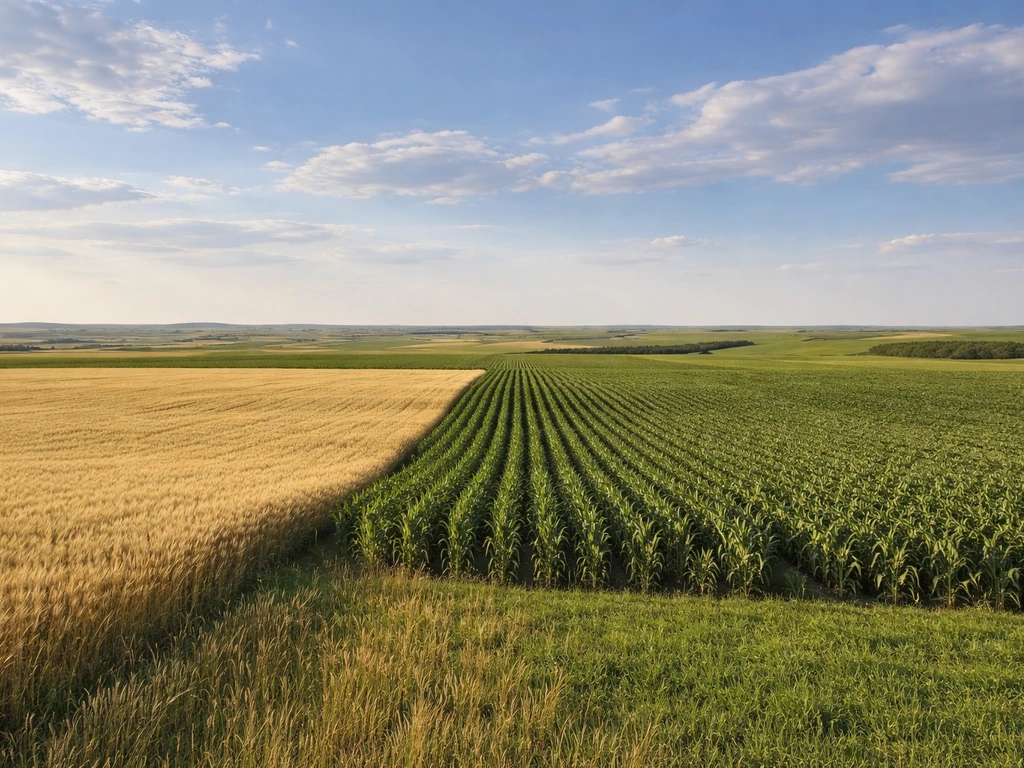
Corn takes over where moisture is higher or irrigation is available, especially across Nebraska and the eastern Dakotas. Sorghum fills the gap in between, thriving where it's too dry for reliable corn yields but too warm for wheat alone. Know those three variables for a specific location and you can predict the likely crop mix with reasonable accuracy.
Great Plains geography and climate basics
The Great Plains stretch from southern Texas north through the Dakotas and into Canada, covering roughly a third of the contiguous United States. The region sits in the rain shadow of the Rocky Mountains, which means moisture from Pacific storms is largely wrung out before it arrives. What precipitation does fall comes mostly from Gulf moisture moving north in spring and summer, making rainfall both seasonal and unreliable.
Precipitation is the defining constraint. The western edge of the Texas Panhandle receives fewer than 10 inches of rain per year. The southeastern corner of the Plains, near the Oklahoma-Arkansas border, can receive over 40 inches. Most of the central Plains falls in the 15 to 30 inch range annually, which the U.S. Forest Service classifies as subhumid to semi-arid. Even in wetter years, evapotranspiration often consumes much of what falls, leaving limited water for crops without supplemental irrigation.
Temperatures vary just as sharply north to south. The northern Plains average around 40°F annually; the southern Plains average closer to 65°F. That spread determines frost dates, growing season length, and which crop species are even viable. Winter wheat, for example, requires a cold vernalization period that works well in Kansas and Oklahoma but becomes less practical in the warmest parts of South Texas.
The soils are mostly Mollisols, the deep, dark, organic-rich prairie soils that built up under centuries of native grassland. They're inherently fertile and hold nutrients well. The limiting factor is almost always water, not soil quality. In the drier western Plains, Aridisols appear more frequently, where low precipitation limits organic matter accumulation and crop production is genuinely moisture-constrained without irrigation or careful dryland management.
What farmers grow by region today
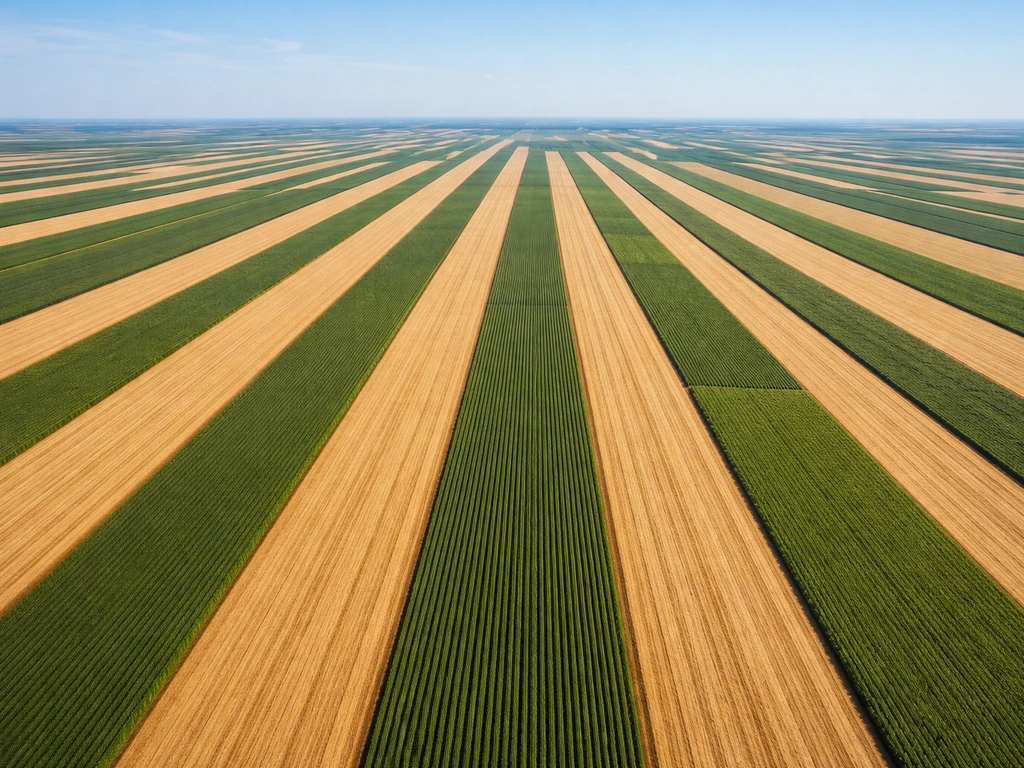
The crop map shifts significantly from state to state, so it helps to break the Plains into rough north-to-south and east-to-west bands when trying to understand what you'll see in a given area.
North Dakota and South Dakota
North Dakota is a small-grain powerhouse. In 2024, farmers there harvested about 6.475 million acres of wheat at yields averaging nearly 57 bushels per acre, producing over 368 million bushels. Barley and oats are also significant, with barley pulling yields around 74 bu/acre. The Northern Plains also produce a large share of the nation's sunflowers, canola, dry edible beans, and lentils, crops that fit the cooler, shorter growing season. South Dakota is more of a transition zone: wheat is still important (about 79 million bushels in 2024), but corn is enormous, with production topping 883 million bushels at 164 bu/acre in the same year. The eastern side of South Dakota receives enough rainfall to support corn reliably.
Nebraska
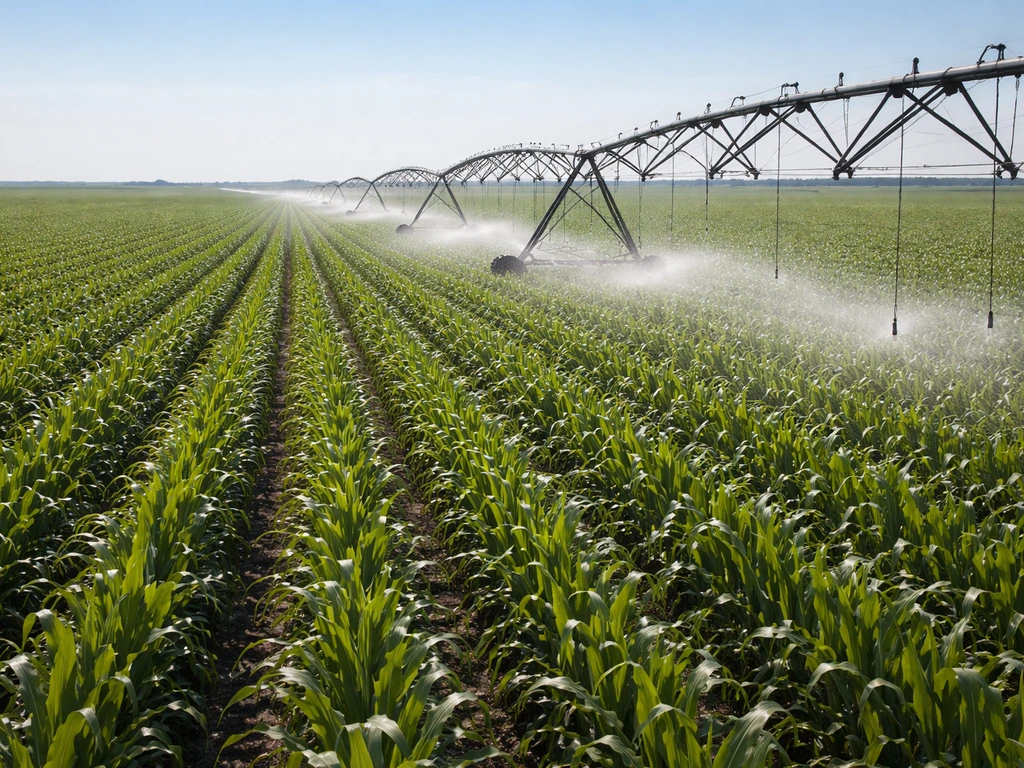
Nebraska sits over the heart of the Ogallala Aquifer, and irrigation has transformed what's possible there. Corn production in 2024 reached nearly 1.8 billion bushels at an average yield of 188 bu/acre, one of the highest corn yields of any Plains state precisely because irrigation supplements rainfall. Wheat remains a presence at around 47 million bushels, and grain sorghum adds about 22 million bushels where drier western conditions or rotation decisions favor it. Soybeans are also widespread in eastern Nebraska where the climate edges closer to the Corn Belt.
Kansas
Kansas is the U.S. winter wheat capital. The 2024 harvest produced about 307 million bushels of winter wheat, though yields averaged only 43 bu/acre reflecting the drier conditions across the western part of the state. Corn contributed 748 million bushels (largely from irrigated areas in the southwest and more humid eastern zones), and grain sorghum added 182 million bushels, making Kansas one of the top sorghum states in the country. The wheat-sorghum-corn gradient here is as clear as anywhere on the Plains.
Oklahoma and Texas
Oklahoma's Great Plains counties are dominated by winter wheat (110 million bushels in 2024) and grain sorghum (about 12.9 million bushels). Cotton appears in the southwestern corner near the Texas border. Texas's Panhandle and High Plains add another 80+ million bushels of wheat and nearly 90 million bushels of sorghum annually. Texas sorghum yields run around 62 bu/acre, lower than Nebraska's irrigated corn but well-suited to the drier, hotter conditions. Cotton is also a major Plains crop in the Texas High Plains, grown largely under irrigation from the depleting Ogallala.
The major commodity crops: grains, oilseeds, and legumes
A few crop categories account for the vast majority of Plains farmland, and understanding what each one needs helps explain the map.
| Crop | Primary growing area on Plains | Key requirement |
|---|---|---|
| Winter wheat | KS, OK, TX Panhandle, CO, western NE | Cold winter for vernalization, dry springs tolerated |
| Spring wheat | ND, northern SD, eastern MT | Short cool growing season, moderate moisture |
| Corn (grain) | NE, SD, eastern KS, ND (irrigated or wetter areas) | 120+ frost-free days, 20+ inches effective moisture |
| Grain sorghum | KS, TX, OK, western NE | Heat and drought tolerance, less water than corn |
| Soybeans | Eastern ND, SD, NE, KS border areas | Warm season, 25+ inches or irrigation |
| Sunflowers | ND, SD, KS | Drought-tolerant, mid-season heat |
| Canola | ND, SD, MT | Cool spring crop, similar rotation to wheat |
| Dry beans/lentils | ND, SD, CO, NE | Short season, moderate moisture |
| Barley | ND, MT, SD | Cool season, malting or feed markets |
| Cotton | TX High Plains, OK southwest | Long frost-free season, mostly irrigated in Plains |
Wheat stands out as the Plains crop at the national scale. In the 2024/25 marketing year, U.S. farmers produced around 2 billion bushels of all wheat classes combined from about 38.5 million harvested acres, and the Great Plains accounts for the bulk of that. The Northern Plains contributes heavily to spring wheat and durum, while the Central and Southern Plains carry the winter wheat load. Soybeans are less central to the Plains than to the Corn Belt further east, but they're increasingly common in the eastern Plains where moisture allows or where crop prices and rotation logic make them attractive.
Row crops vs. small grains, and how rotation works
Small grains (wheat, barley, oats) and row crops (corn, soybeans, sorghum, sunflowers) require different equipment, planting windows, and management, but they're often used together in rotations that break pest and disease cycles and manage soil moisture. The standard question on a Plains farm isn't just 'what do I grow?' but 'what did I grow last year, and what does the soil need now?'
In the Northern Plains, a common rotation pairs wheat with canola or pulse crops (dry peas, lentils, chickpeas). Canola breaks cereal disease cycles and improves yields in the following wheat crop. In central Kansas and the Southern Plains, winter wheat often rotates with grain sorghum, particularly in drier areas. A wheat-sorghum-fallow sequence is well established in Ogallala-region dryland farming: one year of wheat, one year of sorghum, then a fallow year to rebuild soil moisture. That fallow year represents a real sacrifice of one harvest in three, but it's the practical answer when annual rainfall can't consistently support back-to-back crops.
In the wetter eastern Plains and irrigated Nebraska, corn-soybean rotations borrowed from the Corn Belt are common. Two-year corn-soy rotations reduce rootworm pressure and improve nitrogen efficiency because soybeans fix their own nitrogen, reducing fertilizer costs in the following corn crop. Some farms run three-year rotations adding wheat or sorghum as a third leg to spread risk and improve soil structure even further.
Irrigated crops vs. dryland crops: where water changes everything
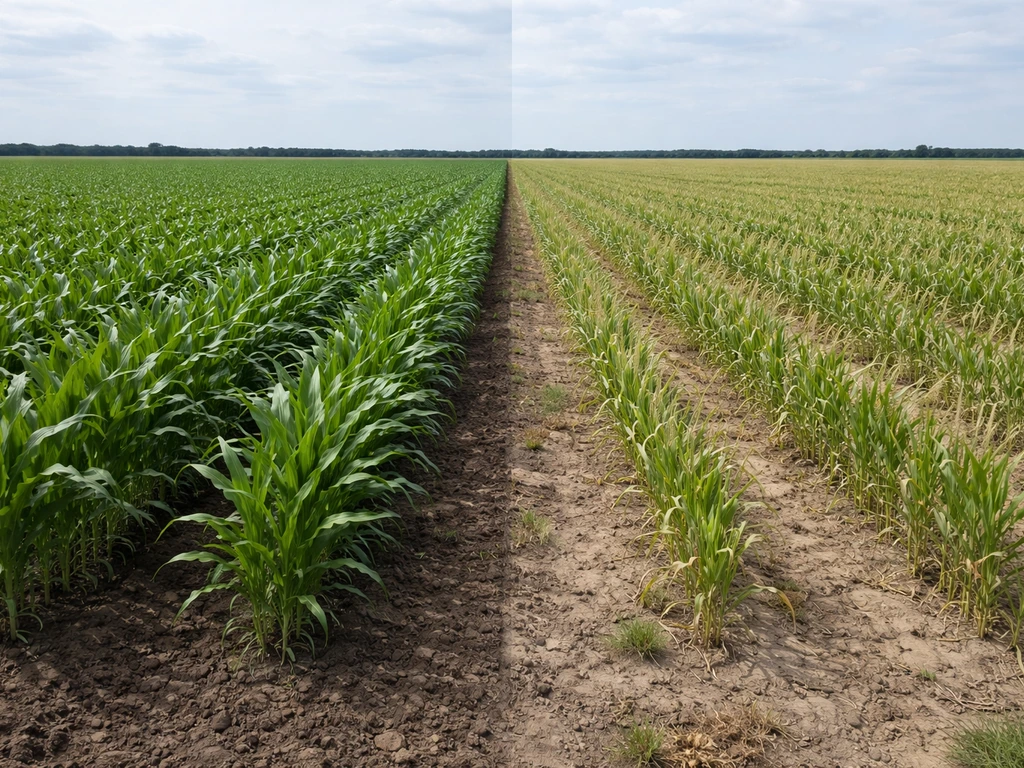
Irrigation is the single biggest determinant of which crops appear where in the Plains. About 23% of the cropland overlying the Ogallala Aquifer is irrigated, according to USGS data, and that irrigated fraction produces crops that would be nearly impossible without supplemental water. A recent USGS report for the Ogallala-related parts of Oklahoma also reports prominent cropland-cover types in 2022, including winter wheat (34.9%), fallow or idle cropland (23.4%), sorghum (22.7%), and corn (10.1%) About 23% of the cropland overlying the Ogallala Aquifer is irrigated, according to USGS data,. Corn in western Kansas or Nebraska's Panhandle, cotton in the Texas High Plains, and high-yield soybeans across parts of Nebraska all depend heavily on the Ogallala.
The practical split works like this: irrigated ground can support high-water-demand crops like corn (which needs roughly 24 inches of growing-season moisture for good yields) and cotton. Dryland ground in the same area typically can't. Instead, dryland farmers in those western counties rely on winter wheat, grain sorghum, and sunflowers because those crops are either drought-tolerant or can survive on stored soil moisture plus limited rainfall. Under some conditions, simulated crop economics actually show dryland wheat and grain sorghum matching or outperforming irrigated returns when water costs are high and aquifer access is limited.
The Ogallala situation is worth understanding because it shapes the future as much as the present. The aquifer is declining in many areas, particularly in the southern High Plains of Kansas and Texas. Farmers are actively experimenting with reduced irrigation rates to stretch remaining water, and some are transitioning acres back to dryland crops or even perennial grasses as the economics of pumping shift. That transition is already visible in county-level crop data if you know where to look.
Hay, pasture, and forage crops on the Plains
It's easy to think of the Great Plains exclusively in terms of grain crops, but hay, pasture, and forage are a massive part of the agricultural landscape, especially in the drier western counties where row crop or small-grain farming isn't viable. The Plains supports one of the largest beef cattle industries in the world, and that cattle industry runs on grass.
Native range and introduced pasture grasses cover enormous acreages across the Plains, particularly in the Flint Hills of Kansas, the Sandhills of Nebraska, and the short-grass prairies of eastern Colorado and Wyoming. These aren't cropland in the traditional sense, but they're managed agricultural land producing forage. USDA data from 2017 recorded 659 million acres of grassland pasture and range nationally, and the Great Plains accounts for a substantial share of that.
Among harvested forage crops, alfalfa is the dominant hay crop across the Plains, valued for its high protein content and ability to support dairy and beef operations. It's grown both dryland and under irrigation, though irrigated alfalfa in Nebraska, Kansas, and Colorado typically produces far more cuttings per year. Native grass hay (big bluestem, switchgrass, buffalo grass mixtures) is harvested in drier areas.
Small grain hay, cut from wheat or oats before heading, is also a tool some farmers use to manage winter wheat in years when grain prices are weak or forage demand is high. Corn silage is important wherever corn is grown: instead of harvesting the grain, the whole plant is chopped and stored as fermented silage for cattle, especially on operations integrated with feedlots.
How Great Plains cropping has changed over time
The crop mix on the Plains today looks nothing like it did 150 years ago, and it's still shifting. Before European settlement, the Plains was entirely native grassland, supporting bison herds rather than crops. Early settlers in the late 1800s attempted to grow corn using eastern farming methods, often with disastrous results in drier years. The emergence of hard red winter wheat, brought by Mennonite settlers from Russia who were already experienced with drought-tolerant varieties, was transformative. By the early 1900s, winter wheat had become the defining Plains crop, particularly in Kansas and Oklahoma.
The Dust Bowl of the 1930s exposed how badly farming practices were mismatched to Plains conditions. Massive plowing of native grassland for wheat, combined with severe drought, created the catastrophic soil erosion that defined that era. The federal response, including the establishment of the Soil Conservation Service (now NRCS) and programs encouraging windbreaks, contour farming, and grassland conservation, reshaped how Plains farmers managed their land and what they grew.
Post-World War II, the spread of center-pivot irrigation unlocked the Ogallala and fundamentally changed the western Plains. Corn, soybeans, and cotton appeared on land that had previously grown only dryland wheat or grazed cattle. The 1970s and 1980s saw rapid expansion of irrigated acreage. Since then, declining aquifer levels and rising energy costs have steadily pressured that irrigated model. Conservation tillage and no-till farming, widely adopted from the 1990s onward, changed which crops work best in various rotations. Today, farmers balance commodity prices, water availability, conservation program incentives, and climate variability in making crop decisions that their grandparents never had to calculate.
More recently, pulse crops (dry peas, lentils, chickpeas) have expanded significantly in the Northern Plains, driven by demand for plant proteins and the agronomic benefits those crops provide in wheat rotations. Industrial hemp appeared briefly as an experimental crop after the 2018 Farm Bill, with variable results. Cover cropping and multi-species mixes are gaining ground as soil health awareness grows. Farmers grow phacelia as a cover crop and green manure because it can help suppress weeds, improve soil structure, and support beneficial insects while protecting bare soil cover crops. The Plains crop map is not static.
How to find out what's grown near you
If you want to know what's actually grown in a specific county or region right now, the most reliable starting point is the USDA NASS (National Agricultural Statistics Service). On most Plains farms, farmers grow only a handful of main crop types within a single year based on rainfall and irrigation access. Their Statistics by State portal and Quick Stats database let you search planted and harvested acres, yields, and production values by state, commodity, and year. It's the most comprehensive public data source for this and it's free. Start at the state level to get the broad crop picture, then filter down to county level for specifics.
For even more local detail, your state's land-grant university extension service publishes county crop guides, variety trial results, and local production data. Kansas State, University of Nebraska-Lincoln, North Dakota State, Oklahoma State, and Texas A&M all maintain active extension programs with crop-specific resources tied to local conditions. If you're trying to understand what's grown in a particular township or planning your own operation, an extension agronomist in the county can give you on-the-ground context that no database can fully replace.
A practical three-step approach works well for most readers: first, identify the average annual precipitation for the specific location (USDA climate maps and the PRISM Climate Group make this easy). Second, check whether the area overlies an irrigable aquifer or has surface water access. Third, cross-reference those two facts with the state-level crop data from NASS. That combination tells you whether you're in wheat-sorghum-fallow country, irrigated corn-soy country, or Northern Plains small-grain and oilseed country, and gives you a solid working list of likely crops before you even talk to a local farmer.
- Look up annual precipitation for your location using USDA Climate Hub maps or PRISM data.
- Check whether the county sits over the Ogallala Aquifer or another irrigable water source.
- Search USDA NASS Quick Stats for your state and county to see planted/harvested acres by crop.
- Visit your state land-grant university extension website for county crop guides and local variety trial results.
- For the most current ground-level picture, contact the local USDA Farm Service Agency (FSA) office, which tracks crop insurance enrollments and planted acreage at the farm level.
Understanding what farmers grow on the Great Plains is really about understanding the water. Whether that's natural rainfall shaping dryland rotations, an aquifer enabling irrigated corn and cotton, or just enough moisture to support spring wheat in the Northern Plains, water is the variable that explains most of what you'll see growing from Texas to North Dakota. Get the precipitation and irrigation picture right, and the crop list largely fills itself in.
Many vegetable and specialty-crop growers use plastic mulch to warm soil and reduce evaporation, which can affect what they grow and when. If you’re wondering what crops do farmers grow in a specific place on the Great Plains, check the local rainfall and irrigation options first.
FAQ
Are the crops listed always grown everywhere on the Great Plains?
No. Within a single state, counties can differ because rainfall varies a lot, irrigation access is uneven, and local frost dates change planting windows. A crop that is common in one part of a state may be rare a few counties away if water availability or temperature suitability is different.
What’s the main difference between winter wheat and spring wheat on the Plains?
Winter wheat is planted in the fall and needs a cold period to develop properly, so it fits best where winters provide vernalization. Spring wheat is planted after winter and relies more on the spring growing season, so it is more practical in colder northern areas where winter wheat’s cold requirement and survival are less certain.
Can farmers on the western Plains grow corn without irrigation?
Often only in limited, higher-rainfall pockets or in especially favorable microclimates, because corn typically needs more growing-season moisture than many dryland counties receive. Where irrigation is available, corn expands quickly, while dryland rotations more commonly emphasize winter wheat, grain sorghum, and hay.
How does irrigation from the Ogallala usually affect crop choices?
Irrigation mainly widens the range of crops by reducing the downside of dry years and allowing higher yield targets. It also changes timing and management, for example supporting water-demanding crops like corn and cotton and enabling multiple cuttings of irrigated alfalfa compared with dryland hay.
What does “fallow” mean in wheat-sorghum-fallow rotations, and is it always required?
Fallow means the land is intentionally left unplanted for a season to conserve soil water and rebuild moisture. It is not a universal rule, but in dryland regions where rainfall is too inconsistent for back-to-back crops, the single-year break can be the difference between a reliable harvest and crop failure.
Why are pulse crops like lentils and chickpeas mostly concentrated in the Northern Plains?
They tend to fit cooler conditions and shorter growing seasons, and they work well in wheat-based rotations because they break cereal disease and pest cycles. Their expansion is also driven by market demand for protein, plus agronomic fit with local precipitation patterns.
Do hay and forage count as “crops” for farmers in the Great Plains?
Yes. A large share of agricultural land is managed for pasture and hay rather than harvested grain or oilseeds. In many western counties, forage systems are the practical way to use land that cannot reliably support row crops under typical rainfall.
How do farmers decide between sunflowers, canola, and other oilseeds?
Decisions often hinge on moisture reliability, disease and pest history, and how well the crop fits into the rotation. Oilseed crops also have different planting and harvest timing than wheat or corn, so farmers typically match them to local frost dates and the farm’s equipment and labor schedule.
What’s a common mistake when trying to predict what’s grown in a specific Plains county?
Relying only on the state-level crop picture. State averages hide big within-state differences, especially where rainfall gradients and irrigation access change the feasible crop mix. County-level data or local precipitation maps are usually needed for an accurate guess.
If aquifer levels are dropping, what transitions are farmers making first?
Many start by reducing irrigation rates or adjusting the rotation, then shift more acres toward drought-tolerant crops when water becomes too expensive or less reliable. Some operations gradually move from irrigated row crops to dryland wheat or sorghum, and others explore perennial grass or conservation-focused systems where they pencil out.
Where can I verify current crop mix for a particular county or year?
Use the USDA NASS Quick Stats and related county reporting, then cross-check with state extension resources for local context on rotations and typical yields. Look at both planted acres and harvested acres, since crop loss in drought or weather events can change the practical “what got grown” story.
Next Articles
What Crops Do Farmers Grow By Region, Climate, and Time
Crop lists by region and climate, plus crop types and history, to answer what farmers grow and why.
What Did the Delaware Colony Grow: Crops, Uses & Legacy
Colonial Delaware’s main crops, grains, hay, flax, fruits, vegetables, livestock, why they thrived and how they were sold.
What Did Jamestown Grow and How They Farmed It
Learn what Jamestown colonists grew and the methods they used to plant, harvest, and adapt crops to Virginia conditions.