
Farmers grow phacelia (Phacelia tanacetifolia) mainly to do two things at once: improve their soil and feed their pollinators. Farmers often grow phacelia as a cover crop and bee forage between cash crops to support pollinators and protect soil. It is a fast-establishing cool-season annual that works as a cover crop, a green manure, and one of the best bee-forage plants you can sow in a temperate field.
Why Farmers Grow Phacelia: Cover Crop, Soil, Pollinators

Samuel Rourke
12 May 2026
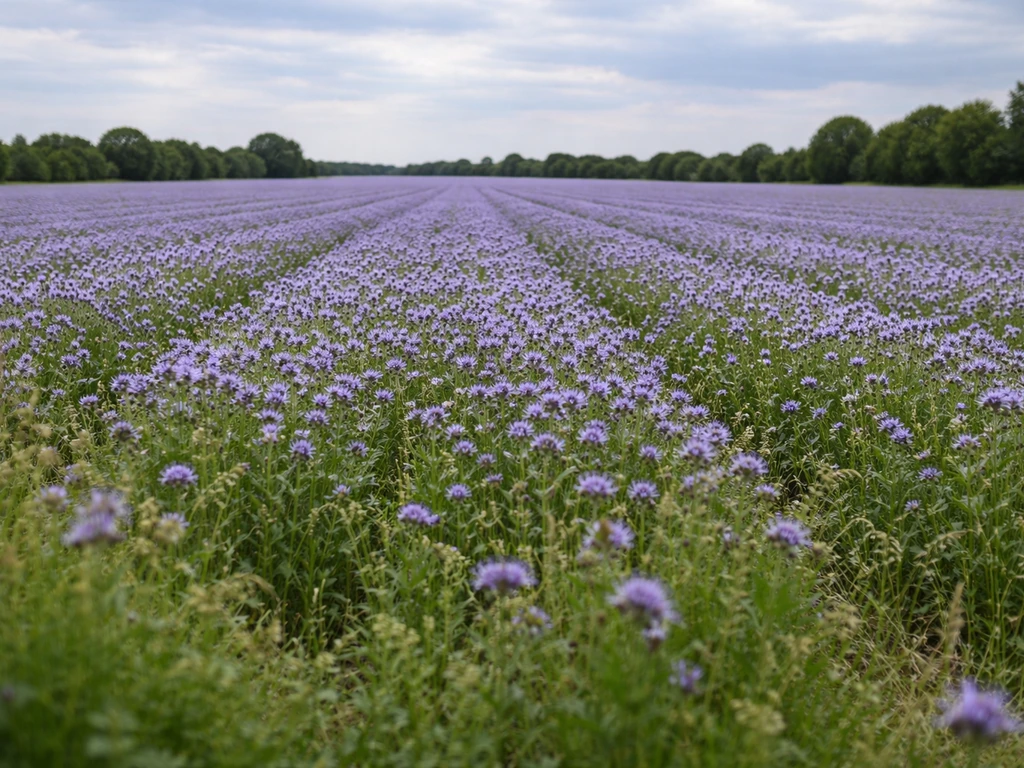
If you are trying to decide whether it belongs in your rotation right now, the short version is this: phacelia is worth it when you need to protect bare ground, boost organic matter, or get honeybees and native bees into a field between cash crops. How many crops farmers grow in a year depends a lot on their rotation schedule and the growing window in their region between cash crops.
It is not the best choice if you need heavy weed suppression or need something cheap and readily available everywhere.
What phacelia actually does on a farm
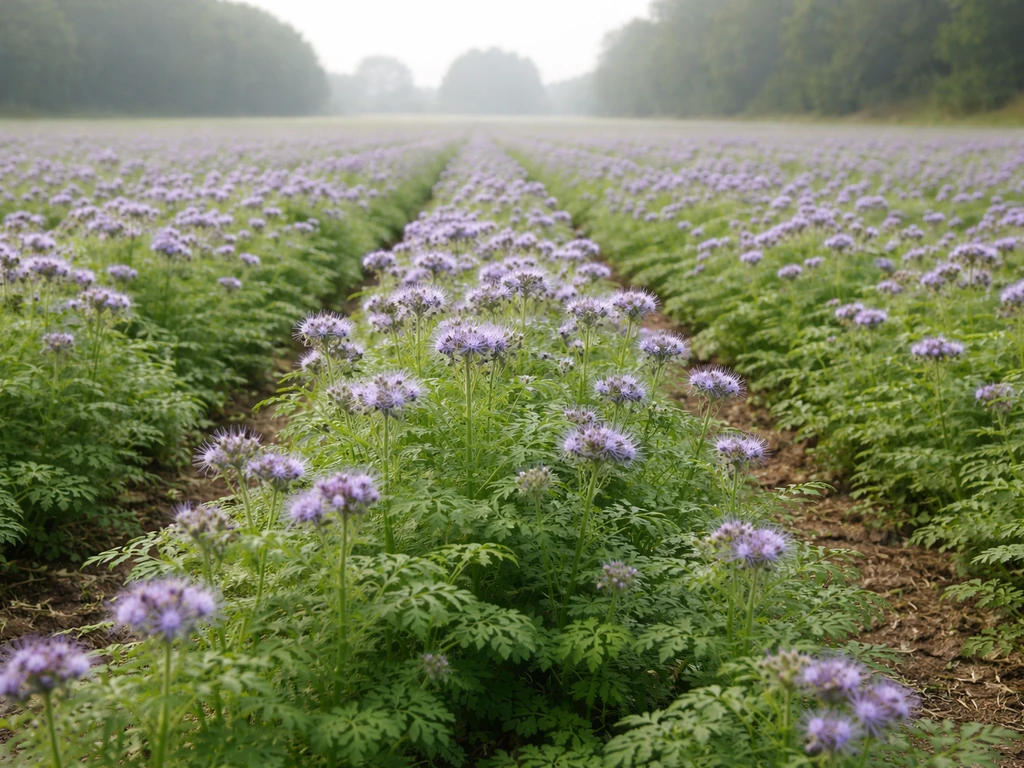
Phacelia fills two roles that most cover crops handle separately. As a cover crop, it puts down ground cover fast, protecting soil from rain impact and compaction during fallow windows. As a pollinator plant, it delivers an exceptional nectar and pollen source, so good that NRCS lists it as an excellent attractant for both European honeybees and native bees in its cover crop guidance. Most growers use it for one of four specific goals: protecting soil over a short fallow period, adding organic matter before a cash crop, drawing pollinators into areas near orchards or vegetable fields, or giving beneficial insects a foothold in a rotation that otherwise offers them nothing.
What makes phacelia stand out compared to other multi-purpose cover crops is that it does the pollinator job better than almost anything else you can sow. Cereal rye protects soil better. Crimson clover fixes nitrogen. Buckwheat flowers fast. But for raw bee attraction per square foot of field, phacelia is hard to beat. That is why you see it show up in wildflower mixes, insectary strips along orchard rows, and vineyard floor covers, not just in broad-acre cover crop systems.
Soil benefits: erosion control, organic matter, and green manure
Phacelia germinates and establishes quickly, which means it covers bare soil before erosion can do damage. That alone is worth something, especially on sloped ground or light sandy soils that crust over after rain. But the bigger soil story is what happens when you terminate it. When you mow or incorporate phacelia, you are adding meaningful biomass back into the soil. Research suggests roughly 25 to 35 percent of phacelia's aboveground components end up contributing to soil organic matter as residues after termination, which is a useful green manure effect even if you are not tilling it in.
In a high-tunnel organic vegetable rotation study, spring phacelia was associated with improvements in soil organic matter content and water-stable aggregate indicators compared to untreated soil. That is not surprising, because any actively growing cover crop is feeding soil biology, but the structural improvement piece matters. Cover crops, including phacelia, change how soil aggregates form and which microbial communities dominate, which has downstream effects on how well your soil holds water and resists compaction. If your ground has been tilled repeatedly or left bare, a single phacelia cover crop cycle will not transform it overnight, but it moves things in the right direction.
Rotation and field health: fitting phacelia between cash crops
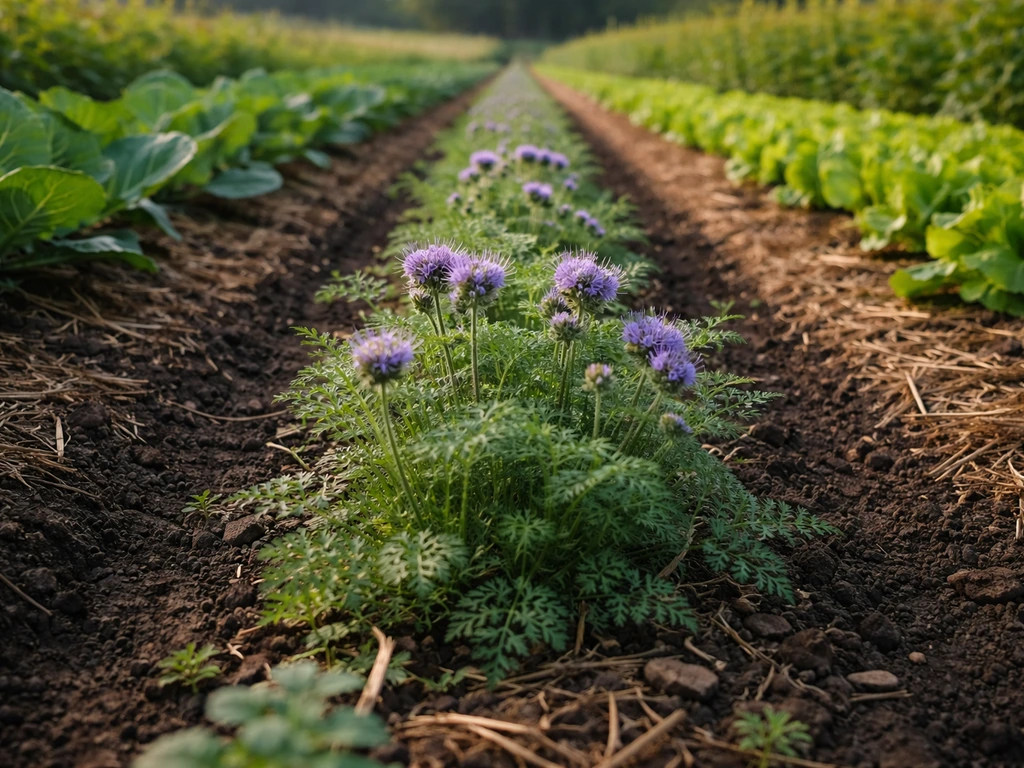
Phacelia is not in the grass family or the legume family or the brassica family, which is actually one of its most practical qualities. Because it belongs to the borage family (Boraginaceae), it does not share disease cycles, pest pressures, or allelopathic concerns with most common cash crops. That makes it a clean break crop in rotations where you want to interrupt soilborne pathogen cycles or just give the ground something genuinely different before planting corn, vegetables, or small grains.
For vegetable growers especially, this matters. If your rotation cycles between brassicas, alliums, and solanums, you are probably running out of families to break with. Phacelia gives you that break without locking in a grass or leaving a disease bridge. Its weed suppression is moderate rather than excellent.
UMN Extension notes that effective weed control from cover crops generally requires excellent stands, and it gives a biomass threshold example of less than 1,000 lb biomass per acre being inadequate for outcompeting spring-emerging weeds weed suppression is moderate rather than excellent. USDA ARS data shows phacelia plots do differ from controls in weed seedling emergence, and a 2024 vineyard study found native phacelia had more weed control potential than an untreated control.
But if weed pressure is your main problem, rye or a rye-vetch mix will outperform phacelia substantially. Use phacelia where the rotation benefit and the pollinator benefit are the primary goals, not where you need a thick weed-suppressing mat.
Beneficial insects and pollinators: the biodiversity argument
This is where phacelia genuinely has no equal among common cover crops. A Swedish field study monitoring insect pollinators in early-flowering phacelia strips found meaningful populations of bumble bees (Bombus spp.) and honeybees (Apis mellifera) present in fields where phacelia strips were established. UK observations of commercial flower mixtures identified phacelia as a dominant species for attracting beneficial insects when it was present in a mix. And a dedicated apiculture study confirms it serves as a food plant for both honeybees and bumble bees. NRCS and UC IPM both list it as a top-tier insectary plant.
The practical implication is real. If you are an almond grower in California, a vegetable farmer trying to support native bee populations, or someone managing habitat near a clover seed field, sowing phacelia strips or whole fields gives local pollinators a dependable forage resource during blank" rel="noopener noreferrer">bloom windows that often have very little else available. Farmers grow phacelia as a dependable forage resource for pollinators during critical bloom windows when other plants are scarce what farmers grow.
One honest caveat from UC SARAP's cover crop database: phacelia can host lygus bugs, which are significant pests in strawberries, beans, and some vegetable crops. If lygus pressure is already a problem on your farm, placing phacelia adjacent to susceptible crops adds risk. Keep that in mind when placing it in the landscape.
Where phacelia works best: climate, season, and regional fit
Phacelia is a cool-season annual that thrives in temperate climates with mild springs and falls. It grows best when temperatures are moderate, and it will winter-kill at around 18°F, which is actually useful in many rotations because it means you do not need to terminate it in cold-winter regions. In the Midwest and northern Great Plains, fall-sown phacelia typically winter-kills and leaves a manageable residue without any additional termination step. In milder regions like the Pacific Coast, California valleys, or the mid-Atlantic, it can be spring-sown for a late-spring bloom window or fall-sown to carry over through a mild winter.
The 2024 vineyard study in California's Central Valley semi-arid Mediterranean conditions found phacelia delivered greater soil health and vine vigor benefits than rye, which is notable because rye is the default cover crop in many California vineyards. That result points to phacelia fitting particularly well in regions with Mediterranean-type climates where cool, wet winters allow establishment and spring flowering before summer heat arrives. In the Pacific Northwest, phacelia fits well in spring fallow windows between vegetable crops. Iowa NRCS guidance includes phacelia as a local cover crop option tied to specific seasonal windows, confirming it has enough regional fit across a range of U.S. climates to be worth considering broadly, not just in specialty situations.
Phacelia does have one sensitivity worth noting: it can be inhibited by certain light and temperature combinations at germination, and performance does vary by sowing date. A multi-year European sowing-date experiment (2017 to 2021) found that stand development and weed dynamics in phacelia shifted meaningfully with planting timing. Earlier spring sowings in cool conditions generally performed better than late or heat-stressed plantings.
How to choose and manage phacelia for your goal today
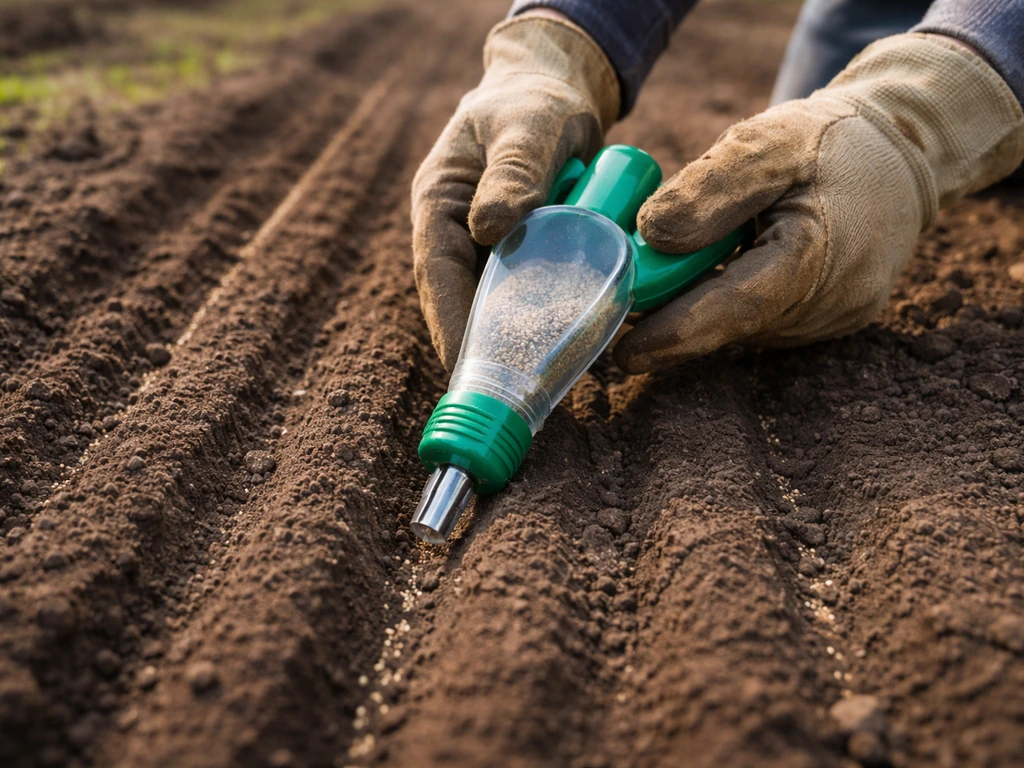
If you have decided phacelia fits your situation, here is what you need to know to actually get it in the ground and manage it well.
Seeding basics
- Seeding depth: 1/8 to 1/4 inch. Phacelia has small seeds and buries poorly. Shallow placement is critical. Drilling at 1/4 inch gives better depth control than broadcasting.
- Seeding rate: NRCS cover crop charts list drilled rates and broadcast rates separately. Drilled rates are lower (roughly 3 to 5 lb/acre is common in guidance); broadcast rates run higher to compensate for lower germination efficiency. Check local NRCS or extension guidance for your region.
- Timing: Spring as early as soil can be worked, or fall at least 4 to 6 weeks before hard frost if you want some growth before winter-kill. In mild-winter regions, fall sowing for spring bloom is the classic approach.
- Seed sourcing: Phacelia seed is not available at every farm supply store. Plan ahead. Specialty seed suppliers, cover crop seed catalogs, and some NRCS-partnered distributors carry it. Expect to pay more per pound than for cereal rye or oats.
Termination and management
In cold-winter climates, phacelia winter-kills and you may not need to do anything. In milder areas, you will need to terminate it before it sets seed or competes with your cash crop. Mowing works, as does rolling or incorporation. Farmers can also grow cover crops under plastic in some systems, and phacelia is a common option when the timing and conditions fit.
NRCS termination guidance emphasizes that timing matters: terminate too early and you risk regrowth; terminate after seed set and you get a volunteer problem. Aim for termination at or just before full bloom if you want to maximize pollinator benefit while still managing regrowth risk.
Penn State and University of Minnesota extension both note that rolling or crimping too early in the plant's growth cycle leads to poor kill rates. If you are rolling rather than mowing, wait until phacelia is fully flowering and beginning to set seed for reliable termination.
Setting realistic expectations
Phacelia will not transform compacted, depleted soil in one season. It will not eliminate weeds. What it will do is protect bare ground, add modest organic matter when terminated, attract an impressive diversity of bees during its bloom window, and slot into a rotation without adding disease or pest pressure to your main crops. When people ask what subsistence farmers grow, cover crops like phacelia can be a practical option for soil protection and pollinator support. For gardeners and small-scale vegetable growers, even a short strip of phacelia near a vegetable bed or fruit tree will pull in pollinators noticeably during flowering.
When phacelia is worth it vs alternatives
| Your primary goal | Does phacelia fit? | Better alternative if not |
|---|---|---|
| Attract pollinators and beneficial insects | Yes, excellent choice | Buckwheat for warmer windows |
| Build soil organic matter (green manure) | Yes, good choice | Legumes if nitrogen is also needed |
| Erosion control on bare ground | Yes, adequate | Cereal rye for stronger cover |
| Heavy weed suppression | Moderate only | Rye or rye-vetch mix |
| Nitrogen fixation | No | Crimson clover, hairy vetch, field peas |
| Cheap, widely available seed | No | Oats, cereal rye |
| Break crop with no family overlap | Yes, strong fit | Few alternatives match this quality |
| Cool-season fallow cover in Mediterranean climate | Yes, strong fit | Few options perform as well |
The clearest case for phacelia is when you need a cover crop that does something for pollinators and soil at the same time, fits into a cool-season planting window, and does not share a plant family with your cash crops. Many farmers choose crops to plant based on climate, market demand, soil needs, and pest and weed pressure. That combination is genuinely hard to replicate with a single species.
If only one of those boxes applies, you may have a cheaper or more effective option. But if two or three of them apply, phacelia is probably the right call. Much like how farmers in different regions choose specific crops based on local climate and soil fit (the same principle that drives what crops dominate the Great Plains versus the Pacific Coast), phacelia earns its place when the conditions and goals line up.
FAQ
Will phacelia come back as a weed or volunteer plant?
Yes, but only if you manage seed production. Phacelia is valued because it winter-kills in many cold areas, but in milder climates it can survive or reseed. If you do not want volunteers near the next cash crop, plan to terminate it before full seed set, and consider mowing or rolling at the right growth stage rather than waiting until it looks “done.”
Is phacelia a good choice when I need strong weed suppression?
Phacelia’s weed suppression is usually described as moderate, not top-tier. If your field has heavy weed seedling pressure (or you are relying on the cover crop to replace herbicide programs), rye or a rye-based mix often provides more rapid, dense ground cover. Use phacelia when pollinator support and rotation breaks matter more than maximum weed control.
How safe is phacelia as a disease and pest break between cash crops?
It is generally a good rotation “family break” because it is not in the grass, legume, or brassica families. That can help you interrupt shared disease and pest cycles with crops like corn (grass), beans (legume), and many common vegetables (often brassicas). If you are managing a specific pathogen, still verify local disease host lists, because “different family” does not always guarantee zero risk.
When should I terminate phacelia to balance pollinators and prevent regrowth?
In most cases, termination timing is the main lever. If you terminate too early, you may get less biomass and a shorter bloom window for pollinators. If you terminate after seed set, you increase the chance of regrowth or volunteer issues. A practical target is termination at or just before full bloom, and then reassess if weather delays follow-up operations.
Why did my phacelia germinate poorly, even though I followed the seeding plan?
Phacelia performance depends on sowing conditions, because germination can be sensitive to certain light and temperature combinations. Stand establishment and weed dynamics vary by planting date, with earlier cool-season sowings usually performing better than late or heat-stressed plantings. If you are sowing in hot periods, adjust your timing or expect thinner stands.
Could phacelia increase pest risk like lygus for nearby crops?
Phacelia can host lygus bugs, which are problematic for crops like strawberries, beans, and some vegetables. If lygus pressure already exists on your farm, placing phacelia adjacent to susceptible fields can raise risk. A common mitigation is to locate phacelia away from vulnerable blocks or manage bloom windows so peak attractiveness does not line up with the most sensitive crop stage.
Can I grow phacelia as a strip or border instead of planting it across the whole field?
Yes, especially for operations that want a pollinator resource without a full-field interruption. Many growers use phacelia as strips near orchard rows, vineyards, or vegetable edges to concentrate bee forage where it matters. This approach can reduce the area at risk for pests like lygus while still supporting beneficial insects during the bloom window.
What results should I realistically expect from one phacelia cover crop cycle?
No single cover crop fixes compaction or weed problems instantly. Phacelia is best viewed as a soil-protection and biology-support tool that helps protect bare ground, contributes some residue after termination, and improves aggregate formation over time when repeated. If your soil is severely compacted, pair phacelia with the physical or traffic-management steps needed to address compaction.
Does phacelia work differently in cold-winter versus mild-winter regions?
It can be useful in cool-season rotations that include mild springs and falls, because it is a cool-season annual. If you are in a region where winter temperatures reliably kill it, you may avoid termination. In milder winter climates, you will usually need to plan termination for spring cropping, since it may persist or produce seed if left too long.
Next Articles
What Do Farmers Grow on the Great Plains? Crops Today
Discover main Great Plains crops today, from wheat and corn to soybeans and alfalfa, plus dryland vs irrigated farming.
What Crops Do Farmers Grow By Region, Climate, and Time
Crop lists by region and climate, plus crop types and history, to answer what farmers grow and why.

What Did the Delaware Colony Grow: Crops, Uses & Legacy
Colonial Delaware’s main crops, grains, hay, flax, fruits, vegetables, livestock, why they thrived and how they were sold.