The answer depends entirely on who 'they' are, where they lived, and when. Once you nail down those three things, crop patterns become surprisingly predictable: geography and climate set the menu, and culture or era narrows it further. This guide walks you through exactly how to figure out which crops a specific group grew, whether you're researching a colonial-era American farm, a medieval European village, an ancient civilization, or a modern agricultural county. For example, if you’re asking what crops Vikings grew, you’ll want to start by pinning down their region and time period, then test those options against climate and evidence what crops a specific group grew.
What Crops Did They Grow? How to Identify Likely Crops

Samuel Rourke
24 Apr 2026
Why 'What Crops Did They Grow' Is a Moving Target
The question sounds simple, but 'they' is doing a lot of heavy lifting. 'They' could mean Anglo-Saxon farmers in 8th-century England, Dust Bowl-era Oklahoma homesteaders, Aztec communities in the Valley of Mexico, or your great-grandparents in rural Georgia. Each of those groups lived in a radically different climate, had access to completely different seeds and tools, and faced different market pressures. Before you can answer the crop question, you need to answer three smaller ones: Who exactly are 'they'? Where did they live (region, climate zone, soil type)? And when, because what was available to plant in 1200 CE is very different from 1900 or today?
Geography is the biggest filter. A crop like cotton needs long, hot summers with at least 200 frost-free days. FAO cotton crop information states that cotton is very sensitive to frost and requires a minimum of 200 frost-free days cotton needs long, hot summers with at least 200 frost-free days.. Rice needs standing water or extremely consistent rainfall. Rye thrives in cold, poor soils where wheat fails. Once you know the climate zone and soil type of your location, you can eliminate a huge chunk of the crop world immediately and zero in on what was actually viable. Time period adds another filter: many crops weren't available in certain regions until trade routes or colonial exchange introduced them. Maize didn't reach Europe until after 1492. Potatoes didn't become a European staple until the 1700s. Those facts alone can rule crops in or out.
What Crops Are Grown Across U.S. Regions
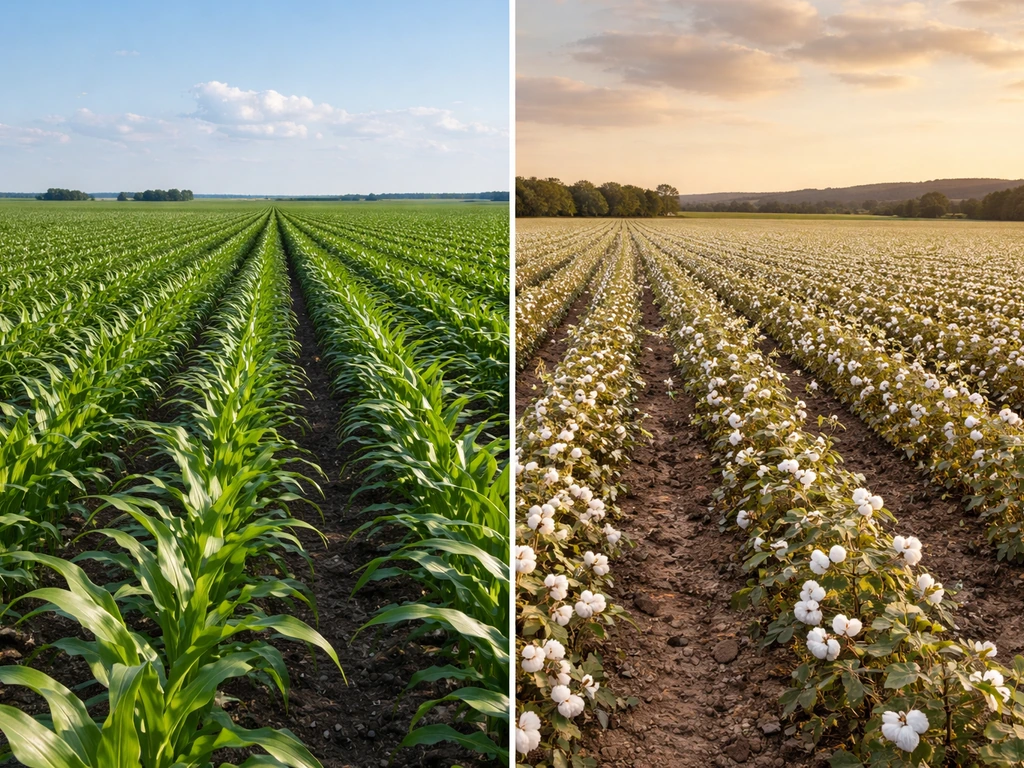
The United States has enough climatic diversity to grow almost anything commercially somewhere, but each region has a dominant crop identity driven by temperature, rainfall, and soil. If your research involves an American farm or community, knowing the region gives you an immediate shortlist.
The Corn Belt (Iowa, Illinois, Indiana, Ohio, Nebraska, Minnesota)
This is the most productive agricultural zone in the country. About 80% of all U.S. corn and soybeans come from the Corn Belt, according to USDA Economic Research Service data. The region's deep glacial soils, warm summers, and adequate rainfall create near-ideal conditions for both crops. Before soybeans became dominant in the mid-20th century, this same region was heavy in corn, oats, and hay, with hogs as the primary livestock. If you're researching a 19th-century Illinois farm, corn, oats, wheat, and hay are your near-certain starting point. For a modern farm in the same spot, add soybeans and remove oats.
The South (Georgia, Mississippi, Alabama, the Carolinas, Tennessee)
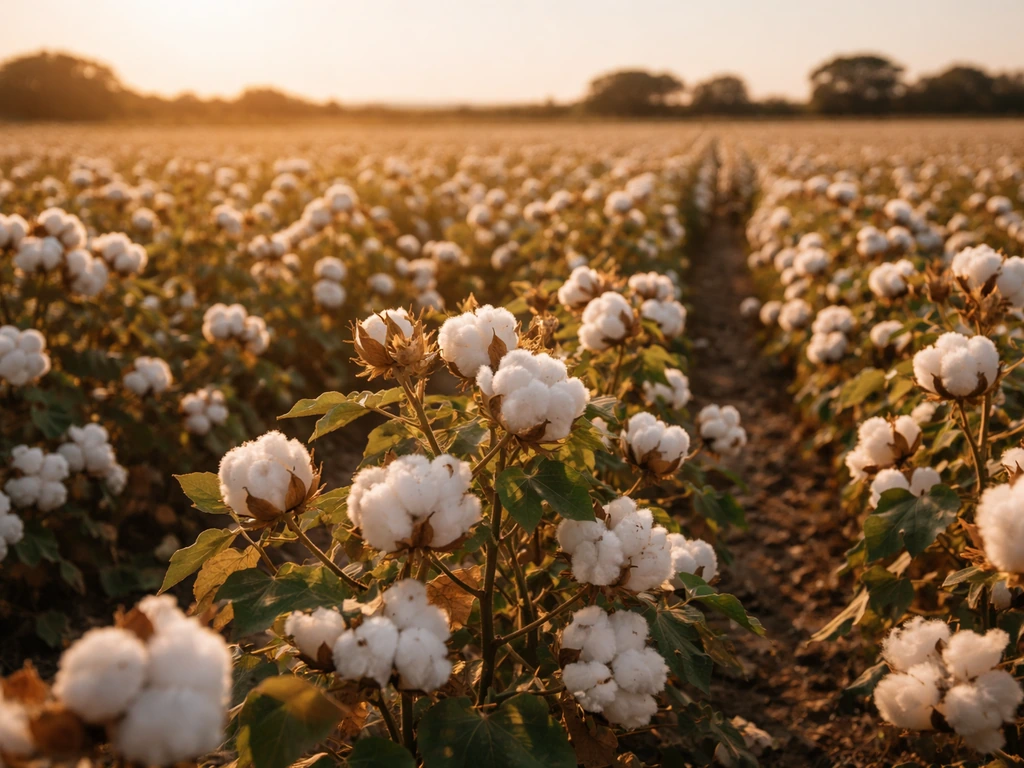
The South's long growing seasons (often 200-plus frost-free days), warm temperatures, and humid summers historically supported cotton, tobacco, sweet potatoes, peanuts, and corn. Cotton dominated from roughly 1800 through the mid-20th century across the Deep South. Tobacco was king in Virginia, North Carolina, and Kentucky. Today the region still grows significant cotton and peanuts, but soybeans and poultry operations have reshaped the landscape. If your 'they' are antebellum Southern farmers, cotton and corn dominate. If they're small subsistence farmers in the same era, add sweet potatoes, cowpeas, and sorghum.
The Great Plains (Kansas, the Dakotas, Oklahoma, Texas Panhandle)
Winter wheat is the signature crop here, along with sorghum and sunflowers in the drier central and southern plains. The region's semi-arid climate, flat terrain, and fertile but thin soils reward drought-tolerant grains. Kansas alone is routinely the top wheat-producing state. USDA NASS’s 2017 State Agriculture Overview for Kansas reports 7,600,000 acres of winter wheat and 333,600,000 bushels of total production for 2017 blank" rel="noopener noreferrer">Kansas alone is routinely the top wheat-producing state.. Early plains homesteaders (1860s-1900s) typically started with wheat, corn, and whatever kitchen garden crops they could nurse through the harsh winters. If you're researching pioneer-era settlement on the plains, wheat, corn, and sorghum are your baseline. Pioneer farmers also followed a similar climate and timing logic when choosing staples for survival what crops did pioneers grow.
The Pacific Coast (California, Oregon, Washington)
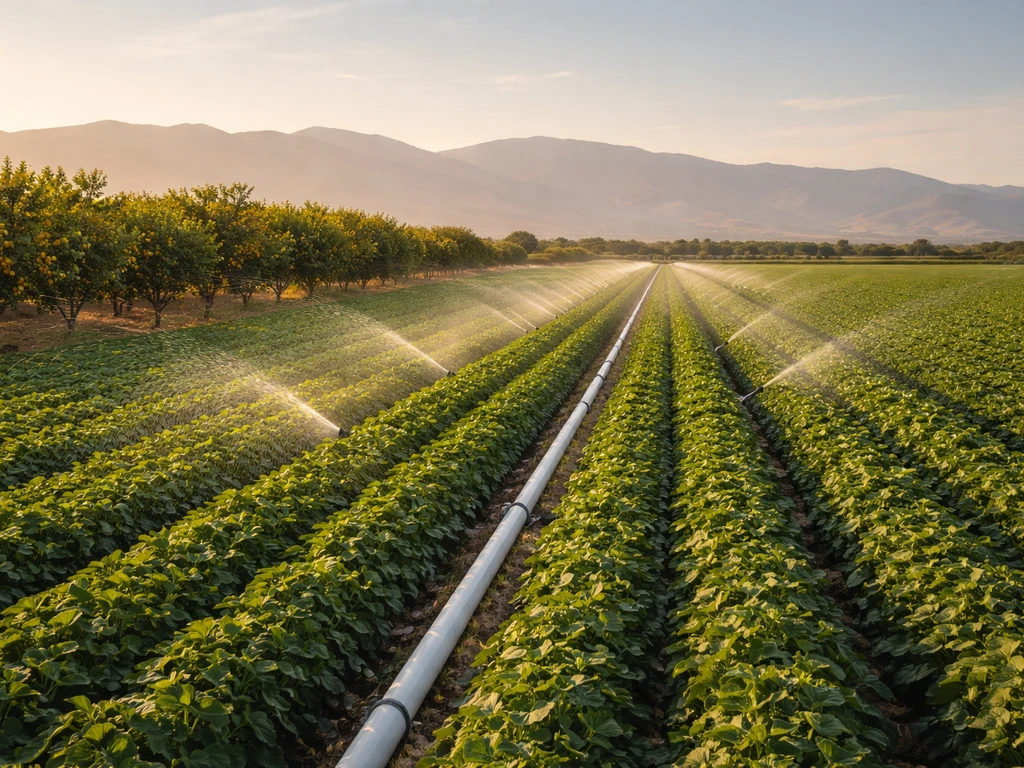
California's Central Valley is one of the most productive agricultural regions on Earth, producing almonds, walnuts, tomatoes, grapes, strawberries, lettuce, and dozens of other specialty crops. The mild winters and Mediterranean-style dry summers create conditions unlike anywhere else in the country. The Pacific Northwest (Oregon and Washington) is known for apples, pears, hops, potatoes, and wheat in the drier eastern portions. If your 'they' are modern California farmers, you're looking at a completely different crop profile than anything you'd find in the Midwest.
The Northeast (New England, Mid-Atlantic)
Shorter growing seasons, rocky soils, and cooler temperatures pushed the Northeast toward hay, potatoes, dairy, apples, and cool-season vegetables. Colonial New England farmers grew corn (adopted from Indigenous peoples), rye, barley, peas, and turnips. The Connecticut River Valley was famous for shade-grown tobacco by the 1800s. Today the region still produces significant dairy, apples, and market vegetables, with a growing local food movement emphasizing mixed vegetable production.
| U.S. Region | Key Historic Crops | Key Modern Crops | Climate Driver |
|---|---|---|---|
| Corn Belt | Corn, oats, hay, wheat | Corn, soybeans, wheat | Deep fertile soils, warm summers |
| Deep South | Cotton, tobacco, corn, sweet potatoes | Cotton, soybeans, peanuts | Long frost-free season, heat |
| Great Plains | Wheat, corn, sorghum | Wheat, sorghum, sunflowers | Semi-arid, flat, wind-prone |
| Pacific Coast | Wheat, fruit, vegetables | Almonds, grapes, tomatoes, lettuce | Mediterranean or maritime climate |
| Northeast | Rye, barley, corn, peas | Apples, potatoes, dairy hay | Short season, rocky soils, cooler temps |
Global Crop Patterns by Climate and Geography
Zoom out to a global scale, and the same principle applies: climate zone determines the crop menu. FAO's Global Agro-Ecological Zones (GAEZ) platform models crop suitability for up to 280 crops using temperature regimes, moisture regimes, growing period lengths, and soil characteristics. The key insight from that system is that parameters calculated for the actual growing period, not annual averages, are what matter. A region with cold winters and hot summers can still grow warm-season crops like corn and sorghum because those crops experience only the hot months.
Tropical and Subtropical Zones
Year-round warmth and either consistent rainfall or reliable irrigation supports the world's most calorie-dense crops: rice, cassava, sugarcane, bananas, plantains, and maize. Southeast Asia's river deltas (the Mekong, Irrawaddy, Chao Phraya) have supported continuous rice cultivation for thousands of years. West Africa's tropical belt grows cassava, yams, sorghum, and millet as staples. Sub-Saharan tropical farmers rely heavily on intercropping, growing multiple crops in the same field simultaneously, which creates crop diversity that single-crop surveys sometimes miss.
Temperate Zones (Europe, East Asia, Northern Americas)
Four distinct seasons, moderate rainfall, and fertile soils across Europe and East Asia built agricultural civilizations on wheat, barley, rye, oats, and legumes like peas and lentils. China's agricultural regions split roughly between rice-dominant south and wheat/millet-dominant north, a divide that has held for over 4,000 years. European farming from Roman times through the medieval period centered on a grain-legume-fallow rotation system, with wheat and barley as the primary cash grains and rye filling in on poor soils. Roman farming, for example, relied heavily on a grain-legume-fallow rotation system and focused on wheat and barley as key crops.
Arid and Semi-Arid Zones
Drought tolerance is everything in low-rainfall regions. Sorghum, millet, and drought-resistant legumes like cowpeas dominate the African Sahel. Date palms are foundational in Middle Eastern desert-edge agriculture. In the ancient Near East, the fertile crescent's reliable river flooding from the Tigris and Euphrates enabled wheat and barley cultivation in an otherwise dry landscape, essentially creating the world's first large-scale agricultural civilization. Where rainfall is unreliable, irrigation or flood-recession farming is almost always part of the story.
Highland and Mountain Zones
High altitude shortens the growing season and lowers temperatures, selecting for frost-hardy crops. The Andes produced the potato, quinoa, and oca, crops specifically adapted to high-altitude conditions. Ethiopian highlands gave us teff and ensete. Across mountain regions globally, barley tends to be the highest-altitude grain, thriving at elevations where wheat and corn fail. If your 'they' lived in a mountain community anywhere in the world, barley, root crops, and legumes are almost always part of the answer.
What Common Crops Were Grown in Different Historical Eras
History adds a hard constraint that geography alone can't tell you: crop availability. A crop can only be grown in a place and time if seeds or plant material were available there. The Columbian Exchange of the late 15th and 16th centuries reshuffled the global crop deck dramatically. Before 1492, maize, potatoes, tomatoes, peppers, and squash were entirely unknown in Europe, Africa, or Asia. After 1600 or so, they spread rapidly. Understanding which side of major agricultural turning points your 'they' fall on is essential.
| Era / Group | Region | Core Crops | Notable Absence |
|---|---|---|---|
| Ancient Mesopotamia (3000-500 BCE) | Middle East | Wheat, barley, lentils, onions, dates | Maize, potatoes, tomatoes (New World) |
| Ancient Egypt (3000-30 BCE) | Nile Valley | Emmer wheat, barley, flax, papyrus, vegetables | Maize, potatoes, citrus |
| Roman Empire (200 BCE-400 CE) | Mediterranean Europe | Wheat, barley, olives, grapes, legumes, millet | Maize, potatoes, citrus (mostly) |
| Medieval Europe (500-1400 CE) | Europe | Wheat, rye, barley, oats, peas, beans, turnips | Maize, potatoes, tomatoes |
| Vikings (800-1100 CE) | Scandinavia/N. Atlantic | Barley, rye, oats, peas, cabbages, flax | Maize, potatoes |
| Anglo-Saxons (450-1066 CE) | England | Wheat, rye, barley, oats, peas, leeks, root vegetables | Maize, potatoes, tomatoes |
| Aztec/Mesoamerica (1300-1521 CE) | Central Mexico | Maize, beans, squash, chili peppers, amaranth, cacao | Wheat, barley, rye (Old World grains) |
| Colonial America / Pilgrims (1600s) | Eastern North America | Maize (learned from Indigenous people), wheat, rye, barley, peas, beans, squash | Tomatoes (still feared), many tropical crops |
| American Pioneers (1800s) | Great Plains/Midwest | Wheat, corn, oats, sorghum, potatoes, hay | Many specialty crops (no market/no refrigeration) |
The theme across all of these eras is that staple crops were the backbone: grains for calories, legumes for protein and soil nitrogen, and root or storage vegetables for winter survival. Luxury or specialty crops (spices, fruits, dye plants) were grown where climate and trade allowed, but they're secondary to the core staples when building a crop list for any historical group.
How to Research What Crops a Specific Place or People Grew
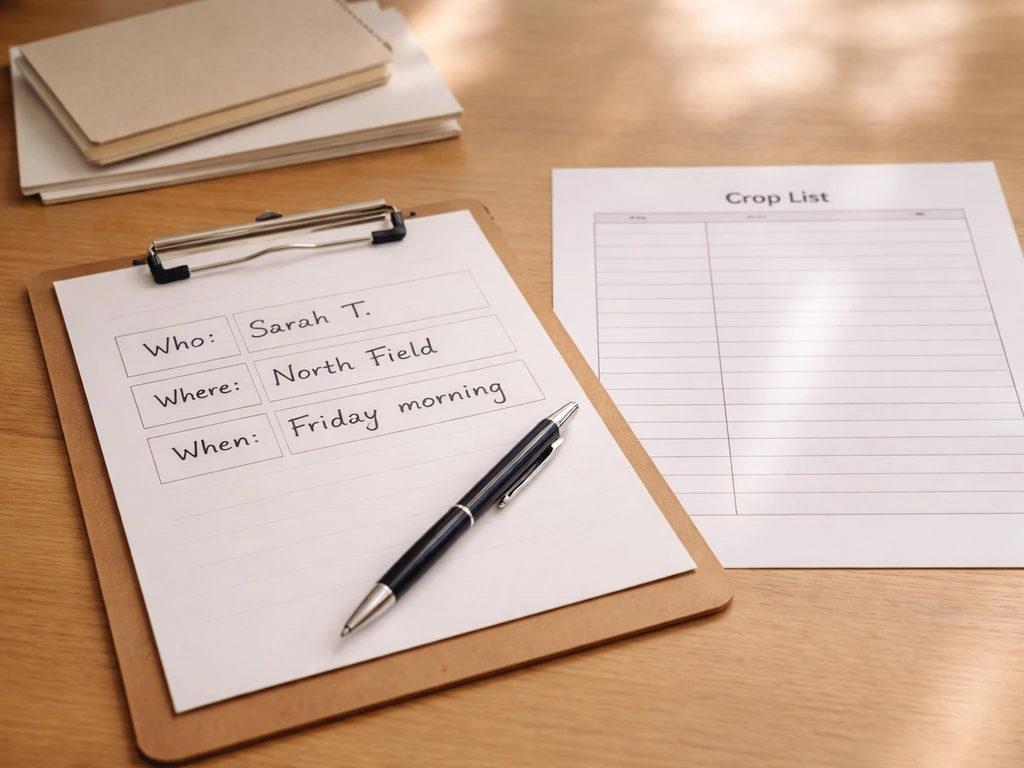
Once you've identified your who, where, and when, here's the actual research workflow. The goal is to build a crop list with at least two types of support: climate-based plausibility (could this crop have grown there?) and documentary evidence (is there a record that it actually was grown?).
- Lock in your three variables: who (the specific group or community), where (location down to the region or county if possible), and when (decade or century).
- Check climate zone and soil type for the location. USDA Plant Hardiness Zone maps work well for U.S. locations. For global or historical locations, FAO's GAEZ platform covers climate suitability for hundreds of crops worldwide.
- Build a baseline crop list from climate logic: what crops could have grown there given the frost-free days, rainfall, and soil? This gives you your 'plausible crops' list even before you touch a historical document.
- Search USDA NASS Quick Stats for U.S. locations. Quick Stats is the most comprehensive publicly available source for U.S. crop data and goes down to the county level for most crops. It includes planted acres, harvested acres, yield, and production figures by year.
- Use USDA NASS Cropland Data Layer (CDL) for modern U.S. crop mapping. The CDL is an annual geo-referenced, crop-specific land cover map produced from satellite imagery and ground-reference data, viewable through CropScape. It won't help with historical research, but it's definitive for crop questions from 2008 onward.
- For historical U.S. research, go to historical agricultural censuses. The U.S. Census Bureau conducted agricultural censuses from 1840 onward, and the manuscript schedules (the actual farm-by-farm records) are available for many years through genealogy databases and state archives.
- For pre-census or colonial U.S. research, shift to probate records, account books, store ledgers, and land grant documents. These often list crops or farm products sold and traded.
- For global or ancient research, use published archaeological reports (pollen analysis, archaeobotany, and seed finds), historical texts (farm manuals, chronicles, tax records), and academic crop history databases.
How to Verify Sources and Interpret Conflicting Evidence
Not all sources are equal, and conflicting records are common. Here's how to evaluate what you find and decide which claims are solid enough to include on your final crop list.
Tier your sources by reliability
- Official agricultural census data (USDA NASS, national equivalents): highest reliability for the period covered, but only goes back to the mid-1800s in the U.S.
- Primary documents from the period (farm diaries, probate inventories, account books, tax records): high reliability if they're from the exact location and time you're researching.
- Archaeological evidence (seed finds, pollen cores, phytoliths): highly reliable for presence/absence of crops, though it reflects what survives, not necessarily what was dominant.
- Secondary academic sources (peer-reviewed history of agriculture, archaeobotany papers): reliable if recently published and cited with primary evidence.
- General history books, encyclopedias, or popular websites: use for orientation only; always trace claims back to a primary source before including them on your list.
Watch for common research traps
- Anachronism: a source claims a crop was grown in a time or place before it was available. Check when the crop was introduced to that region.
- Scale confusion: a crop grown experimentally in a botanical garden is not the same as a crop grown at farm scale. Check whether sources describe commercial/subsistence cultivation or just botanical presence.
- Regional generalization: 'farmers in 19th-century America grew wheat' is true for some regions and completely false for others. Always push sources to be specific about location.
- Missing data for common crops: the USDA stopped publishing county-level estimates for some crops like tobacco after 2019. Absence of current data doesn't mean the crop isn't grown; it means the data moved to a different collection method.
- Survivorship bias in historical records: records often captured commercial crops sold for market. Subsistence crops grown for household use (garden vegetables, minor grains) are frequently undercounted or absent from official records.
Triangulate across source types
The strongest crop claims are supported by at least two independent source types. If a census record shows wheat production in an 1880 Kansas county AND a farmer's diary from that county mentions wheat harvest AND the climate data confirms viable growing conditions, you can put wheat on your list with high confidence. If only one source mentions a crop, label it 'probable' rather than 'confirmed' until you find corroboration.
Build Your Crop List: A Practical Quick-Start Method
Here's a concrete workflow you can run through in under an hour for most research scenarios. It produces a tiered crop list organized by confidence level.
Step 1: Fill in the three variables (your worksheet foundation)
Write down your answers to: Who are 'they' (specific group, community, civilization, or individual farm)? Where (country, state, region, county, or coordinates if known)? When (century, decade, or specific years)? These three answers are the filter for everything else. Every crop on your final list has to pass all three.
Step 2: Build your climate-plausible crop list
Using the region tables in this article (or FAO GAEZ for global/ancient locations, or USDA climate zone data for U.S. locations), list every crop that could reasonably have grown in your climate zone. Don't filter by evidence yet, just by what the climate and soil allow. This is your 'possible crops' column. For a medieval English village, you'd list wheat, rye, barley, oats, peas, beans, turnips, and possibly flax. You wouldn't list maize, potatoes, or tomatoes because they weren't available in Europe before the 16th century.
Step 3: Check availability for your time period
Cross-check your possible crop list against your time period. Use the era table earlier in this article as a quick reference. Remove any crop that wasn't yet available in that region during that period. What's left is your 'chronologically plausible' crop list.
Step 4: Search for documentary or archaeological evidence
Now go to your sources. For modern U.S. research, start with USDA NASS Quick Stats (nass.usda.gov) and filter by state, county, and year range. For 1840-1950 U.S. farm research, look for the agricultural census schedules for your county. For historical or global research, go to published archaeobotany reports or academic histories of agriculture in the region. Note which crops appear in records and which sources they come from.
Step 5: Build your tiered crop list
Organize your findings into three columns: Confirmed (two or more source types agree), Probable (climate-plausible and mentioned in at least one reliable source), and Possible (climate-plausible but no direct documentary evidence found yet). This structure makes your list honest and defensible. When you share it with others, the tiering shows exactly how solid each claim is.
| Confidence Level | Criteria | Example (1880s Kansas farm) |
|---|---|---|
| Confirmed | Mentioned in two or more independent source types (census + diary, or records + archaeological find) | Winter wheat (census records + farmer diaries) |
| Probable | Climate-plausible and mentioned in at least one reliable contemporary source | Sorghum (regional records, climate fits) |
| Possible | Climate-plausible for region and era, but no direct local evidence found yet | Rye (grown in similar regions, no local record found) |
| Ruled out | Either not available in the era, or climate is unsuitable | Cotton (wrong climate for Kansas), maize as pre-contact crop (wrong era for European grains) |
Quick reference: where to start based on your scenario
- Modern U.S. farm or county: USDA NASS Quick Stats + USDA Cropland Data Layer (CropScape) for visual crop mapping.
- Historical U.S. farm (1840-1950): U.S. agricultural census manuscript schedules + state historical society records.
- Colonial-era U.S. community: Probate records, store account books, and colonial-period farm manuals.
- Medieval or ancient European group: Academic archaeobotany literature + FAO GAEZ for climate plausibility baseline.
- Pre-Columbian Americas: Archaeological reports from the specific region + published histories of Mesoamerican or Andean agriculture.
- Global developing-world agriculture: FAO GAEZ crop suitability layers + FAO production statistics by country.
- Any ambiguous historical group: Start with the era table in this article to establish what was crop-available, then move to regional sources.
The workflow above works whether you're a student writing a history paper, a gardener trying to grow historically authentic crops, a genealogist reconstructing your great-grandparents' farm, or a historian building a serious agricultural argument. The method is the same: lock in your three variables, filter by climate and era, gather documentary evidence, and tier your results by confidence. That's how you turn a vague question about 'what crops they grew' into a defensible, specific answer you can actually use. If your group is the Vikings, use the same climate-and-era approach to narrow down which crops they grew in Scandinavian conditions what crops did vikings grow. If your group is the Vikings, use the same climate-and-era approach to narrow down which crops they grew in Scandinavian conditions, and you can apply that same method to answer what crops did medieval peasants grow.
FAQ
How do I answer “what crops did they grow” if I only know a broad area, like “the Midwest” or “a coastal region”?
Narrow to the closest practical unit you can justify (state, county, or watershed), then use growing-season clues such as frost dates and rainfall patterns to build a “possible” list. If you cannot get coordinates or county-level data, keep your final answer tiered as “possible” or “probable,” since local variation (soil, microclimates, irrigation) can shift crop choices.
What if the crop list is for a mixed farm, not a single-crop operation?
Include both staples and livestock-support crops. For many historical or rural communities, hay, pasture grasses, and grain used for feed can be as important as human staples. So your tiering should treat forage crops (hay, oats, barley) as “expected” where dairy or hogs were present, even if the question is framed as food crops.
How can I tell whether a crop was grown as a staple versus grown only as a cash or specialty crop?
Look for crop-specific evidence types. Staple crops often appear in production counts, storage or granary records, or widespread diet references, while specialty crops may show up mainly in trade records, market descriptions, or merchant inventories. If you have only trade evidence, label the crop as “probable for sale,” not necessarily a household staple.
What if I find a record that mentions a crop, but it seems out of place for the climate or time period?
Treat it as an evidence-quality issue, not automatically as a wrong answer. Verify the crop identity (some names shifted over time or referred to different species) and check whether the record could reflect importation or storage rather than local cultivation. If irrigation, greenhouse production, or coastal microclimates could explain it, move the crop to “probable” rather than “confirmed” until you find additional corroboration.
How should I handle confusion between crop names in historical sources?
Create a crosswalk from old terms to modern species before you tier anything. Words like “millet,” “beans,” or “wheat” may refer to different varieties regionally or in different centuries, and “rye” is sometimes loosely used for other grains. If you cannot confidently map the term, keep that entry in “possible” or exclude it from the final confident list.
Do I need to use “annual averages” for climate, or is that misleading?
Use the conditions during the actual growing months if you can. Annual rainfall totals can hide long dry spells that affect germination or harvest. If your research tools only provide averages, compensate by checking frost-free period length and precipitation seasonality, since those two often determine whether warm-season crops can succeed.
What if irrigation or flooding was available, would that change the crops they could grow?
Yes. Irrigation can expand the crop menu beyond what rainfall alone would suggest, especially for water-intensive crops or those with narrow moisture needs. If you are working near rivers, delta regions, canals, or known flood-recession zones, you should treat “possible crops” as broader, then rely on documentary or archaeobotanical evidence to decide what was actually grown.
How do I interpret archaeological plant remains, seeds, or charcoal fragments compared with written farm records?
Use them as different types of support. Plant remains (charred seeds, phytoliths, imprints) can confirm cultivation or at least presence in fields and processing, while written records confirm economic importance or reporting. A crop supported by both archaeobotany and documents is usually your best “confirmed” candidate, while either one alone should remain “probable” unless the context is very clear.
If my question is about a people group, not a specific farm, how do I avoid overgeneralizing?
Avoid assuming everyone in the group farmed the same way. Instead, look for sub-regions (river valleys, uplands, coasts) and time variation (good years versus drought, or early versus late periods). Your final answer should describe a likely core set of staples and then note likely regional variants, rather than one uniform crop list for the entire group.
What are common mistakes that lead to wrong crop identifications in historical research?
The biggest pitfalls are using the wrong “when” (pre- or post-Columbian Exchange for many European cases), ignoring frost-free or season length, and treating imports as cultivation. Another common mistake is failing to tier confidence, so unsupported claims get mixed into “confirmed” lists even when evidence is thin.
Next Articles
What Types of Food Did Anglo-Saxons Grow? Crops by Region
Crops Anglo-Saxons grew by region: grains, legumes, vegetables, fruit and nuts, shaped by soil and climate.
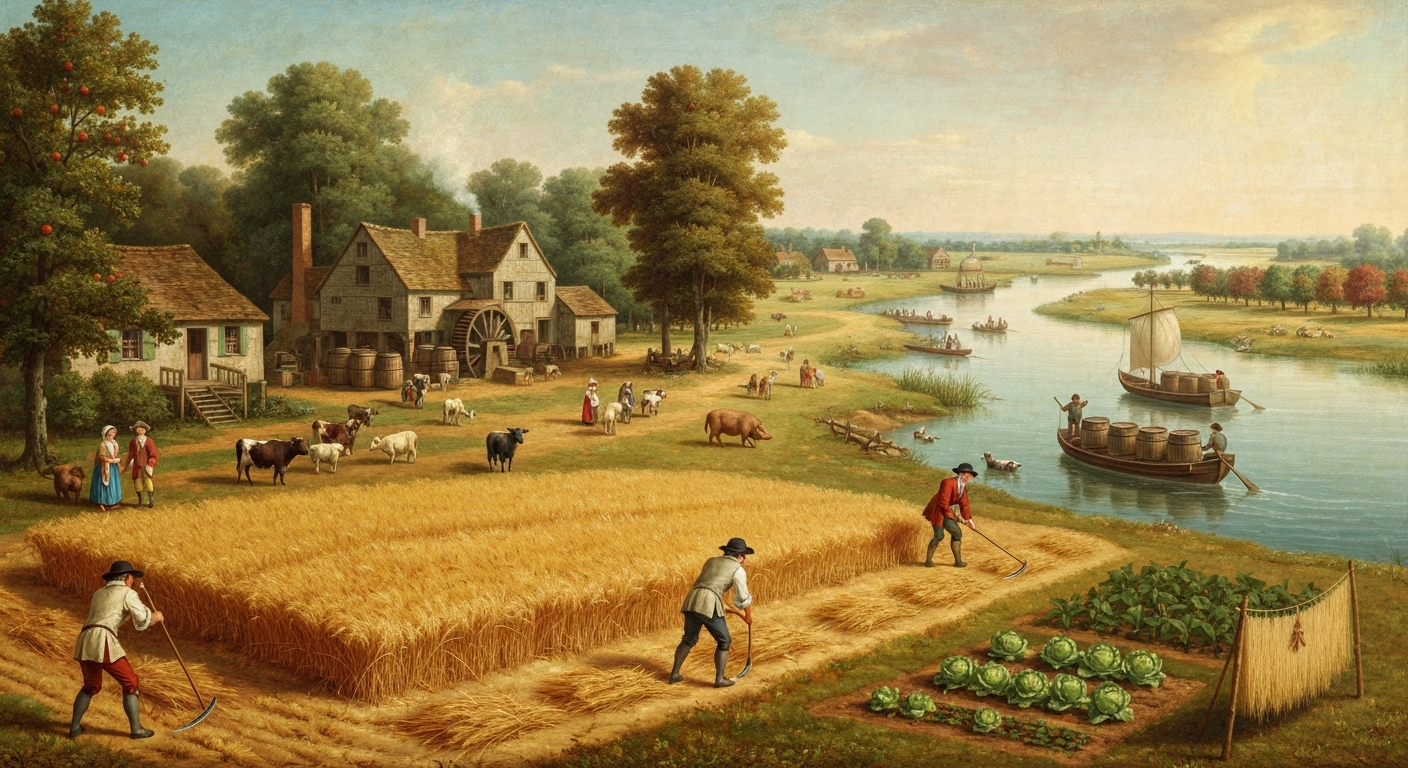
What Did the Delaware Colony Grow: Crops, Uses & Legacy
Colonial Delaware’s main crops, grains, hay, flax, fruits, vegetables, livestock, why they thrived and how they were sold.
What Did Jamestown Grow and How They Farmed It
Learn what Jamestown colonists grew and the methods they used to plant, harvest, and adapt crops to Virginia conditions.