Colonial farmers grew corn, wheat, rye, barley, beans, squash, and a wide range of kitchen garden vegetables almost everywhere across the colonies. But if you're trying to understand what a specific colony grew, the honest answer is: it depends heavily on where you're looking. New England farmers scratched out subsistence crops from rocky, thin soil. Middle colony farmers grew wheat so abundantly they became the breadbasket of the Atlantic world. Chesapeake planters built entire economies on tobacco. And further south, rice, indigo, and eventually cotton defined plantation agriculture. The colony matters, the climate matters, and whether you're talking about a kitchen garden or a cash crop operation matters even more.
What Did Colonial Farmers Grow by Region and Crop Type

Samuel Rourke
6 May 2026
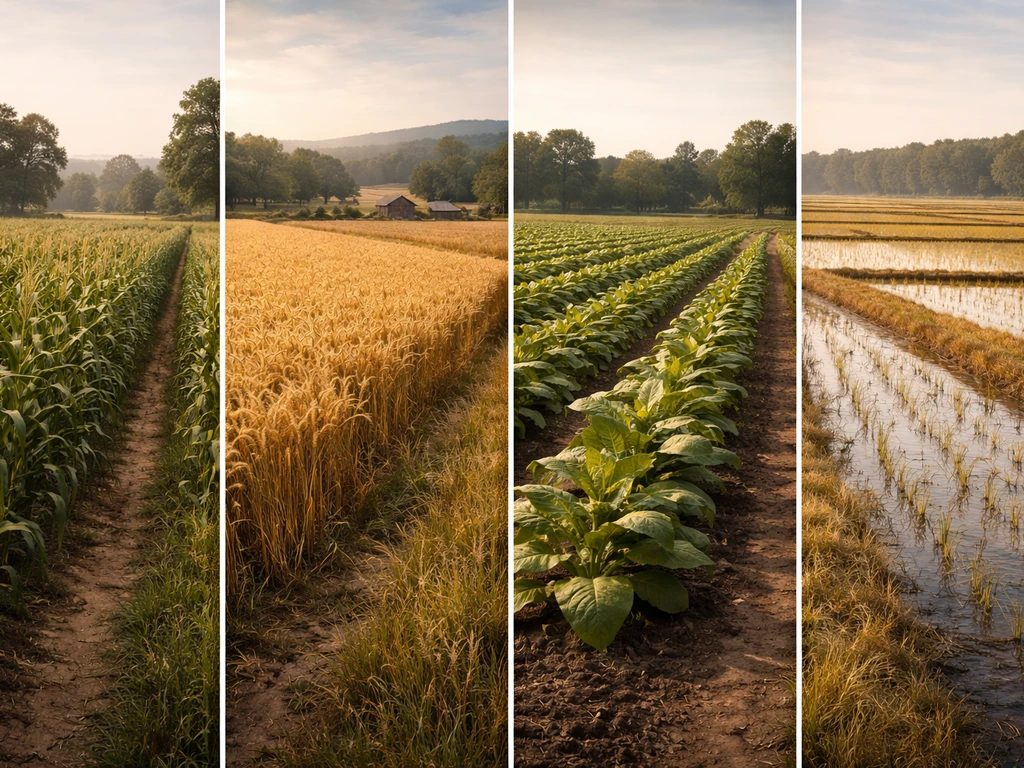
Core crops colonial farmers grew (the quick answer)
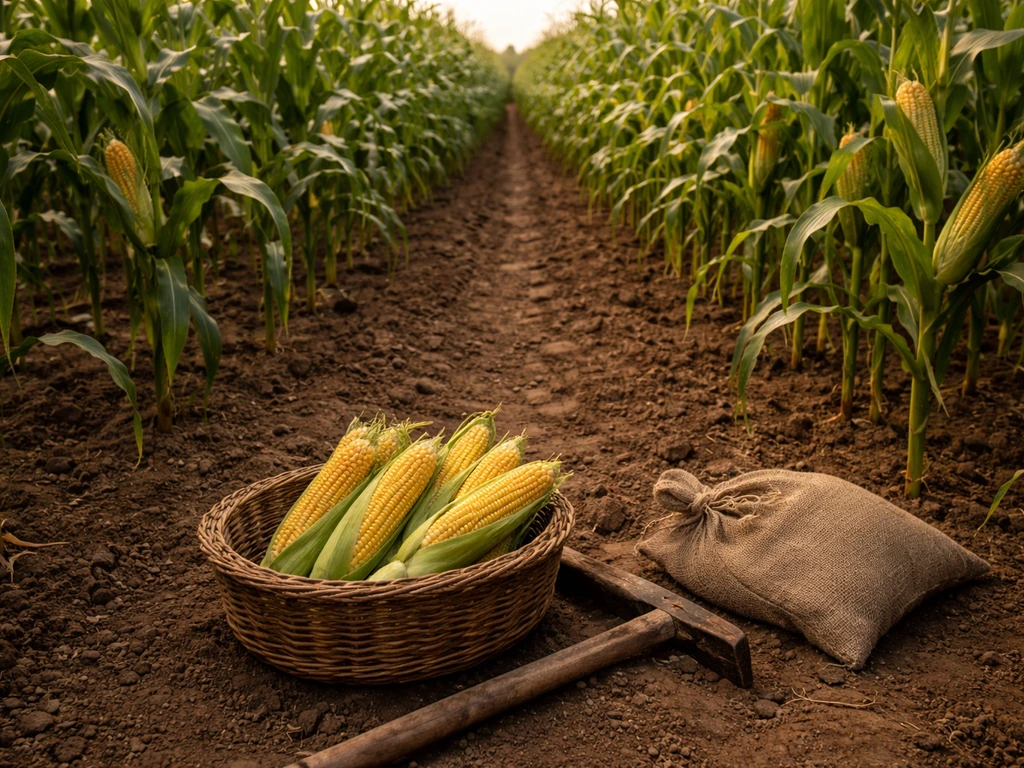
Across all colonial regions, corn (maize) was the single most universal crop. Native Americans had cultivated it for generations, and European settlers adopted it quickly because it grew in almost any soil, yielded well, and could be stored through winter. Alongside corn, nearly every colonial farm had some combination of wheat or rye, kitchen beans and peas, squash, root vegetables like turnips and parsnips, and an orchard of apple trees. That's your baseline. What changes dramatically from region to region is the cash crop layer on top of that subsistence foundation.
- Corn (maize): grown universally from New England to Georgia
- Wheat and rye: dominant grains in the middle colonies and parts of New England
- Beans, peas, and squash: staple kitchen garden crops everywhere
- Tobacco: the defining cash crop of Virginia and Maryland
- Rice: the dominant plantation crop of coastal South Carolina and Georgia
- Indigo: grown alongside rice as a secondary cash crop in the Carolina Lowcountry
- Apples and orchard fruits: common across all regions, especially New England and the mid-Atlantic
How crops changed by region and climate
The colonial United States wasn't one farming culture. It was at least four distinct agricultural zones shaped by soil, frost dates, rainfall, and the economic pressures of each settlement. If you're researching a specific colony, you need to start with the region it sat in.
New England (Massachusetts, Connecticut, Rhode Island, New Hampshire)
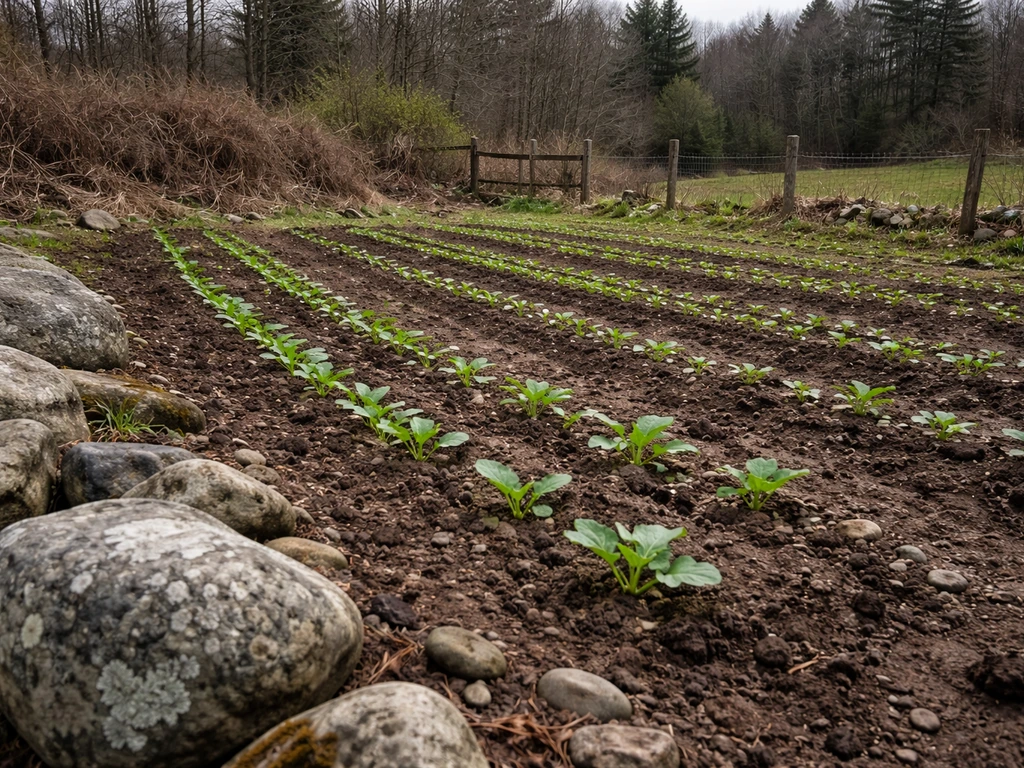
New England farmers had a hard time of it. Short growing seasons, rocky glacial soils, and cold winters made large-scale grain farming difficult and cash cropping for export nearly impossible for most smallholders. That regional constraint is the core answer to why were new england farmers unable to grow cash crops, even when they could grow subsistence grains cash cropping for export nearly impossible.
Corn was the workhorse crop here, supplemented by rye (which tolerates poor, acidic soil better than wheat), barley for brewing, turnips, peas, and kitchen garden staples. Apple orchards were everywhere and served a practical purpose: fermented cider was safer to drink than water and kept through winter. Livestock feed crops like hay were critical because animals needed to be fed through long, harsh winters.
The reason New England farmers were largely unable to grow profitable cash crops came down to climate and soil, and that story is worth understanding on its own if you're digging into this region.
Middle Colonies (New York, Pennsylvania, New Jersey, Delaware)
The middle colonies had the best general farming conditions in colonial America. Deep, fertile soils, moderate winters, and longer growing seasons made wheat cultivation genuinely profitable at scale. Pennsylvania and New York exported enormous quantities of wheat and flour to Europe and the Caribbean. Rye, barley, oats, corn, flaxseed (for linen fiber), and a full range of vegetables rounded out the agricultural picture. The middle colonies were sometimes called the breadbasket of the colonies, and that label was earned. If you're looking at why middle colony farmers were able to grow cash crops when New England farmers couldn't, the soil and climate difference tells most of the story.
Chesapeake Region (Virginia, Maryland)
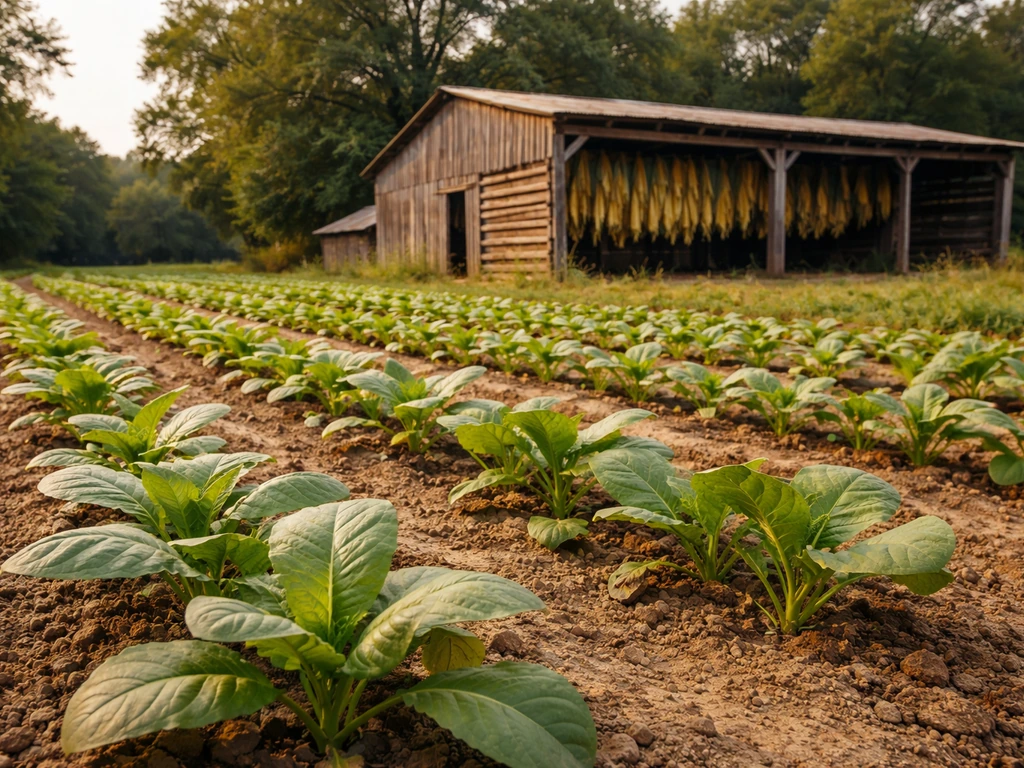
Tobacco dominated Chesapeake agriculture from the early 1600s through the entire colonial period. Virginia's planters figured out almost immediately that the warm climate, long growing season, and river-laced tidewater landscape were ideal for tobacco cultivation. By 1640, London was importing nearly 1.5 million pounds of Virginia tobacco annually, which tells you how fast the crop took hold. Maryland followed the same pattern. Even as planters later diversified into wheat and corn for food security, tobacco remained the economic engine of the region. Subsistence crops like corn, beans, and kitchen vegetables were grown on every farm, but tobacco was what colonial Chesapeake agriculture was fundamentally built around.
The Deep South (South Carolina, Georgia, North Carolina)
The plantation South had a different crop map entirely. South Carolina's coastal lowcountry had the hot, humid, swampy conditions that made rice cultivation viable, and rice became the colony's defining export crop by the early 1700s. Indigo was introduced as a companion cash crop in the 1740s, largely through the efforts of Eliza Lucas Pinckney, and it thrived in the drier inland areas between rice harvests. [Eliza Lucas Pinckney](https://www.
scencyclopedia. org/sce/entries/pinckney-eliza-lucas/) experimented with indigo, expressing hopes that it could become a profitable cash crop, and her letters are discussed in the South Carolina Encyclopedia entry. That helps explain why were ryots reluctant to grow indigo in some areas even though it promised profits on plantations. Georgia followed South Carolina's lead.
In North Carolina, tobacco and naval stores (tar, pitch, and turpentine from longleaf pine) were more important than rice. The crops enslaved people were forced to grow on these plantations shaped the entire agricultural and economic system of the colonial South. To be specific, plantations could involve crops like rice, indigo, and tobacco, depending on the region what crops enslaved people were forced to grow.
Staple grains, vegetables, and legumes grown everywhere
Below the cash crop layer, most colonial farms ran on a remarkably similar set of food crops. These were the things every farming household needed to survive winter, feed their family, and keep their livestock going.
| Crop | Primary Use | Regions Where Common |
|---|---|---|
| Corn (maize) | Food, animal feed, hominy, meal | All colonies |
| Wheat | Bread, flour, export grain | Middle colonies, parts of Chesapeake |
| Rye | Bread, brewing, animal fodder | New England, middle colonies |
| Barley | Brewing, animal feed | New England, middle colonies |
| Oats | Animal feed, porridge | Northern and middle colonies |
| Beans | Subsistence food, drying for winter | All colonies |
| Peas | Subsistence food, field crop | All colonies |
| Squash and pumpkins | Food, livestock feed | All colonies |
| Turnips and parsnips | Root vegetable staples | All colonies |
| Flaxseed | Linen fiber, linseed oil | Middle colonies, New England |
The three sisters planting system (corn, beans, and squash grown together) was adopted by many colonial farmers directly from Native American agricultural practice. It worked well because the crops complemented each other: corn stalks support climbing beans, beans fix nitrogen, and squash leaves shade the ground and suppress weeds. You'll see this pattern show up frequently in colonial farm records across all regions.
Cash crops and what colonial farmers grew for profit
The cash crop story is really the economic history of the colonies. Each region found the crop that best matched its climate and connected to Atlantic trade networks, and that crop shaped everything, from labor systems to land use to social structure.
Tobacco was the most economically significant cash crop in colonial America overall. Virginia began exporting it commercially by the 1610s, and by the mid-1600s it was already transforming the Chesapeake into a plantation economy. Maryland joined in quickly. Even small family farms in Virginia often dedicated significant acreage to tobacco because it was the primary way to earn cash or credit with merchants. The crop was so central that it was sometimes used as currency.
Rice played the same role in South Carolina and Georgia that tobacco played in the Chesapeake. The crop required specific tidal flooding conditions found in the coastal lowcountry, and it was cultivated using knowledge that enslaved Africans from rice-growing regions of West Africa brought with them. Indigo was grown as a complementary cash crop because it could be cultivated in drier fields and harvested at different times than rice, making the two crops a useful pairing for plantation operations.
Wheat was the middle colonies' primary cash crop and trade commodity. It didn't carry the same plantation-scale labor implications as tobacco or rice, but it generated enormous export income. Flaxseed was also exported from Pennsylvania and New York to Ireland, where it was used to grow flax for linen production. Naval stores (tar, pitch, rosin, and turpentine) were North Carolina's major export commodity, derived from the vast longleaf pine forests there rather than field agriculture.
Orchards, livestock feed, and fiber crops
Orchards were taken seriously on colonial farms in ways that sometimes surprise modern readers. Apple trees in particular were planted almost as soon as settlers established a homestead, partly because cider was the everyday drink of choice across New England and the mid-Atlantic. A mature apple orchard was a valuable asset, and varieties were selected for cider-making, long-term storage, or cooking. Pear, cherry, peach, and plum trees were also common, with peaches actually thriving surprisingly well in the Chesapeake and Carolina regions where winters were mild enough.
Hay was arguably the most unglamorous but most essential crop on any northern colonial farm. Cattle, horses, oxen, sheep, and hogs all needed to eat through winter, and hay production consumed large amounts of land and labor in New England and the middle colonies. Clover was sometimes grown to improve soil nitrogen, and it doubled as hay. Turnips were also grown at field scale as animal fodder in addition to human consumption.
Fiber crops were grown primarily in the middle colonies and parts of New England. Flax was the most important, cultivated for both the fiber in its stalks (used to make linen) and for its seeds (pressed into linseed oil or exported). Hemp was grown in some areas, particularly Virginia and Kentucky-adjacent regions, for rope and sailcloth fiber. Cotton was grown in small amounts in the colonial South but didn't become a dominant crop until after the invention of the cotton gin in 1793, well after the colonial period ended.
How to research what a specific colony or county actually grew
If you need precise crop information for a particular colony, county, or time period, the good news is that colonial agricultural records are more accessible than most people expect. Here's how to approach the research practically.
- Start with probate inventories and estate records. Colonial probate records frequently list farm equipment, seeds, stored grain, and livestock, which gives you a direct picture of what a specific farm was actually growing. Many state archives have digitized these. Search for '[colony name] colonial probate records' or '[county name] estate inventories 1700s.'
- Use the USDA's historical crop statistics and state agricultural experiment station records. Many states published retrospective agricultural histories that trace crop patterns back to colonial settlement. These are particularly useful for understanding when specific crops entered or left a region.
- Search the Library of Congress American Memory collections for colonial-era plantation records, account books, and farm journals. Tobacco planters in Virginia and Maryland kept meticulous records of crop yields, and many have been digitized.
- Look at colonial-era land surveys and township maps. These often note land use, orchard locations, and field crops. The Historic American Landscapes Survey (HALS) and state historical societies hold many of these.
- Use climate and soil data to cross-check what you find. If a record mentions a crop you weren't expecting, check whether the local climate and soil type would actually support it. NOAA historical climate data and USDA Web Soil Survey both provide the geographic context to interpret what colonial farmers were working with.
- Search for university agricultural history programs and published colonial farming studies. Institutions like Colonial Williamsburg, the Virginia Historical Society, and the Massachusetts Historical Society have published detailed studies on regional colonial agriculture that go well beyond general overviews.
When you're searching digitally, useful keyword combinations include: 'colonial [state] agriculture crops,' '[colony name] plantation records [crop name],' 'colonial kitchen garden [region],' and '[county name] colonial farm inventory.' For the Chesapeake, adding 'tobacco culture' or 'tobacco hogsheads' will pull up highly specific historical sources. For the Carolina Lowcountry, 'rice culture colonial South Carolina' and 'indigo cultivation colonial Georgia' work well. For New England, try 'colonial subsistence farming Massachusetts' or 'New England colonial grain crops.'
The broader pattern to keep in mind: colonial agriculture was shaped by three forces working together. Climate and soil set the physical limits of what could grow. Atlantic trade networks determined which crops were worth growing for profit. And available labor, whether family, indentured servants, or enslaved people, determined the scale at which any given crop could be cultivated. Understanding all three of those forces for the specific region you're researching will give you a much sharper picture than any general list of colonial crops.
FAQ
If I only remember one crop, is corn (maize) the best answer to what colonial farmers grew overall?
Yes for a baseline. Corn was widely grown because it adapted to many soils and could be stored for winter, but most farms still added a mix of wheat or rye and garden crops, so “corn alone” is rarely the full picture for any single household.
Why did some colonies seem to grow grain even if the article describes cash crops as the main difference?
Subsistence grain was still the default in every region. The big regional variation was usually the cash crop layer on top, like wheat exports in the middle colonies, tobacco in the Chesapeake, or rice and indigo in parts of the plantation South.
Were “kitchen garden vegetables” the same in every colony?
Not exactly. Garden crops were common almost everywhere, but the exact mix shifted with local climate and household needs, including what could reliably mature before frost and what storage vegetables were available. Even within the same colony, coastal and inland areas could differ.
Could New England farmers grow tobacco or rice even if they were mostly focused on corn and rye?
They could grow some plants experimentally, but these became practical cash crop systems only where climate, soils, and market demand aligned. The core limitation in New England was the short growing season and harsher conditions, which made export-oriented plantation-style production difficult.
How can I tell whether a record is describing subsistence farming or a cash crop operation?
Look for evidence of marketing and processing, such as export-focused terms (flour, hogsheads), mentions of merchant dealings, or descriptions of land dedicated to a single profitable crop. Also, cash crops often show up with labor organization and larger acreage, not just small garden quantities.
What does it mean when sources say tobacco was used “as currency” in colonial Virginia?
It usually refers to the fact that tobacco could be accepted by merchants or used to settle debts because it had a consistent commercial value in trade. It does not mean all everyday purchases were paid solely in tobacco, and the practice varied by time and place.
Did rice in the lowcountry depend on tidewater conditions, or could it be grown inland?
Rice culture depended on specific flooding and water-management conditions, which is why it was concentrated in coastal lowcountry areas. Inland rice was more limited and typically required comparable water control, while other cash crops like indigo could fit drier fields.
How was indigo different from rice in terms of risk and timing for plantation labor?
Indigo could be cultivated in drier areas and harvested on a different schedule than rice. That pairing helped plantations spread labor demands and reduce dependence on one crop’s specific water conditions, which is part of why indigo often complemented rice rather than replacing it outright.
Was flax grown mainly for fiber, seed, or both in the middle colonies?
Both. Flax was cultivated for fiber used to make linen, and the seeds were also pressed into linseed oil or exported for other uses. If you’re using inventory lists, try to note whether the record names stalk fiber products versus seed or oil.
Why were orchards like apple trees so common if the farms also grew grains and legumes?
Orchards provided a durable household asset with year-round value. Apples were tied to cider making and storage, which was especially important when winter access to beverages and fresh fruit was limited, and orchard trees also supported a long-term investment strategy for settlers.
Do the “three sisters” crops show up in colonial records because farmers used them universally?
They were adopted widely, but “universal” is not accurate. The technique appeared frequently because the crops supported each other, but individual farms still varied based on local land, soil, and whether the household prioritized particular cash crops.
If I’m researching a specific county, what’s the most common reason people get the wrong crops listed?
They rely on a general colonial list without checking local geography and date. Crop choices could change over time and differed between coastal versus inland areas, so you need the specific place and period, plus whether the document reflects household production or export-oriented acreage.
Next Articles
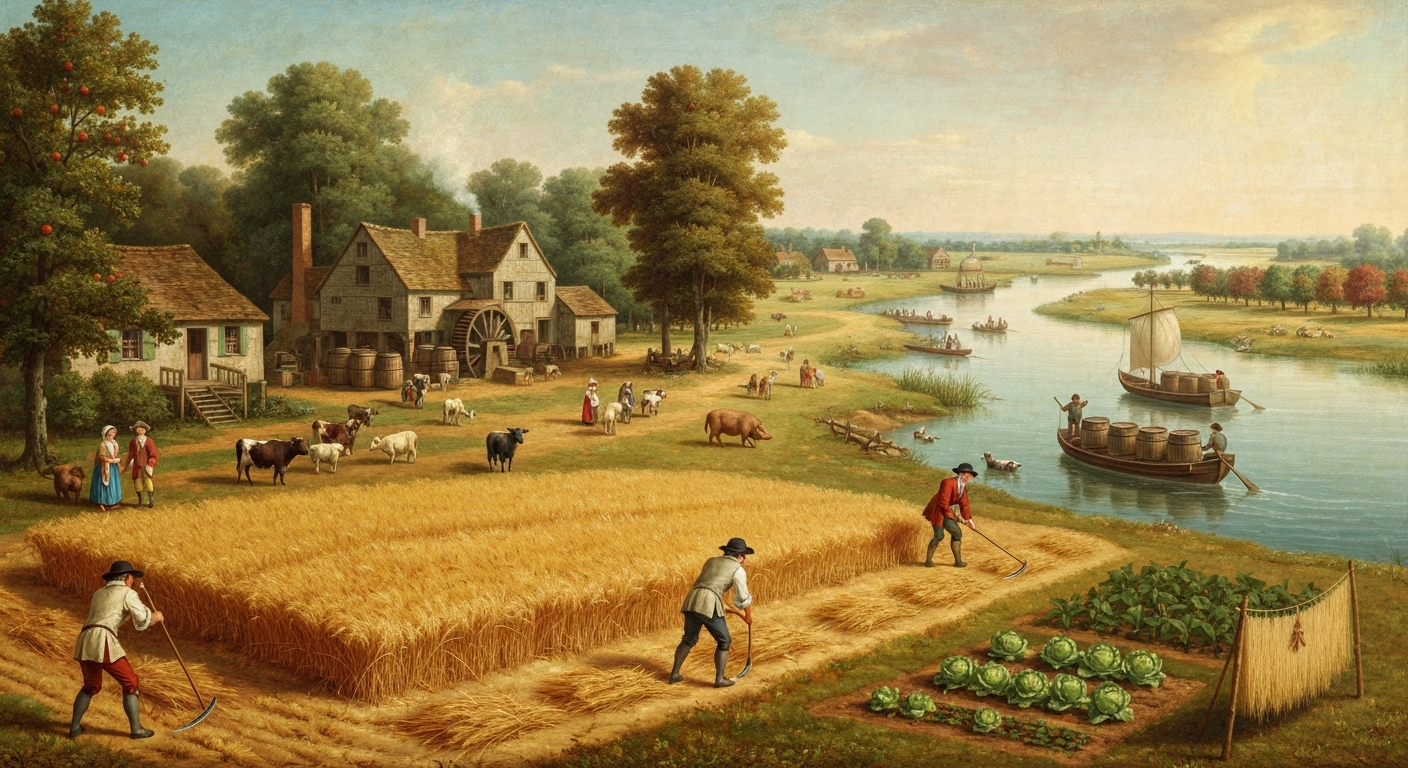
What Did the Delaware Colony Grow: Crops, Uses & Legacy
Colonial Delaware’s main crops, grains, hay, flax, fruits, vegetables, livestock, why they thrived and how they were sold.
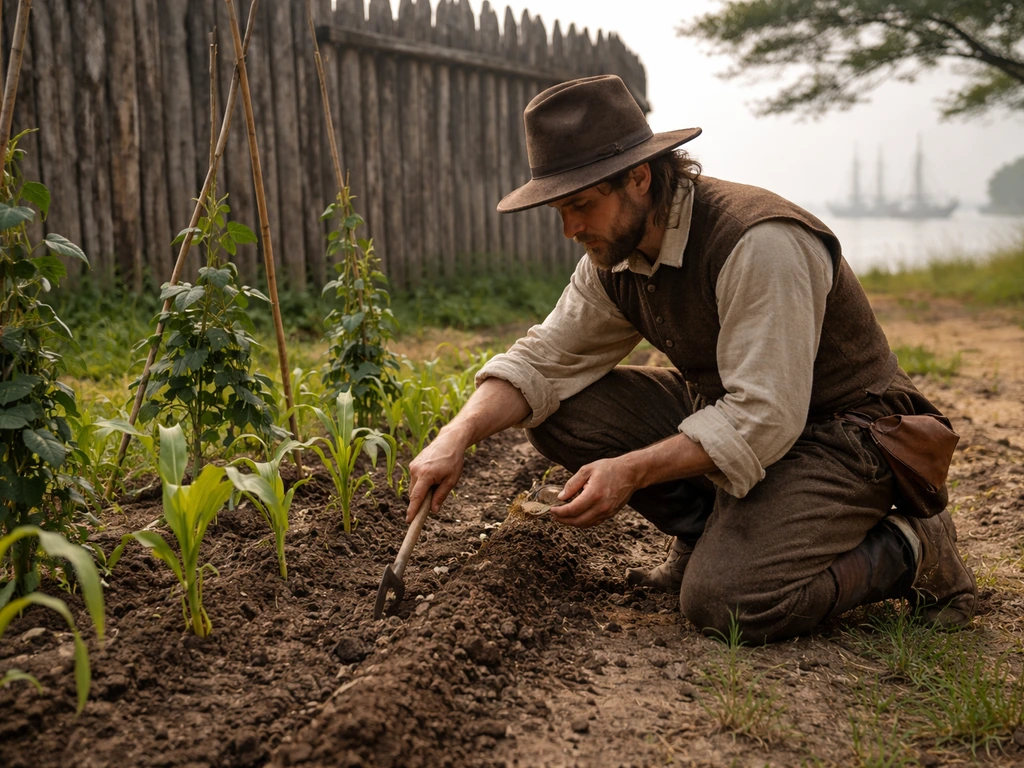
What Did Jamestown Grow and How They Farmed It
Learn what Jamestown colonists grew and the methods they used to plant, harvest, and adapt crops to Virginia conditions.
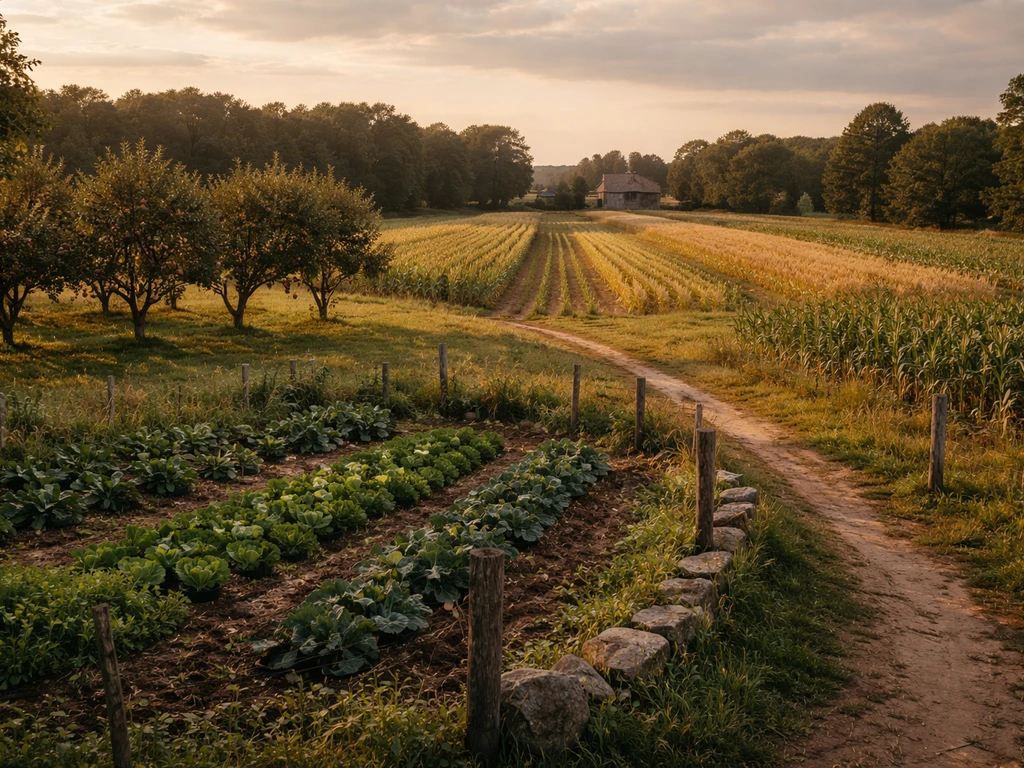
What Did the New England Colonies Grow? Major Crops
Major New England colonial crops explained by climate and soil, from corn and wheat to beans and hay, plus today’s paral