
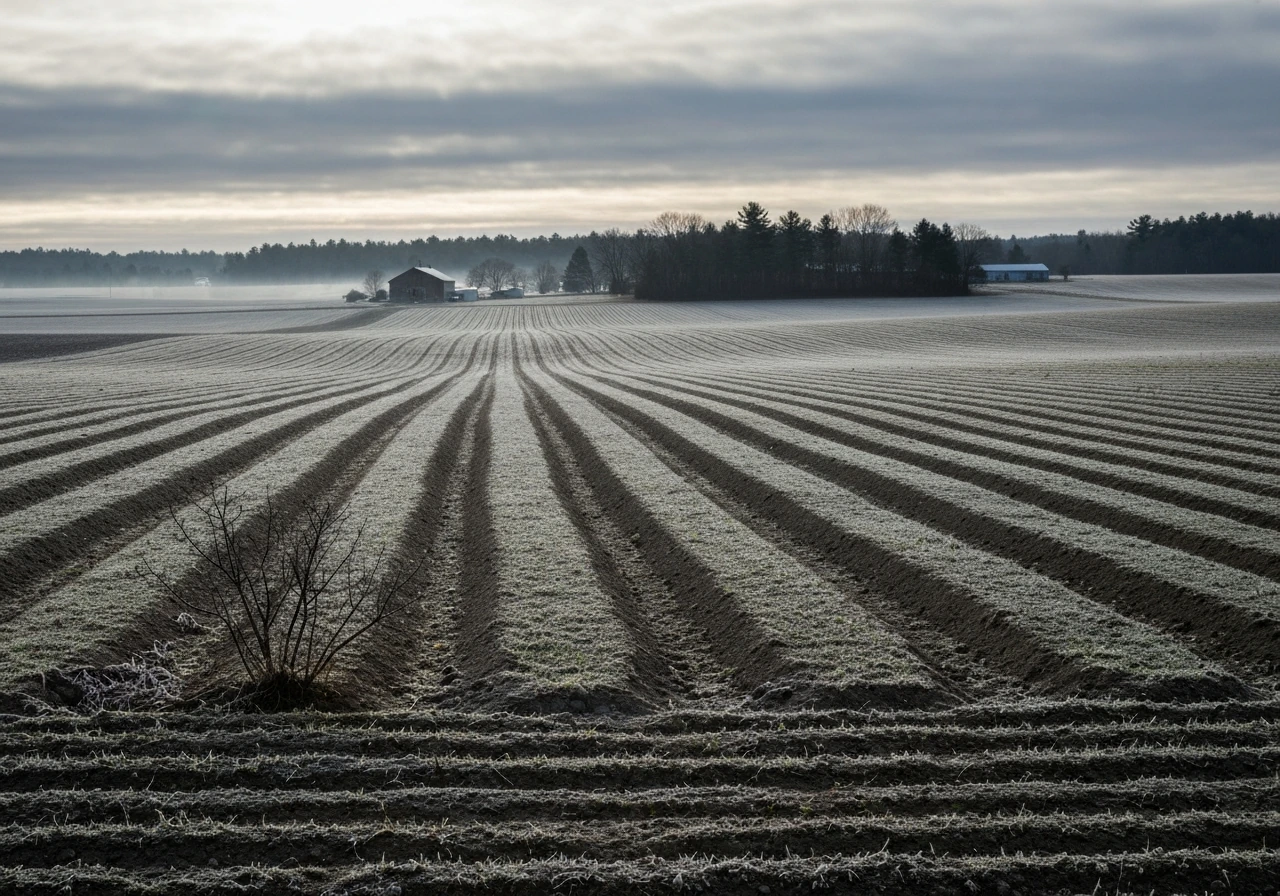
New England farmers couldn't reliably grow the classic warm-weather cash crops, like tobacco, cotton, rice, and sugarcane, because the region's short frost-free season, cold winters, rocky glaciated soils, and small-farm economics stacked the odds against them. The frost-free window runs from as few as 90 days in northern Maine and the mountain valleys of Vermont and New Hampshire to about 140 days along the southern Massachusetts coast. That's simply not enough warm weather to mature crops that need 150 to 200+ frost-free days and a steady accumulation of heat units. Add poor, thin soils left behind by glaciers, limited capital, and no real transportation network to move bulk agricultural goods to market, and the picture becomes clear: the climate said no first, and everything else made it worse.
Why New England Farmers Couldn’t Grow Cash Crops Reliably

What 'cash crops' actually meant for New England farmers
A cash crop, in the most practical sense, is any crop grown primarily to sell for money rather than to feed your household. That's the baseline distinction historians use to separate market-oriented farming from subsistence farming. But the phrase carries a lot of baggage from the plantation era, where tobacco in the Chesapeake, rice and indigo in the Carolinas, and later cotton across the Deep South defined what 'cash crop' meant to the British colonial system. When people ask why New England farmers couldn't grow cash crops, they're usually asking about those specific warm-weather, high-value plantation crops, and why they didn't take root the same way in the Northeast. So when people ask what colonial farmers grew, the answer depends on whether the region could support those warm-weather crops long enough to mature them warm-weather cash crops.
It's worth noting that New England wasn't completely outside the cash economy. Farmers did sell goods: timber, fish, furs, surplus grain, flax fiber, and eventually apples and other orchard fruits moved through local and regional markets. But the region never developed a single dominant export monocrop the way Virginia did with tobacco or South Carolina did with rice. Understanding why requires looking at climate, soil, farm structure, and market access together, not just one factor in isolation.
The frost problem: short seasons and brutal cold
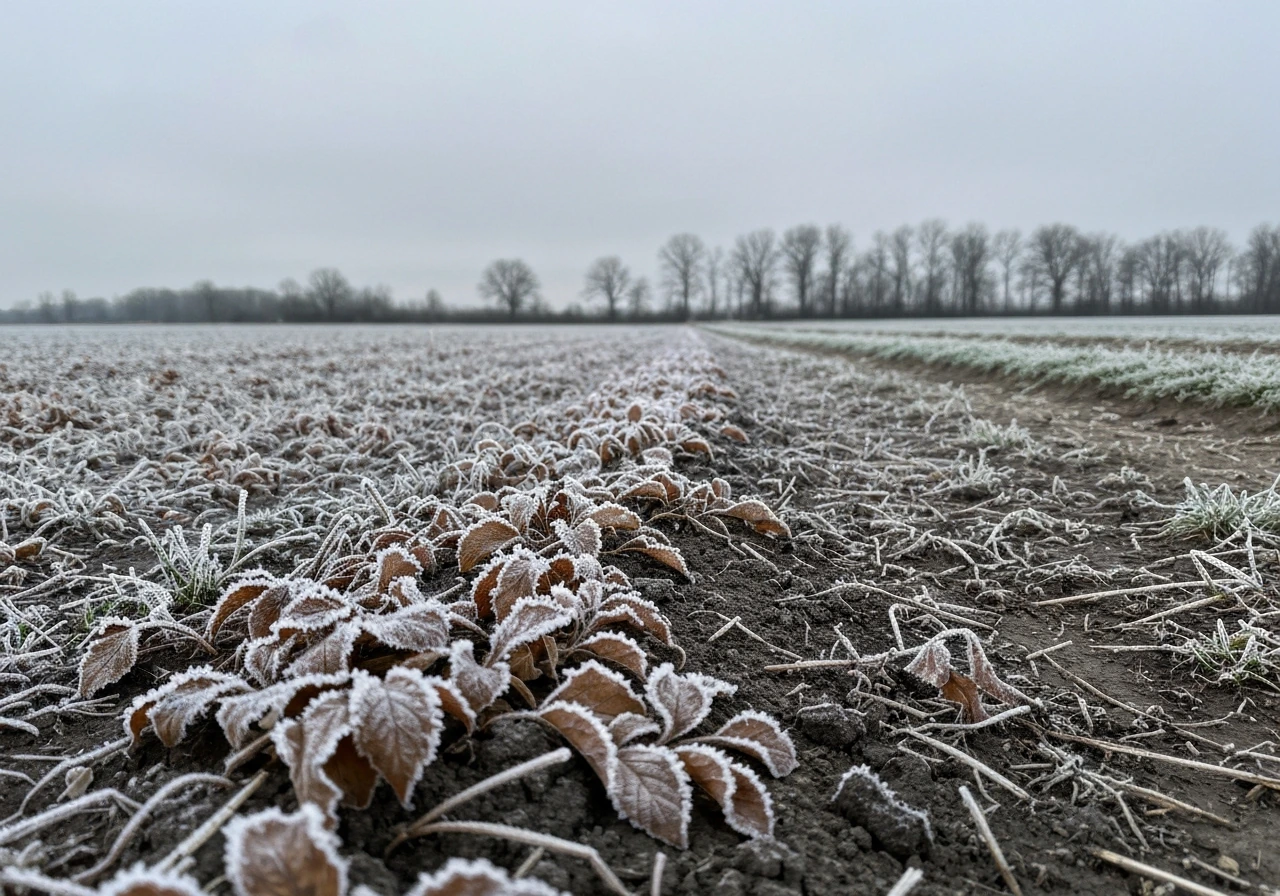
The single biggest obstacle for warm-weather cash crops in New England is the growing season, specifically how short it is and how unforgiving the cold can be on both ends. The frost-free period, defined by USDA/NRCS as consecutive days when surface air temperature stays above 32°F, ranges from roughly 90 days in far northern Maine and the mountain valleys of the White and Green Mountains to about 140 days along the southern coast of Massachusetts. By comparison, Virginia's Tidewater region, where tobacco thrived, enjoys 180 to 210+ frost-free days. That gap is enormous when you're trying to mature a heat-hungry crop.
And it's not just about averages. NOAA tracks freeze events at multiple temperature thresholds: 32°F, 28°F, 20°F, and lower. A hard freeze below 28°F in late spring or early fall can wipe out a crop that might have survived a light frost. In New England's interior and at elevation, those hard freezes happen with enough regularity that planting any frost-sensitive warm-weather crop becomes a gamble every single year. A farmer betting on tobacco or cotton in central Vermont or northern New Hampshire wasn't just working against the calendar; they were working against the real possibility of a killing frost before harvest.
Growing degree days, which measure heat accumulation above a crop-specific base temperature, drive this point home with numbers. Cotton, for example, uses a base threshold of 60°F (DD60) to track development, and it needs a substantial accumulation of those degree days to reach maturity. New England's warm season simply doesn't generate enough heat units in most years to push a cotton crop to harvest, even if the frost dates cooperated perfectly. The same logic applies to tobacco, which needs sustained warm nights and a long, warm growing window to cure properly in the field.
Rocky ground: how glaciation shaped New England's soils
Even if the climate had been warmer, the soils would have created serious problems. New England's landscape was scraped and rearranged by glaciers, and what the ice left behind is rocky, thin, often acidic, and inconsistently drained. Granite bedrock sits close to the surface across much of the region, limiting how deep roots can grow and how much water and nutrients the soil can hold. USDA/NRCS soil surveys of New Hampshire and neighboring states consistently identify ledge, rock fragments, and thin topsoil as defining characteristics of New England farmland. Farmers clearing fields didn't just remove trees; they had to haul out thousands of stones, many of which ended up in the iconic stone walls that line old farm boundaries across the region.
The soil science goes deeper than just rocks. New England's glacially derived soils are dominated by Spodosols, a soil type formed under cold, humid conditions with acidic parent material. These soils are naturally low in base nutrients, have poor water retention in sandy areas, and tend toward poor fertility without significant amendment. Tobacco and cotton both demand well-drained, fertile, loamy soils with good moisture retention, the kind of deep alluvial or sandy loam soils found in the Chesapeake lowlands or the Carolina Piedmont. New England's rocky, thin, acidic soils were almost the opposite of what those crops needed. One Earth Magazine analysis described New England's glacial geology as 'almost single-handedly responsible' for shaping the region's agricultural economy, and that's not an exaggeration.
Poor drainage added another layer of difficulty. Low-lying areas often stayed waterlogged in spring, delaying planting dates that were already tight given the short frost-free season. On slopes, thin soils over ledge meant water ran off quickly, leaving crops to dry out in summer. Neither extreme suits warm-weather crops that need consistent moisture and well-structured root zones.
Market and economic barriers: distance, transport, and price risk
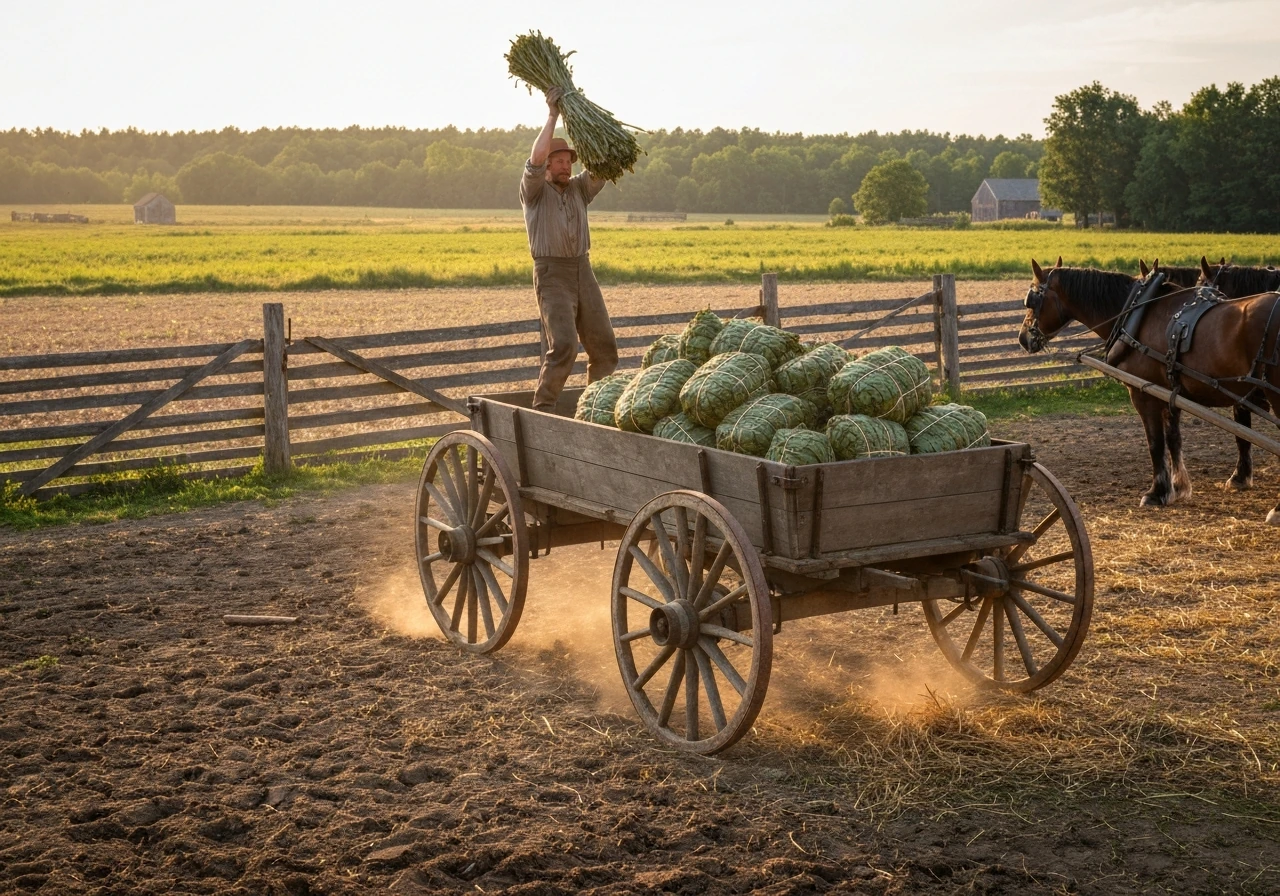
Even if a New England farmer managed to grow a decent tobacco or cotton crop in a good year, selling it profitably was a separate challenge. The major markets for plantation cash crops were in England, and they were supplied most efficiently by the Chesapeake and Carolina colonies, which had established trade networks, experienced merchants, and established reputations for product quality. New England sat outside those established channels. The region's colonial economy ran on different exports: fish, timber, furs, and eventually manufactured goods. Trying to break into the warm-weather cash-crop market from Boston or Portsmouth meant competing against producers who had better soil, longer seasons, lower production costs, and direct merchant relationships with London buyers.
Transportation inside New England compounded the problem. Overland roads were poor, rivers weren't always navigable, and moving bulk agricultural goods from interior farms to coastal ports was expensive and slow. A coastal farmer might access seaborne trade, but an inland Vermont or New Hampshire farmer faced significant cost and spoilage risk getting any perishable or bulk commodity to a buyer. This is why New England's successful market goods tended to be non-perishable (timber, dried fish) or high-value per pound (furs), not bulk field crops that require cheap, reliable bulk transport to be profitable.
Small farms and subsistence-first priorities
New England farming was structurally different from the plantation system that made tobacco and cotton viable further south. Plantation agriculture depended on large land holdings, large labor forces (enslaved workers on southern plantations), and the ability to absorb bad years because the scale created buffers. Enslaved people were made to grow plantation cash crops such as tobacco, cotton, and rice, depending on the region’s climate and soil. New England farms were small, family-operated, and built around the logic of survival first, market second. The Federal Reserve Bank of Boston has noted that small farms close to population centers have always been a defining feature of the region, and that pattern goes back to the colonial period.
For a small New England farm family, betting a season's labor on an experimental tobacco or cotton crop wasn't just ambitious; it was potentially catastrophic. Educational resources from New Hampshire's agricultural history make this explicit: English settlers needed to grow enough food to survive, and subsistence farming dominated because the margins for failure were thin. A cash-crop gamble that failed meant a hungry winter. That risk calculus pushed farmers toward reliable food crops first and limited their appetite for high-risk experiments with crops that weren't suited to their climate anyway. You can contrast this with what was happening on southern plantations, where enslaved labor bore the risk of failure and owners could afford to push harder on a single profitable crop year after year.
This farm structure also shaped which 'cash-adjacent' crops did find a foothold. Flax for linen and hemp for rope and fiber didn't require tropical heat or a long season, and they could be processed at home during winter months, fitting the labor pattern of a small farm family. These fiber crops offered some market income without the weather risk of warm-season monocrops, which is exactly why they showed up more consistently in New England farm records than tobacco or cotton did.
Why each major warm-weather cash crop failed in New England

Let's go through the most commonly cited warm-weather cash crops and look at exactly why each one was a poor fit for New England.
| Crop | Heat/Season Requirement | New England Problem | Historical Outcome |
|---|---|---|---|
| Tobacco | 150–180+ frost-free days; warm nights for curing | 90–140 frost-free days; cold nights reduce quality and yield | Limited intermittent production; never a dominant export |
| Cotton | Needs 200+ frost-free days; high DD60 heat accumulation | Far too short a season; insufficient growing degree days in most of the region | Essentially not grown commercially; no viable production history |
| Sugarcane | Tropical/subtropical; no frost tolerance; 270+ day growing season | Hard freezes kill plants; growing season far too short everywhere in the region | Never cultivated commercially in New England |
| Rice | Warm, wet lowlands; 120–150+ frost-free days with consistent warmth | Cold soils, short season, and lack of suitable lowland paddies | Not grown; wrong terrain and climate |
| Indigo | Subtropical; needs long warm season and specific soil conditions | Too cold; insufficient heat accumulation for dye-quality yields | Occasionally attempted but not viable at scale |
Tobacco is the most instructive case because New England farmers actually attempted it. There's a full academic monograph on the history of tobacco production in New England, which tells you the subject was real enough to document. But consistent, profitable tobacco production never emerged. NPS records on colonial tobacco cultivation describe it as labor-intensive, disease-prone, and risky even in Virginia, where conditions were far better. New England's shorter season compressed the risk further: a late spring frost or an early fall freeze could wipe out a crop that hadn't fully matured. Even in good years, New England tobacco struggled to match the quality and yield that Chesapeake growers produced in Virginia's longer, warmer seasons, so it couldn't compete in English markets.
Cotton never got far enough to have much of a historical story in New England. The math simply doesn't work. Cotton needs somewhere around 200 frost-free days and a large accumulation of growing degree days above 60°F to mature. Even the most favorable New England locations top out around 140 frost-free days. There's no sub-region of New England that comes close to providing what cotton needs. The same logic applies to sugarcane, which is a tropical plant that cannot tolerate frost at all and requires a growing season that exceeds anything New England offers by a factor of two. In the plantation South, enslaved people were brought from Africa to grow sugarcane for profit.
What does grow in New England, and how to choose crops today
The crops that have succeeded in New England, historically and today, share a common profile: they're tolerant of cool temperatures, they mature within a 90- to 140-day window, they can handle acidic and rocky soils with good drainage, and they fit the small-farm model that dominates the region. Apples are the clearest example. By the late 1700s, apple orchards had spread throughout New England because apples require a cold winter to break dormancy (a 'chill hour' requirement that New England reliably meets), tolerate acidic and somewhat rocky soils, and produce a storable, marketable crop. NPS orchard history documents this spread explicitly as a success story driven by climate fit.
Beyond apples, the modern New England farm market includes pears, peaches (in warmer microclimates near the coast), blueberries, strawberries, potatoes, pumpkins, squash, and a wide range of vegetables suited to cool-season growing. Dairy farming became a major New England industry precisely because grass grows reliably in the region's climate and rocky soils don't prevent pasture as severely as they prevent tilled field crops. These aren't consolation prizes for failing at tobacco; they're crops that match what the land and climate actually offer.
How to use climate and soil data to choose the right crop today
Whether you're farming in New England today or just trying to understand why historical crops succeeded or failed in a specific region, the decision-making framework is the same. Start with these four inputs before committing to any crop. USDA’s official “How to Use the Maps” explains how to use the Plant Hardiness Zone Map and interpret its zone-based guidance for practical crop selection.
- Check your frost-free season length. Use NOAA's freeze date maps and your local historical frost data to find your median last spring frost and first fall frost. This defines your available growing window. In northern New England, assume 90 to 110 days; in southern coastal areas, you may get up to 140. Compare that number against your target crop's minimum season requirement before anything else.
- Calculate growing degree days (GDD) for your location. USDA/NRCS defines GDD as heat accumulation above a crop-specific base temperature. If you're evaluating a warm-season crop, look up its GDD requirement and compare it against historical GDD accumulation for your county. Your local Cooperative Extension office will have this data. If your location doesn't consistently accumulate enough GDDs, the crop won't mature reliably.
- Look up your USDA Plant Hardiness Zone. The 2023 USDA Plant Hardiness Zone Map tells you the average annual extreme minimum winter temperature for your location. New England spans zones 3b through 7a depending on location and elevation. This matters most for perennial crops: a zone 4 site can support apples and cold-hardy berries, but not peaches or figs reliably.
- Assess your soil. Get a basic soil test from your Cooperative Extension service to check pH, nutrient levels, and drainage. New England soils typically run acidic (pH 5.5 to 6.5) and may need lime amendment. Check rooting depth where you plan to plant: if you hit ledge at 12 inches, deep-rooted field crops will struggle. Match crop root requirements to actual soil depth and drainage class.
- Factor in your market and logistics. Even if a crop can grow on your site, ask whether you can get it to buyers efficiently. New England's strength today is direct-market and regional sales: farmers markets, farm stands, CSAs, and restaurant accounts. Crops that store well or command premium prices in local markets (specialty vegetables, berries, heirloom apples, cut flowers) fit the region's farm-to-customer model better than commodity bulk crops competing in national markets.
The historical lesson from New England agriculture is ultimately a practical one: crop choice has to match the intersection of climate, soil, farm scale, and market access. When any one of those four factors is badly misaligned, a crop struggles. When all four are misaligned, as they were for tobacco and cotton in colonial New England, the crop simply doesn't survive as a viable agricultural enterprise. That same analytical lens applies today, whether you're evaluating a new specialty crop for a Vermont hillside farm or trying to understand why a neighbor's experiment with a southern variety failed three years running. Match the crop to the conditions, not the other way around.
It's worth noting that the same pattern of climate-crop mismatch shows up repeatedly in agricultural history across different contexts. The middle colonies, by contrast, had longer growing seasons, deeper soils, and better river transport, which is why farmers there found it easier to produce surplus grain for market. Understanding why specific regions succeeded with specific crops, whether that's colonial farmers in New England, plantation agriculture in the South, or modern specialty producers in any region, always comes back to the same underlying geography. The crops don't lie about what they need. USDA also provides an official blank" rel="noopener noreferrer">2023 Plant Hardiness Zone Map that you can use as a standardized guide for evaluating winter survival limits when choosing crops today.
FAQ
If New England had warm summers sometimes, why couldn’t farmers just plant late warm-weather crops and “make it work” in good years?
Because the risk was not only the average warmth, it was the timing of cold events. A late spring freeze or an early fall freeze could kill seedlings or prevent full maturity, and many warm-weather crops also require sustained warmth and heat accumulation to cure or finish properly, not just a single hot month.
How much did the difference in frost-free days really matter compared with other limits like soil quality?
For many warm-weather cash crops, frost-free duration was the binding constraint. Even where soils were workable, the region often could not provide the 150 to 200 plus frost-free days (or equivalent heat accumulation) needed to reach maturity, so farmers could lose an entire crop even in seasons with acceptable rainfall and soil conditions.
Did New England farmers try to solve the cold problem with varieties or planting methods, and would that have been enough?
They could shift timing, use locally adapted strains, or select earlier-maturing forms, but there was still a hard ceiling created by both early fall risk and limited growing degree days. For crops like cotton and sugarcane, adjusting varieties could not reliably close the gap between what the plant needed and what the region could consistently supply.
Were there places within New England that were suitable for warm cash crops, like the southern coast only?
Some coastal locations had longer seasons than inland valleys, but the best-case frost-free window still generally fell short of what the most demanding cash crops require. That is why even “best” sub-regions could support cool-season crops and orchards far more consistently than plantation-style monocrops.
Could railroads or better transport have changed the outcome, or was the problem mostly climate and soil?
Better transport would have helped profitability for products that could tolerate longer shipping times, like timber, dried goods, or storable produce. But for warm-season field crops, transport improvements do not remove the fundamental exposure to frost and heat-unit shortfalls that determine whether a harvest is possible in the first place.
Why didn’t New England develop a tobacco or cotton monoculture the way Virginia and the Carolinas did?
In addition to climate and soils, monoculture required scale and buffers against bad years. New England farm ownership and labor were typically small and family-based, so a failed cash-crop year was directly tied to household survival, leaving little room for repeated high-risk experiments.
What role did drainage play, and could drainage fixes make warm cash crops viable?
Poor drainage delayed planting and increased crop stress during narrow windows, which mattered when frost threatened early. While tiling, ditching, or soil amendments could improve specific fields, widespread conversion to the deep, well-structured loamy soils warm cash crops prefer was a costly long-term project for small farms.
If farmers could not grow warm cash crops reliably, what explains why some market-oriented crops still appeared in records?
Market participation in New England often centered on goods that matched the region’s constraints, not necessarily the plantation crops people associate with “cash cropping.” Many successful options were storable, high value per pound, or tied to cool-season growing, like apples, fibers (flax and hemp), dairy, and certain orchard or vegetable crops.
Were fiber crops like flax or hemp considered “cash crops,” or were they just subsistence extras?
They were often cash-adjacent, because they could be sold for specific uses like linen and rope, but the exact balance between selling and self-use varied by household. They fit the small-farm labor calendar better because processing could occur during winter months and they do not require frost-free, heat-hungry growing conditions.
How should I think about “cash crop” when reading about colonial New England, since the term can feel like it implies plantation-style production?
It helps to separate market sales from plantation logic. A New England farmer could sell goods regularly without producing a single dominant export crop, and “cash” could come from many smaller streams such as timber, livestock products, orchard fruit, and fish, rather than one climate-sensitive commodity.
If a modern farmer in New England wants to test a warm-weather cash crop, what is the most important checklist item before planting?
Start with whether local conditions can meet both the frost timing and the crop’s heat accumulation needs, not just whether summers look warm. Then check field specifics like drainage depth, stone/ledge constraints, and whether the crop can be processed or cured locally enough to reduce dependence on fragile post-harvest logistics.
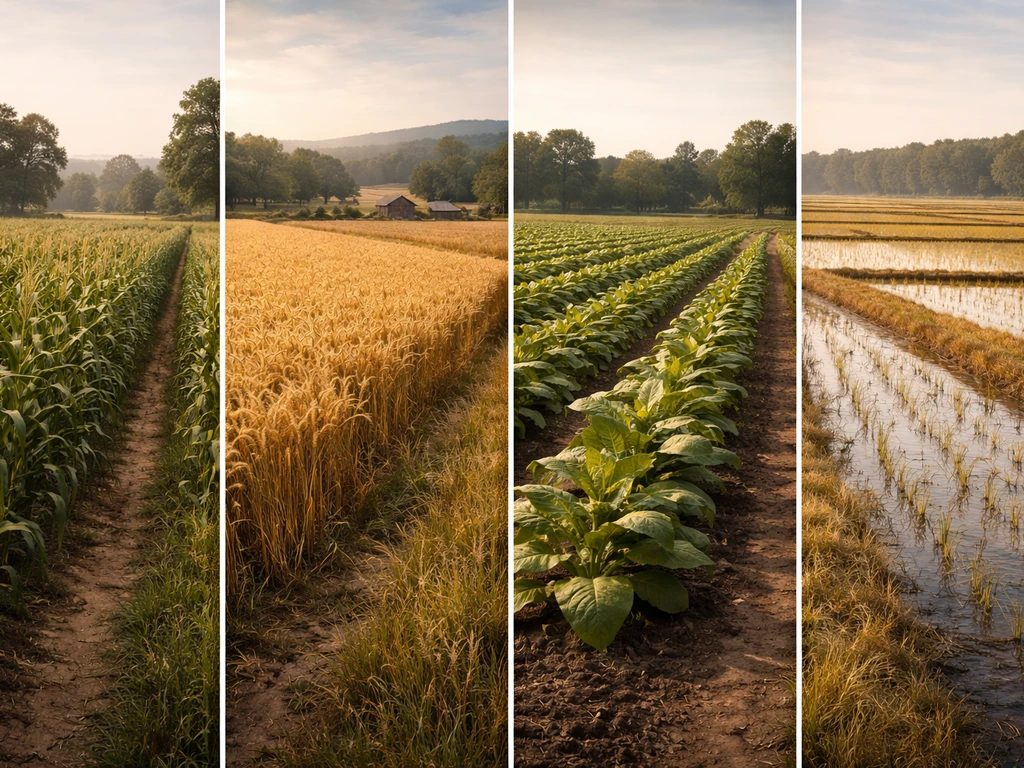
Regional breakdown of colonial crops, from staple grains and gardens to cash crops, plus how to find exact crops by colo
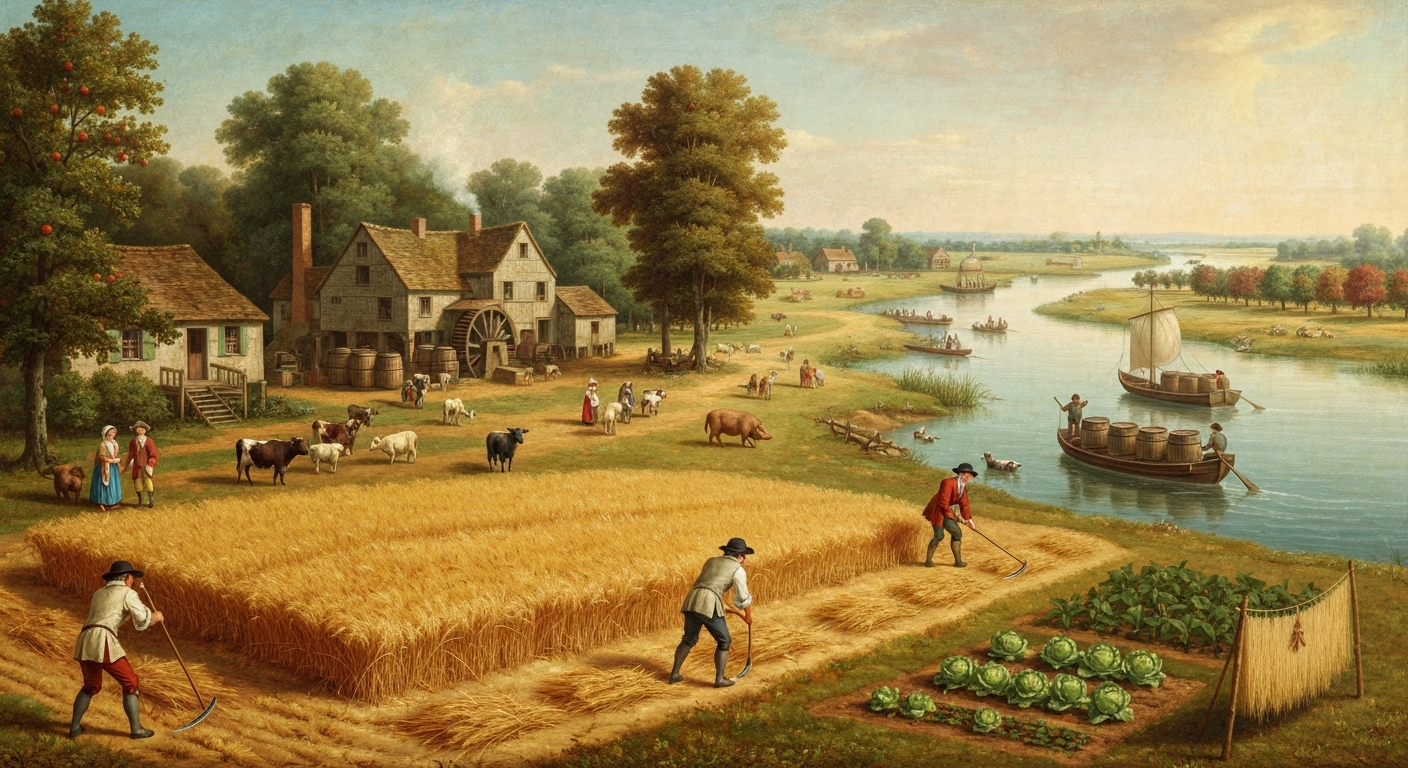
Colonial Delaware’s main crops, grains, hay, flax, fruits, vegetables, livestock, why they thrived and how they were sold.
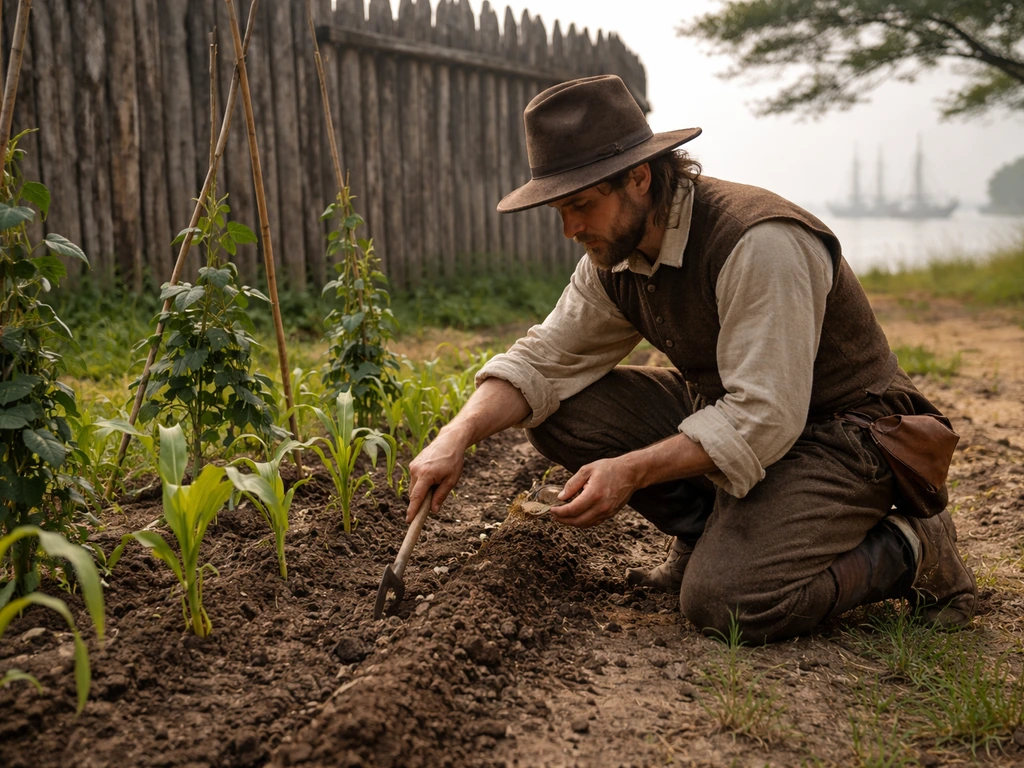
Learn what Jamestown colonists grew and the methods they used to plant, harvest, and adapt crops to Virginia conditions.