The Cherokee grew corn, beans, squash, pumpkins, and sunflowers as their core agricultural crops, with corn sitting at the center of that system. These five plants formed the backbone of Cherokee farming across the southern Appalachian highlands, river valleys, and lowland fields that made up their traditional homeland. If you need a short answer, that's it. But if you want to understand which varieties were grown, how companion planting worked, how crops shifted by location and era, and how to apply any of this to a modern garden or research project, read on.
What Crops Did the Cherokee Grow By Region and Season

Samuel Rourke
22 Apr 2026
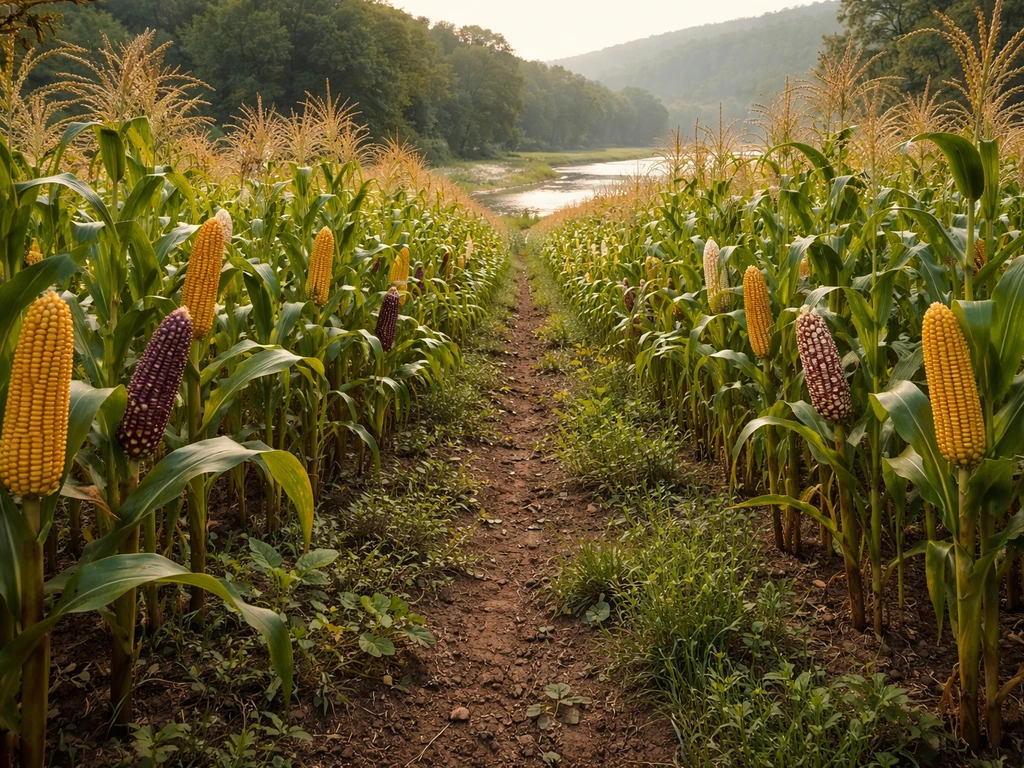
Core Cherokee staple crops
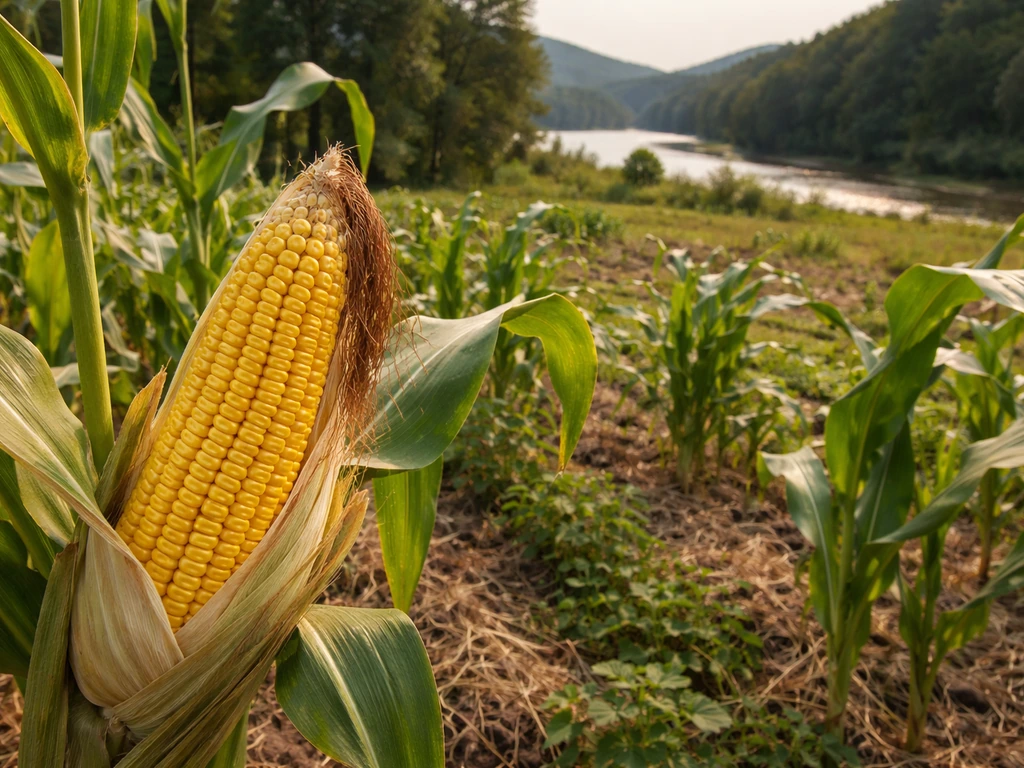
Cherokee agriculture was productive and intentional. Villages maintained what early European observers described as vast cornfields, often situated in river valleys where soil was fertile and water was reliable. Around and within those fields grew a supporting cast of crops that together provided a balanced diet across the growing season. Here are the staple crops most consistently documented in historical and ethnobotanical records:
- Corn (maize): The dominant staple, grown in multiple varieties including flint, flour, and dent types. The Cherokee Nation's seed program today maintains 11 distinct corn varieties with documented pre-contact lineages.
- Beans: Multiple varieties grown both as a food source and as a companion plant to corn. The Cherokee Nation currently preserves 4 bean varieties from historical Cherokee cultivation.
- Squash: Grown alongside corn and beans; summer and winter types were both cultivated.
- Pumpkins: Closely related to squash and often grown together; the Cherokee Nation maintains one documented heritage pumpkin variety.
- Sunflowers: Grown for seeds, oil, and dye. Sunflowers appear consistently in historical Cherokee agricultural accounts alongside the core food crops.
These are not guesses or generalizations pulled from broad Native American farming profiles. They are specifically documented for Cherokee communities through ethnobotanical fieldwork, tribal agricultural programs, and historical observation. The seed preservation work of the Cherokee Nation, which actively grows heritage varieties of all five crops, is one of the strongest lines of evidence that these plants have direct, continuous Cherokee agricultural lineage. Cherokee Nation’s Seed Bank is described by the Cherokee Nation as a plant and cultural preservation program that provides seeds to tribal citizens for growing traditional Cherokee crops.
The Three Sisters and how Cherokee companion planting actually worked
The Three Sisters concept (corn, beans, and squash planted together) is one of the most well-documented Indigenous intercropping systems in North America. The USDA National Agricultural Library describes a Cherokee and Iroquoian style of planting where corn is mounded in small hills, beans are planted around the base of the corn stalks, and squash is interspersed throughout. Each plant plays a role in that arrangement: corn stalks give beans a structure to climb, beans fix nitrogen in the soil, and squash spreads low across the ground, shading out weeds and retaining soil moisture with its broad leaves.
This system wasn't just clever gardening theory. It was a practical solution adapted to the specific conditions of the Eastern Woodlands and southern Appalachian region, where summer humidity is high, rainfall is variable, and hillside soils can drain and erode quickly. The low-growing squash acts almost like a living mulch, and the whole hill system concentrates nutrients around each plant cluster. If you're trying to recreate Cherokee-style growing in a modern garden, the hill-planting method is worth taking seriously. Space hills about 3 to 4 feet apart, plant 4 to 6 corn seeds per hill, add 3 to 4 bean seeds around the perimeter once corn is 6 inches tall, and scatter squash seeds or transplants between hills.
Beyond the Three Sisters: other Cherokee food and useful plants
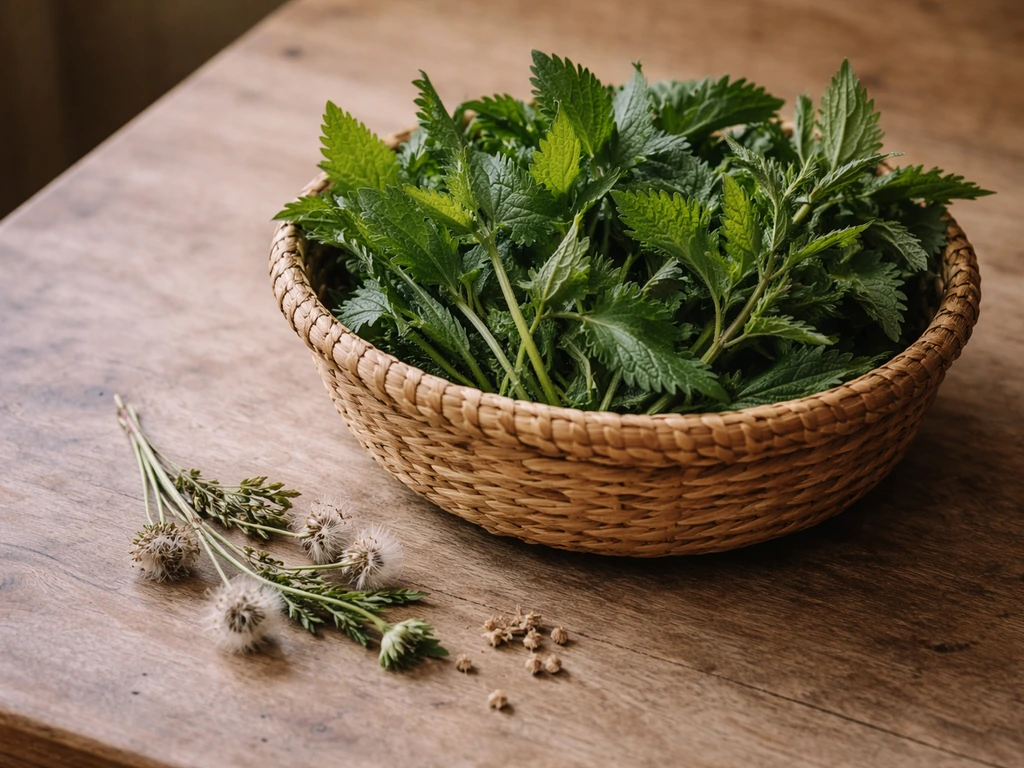
Cherokee agriculture and plant use extended well beyond the core staple crops. The ethnobotanical record, much of it compiled through decades of fieldwork with Cherokee residents in North Carolina, documents a wide range of plants used for food, medicine, fiber, and ceremony. Not all of these were cultivated in the same sense as field crops, but many were managed, tended, and intentionally grown or gathered.
- Wild greens and leafy plants: Several wild and semi-cultivated greens were collected and consumed, including ramps, watercress, and other woodland plants common to the Appalachian region.
- Nuts and tree crops: Chestnuts, hickory nuts, black walnuts, and acorns were significant food sources, gathered from managed woodland areas rather than field-planted.
- Berries and fruits: Blueberries, strawberries, serviceberries, and persimmons were gathered seasonally from the landscape.
- Tobacco: Grown for ceremonial use, tobacco was a cultivated plant in Cherokee communities, distinct from wild tobacco species.
- Gourds: Used as containers and tools rather than primarily as food, gourds were cultivated alongside the food crops.
- Medicinal plants: The Cherokee ethnobotanical record is extensive. Goldenseal, black cohosh, bloodroot, and many other Appalachian woodland plants were intentionally managed and used medicinally.
It's worth drawing a line here between cultivated crops and gathered plants, because conflating them can distort the picture. Cherokee communities were highly skilled at managing entire landscapes, not just garden beds. A forest managed for nut production or a streamside area maintained for medicinal herbs is a form of agriculture even if it doesn't look like a plowed field. If your research goal is crop history specifically, focus on the corn, bean, squash, pumpkin, and sunflower cluster. If you're specifically asking about Apache agriculture, their crop choices were shaped by the deserts and highland environments of their territory. If you're interested in the full scope of Cherokee plant knowledge, the ethnobotanical record points much deeper.
How Cherokee crops varied by region, season, and time period
The Cherokee homeland spanned a large and geographically diverse area, covering parts of what are now North Carolina, Tennessee, Georgia, Alabama, and South Carolina, with the landscape ranging from high mountain ridges in the Blue Ridge to lower piedmont valleys and river bottomlands. Crop choices and farming methods were not uniform across that range.
In the higher elevation mountain zones, growing seasons are shorter, frost arrives earlier, and temperatures are cooler overall. Cherokee communities in those areas likely relied more on flint-type corn varieties that mature faster, and their bean and squash cultivation would have been adapted to a compressed summer window. In the warmer, lower river valleys, longer growing seasons allowed more flexibility in crop timing and variety selection. The richest agricultural soils were in the alluvial floodplains along rivers like the Little Tennessee, Hiwassee, and Oconaluftee, and those areas supported the large communal cornfields described in early historical records.
Time period matters significantly too. By the 1820s, the Blue Ridge National Heritage Area documents a shift away from large communal village fields toward smaller family-scale farming centered on log cabin homesteads along streams and river valleys. This shift was driven partly by European influence and partly by changing political and economic conditions in the Cherokee Nation. What this means practically: if you're researching pre-contact or early-contact Cherokee agriculture (pre-1700s), you're looking at a more communal field system with large corn acreage. If you're looking at the early 19th century, you're looking at smaller mixed-crop family farms that may have incorporated European crops like wheat and livestock alongside traditional Cherokee crops.
| Period | Farming Scale | Key Crops | Notes |
|---|---|---|---|
| Pre-contact (pre-1500s) | Large communal village fields | Corn, beans, squash, pumpkin, sunflower | Hill-planted intercropping; dense river valley cultivation |
| Early contact (1500s-1700s) | Communal fields with some disruption | Same core crops, some early trade introductions | European observations document vast cornfields around villages |
| Late 18th century | Transitional, mix of communal and family | Core crops plus early European influences | Increasing European contact accelerates change |
| Early 19th century (1800s-1830s) | Family-scale farms, log cabin settlements | Core crops plus wheat, livestock, European vegetables | Shift to stream/valley homesteads; forced removal in 1838 disrupts all Cherokee farming |
Cherokee farming did not exist in isolation either. Trade networks connected Cherokee communities to other groups across the Southeast and beyond, and crop varieties moved along those networks. If you're comparing Cherokee agriculture to neighboring groups like the Pueblo or Navajo, the environmental context shifts dramatically. For the Comanche, you would need to look at how the Plains environment shaped their staple crops and cultivation practices what crops the Comanche grew. If you’re also wondering what crops the Pueblo grew, you’ll want to look at how irrigation and the arid Southwest shaped their staple plants. Cherokee crops were suited to a humid, temperate, heavily forested environment, quite different from the arid Southwest systems. In the same way, the question of what the Navajo grew depends heavily on the arid Southwest environment and their irrigation and dry-farming practices. Even within the broader Native American farming world, Cherokee agriculture was regionally specific.
Growing Cherokee crops today: what actually works in a modern garden or small farm
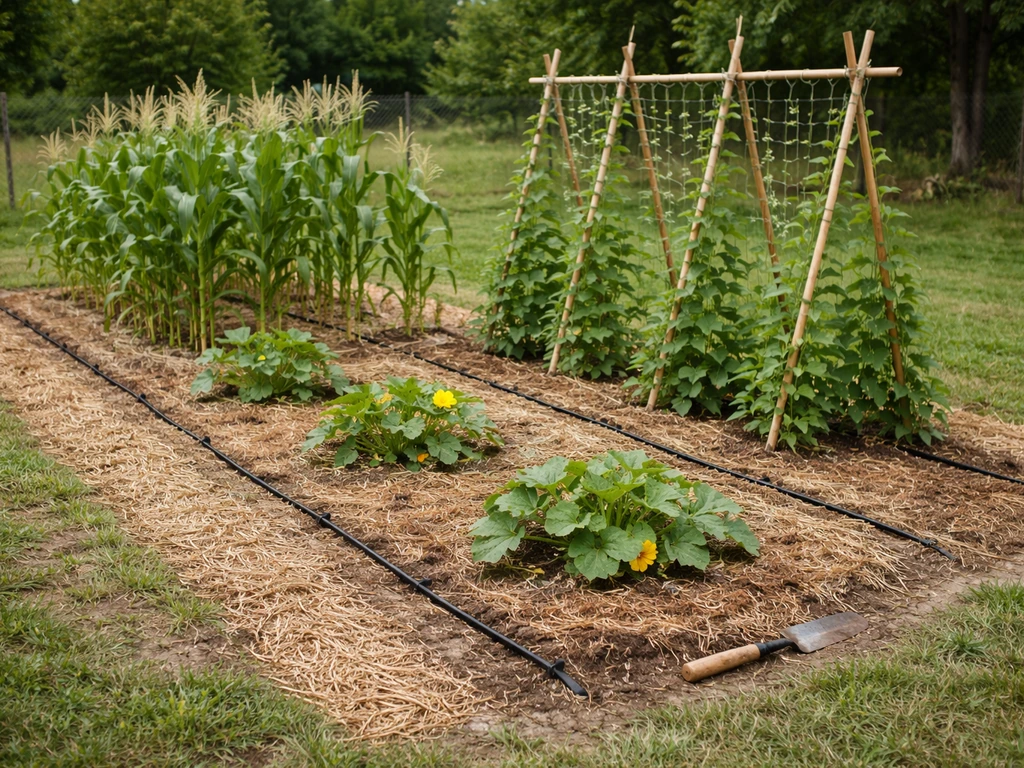
If you're a gardener or small-scale farmer wanting to grow crops with Cherokee heritage, the good news is that most of the core plants are still accessible, and some are being actively preserved by the Cherokee Nation itself. The main challenge is finding the right heritage varieties rather than modern hybrids, which have been bred for commercial production rather than flavor, resilience, or historical accuracy.
For corn, look for open-pollinated heritage varieties adapted to the Southeast and southern Appalachian region. Cherokee White Flour Corn and similar Appalachian flint or flour corns are available through seed-saving organizations and Native seed libraries. These varieties are typically planted in late spring after last frost (mid-April to May across most of the Cherokee homelands) and need 80 to 110 days to maturity depending on variety. The Cherokee Nation SeedBook (2022) similarly provides practical corn-growing guidance, including planting and growth timing parameters such as days to maturity blank" rel="noopener noreferrer">need 80 to 110 days to maturity depending on variety. They prefer well-drained but moisture-retentive loam soils, which is exactly what you find in the river valleys where Cherokee agriculture was concentrated.
For beans, seek out Cherokee Trail of Tears beans, which are a documented heritage pole bean variety with a direct Cherokee connection. They're a black-seeded pole bean, vigorous and productive, well suited to humid summer conditions. Plant after corn is established if you're doing Three Sisters style, or plant on their own along a trellis. They need about 65 to 75 days to dry bean stage.
For squash and pumpkins, heritage varieties like Long Island Cheese Pumpkin or various Cushaw squashes are good starting points for Appalachian-climate growing, though sourcing varieties specifically documented to Cherokee cultivation takes more research. Sunflowers are straightforward: standard open-pollinated sunflowers from seed-saving suppliers work well, and growing them at the edge of a corn-bean-squash planting mimics historical Cherokee field arrangements.
- Source seeds from Native-focused seed libraries or tribal seed programs where possible, not commercial hybrid seed suppliers.
- If growing Three Sisters style, prepare hills 3 to 4 feet apart in well-amended, well-drained soil in full sun.
- Plant corn first and wait until stalks are 6 to 8 inches tall before adding beans.
- Add squash or pumpkin seeds between hills after beans are in the ground.
- Plant sunflowers at the field perimeter or in a separate row; they can compete aggressively if mixed directly into corn hills.
- Water consistently during pollination for corn and pod set for beans; these crops are not drought-tolerant the way Southwest crops often are.
How to verify sources and research Cherokee crops by specific area or era
If you're a student, historian, or researcher trying to pin down crop information for a specific Cherokee community, location, or time window, generic lists are only a starting point. Here's how to go deeper and verify what you find.
The eHRAF World Cultures database maintained by Yale University is one of the strongest primary source repositories for Cherokee ethnobotany. It hosts texts like 'Cherokee Plants and Their Uses,' which draws on 30 years of fieldwork with Cherokee residents in North Carolina. If you have access through a university library, it allows you to search across full-text ethnographic records. For agricultural specifics, look for documents tagged with Cherokee subsistence, horticulture, or food preparation categories.
The USDA National Agricultural Library has accessible online resources on the Three Sisters intercropping system specifically, and the NMAI (National Museum of the American Indian) publishes detailed coverage of tribal seed-saving programs including the Cherokee Nation's current crop preservation work. Both are credible, publicly available sources you can cite in academic or research work.
For regional specificity, the Blue Ridge National Heritage Area is a useful source on Cherokee agriculture in the North Carolina mountain region specifically, distinguishing between pre-contact communal farming and the 19th-century transition to family-scale farms. If your research focus is on the western Cherokee (Oklahoma), look for materials related to the Cherokee Nation of Oklahoma's agricultural history, which diverges after the Trail of Tears removal in 1838 when the Nation was forced to rebuild agriculture in a completely different environment.
A few verification habits that help: Cross-check any crop claim against at least two independent sources, preferably one historical/ethnographic and one from a tribal or institutional agricultural program. Be skeptical of websites that blur the line between Cherokee crops and generic 'Native American crops,' since different nations grew very different things depending on their region and climate. The Cherokee were an Eastern Woodlands people, and their crop profile reflects that, just as the Pueblo's crops reflect the arid Southwest, and the Apache's agricultural practices differed again based on their own territorial range and traditions. Keeping those regional distinctions clear is what turns a general answer into an accurate one.
FAQ
Is the answer always just corn, beans, squash, pumpkins, and sunflowers, or did the Cherokee grow more crops?
If you mean the most consistently cultivated “field” crops Cherokee communities planted year after year, the core answer stays corn, beans, squash, pumpkins, and sunflowers. Some other plants were important too, but they may be better described as managed or gathered foods rather than the main tilled crops that anchor the Three Sisters system.
For Three Sisters planting, how do you choose between squash types so it still works like the traditional system?
In the Cherokee Three Sisters-style planting, the squash is typically the ground-cover “weed suppressor” that helps keep moisture in the hill cluster. If you substitute a vining squash without enough ground coverage, you often lose part of that benefit, so choose a heritage type with a spreading habit suited to humid summers.
How should I adjust the crops or timing if I’m trying to match Cherokee farming in mountain vs valley areas?
The Cherokee did not farm the same way everywhere across their homeland. Higher elevations meant shorter seasons and earlier frost, so you would generally prioritize faster-maturing corn and time bean and squash planting to fit a compressed summer. River valleys and floodplains supported larger cornfields because growing conditions and soils were more reliable.
Did Cherokee crop choices change in the early 19th century compared with earlier periods?
Yes. The article notes a shift by the early 1800s toward smaller, family-scale farming near homesteads. When researching “what crops,” you should match the crop system to the time window, because claims based on village-field descriptions may not fit later homestead patterns.
Does the crop list apply equally to Cherokee communities in Oklahoma and in the historic southeastern homeland?
If your goal is accuracy for a specific community, treat “Cherokee” as a label for different subcontexts. The western Cherokee (Oklahoma) rebuilt agriculture after 1838 under new ecological conditions, so crops and practices you might expect in the Southeast do not necessarily transfer directly.
If I have a small backyard garden, how can I adapt Cherokee-style planting without losing the main benefits?
Corn and the supporting crops can still be historically meaningful even if your garden is small. The key is planting structure, not acreage, for example using hill planting for corn and coordinating beans around the base and squash between hills to mimic the microclimate effects (shade, moisture retention, and soil protection).
What’s the most common mistake people make when answering what crops the Cherokee grew?
A common mistake is assuming every “Native American” crop is the same as Cherokee crops. The Three Sisters concept can overlap across nations, but the specific varieties, local adaptations, and dominant field crops differ by region and climate, so you should verify Cherokee-specific sources rather than general Indigenous agriculture lists.
What does “heritage variety” mean in practice, and why does it matter for growing Cherokee-linked crops?
“Heritage” here usually means open-pollinated varieties that you can save seed from, rather than modern commercial hybrids selected for uniformity and yield. For Cherokee-heritage gardening, seed availability and variety maturity days matter as much as the crop identity.
Next Articles
What Crops Did Native Americans Grow by Region
Region-by-region guide to Native American crops, including Three Sisters and staples, uses, and how climate shaped farmi
What Did the Delaware Colony Grow: Crops, Uses & Legacy
Colonial Delaware’s main crops, grains, hay, flax, fruits, vegetables, livestock, why they thrived and how they were sold.
What Did Jamestown Grow and How They Farmed It
Learn what Jamestown colonists grew and the methods they used to plant, harvest, and adapt crops to Virginia conditions.