The Pueblo peoples, both the ancient Ancestral Puebloans and the later Pueblo groups of the American Southwest, built their diet around three core crops: corn (maize), beans, and squash. These three plants, often called the blank" rel="noopener noreferrer">Three Sisters, covered the majority of their nutritional needs and were grown together in the same fields. Beyond that foundation, Pueblo farmers and foragers also cultivated or promoted amaranth, chenopodium (goosefoot), sunflower, and gourds, and they gathered piñon nuts, wild greens, and berries to round out the food supply.
What Crops Did the Pueblo Grow A Regional Guide

Samuel Rourke
18 May 2026
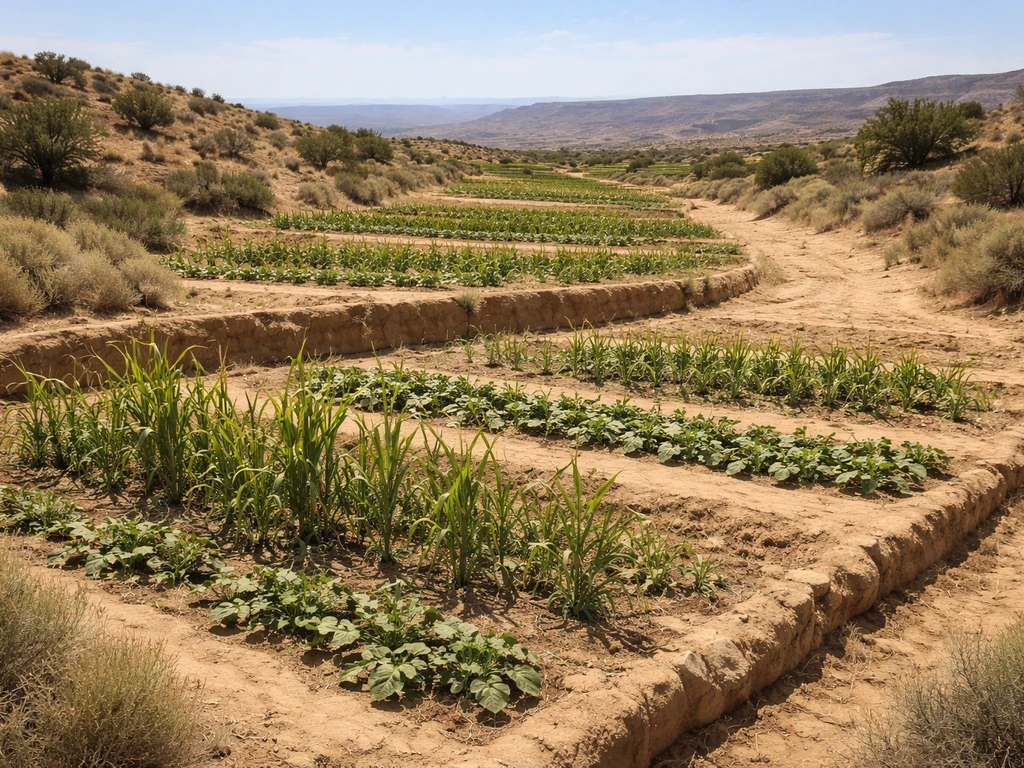
The staple crops: corn, beans, and squash
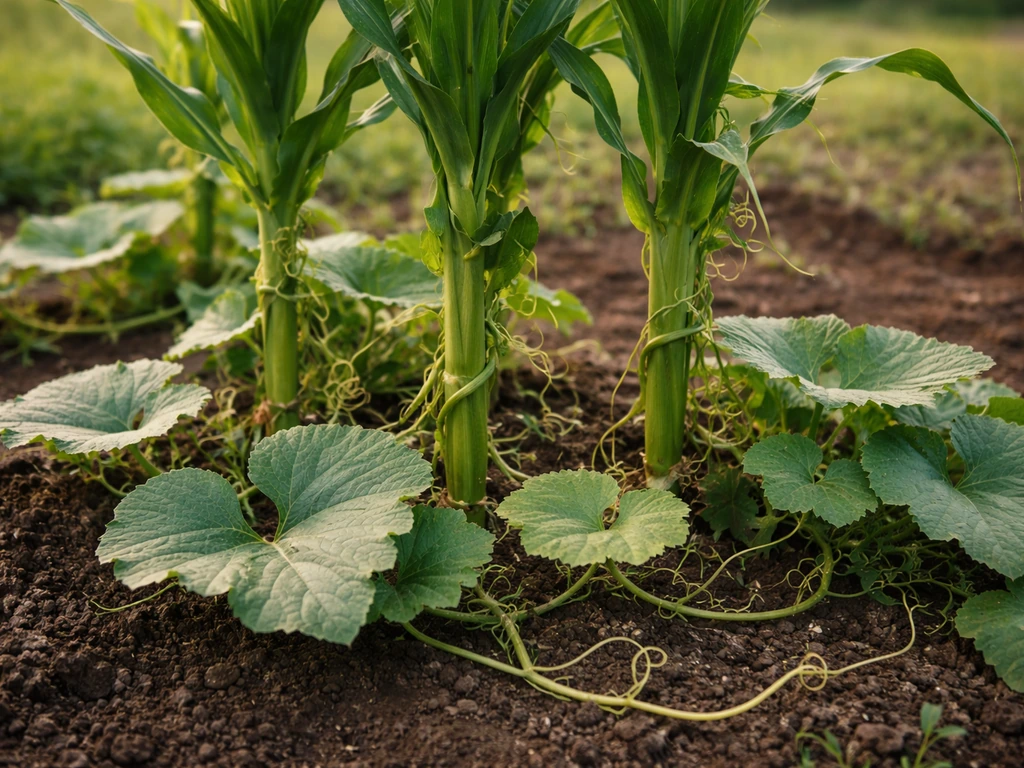
If you want to understand Pueblo agriculture, start with maize. Corn was the single most important crop across every Pueblo region and time period. Archaeological evidence from Chaco Canyon places maize cultivation in the area as far back as around 2500 BC, and by the time Mesa Verde farmers were in full swing (roughly 450 CE onward), corn was the dominant food resource. Mano and metate grinding stones found throughout Mesa Verde and other sites tell you just how central processed corn meal was to daily life.
Beans came into the Southwest somewhat later than corn, but they became equally essential. Nutritionally, beans supply the amino acids that corn lacks, so together the two crops delivered a more complete protein than either could alone. Squash rounded out the trio by providing carbohydrates, vitamins, and a thick ground cover that shaded out weeds and held soil moisture, which mattered a lot in an arid climate.
The Three Sisters system worked as companion planting: corn stalks grow tall and give beans something to climb, beans fix nitrogen back into the soil, and squash spreads low across the ground to reduce evaporation. It's a farming logic that was refined over centuries before Europeans arrived, and it's still ecologically sound today. Gourds were also grown alongside or in place of squash at some sites, particularly at Mesa Verde starting in the 6th century, and the terms are sometimes used interchangeably in historical sources.
Beyond the Three Sisters: other crops in the Pueblo toolkit
Pueblo farmers weren't limited to just three crops, even if those three got most of the attention. Archaeobotanical work at Chaco Canyon and Sand Canyon Pueblo has turned up evidence of amaranth, chenopodium (also called goosefoot or lamb's quarters), and sunflower being cultivated or at least actively promoted. These are all high-seed-yield plants that tolerate dry, disturbed soils, which makes them a natural fit for the same fields where corn, beans, and squash were grown.
Amaranth deserves special mention. It's a grain crop that's heat-tolerant and drought-resistant, produces edible leaves, and has been found in Ancestral Puebloan archaeological contexts with domesticated-style seed characteristics that indicate intentional cultivation rather than just wild harvesting. Chenopodium shows up in flotation analyses from Chaco Canyon alongside other economic taxa like Portulaca, suggesting these plants were part of a managed food system, not just background weeds.
Piñon nuts occupy a special category. They're technically a gathered wild food rather than a farmed crop, but evidence from Chaco Canyon suggests piñon trees were protected and the nut harvest was managed deliberately. The PLOS ONE ecosystem study of Chaco found that piñon nuts were a reliable and likely protected food resource, especially during the early occupation period. For any gardener or farmer thinking about food security in the arid Southwest, piñon is worth understanding as part of the Pueblo food system even if it didn't grow in a row-planted field.
- Corn (maize): dominant staple, grown since at least 2500 BC in the Chaco region
- Beans (Phaseolus): protein complement to corn, introduced to the Southwest later than maize
- Squash and gourds (Cucurbita): ground cover, water retention, vitamins, and calories
- Amaranth: drought-tolerant grain and leafy green, evidence of domesticated cultivation
- Chenopodium (goosefoot/lamb's quarters): edible seeds and greens, found in flotation assemblages
- Sunflower: oil and seed crop, likely cultivated at Chaco and other sites
- Piñon nuts: gathered but likely managed, reliable high-calorie food resource
Northern vs. Southern Pueblo regions: where each crop mattered most
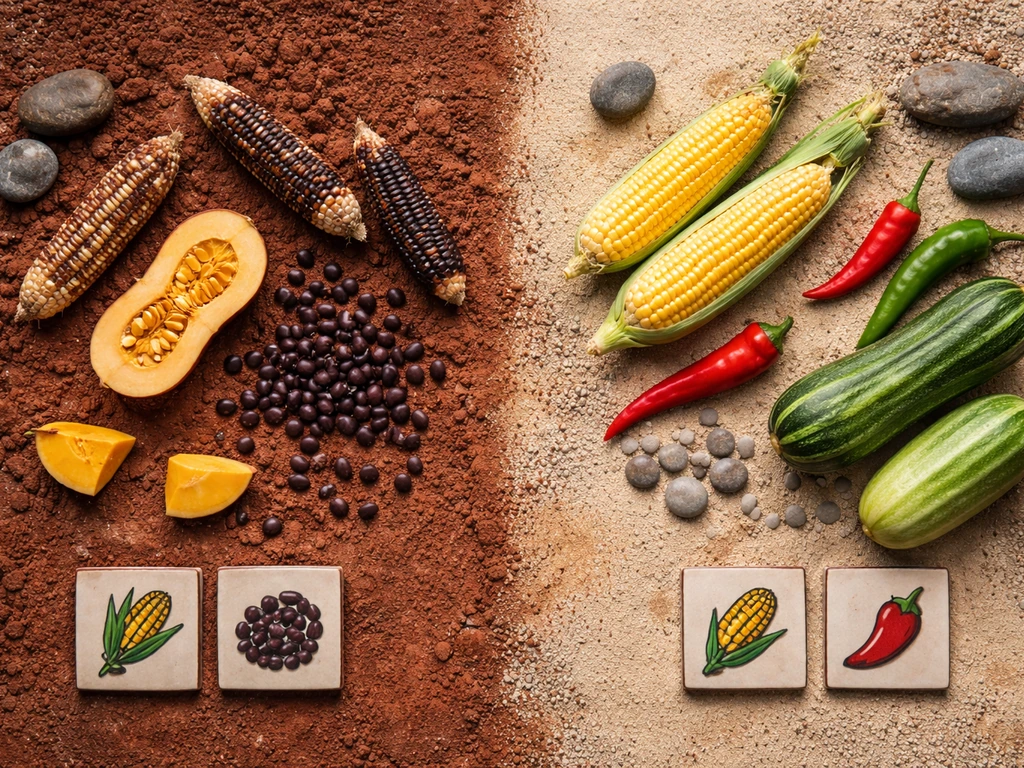
The Pueblo world stretched across a wide geography, and crop emphasis shifted depending on where you were. The Northern Pueblo region, centered on the Four Corners area (Mesa Verde, Chaco Canyon, and surrounding highlands of Colorado, Utah, and New Mexico), was characterized by higher elevation, shorter growing seasons, and variable precipitation. Corn, beans, and squash were grown here from at least the 6th century CE, but farmers had to work around cold-air drainage in low spots, late frosts, and the year-to-year unpredictability of summer rains. The Crow Canyon Pueblo Farming Project has documented just how much interannual variability farmers faced in the Mesa Verde region, and that variability shaped decisions about field placement and crop variety.
The Southern Pueblo region, including the Rio Grande valley pueblos like the Tewa villages and sites farther south, had somewhat more reliable water access through rivers and better conditions for hydraulic irrigation. Spanish-era records and Smithsonian ethnographic bulletins confirm that at European contact, the Tewa were cultivating maize, beans, and pumpkins using irrigation systems. The Rio Grande corridor also supported a longer growing season than the high plateaus of Mesa Verde, which gave southern farmers more flexibility in what they could reliably bring to harvest.
| Region | Key Sites | Main Crops | Water Source | Growing Season |
|---|---|---|---|---|
| Northern Pueblo (Four Corners) | Mesa Verde, Chaco Canyon, Aztec Ruins | Corn, beans, squash, gourds, amaranth, chenopodium, sunflower | Rainfall, floodwater, storm-runoff catchment | Shorter; frost risk a real constraint |
| Southern Pueblo (Rio Grande) | Tewa villages, Jemez Pueblo, Bandelier area | Corn, beans, squash, pumpkins | River irrigation, acequias, rainfed | Longer; more reliable season |
How Pueblo farmers actually watered and timed their fields
Pueblo farming was not one-size-fits-all. The northern mesa and canyon sites relied heavily on what researchers call direct-precipitation farming, meaning they depended on summer monsoon rains and managed field placement to maximize soil moisture. At Chaco Canyon, farmers went further and built water catchment and distribution systems that routed storm floodwaters to agricultural fields. The USGS documentation of Chaco shows terraced fields and evidence of engineered irrigation channels, which is a serious engineering achievement for a landscape that averages less than 9 inches of rain per year.
In the Rio Grande valley and other river-adjacent sites, irrigation was more formalized. The Tewa economy ethnographies describe hydraulic irrigation as standard practice, and acequia systems, gravity-fed channels that carry snowmelt from mountain streams to fields, became the backbone of Pueblo water management. National Geographic describes acequias as irrigation channels that carry snowmelt to tilled fields and highlights spring cleaning and management traditions that shape irrigation timing and water scarcity acequia systems, gravity-fed channels that carry snowmelt from mountain streams to fields. Thousands of acequias still exist across northern New Mexico and southern Colorado today. At Jemez Pueblo, for example, acequia-based irrigation continues to deliver water to traditional farm fields, though drought and wildfire now stress those systems in ways that mirror the same climate pressures ancient Pueblo farmers faced.
Timing followed the water and the frost calendar. Planting happened in spring after the last frost risk passed and snowmelt was moving through the irrigation channels. Harvest came in late summer and fall, timed around the end of the monsoon season. The Pueblo Farming Project work at Crow Canyon emphasizes that cold-air drainage in valley floors created frost pockets that could wipe out a corn crop, so experienced farmers chose field locations carefully, often planting on slopes or elevated spots rather than the lowest ground.
How archaeologists know what Pueblo people grew
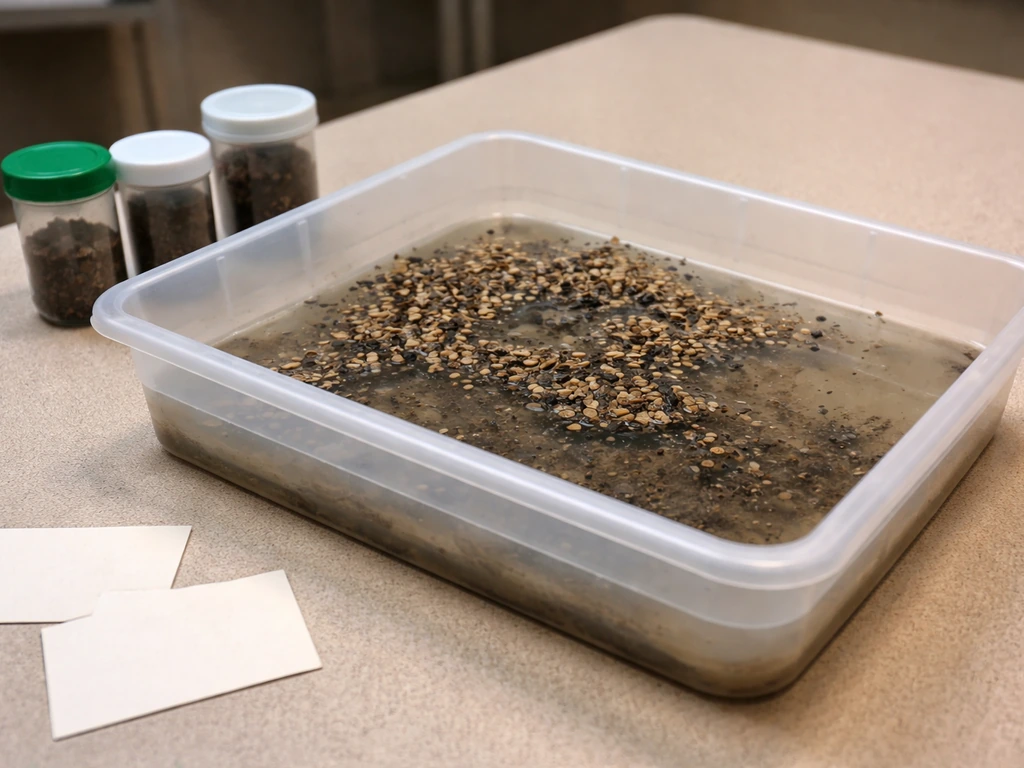
The crop list above isn't guesswork. It comes from several converging lines of evidence that researchers have built up over decades of excavation and analysis.
- Charred plant remains (flotation analysis): When sites are excavated, soil samples are floated in water to recover carbonized seeds, cobs, and plant fragments. Flotation studies at Sand Canyon Pueblo and Chaco Canyon have identified maize, beans, squash, chenopodium, amaranth, and Portulaca, among others.
- Pollen records: Pollen cores from architectural mortar, woodrat middens, and sediment deposits preserve evidence of what plants were present. Maize pollen has been identified in Chaco Canyon mortar samples, and pollen records are used to trace the spread of maize agriculture across the Southwest.
- Phytoliths: Microscopic silica structures from plant cells survive in sediments long after organic material has decayed. Combined with pollen, phytolith records help researchers establish when and where maize agriculture began in specific areas.
- Strontium isotope analysis of corn cobs: Researchers have used trace-metal and strontium ratios in archaeological corn cobs from Chaco Canyon and Aztec Ruin to identify possible source areas, showing that some corn may have been imported from other regions.
- Ethnographic and ethnohistoric records: Spanish colonial documents, Smithsonian ethnographic bulletins (like the Tewa economy surveys), and later anthropological fieldwork recorded what Pueblo people were growing at or near the time of European contact, providing a bridge between deep archaeology and recent practice.
- Experimental archaeology: Projects like the Crow Canyon Pueblo Farming Project have grown traditional crops under conditions similar to what ancient farmers faced, testing how variables like precipitation, frost, and soil type affected yields.
For students doing research, the National Park Service publications for Bandelier, Mesa Verde, Aztec Ruins, and Tonto national monuments are solid starting points. The World History Encyclopedia's Chaco Canyon article is a good secondary overview, and the Crow Canyon Archaeological Center's Pueblo Farming Project documentation is especially useful for understanding the practical farming constraints these communities worked within.
What this means for your garden or farm today
If you're a gardener or small-scale farmer in the arid or semi-arid West, Pueblo agriculture has a lot to teach. The Three Sisters model is genuinely functional, not just historically interesting. Planting corn, beans, and squash together in the same hill or bed reduces irrigation needs, improves soil nitrogen over time, and gives you a more nutritionally complete harvest from the same square footage than any of the three crops alone.
For sourcing authentic or historically connected varieties, look for drought-tolerant landraces rather than modern commercial hybrids. Organizations like Native Seeds/SEARCH (based in Tucson, Arizona) maintain seed collections specifically focused on traditional Southwest crops, including Pueblo-associated corn, bean, and squash varieties. Some of these varieties have been adapted to the region's heat, drought, and short growing-season pressures over hundreds of generations, which gives them performance characteristics that modern varieties bred for irrigated, flat-ground agriculture simply don't have.
Adding amaranth or chenopodium to your garden alongside the Three Sisters is worth considering. Both are easy to grow, productive in poor soils, and provide nutritious greens early in the season before the corn is ready. Sunflowers also fit naturally into this system as a fourth companion plant, attracting pollinators and producing edible seeds.
On the water side, the acequia model is worth understanding even if you're not in New Mexico. The principle of gravity-fed, community-managed water distribution to small field plots is highly water-efficient and well-suited to the kind of interannual variability that climate projections suggest is increasing across the Southwest. Field placement matters too: if you're farming in a valley or canyon, pay attention to frost drainage patterns the way Pueblo farmers did. Cold air settles in low spots, and a late spring frost on a valley floor can kill a corn planting that would have survived on a slightly elevated bench field nearby.
It's worth noting that Pueblo agriculture was part of a broader Native American agricultural tradition across North America. If you want to zoom out beyond Pueblo fields, you can also explore what crops did native americans grow across North America and how those traditions overlapped. For a related comparison, you can also look at what the Navajo grew and how their crops fit local conditions. Other Southwestern groups like the Navajo and Apache developed their own distinct crop practices, often shaped by different landscapes and degrees of mobility, while Eastern peoples like the Cherokee used Three Sisters farming in very different climatic conditions. Understanding what the Pueblo grew makes the most sense in that regional context: these were farmers who solved the specific hard problem of reliable food production in one of the most demanding agricultural environments on the continent, and they did it for well over a thousand years. If you're also curious about neighboring Native nations, you might next look into what crops did the Comanche grow.
FAQ
Did all Pueblo communities grow the exact same crops every year?
No. The core Three Sisters were widespread, but the mix and emphasis shifted with elevation, frost risk, and water access. Northern sites often leaned more on direct precipitation and careful field placement, while river-adjacent communities used irrigation more consistently and could include more dependable “filling-in” crops like pumpkins.
Were pumpkins and squash the same thing in Pueblo farming?
They were closely related and sometimes treated similarly, but they are not identical. The article notes that “gourds” and terms can overlap in historical sources, and in practice farmers may have grown different winter squash or related gourds depending on local seed availability and market or household needs.
Did the Pueblo grow corn, beans, and squash together exactly like modern Three Sisters gardens?
The guiding idea was the same companion-plant logic, but field layout could vary. For example, irrigation systems, terracing, and engineered channels at places like Chaco would affect bed size, planting density, and timing, so the exact “hill” method could differ across regions.
If beans supply nitrogen, why not plant them without corn?
Beans alone would not meet the Pueblo nutritional strategy. The pairing worked because corn was the major calorie source and beans supplied missing amino acids. Also, beans benefit from corn’s vertical structure, so removing corn changes both nutrition and practical growth advantages.
Were amaranth and goosefoot considered crops or just wild plants that people gathered?
Evidence in the article points to managed cultivation or deliberate encouragement, not only foraging. Archaeobotanical findings like seed traits and their appearance alongside other economic taxa in flotation analyses suggest they were treated as part of a planned food system.
Did piñon trees get planted like a farm crop?
Not typically in the same way as row-planted field crops. Piñon is described as a gathered wild resource, but the article explains that there is evidence for protection or managed harvest of trees and nuts at places like Chaco, which functionally improves reliability even without formal planting.
How did frost change what crops Pueblo farmers chose and where they planted?
Frost risk was a major constraint, especially in valley floors due to cold-air drainage. Farmers often avoided low spots and used slopes or higher benches to reduce the chance that a late spring frost would damage corn, which implies that “what” they grew was closely tied to “where” they planted.
When were crops planted and harvested in Pueblo regions?
Timing generally followed seasonal water and frost patterns: planting typically occurred in spring after last-frost risk and around snowmelt flow into channels, and harvesting clustered in late summer and fall, near the end of the monsoon season.
Could small-scale gardeners today grow the same crops successfully without irrigation?
You can grow the Three Sisters under rainfed conditions in areas with suitable summer monsoon patterns, but you need to match the local climate. Where irrigation is not available, choosing drought-tolerant landraces and using soil-moisure-conserving practices (including ground-cover squash) becomes more important.
What’s a common mistake people make when trying to replicate Pueblo agriculture?
The mistake is assuming a single fixed crop recipe works everywhere. Pueblo farming adapted to local precipitation, elevation, and water systems, so using varieties and spacing designed for irrigated, flat agriculture can fail in short-season or drought-prone settings.
If I want to grow “Pueblo-associated” varieties, what should I look for?
Look for region-appropriate landraces, not modern hybrids bred for uniform, high-input farms. The article specifically recommends seed sources that maintain traditional Southwest crop collections, since those varieties are more likely to match heat and drought tolerance demands.
Next Articles
What Crops Did the Cherokee Grow By Region and Season
Cherokee staple and garden crops by region and season, plus how to verify sources and grow faithful today.
What Crops Did Native Americans Grow by Region
Region-by-region guide to Native American crops, including Three Sisters and staples, uses, and how climate shaped farmi
What Did the Delaware Colony Grow: Crops, Uses & Legacy
Colonial Delaware’s main crops, grains, hay, flax, fruits, vegetables, livestock, why they thrived and how they were sold.