Plenty of crops grow in the desert, and the list is longer than most people expect. Date palms, pomegranates, figs, olives, sorghum, pearl millet, tepary beans, chickpeas, watermelon, squash, sweet potatoes, amaranth, jujube, prickly pear, and agave all have real histories of desert cultivation. With irrigation, you can add tomatoes, peppers, onions, garlic, lettuce, and most other common vegetables, as long as you time them around the worst heat. The trick is not finding a crop that survives the desert; it is picking the right crop for your specific desert and growing it at the right time of year.
What Crops Grow in the Desert: Planting Guide and List

Samuel Rourke
3 May 2026
Desert-adapted crops: the practical list
These crops have proven track records in arid and semi-arid conditions. Some need minimal irrigation; others need reliable water but tolerate heat, alkaline soil, or both.
| Crop | Key Desert Trait | Irrigation Need | Notes |
|---|---|---|---|
| Date palm | Extreme heat tolerance, deep roots | High but efficient | Thrives in low humidity, dry heat; Coachella Valley staple |
| Pomegranate | Drought and heat tolerant once established | Moderate | Handles alkaline soils well; grown across Middle East and Southwest U.S. |
| Fig | Deep roots, drought tolerant once established | Low to moderate | Short fruiting season; tolerates rocky soils |
| Olive | Drought tolerant, heat tolerant | Low to moderate | Sensitive to late frost; widely grown in arid Mediterranean climates |
| Sorghum | C4 photosynthesis, heat tolerant | Low to moderate | Staple grain crop in dry Africa, India, and U.S. Southern Plains |
| Pearl millet | More drought tolerant than sorghum, early maturity | Low | Deep roots reduce sensitivity to short dry spells |
| Tepary bean | Native Sonoran Desert crop, extreme heat/drought tolerance | Very low | Historically grown on flash-flood field edges; short growing season |
| Chickpea | Drought tolerant, but salinity-sensitive | Low to moderate | Watch irrigation water salinity; cool-season crop in hot deserts |
| Watermelon | Heat tolerant, deep taproot | Moderate | Requires consistent water during fruit set |
| Squash/pumpkin | Heat tolerant, fast-maturing varieties available | Moderate | Part of traditional Sonoran Desert Three Sisters planting |
| Sweet potato | Heat tolerant, stores water in tubers | Moderate | Long season; plant early before peak heat |
| Amaranth | C4 photosynthesis, extremely heat tolerant | Low to moderate | Grain and leafy green uses; tolerates poor soils |
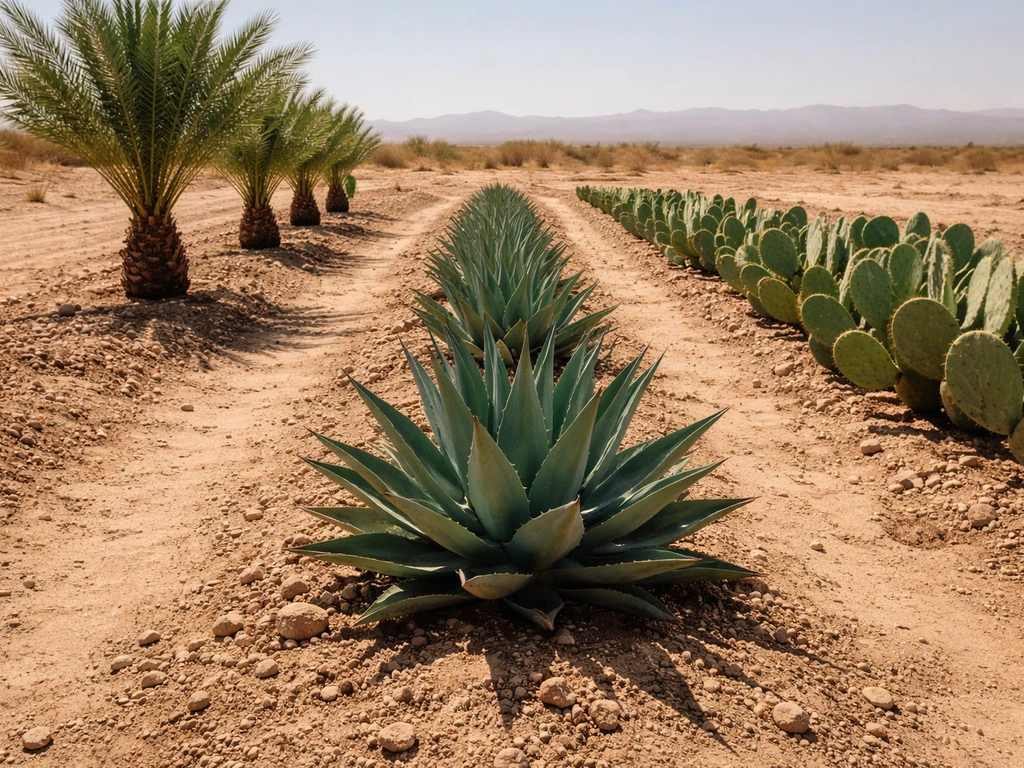
| Prickly pear (nopal) | CAM photosynthesis, stores water in pads | Minimal once established | Edible pads and fruit; commercial cultivation in Mexico and Texas |
| Agave | CAM photosynthesis, extreme drought tolerance | Minimal | Long-cycle crop; grown commercially for fiber and spirits |
| Jujube | Heat tolerant, drought tolerant once established | Low | Tolerates alkaline and poor soils; underused in U.S. Southwest |
| Onion/garlic | Cool-season crops tolerated in winter desert | Moderate | Plant in fall in low-elevation deserts like Sonoran or Mojave |
| Tomato | Heat tolerant varieties exist, but fruiting stalls above 90°F | Moderate to high | Time carefully; pollen viability drops in peak summer heat |
How desert crops actually survive the heat and dryness
Desert-adapted crops deal with heat and water scarcity in a few specific biological ways, and understanding these helps you choose the right crop and manage it correctly. The three main strategies are CAM photosynthesis, C4 photosynthesis, and physical adaptations that slow water loss.
CAM photosynthesis: the night-shift strategy
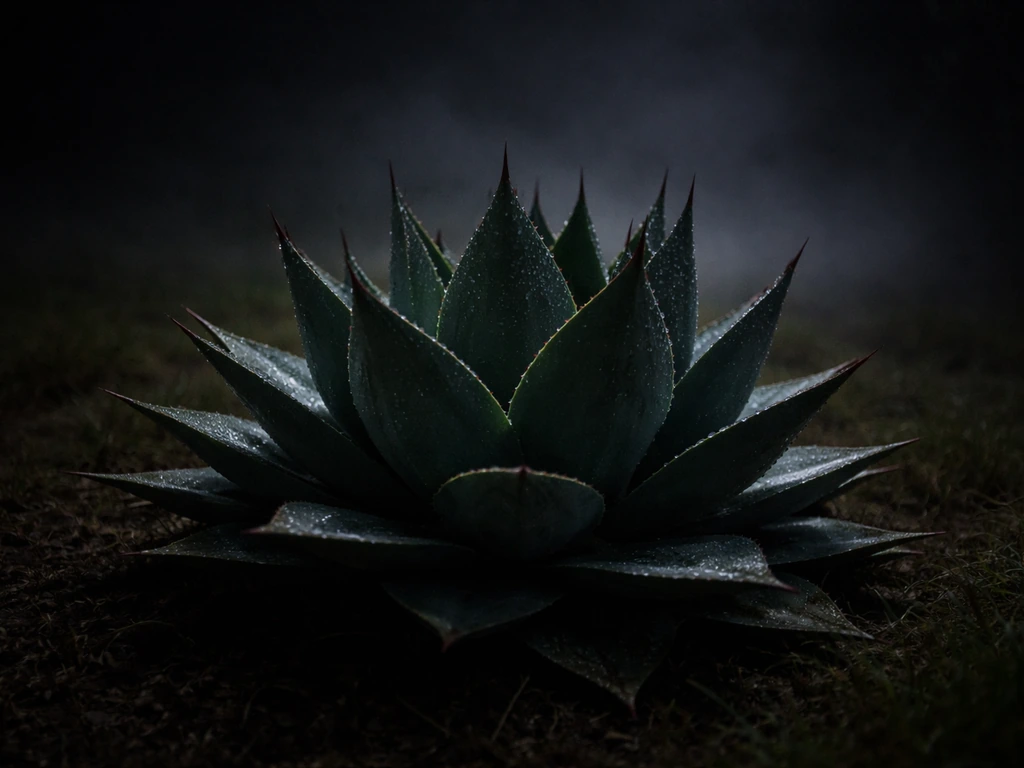
Agave, prickly pear, and cacti use CAM (Crassulacean acid metabolism), which shifts almost all CO2 uptake to nighttime when temperatures are cooler and humidity is relatively higher. This dramatically improves water-use efficiency because the plant keeps its stomata closed during the hot, dry day. These crops are the most water-independent of any agricultural plants, which is why agave and prickly pear have commercial-scale cultivation in some of the driest parts of Mexico, Texas, and the U.S. Southwest.
C4 photosynthesis: efficient under intense sun
Sorghum, pearl millet, corn, and amaranth all use C4 photosynthesis, which is more efficient than standard C3 photosynthesis under high heat and intense light. C4 crops fix carbon faster at high temperatures and use water more efficiently than C3 crops under the same conditions. Pearl millet also has a notably deep root system, which means it can keep drawing soil moisture during a short dry spell that would stress shallower-rooted crops. Both sorghum and pearl millet are foundational grain crops in sub-Saharan Africa and South Asia precisely because of these traits.
Physical adaptations and root depth
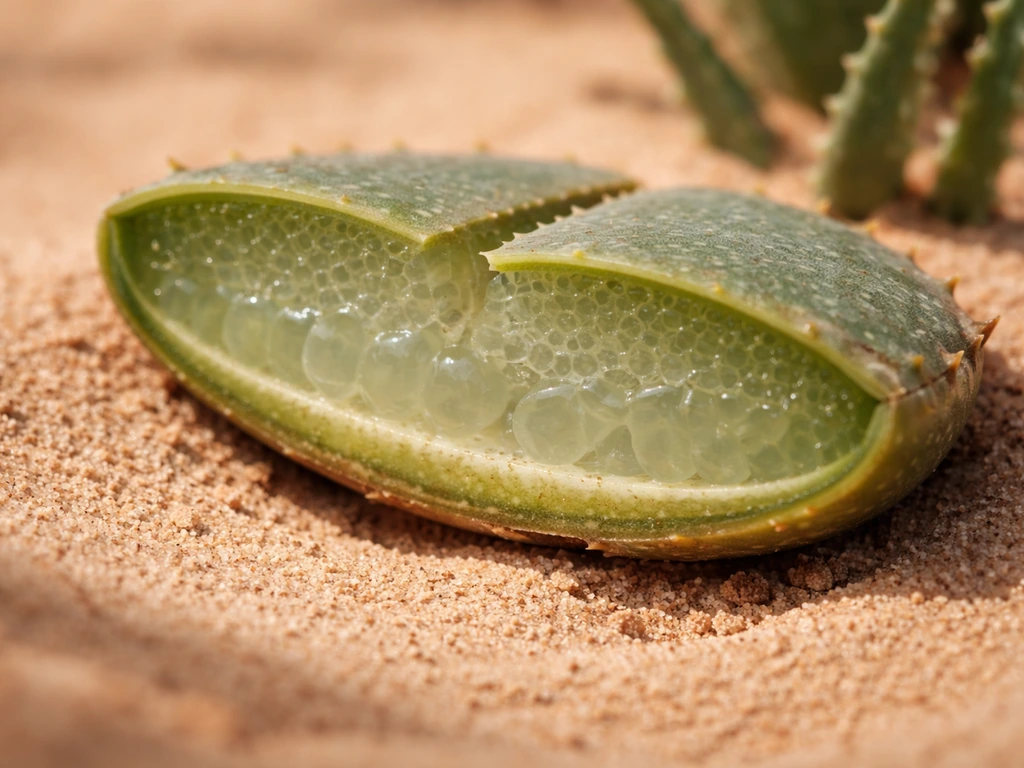
Many desert-tolerant crops reduce water loss through physical traits: fleshy leaves or stems that store water, smaller leaf area that reduces surface transpiration, and waxy or hairy coatings that reflect sunlight and reduce leaf temperature. Deep root systems let crops reach subsoil moisture that surface roots cannot. Tepary beans, developed over centuries in the Sonoran Desert, combine both: small leaves, heat-hardened physiology, and a growing habit that matches short windows of rainfall or flood irrigation.
The critical window: flowering and fruit set
Even drought-tolerant crops have one vulnerable period: flowering and pollination. Heat stress combined with drought at flowering is where yields collapse. Tomato pollen becomes non-viable above about 90°F. Bean flowers abort when temperatures exceed roughly 85°F. This is not a reason to avoid these crops in the desert; it is a reason to time them so flowering happens before or after peak summer heat. Almost every experienced desert grower in the American Southwest plants warm-season vegetables in late winter or early fall, specifically to avoid this problem.
Matching crops to your desert type and setup
Not all deserts are the same, and crop choice should reflect your actual conditions. A backyard gardener in Tucson, Arizona, is working in a hot desert with mild winters and two rainy seasons. A dryland farmer in the Chihuahuan Desert has different soil, rainfall patterns, and scale. A grower in the Mojave or Coachella Valley has access to irrigation infrastructure that changes everything.
Low-rainfall, no-irrigation conditions
If you are relying mostly or entirely on rainfall, your crop list narrows significantly. In those dryland setups, crops will not grow unless you time planting to the brief, reliable post-rain window relying mostly or entirely on rainfall. Tepary beans, sorghum, pearl millet, amaranth, and drought-hardy melons are your best options. The traditional Sonoran Desert farming approach used floodplain and arroyo-mouth techniques: fields were positioned to capture runoff from brief, intense monsoon rains, and fast-maturing crops like tepary beans were planted to match the short, reliable post-rain growing window. If you are in a similar situation today, this floodwater harvesting model is still applicable and worth considering alongside dryland varieties.
Hot and sunny deserts with irrigation access
This is where the full crop list opens up. With reliable drip irrigation and smart timing, you can grow nearly any vegetable, plus perennial fruits like dates, pomegranates, figs, olives, and jujube. In Mexico specifically, the same constraints apply, which is why farmers often struggle to grow crops without reliable water and careful timing reliable drip irrigation. The Coachella Valley is the clearest example: imported Colorado River water, delivered through the Coachella Canal and managed via more than 2,000 miles of subsurface on-farm drains, turned a true desert into one of the most productive agricultural regions in the United States. The lesson is that water supply, not temperature, is usually the binding constraint.
Sandy soils vs. alkaline clay soils
Sandy desert soils drain fast but hold little water or nutrients. Alkaline clay soils in desert basins can be waterlogged after rain and then crack-dry in heat. They often carry salts. Sandy soils need more irrigation emitters per row to achieve even wetting because horizontal moisture redistribution in sand is limited. Sodic or saline soils need gypsum amendments and leaching to move salts out of the root zone before planting salt-sensitive crops like chickpeas. Salt-tolerant crops like date palms, barley, and beets handle higher soil and irrigation water salinity, while chickpeas, beans, and lettuce need better-quality water and well-leached soil.
Backyard raised beds vs. field-scale production
Raised beds are highly practical in desert gardens because you control the soil mix, drainage, and irrigation precisely. Use blank" rel="noopener noreferrer">inline drip or soaker hose placed under mulch at roughly 12-inch spacing for most vegetables in a raised bed. Make sure the bed drains freely before planting; standing water near roots in a desert summer is fatal. At field scale, drip systems are still the most water-efficient choice, but spacing and emitter density need to match soil texture, especially in sandy soils. A Reddit discussion on raised-bed drip systems similarly highlights practical home-gardener decision factors like tubing size, emitter spacing and placement, and whether to use a manifold versus a single line manifold vs. single line.
How to actually grow desert crops today
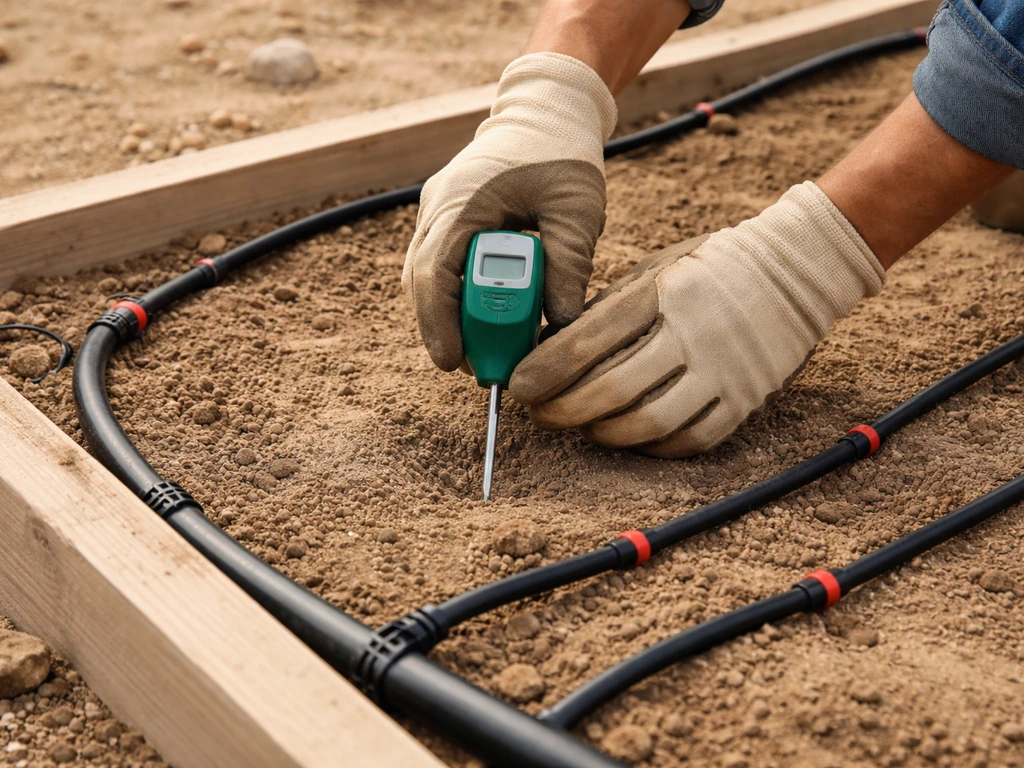
Soil preparation
Start by testing your soil for salinity and pH. Desert soils are frequently alkaline (pH 7.5 to 8.5) and may contain elevated sodium or salts. If your irrigation water has an electrical conductivity above about 3.0 dS/m, you need to use only more salt-tolerant crops and ensure good drainage and leaching to prevent salt buildup. For sodic soils, apply gypsum at rates your soil test recommends, then irrigate heavily to leach salts below the root zone before planting. Add compost to improve water retention in sandy soils and structure in clay soils. Raised beds filled with a blend of compost and well-draining native soil sidestep many of these problems for small-scale gardeners.
Irrigation strategy
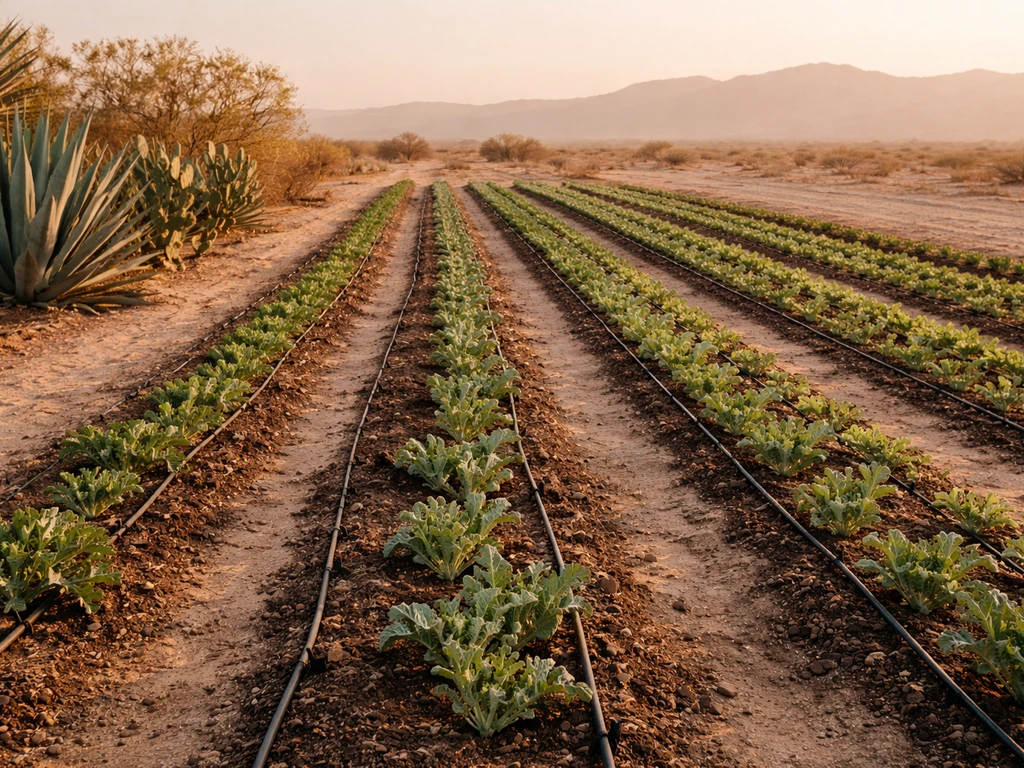
Drip irrigation is the right system for desert crops at nearly every scale. It delivers water directly to the root zone, minimizes evaporation, and keeps foliage dry, which reduces disease. Place drip lines or soaker hoses under a 2 to 3 inch layer of mulch to further cut evaporation. Run time depends on your soil's water-holding capacity and the heat load: hot, windy desert days significantly increase weekly water demand compared to cooler weather baselines. Sandy soils need shorter, more frequent irrigation cycles; clay soils hold more water but need slower application to avoid runoff. Always verify water freely drains through the rooting zone and does not pool.
Timing is the most important decision you make
In low-elevation hot deserts like the Sonoran and Mojave, there are two productive growing windows: a cool season running roughly October through March, and a warm season running February or March through June. The goal is to plant so that crops flower and fruit before temperatures consistently exceed 90 to 95°F. Tomatoes planted in January or February in southern Arizona can set fruit and harvest before the brutal July heat arrives. If you try to carry tomatoes through July and August, fruit set will essentially stop because pollen viability fails. Cool-season crops including lettuce, spinach, broccoli, carrots, onions, and garlic do well from October through early spring. Plan your garden calendar around this constraint and almost everything else becomes easier.
Planting method: direct sow vs. transplants
Fast-maturing, tap-rooted crops like tepary beans, sorghum, pearl millet, squash, and melons are best direct-sown because their root systems develop better without transplant disruption. Tomatoes, peppers, and eggplant benefit from transplanting, which lets you start them indoors during cooler months and move them out at the right soil temperature (above 60°F for most warm-season crops). Chickpeas and beans can go either way but are usually direct-seeded. Perennial crops like pomegranate, fig, and jujube are planted as bare-root or containerized starts in fall or late winter.
Where these crops are grown: regions and U.S. examples
Desert agriculture has a long global history, and the patterns tell you a lot about which crops actually work. The Sonoran Desert spanning southern Arizona and northern Mexico has been continuously farmed for thousands of years, with tepary beans, corn, squash, and amaranth as the core crops. Indigenous Tohono O'odham farmers used floodwater farming along arroyo mouths to capture monsoon runoff, a technique that is still used and studied today.
The Coachella Valley in California is the most commercially productive desert agriculture zone in the U. S. , driven by Colorado River irrigation: it produces almost all of the country's date palm crop, along with table grapes, citrus, peppers, and vegetables. The Imperial Valley immediately south also relies entirely on diverted Colorado River water and produces enormous volumes of lettuce, broccoli, carrots, and melons, mostly in the cool season.
Globally, the most relevant comparison areas are the Nile Valley (dates, wheat, barley, vegetables irrigated since ancient times), the Indus Valley (cotton, sorghum, millet, chickpeas), and the Saharan oasis systems (dates, figs, olives, and small vegetable plots around groundwater sources). In many Saharan areas, crop growth is mainly possible in oasis systems where groundwater is accessible, or in small plots sustained by seasonal water Saharan oasis systems. For readers curious about where crop cultivation is geographically possible in the most extreme desert conditions, the Sahara presents its own specific constraints and opportunities that go well beyond what is achievable in the American Southwest.
In the U.S., notable desert-farming states outside Arizona and California include New Mexico (green chile, pecans, onions, sorghum), Texas (cotton, sorghum, pecans, watermelon in the Trans-Pecos and Southern High Plains), and Nevada, where small irrigated valleys produce alfalfa and vegetables. Utah's high desert also supports crops like alfalfa, small grains, and specialty crops in irrigated valley floors.
Why desert crops fail: common problems and realistic yields
Water timing errors
The most common failure is inconsistent water at the wrong growth stage. Missing irrigation during flowering or early fruit set causes flower drop, poor pollination, and near-zero yield even if the plant looks otherwise healthy. Desert conditions amplify this: a few missed days of drip irrigation during a July heat event can abort an entire fruit crop. Set your irrigation schedule and check it, especially during the hottest weeks.
Salinity buildup
Every time you irrigate with water that contains any salt, some of that salt stays in the soil after the plant takes up the water. Over a season, this accumulates. Without periodic leaching irrigations that flush salts below the root zone, soil salinity climbs and crop performance declines progressively. This is a particular problem with drip irrigation in sandy desert soils, where salts can concentrate at the edge of the wetted zone. Test your soil annually and manage leaching deliberately.
Heat stress and bloom drop
Even heat-tolerant crops have limits. Bean flowers abort above roughly 85°F. Tomato pollen loses viability above 90°F. Pepper fruit set slows similarly. This is not a fertilizer problem or a disease problem; it is a temperature problem that can only be solved by timing. If you plant correctly, you avoid it. If you plant late and flowers open in July in Phoenix, no amount of water or fertilizer will fix the lack of fruit set.
Pests and disease in arid conditions
Desert gardens face a narrower disease pressure than humid climates, but pest pressure can be intense. Spider mites thrive in hot, dry conditions and are the most common insect problem in desert vegetable gardens during summer. Whiteflies, aphids, and thrips are also frequent. Plants that are drought-stressed have lower levels of defensive carbohydrates and metabolites, which makes them more attractive to insects and more susceptible to damage. Keeping plants consistently watered is not just about yield; it is also your primary pest defense. Fungal diseases are less common in low humidity but can appear with overhead watering or crowded plantings. Drip irrigation under mulch, combined with good plant spacing, handles most of this.
Realistic yield expectations
Desert yields can be very good when timing and irrigation are right, or very poor when they are not. A well-managed drip-irrigated raised bed in Tucson or Phoenix can produce as much per square foot as a garden in a more temperate climate, because the sun intensity and long growing season compensate for the heat stress challenges. Dryland farming without irrigation is lower-yield by definition: tepary beans may yield 500 to 800 pounds per acre in a good monsoon year and a fraction of that in a dry one. Perennial crops like pomegranate, fig, and date palm reward patience: they need two to five years to reach full production but then deliver reliably for decades with minimal inputs once established.
Your next steps: picking a crop and starting a test plot
The best way to start is to pick one or two crops matched to your current season and available water, then run a small test plot before committing to larger scale. In the bedrock zone, crops can grow slowly because roots struggle to penetrate and access water why do crops grow so slow in bedrock. If you are specifically asking what foods grow in Mexico, the best starting point is the crops proven in similar desert regions like the Sonoran Desert. Here is a practical sequence:
- Identify your desert type: hot low-elevation (Sonoran, Mojave), high-elevation semi-arid (Colorado Plateau, Chihuahuan), or irrigated valley. This determines your growing windows and crop options.
- Test your soil and irrigation water for salinity (EC) and pH. If EC of your water is above 3.0 dS/m, focus on salt-tolerant crops and plan leaching irrigations.
- Check your current calendar position against the planting windows for your region. In low-elevation hot deserts, the fall planting window (September to October) is ideal for starting cool-season crops and getting established before winter.
- Choose two crops: one proven heat/drought-tolerant staple (tepary bean, sorghum, or amaranth if you have minimal water; tomato, pepper, or squash if you have reliable drip), and one perennial to invest in for the long term (pomegranate or jujube are the most forgiving starters).
- Set up drip irrigation before planting. Place lines under mulch, verify drainage, and set a consistent schedule. Adjust run time upward during hot spells.
- Direct-sow fast-maturing crops and transplant heat-sensitive vegetables at the right soil temperature. Keep notes on what you planted, when, and what the temperature patterns were that season.
- After your first season, you will know what works in your specific microclimate and soil. Scale up from there.
Desert farming has been done successfully for thousands of years across some of the driest places on earth. The people who did it well understood their specific conditions: the timing of rains, the depth of soil moisture, which crops matched their season, and how to move water efficiently. That core logic has not changed. Match your crop to your desert, time it around the heat, and manage water precisely, and you will be surprised how productive even harsh desert land can be.
FAQ
What crops grow in the desert without irrigation?
If you truly rely on rainfall, your crop list is mostly limited to short-window plants that can grow after storms. Tepary beans, sorghum, pearl millet, amaranth, and fast, drought-hardy melons are typical choices, and success depends on planting so flowering and fruiting fall inside the brief post-rain growth window.
Can I grow tomatoes in a hot desert, and how do I avoid failed fruit set?
Yes, but plan the calendar so flowering happens before persistent peak summer heat. In hot deserts, tomatoes can set poorly when daytime highs push pollen viability too high, so many growers plant in late winter or early fall and avoid carrying fruiting through mid-summer.
Do desert crops need different fertilizer than crops in other climates?
The nutrient needs may be similar, but timing and salt management matter more. Desert soils often have higher background pH and may accumulate salts, so over-fertilizing can worsen stress when irrigation water is salty. Use soil tests and keep nutrients aligned with active growth, not the hottest dry weeks.
How can I tell if my irrigation water is too salty for the crops I want?
Check your irrigation water electrical conductivity (EC). If it is high (around 3.0 dS/m or above), you should prioritize salt-tolerant crops and plan for periodic leaching irrigations with good drainage. If you cannot leach, avoid salt-sensitive crops like chickpeas or lettuce because salts can concentrate in the root zone over time.
What should I do if my desert soil is alkaline or sodic?
Start with a soil test for pH and sodium/salinity indicators. For sodic soils, gypsum is often recommended based on lab results, then irrigate enough to move salts below the root zone before planting. Also consider raised beds or soil blending to improve structure and reduce how quickly salts accumulate at the surface.
How often should I water desert crops with drip irrigation?
There is no single schedule, but sandy soils usually need shorter, more frequent irrigation cycles, while clay holds water longer and needs slower applications to avoid runoff. Use the goal of keeping the rooting zone evenly moist during growth, and verify drainage so water does not pool near roots during hot periods.
Is it better to plant from seeds or transplants in the desert?
Many desert growers use direct seeding for tap-rooted or drought-tolerant crops because transplants can be slowed by root disruption. Warm-season fruiting crops like tomatoes and peppers often do better when started as transplants so they establish before peak heat, while beans and chickpeas are commonly direct seeded.
Why do my desert vegetables die even though I water regularly?
The most common issue is poor drainage or water pooling near roots, especially in summer. Raised beds and checking that water freely moves through the rooting zone can prevent root failure. Also watch for inconsistent watering during critical flowering and early fruit set, which can cause apparent “death” of yields even if plants look alive.
What are the most common pests in desert vegetable gardens?
Spider mites are a top problem in hot, dry summers, and you may also see whiteflies, aphids, and thrips. Drought-stressed plants often attract and tolerate damage less well, so consistent irrigation is both a yield strategy and a pest-defense strategy.
Do desert crops still get diseases like in humid areas?
Fungal disease pressure is usually lower because humidity is lower, but problems can still occur with overhead watering, crowded plants, or poor airflow. Drip irrigation under mulch plus adequate spacing usually reduces disease risk significantly.
If my desert is “hot,” can I just pick heat-tolerant crops and ignore the type of desert?
Not really. Crop performance depends heavily on whether you have sand versus clay, drainage quality, and rainfall versus irrigation. Two deserts at the same temperature can behave very differently, for example sandy soils can concentrate salts at the wetted edge, while alkaline clays can waterlog briefly and then crack-dry.
What crops are best for dryland desert farming based on timing?
For dryland setups, match crops to the short, reliable period after rainfall. Tepary beans, sorghum, pearl millet, amaranth, and drought-hardy melons are common standouts, and floodwater or arroyo-mouth style water capture is an especially strong model when storms are intense and runoff is predictable.
How long until perennial desert crops start producing?
Perennials like pomegranate, fig, and date palm usually take time to reach full output. Expect a lag of about two to five years for mature yields, but once established they can produce reliably for many years with fewer inputs than annual vegetable crops.
Next Articles
What Foods Grow in Mexico By Climate and Region
Region by region guide to what foods grow in Mexico: maize, beans, fruits, peppers, cacao, coffee, agave, and more.
What Did the Delaware Colony Grow: Crops, Uses & Legacy
Colonial Delaware’s main crops, grains, hay, flax, fruits, vegetables, livestock, why they thrived and how they were sold.
What Did Jamestown Grow and How They Farmed It
Learn what Jamestown colonists grew and the methods they used to plant, harvest, and adapt crops to Virginia conditions.