Mexico grows an enormous range of foods, from corn and beans across almost every region to mangoes and cacao in the tropical south, avocados in the highlands of Michoacán, coffee in the mountain forests of Chiapas and Veracruz, citrus along both coasts, and agave across the arid plains of Jalisco and Oaxaca.
What Foods Grow in Mexico By Climate and Region

Samuel Rourke
27 Apr 2026
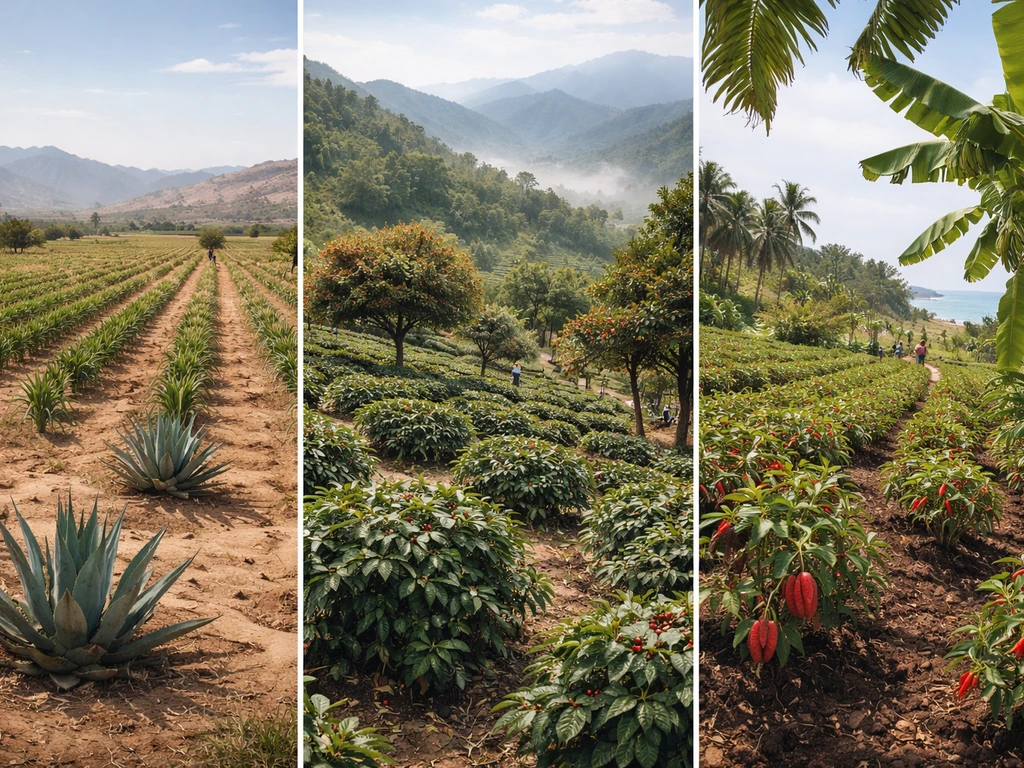
What grows where depends almost entirely on climate: altitude, temperature, and rainfall shift dramatically from the northern deserts to the central highlands to the humid Gulf lowlands, and each zone favors a completely different set of crops. If you know the climate of the area you're researching or farming, you can quickly narrow down what will thrive there.
INEGI’s climate program (CLIM) maintains climate records based on meteorological station data, which can be used when assessing climate-based crop suitability INEGI’s climate program (CLIM) and related climate records.
Mexico's climates and why they control what grows
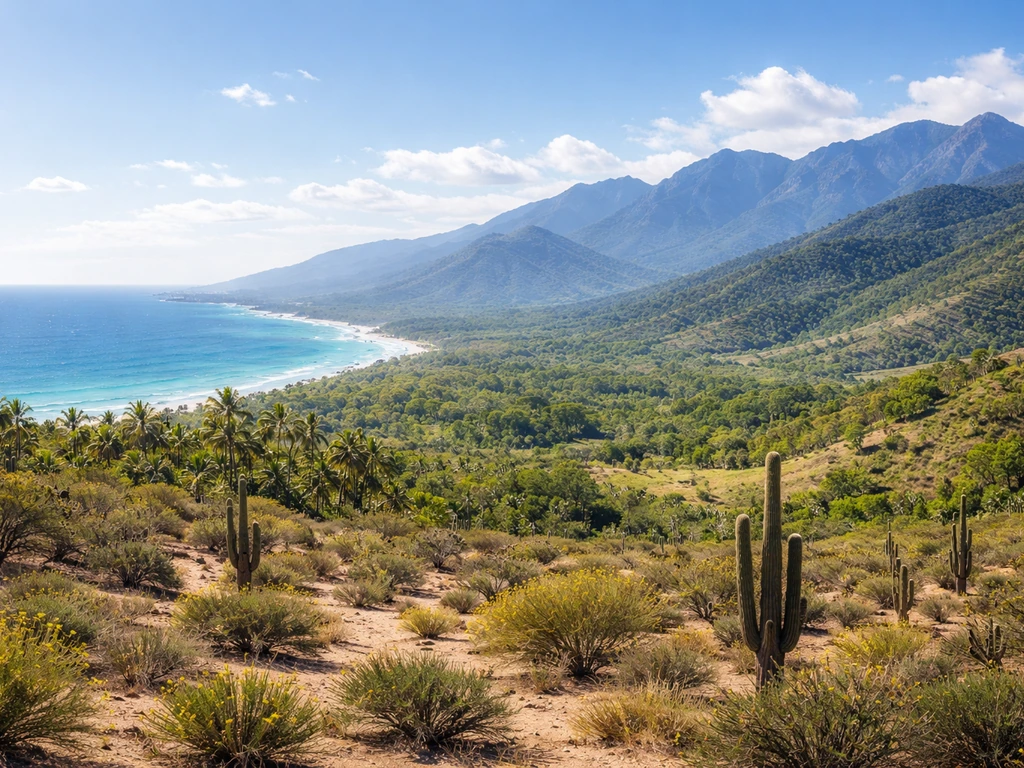
Mexico is not one climate. It's more like five or six layered on top of each other, and this is the single most important thing to understand before asking what grows there. The north is largely arid and semiarid: low rainfall, hot summers, cold winters at higher elevations, and long dry seasons.
Rainfall actually increases as you move south, so the Gulf lowlands in Veracruz and Tabasco can receive well over 1,000 mm of rain per year, while large parts of Sonora and Chihuahua receive a fraction of that. The central highlands sit at elevations of 1,500 to 2,500 meters or more, which moderates temperatures and creates a temperate climate that feels nothing like the coastal lowlands just a few hundred kilometers away.
The southern states, especially Chiapas and Oaxaca, contain a mix of hot lowland tropics and cool mountain forests. The Yucatán Peninsula has its own flat, limestone-based tropical climate with distinct wet and dry seasons.
Mexico's national geography agency INEGI classifies dozens of climate subtypes across the country, including categories like subtropical semiarid temperate, where the coldest month averages between 5°C and 18°C and only one to three months qualify as truly wet. That kind of precision matters for crop planning because a plant that handles frost differently from one that needs year-round moisture will succeed or fail based on exactly those parameters. Altitude is often the deciding factor in the highlands: a 500-meter climb can mean the difference between growing sugarcane and growing wheat.
Staple foods: corn, beans, and other basic grains
Corn (maize) is the foundation of Mexican agriculture, full stop. It has been cultivated in Mexico for at least 9,000 years, and today Mexico grows dozens of distinct native varieties, called landraces, adapted to conditions ranging from the hot lowlands to the cool highlands above 2,000 meters. The country produces tens of millions of metric tons of maize annually, with major production in Sinaloa, Jalisco, Mexico State, and Chiapas. La SADER (gob.mx) detalla los principales estados productores de maíz blanco y amarillo, junto con sus participaciones de producción, como Sinaloa (≈25% en maíz blanco) y Jalisco (≈12%) Mexico’s leading maize-producing states and their production shares. White maize dominates for human consumption, while yellow maize is grown more for animal feed.
Beans are the other half of that ancient staple pair. Black beans are most common in the south and southeast, while pinto and bayo beans are more typical in the north and central regions. Together, corn and beans have fed Mexico for millennia because they grow in a wide range of conditions and complement each other nutritionally. Beyond those two, wheat is important in the northern states of Sonora and Sinaloa (which together account for most of Mexico's wheat production), sorghum is widely grown as both food and feed in Tamaulipas and other northern and central states, and rice is cultivated in warm, humid lowland areas like Veracruz and Morelos.
Regional crop guide: north, central highlands, south/tropics, and coasts
Northern Mexico (Sonora, Chihuahua, Baja California, Sinaloa, Tamaulipas)
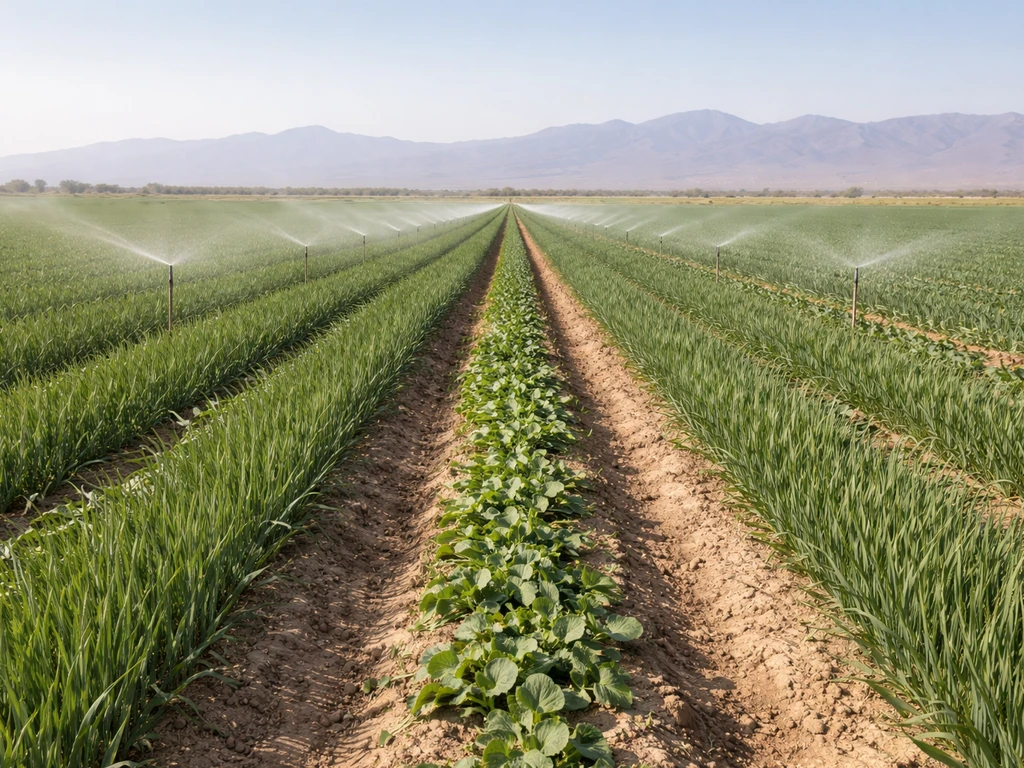
The north is the breadbasket for irrigated commercial agriculture. Sonora and Sinaloa lead the country in wheat, chickpeas (garbanzo beans), and vegetables like tomatoes, cucumbers, and peppers grown for export. Baja California produces wine grapes and olives in its Mediterranean-climate valleys around Ensenada. Chihuahua grows apples, oats, and beans at higher elevations, and is the country's largest producer of chili peppers (especially dried varieties like ancho and pasilla). Tamaulipas contributes sorghum and citrus. Irrigation is critical throughout this zone because natural rainfall is sparse.
Central Highlands (Jalisco, Michoacán, Guanajuato, Mexico State, Puebla, Hidalgo)
The central highlands are the agricultural and cultural core of Mexico. This is where avocados thrive at elevations of 1,200 to 2,400 meters in blank" rel="noopener noreferrer">Michoacán, which produces over 30% of the world's avocado supply. Jalisco and surrounding states grow agave (the raw material for tequila and mezcal) across vast plains. Guanajuato and the Bajío region are major vegetable producers: broccoli, lettuce, strawberries, garlic, and onions all perform well in the temperate highland climate. Corn, beans, and squash are grown across this entire region in traditional milpa systems. Puebla contributes black beans, maize, and a range of chili peppers fundamental to Mexican cuisine.
Southern Mexico and tropical lowlands (Chiapas, Oaxaca, Tabasco, Guerrero)
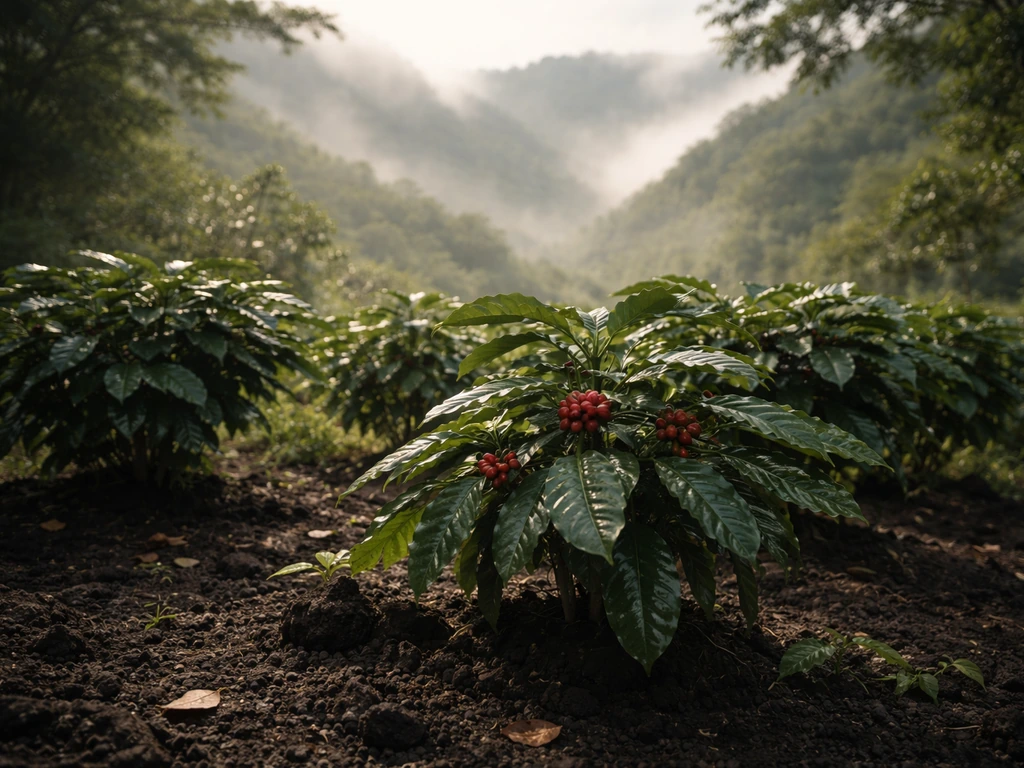
The south is where tropical and subtropical crops come into their own. Chiapas and Oaxaca grow coffee in the mountain cloud forests at elevations between 900 and 1,800 meters, where cool temperatures, cloud cover, and reliable rainfall create near-perfect conditions. Cacao (chocolate) thrives in the hot, humid lowlands of Tabasco and southern Chiapas, which are among Mexico's most important cacao-producing areas. Sugarcane is grown in warm lowland valleys across Chiapas, Veracruz, and Oaxaca. Oaxaca is also the spiritual home of mezcal agave, with dozens of wild and cultivated agave species used for production. Tropical fruits like mango, papaya, and sapote are grown widely throughout the region.
Coastal areas and the Yucatán Peninsula
Both the Gulf and Pacific coasts support citrus (especially oranges and limes), coconuts, bananas, and plantains. Veracruz on the Gulf side is one of Mexico's most agriculturally diverse states: it grows vanilla (Mexico is its original home), sugarcane, coffee, citrus, pineapple, and pepper. The Yucatán Peninsula historically produced henequen (a fiber agave) and still grows citrus, habanero peppers, and some honey-producing farms. Habaneros are closely associated with Yucatán cuisine and are a significant specialty crop in the region.
Fruits and vegetables commonly grown in Mexico
Mexico is one of the world's most important sources of fresh produce, and the variety is staggering. The following table covers the most commercially and culinarily significant fruits and vegetables, organized by where they grow best.
| Crop | Main producing region(s) | Climate requirement |
|---|---|---|
| Avocado | Michoacán, Jalisco, Mexico State | Temperate highlands, 1,200–2,400 m |
| Mango | Sinaloa, Nayarit, Chiapas, Veracruz | Hot lowlands/tropics, frost-free |
| Lime (Key lime) | Michoacán, Veracruz, Oaxaca | Warm subtropical, well-drained |
| Orange | Veracruz, San Luis Potosí, Tamaulipas | Subtropical coastal and valleys |
| Tomato | Sinaloa, Sonora, Baja California | Irrigated arid/semiarid with warm days |
| Chili peppers | Chihuahua, Sinaloa, Guanajuato, Puebla | Wide range; hot to temperate |
| Papaya | Veracruz, Oaxaca, Guerrero | Tropical/subtropical lowlands |
| Strawberry | Baja California, Guanajuato | Temperate, cool nights |
| Broccoli | Guanajuato, Sonora | Cool temperate highlands and irrigated north |
| Garlic & Onion | Guanajuato, Baja California, Zacatecas | Dry, irrigated, temperate |
| Pineapple | Veracruz, Oaxaca | Hot humid lowlands |
| Coconut | Guerrero, Colima, Tabasco (coasts) | Coastal tropical, humidity required |
| Banana/Plantain | Chiapas, Tabasco, Veracruz | Tropical lowlands, high rainfall |
| Guava | Aguascalientes, Michoacán, Mexico State | Warm temperate to subtropical |
| Vanilla | Veracruz (Totonacapan region) | Humid tropical forest understory |
Cash and specialty crops: coffee, cacao, sugarcane, and agave
These four crops define large parts of Mexico's agricultural economy and cultural identity, and each has a very specific climate niche.
Coffee is grown in the highlands of Chiapas, Veracruz, Oaxaca, Puebla, and Guerrero. The key conditions are elevation (usually 900 to 1,800 meters), consistent rainfall, moderate temperatures (ideally 18°C to 22°C), and partial shade. Mexico produces mainly Arabica and is a significant exporter of organic coffee. The high-altitude farms of the Sierra Madre de Chiapas and the mountains above Xalapa in Veracruz are particularly well-regarded for quality.
Cacao needs heat, humidity, and shelter from wind, which is why it concentrates in the hot lowlands of Tabasco and Chiapas. These states account for the majority of Mexico's cacao output. Mexico was the original source of cacao for the world, and there is growing interest in reviving heritage criollo varieties for specialty chocolate production.
Sugarcane thrives in warm, wet lowland zones with long growing seasons. Veracruz is by far the largest producing state, followed by Jalisco, San Luis Potosí, and Oaxaca. The crop needs sustained warmth (above 20°C), high rainfall or irrigation, and deep fertile soil. Altitude above about 1,000 meters generally stops commercial sugarcane production in Mexico.
Agave is in a class of its own. Blue Weber agave for tequila is cultivated primarily in Jalisco and parts of Guanajuato, Michoacán, Nayarit, and Tamaulipas in semiarid conditions at 1,000 to 2,000 meters. Mezcal agave, which includes dozens of wild and semi-wild species, is most associated with Oaxaca but also Guerrero, Durango, and Zacatecas. Agave is extraordinarily drought-tolerant, which makes it uniquely suited to the drier parts of Mexico where most other crops struggle.
This connects to the broader challenge of farming arid land in Mexico, which is worth considering separately for anyone trying to understand why certain regions have limited crop options. Farming arid land is also the main reason crops can feel like they grow so slowly in bedrock areas where available moisture is limited.
How to match a food to its right climate in Mexico
The three variables that matter most are altitude, annual rainfall, and whether the area has a frost season. Once you know those for a specific location in Mexico, you can eliminate most of the wrong crops quickly and focus on what actually makes sense.
| Climate zone | Altitude | Rainfall | Crops that work well |
|---|---|---|---|
| Arid/semiarid north | 200–1,500 m | Under 500 mm/yr (irrigated) | Wheat, sorghum, garlic, tomato, chili, grapes, chickpeas |
| Temperate central highlands | 1,200–2,500 m | 600–1,200 mm/yr | Maize, beans, avocado, broccoli, strawberry, agave (blue Weber), guava |
| Tropical/subtropical south | 0–900 m | 1,200–3,000+ mm/yr | Cacao, banana, papaya, mango, sugarcane, pineapple, vanilla |
| Highland cloud forest | 900–1,800 m | 1,500–3,000 mm/yr | Coffee, maize (native varieties), beans, squash |
| Coastal lowlands (both coasts) | 0–300 m | 800–2,000 mm/yr | Citrus, coconut, banana, rice, sugarcane, mango |
Frost tolerance is the other big filter. Avocado tolerates mild frost; banana and cacao do not. Coffee can handle cool temperatures but not hard freezes. Maize native to highland Mexico has been selected over centuries to tolerate cool nights, but lowland varieties will not. If a region gets frost even occasionally, tropical crops are off the table without protection structures.
Soil type matters too, though it's secondary to climate in most cases. The volcanic soils of the central highlands (andosols) are exceptionally fertile and well-drained, which partly explains why Michoacán dominates avocado production. The thin, limestone-based soils of the Yucatán limit what can be grown commercially there despite adequate rainfall in the wet season.
Where to start: seeds, sourcing, and verifying local suitability
If you're a farmer, gardener, or researcher trying to apply this information practically, here's how to move from general knowledge to actual crop decisions for a specific location in Mexico.
- Identify your climate zone first. Use INEGI's Espacio y datos de México platform to look up the official climate classification for your specific municipality. It will show you rainfall, temperature range, and climate type, which is enough to match against the crop-climate table above.
- Check with INIFAP (Instituto Nacional de Investigaciones Forestales, Agrícolas y Pecuarias), Mexico's national agricultural research institute. They publish regional crop guides and variety recommendations by state and climate zone, including which maize, bean, or wheat varieties are adapted to your area. These are free and practical.
- For seeds and planting material: SAGARPA (now SADER) and local Centros de Apoyo al Desarrollo Rural (CADER) offices in each state connect farmers to certified seed suppliers and extension agents. For native maize and bean varieties specifically, organizations like CIMMYT (based in Texcoco) maintain germplasm banks and can point you toward landraces suited to specific elevations.
- For coffee and cacao: AMECAFÉ (Asociación Mexicana de la Cadena Productiva del Café) and state-level coffee councils in Chiapas and Veracruz are the practical starting point. They manage seedling nurseries and provide technical support for new growers.
- For avocado: Michoacán's state government and the Asociación de Productores y Empacadores Exportadores de Aguacate de México (APEAM) provide technical guidelines on variety selection, altitude requirements, and water needs. Hass is the commercial standard, but other varieties are available for different altitude ranges.
- Cross-check with local growers. Talking to farmers in the same municipality, or visiting the nearest tianguis (weekly market), is still one of the fastest ways to learn what actually grows well in a specific microclimate. Local knowledge often goes beyond what any database can capture.
One thing worth flagging: Mexico has significant areas where growing crops is genuinely difficult due to water scarcity, poor soils, steep terrain, or extreme temperatures. The northern deserts and parts of the Mixteca region in Oaxaca and Puebla face serious structural challenges for agriculture. In arid regions, the most reliable answer to what crops grow in the desert is usually drought-tolerant plants rather than water-hungry staples. where is it possible to grow crops in the sahara.
In deserts, limited water and extreme heat make it hard for most crops to establish, so farmers often rely on drought-tolerant species or irrigation what crops grow in the desert. If you're working in those zones, the crop list gets short fast, and drought-tolerant options like agave, nopal (prickly pear cactus), and certain native bean varieties become the most realistic choices.
Understanding why some areas are hard to farm is just as useful as knowing what grows in the easier ones.
Mexico's agricultural geography is genuinely one of the most complex and interesting in the world. The same country that produces wheat by the millions of tons in the irrigated northwest also grows wild agave in the rocky Oaxacan sierra and shade-grown coffee in misty highland forests. The key is always the same: match the crop to the climate, and start with what grows naturally nearby.
FAQ
What foods grow in Mexico if I only know the city or town name?
Use climate data for the nearest weather station or local elevation, then match to the article’s filters (altitude, annual rainfall, and frost risk). If you are below about 900 m, assume frost-sensitive tropical crops are possible, but confirm winter lows, since occasional cold snaps can still eliminate cacao or banana.
Can I grow maize and beans anywhere in Mexico just like in traditional milpa systems?
They can grow across wide ranges, but not all varieties match all elevations. If you are in a cooler highland site, choose highland-adapted seed, because lowland maize types often fail in areas with cool nights and frost-like conditions.
Why do some citrus orchards struggle even in places described as “rainy”?
In Mexico, “rainy season” does not always mean consistent moisture. Citrus is especially sensitive to prolonged waterlogging and drainage, so poorly drained sites can reduce yields even if rainfall totals are high. Look for well-drained ground or raised beds if the area stays saturated after storms.
What foods grow in Mexico in areas with mild frost, like parts of the highlands?
For light or occasional frost, prioritize crops that tolerate cool nights, such as highland-adapted maize and many temperate vegetables. Avoid assuming tropical perennials will work outdoors. Avocado can handle mild frost, but banana and cacao typically require frost protection or a site that stays reliably warmer.
If my farm has drought, what are the best crops to consider beyond agave?
In arid or structurally dry zones, look first for drought-tolerant species and native options rather than staples that depend on dependable rainfall. Besides agave, nopal (prickly pear cactus) and some native bean landraces can be more realistic, but yields will still depend heavily on soil depth and any irrigation capacity.
What’s the difference between growing coffee and growing cacao if both are described as “southern” crops?
Coffee needs moderate temperatures, partial shade, and fairly steady rainfall, and it is usually grown around 900 to 1,800 m in Mexico’s cloud-forest mountains. Cacao instead depends on heat and humidity in hot lowlands (roughly the hot, humid Gulf and southern areas), so moving cacao to higher elevations often causes poor growth even when rainfall is adequate.
Can sugarcane be grown in higher places if it gets warm part of the year?
Usually not at scale. The article notes that altitude above about 1,000 m generally stops commercial sugarcane production, because sustained warmth matters more than brief warm spells. If your site cools significantly at night or has a long cool season, you may get stunted growth or low sugar content.
What foods grow in Mexico where irrigation is limited, especially in the north?
In the irrigated northwest, many commercial crops depend on water availability. If irrigation is not reliable, prioritize rainfed crops that match semiarid conditions (for example, hardy dryland grains and drought-tolerant options) and treat export-style vegetable production as difficult without dependable water.
Do Yucatán’s rainfall and climate guarantee good production for common tropical crops?
Not automatically. The limestone-based soils can limit what performs well commercially, even when the wet season rainfall looks sufficient. Soil amendments, drainage improvements, and crop choice tuned to calcareous soils often determine whether fruit and specialty crops do well.
What are common mistakes people make when trying to choose crops in Mexico by region alone?
Relying only on state or region without checking altitude, frost likelihood, and actual rainfall pattern is the biggest error. Two farms 50 to 200 km apart can have very different temperature ranges, and a single frost event can eliminate frost-sensitive crops, even if the area is “tropical” on a map.
Next Articles
What Did the Delaware Colony Grow: Crops, Uses & Legacy
Colonial Delaware’s main crops, grains, hay, flax, fruits, vegetables, livestock, why they thrived and how they were sold.
What Did Jamestown Grow and How They Farmed It
Learn what Jamestown colonists grew and the methods they used to plant, harvest, and adapt crops to Virginia conditions.
What Did the New England Colonies Grow? Major Crops
Major New England colonial crops explained by climate and soil, from corn and wheat to beans and hay, plus today’s paral