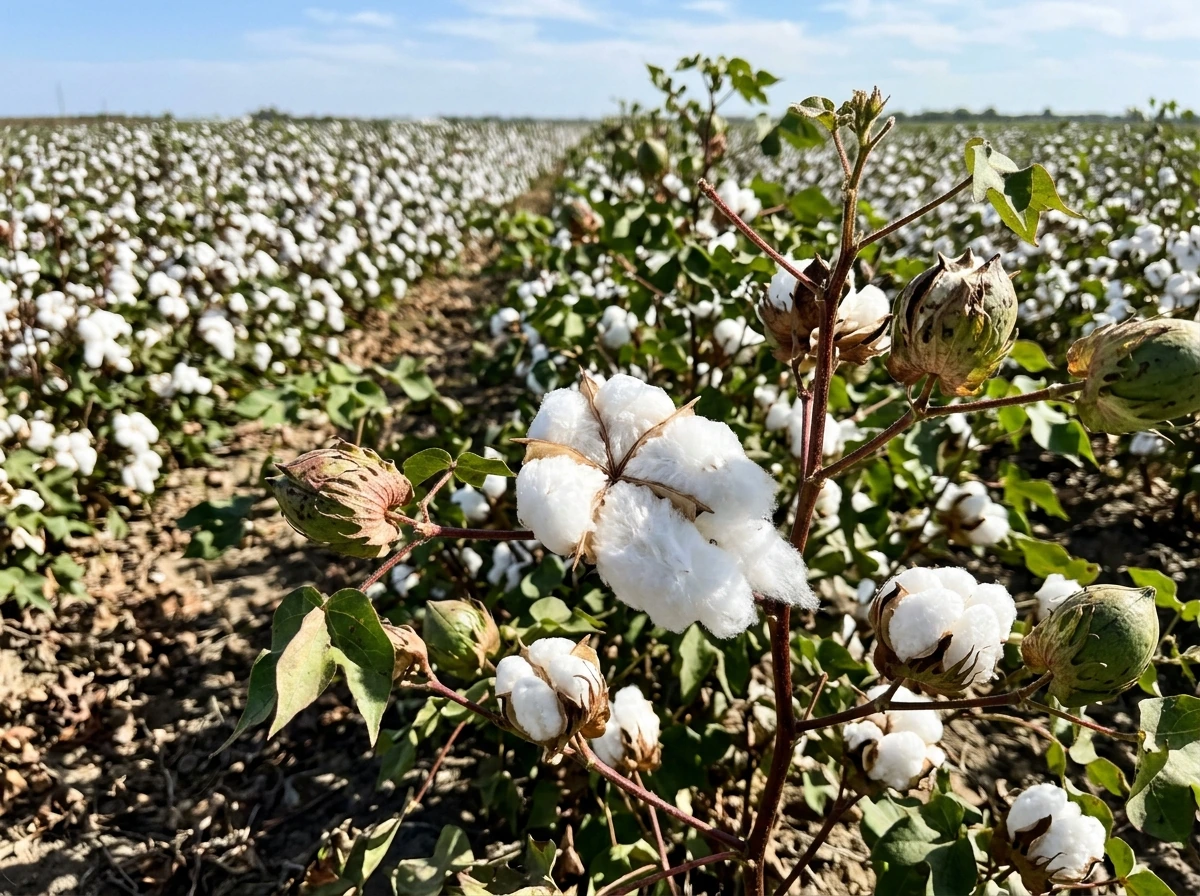
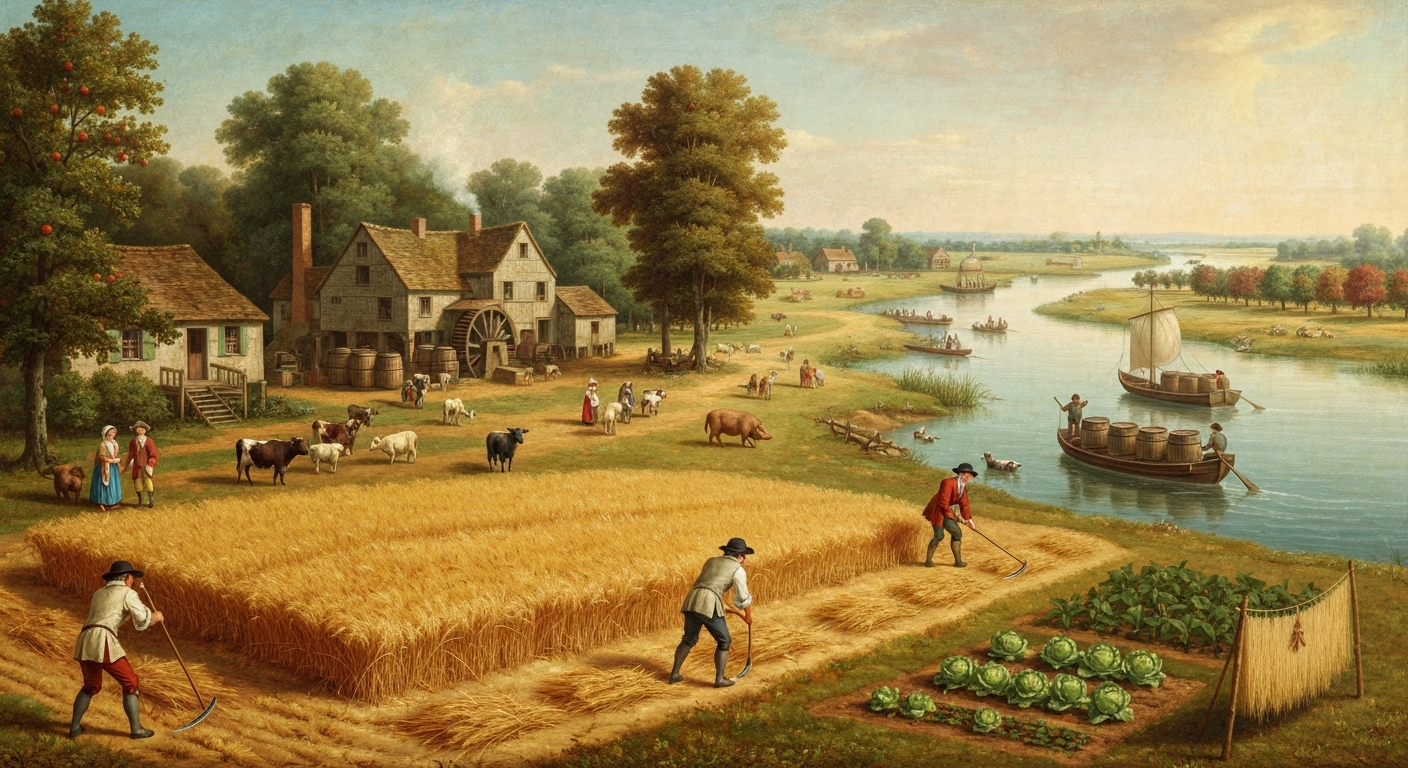
The fiber itself, called lint, is made up of elongated cells that grew directly from the outer surface of those seeds while the boll was developing. So when someone asks how cotton grows on a plant, the short answer is: cotton is the plant's fruit, and the fiber is technically a seed hair. It exists to help protect and disperse the seeds, not to make fabric, that's just what humans figured out how to use it for.
The cotton plant (most commonly Gossypium hirsutum in commercial farming) is a woody shrub that, in a warm enough climate, can grow several feet tall in a single season. It produces recognizable cream or white flowers, develops round green bolls after pollination, and eventually those bolls dry out, crack open, and push the fiber outward. That's the harvest window. Understanding this full arc from seed to open boll is the key to understanding where and why cotton grows the way it does around the world.
Cotton plant life cycle: from seed to plant establishment
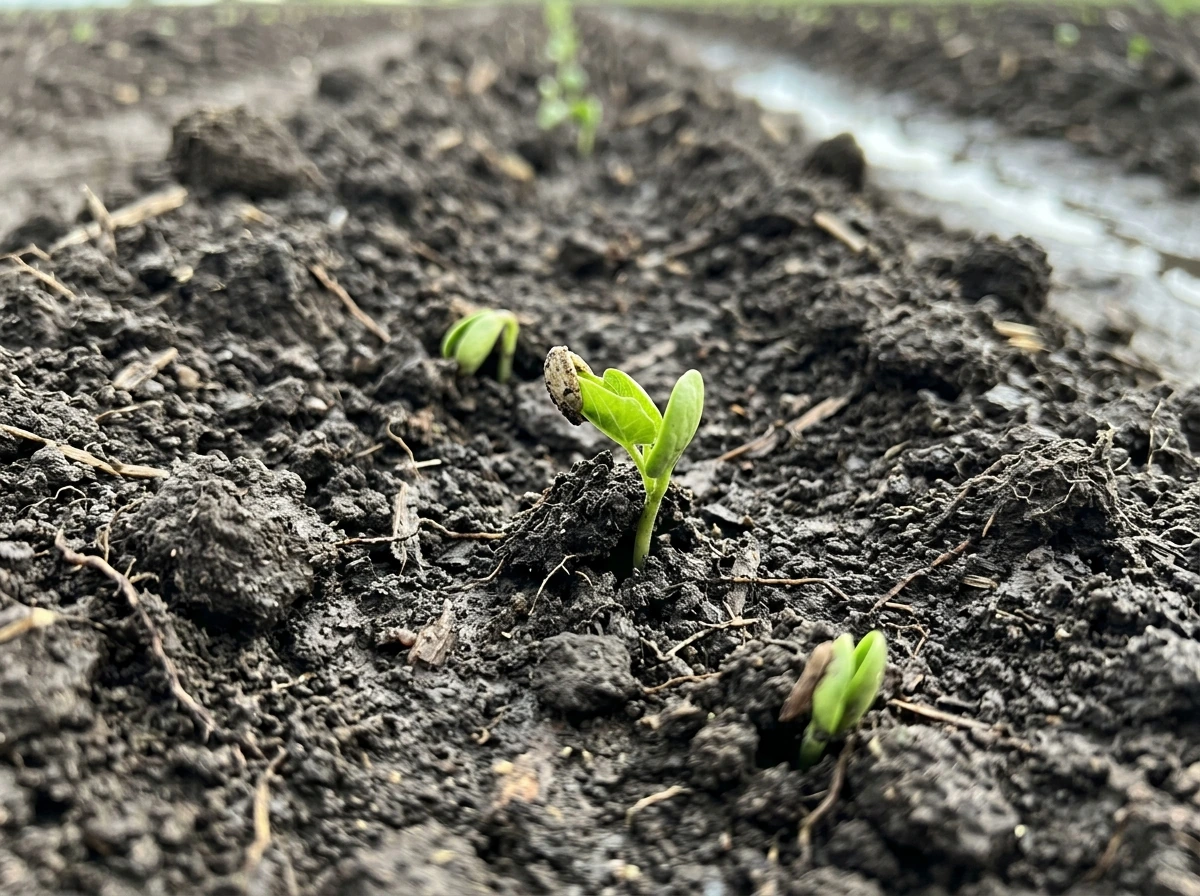
Cotton starts from a small, hard seed planted directly in the field. Germination and early emergence depend heavily on soil temperature, not just the calendar date. Cotton seed needs soil temperatures consistently above about 60°F to germinate and establish well. Below that threshold, very little growth happens. Above about 100°F (especially with low soil moisture), growth also stalls. This is why planting decisions are tied to accumulated heat units rather than a fixed date on the calendar. In the northern hemisphere, planting windows range from as early as February in warmer subtropical zones to as late as early June in cooler cotton regions.
Once the seedling breaks through the soil, the first two leaf-like structures you see are cotyledons, seed leaves that provide initial energy to the young plant. True leaves follow quickly, and the plant enters a vegetative phase where it's focused almost entirely on building roots, stems, and leaf canopy. Root development during this early phase is critical because deep roots will later help the plant access water during dry spells. The plant follows an overall S-shaped growth curve: slow at first while roots establish, then rapid through canopy formation, flowering, and boll development, before slowing again during boll maturation.
Within roughly 50 to 85 days after planting (depending on variety and temperature), the plant starts forming floral buds. These buds are called squares, and they're the first visible sign that the plant is shifting from purely vegetative growth into reproductive mode. Squares look like small, pointed green pyramidal structures on the plant's fruiting branches. Spotting the first square is a major milestone in cotton field management.
Flowering and boll development: where the fiber comes from
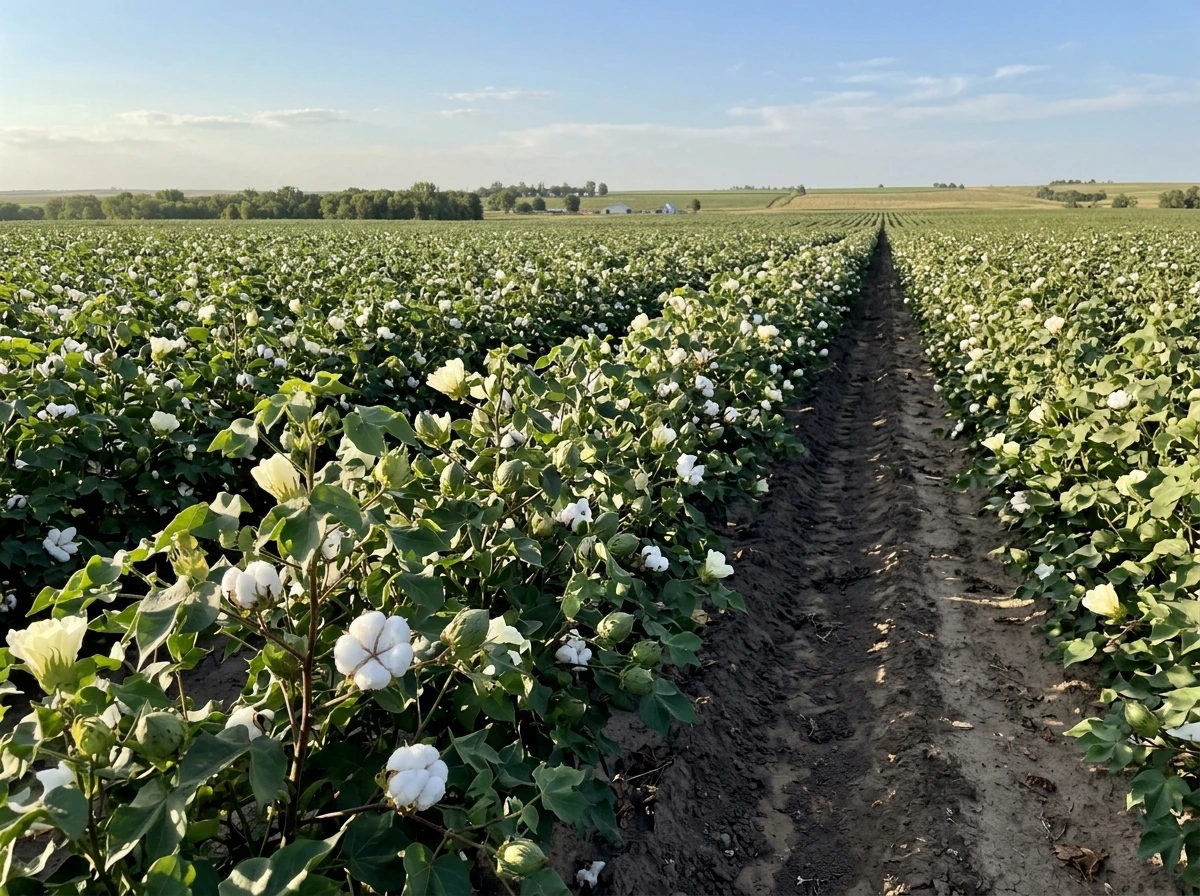
About three weeks after squaring begins, the first flowers open. Cotton flowers are striking, typically a creamy white or pale yellow on the first day, shifting to pink and then deep red before dropping off the plant. That color change matters: it signals that pollination and fertilization have occurred. At the moment of flowering (anthesis), the ovules inside the flower are fertilized, and this is the exact point when fiber development begins. Lint fiber cells (technically called trichomes) initiate from the outer surface of the seed's coating on or right around the day of anthesis.
After pollination, the flower petals fall away and what remains is a small green boll, the developing seed pod. The boll grows rapidly over the following weeks, reaching full size about 21 days after flowering. But reaching full size doesn't mean it's ready to harvest. The fibers inside are still living cells at this point, actively depositing cellulose in layers to build their wall thickness. Fiber development goes through four overlapping stages: initiation, elongation (fibers can grow up to about 5 cm in length), secondary wall buildup, and finally maturation. That full process, from open flower to a mature boll with properly developed fiber, takes roughly 50 to 60 days.
One thing that makes cotton production complicated is that the plant is indeterminate. That means it keeps producing new squares, flowers, and bolls throughout the season rather than all at once. While early bolls are maturing, the plant is still flowering and setting new bolls higher up. This overlapping timeline is important for both regional comparisons and harvest planning, a long growing season gives cotton more opportunities to set bolls, while a short season forces growers to manage the indeterminate habit aggressively.
Ripening and harvesting: how cotton is ready to pick
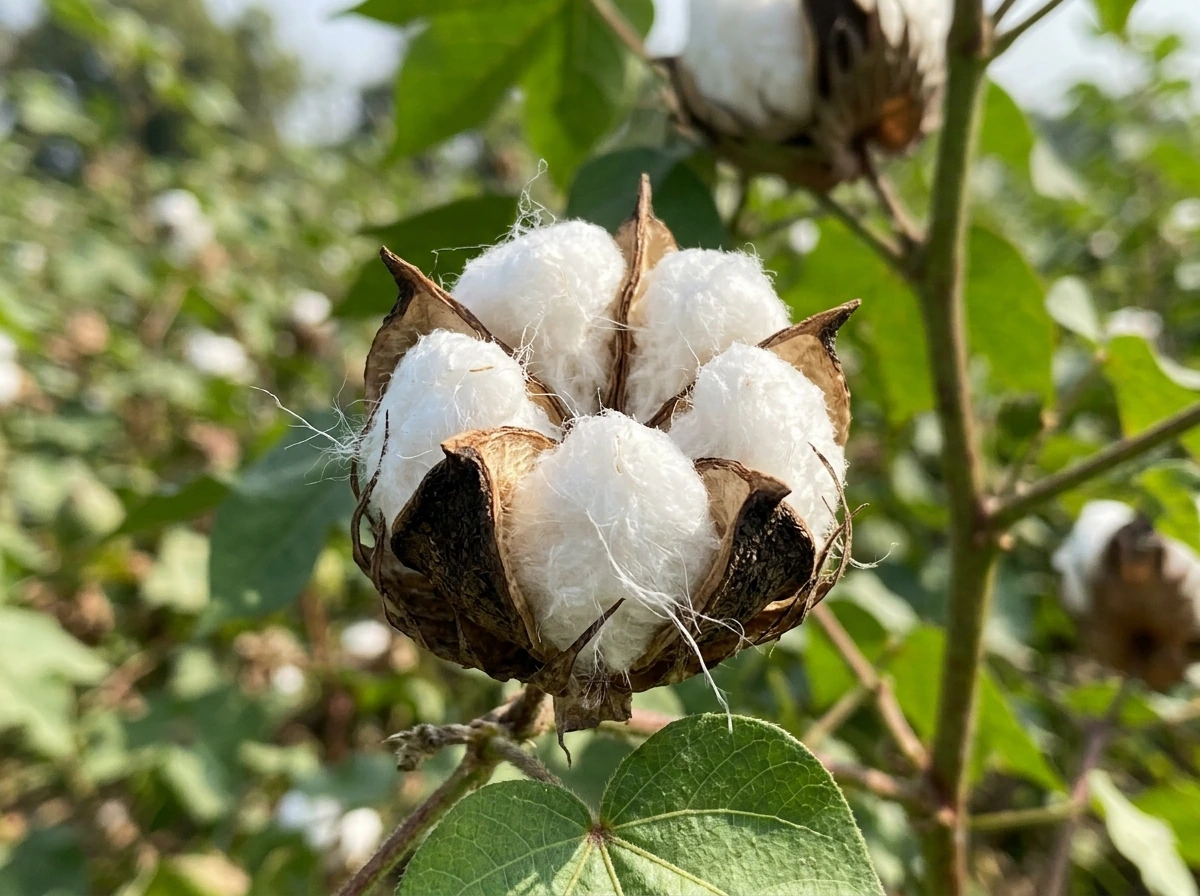
A boll is mature and ready to open when the fiber inside has fully dried and the capsule wall starts to crack. Once exposed to air, the living fiber cells die, dry out, and twist, that twisting is what gives cotton fiber its ability to spin into yarn. The window from pink flower stage to open boll is roughly 55 days. When the boll finally opens, the fluffy white lint pushes outward through the cracked segments of the capsule.
A simple field check for boll maturity: pull a fiber from the boll and try to stretch it out. If it strings out cleanly, the fiber is mature. If it doesn't hold together, the boll needs more time. Mature bolls also feel firm when pressed, with little moisture remaining inside. Getting harvest timing right matters because picking too early means immature fiber with poor strength and yield, while waiting too long risks weather damage and quality loss.
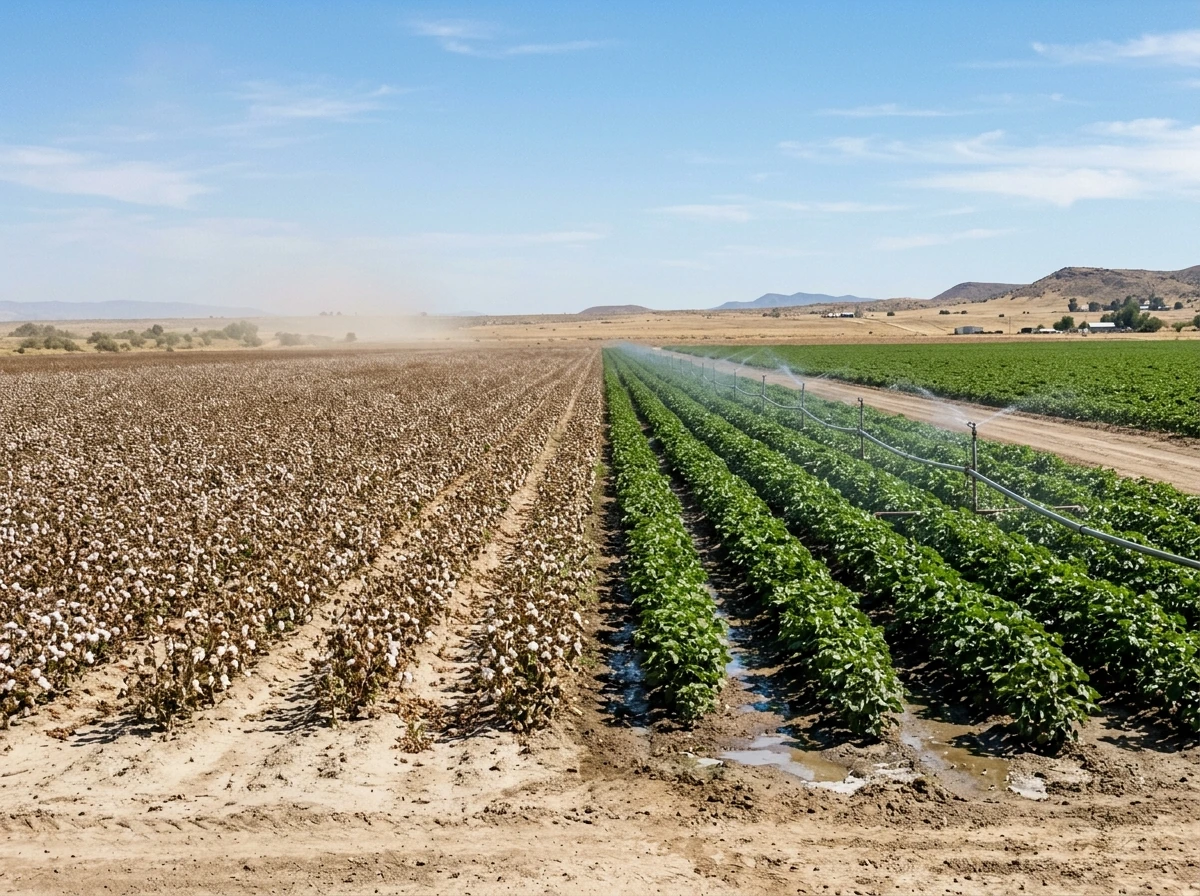
Because cotton is indeterminate, mechanical harvest requires some coordination. Growers commonly use harvest aid programs to bring the crop to a uniform, harvestable state. These programs use defoliants to remove leaves (which improves harvesting efficiency and fiber cleanliness) and boll-opening compounds to accelerate the final drying and cracking of bolls that are close to maturity but not quite open.
Cotton Incorporated notes that ethephon-based boll opener products, using the active ingredient ethephon, are used to increase the rate of boll opening and improve harvest speed and ability boll-opening compounds to accelerate the final drying and cracking of bolls. UC IPM notes that boll-opening compounds or conditioners are often recommended together with [defoliants](https://ipm.
ucanr. edu/agriculture/cotton/harvest-aid-chemicals/) to increase the open-boll percentage for once-over harvest. These aren't instant chemical fixes, they work through biological processes driven by heat accumulation. Heat-unit models are used to predict when these treatments will be effective, making harvest decisions more objective than eyeballing the field alone.
What conditions make cotton grow well (climate, soil, water, sun)
Cotton is a warm-season crop with real temperature limits on both ends. Minimum growth temperature sits around 60°F, and temperatures above about 95 to 100°F (or above 36°C for extended periods) stress the plant and reduce fiber and boll development. Cotton is a warm-season crop with real temperature limits on both ends. Minimum growth temperature sits around 60°F, and temperatures above about 95 to 100°F (or above 36°C for extended periods) stress the plant and reduce fiber and boll development.
The sweet spot is a long, warm growing season with plenty of sunshine. Critically, cotton needs a minimum of about 200 frost-free days. A killing frost at any point during boll development can wipe out late-set bolls completely. This frost requirement alone narrows where cotton is commercially viable.
why does cotton grow well in the south A killing frost at any point during boll development can wipe out late-set bolls completely. This frost requirement alone narrows where cotton is commercially viable.
Cotton tolerates a range of well-drained soils but does best in deep, fertile loams with good water-holding capacity. Compacted or waterlogged soils restrict root development and increase boll shedding. Nitrogen availability is important from early in the season, with typical applications split between an early post-planting dose and a second application ahead of flowering. Adequate nitrogen supports the rapid vegetative growth that eventually holds the load of developing bolls.
Water management is where a lot of cotton decisions get made. Whether cotton needs a lot of water depends largely on the growth stage and how much rainfall the region receives Water management is where a lot of cotton decisions get made.. During early vegetative growth, cotton is relatively tolerant of moderate water stress. The critical window is from first flower through peak bloom and boll development, when <a data-article-id="0D17F8F4-D7B6-4ACB-A454-85273418163A">water demand climbs to roughly 0. 2 to 0.
28 inches per day. Stress during this period causes square and boll shedding, reduces boll size, and cuts final yield significantly. Interestingly, moderate deficit during early flowering can actually restrict excess vegetative growth while still supporting good boll set, but push that deficit further into peak bloom and the yield losses stack up fast. Cotton is grown under both rainfed and irrigated systems worldwide, and which approach is viable depends almost entirely on seasonal rainfall patterns in a given region.
Why cotton grows (biology/role of fiber and seeds)
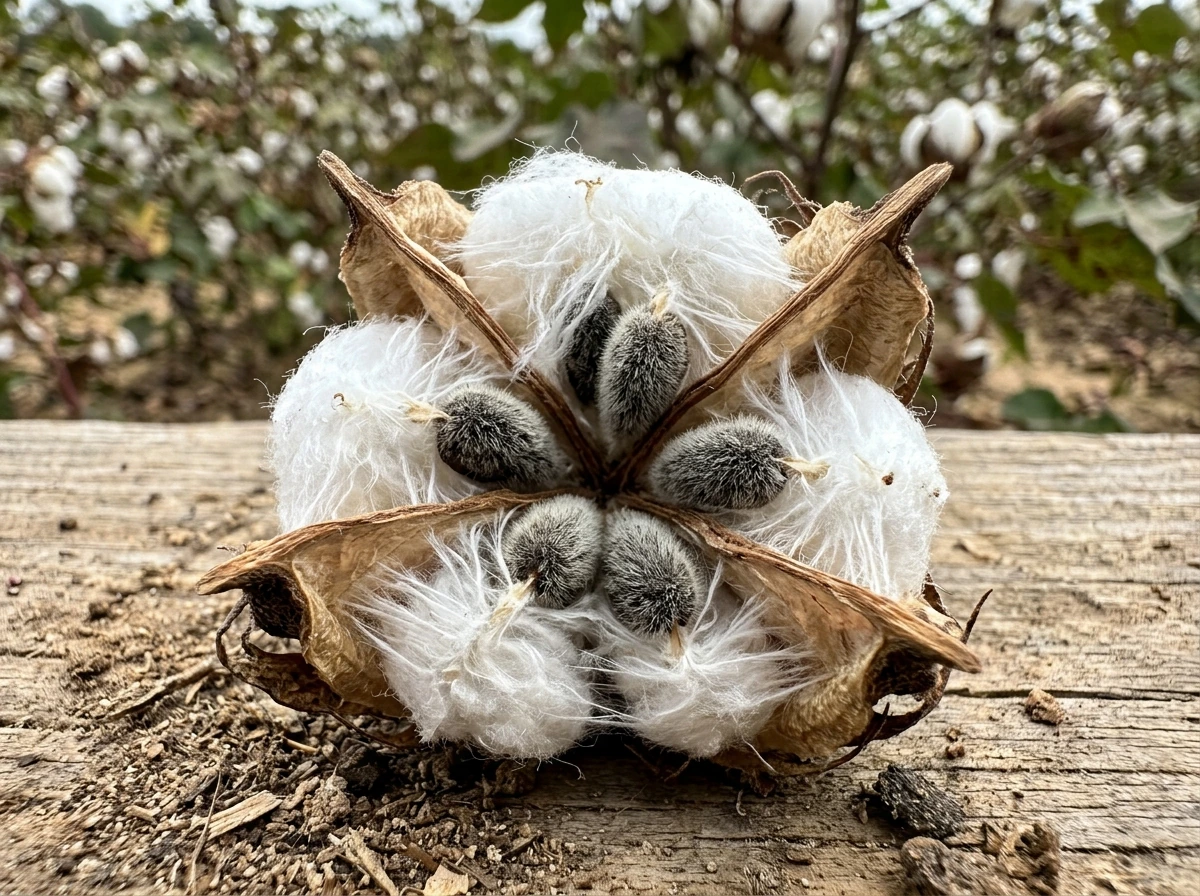
The fiber isn't there for us. It's there for the seeds. Cotton lint is a seed hair, a dense mass of elongated epidermal cells on the seed coat that developed inside the boll. In nature, this fiber serves two purposes: it cushions and protects the seeds inside the closed boll, and once the boll opens, it helps the seeds catch the wind and disperse away from the parent plant. The same fluffy structure that makes cotton useful for spinning into thread is the plant's seed dispersal mechanism.
This also explains the timing of fiber development. The plant invests heavily in fiber production only after successful pollination, because building fiber around seeds that weren't fertilized would be wasted energy. The tight link between anthesis (flowering/pollination) and fiber cell initiation reflects this, the plant essentially waits for confirmation that the seed is viable before committing resources to building fiber around it. Stress during or right after flowering, before that confirmation happens, is therefore especially damaging to final fiber yield and quality.
How cotton growth differs by region and growing season
Where cotton grows and how it behaves in the field varies a lot depending on regional climate. The U.S. Cotton Belt, stretching across the Southeast, Texas, and into parts of the Southwest and California, covers a range of conditions, from the humid, rainfed fields of the Carolinas and Georgia to the arid, irrigated plains of west Texas and the San Joaquin Valley. In humid southeastern states, the long frost-free season (often 200+ days) and warm summers allow cotton to fully express its indeterminate habit, setting bolls over a long window. In drier western regions, irrigation is essential, and the growing season is managed more tightly.
Globally, major cotton producers like India, China, Pakistan, Brazil, and the countries of Central Asia each work with different varieties, rainfall patterns, and growing season lengths. In tropical and subtropical zones closer to the equator, cotton can sometimes behave more like a perennial shrub if frosts don't arrive to kill the plant. In temperate zones, it's managed strictly as an annual. The basic biology is the same everywhere, the S-shaped growth curve, the squaring-to-bloom progression, the boll development timeline, but the calendar shifts significantly. Planting in the northern hemisphere alone spans from February in warmer subtropical regions to June in cooler continental climates.
| Region/System | Planting Window | Frost-Free Days Available | Typical Water Source | Key Regional Challenge |
|---|
| U.S. Southeast (GA, SC, NC) | April to May | 200–240 days | Rainfed with some irrigation | Humidity, disease pressure, boll weevil history |
| U.S. Texas High Plains | May to early June | 185–200 days | Primarily irrigated | Limited water supply, wind, short season |
| U.S. California (San Joaquin) | April to May | 250+ days | Fully irrigated | Water cost and availability |
| India (major cotton states) | May to July | 200–300+ days | Rainfed (Bt cotton era) | Erratic monsoon, pest pressure |
| Central Asia (Uzbekistan, etc.) | April to May | 180–210 days | Irrigated (canal systems) | Soil salinity, water allocation |
| Brazil (Cerrado) | December to January (Southern Hemisphere) | 300+ days | Rainfed and irrigated | Pest management, large-scale mechanization |
Season length is the biggest regional variable in terms of how cotton actually grows. A long season in a warm climate lets a cotton plant set bolls in multiple waves, making the indeterminate growth habit an asset. A short season forces growers to choose earlier-maturing varieties, apply harvest aids aggressively, and accept fewer boll-setting opportunities. This is exactly why understanding regional climate, frost dates, heat unit accumulation, rainfall timing, is inseparable from understanding how cotton grows in any given place. If you're interested in why the American South became the world's dominant cotton region historically, or how irrigation reshaped cotton geography in the 20th century, those patterns all trace back to these same biological constraints playing out across different landscapes.
If you want to dig deeper into the regional side of this, exploring where cotton grows across U.S. states and global regions is a natural next step. The biological growth cycle described here is the foundation, but geography is what determines whether that cycle can complete successfully in any given location.