
Cotton grows as a warm-season perennial shrub that's farmed as an annual crop. It needs a long frost-free growing season (at least 160 to 200 days), warm to hot temperatures, well-drained soil, and full sun. If you can give it those four things, you can grow cotton, whether you're planning a commercial field in Texas or a backyard plot in Georgia. This guide walks through exactly how cotton grows, what conditions it needs, how to plant and harvest it, and why it thrives where it does.
How Cotton Grow: Step-by-Step Planting, Care, Timing

Samuel Rourke
24 Mar 2026
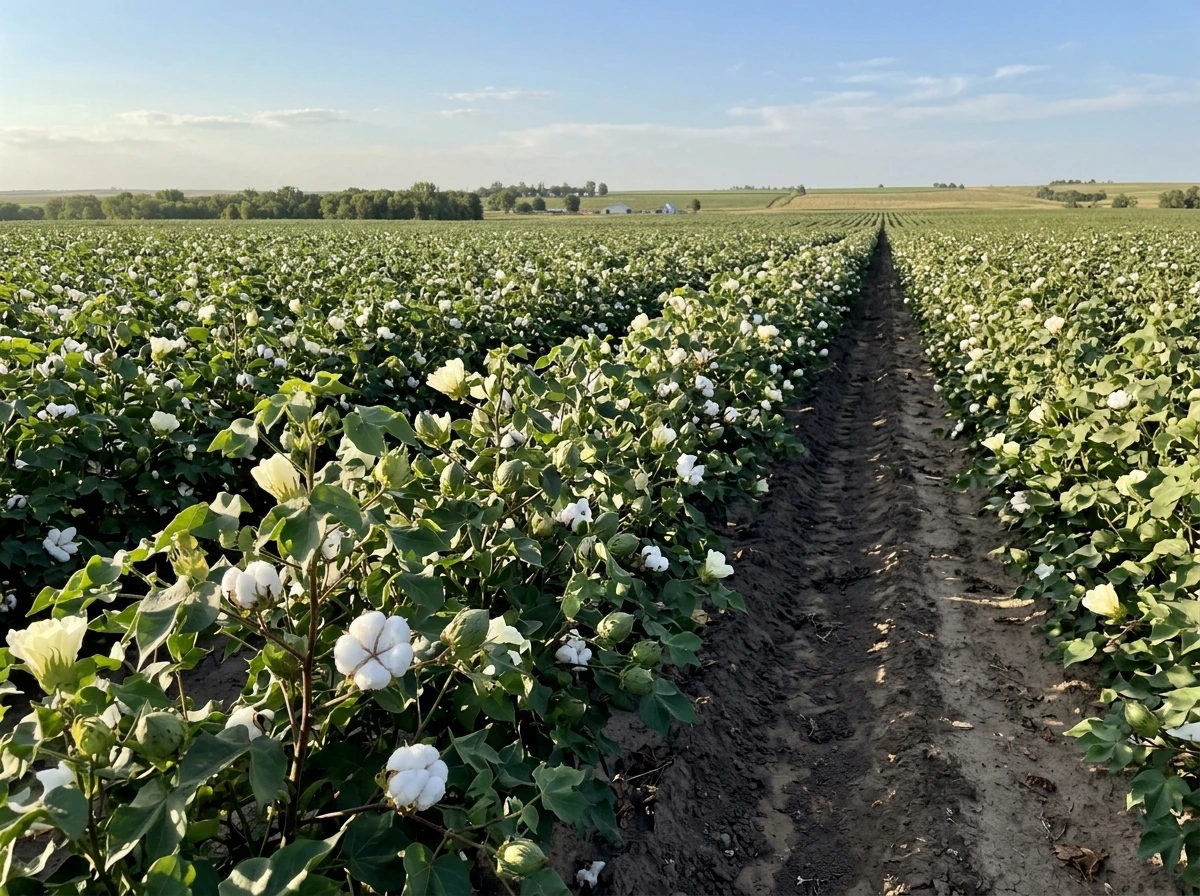
What cotton is and where it's grown
Cotton belongs to the genus Gossypium in the mallow family. The two species that matter most for modern production are Gossypium hirsutum (upland cotton) and Gossypium barbadense (extra-long staple cotton, including Egyptian and Pima varieties). Upland cotton dominates globally, accounting for roughly 90 to 95 percent of all cotton production worldwide. Two older diploid species, G. arboreum and G. herbaceum, have deep historical roots in South Asia and Africa but are rarely grown commercially today.
Commercially, cotton is concentrated in a handful of major producing countries: China, India, the United States, Pakistan, Brazil, and Turkey lead global output, China, India, the United States, Pakistan, Brazil, and Turkey lead global output, with Egypt recognized specifically for its long-staple varieties. Within the U. S. , the crop is centered in what's commonly called the Cotton Belt, stretching from the Carolinas through Georgia, Alabama, Mississippi, Arkansas, Louisiana, Texas, Oklahoma, and into parts of the Southwest.
where cotton grow Globally, cotton thrives in the seasonally dry tropics and subtropics, and in irrigation-based regions where water can substitute for unreliable rainfall. If you want to dig into the specific geography of where cotton is grown by region and state, that's worth exploring separately. how does cotton grow on plants
What cotton needs to grow well
Temperature
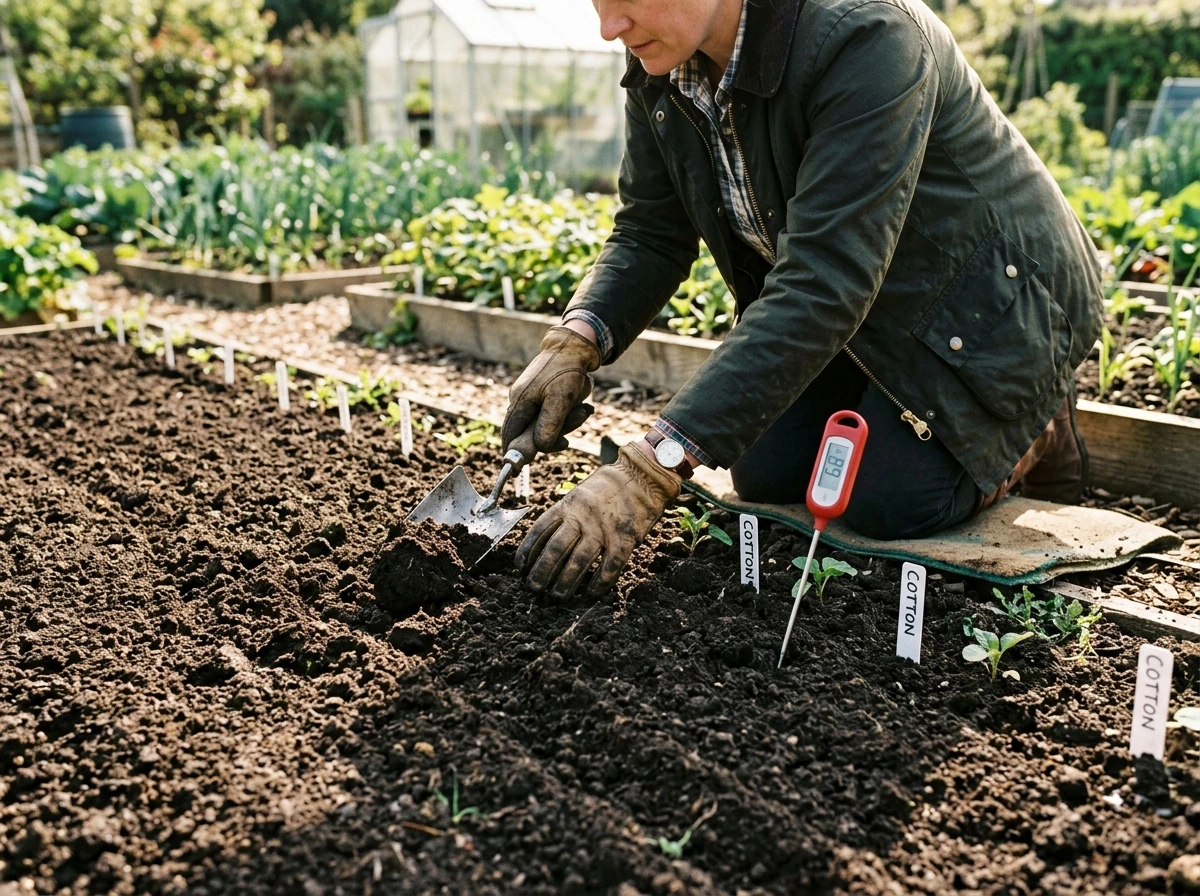
Temperature is the single biggest factor in whether cotton succeeds. At San Angelo’s Texas A&M AgriLife extension materials, the time from planting to first square is described as temperature dependent, commonly about 35 to 47 days after planting time from planting to first square is temperature dependent.
Seeds need soil temperatures of at least 60°F (15°C) to germinate reliably, and 65°F is better. Daytime highs during the growing season should consistently hit 70°F to 100°F (21–38°C). Cotton is genuinely heat-tolerant and actually benefits from hot summers, which is why it thrives in the Deep South and in arid regions with irrigation. What it cannot tolerate is frost.
One frost event can kill seedlings or ruin a nearly mature crop, so knowing your last and first frost dates is non-negotiable.
Growing season length
From planting to harvest, cotton needs 150 to 200 frost-free days depending on the variety. Upland varieties (which most small growers will use) are on the shorter end. Extra-long staple varieties like Pima need closer to 200 days. This requirement is what defines where cotton can and can't be grown, regions with short summers simply don't have enough frost-free days to bring a crop to maturity.
Rainfall and water needs
Cotton needs roughly 20 to 25 inches (500 to 625 mm) of water distributed across the growing season. Most of that demand is concentrated during flowering and boll development. It's more drought-tolerant than many crops once established, but water stress during boll fill directly reduces yield and fiber quality. In the U.S. Southeast, natural rainfall often covers most of this need. In Texas, the High Plains, and most of the world's irrigated cotton regions (Central Asia, the Nile Valley, Pakistan's Indus Basin), irrigation is essential. blank" rel="noopener noreferrer">The relationship between cotton and water use is a big topic on its own, and one worth understanding before you plan irrigation. does cotton need a lot of water to grow
Soil
Cotton prefers deep, well-drained loamy or sandy loam soils with a pH of 5.8 to 8.0, though it performs best between 6.0 and 7.0. Good drainage is critical: cotton roots will rot in waterlogged soil. The taproot goes deep (sometimes 3 to 5 feet), so compacted hardpan layers are a serious problem. Cotton is moderately tolerant of salinity compared to many crops, which partly explains why it's grown in some arid irrigated regions where soil salinity can be an issue.
Sunlight
Cotton is a full-sun crop. It needs at least 6 hours of direct sunlight daily, and more is better. Shade reduces growth rate, delays maturity, and cuts yields significantly. Planting in full sun with good row spacing for air circulation is standard practice.
When cotton grows: planting windows and the growth cycle
Cotton is planted in spring once soil and air temperatures are consistently warm. The growth cycle from planting to harvest looks roughly like this:
- Germination: 5 to 10 days after planting in warm (65°F+) soil
- Seedling establishment: 2 to 3 weeks post-germination
- Square (flower bud) formation: about 5 to 7 weeks after planting
- Flowering: 3 weeks after squaring (roughly 8 to 10 weeks after planting)
- Boll development: petals drop, the boll (seed pod) forms and grows over 45 to 65 days
- Boll opening (crack): 130 to 160+ days after planting, depending on variety and heat accumulation
- Harvest: once 60 to 70% of bolls are fully open
Planting dates vary significantly by region. Here's a practical regional breakdown for U.S. growers:
| Region | Typical Planting Window | Notes |
|---|---|---|
| Southeast (GA, AL, MS, SC) | Late April to mid-May | Good natural rainfall; watch for last frost in early April |
| Mid-South (AR, TN, LA) | Late April to mid-May | Rich alluvial soils; high humidity can increase disease pressure |
| Texas (dryland) | Late April to late May | Variable rainfall; earlier in South Texas (March–April) |
| Texas High Plains (irrigated) | May to early June | Shorter season, cooler nights; irrigation-dependent |
| Southwest (AZ, CA) | March to April | Hot, dry climate; nearly all irrigated; long season possible |
| Carolinas | Late April to mid-May | Established cotton belt; warm humid summers |
Outside the U.S., planting windows shift with hemisphere and climate. In India and Pakistan, the kharif (summer) season means planting from May through July. In Brazil's cerrado region, planting happens from November to January. In Egypt, planting is typically in March and April. The underlying rule is the same everywhere: plant after the last frost, once soil temperatures are stable above 60°F, and make sure the variety's days-to-maturity fits within your frost-free season.
How to grow cotton: planting to harvest
Step 1: Choose the right variety
For most U.S. home growers or small-plot farmers, upland cotton (G. hirsutum) varieties are the practical choice. Look for shorter-season varieties (120 to 150 days) if you're in the northern edge of the growing range. If you're in Arizona, Southern California, or another long-season, hot-climate area and want premium fiber, Pima (G. barbadense) is worth considering. Seed catalogs, your local cooperative extension office, and regional university trial data are all good sources for variety recommendations tailored to your specific state.
Step 2: Prepare the soil
Till deeply (8 to 12 inches) to break up compaction and encourage deep root development. Test your soil pH and adjust if needed, add lime to raise pH toward 6.0 to 6.5, or sulfur to lower it if above 7.5. Incorporate balanced fertilizer at planting; a soil test will give you specific numbers, but a general starting point is 60 to 80 lbs/acre of nitrogen, 30 to 40 lbs/acre of phosphorus (P2O5), and 30 to 60 lbs/acre of potassium (K2O) for a field crop. For backyard or garden-scale planting, work in a balanced slow-release fertilizer and compost before planting.
Step 3: Plant the seeds
Plant seeds 1 inch deep, 3 to 5 inches apart in rows spaced 30 to 40 inches apart. At field scale, growers typically target a final stand of 2 to 4 plants per foot of row. Soil temperature at the 4-inch depth should be at least 60°F for three to five consecutive days before you plant, planting into cold soil delays germination and increases the risk of seedling disease. Don't rush. Planting two weeks late into warm soil will almost always outperform planting two weeks early into cold soil.
Step 4: Manage water and fertilizer
Keep soil moist but not waterlogged until germination. After establishment, cotton is somewhat drought-tolerant through the vegetative stage but becomes highly sensitive to water stress from first bloom through boll development. That window (roughly weeks 8 through 16 after planting) is when consistent moisture translates directly to yield and fiber quality. Side-dress with additional nitrogen at the start of squaring (flower bud formation) if growth looks slow or leaves are pale. Avoid over-fertilizing with nitrogen late in the season, too much late nitrogen causes excessive vegetative growth and delays boll maturity.
Step 5: Control weeds early
The first 4 to 6 weeks after planting are the critical weed control window. Cotton is a slow establisher, and weeds that get ahead of the crop during that early period will reduce final yields significantly. Cultivate shallowly between rows, use pre-emergent herbicide in commercial fields, and mulch around plants in garden settings. Once the canopy closes (typically by mid-season), the crop shades out most weed competition on its own.
Step 6: Watch for pests and disease
The main insect pests in U.S. cotton are the boll weevil (largely eradicated in most states through the Boll Weevil Eradication Program but still a concern in parts of Texas and the South), bollworms, tobacco budworm, thrips, and spider mites. Scout your fields regularly from squaring onward. Common fungal diseases include boll rot (usually a moisture management issue) and Fusarium and Verticillium wilts (soil-borne; rotation and resistant varieties are your best defenses). Root-knot nematodes are also a recurring problem in sandy soils across the Southeast.
Step 7: Apply a harvest aid and harvest
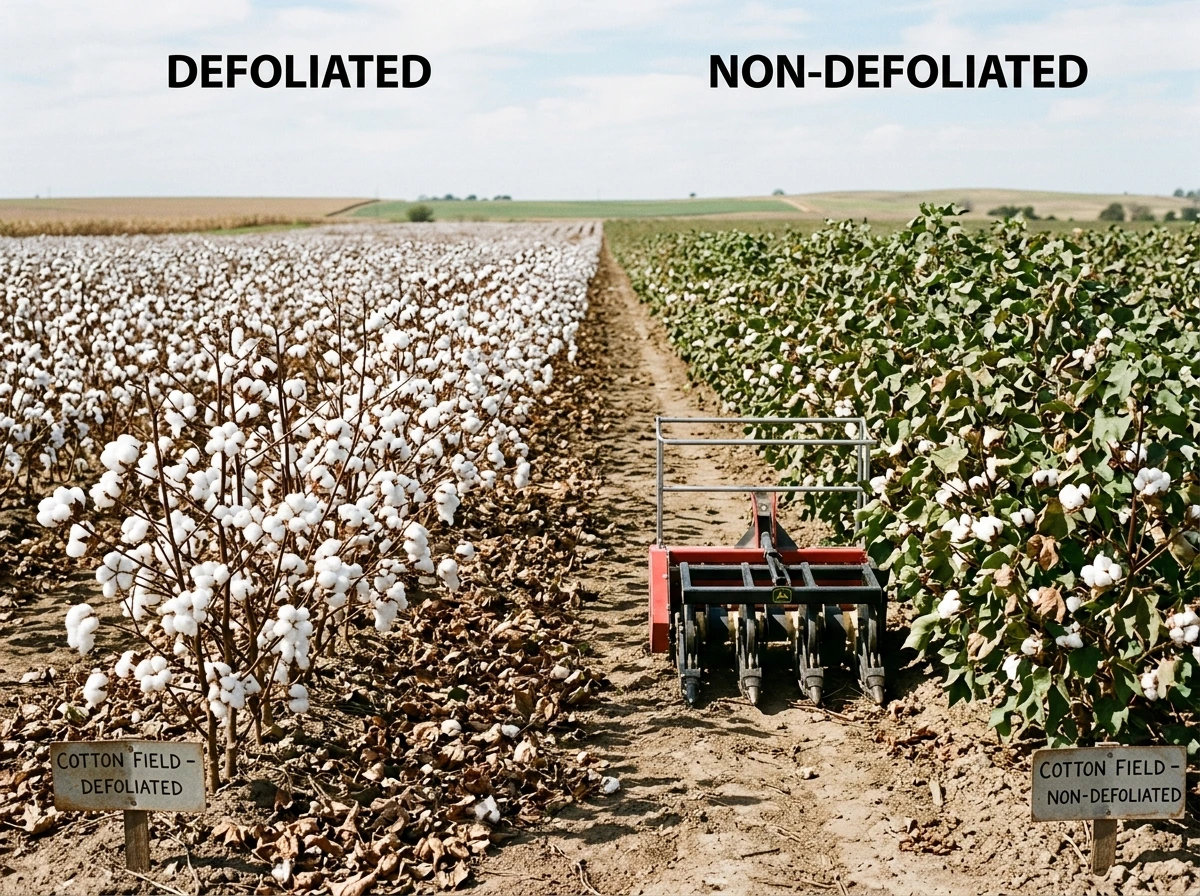
Commercial cotton growers typically apply a defoliant (chemical that removes leaves) 4 to 6 weeks before picking to allow machinery to operate efficiently and to prevent leaf trash from contaminating the lint. For small-scale or home growers hand-picking open bolls, this step isn't necessary. Harvest when 60 to 70 percent of bolls are fully open.
UGA Extension cotton materials describe how harvest timing tied to percent-open bolls can relate to NACB values, with about 60% open bolls corresponding to NACB around 4. 1 in the document’s chart [percent-open bolls to NACB values](https://extension. uga. edu/content/dam/extension-county-offices/webster-county/anr/Cotton%20Irrigation%2C%20Defoliation%2C%20and%20Contamination.
pdf). Hand-pick by pulling the cotton fiber (lint) directly from the open boll. The brown fibrous seed coat (seed cotton) is what you harvest; ginning (not practical at home scale) separates the lint from the seeds.
Why cotton grows where it does
Cotton's geographic distribution isn't random. It's a direct result of the crop matching its core requirements to specific regional climates. The U.S. Cotton Belt exists because the Southeast and South-Central states offer exactly what cotton needs: long, hot, humid summers with 200+ frost-free days, deep alluvial and sandy loam soils, and enough seasonal rainfall (supplemented by irrigation in drier areas). The Mississippi Delta region, for example, has some of the richest alluvial soils in the world, deep, well-drained, and naturally fertile, which is a big part of why cotton dominated that region both historically and today, and why cotton grows so well in the South.
The same logic explains cotton's global distribution. Egypt's Nile Valley provides long hot summers, minimal rainfall (replaced by Nile irrigation), and deep silt soils ideal for the extra-long staple varieties that made Egyptian cotton famous. India's Deccan Plateau has deep black cotton soils (vertisols) that retain moisture and release it slowly, naturally buffering cotton against drought. Pakistan's Indus Plain and China's Xinjiang region both rely heavily on irrigation, proving that where the climate provides heat and sunshine, water can be supplied artificially.
Historically, cotton cultivation is thousands of years old. Evidence of G. arboreum cultivation in the Indus Valley dates to around 3000 BCE, and G. hirsutum was being cultivated in Mesoamerica well before European contact. The crop's spread across continents followed trade routes and colonial agricultural systems, landing in the American South by the 17th and 18th centuries, where it transformed both the regional economy and landscape. Understanding that history helps explain why certain regions still grow cotton today, even when economics alone wouldn't always predict it.
The bottom line on why cotton grows where it does: heat accumulation (measured as growing degree days), frost-free season length, and water availability are the three governing factors. Regions that can supply all three, naturally or through irrigation, grow cotton. Regions that can't, don't. It's really that clean.
Common mistakes new cotton growers make
- Planting too early into cold soil: germination stalls, seedling disease increases, and you don't gain any real advantage over waiting for warm soil. Wait until soil temperature at 4 inches is consistently 65°F.
- Choosing the wrong variety for your region: a 200-day variety planted in Tennessee or North Carolina won't reach maturity before frost. Match variety days-to-maturity to your frost-free window with at least a 2-week buffer.
- Overwatering during the vegetative stage: cotton is more drought-tolerant early on than most people expect. Waterlogged soil causes root problems and reduces the deep root development the plant needs to handle mid-season stress.
- Underwatering during boll development: this is the opposite mistake, and it's more costly. The 6 to 8 weeks from first bloom through boll fill are when water stress does real damage to yield and fiber quality.
- Ignoring early weed pressure: weeds in the first 4 to 6 weeks after planting suppress the crop in ways you can't make up later. Early weed control is a yield multiplier.
- Over-applying nitrogen late in the season: late nitrogen pushes vegetative growth at the expense of boll maturity, delays harvest, and can make the crop more susceptible to late-season disease.
- Not scouting for pests consistently: pest damage in cotton accumulates fast once populations build. Weekly scouting from squaring onward lets you catch problems before they become expensive.
- Planting cotton in the same field year after year without rotation: soil-borne diseases like Fusarium and Verticillium wilt and root-knot nematodes build up quickly under continuous cotton. Rotating with corn, soybeans, or peanuts breaks pest cycles.
If you're just starting out, the highest-leverage things you can do are simple: wait for warm soil before planting, pick a variety suited to your specific region's season length, and protect the crop from weeds for the first six weeks. Get those three things right and you've cleared the biggest hurdles. From there, water management and pest scouting carry you the rest of the way to harvest.
FAQ
How do I know if my soil is warm enough to start planting cotton?
Use a soil thermometer and check the 4-inch depth. Plant only after it stays at about 60°F (15°C) for at least 3 to 5 days, and avoid going in immediately after a cold spell. If you plant into uneven warm spots (for example, low areas that stay cooler), you can get patchy emergence and higher seedling disease.
Should I soak or pre-treat cotton seed to help germination?
In most home or small-plot situations, pre-soaking is unnecessary and can backfire if temperatures are cool or soil is not well aerated. The bigger success driver is warm soil and correct seeding depth (about 1 inch). If you do use any pre-treatment, keep timing short and match it to your local conditions so seeds still go into consistently warm ground.
What happens if cotton is planted two weeks early, but the weather later warms up?
Early planting often reduces stand quality, even if the crop eventually grows. Cold, slow germination increases seed rot and makes seedlings more vulnerable to pests. A delayed first bloom can also shrink your boll fill window, which can reduce both yield and fiber quality.
How much spacing should I use for cotton in a backyard garden?
For small plots, aim for enough spacing to get light and airflow, similar to row spacing used in fields. Rows around 30 to 40 inches are a practical target, with a few inches between plants in the row. Too-tight spacing increases disease risk and shade, which can delay maturity and lower lint production.
Can cotton grow in containers or raised beds?
Yes, but only if you can provide deep soil volume because cotton roots can go several feet down. Use a very large container or a deep raised bed, keep drainage excellent, and be careful with irrigation consistency during flowering and boll development (that is when water stress is most damaging). Container heat can help in early season, but drying out too fast is a common failure mode.
How do I manage watering before flowering versus during boll development?
Before flowering, keep moisture steady enough for establishment, but do not keep soil constantly wet. Once flowering starts, shift to preventing water stress, because drought during boll fill directly reduces yield and fiber quality. A helpful approach is to water based on soil dryness (not just the calendar) and avoid letting the root zone swing between very dry and saturated.
What soil pH is safest for cotton, and what if my test shows extreme acidity or alkalinity?
Cotton performs best roughly in the 6.0 to 7.0 range, with tolerance across a broader 5.8 to 8.0 window. If you are below about 5.5 or above about 8.0, yields can suffer even if you fertilize. Amend based on your test results (lime to raise pH, sulfur to lower it), and retest after time for the amendment to react.
Do I need to fertilize cotton the way fields do, or can I simplify for a small plot?
Small growers usually do better with a soil-test-based approach and modest, time-targeted feeding. Instead of matching field acre rates, focus on getting a balanced nutrient supply early, then adding nitrogen around the start of squaring if leaves look pale or growth is slow. Avoid heavy late-season nitrogen, it can push leafy growth and delay boll maturity.
When exactly is the best time to do weed control?
The first 4 to 6 weeks after planting are the highest-impact window. Cotton starts slowly, so weeds that gain height and light can permanently reduce your final yield. After canopy closure, cotton shades out much of the competition, so late-season weeding is typically less critical than early weed prevention.
What pests and diseases should I watch for as a home grower?
Start scouting from squaring onward. Common concerns include boll-feeding caterpillars (bollworms and related species) and sucking pests like thrips and spider mites, which can be worse in hot, dry weather. For disease, watch for wilting patterns that suggest Fusarium or Verticillium, and avoid waterlogged soil because boll rot can spike when moisture management is poor.
Is defoliation necessary before harvest for cotton grown at home?
Usually no for hand harvesting. Defoliants are mainly used in commercial operations to allow efficient mechanical picking and to prevent leaf trash from mixing with lint. If you are hand-picking open bolls, you can skip defoliation and focus on harvesting at the right open-boll stage.
How do I know when my cotton is ready to harvest if I do not have equipment for ginning?
Harvest when about 60 to 70 percent of bolls are fully open. Pick only open bolls, because green or partially opened ones will not be usable for clean lint. Since home ginning may be impractical, plan for how you will separate lint from seed (or whether you are growing mainly for fiber quality and experimentation rather than large-scale production).
What is the single biggest reason cotton fails in marginal climates?
It is usually frost and the resulting shortage of frost-free days, not just lack of heat. Even if summers are hot, a single early frost can kill seedlings or prevent bolls from fully maturing. Choose a shorter-season variety and match the variety's days-to-maturity to your frost window before you invest in planting.
Next Articles
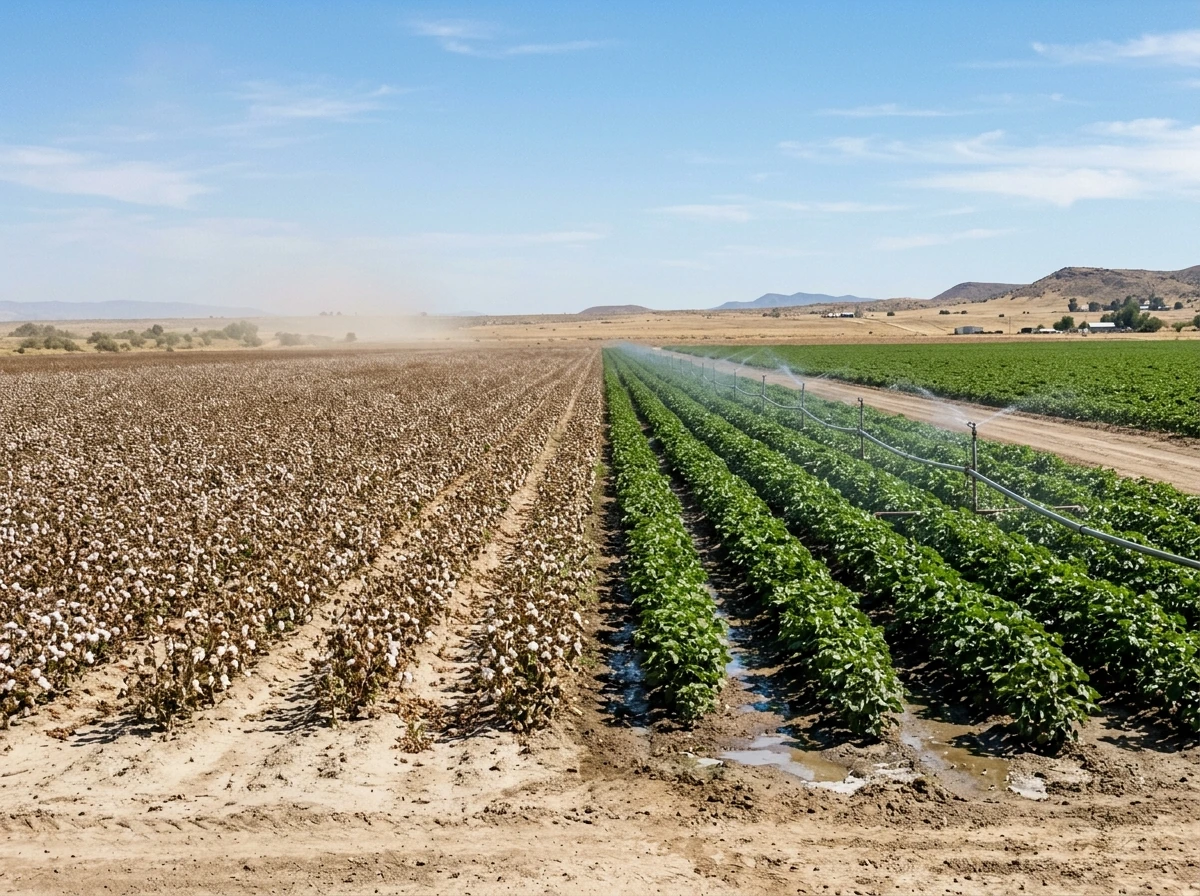
Does Cotton Need a Lot of Water to Grow? Real Estimates
How much water cotton needs to grow, what drives demand by region, and how to estimate irrigation needs locally.
What Did the Delaware Colony Grow: Crops, Uses & Legacy
Colonial Delaware’s main crops, grains, hay, flax, fruits, vegetables, livestock, why they thrived and how they were sold.
What Did Jamestown Grow and How They Farmed It
Learn what Jamestown colonists grew and the methods they used to plant, harvest, and adapt crops to Virginia conditions.