Cotton needs heat, a long frost-free growing season, well-drained soil, and reliable moisture during its middle growth stages. If you are wondering how cotton grows from the ground to harvest, it starts with warm soil and the right timing for germination and early water needs how does cotton grow from the ground.
What Does Cotton Need to Grow: Soil, Sun, Water

Samuel Rourke
4 May 2026
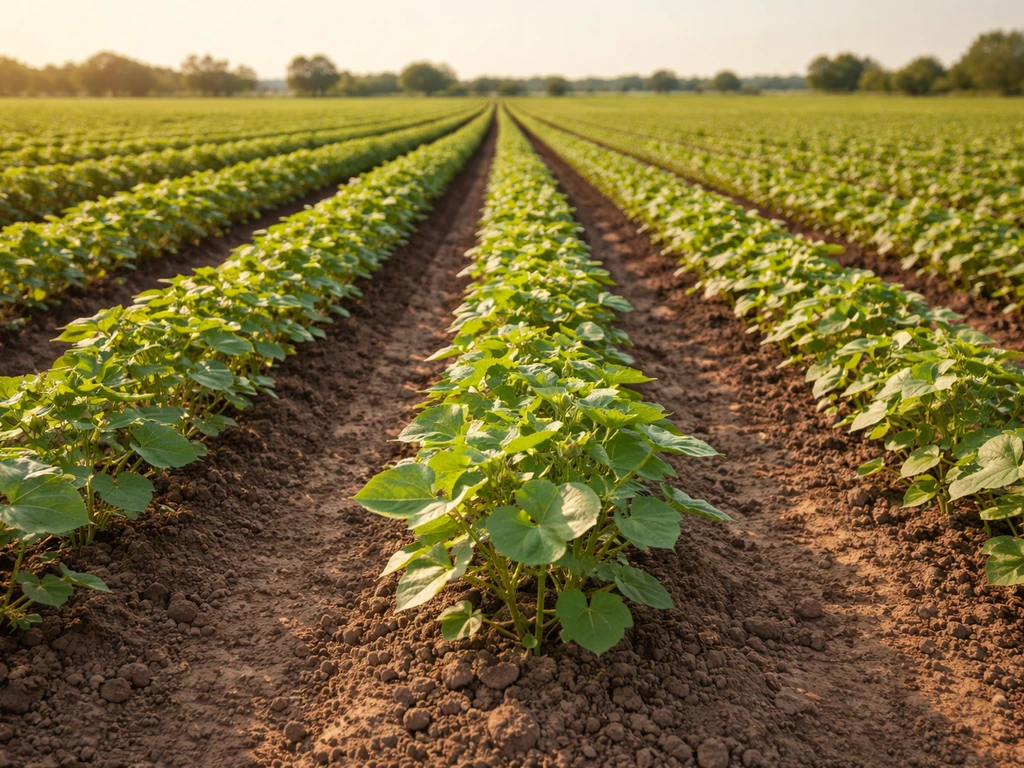
Specifically, you are looking at soil temperatures above 60°F before you even think about planting, average growing-season air temps in the 77–86°F (25–30°C) range, around 150–180 frost-free days, roughly 30 inches of seasonal water, and a deep loamy or sandy loam soil with a pH somewhere between 5. 8 and 8. 0. If your location can check those boxes, cotton is very likely a viable crop.
If one or more are missing, you will need to compensate or reconsider.
Climate and Temperature Requirements
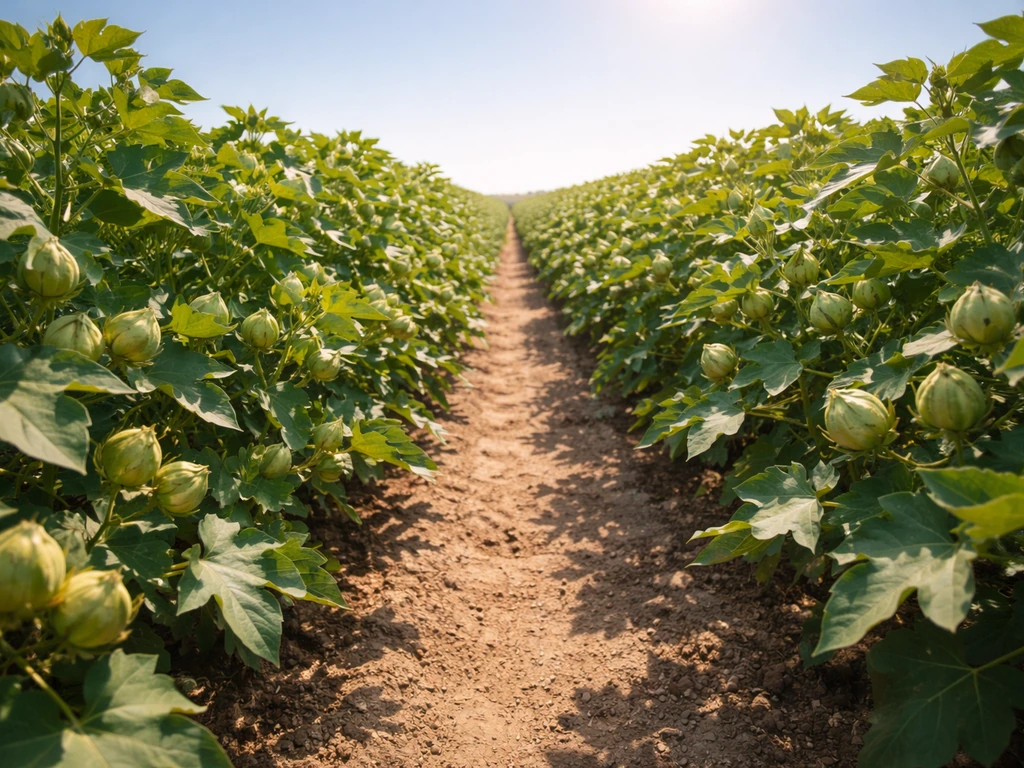
Cotton is a tropical crop at heart, and temperature is the single biggest factor that determines whether you can grow it at all. The plant grows best when average growing-season temperatures stay in the 25–30°C (77–86°F) range. Below about 20°C average, development slows noticeably, especially during the critical flowering and boll-development window. Above 34°C for extended periods, you start seeing heat stress that can inhibit fertilization and reduce seed set, which directly cuts yield.
For germination specifically, the optimum soil temperature at the surface is around 17.5–18°C (roughly 64°F), and you really want to stay above a minimum of about 60°F (15.6°C) before planting. MSU Extension recommends aiming for at least 68°F in the seedbed at the 2-inch depth, and expecting at least 50 DD-60s in the next 5 days Mississippi State University Extension. Cotton planted into cold soil germinates slowly and unevenly, leaving it vulnerable to seedling diseases. Some cultivars can technically germinate down to around 12–14°C, but that is pushing the lower boundary and results in poor, patchy stands.
Once the plant is up and growing, cotton development tracks heat accumulation using a degree-day system called DD60s, which counts heat units above a 60°F base temperature. It takes roughly 850 DD60s to carry a boll from bloom to full maturity. This is a handy way to predict whether your season has enough heat to actually ripen the crop before the first fall frost arrives.
Geographically, this means commercial cotton production runs from about 47°N to 32°S globally. In the United States, the Cotton Belt stretches across the southern half of the country, from Virginia and the Carolinas through Georgia, Alabama, Mississippi, Texas, and into New Mexico, Arizona, and California's San Joaquin Valley. Cool, maritime climates in the Pacific Northwest, northern tier states, and most of Europe are too cold and too short-seasoned for reliable production.
Sunlight and Growing Season Length
Cotton needs a long season. The U.S. Cotton Belt standard is around 150–180 frost-free days, and globally, growing periods typically run 150–220 days depending on the cultivar and climate. You simply cannot rush this plant: from planting to a mature, harvestable boll takes months of sustained warm weather.
On the sunlight side, wild and primitive cotton varieties are photoperiod-sensitive, meaning day length triggers their flowering response. Modern commercial cultivars, however, have largely been bred out of that photoperiod sensitivity and can perform at a wide range of latitudes as long as the temperature and season length requirements are met. What matters more than day length for modern cotton is simply having enough hot, frost-free weeks to accumulate the heat units the plant needs to mature its bolls before temperatures drop in autumn.
If you are in a borderline location, the first frost date in fall is your hard constraint. Work backward from that date using DD60 heat-unit estimates for your region to see whether a typical season gives you enough accumulated heat to mature the crop. Cotton Incorporated publishes tools for this kind of heat-unit planning, and your local extension office will have historical degree-day data.
Rainfall vs. Irrigation Needs
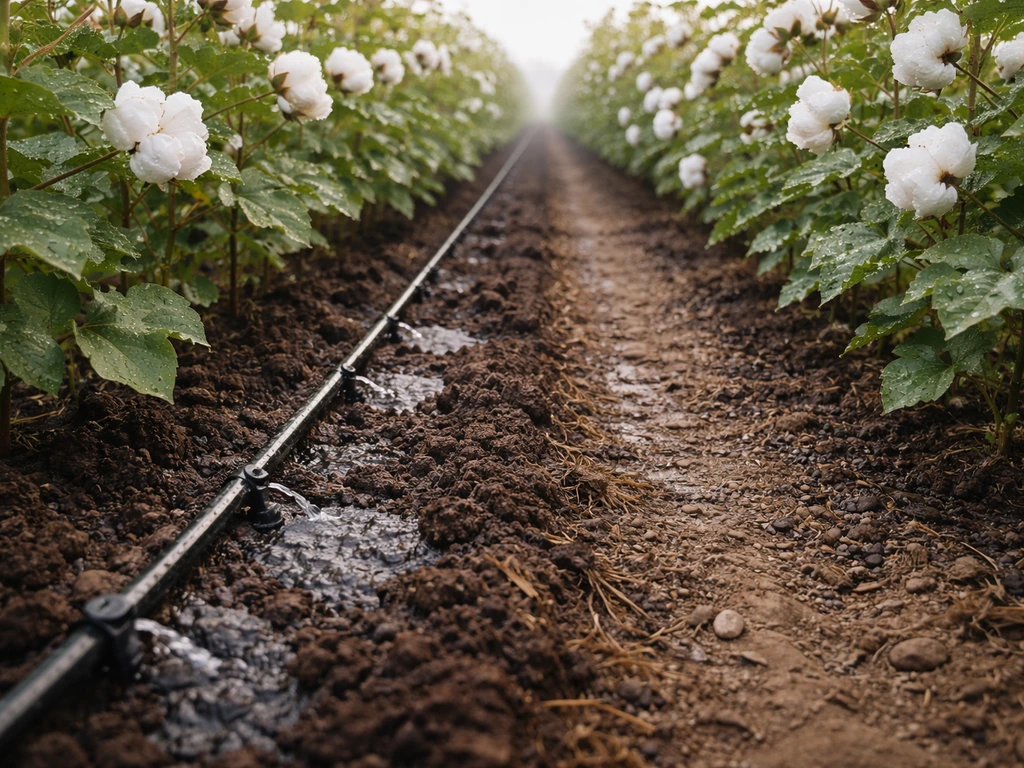
A healthy, well-watered cotton crop uses around 30 inches of water over the growing season in a climate like southwestern Oklahoma. In wetter parts of the southeastern Cotton Belt, summer rainfall alone can supply much of that, and cotton is grown there without supplemental irrigation. In drier regions like west Texas, Arizona, and California, irrigation is not optional; it is the whole system.
Timing matters as much as total volume. The most water-sensitive period is from first square (the first flower bud) through boll development. Allowing water deficit stress to set in during this phase can directly reduce the number of fruiting forms the plant retains, cutting into your final yield before you ever get to harvest. Late in the season, cotton's water demand drops, and experienced irrigators deliberately back off at that point to encourage boll maturation and improve fiber quality, specifically micronaire.
Cotton handles moderate deficit irrigation reasonably well in normal (non-saline) conditions, but you want to avoid extended dry spells in mid-season. If you are in an area with inconsistent summer rain, plan for a drip or furrow irrigation system that lets you manage timing precisely. Overhead sprinkler systems work but are less water-efficient, and cotton foliage that stays wet promotes disease.
Soil Requirements and Preparation
Cotton is not extremely fussy about soil type, but it does have clear preferences. It performs best in deep, permeable soils with a rooting depth of at least 1.2 meters (about 4 feet). A sandy loam to loam texture is ideal: good enough drainage to prevent waterlogging, but enough water-holding capacity to buffer between rain or irrigation events. Very heavy clay soils can work if drainage is managed, but they are harder to bring up to temperature in spring and more prone to compaction.
Soil pH should sit between 5.8 and 8.0 for best results, with a wider tolerance range of about 5. Cotton pH is optimally about 5.8 to 8.0, and soil amendments are recommended when pH falls outside that range Integrated Crop Management. 5 to 8.5 reported in some sources. If your soil is more acidic than 5.8, lime it before planting. If it is on the alkaline end approaching 8.5, you may need to manage micronutrient availability carefully since iron, manganese, and zinc become less available at high pH.
Soil salinity is worth checking if you are in an arid irrigated region or anywhere with a history of heavy fertilizer use and poor drainage. Cotton is classified as moderately salt tolerant, with a reported salinity threshold around 7.7 dS/m (electrical conductivity). Below that threshold, yield is generally not affected much. Above it, germination delays and yield reductions begin to compound. If your irrigation water has elevated salt content, this becomes an active management issue.
Compaction is a serious enemy. Restricted root penetration limits how well the plant can access water and nutrients, which shows up as stunted growth and uneven stands. Before planting, check for a plow pan or compaction layer with a probe or penetrometer. Deep tillage (subsoiling) to break up compaction layers before the season is standard practice in many cotton-producing areas. After that, avoid heavy equipment on the seedbed while it is wet.
Site Selection and Drainage Considerations
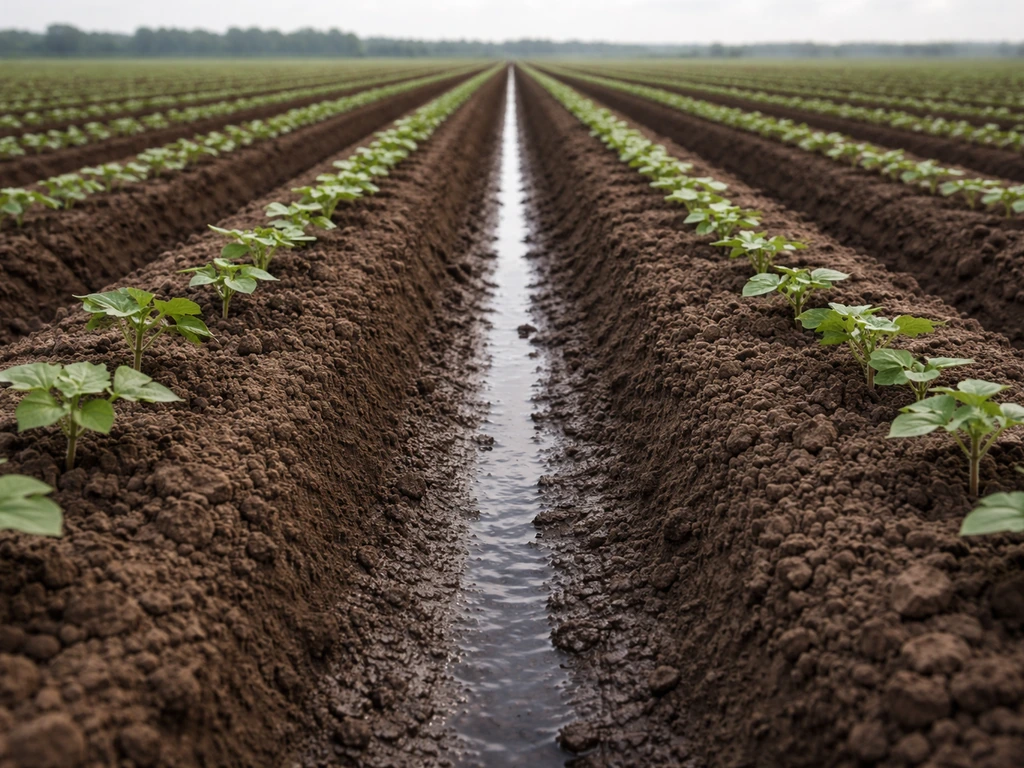
Drainage is one of the most overlooked factors when people first think about growing cotton. Cool, wet conditions in the early season are genuinely harmful: they slow germination, stress seedlings, and create the exact environment that soil-borne seedling pathogens thrive in. Any site that holds water or stays cold and damp well into spring is going to give you establishment headaches.
The practical fix many growers use is raised beds. Planting on raised beds serves two purposes: it improves surface drainage so excess water moves away from the root zone, and it allows the soil in the elevated bed to warm up faster in spring, pushing soil temperatures past that critical 60–64°F germination threshold sooner. If you are wondering why do seeds grow in cotton, notice how raised beds help warm the seedbed and support faster, more even germination. In areas with heavy soils or marginal temperatures, this can make a meaningful difference in stand uniformity.
When selecting a site, look for fields or garden beds with a slight natural slope for passive drainage, good south-facing exposure (in the Northern Hemisphere) to capture maximum solar warming, no history of persistent standing water, and deep, uncompacted soil. Avoid low spots, areas shaded by tree lines, or spots where previous crops showed signs of soil disease pressure.
How to Assess Local Suitability and Next Steps
Before you order seed, run through this quick checklist to gauge whether your location can realistically support cotton.
- Count your frost-free days. You need at least 150, and 180 is safer. If your last spring frost is in May and first fall frost is in late September, that is roughly 150 days: a tight but workable window with the right early cultivar.
- Check your summer average temperatures. If your July and August averages are regularly in the 25–35°C (77–95°F) range, you have the heat profile cotton needs. If summers are mild or frequently cool, heat accumulation will fall short.
- Estimate heat units. Use your local historical daily high and low temperature data to calculate DD60 accumulation from your typical planting date to first fall frost. You need enough to hit around 850 DD60s per boll cycle and complete the full season.
- Test or look up your soil pH. Aim for 5.8–8.0. Amend with lime if acidic, or plan micronutrient management if alkaline.
- Check for compaction. Push a soil probe or a sturdy wire flag into the soil. If you hit resistance within 12–18 inches, consider subsoil tillage before planting.
- Evaluate drainage. Walk your site after a heavy rain. Standing water lasting more than a few hours indicates you need raised beds, tile drainage, or a different site.
- Assess water availability. Estimate your seasonal rainfall from May through September. If it reliably adds up to 25–30 inches and is reasonably distributed, you may not need irrigation. If it is lower or erratic, plan a supplemental irrigation system before planting.
- Check salinity if relevant. If you are irrigating with well water or surface water in an arid region, get an EC reading on your water and, if possible, your soil. Stay below the 7.7 dS/m threshold to avoid yield penalties.
Your local cooperative extension office is the fastest way to pull together the local climate data you need. Most U.S. state extension services in cotton-growing states publish planting date windows, recommended DD60 targets, and cultivar suggestions calibrated to your specific county or region. If you are gardening on a small scale and want to observe how cotton actually emerges and grows before committing to a field-scale planting, starting seeds in cotton wool or a controlled seedbed to test germination under your local conditions is a useful first step, and it connects to a broader question many gardeners have about which seeds germinate best in those conditions.
The bottom line: cotton rewards growers who get the fundamentals right before the first seed goes in the ground. If you are wondering what seeds grow in cotton wool, it is usually used for starting seeds rather than for growing cotton itself. Heat, drainage, soil depth, and water timing are not optional details. Get those dialed in and cotton is a satisfying and commercially significant crop with a long history across the southern U.S. and across tropical and subtropical regions worldwide.
FAQ
What if my air temperatures are warm but the nights are cool, can I still plant cotton?
Don’t rely on air temperature alone. Measure soil temperature at seeding depth, and only plant when soil stays consistently above about 60°F (15.6°C). If nights are cool, consider delaying planting or using raised beds so the seed zone warms more reliably.
Can cotton be planted in cooler weather if I have a hardy seed variety?
Yes, but expect uneven stands and more disease pressure when soil is too cold. Even if a cultivar can germinate near 12 to 14°C, it’s risky because emergence is patchy and seedlings get a longer window for soil-borne infections.
How do I know if my season has enough heat to actually mature bolls before frost?
Use the frost-free constraint plus degree-day accumulation. Work backward from your average first fall frost date and verify your region can realistically reach the heat needed to ripen bolls, not just survive winter.
What’s the biggest mistake that causes cotton to fail right after planting?
Check for compaction and drainage issues before you try to “fix” them with irrigation. Cold, wet early conditions hurt establishment, so prioritize a well-drained site, avoid low spots, and consider raised beds if your ground stays damp or cool into spring.
Is drainage as important as temperature for cotton germination and early growth?
A field can meet heat and sun needs but still fail if drainage is poor. Cotton needs warm, oxygenated soil for emergence, and waterlogged seedbeds raise disease risk and slow germination dramatically.
If water is limited, when should I prioritize irrigation for best yield?
The most water-critical window is from first square through boll development. If you can’t irrigate throughout the season, plan to protect this mid-season period from drought stress, since deficits here reduce fruiting forms and final yield.
Can I use deficit irrigation to save water, and what are the limits?
In non-saline conditions, moderate deficit irrigation can work, but avoid long dry spells during the fruiting window. Also, if using irrigation, time and schedule matter more than just total seasonal volume.
How do I decide whether my irrigation water is too salty for cotton?
Cotton’s “moderately salt tolerant” rating means you still need to manage salt. If electrical conductivity is around or above the reported threshold (about 7.7 dS/m), expect germination delays and compounding yield losses, especially if irrigation water is saline.
What should I do if my soil pH is too acidic or too alkaline?
If you lime to reach the target pH band, do it before planting and incorporate thoroughly. At the high end of the pH range (near alkaline conditions), micronutrient availability drops, so you may need targeted micronutrient management rather than repeated liming.
How can I tell if compaction will be a problem before planting cotton?
Yes, especially if you plant into a compacted layer or a wet seedbed. A simple pre-plant penetrometer or probe check can reveal a plow pan, and many growers subsoil to restore root access before the season begins.
Is drip irrigation necessary, or can overhead sprinklers work for cotton?
Overhead sprinklers can be less efficient because of evaporation and wetted foliage, and wet leaves increase disease risk. If you have disease history or limited water, drip or well-managed furrow irrigation usually gives tighter control over timing and water delivery.
If cotton wool works for starting seeds, does that mean cotton can grow in soil without those climate requirements?
No, cotton is grown for fiber and seed, but the seed-starting approach (like cotton wool) is mainly for germination experiments. For field production, you still need the full combination of heat, frost-free days, drainage, and correct watering timing.
Should I test germination conditions first if I’m gardening in a borderline area?
Yes for small scale, especially to observe emergence uniformity. A controlled seedbed or local trial helps you learn how your exact soil temperature and moisture conditions affect germination before you commit to a full planting.
Next Articles
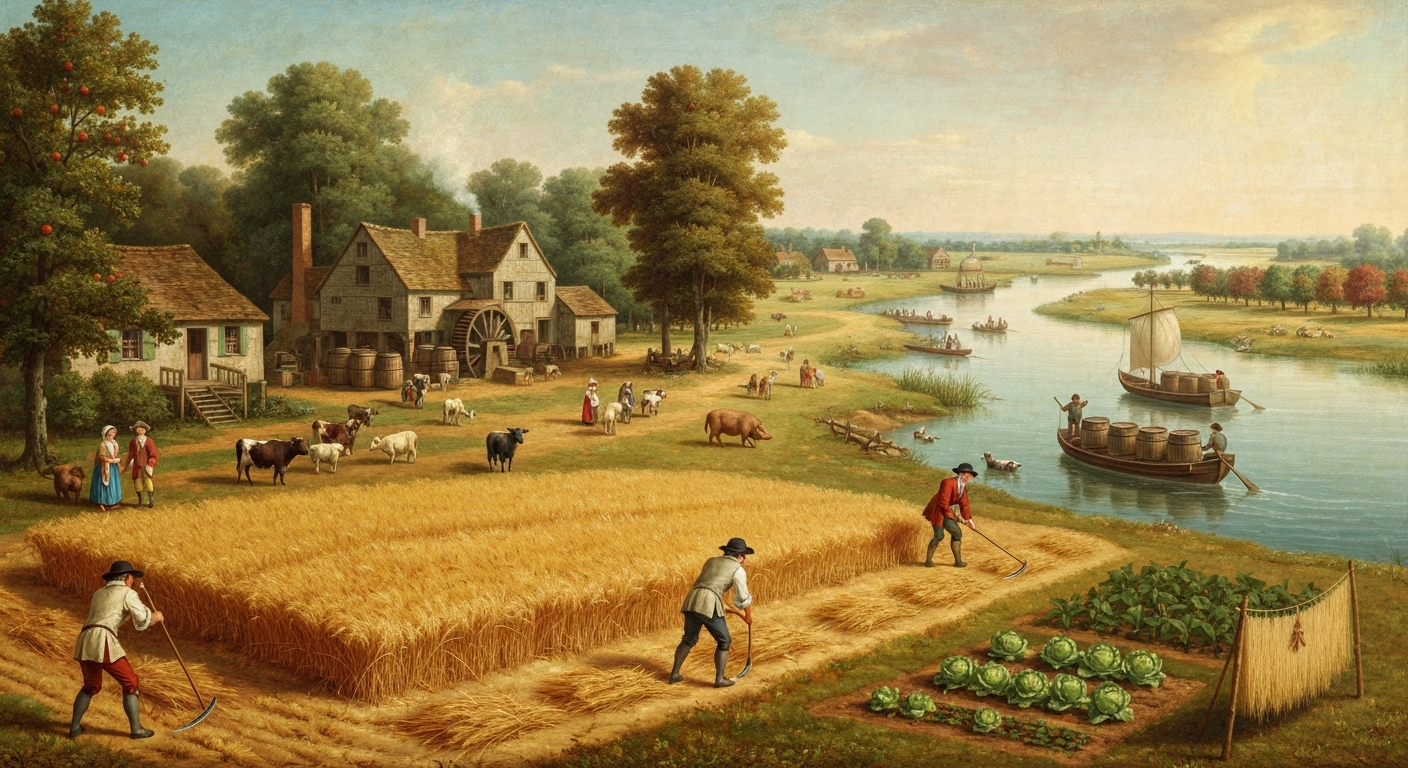
What Did the Delaware Colony Grow: Crops, Uses & Legacy
Colonial Delaware’s main crops, grains, hay, flax, fruits, vegetables, livestock, why they thrived and how they were sold.
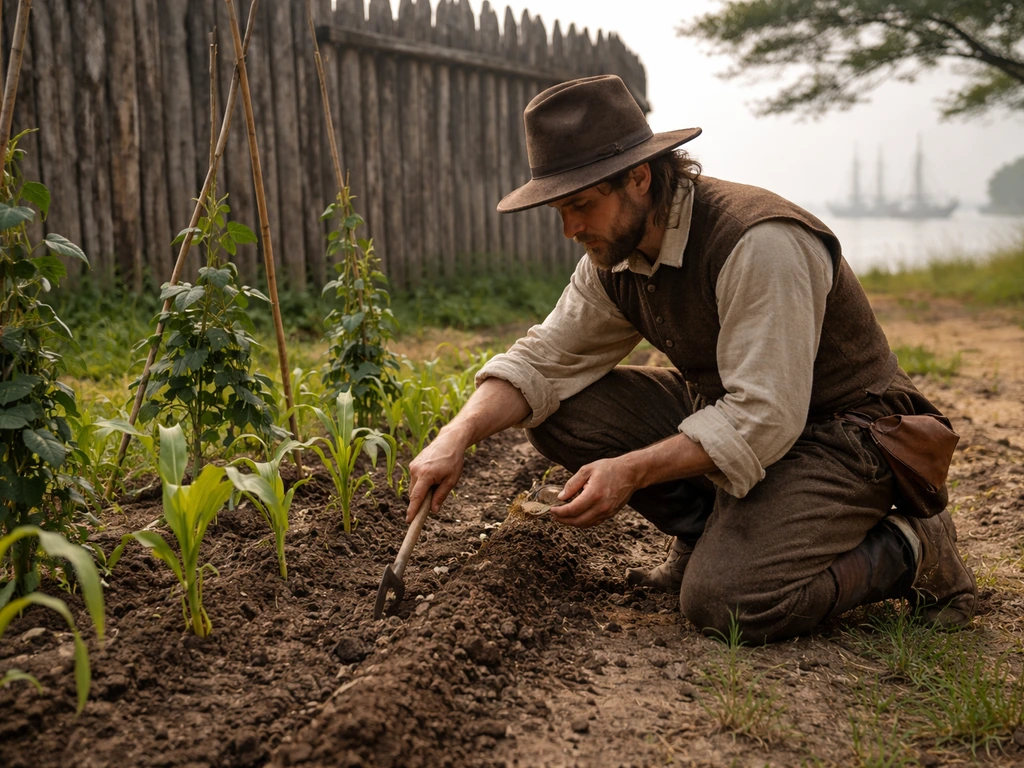
What Did Jamestown Grow and How They Farmed It
Learn what Jamestown colonists grew and the methods they used to plant, harvest, and adapt crops to Virginia conditions.
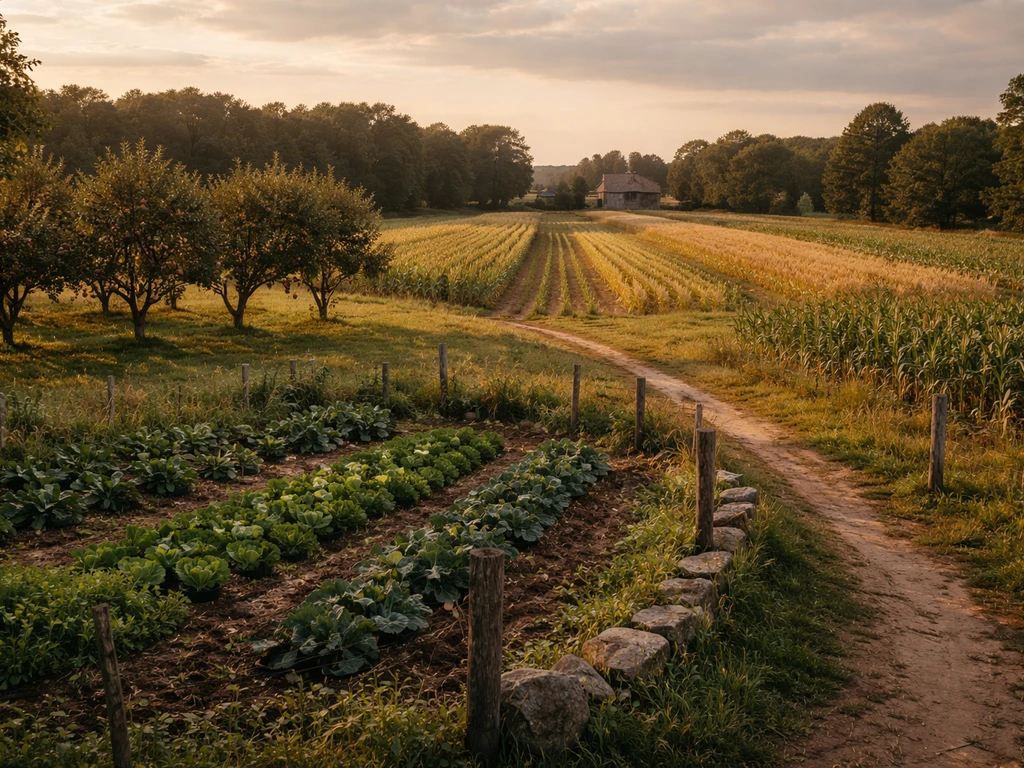
What Did the New England Colonies Grow? Major Crops
Major New England colonial crops explained by climate and soil, from corn and wheat to beans and hay, plus today’s paral