The best survival crops to grow are the ones that give you the most calories per square foot, store well without refrigeration, and actually thrive in your specific climate. For most temperate regions in the U.S., that shortlist comes down to field corn, dry beans, potatoes, winter squash, and sweet potatoes. If you are also trying to figure out what is the cheapest crop to grow for your situation, start by comparing these survival-calorie staples against your climate and costs. For colder or shorter-season climates, you shift toward barley, turnips, and dried peas. For hot, dry regions, sorghum, cowpeas, and amaranth take the lead. Get those core crops right, and you have a real food system, not just a garden.
Best Survival Crops to Grow: Regional Picks and Steps

Samuel Rourke
23 May 2026
What 'survival crop' actually means (and how to evaluate one)
A survival crop is not just anything edible. It is a crop that scores well across five practical measures: calorie density, storage life, yield stability, ease of cultivation, and harvest timing flexibility. A crop can taste great but fail every one of those tests and leave you hungry by February.
- Calorie density: Grains, legumes, root vegetables, and starchy tubers carry the most calories per pound. Leafy greens are nutritionally useful but will not keep you fed through winter.
- Storage life: Dry grains and beans stored at safe moisture levels (around 13 to 15% depending on the crop) can last multiple years. Fresh vegetables, by contrast, need preservation or they spoil in weeks.
- Yield stability: Some crops produce reliably across a wide range of conditions. Others are high-reward but high-risk. For survival purposes, consistent moderate yields beat occasional bumper crops.
- Ease of cultivation: A crop that needs constant irrigation, specialist equipment, or precise soil chemistry is a liability under stress. Prioritize crops with a long history of low-input farming in your region.
- Harvest timing: Staggering crops so you have something coming in from spring through fall, with dried and stored food bridging the gap, is the real goal. No single harvest date is safe on its own.
One more factor worth naming: historical track record. Crops that have been grown for centuries in a particular region are there for a reason. Corn in the American Midwest, sorghum in the Southern Plains, rye across Northern Europe and the northeastern U.S., potatoes in the Andean highlands and the cool Pacific Northwest: these are not accidents. Geography, soil type, rainfall patterns, and growing season length selected for these crops over generations. That history is genuinely useful when you are deciding what to plant.
Start here: match your climate to a crop shortlist
Before you plant anything, get honest about where you live. Your growing season length, average last frost date, summer heat, annual rainfall, and soil drainage all determine which crops are realistic. A single 'best survival crops' list that ignores climate is just wishful thinking.
| Climate / Region | Primary Survival Crops | Key Advantage |
|---|---|---|
| Temperate (Midwest, Mid-Atlantic, Pacific Northwest) | Field corn, dry beans, potatoes, winter squash | Long season supports high-calorie staples with good storage |
| Hot and humid (Southeast U.S., Gulf Coast) | Sweet potatoes, cowpeas, field corn, okra | Heat-tolerant, deep-rooted crops handle humidity and summer heat |
| Hot and dry (Southern Plains, Southwest) | Sorghum, cowpeas, amaranth, tepary beans | Drought-adapted crops with low water requirements and long storage |
| Cold / short season (Northern U.S., Canada, high elevation) | Barley, rye, turnips, dried peas, kale | Fast-maturing, frost-tolerant crops fit compressed growing windows |
| Mild and wet (Pacific Coast, Appalachians) | Potatoes, dried beans, brassicas, garlic | Cool-season crops thrive with consistent moisture and mild winters |
If you are on the fence about your climate zone, look up your USDA hardiness zone and your average frost-free days. Anything under 100 frost-free days pushes you firmly into the cold-season column. Over 200 days opens up a wide range of options, including some of the most calorie-dense crops available.
The calorie backbone: grains and legumes
Grains and legumes are the core of any serious survival food plan because they dry, store, and deliver calories efficiently. If you can only grow and store two crop categories, make it these two.
Corn (field corn, not sweet corn)
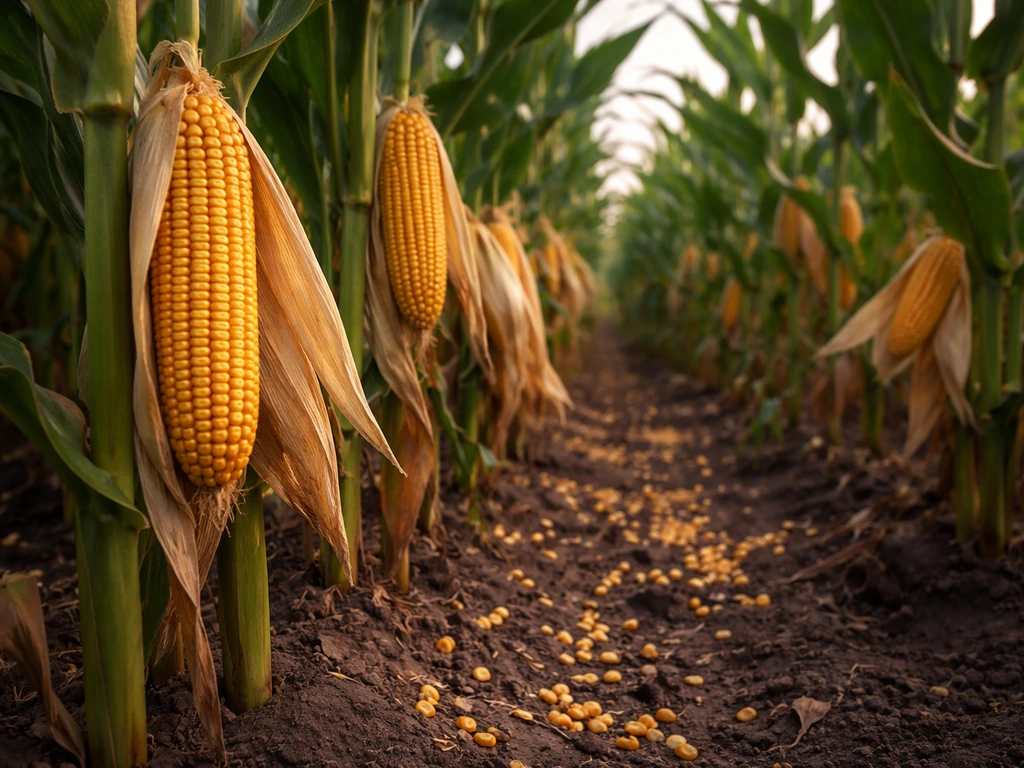
Field corn is the single highest-yielding grain option for most of the U.S. The national average yield in 2024 was 179.3 bushels per acre, which translates to roughly 5,000 pounds of dry grain per acre under average conditions. For a survival context, even a quarter of that on a small plot is substantial calorie storage. Open-pollinated varieties like Bloody Butcher or Hickory King are preferable over hybrids because you can save seed year to year. To store corn safely for more than six months, dry it to around 13.5% moisture content. Above 14% and you risk mold growth and rapid loss of viability. Corn has been the calorie anchor of North American farming for thousands of years, and there is a reason for that.
Wheat and rye
Wheat averaged 51.2 bushels per acre nationally in 2024, which is lower than corn in raw calorie terms but wheat is extremely versatile and winter wheat fits into a crop rotation that corn cannot fill. Plant winter wheat in fall, harvest in early summer, then follow with a fall vegetable crop on the same ground. Rye is the more forgiving grain: it tolerates poor, sandy, or acidic soils that would underperform for wheat, and it handles cold better than almost any other grain. For northern climates or marginal soils, rye is often the smarter first choice.
Dry beans and cowpeas
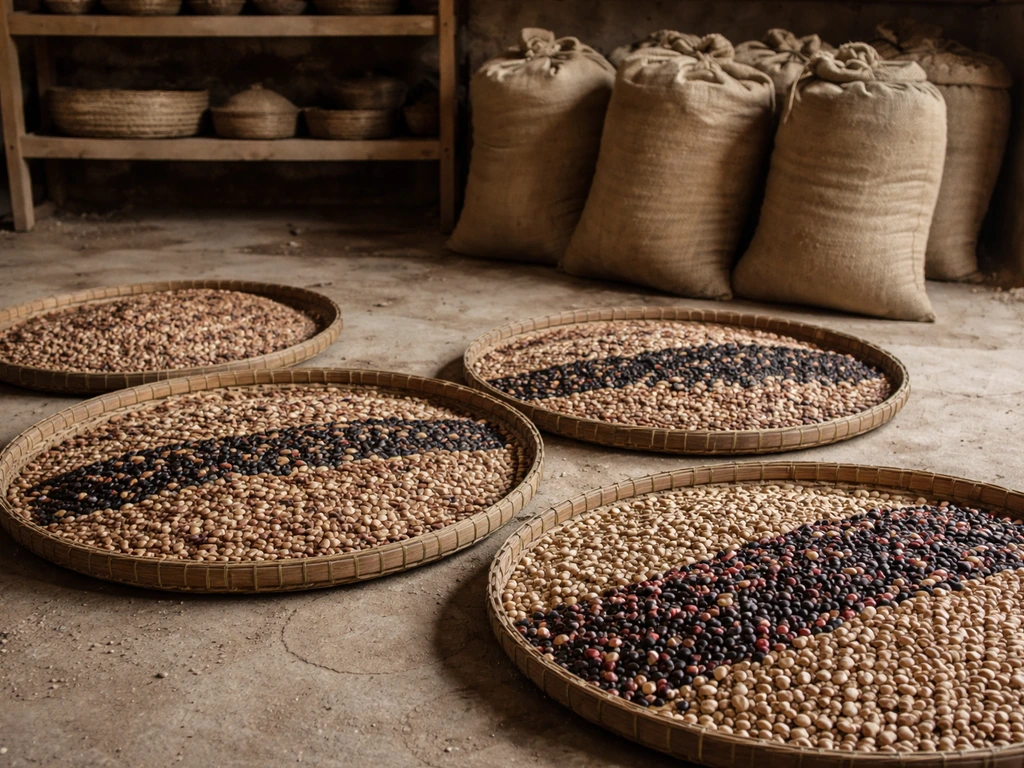
Dry beans (pinto, navy, black, kidney) are the protein and calorie complement to grain. They fix nitrogen in the soil, which helps next year's grain crop, and they store for years at safe moisture levels around 15%. Cowpeas (also called black-eyed peas) serve the same role in hotter, drier climates where common beans struggle. Both have deep historical roots in their respective regions: dry beans across the temperate U.S. and Mesoamerica, cowpeas across the Southeast and sub-Saharan Africa. That long track record signals real adaptability. Plan for roughly one pound of dried beans per person per week as a storage target.
Barley and sorghum
Barley matures faster than wheat and tolerates cold and drought reasonably well, making it the grain of choice for short-season or northern growers. It has an ancient record in northern climates going back to early European and Middle Eastern agriculture. Sorghum fills the opposite role: it is built for heat and dry conditions, uses less water than corn for a similar calorie output, and stores well as a dry grain. If you are in the Southern Plains or Southwest and corn struggles in your summer heat, sorghum is the direct substitute.
Root crops and vegetables that pull their weight
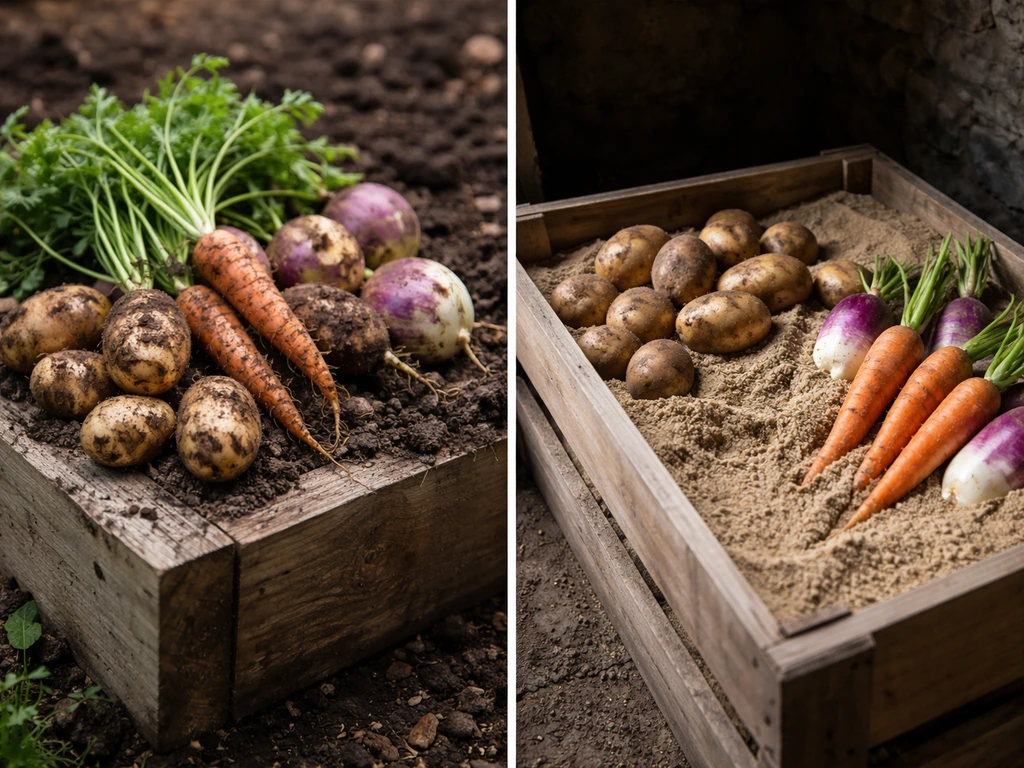
Roots and tubers give you calories in fresh form during the growing season and, with basic storage, through much of winter. They also tend to be productive on small plots and forgiving of less-than-perfect conditions.
Potatoes
Potatoes produce more calories per square foot than almost any other crop. A 10x10 foot bed can yield 50 to 100 pounds of potatoes in a good year. They prefer cool soil, consistent moisture, and loose well-drained ground, which makes them excellent in the Pacific Northwest, northern states, and cooler upland areas. Stored in a cool (around 40°F), dark, humid space, potatoes keep for several months. Cure them first at 50 to 60°F for two weeks to harden the skin before long-term storage.
Sweet potatoes
Sweet potatoes are the warm-climate counterpart to regular potatoes. They thrive in the heat, tolerate drought once established, and produce heavily in loose, well-drained soil. The Southeast has grown them as a staple for centuries. Cured at around 85°F for one week, then stored at 55 to 60°F, they hold well for months. One 100-foot row can produce 100 to 150 pounds. They are also one of the most nutritionally dense crops on this list, delivering beta-carotene alongside their calories.
Winter squash and pumpkins
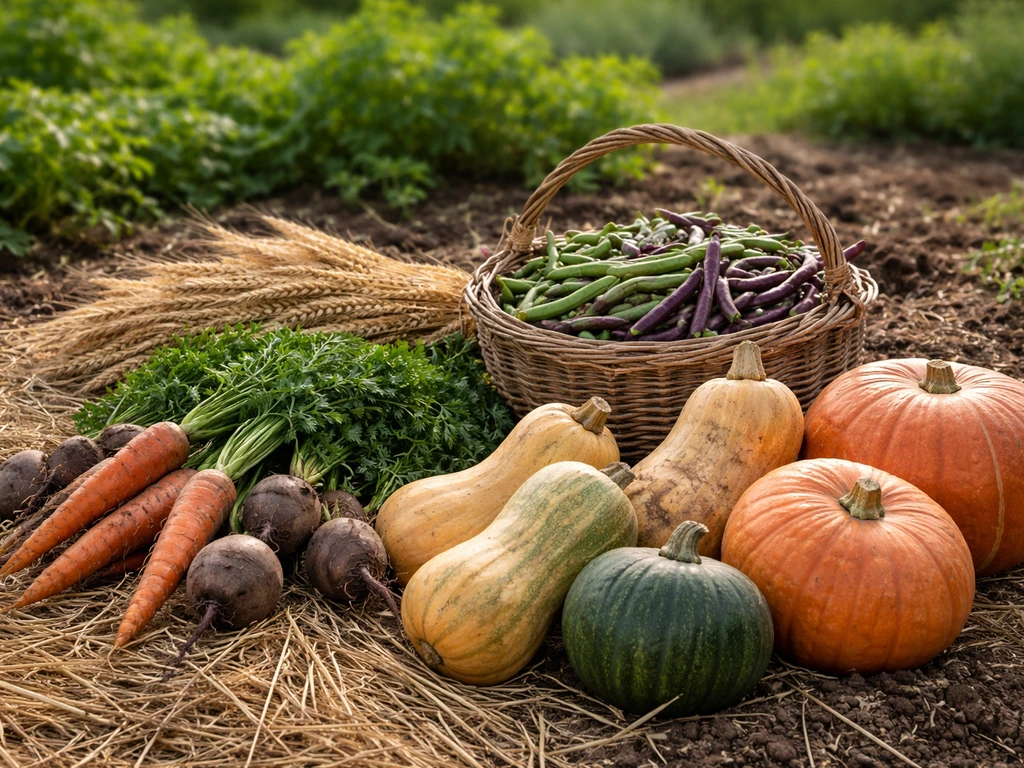
Butternut, Hubbard, and acorn squash are calorie-dense, store for three to six months at room temperature (around 50 to 60°F), and require very little intervention after planting. They have been a survival staple in Native American agriculture for thousands of years, and the combination of corn, beans, and squash (the 'Three Sisters') is one of the most historically validated polyculture systems in the Western Hemisphere. Plant them together and they support each other: corn provides a trellis, beans fix nitrogen, squash shades the ground and reduces weeds.
Turnips, beets, and carrots
Root vegetables that are not potatoes still earn their place. Turnips and beets mature fast (50 to 70 days), handle frost, and store well in root cellars or packed in damp sand. Carrots are nutritionally dense and store for months when kept cool and moist. All three can be direct-seeded in late summer for a fall and early winter harvest that extends your fresh food season well past the first frost.
When conditions get hard: drought, cold, and short seasons
Resilience planning means having backup options when your primary crops face stress. Every region has at least one reliable threat, whether that is drought, late frosts, a compressed growing season, or extreme heat. Here are the crops to lean on when conditions get difficult.
Drought-tolerant options
- Sorghum: uses roughly 30% less water than corn for comparable dry grain yields; thrives in the Southern Plains and Southwest
- Cowpeas (black-eyed peas): deep-rooted, heat-tolerant, and highly drought-resistant once established; a protein staple across hot, dry regions
- Tepary beans: native to the Sonoran Desert and arguably the most drought-tolerant bean in North America; low yields but nearly zero water input needed after germination
- Amaranth: produces protein-rich grain and edible leaves, tolerates heat and dry conditions, and matures in 90 to 120 days across a wide range of climates
- Winter squash (planted with minimal irrigation): once vines establish, many varieties tolerate dry spells well enough to carry through to harvest
Cold-hardy and short-season options
- Rye: germinates in near-freezing soil, survives hard winter freezes, and matures early in spring; the most cold-tolerant grain crop available
- Barley: matures in 60 to 70 days from planting, making it viable in areas with as few as 90 frost-free days
- Kale and collards: withstand hard frosts (some varieties to 10°F), stay harvestable well into winter, and provide vitamins that stored grains lack
- Turnips: can be seeded in late summer and harvested after frost, which actually improves their sweetness; one of the fastest root crops available
- Dried peas (field peas): cool-season legumes that fix nitrogen, tolerate light frosts, and store as dry protein for winter
Historical agriculture gives a useful template here. Northern European farming relied heavily on rye, barley, turnips, and field peas for exactly these reasons: they worked in short, cold seasons when other crops did not. The same logic applies today in Minnesota, Michigan, or any high-elevation valley in the West.
How to actually plan for a survival food system
Start with acreage and calorie math
A rough rule of thumb: feeding one adult year-round from stored calories requires roughly 2,000 to 4,000 square feet of productive growing space, depending on how intensively you plant and how well you manage storage losses. That is not a backyard garden; that is closer to a tenth of an acre. If you are working with less space, prioritize calorie density ruthlessly: potatoes, beans, and corn over salad greens and herbs. If you have more land and are thinking about larger-scale food resilience, the analysis starts overlapping with what makes sense for a small farm, which involves different trade-offs than a survival garden. If you are looking for the best crops to grow on small farm, use this framework to balance calorie density, yield reliability, and storage needs. If you are aiming for the best crop to grow on 10 acres, you will want to plan acreage and calorie density together so your yields translate into enough stored food for the year larger-scale food resilience. If you are working with five acres, the “best crop” choices should be driven by your climate, frost-free days, and how much of your diet you need to cover with stored calories best crop to grow on 5 acres.
Succession planting and timing
Do not plant everything at once. A staggered planting schedule stretches your harvest window and protects against losing an entire crop to one weather event. A reasonable sequence for a temperate-zone survival garden looks like this:
- Early spring (4 to 6 weeks before last frost): Plant cool-season crops first, peas, turnips, beets, and carrots. These are your bridge food while the main crops establish.
- After last frost: Direct-seed beans and plant out potatoes. Start corn when soil temperature reaches 50°F consistently.
- Two to three weeks after first corn planting: Stagger a second corn sowing to spread out the harvest and reduce the risk of losing everything to a single pest or disease event.
- Midsummer: Sow fall brassicas (kale, collards) and a second round of root vegetables for autumn harvest.
- Late summer: Plant winter wheat or rye for grain to be harvested the following year; this covers the calorie gap between one season's stored food and the next harvest.
Spacing for maximum yield per square foot
Corn needs at least 12 inches between plants in a block planting (not single rows, which reduces pollination); dry beans work well at 4 to 6 inches apart in rows 18 inches wide; potatoes need about 12 inches between plants and 2 to 3 feet between rows. Winter squash needs the most room, roughly 2 to 4 feet between plants with 6-foot row spacing, but the yield per plant is high enough to justify it. Do not crowd root crops: turnips and carrots thinned to 3 to 4 inches apart outperform dense plantings that compete for space.
Storage: the part most people underplan
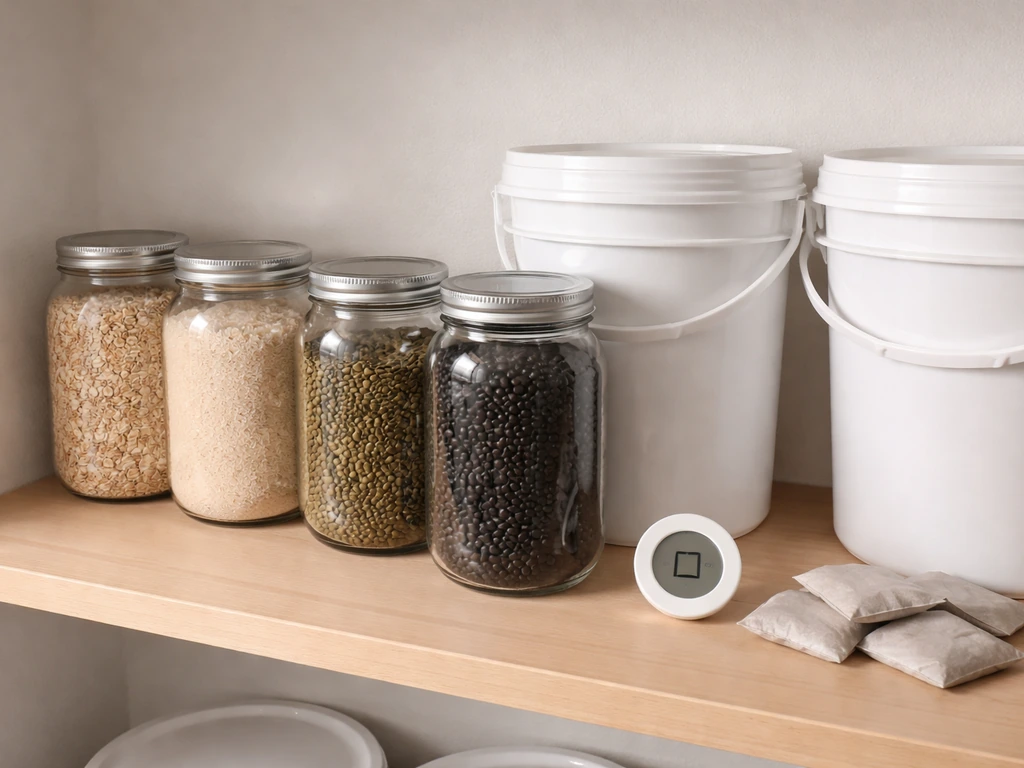
Growing the food is only half the work. If you cannot store it correctly, the yield does not matter. For dry grains and beans, the target is to get moisture content below the safe threshold before sealing for storage: around 13% for corn, 14% for rice or paddy, and 15% for beans and cowpeas. Above those levels, mold grows, grain viability drops, and eating quality deteriorates quickly. In practice, this means drying grain in a well-ventilated area until a handful feels dry and hard with no soft or spongy kernels, then sealing in airtight containers (metal cans, sealed buckets, or glass jars) in the coolest, driest space available. A storage room held at around 30% relative humidity is ideal if you can manage it. For root crops, the goal is the opposite: cool, dark, and slightly humid to prevent desiccation. A root cellar, unheated basement corner, or buried pit works well for potatoes, carrots, beets, and turnips.
What to plant first if you are starting now
If it is late spring and you are just getting started, here is the priority order: get dry beans and field corn in the ground immediately for late-summer harvest and long-term storage, plant sweet potatoes or regular potatoes depending on your climate, and direct-seed a patch of winter squash. Those four crops alone give you a genuine calorie reserve by fall. Then in late summer, sow winter wheat or rye to bridge into next year. Fast-maturing crops like turnips and kale can go in as a gap-filler anytime from late summer onward and give you fresh nutrition while the main crops dry down for storage.
Survival crops are not exotic or complicated. They are the same crops that fed people through hard winters, droughts, and disruptions for centuries across every region of the world. The key is matching them to where you actually live, growing enough of the right ones, and storing what you harvest properly. If you are thinking beyond survival, you can also use these same crops to plan for the best cash crops to grow for your climate and market. Get those fundamentals right and you have a real food system working for you.
FAQ
What are the easiest “best survival crops to grow” for a true beginner who has limited gardening time?
Start with crops that tolerate mistakes in spacing and handling: dry beans (for fast setup and long storage), potatoes (for forgiving growth if soil is loose and drained), and winter squash (once established, it needs less daily attention than many vegetables). Pick one grain-adjacent option (field corn or barley) only if you can commit to consistent watering during establishment, because grains punish uneven early growth more than roots and squash.
If my goal is calories, should I prioritize one crop or build a mixed “stack” of several?
Build a stack. Even if one crop gives the highest calories per square foot, weather risk rarely stays uniform across crops. A common high-resilience mix is one staple starch (corn or potatoes), one long-storing legume (dry beans or cowpeas), and one storage-stable bulk vegetable (winter squash). This combination also diversifies micronutrients and improves diet acceptance, which matters during months of repeat meals.
How do I choose between corn, barley, and rye if I’m not sure about my frost-free days?
Use frost-free days as the tiebreaker for feasibility. Under about 100 frost-free days, choose barley or rye first because they can finish in cold-season windows you can actually count on. If your season is long and summers are moderate, corn becomes the calorie anchor, but if you often get heat stress or short, hot summers, rye or barley reduces the chance of a total failure.
What mistake causes most crop-storage failures for “best survival crops”?
Storing at the wrong moisture level. Many people harvest “looks dry” and seal too early, then mold or rapid quality loss follows. Use the target moisture thresholds as your decision rule (roughly 13% for corn, about 15% for beans and cowpeas, and around 14% for grains like rice). Also ensure containers are truly airtight, because slow moisture re-entry can still ruin grain even if it felt safe at packing time.
Can I store potatoes and carrots in the same root-cellar conditions?
Not always. Potatoes do best with cool, dark, slightly humid conditions that limit shriveling, while carrots often require a bit more consistent moisture management to prevent drying and cracking. If you have one storage space, separate by airflow and packing method, for example keep potatoes in breathable bulk and carrots in packed damp material, and monitor for rot starting in small localized spots.
How much should I plant if I want stored calories through winter but also want some fresh food?
Plan on divided acreage by harvest type. Root crops, turnips, and beets can cover fresh meals through late fall and early winter, while grains, dry beans, and squash are your “end of season” insurance. A practical way to decide is to reserve the highest percentage for what stores best (beans, grains, squash) and treat fresh crops as supplemental to reduce pressure on your storage capacity and diet variety.
What’s the best staggered planting approach if late spring is when I start?
Use a two-phase plan: immediate planting for crops that need longer to dry and store (dry beans and corn if your season allows), then late-summer sowing for bridge crops (winter wheat or rye, plus fast roots like turnips). This reduces the risk that one early or late frost wipes out both your storage crops and your “gap filler” at the same time.
Is it worth saving seed from survival crops, and which ones are simplest for seed saving?
Yes, especially for beans, many open-pollinated corn varieties, and some squashes if you manage isolation. The simplest seed-saving targets are open-pollinated crops, because hybrids can produce unpredictable next-generation traits. Corn seed saving is easiest when you use open-pollinated varieties and avoid cross-pollination by controlling neighboring varieties or distances.
Do “best survival crops to grow” change if I have poor soil drainage or heavy clay?
They can. Potatoes, carrots, and beets usually require looser, well-drained ground, so drainage fixes or raised beds may be needed. For grains and hardy options, rye and barley tend to outperform wheat in marginal soils. For squash and beans, you can often compensate with mounding and better bed preparation, but if standing water is common, prioritize drainage solutions before expanding acreage.
If pests or diseases hit one crop, what replacement crops fit the same season window?
Choose substitutes that match the time to harvest. In many temperate regions, turnips and beets can be gap-fillers when something fails, because they mature relatively quickly and store well. For longer-term failure, rye or barley can often be used to bridge into the next year even when you miss the exact timing for a primary grain.
How should I scale from a backyard survival garden to “enough for a year” without overbuilding storage?
Scale based on storage practicality, not just garden size. Grain and beans require proper drying and airtight containment, while roots require a cool, dark, slightly humid environment. If your storage setup is limited, increase acreage for the crops you can store reliably in your space (often squash and beans), and be cautious adding crops that require tight environmental control unless you can replicate it consistently.
Next Articles
Best Crop to Grow on 10 Acres: Pick the Right One
Choose the best crop for 10 acres using climate, soil, irrigation, and goals, plus a practical start plan.
Best Crop to Grow on 5 Acres: Region-Based Guide
Pick the best crop for 5 acres by region using climate, soil, water, costs, yields, and market goals.
What Are the Most Profitable Crops to Grow by Region
Find the most profitable crops to grow by region, using climate fit, market demand, yields, and realistic profit budgets