
The best crop to grow on 5 acres depends almost entirely on three things: where you live, what you want out of the land, and how much time and money you can realistically put in. There is no universal answer. But if you work through those three filters honestly, the right crop (or combination of crops) becomes pretty obvious pretty fast. This guide walks you through that process step by step.
Best Crop to Grow on 5 Acres: Region-Based Guide

Samuel Rourke
16 Apr 2026
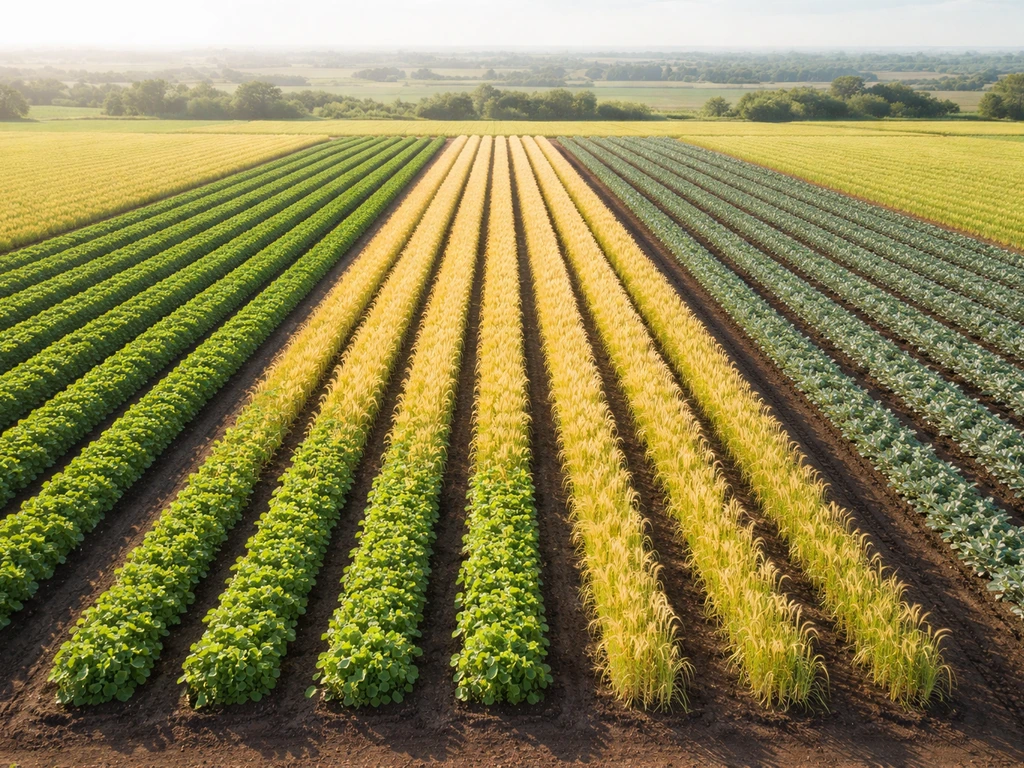
What does "best" actually mean for your 5 acres?
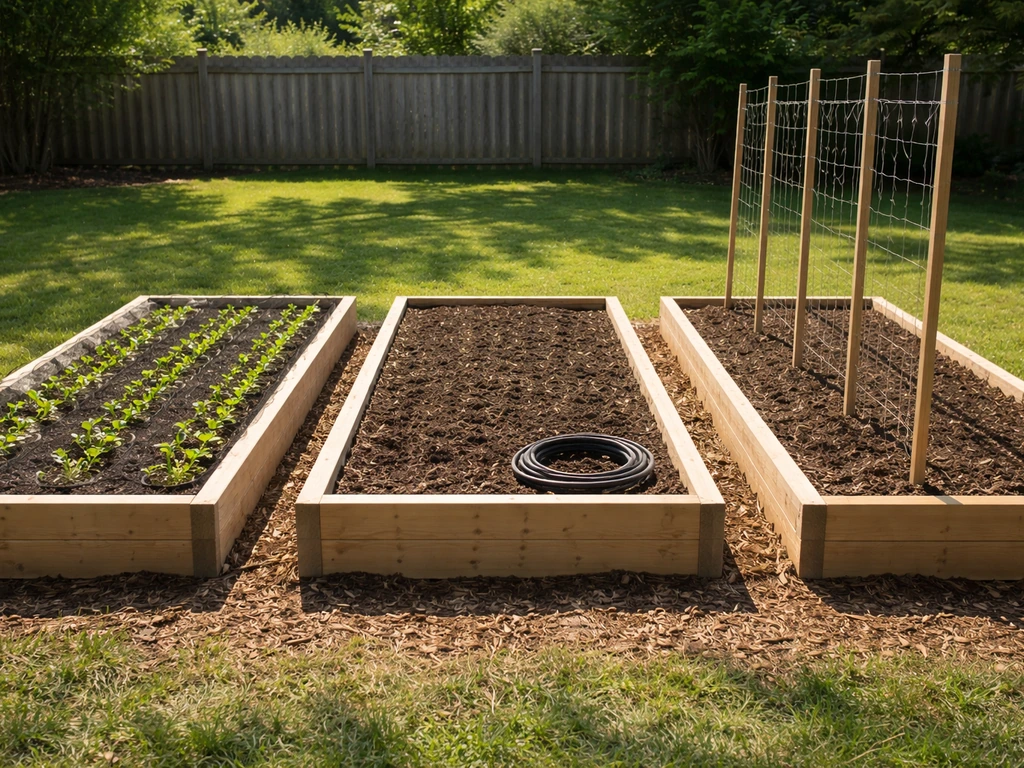
Before you look at any crop list, you need to answer a more important question: best for whom, and for what purpose? Growing for your own household is a completely different equation than growing to sell. A 5-acre plot of sweet corn for family use and freezing requires almost nothing beyond seed, a tiller, and your time. That same 5 acres planted in sweet corn for a farm stand means you need a market, a harvest timeline, and a plan for moving volume before it goes starchy.
Risk and payoff work differently at this scale too. High-value specialty crops like herbs, cut flowers, or strawberries can generate serious income per acre, but they demand more inputs, more labor, and more market access than a grain crop or a forage stand. OSU Extension's small-farm enterprise selection framework makes this exact point: the right enterprise matches your climate zone, your management capacity, and your whole-farm goals, not just your profit target. So start by deciding: is this land primarily feeding your family, generating income, or both?
A good way to frame it is to ask yourself two questions. First, what is the worst-case scenario if the crop fails, and can you absorb that? Second, do you have or can you build a realistic outlet for what you produce? If you answer both of those honestly, you have a much clearer target for what "best" means on your specific 5 acres. If profitability is your primary driver, it is also worth spending time with a broader resource on what are the most profitable crops to grow before you finalize your plan.
Let your region and climate do most of the filtering
Climate is the biggest natural filter you have. A crop that thrives in the Mississippi Delta is going to struggle in coastal Maine, and vice versa. This is not just about average temperature. It is about frost dates, humidity, rainfall distribution, and the length of your productive growing window. These are the same factors that explain why certain crops dominate in certain regions historically and today: cotton in the Southeast, wheat across the Great Plains, potatoes in Idaho's volcanic soils, and citrus in California and Florida.
The most practical thing you can do right now is look up the historical and contemporary crop patterns for your U.S. state or country. What has the land around you historically grown well? What do neighboring farms actually produce? Those patterns exist for good reason. Crops that have grown commercially in your region for decades are telling you something about what works in your soil type, your rainfall window, and your pest pressure. Understanding best agricultural crops to grow in the context of regional fit is genuinely the most important analytical step in this process.
Your USDA hardiness zone and your average last and first frost dates are your baseline anchors. From there, look at your average annual rainfall and whether it is distributed evenly through the season or concentrated in specific months. A grower in the Willamette Valley of Oregon has wet winters and dry summers, which completely shapes crop selection. A grower in the Midwest has to account for spring flooding risk and summer heat spikes. Your microclimate matters too: a frost pocket at the low end of your field can eliminate a whole category of early-season crops.
Soil, water, and season length: the checks that actually matter
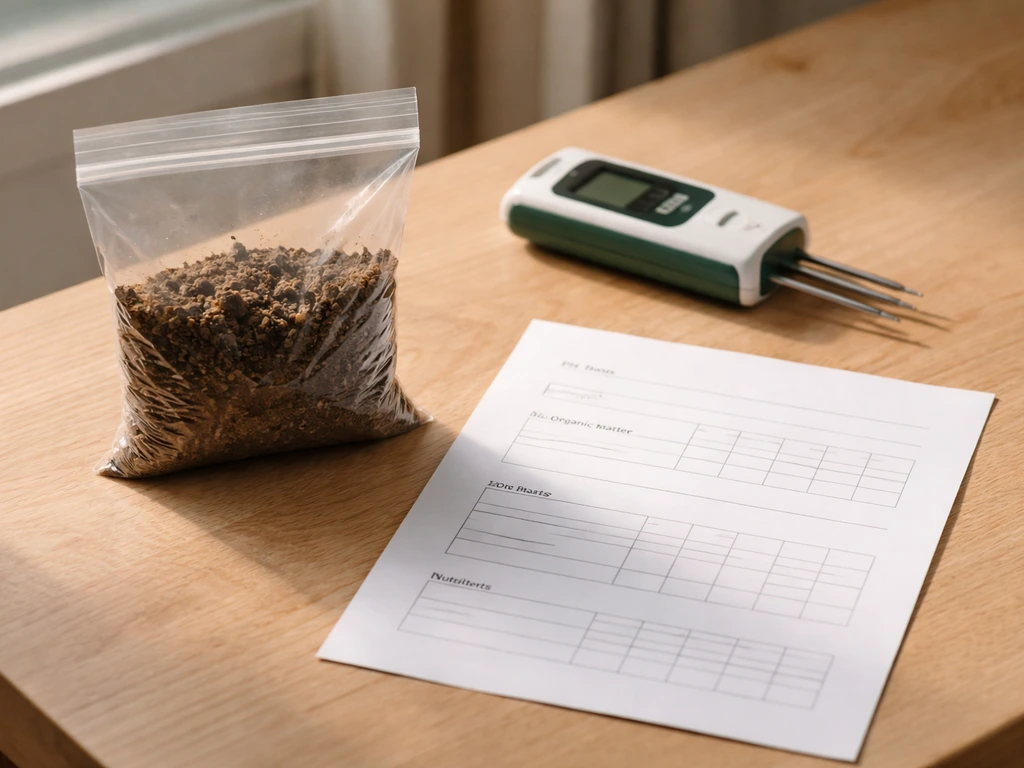
On a 5-acre plot, soil quality can vary more than you might expect. Before you choose a crop, get a soil test. It costs very little and tells you your pH, your organic matter level, and your nutrient profile. Most vegetable crops thrive at a soil pH between 6.
Mississippi State University Extension also notes that vegetable garden soils do best around pH 6. 0 to 6. 5, and that growth is poor in acidic soils around pH 4. 5 to 5.
5 or in alkaline soils above about 7. 5 [Most vegetable crops thrive at a soil pH between 6. ](https://extension. msstate.
edu/lawn-and-garden/vegetable-gardens/test-soil-find-its-ph-value). 0 and 7. 0, with 6. 5 being optimal for most of them.
That is a consistent finding from extension guidance across multiple states, including UConn Extension, the University of Maryland, and Montana State University's market garden soil fertility work. If your pH is off, you will fight your crop all season regardless of what you plant.
Once you have your soil test results, you can use a nutrient management calculator (UMN Extension has a good one for vegetable crops) to figure out what amendments you need before you put a seed in the ground. This step is easy to skip, but it is probably the single most cost-effective thing you can do to set yourself up for a decent first-year yield.
Water access is the second major filter. Do you have irrigation infrastructure, or will you depend entirely on rainfall? Five acres without irrigation in a dry summer region is a very different farm than 5 acres with drip tape and a reliable well. If irrigation is limited, lean toward crops that are adapted to your natural rainfall pattern or that reach maturity before your dry season peaks. Cover crops and improved soil organic matter can extend your effective water-holding capacity significantly, which is exactly what USDA NRCS soil health guidance emphasizes when helping producers manage variable water and climate stress.
Season length is the third filter. Growing Degree Days (GDD) are a practical tool here. Purdue's Midwestern Regional Climate Center explains that GDD are calculated from your daily high and low temperatures above a crop-specific base temperature, and they allow you to estimate whether a given crop can realistically reach maturity in your location before frost. A crop that needs 2,800 GDD to mature is not a great choice in a location that accumulates 2,200 GDD in a typical season. Check your local GDD accumulation data before committing to any crop with a long maturation window.
Crop shortlist by goal
Here is a practical breakdown of strong candidates depending on what you are trying to accomplish. This is not exhaustive, but it covers the most commonly viable options for a 5-acre plot across most U.S. regions.
Food staples for home use or community supply
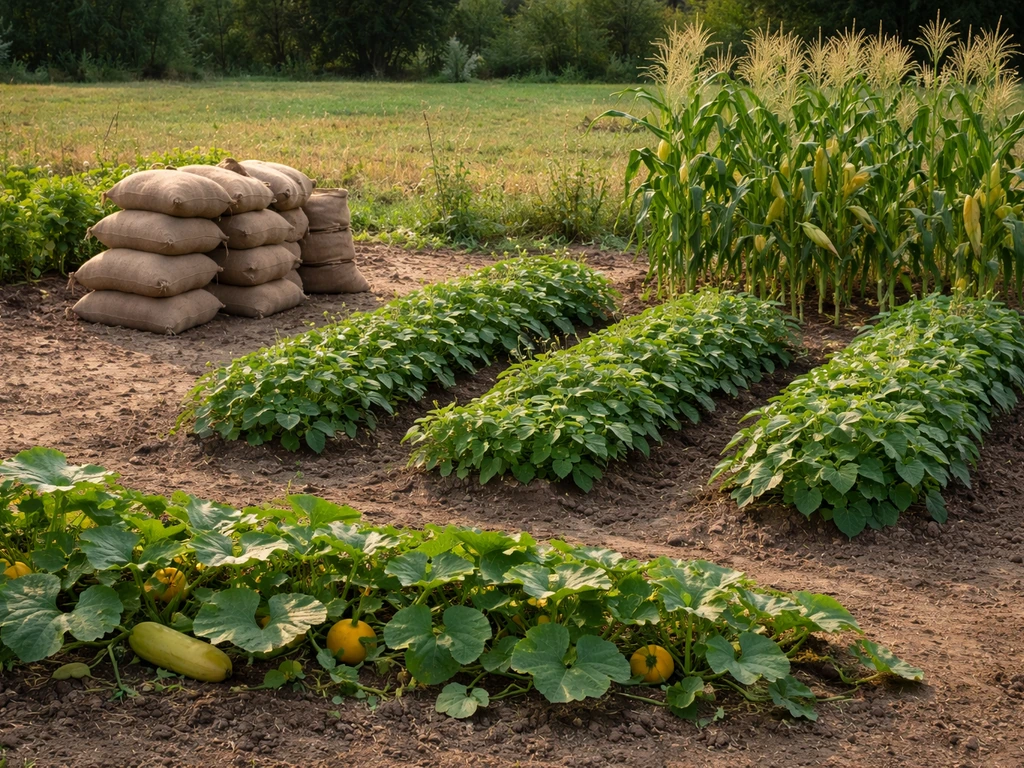
If your goal is feeding your household or building a reliable food base, potatoes, dry beans, sweet corn, winter squash, and garlic are the most practical choices. They store well, produce substantial caloric value per acre, and are relatively forgiving to grow. Potatoes in particular have a long track record as one of the most productive food crops per acre in temperate climates. Five acres of potatoes, properly managed, can yield 150 to 300 hundredweight depending on your region and variety. If resilience and self-sufficiency matter most to you, it is also worth reading about best survival crops to grow to make sure your shortlist includes calorie-dense, storage-stable options.
Cash crops for direct market or wholesale
For income, the most consistently viable options on 5 acres at a small-farm scale are market vegetables (mixed), small fruits like strawberries and blueberries, and field crops like dry beans or sunflowers where local markets exist. Mixed vegetable production for a farmers market or CSA is probably the most accessible cash-generating model at this scale, especially if you are new to selling. It spreads your risk across many crops and gives you multiple harvest windows through the season. The article on best cash crops to grow goes deeper on income potential by crop type if you want to compare options more carefully.
High-value specialty crops
Specialty crops like herbs, lavender, cut flowers, mushrooms (in appropriate shade structures), and microgreens can generate the highest gross revenue per acre of any category, sometimes $20,000 to $100,000 per acre for intensive herb or flower operations. But that revenue comes with high labor requirements, perishability challenges, and the need for established buyers or direct customers. These are not beginner crops, and they are not right for every region. They make the most sense if you already have a market relationship or are within reasonable distance of a population center.
Forage and cover use
If you have livestock, or if you are trying to build soil health before committing to a production crop, forages like clover, alfalfa, or mixed grass-legume stands are excellent uses of 5 acres. Alfalfa can produce 4 to 8 tons per acre per year in irrigated western regions. Cover crops like winter rye, crimson clover, and buckwheat are valuable for building organic matter, suppressing weeds, and giving you a productive fallow period while you finalize your long-term plan.
Profit and practicality on 5 acres: what the numbers actually look like
Five acres is big enough to be serious but small enough that you are almost certainly relying heavily on manual labor or small-scale equipment. That changes your cost structure significantly compared to a larger operation. Here is a realistic comparison of common 5-acre crop scenarios:
| Crop | Estimated Yield (5 acres) | Typical Gross Revenue | Primary Labor Demand | Equipment Needed |
|---|---|---|---|---|
| Mixed vegetables (market garden) | Varies by crop mix | $25,000–$75,000+ | Very high, season-long | Tiller, irrigation, small tools |
| Potatoes | 750–1,500 cwt | $7,500–$22,500 (wholesale) | Moderate; harvest intensive | Planter, digger, or hand labor |
| Sweet corn | 500–750 bu | $1,500–$3,500 (wholesale) | Low to moderate | Planter, tractor preferred |
| Dry beans | 500–1,500 lb | $750–$3,000 | Low; harvest intensive | Planter, combine or hand harvest |
| Strawberries | 10,000–30,000 lb | $20,000–$60,000 | Very high, peak harvest | Irrigation, mulch, small equipment |
| Alfalfa (hay) | 20–40 tons | $3,000–$8,000 | Low to moderate | Mower, baler, or custom hire |
| Lavender / herbs | Variable by density | $15,000–$50,000+ | High; harvest and processing | Distillation or drying equipment |
The numbers above are ranges, not guarantees. Your actual revenue depends on yield, your price point, and how efficiently you can move product. Labor is usually the cost that surprises people most at this scale. University of Delaware Extension and SARE both emphasize building labor costs and equipment depreciation into your enterprise budget before you plant, not after. A crop that looks profitable on paper can become a money-loser once you account for 400 hours of harvest labor at any realistic wage.
Input costs matter too. Seed, amendments, irrigation infrastructure, and pest management add up quickly on intensive crops. If keeping startup costs low is a priority, look at the analysis in what is the cheapest crop to grow to identify options that minimize your upfront investment while still producing something useful.
How to validate your choice before you plant
This step is the one most people skip, and it is the one that separates growers who have a good first season from those who lose money on a crop that was never right for their situation. Here is a practical validation checklist you can run through in about a week.
- Get a soil test from your county extension office or a private lab. Know your pH and major nutrient levels before anything else.
- Look up your county's crop production history through USDA NASS data or your state extension's crop maps. What has grown commercially in your area, and what is the yield benchmark for that crop in your region?
- Contact your local county extension office directly. Ask if they have enterprise budgets for your target crop in your state. Penn State, University of Minnesota, and most state land-grant universities publish expected yield tables and cost breakdowns you can use as a baseline.
- Check your local farmers markets, food hubs, and grocery co-ops. Is there actual demand for what you plan to grow? Talk to one or two vendors already selling that crop. Ask them what sells and what sits.
- Use your frost date data and your local GDD accumulation history to confirm your target crop can reach maturity in your season window.
- Build a simple enterprise budget: projected gross revenue minus seed, amendments, irrigation, labor, and equipment. If you cannot get to a positive number even with optimistic yield assumptions, the crop is wrong for your goals.
- Look at the University of Maryland Extension's enterprise selection approach, which uses a structured decision process including a SWOT-style analysis to pressure-test your crop choice against your specific farm conditions.
One underused validation tool is historical analogs. If your region historically produced a certain crop commercially, that is strong evidence that your soil, climate, and water situation can support it. The same logic applies globally: regions with similar temperature ranges, rainfall patterns, and soil types tend to support similar crops. Understanding why crops grow where they do is one of the most reliable guides to what will work on your land.
It is also worth noting that USDA FSA has made acreage reporting improvements specifically to help small-scale and urban producers document what they are growing, which can matter if you want to access USDA programs or financing tied to your crop enterprise. Knowing how to formally report your crop acreage is a practical step once you have committed to a plan.
If your top choice fails: backup plans and rotation ideas
Even a well-researched crop choice can run into problems: a late frost, a pest outbreak, a wet spring that delays planting by three weeks, or a market that shifts unexpectedly. Having a backup plan is not pessimism. It is practical farming.
Succession planting is one of the most effective tools at this scale. West Virginia University Extension recommends staggering early, mid, and late varieties of the same crop to spread your harvest window and reduce the risk that one weather event wipes out your entire yield. Oregon State University Extension adds a specific operational example that is easy to apply: once you pull a spring crop like lettuce or peas, you can immediately plant a warm-season follow-up crop like beans or summer squash in the same space. That approach keeps your land productive through more of the season and gives you a second chance if your first planting underperforms.
Crop rotation is your second major backup tool. NRCS and USDA both provide guidance on rotation and cover crop integration for small-scale farms, and it is directly applicable here. If your primary crop fails or the market collapses, rotating into a nitrogen-fixing cover crop like crimson clover or hairy vetch protects your soil, suppresses weeds, and gives you something to show for the season while you plan your next move. USDA guidance specifically notes that cover crop and rotation practices apply just as well to small food gardens as to commercial operations.
For growers who find their top crop is not viable (due to soil, climate, or market reasons), here are practical fallback categories by situation:
- Short season or northern climate: root vegetables (turnips, beets, carrots), cold-hardy greens, potatoes, dry beans, and small grains like oats or barley are all reliable in compressed growing windows.
- Drought-prone or low-irrigation areas: sorghum, dry beans, sunflowers, and drought-adapted cover crops like cowpeas or millet can produce meaningful yields on limited water.
- Poor or compacted soils: start with a full season of cover crops and soil-building before committing to a production crop. Buckwheat and daikon radish are especially effective at breaking up compaction.
- Limited market access or remote location: focus on storable crops (dried beans, garlic, potatoes, winter squash, grains) that do not require you to sell immediately after harvest.
- Limited labor or solo operation: perennial crops like asparagus, fruit trees, or berry bushes require high setup effort but low annual labor once established, and they pair well with annual crops in a diversified 5-acre system.
If you are still in the early stages of figuring out your farm's direction, it helps to look at how other small-farm operators have approached crop selection. The guide on best crops to grow on small farm covers many of the same considerations from a slightly broader perspective and can give you additional reference points. And if you are thinking about scaling up in the future, the parallel analysis in best crop to grow on 10 acres is worth reading alongside this one so you can plan for growth without locking yourself into an infrastructure that does not scale.
The honest summary is this: 5 acres is a genuinely useful amount of land. It is enough to be productive, but small enough that your decisions still have to be precise. Run the soil test, check your GDD, talk to your local extension office, and build a real budget before you buy seed. The Crop Production Annual Summary in USDA/ESMIS provides acreage, harvested area, yield, and production information by crop type and at the national level. Those four steps will do more to ensure a good outcome than any crop list ever will.
FAQ
What’s the best crop to grow on 5 acres if I’m a total beginner and want the lowest risk?
Start with crops that have predictable harvest timing and good storage or easy processing, such as potatoes or dry beans. If you want to add income potential without complexity, consider mixing one “low-drama” staple (potatoes, squash, or beans) with a small area of a market vegetable, so you are not relying on a single crop or a single buyer.
How should I choose between one main crop and a mixed plan on 5 acres?
Use a simple rule: if you have a reliable outlet for a specific volume (CSA spot, farm stand rhythm, or a buyer), a single main crop can work. If you do not, a mixed plan is safer because it spreads risk across different planting dates and price swings. For most new growers, 2 to 4 crop types is usually a practical upper limit for managing labor.
If my soil test pH is off, do I still plant right away or wait for amendments?
If the pH is far from the target range, it is usually better to amend and wait enough for pH change before you invest heavily in pH-sensitive crops. For many amendments (like lime), timing matters and results take weeks to months. If you must plant sooner, pick crops that tolerate your current pH better as a short-term bridge while you correct the soil for the longer-term plan.
How do I factor irrigation costs into the “best crop” decision?
Do not just ask whether irrigation is available, ask how reliably you can supply water during your crop’s peak demand. If you rely on pumping or hauling water, the energy or labor cost can erase profit, especially for thirsty vegetables. A practical approach is to calculate your weekly water need during the hottest stretch and compare it to your real pumping or well capacity, then choose crops that match that constraint.
What’s a realistic way to use Growing Degree Days if I don’t have detailed local data?
If local GDD charts are not available, use a conservative strategy: assume a shorter effective season for frost risk (for example, treat your first frost date as earlier by 1 to 2 weeks if you have low-lying areas or frequent cold nights). Then select crops and varieties that mature comfortably before that adjusted date, and favor faster-maturing types to reduce uncertainty.
How much acreage can I actually manage on 5 acres if I’m mostly hand labor?
Treat 5 acres as “up to” rather than “fully at once.” Many growers can manage close to 5 acres only if the crops have low labor peaks, limited weeding needs, and compatible harvest windows. If your schedule is tight, choose crops with fewer harvests (like storage crops) and plan for labor spikes (weeding, harvest, processing) so you are not overwhelmed during the same weeks.
What should I include in my enterprise budget besides seed and fertilizer?
Include labor hours for recurring tasks (weeding, trellising, harvest, wash and pack), equipment depreciation or replacement (tiller, mower, irrigation parts), and perishability handling if you sell fresh. Also budget for “failure modes” such as reseeding after gaps, pest control that goes beyond basic treatment, and packaging supplies that often get forgotten at the start.
How do I pick crops that fit my market, not just my climate?
Start from the outlet constraints. Farmers markets and CSAs usually require predictable weekly supply, while a farm stand can be more flexible. If you want direct-to-consumer income, prioritize crops that can be harvested in a steady cadence and sold at your target quality grade, then schedule plantings so you have product during the weeks your buyers expect it.
What’s a good backup plan if weather delays planting by a few weeks?
Plan a “later window” crop choice from the beginning. For example, after an early crop (like peas or lettuce) underperforms or is missed, switch to a warm-season follow-up that can still mature before the fall frost. Succession planting within the same crop family (early, mid, late varieties) is also a reliable way to protect your harvest volume.
Do I need crop rotation on a small 5-acre plot, and what if I fallow part of it?
Yes, rotation still matters because pests and diseases build up in the same fields year after year, even on small acreage. If you have to leave space idle, use a cover crop or a rotation fallow that includes a non-host period, then incorporate or terminate it before the next planting window. This keeps soil covered, improves organic matter, and reduces weed pressure.
How can I test whether a crop will work on my specific 5 acres before committing the whole field?
Run a small “side-by-side” trial. Plant a limited area of your top candidate crop and a second alternative that targets the same market goal, using the same soil prep and irrigation plan. Compare emergence, early vigor, pest pressure, and days to harvest, then scale up only the winner the next season. This reduces the cost of being wrong on variety, spacing, or timing.
Should I choose a specialty crop or a field crop on 5 acres?
Specialty crops can pay well but typically demand tight timing, high-touch management, and dependable buyers. If your top bottleneck is labor or market access, field crops or storage-friendly staples usually reduce downside risk. If your bottleneck is only startup money, specialty crops may still be viable, but focus on the specific niche you can actually sell (for example, a herb bundle buyer or a flower buyer with consistent demand).
Next Articles
What Are the Most Profitable Crops to Grow by Region
Find the most profitable crops to grow by region, using climate fit, market demand, yields, and realistic profit budgets
What Did the Delaware Colony Grow: Crops, Uses & Legacy
Colonial Delaware’s main crops, grains, hay, flax, fruits, vegetables, livestock, why they thrived and how they were sold.
What Did Jamestown Grow and How They Farmed It
Learn what Jamestown colonists grew and the methods they used to plant, harvest, and adapt crops to Virginia conditions.