
The most profitable crop to grow is the one that fits your climate, your land, your sales channel, and your cost structure. That sounds like a dodge, but it's the most honest answer anyone can give you. A microgreens operation in a Denver garage can outperform a 500-acre soybean farm on a per-square-foot basis. A blueberry planting in the Pacific Northwest can generate $20,000+ per acre at maturity. But neither of those wins in every situation. What this guide does is give you a framework to identify your best options today, with real numbers and a practical process to validate before you plant a single seed.
What Are the Most Profitable Crops to Grow by Region

Samuel Rourke
13 Apr 2026
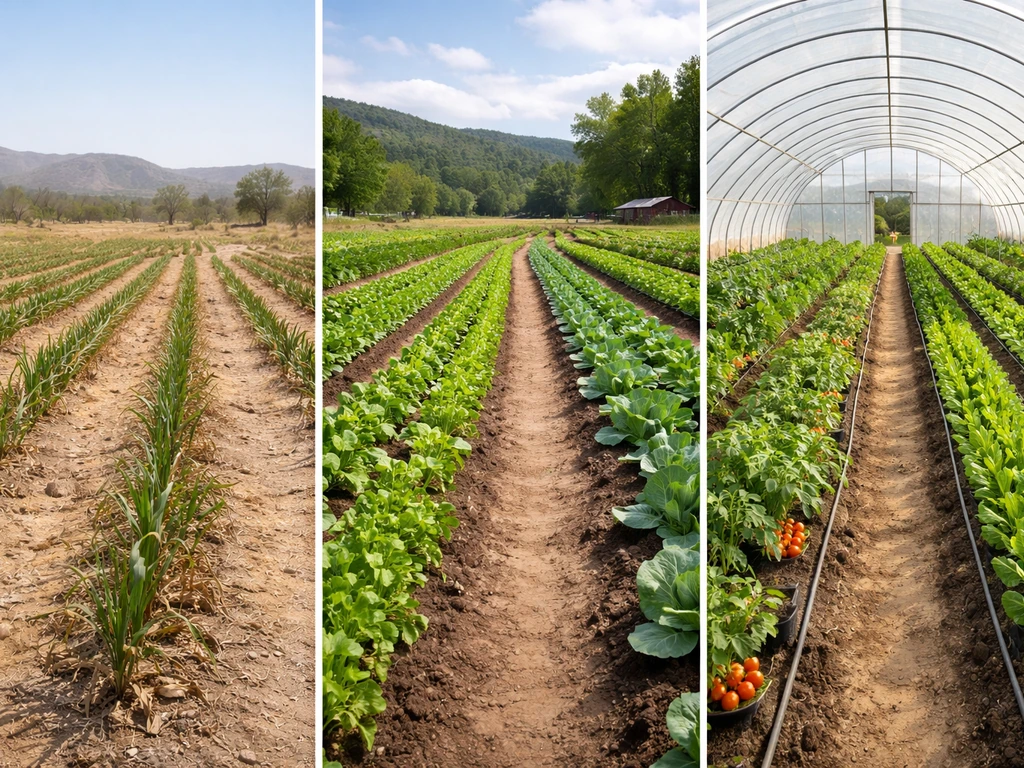
Why "most profitable" depends on your location and market
Profitability in farming has four moving parts: what you can sell it for, what it costs to grow, how much you can yield per acre, and how reliably you can do it year after year. All four of those variables change depending on where you are. Corn at $5.00 per bushel (a common planning assumption used by OSU Extension for their enterprise budgets) looks different in Iowa, where yields average 200+ bushels per acre, than in a marginal-soil county where you're fighting for 120. The same logic applies to vegetables and specialty crops: a high-tunnel lettuce operation in Missouri carries different price forecasts and cost assumptions than one in coastal California where field lettuce competes year-round.
Geography shapes profitability in ways that go deeper than just weather. Soil drainage, frost timing, growing degree day accumulation, proximity to processing facilities or farmers markets, local competition, and even historical crop patterns in your region all factor in. Blueberries have been profitable in Michigan and the Pacific Northwest for decades because the soil pH, rainfall, and chilling hours align almost perfectly. Trying to replicate that in central Kansas without major soil amendment would be expensive and risky. This is exactly why matching crop choice to location isn't optional, it's the core of the decision.
Top high-profit crop types (and when each wins)
There are four broad categories of high-profit crops, and each wins under different conditions. Understanding which category suits your situation is the fastest shortcut to a good answer. If you want a deeper look at the full landscape of revenue-generating options, the breakdown in this guide to best cash crops to grow is a solid companion read.
High-value produce: vegetables, berries, and specialty fruits
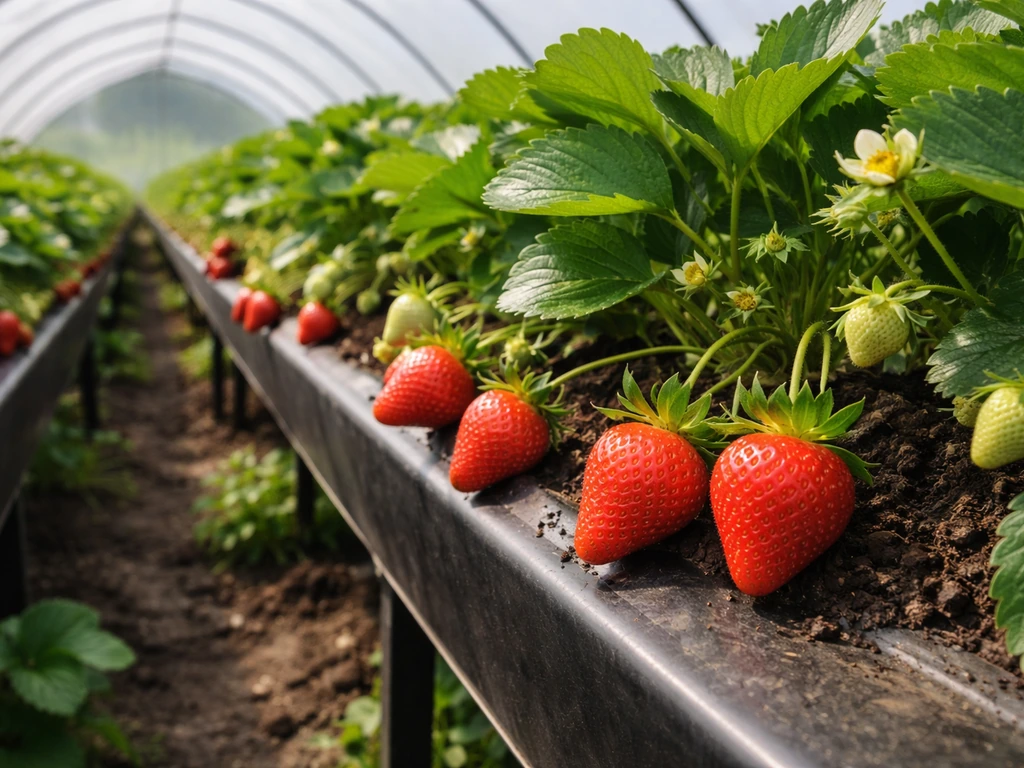
This is where the highest gross revenue per acre typically lives. Strawberries grown in high tunnels using a table-top system can generate projected annual net income around $21,000 per acre in favorable yield and price scenarios, according to University of Minnesota Extension enterprise budget modeling. Blueberries at full maturity are commonly modeled at $14,000 to $20,000 per acre in full economic cost budgets from Oregon State and Washington State University, which means net returns depend heavily on your yield and fresh-market access. Vegetables like lettuce, tomatoes, and peppers can be extremely profitable at small scale, especially with direct sales, but they are also labor-intensive and perishable.
Commodity crops with scale: corn, soybeans, wheat
Commodity crops win on volume and reduced per-hour labor, not per-acre margin. UMN Extension data from their FinBin database shows average cost of production (including operator labor and management) at roughly $4.21 per bushel for corn and $9.82 per bushel for soybeans on cash-rented ground. At those costs, margins are thin and highly sensitive to price swings. These crops make sense when you have significant acreage, access to equipment, and can manage input costs carefully. For anyone farming under 50 acres, the math rarely favors row crops over specialty alternatives.
Season-extension and greenhouse crops
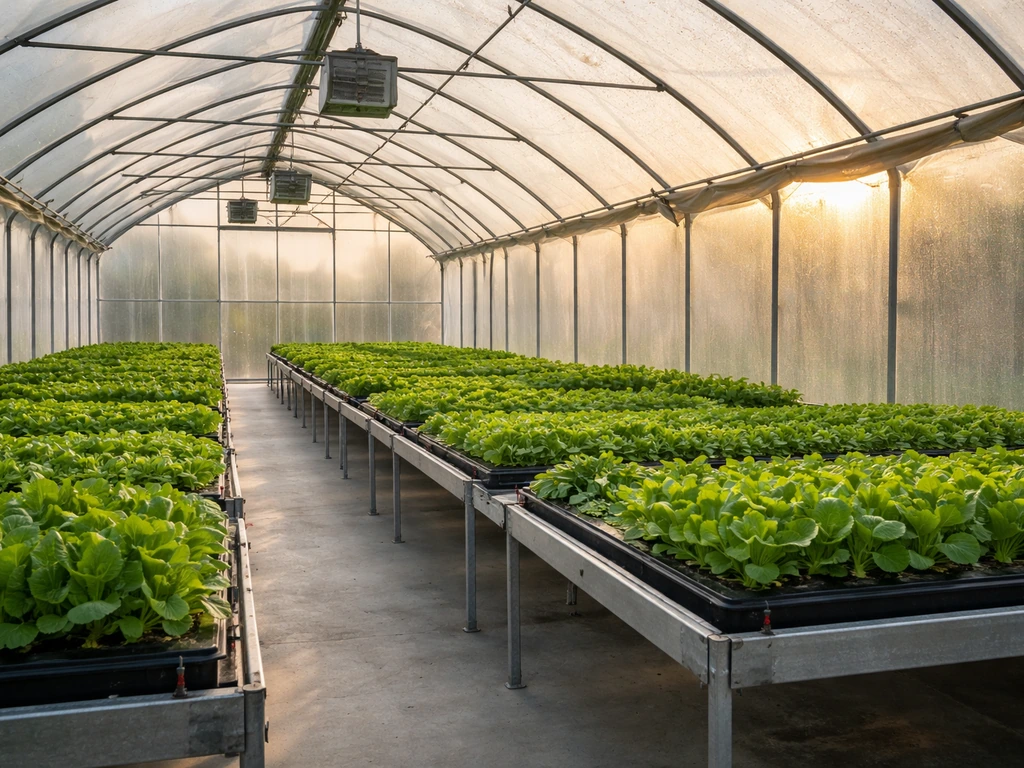
High tunnels and greenhouses unlock profitability in two ways: they extend the season into higher-price windows (early spring, late fall) and they reduce weather risk on sensitive crops. The tradeoff is higher establishment cost. UF/IFAS documents depreciation for a 1,600 sq-ft caterpillar tunnel varying by style (gothic vs. quonset), and Cornell High Tunnels emphasizes that structure and labor costs can easily exceed field production costs, so market strategy, typically direct marketing, is essential to capture returns. Penn State Extension provides enterprise budgets for field and high-tunnel vegetable crops that are worth downloading before you commit to infrastructure.
Specialty and niche crops
Herbs, microgreens, cut flowers, hops, ginseng, and specialty mushrooms can generate extraordinary revenue per square foot, but they come with real constraints: limited market size, steep learning curves, and sometimes significant post-harvest handling requirements. These work best when you already have a direct sales relationship or a local market that's underserved. They're often the right answer for urban or peri-urban small plots where land cost per square foot is high.
How to match crops to climate, soil, and growing seasons
Before you pick a crop, you need three pieces of location data: your USDA Plant Hardiness Zone, your last spring frost date, and your basic soil characteristics. These three inputs will eliminate a huge swath of bad choices before you spend any money.
The USDA Plant Hardiness Zone Map (updated in 2023) lets you look up your zone by ZIP code. The zone tells you about minimum winter temperatures, which determines what perennial crops (fruit trees, berry bushes, asparagus) can survive without extra protection. For annual crops, frost dates matter more. NOAA's interactive map of average last spring freeze dates gives you a localized view of when you can safely transplant frost-sensitive crops like tomatoes, peppers, and melons. The Farmers' Almanac also maintains a planning-oriented frost date table by city and state that's easy to use alongside a crop's days-to-maturity to figure out whether a crop will reach harvest before your first fall frost.
For heat-loving crops, growing degree days (GDD) matter as much as frost dates. The USDA Climate Hubs AgroClimate GDD calculator lets you estimate heat accumulation for your location, which is especially useful for crops like sweet corn, melons, and peppers that need a certain heat threshold to produce well. Soil is the third leg of this stool. The USDA NRCS Web Soil Survey lets you pull soil data for any parcel in the U.S., including drainage class, pH range, and productivity ratings. If you're considering blueberries and your native soil pH is 6.5+, you'll need to budget serious amendment costs, which changes the profitability math entirely.
Local and regional crop mapping: what tends to thrive where

One of the fastest ways to shortlist profitable crops is to look at what's already working in your county or region. Crops that have thrived historically in a region usually do so because the soil, climate, and infrastructure (processing, storage, market access) align. The USDA NASS Quick Stats database is the most comprehensive tool for accessing official published aggregate agricultural production data at the county level, and it's free. You can download data files or use the API to see exactly what crops are being grown near you, at what acreage, and with what yield history. That's your competitive and climatic reality check.
Here's a rough regional guide to high-profit crop opportunities across the U.S., based on climate and established market patterns:
| Region | High-Profit Crop Candidates | Why It Works |
|---|---|---|
| Pacific Northwest (WA, OR) | Blueberries, hazelnuts, hops, wine grapes | Mild summers, acidic soils, strong fresh/export markets |
| Upper Midwest (MI, WI, MN) | Blueberries, cherries, potatoes, high-tunnel tomatoes | Chilling hours for fruit crops, strong CSA and direct markets |
| Southeast (GA, FL, NC) | Strawberries, sweet potatoes, peppers, greens | Long season, early spring advantage for northern markets |
| Mid-Atlantic (PA, NY, MD, VA) | Apples, peaches, vegetables, cut flowers | Dense population = strong direct sales; varied elevations |
| Southwest (CA, AZ, NM) | Specialty vegetables, citrus, avocados, herbs | Long growing season, irrigation-dependent, strong retail demand |
| Great Plains (KS, NE, IA) | Corn, soybeans (at scale), specialty grains | Best on 100+ acres; margins thin but infrastructure strong |
| Mountain West (CO, UT, ID) | Potatoes, hops, garlic, high-tunnel crops | Cool nights improve flavor quality; direct market growth |
These patterns aren't arbitrary. They reflect decades of agricultural adaptation and in many cases go back much further. Understanding the historical depth of these patterns is part of what makes regional crop mapping such a useful tool for modern planning. The same climatic logic that made the Willamette Valley ideal for specialty crops in the 19th century still applies today.
Simple profitability math: costs, yield, and realistic returns
Enterprise budgets are your best friend here. They're publicly available for almost every major crop from your state's land-grant university extension service, and they break down fixed costs (land, equipment, structure depreciation), variable costs (seed, fertilizer, pest management, labor), expected yield, and target price. Utah State University Extension maintains a hub of enterprise budgets for commercial vegetable crops, including high-tunnel options, that's worth bookmarking. University of Maryland Extension's field crop budgets include detailed per-acre cost and return components with sensitivity analysis for commodity crops. Iowa State's Ag Decision Maker includes county-level yield assumptions useful for modeling realistic (not optimistic) revenue projections.
Here's a simplified framework for thinking through profitability before you find a formal enterprise budget:
- Gross revenue = expected yield per acre x realistic market price (use conservative price, not best-case)
- Variable costs = seed/transplants + fertilizer + pest management + harvest labor + packaging/marketing
- Fixed costs = land cost or rent + equipment depreciation + any structure (tunnel, irrigation) depreciation
- Net return = Gross revenue minus variable costs minus fixed costs
- Break-even yield = total costs divided by realistic market price (tells you the minimum yield you need to avoid a loss)
To make this concrete: a high-tunnel strawberry operation modeled by University of Minnesota Extension shows projected annual net income of $21,033 in a good yield/price scenario. But that assumes you've accounted for all annual costs and labor at realistic rates. blank" rel="noopener noreferrer">The MSU Extension Michigan Blueberry Cost of Production 2024 report illustrates how even a single line item like labor management costs (around $240 per acre in their budget framework) can shift your numbers meaningfully. Always build your budget from extension data for your specific state, not national averages. University of Missouri Extension also provides a blank" rel="noopener noreferrer">“Strawberry (High Tunnel) Planning Budget” that you can use for high-tunnel strawberry cost and return assumptions.
One more thing worth tracking: commodity market inventory data affects processor prices. The USDA Cold Storage report tracks frozen fruit stocks by month, which is a real indicator of whether the processor market for a crop like blueberries or strawberries is oversupplied. If cold storage stocks are high, processor prices will be under pressure. That's a reason to prioritize fresh-market sales channels where you can.
Choosing crops for your sales channel (farm stand, CSA, wholesale, direct)
Your sales channel might be the single biggest lever on crop profitability. The same pound of tomatoes that goes for $0.40 at wholesale can sell for $3.00 at a farmers market. That's not an exaggeration, it's a routine reality in direct-to-consumer agriculture. The crop choice and the sales channel have to be designed together.
- Farm stand or farmers market: favors high-visual-appeal crops (tomatoes, peppers, berries, flowers, melons), premium pricing, but requires consistent weekly supply and customer-facing time
- CSA (Community Supported Agriculture): works best with diverse vegetable mix, steady weekly harvest across the season, and customers who accept variety; reduces price risk because payment is upfront
- Wholesale to grocery/restaurant: requires volume, consistent quality grading, and delivery logistics; margins are lower but you can move larger quantities with less customer interaction
- Direct online or pick-your-own: good for berry crops and orchards; converts a portion of your harvest labor to the customer while maintaining higher-than-wholesale prices
- Processor contracts: lowest price per unit but most predictable; works for crops like processing tomatoes, blueberries, sweet corn, and dry beans where you can negotiate volume contracts in advance
Land size shapes which channels are realistic. If you're working a smaller plot and thinking through which crops and systems make sense at that scale, the discussion of best crops to grow on small farm setups goes deeper on how to match high-value crops to limited acreage. If you're planning for 5 or 10 acres specifically, there's targeted guidance in articles covering the best crop to grow on 5 acres and the best crop to grow on 10 acres that walk through realistic crop-to-acreage matches.
Input costs vs. profit potential: a quick crop comparison
| Crop | Approx. Cost Range (per acre) | Realistic Price Point | Best Sales Channel | Key Risk |
|---|---|---|---|---|
| Blueberries (mature) | $14,000–$20,000 full economic cost | $1.50–$4.00/lb fresh | Direct, U-pick, fresh wholesale | 3–5 year establishment period before full yield |
| High-tunnel strawberries | Moderate-high (structure + labor) | $3.00–$6.00/lb direct | Farm stand, CSA, pick-your-own | Labor intensity, tunnel depreciation |
| Field vegetables (tomatoes, peppers) | Moderate | $0.40–$3.00/lb (channel-dependent) | Farmers market, CSA, wholesale | Perishability, labor, weather |
| High-tunnel lettuce | Moderate (structure amortized) | $2.00–$4.00/head direct | Restaurant direct, farmers market | Fast turnover required, consistent demand needed |
| Corn (commodity, large scale) | ~$4.21/bu cost of production | $4.50–$6.00/bu market | Grain elevator, contract | Thin margins, price volatility |
| Soybeans (commodity) | ~$9.82/bu cost of production | $10–$13/bu market | Grain elevator, contract | Input cost sensitivity, weather yield risk |
| Specialty herbs / microgreens | Low-moderate (high/sq ft) | $15–$50/lb or more direct | Restaurant, CSA, direct online | Small market size, shelf life |
Next steps: test plan and how to validate profitability today
Here's what I'd actually do if I were starting this process today. It's a seven-step sequence that moves from desktop research to a small test plot before you commit real capital.
- Look up your USDA Plant Hardiness Zone and pull your last spring frost date from NOAA's interactive freeze map or the Farmers' Almanac frost date table for your city. Write these down. They're your non-negotiables.
- Run the USDA NRCS Web Soil Survey for your parcel. Note your soil drainage class, pH, and any productivity limitations. This eliminates crops that need soil conditions you don't have without expensive remediation.
- Pull USDA NASS Quick Stats data for your county. Filter by crop and look at what's been grown at scale locally over the last 10 years. Crops with consistent local production history usually have local market infrastructure (buyers, processors, equipment dealers) you can tap into.
- Download an enterprise budget from your state's land-grant extension service for your top two or three candidate crops. Use their cost and yield assumptions, not optimistic projections. Calculate your break-even yield and compare it to local average yields from NASS.
- Check your sales channel options before you finalize the crop. Call two local buyers (farmers market manager, restaurant, co-op buyer, or grain elevator) and ask what they're currently paying and whether they'd buy from you. Market validation costs nothing and prevents expensive mistakes.
- Start small: test your top crop candidate on the smallest practical plot (a quarter-acre to one acre depending on the crop) for one full season. Track every cost and every hour of labor. Real numbers beat modeled numbers every time.
- After your first season, compare your actual cost-per-unit and revenue-per-acre to the enterprise budget you used. If you beat the budget, scale. If you didn't, diagnose whether it was a yield problem, a price problem, or a cost problem, and adjust before committing more land.
If you're working through crop options from a food security or resilience angle (not just profit), it's worth looking at the guide to best survival crops to grow, which overlaps with profitability in useful ways since calorie-dense, storable crops often have strong homestead economics. And if you want to understand the full cost side of the equation before committing to any crop, the breakdown in what is the cheapest crop to grow gives you the other end of the input-cost spectrum to compare against.
The crops that make the most money aren't always the ones with the highest price per pound. They're the ones where your climate, soil, sales access, and management skills all align. Get those four things right for your specific location and the profitability follows. That's what the most successful regional producers, from Michigan blueberry growers to Oregon hazelnut farmers to Pennsylvania market gardeners, have figured out over generations of farming the same land.
For a broader view of which crops have proven their value across different agricultural systems and geographies, the overview in best agricultural crops to grow is worth reading alongside this guide as you narrow down your shortlist.
FAQ
How do I figure out “most profitable” for my farm instead of using national crop rankings?
Profit depends on your net return per acre after all costs, plus how reliably you can repeat the yield. Start by building a simple pro forma with your expected yield range, a conservative price assumption for your sales channel, and realistic labor and input costs. Then stress-test it with a low-yield year and a lower-price scenario, since many crops look profitable in averages but fail when one variable dips.
What’s the difference between “high gross revenue” and “high profit,” and why it matters?
High gross revenue is how much you sell, before subtracting costs. A crop can generate big sales but still have thin margins if your labor, packaging, shrink, pest pressure, or infrastructure costs are high. Treat labor and post-harvest handling as core costs, especially for perishable produce, because they often decide whether the crop is truly profitable.
If I have limited time and want minimal labor, which high-profit crop types usually fit?
High labor crops tend to punish you when sales or staffing becomes inconsistent. If your bottleneck is time, prioritize crops and systems designed for lower per-hour management, such as certain perennial fruit with established pick windows, or crops that can be harvested in fewer passes with commodity or processor buyers. For microgreens and many vegetables, profitability often hinges on daily or frequent harvest and fast marketing.
How can I tell whether direct-to-consumer pricing is realistic for my area?
Don’t assume farmers market or CSA prices automatically apply to your location. Verify with past vendor sales if available, talk to buyers about current demand and willingness to pay, and estimate your realistic share of that market based on your customer access and product schedule. Also account for rejection risk, grading, and unsold waste, which can erase the apparent price premium.
What’s a common mistake when comparing greenhouse or high-tunnel crops to field crops?
Comparing only yield and sale price, while ignoring total annualized structure costs and labor. High tunnels involve higher establishment, repairs, depreciation, and often additional labor for setup and ventilation management. A fair comparison budgets the structure over its useful life, includes additional production time, and reflects the exact market window you are targeting.
Do per-acre extension budgets apply if I plan to grow on a small scale?
They can be a starting point, but scaling changes your cost structure. Small operations often face higher per-unit costs for labor, packaging, and inputs, and they may not achieve the same efficiency in harvest and shipping. Adjust extension numbers using your expected acres, your labor hours per harvest, and any equipment you must buy at small scale.
What if my soil pH or drainage is off, can I still grow the “profitable” crop?
Sometimes, but the profit math may flip after amendments or drainage work. Before choosing a crop, price out the amendment plan (rate, frequency, and duration to reach targets) and any drainage or raised-bed costs. For crops with strict soil requirements like some berries, a short test season is not enough if it takes years to stabilize pH and root performance.
How do I account for crop risk, like weather and pest pressure, when choosing the most profitable crop?
Use reliability, not just peak returns. Look for historical yield variability where possible, and plan for pest management intensity that matches your region. Then ask whether your sales channel can absorb quality variation, since processor contracts and direct markets react differently to under-spec product.
What should I use for a conservative yield and price estimate?
For yield, start with county-level or state-level history if available, then reduce it modestly to reflect your specific parcel differences (soil productivity, drainage, and management). For price, tie it to your sales route, not the highest advertised price. If you use peak-season pricing, also model off-season pricing and the probability of not hitting peak quality.
How can I validate that a locally profitable crop is actually profitable for me?
Run a small test plot that mirrors your intended production system, harvest schedule, and marketing plan. Track actual labor hours, input costs, culls, and time-to-sell. The goal is to measure your real cost per usable unit, because that’s what determines whether extension assumptions match your operation.
How do market supply signals like cold storage affect profitability decisions?
They help you anticipate processor price pressure and demand softness. If inventory is high, processors may lower contract prices or tighten grading, which can reduce margins even when your yield is strong. Use cold storage data as a timing and pricing risk check, then prioritize sales channels that give you more price control or shorter lead times.
Which crops are most profitable per square foot, and what limits them?
Microgreens, herbs, cut flowers, and specialty mushrooms often have high revenue per area, but the limits are market size, consistent throughput, and post-harvest requirements. If you cannot sell everything quickly and repeatedly, high per-square-foot crops can become high waste. The most profitable version is usually the one with a stable buyer relationship and a predictable production rhythm.
What documents should I rely on when building my own budget?
Use your state land-grant university extension enterprise budgets for the closest crop and system match, then customize inputs to your parcel and management. Pay attention to which costs include operator labor, land charges, and management, because different budgets handle these differently. For planning, confirm the budget’s yield and price assumptions align with your expected sales channel.
If I want the most profitable crop, should I start with climate, soil, or marketing?
Start with climate and soil to eliminate crops you physically cannot produce or sustain profitably, then lock the sales channel to translate your harvest into achievable prices. Marketing can be a deal-breaker if you require customers to buy a product on a schedule you cannot reliably hit. The best choices match all three, so use soil and seasonality to shortlist, then test marketing feasibility before investing.
Next Articles
What Did the Delaware Colony Grow: Crops, Uses & Legacy
Colonial Delaware’s main crops, grains, hay, flax, fruits, vegetables, livestock, why they thrived and how they were sold.
What Did Jamestown Grow and How They Farmed It
Learn what Jamestown colonists grew and the methods they used to plant, harvest, and adapt crops to Virginia conditions.
What Did the New England Colonies Grow? Major Crops
Major New England colonial crops explained by climate and soil, from corn and wheat to beans and hay, plus today’s paral