
The best crop to grow on 10 acres depends on four things above everything else: where you are, what your soil can actually support, whether you have water, and what you want out of the land. The same approach works for smaller plots like 5 acres, so you can identify the best crop to grow on 5 acres for your specific constraints. If you are in the Midwest with deep loam and decent rainfall, corn or soybeans are hard to beat for low-effort, market-ready production. If you are in the Southeast with sandy soil and direct-sale access, you might do far better with sweet potatoes or market vegetables. If you are in the arid West with irrigation and a long season, you have real options in specialty crops like dry beans, melons, or even garlic. There is no single universal answer, but there is always a best answer for your specific situation, and this guide walks you through exactly how to find it. If you want a starting point, focus on the best agricultural crops to grow that fit your climate, soil, and market access.
Best Crop to Grow on 10 Acres: Pick the Right One

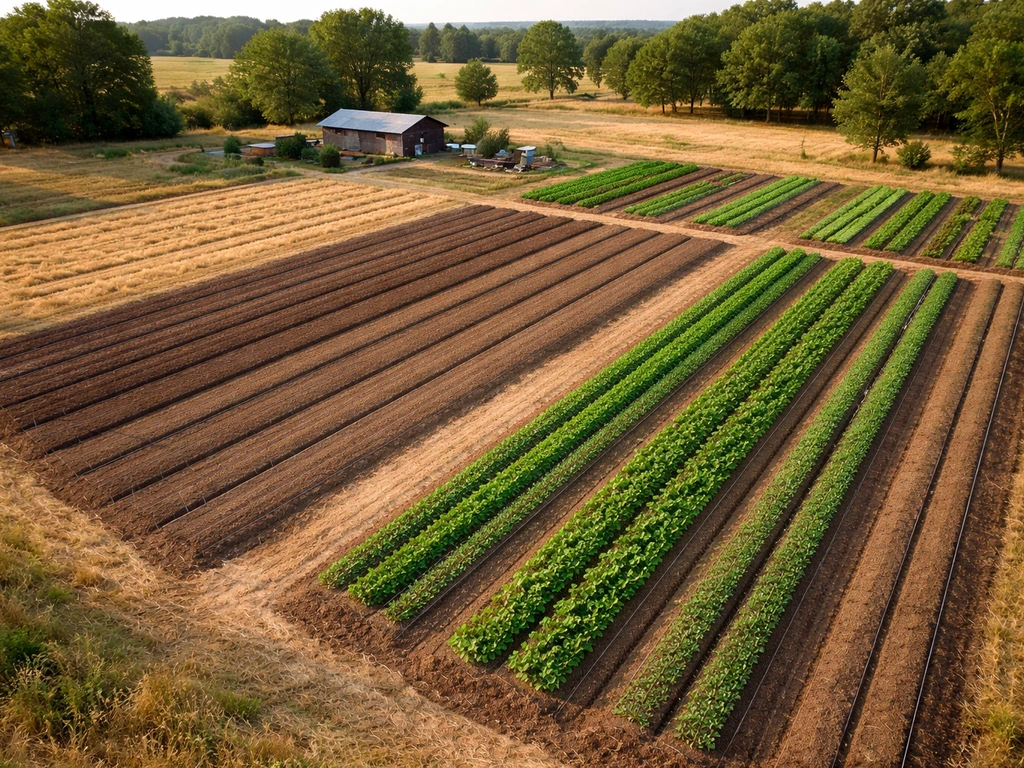
Start here: nail down your constraints before picking a crop
Before you look at any crop list, you need to be honest about five constraints. Get these clear and the crop choice becomes much more obvious.
- Location and climate zone: What state or region are you in? What is your average last frost date in spring and first frost in fall? The USDA defines the frost-free growing season as the window between those two dates, and that number controls almost everything about what you can grow.
- Soil type and quality: Is your soil sandy, silty, clay-heavy, or loamy? What is the pH? Do you have drainage issues? A simple soil test will tell you pH, organic matter, cation exchange capacity (CEC), and phosphorus and potassium levels, along with lime and fertilizer recommendations for specific crops.
- Water access: Do you have irrigation, or are you relying on rainfall? Dryland farming on 10 acres in a 25-inch annual rainfall zone is a completely different game than farming with a reliable drip or pivot system.
- Time and labor: Are you doing this yourself, or do you have help? Some crops (row vegetables, strawberries) are extremely labor-intensive. Grains and hay are far more mechanical.
- Your primary goal: Are you chasing maximum profit, feeding your family and community, producing forage for livestock, or just keeping the land productive with minimal risk? Each goal points to a very different crop or mix.
Write these five things down before you go any further. If you are unsure about soil, go straight to the blank" rel="noopener noreferrer">USDA NRCS Web Soil Survey, enter your location, and use the Soil Data Explorer to pull up soil map units for your field. The Web Soil Survey covers soils data for more than 95% of U.S. counties, and it lets you use Soil Data Explorer to evaluate soil suitability blank" rel="noopener noreferrer">USDA NRCS Web Soil Survey. It will show you texture, drainage class, available water capacity (AWC), and irrigated vs. non-irrigated capability class. That free tool alone can save you from planting the wrong crop entirely.
How to match crops to your climate and season length
Season length is the most fundamental filter. Crops have minimum growing degree day requirements and day-length sensitivities that cannot be negotiated. A long-season crop like cotton needs 180 to 200 frost-free days. Field corn typically needs 100 to 120 days. Spring wheat can mature in 90 to 100 days. Cool-season vegetables like spinach or radishes can turn around in 30 to 45 days. If you are farming in northern Minnesota with a 120-day frost-free window, you are not growing cotton or watermelons outdoors. If you are in central Texas with 240+ frost-free days, you might get two crop cycles.
Temperature range matters just as much as season length. Wheat, oats, and cool-season forages (alfalfa, clover, ryegrass) thrive in moderate temperatures and tolerate frost. Corn, soybeans, and sunflowers need warm nights to set grain properly. Specialty crops like lavender or garlic have narrow but manageable requirements. Vegetables are highly variable: brassicas (cabbage, broccoli, kale) prefer cool weather, while tomatoes, peppers, and squash want consistent heat. Matching a crop to your average temperatures, not just your frost dates, is what separates a good harvest from a failed one.
Rainfall and soil drainage interact with crop choice in a big way. Corn on poorly drained heavy clay is a recipe for yield loss and root rot. Rice, on the other hand, actually requires standing water. Dry beans and garlic demand well-drained soils or they will rot before you harvest anything. If your 10 acres has variable drainage, consider zoning it: plant a moisture-tolerant forage or grain on the wet sections and a higher-value crop on the well-drained sections.
Best crop options for 10 acres, sorted by your goal
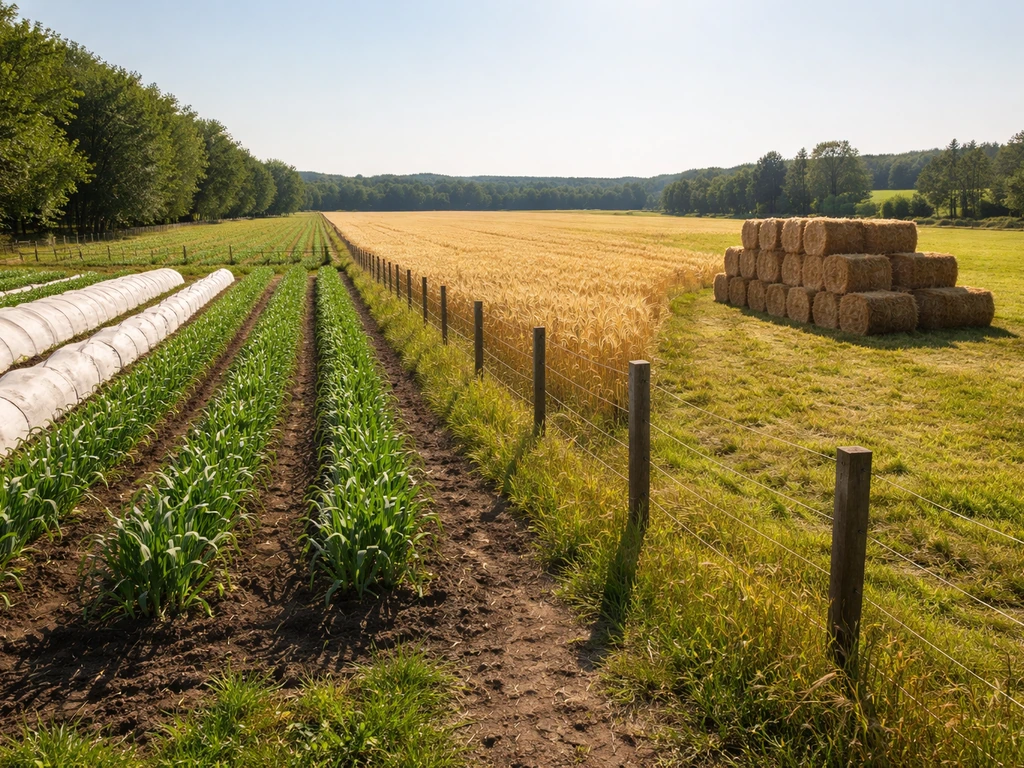
If your goal is profit
For maximum income on 10 acres, specialty and direct-market crops almost always outperform commodity crops on a per-acre basis. Garlic is one of the most frequently cited high-value options: retail prices range from $8 to $20 per pound for specialty varieties, and a well-managed acre can produce 10,000 to 15,000 pounds. That said, it is also labor-intensive at harvest. Market vegetables (tomatoes, peppers, greens, cucumbers) sold through farmers markets, CSAs, or local restaurants can generate $15,000 to $30,000+ per acre but demand significant labor and infrastructure. Herbs like basil, cilantro, or specialty culinary herbs are similar. If you want profit with less hands-on labor, sunflowers for oil or seed, dry beans, or certified seed production (corn, soybean, small grains) can generate meaningful premiums over commodity prices with standard row-crop equipment.
If your goal is food production for the farm or community
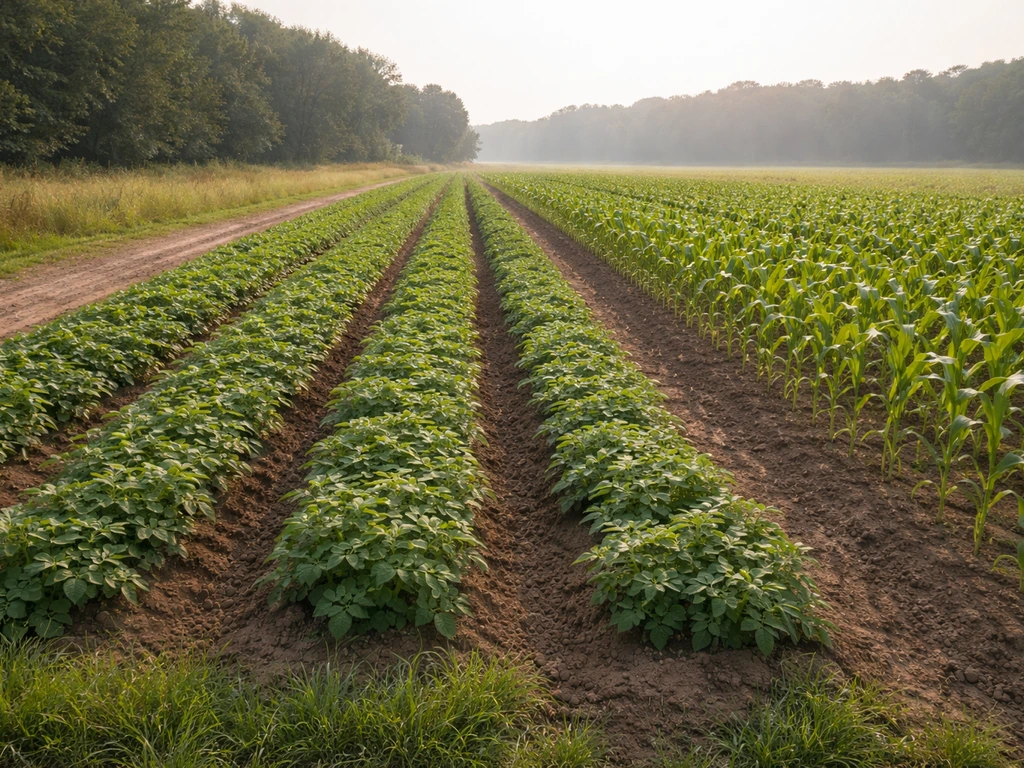
Ten acres is a very capable food-production unit. A diversified market garden using 2 to 3 acres intensively can supply a significant CSA membership or farm stand. Potatoes, sweet potatoes, winter squash, and dry beans are calorie-dense, storable, and relatively forgiving. These are also among the best survival crops to grow because they store well and can keep your farm fed through tougher seasons. Grains like wheat or corn on the remaining acres round out a production mix that covers starches, vegetables, and legumes. If you are also running livestock, dedicating 5 to 6 acres to a productive forage mix and using the rest for vegetables and grains makes solid sense.
If your goal is forage for livestock
Hay and forage crops are among the most straightforward choices on 10 acres if you have or are near livestock operations. Alfalfa is the gold standard for protein-rich hay and can yield 4 to 8 tons per acre per year in irrigated systems, though it requires good drainage and a soil pH near 6.8 to 7.0. Grass hays (orchardgrass, timothy, bermudagrass depending on your region) are lower-input and more drought-tolerant. Mixed clover-grass stands are a solid middle ground. Corn silage is another option if you have the equipment or a buyer. In the Southeast, bermudagrass or bahiagrass hay is widely reliable. In the upper Midwest and Northeast, alfalfa-grass mixes dominate.
If your goal is low-risk, low-labor production
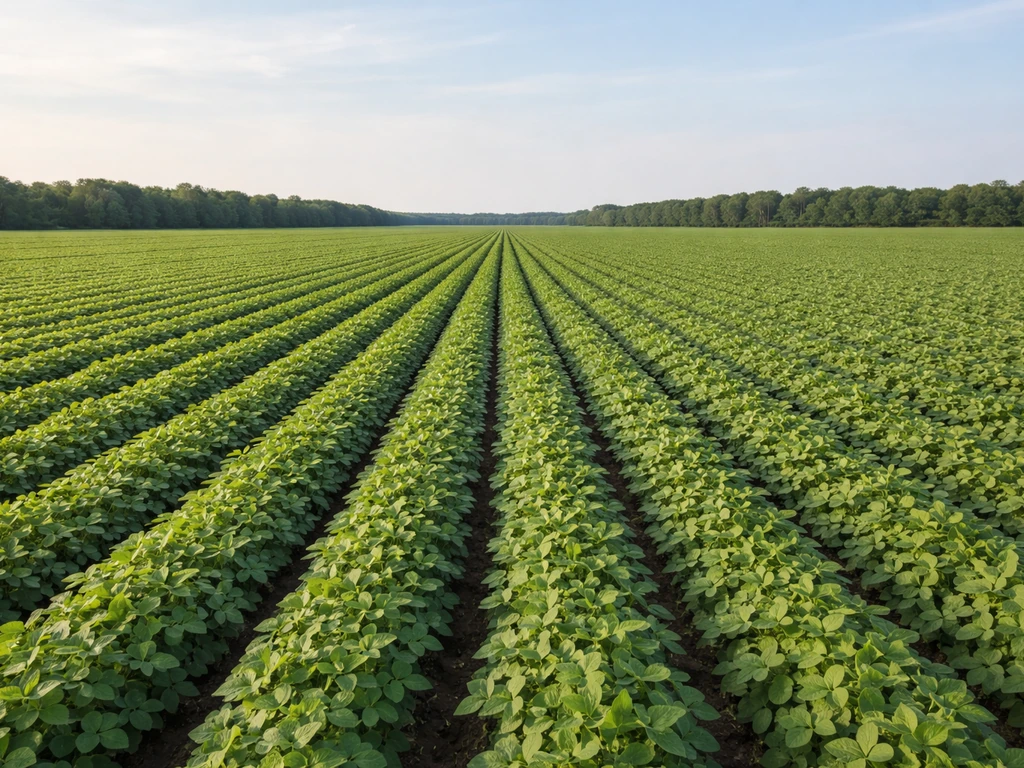
If you want the land productive without a lot of complexity, established commodity crops in your region are the pragmatic choice. In the Corn Belt, soybeans are often cited as the easiest commodity row crop: they fix their own nitrogen, tolerate a range of soils, and fit standard equipment. Winter wheat is similarly forgiving in Plains and Midwest environments, with relatively low input costs and a well-established infrastructure for sale. In the South, cotton and peanuts have strong infrastructure but require more management. Hay is low-risk in most temperate regions if you can access or rent cutting and baling equipment.
What tends to thrive where: a region-based guide
Geography shapes crop viability more than any other single factor. Here is a practical breakdown of what typically performs well across major U.S. regions and equivalent global climate zones.
| Region / Climate | Strong Crop Options | Notes |
|---|---|---|
| Corn Belt (IA, IL, IN, OH, MO) | Corn, soybeans, winter wheat | Deep loam soils, 150–180 frost-free days, strong market infrastructure |
| Great Plains (KS, NE, OK, TX Panhandle) | Winter wheat, grain sorghum, sunflowers, dry beans | Variable rainfall; dryland farming common; irrigation expands options significantly |
| Southeast (GA, AL, MS, SC, NC) | Peanuts, sweet potatoes, cotton, watermelons, market vegetables | Long season (200+ days); sandy soils common; warm, humid summers |
| Upper Midwest / Great Lakes (MN, WI, MI) | Soybeans, corn, small grains, alfalfa, potatoes | Shorter frost-free window (120–150 days); good soil moisture |
| Mid-Atlantic / Northeast (PA, NY, VA, NJ) | Vegetables for direct sale, small fruits, hay, small grains | Diverse microclimates; strong direct-market demand near population centers |
| Pacific Northwest (WA, OR) | Wheat, potatoes, hops, specialty vegetables, blueberries | Excellent soils in Palouse/Willamette; irrigation expands arid-side options |
| Southwest / Intermountain West (CA, AZ, NM, CO) | Garlic, dry beans, chile peppers, melons, alfalfa (irrigated) | Arid climate; irrigation is essential; long season in lower elevations |
| Humid tropical/subtropical (HI, South FL, global equivalents) | Sugarcane, tropical vegetables, taro, specialty herbs | Year-round production possible; unique market and regulatory considerations |
Outside the U.S., the same framework applies. Temperate Europe and northern China favor small grains, oilseeds (canola, sunflower), and vegetables. Sub-Saharan Africa's smallholder 10-acre equivalent often centers on maize, sorghum, cassava, or legumes depending on rainfall reliability. South and Southeast Asia at this scale often defaults to rice or mixed vegetable production. The underlying logic is always the same: match the crop's temperature, water, and soil requirements to what your land actually offers.
Costs, labor, equipment, and risk at the 10-acre scale
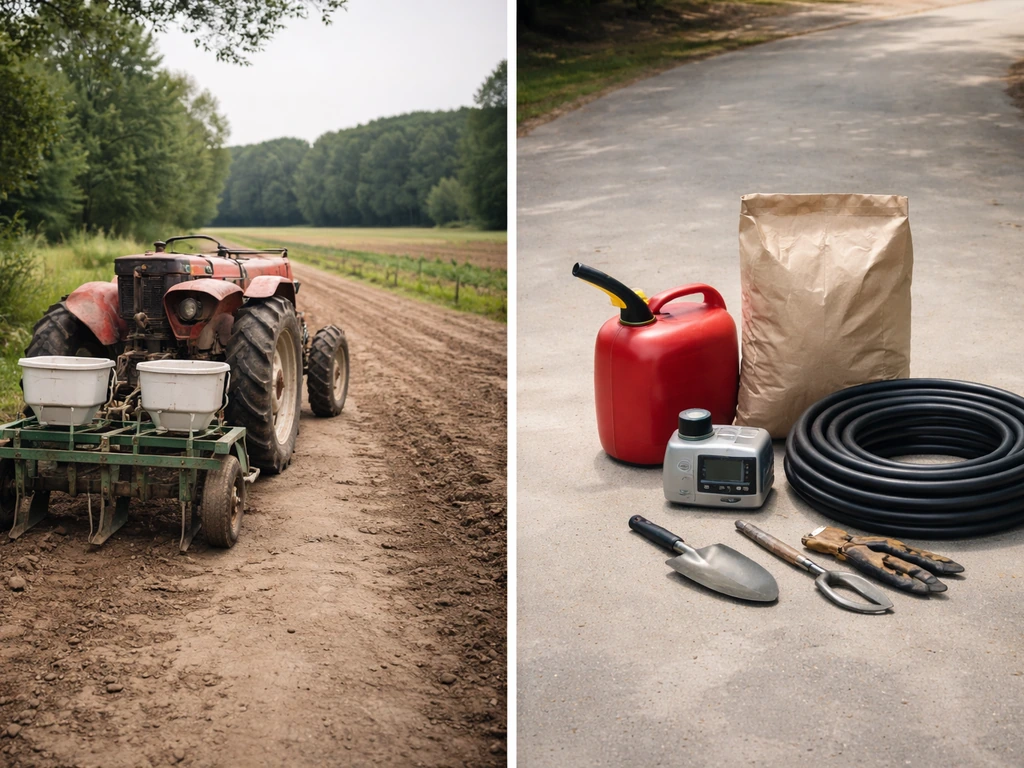
Ten acres is a genuinely awkward scale for commodity crops. It is too small to justify owning a full set of large row-crop equipment (a used planter, tractor, and combine can easily run $50,000 to $150,000+), but it is large enough that hand production is impractical for most field crops. The most common solutions are custom hiring (paying a local farmer to plant and harvest for a per-acre fee), renting equipment by the hour or day, or joining a farm cooperative that shares machinery. For specialty and vegetable crops, smaller two-wheel tractors, bed formers, and walk-behind equipment scale well to 10 acres without huge capital outlays.
Here is a rough per-acre cost comparison for common 10-acre crops. These are ballpark figures for the U.S. Midwest and Southeast and will vary significantly by region, input prices, and whether you own or hire equipment.
| Crop | Approx. Input Cost/Acre | Typical Gross Revenue/Acre | Labor Intensity | Key Risk |
|---|---|---|---|---|
| Corn (commodity) | $400–$650 | $600–$900 | Low (mechanized) | Price volatility; equipment cost |
| Soybeans (commodity) | $250–$450 | $450–$700 | Low (mechanized) | Price volatility; smaller margin |
| Winter wheat | $150–$300 | $300–$550 | Very low | Weather at heading; low margin |
| Alfalfa hay | $300–$500 (establishment) | $600–$1,200 (3–4 cuttings) | Moderate (cutting/baling) | Stand establishment; weather at cutting |
| Market vegetables | $1,500–$4,000 | $10,000–$30,000+ | Very high | Labor, perishability, market access |
| Garlic (specialty) | $2,000–$4,000 | $8,000–$20,000+ | High (planting/harvest) | Market price fluctuation; storage |
| Dry beans | $200–$400 | $500–$900 | Low-moderate | Drought sensitivity; market dependent |
| Sunflowers | $100–$250 | $300–$600 | Low | Bird pressure; niche market |
Risk is a real consideration at 10 acres. A failed commodity crop on 10 acres might cost you $3,000 to $6,000 in inputs with little recovery. A failed specialty crop could cost $20,000 to $40,000 in inputs plus lost revenue. Crop insurance is available for most commodity crops through USDA's Risk Management Agency and is worth factoring in from the start. For specialty crops, Whole-Farm Revenue Protection (WFRP) policies can cover a diversified operation. Never go all-in on a high-value specialty crop in year one without trialing it on a smaller plot first.
A basic planting plan: varieties, spacing, inputs, and timing
Once you have picked your crop, the planting plan comes down to four variables: variety selection, plant spacing and population, input schedule, and harvest timing. Getting all four right is what separates a decent year from a great one.
Variety selection
Always start with locally adapted varieties. Your state extension service will publish performance trial results comparing varieties for yield, disease resistance, and maturity rating in your specific region. For corn and soybeans, maturity groups are tied to day-length response, so a variety suited to Kansas will underperform in Minnesota. For vegetables, disease-resistant hybrid varieties almost always outperform open-pollinated heirlooms in commercial settings, though heirlooms carry premium pricing at some farmers markets.
Spacing and population
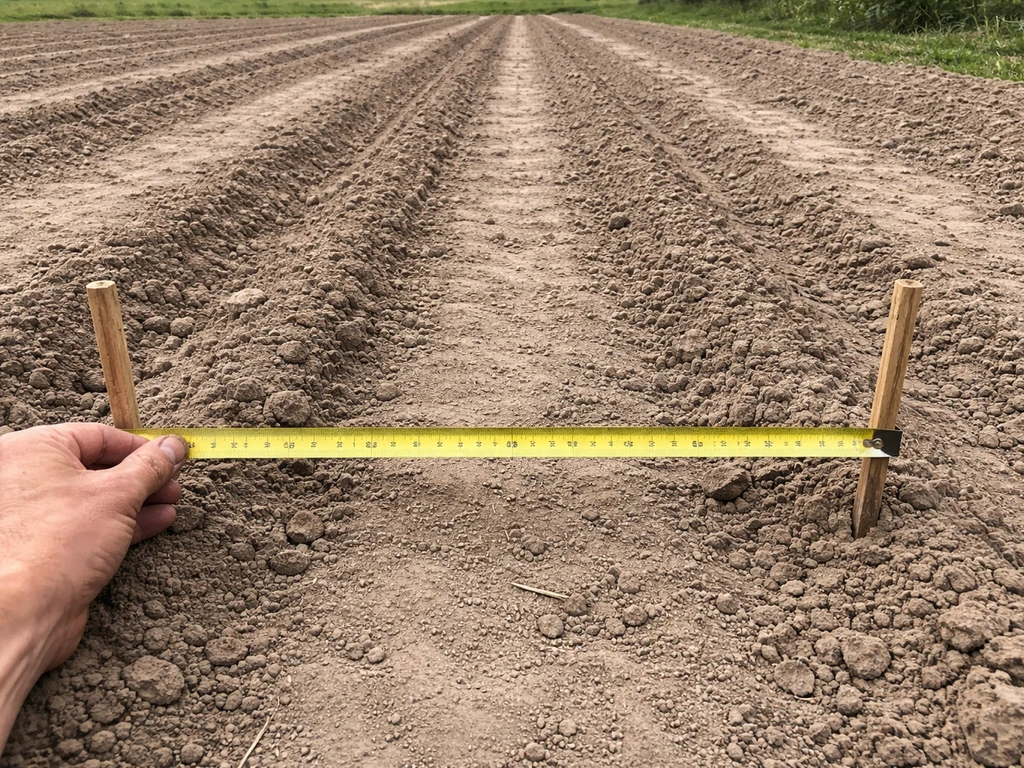
Ten acres at standard row widths gives you a concrete sense of scale. At 30-inch row spacing, you have about 17,424 row-feet per acre, or roughly 174,000 row-feet across 10 acres. For corn at a target population of 32,000 plants per acre, you are planting 320,000 seeds across 10 acres. For garlic at 6-inch in-row spacing on 30-inch beds, you are planting about 87,000 cloves per acre. These numbers matter because they directly determine your seed cost, labor time, and equipment passes. Narrow row production (15-inch or less) for soybeans can increase yield 5 to 10% in some environments but requires compatible equipment.
Input schedule and soil fertility
Your soil test report is the foundation of your input plan. A standard test sampled at 0 to 6 inches depth (composite of 15 to 20 cores across the field) will give you pH, phosphorus, potassium, organic matter, and CEC, along with specific lime and fertilizer recommendations for your chosen crop and yield goal. Apply lime well before planting if pH needs adjustment, ideally in fall for a spring crop. Nitrogen timing is critical for corn and most vegetables: split applications reduce loss and usually improve efficiency. For legumes (soybeans, dry beans, clover), inoculant is cheap insurance for nitrogen fixation, especially in fields with no prior legume history.
Harvest timing
Know your harvest window before you plant. Field corn is typically harvested at 15 to 18% moisture and dried to 14%. Soybeans shatter easily if left too long at low moisture. Garlic must be cured for 3 to 6 weeks after digging. Market vegetables have tight harvest windows measured in days, not weeks. If you are custom hiring harvest equipment, confirm availability well in advance. At 10 acres, you are a small customer, and custom operators prioritize their larger clients.
Your next steps, starting today
You do not need to have everything figured out before you start moving. Here is a clear sequence of actions you can take right now to get from "thinking about it" to an actual plan.
- Run a Web Soil Survey. Go to the USDA NRCS Web Soil Survey, draw your area of interest, and pull up the Soil Data Explorer. Look at the land capability classification, drainage class, and available water capacity for your field. This takes 20 to 30 minutes and is free.
- Get a soil test. Pull 15 to 20 cores from across your 10 acres at a consistent 0-to-6-inch depth, composite them into a single sample, and send it to your state university extension lab or a certified private lab. Cost is typically $15 to $30. Ask for a recommendation for the specific crop you are considering.
- Check your frost dates and season length. Look up your county's average last spring frost and first fall frost via the NRCS WETS tables or your state's climate office. Count the frost-free days and match them to your crop candidate's days-to-maturity requirement.
- Contact your local extension office. Every U.S. county has a Cooperative Extension office tied to the land-grant university system. Call or email them. Tell them you have 10 acres, describe your soil and water situation, and ask what performs well in your county. They will know the local pest, disease, and market conditions that no generic guide can cover.
- Check your market before you plant. For any crop with a sales component, verify where and how you will sell it before you put seed in the ground. Call local grain elevators (for commodity crops), farmers market managers, food hubs, or restaurant buyers. Confirm realistic prices and volumes for your area.
- Do a quick profitability check. Take your expected yield (ask extension for realistic local averages), multiply by expected price, subtract estimated input costs, and see if the margin justifies the risk and effort. If the numbers are thin, look at whether a different crop or a direct-sale channel changes the economics.
- Start small with new or unfamiliar crops. If you are trying a specialty crop for the first time (garlic, herbs, a new vegetable), trial it on 0.5 to 1 acre in year one. Scale up once you know the crop works in your conditions and you have a confirmed market.
The honest truth is that picking the best crop for 10 acres is less about finding some secret high-value option and more about accurately matching what your land can do to what the market (or your farm) needs. Growers who do the soil test, talk to extension, confirm their market, and choose a well-adapted variety almost always outperform those who skip those steps and plant whatever sounds most profitable. If you are weighing options across farm sizes, the calculus on 10 acres shares a lot of logic with what works on 5 acres, though it starts to open up equipment and market-volume possibilities that smaller plots cannot access. If you are deciding on the best crop to grow on 5 acres, use the same approach: match your season length, soil, and market access to a crop that can actually perform at your scale. And if profitability is your primary driver, the analysis here overlaps heavily with broader questions about which crops generate the strongest cash returns in your region, which is worth thinking through separately based on your local prices. And if profitability is your primary driver, the analysis here overlaps heavily with broader questions about which crops generate the strongest cash returns in your region, which is worth thinking through separately based on your local prices what is the cheapest crop to grow. If you want a quick, practical shortlist, review the best cash crops to grow for your region and season before you finalize your choice. If you want to go deeper, you can also look at what are the most profitable crops to grow for your specific region and market.
Pick one or two realistic candidates based on your location, soil, and goal. Pick one or two realistic candidates based on your location, soil, and goal, and compare them to the best crops to grow on small farm you can realistically manage and sell. Get the soil test done this week. Call your extension office. Then make the call. Ten acres is enough land to run a genuinely productive and profitable farming operation if you choose intelligently from the start.
FAQ
What’s the fastest way to narrow down the best crop to grow on 10 acres if I’m undecided between commodity and specialty crops?
Start with two candidate crops that are both within your frost-free window and match your drainage (well-drained vs wet). Then filter each by labor and equipment reality: if you do not already have harvest access, prioritize commodity crops or contract-harvest options for the first year, and trial 10 acres only after your chosen buyer and harvest timing are confirmed.
How do I decide whether I should split my 10 acres into zones for different crops?
Use your soil drainage and field variability notes. If you have measurable wet spots, different soil types, or yield maps showing low-performing areas, zone it rather than forcing one crop everywhere. A common approach is placing moisture-tolerant forage or grain on the wettest blocks and a higher-value, better-drained crop on the remaining acreage.
Is 10 acres too small to use commodity crops without owning equipment?
It can be, but it’s workable. Many growers at this scale use custom planting and harvest, rent equipment for limited passes (like tillage and spraying), or coordinate through a cooperative. Before committing, confirm availability for the exact planting and harvest dates for your target crop, not just “sometime in the season.”
What mistake causes the most failures when planting high-value crops on 10 acres?
Skipping the buyer and harvest logistics. High-value crops often have short harvest windows and quality requirements, so plan your sales channel and post-harvest handling first (cooling, storage, wash/pack steps, and labor availability). A crop can be agronomically successful and still fail financially if you cannot harvest on time or sell at the right quality.
How much seed and labor should I expect to scale differently for row crops versus bed crops at 10 acres?
Row crops generally translate into fewer, longer passes and predictable equipment needs, while bed crops usually require more detailed bed forming and often more hand labor around planting, weeding, and harvest. Use your target row width and in-row spacing to estimate seed cost and timing, then sanity-check the total labor hours during peak harvest weeks.
Do I need to test my soil every time I change crops or can I reuse an old test?
If your test is recent and sampled correctly, you can reuse it for planning. For pH, nutrients, and lime timing, aim for a current test before major changes. If you have not sampled at least within the last 1 to 3 years, or the field had major amendments, take a new composite sample so recommendations match the current reality of your soil.
How should I handle nitrogen for corn or vegetables on a 10-acre scale?
Split nitrogen applications rather than applying everything at once, especially if you have leaching or denitrification risk (light soils, wet areas, or heavy rainfall). Also confirm that your equipment can apply the timing accurately across your full acreage, because labor or scheduling gaps can reduce efficiency even when your total rate is correct.
For soybeans or legumes, do I always need inoculant?
Inoculant is most critical when there has been little or no prior legume history, or when you are breaking ground after a long gap. If you have a clean history of legume cultivation with similar inoculation practices, the benefit can be smaller, but it’s still often a low-cost insurance. Match the inoculant to the specific crop and ensure proper handling so it survives until application.
How do I prevent harvest-related losses on 10 acres, especially for soybeans and garlic?
For soybeans, plan to harvest promptly when pods are mature, because shattering can spike quickly during dry, windy periods. For garlic, build curing time into your calendar (3 to 6 weeks) and plan drying space and airflow so bulbs cure uniformly. If you custom hire harvest, confirm equipment capacity and crew availability for those peak dates.
What crop insurance should I consider if I’m taking a higher risk crop choice?
Commodity crops often have standard USDA-RMA coverage options that you can factor into budgeting. For diversified specialty operations, consider Whole-Farm Revenue Protection so the policy reflects your overall revenue rather than only one crop. Before you decide, check eligibility, coverage triggers, and deadlines, because enrollment timing matters.
Should I choose one crop or a mix when I’m farming only 10 acres?
A single crop can work if you have strong buyer access, consistent timing, and matching equipment. But many 10-acre operators benefit from a small diversification plan, for example, intensive vegetables on a fraction of land plus a forage or grain block for cashflow and resilience. If you diversify, keep the plan simple enough that your labor and harvest schedule does not overlap peak requirements.
How do I estimate whether a crop will actually fit my 10-acre labor schedule?
Write your peak tasks by week, then compare them against your realistic availability (farm workers, family labor, or contracted labor). Crops with tight harvest windows can require concentrated labor, while others need periodic but less intense work. If you cannot cover peak weeks, it is often better to reduce acreage of the labor-heavy crop rather than dropping the crop entirely.
What if my field has variable soil texture, how should I choose the “best” crop across it?
Choose based on the limiting factor rather than the average. If drainage is your limiting constraint, prioritize crops that tolerate your worst zones or zone the field. If texture drives water holding, match crops to that water availability profile, and avoid assuming that a crop that grows well in the best spots will survive the whole field reliably.
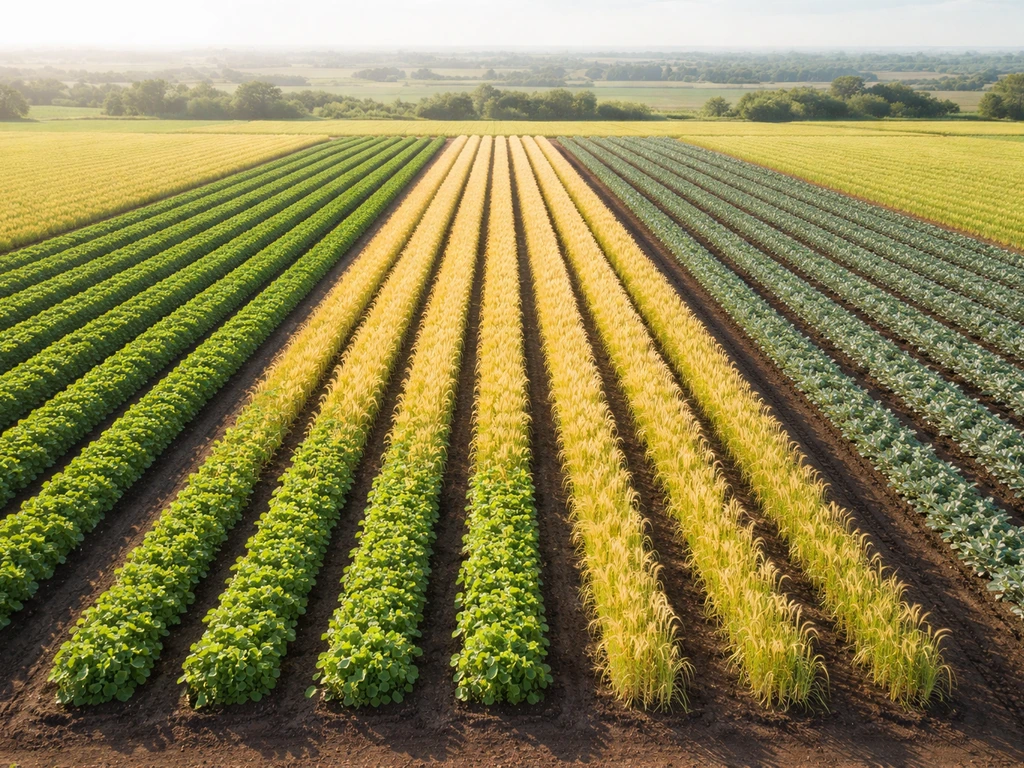
Pick the best crop for 5 acres by region using climate, soil, water, costs, yields, and market goals.
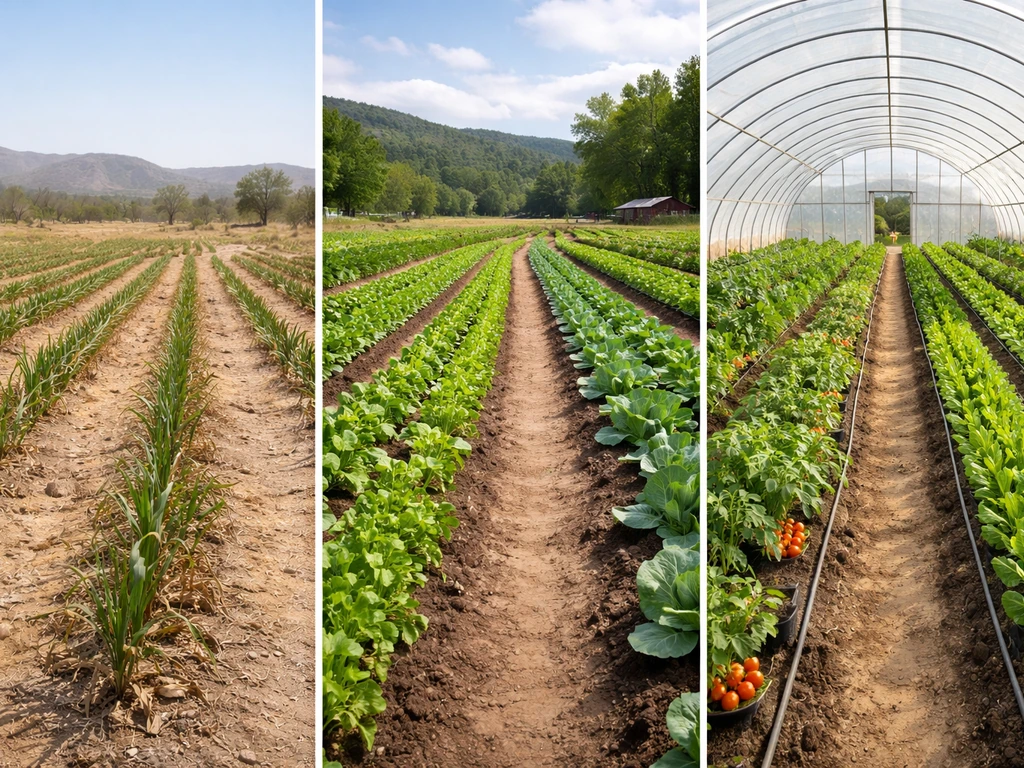
Find the most profitable crops to grow by region, using climate fit, market demand, yields, and realistic profit budgets
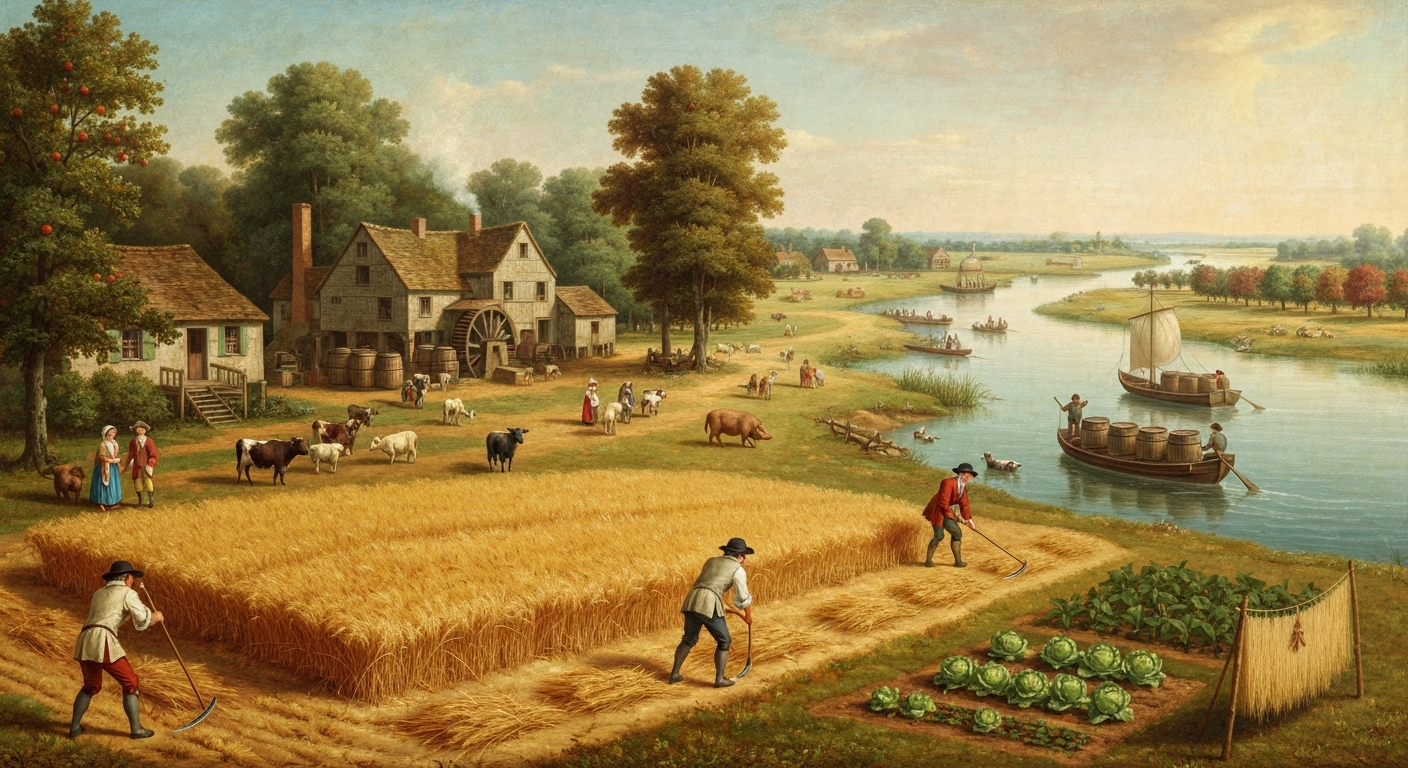
Colonial Delaware’s main crops, grains, hay, flax, fruits, vegetables, livestock, why they thrived and how they were sold.