
Yes, a cotton seed was the first to visibly sprout on the Moon, but the full story is more specific than most headlines let on. On January 7, 2019, a cottonseed (genus Gossypium) germinated inside a sealed biosphere canister aboard China's Chang'e-4 lander, which had touched down on the lunar far side on January 3. That sprouting event is now officially recognized by Guinness World Records as the first seed to germinate on the Moon.
Was Cotton the First Plant to Grow on the Moon?

Samuel Rourke
16 Jun 2026
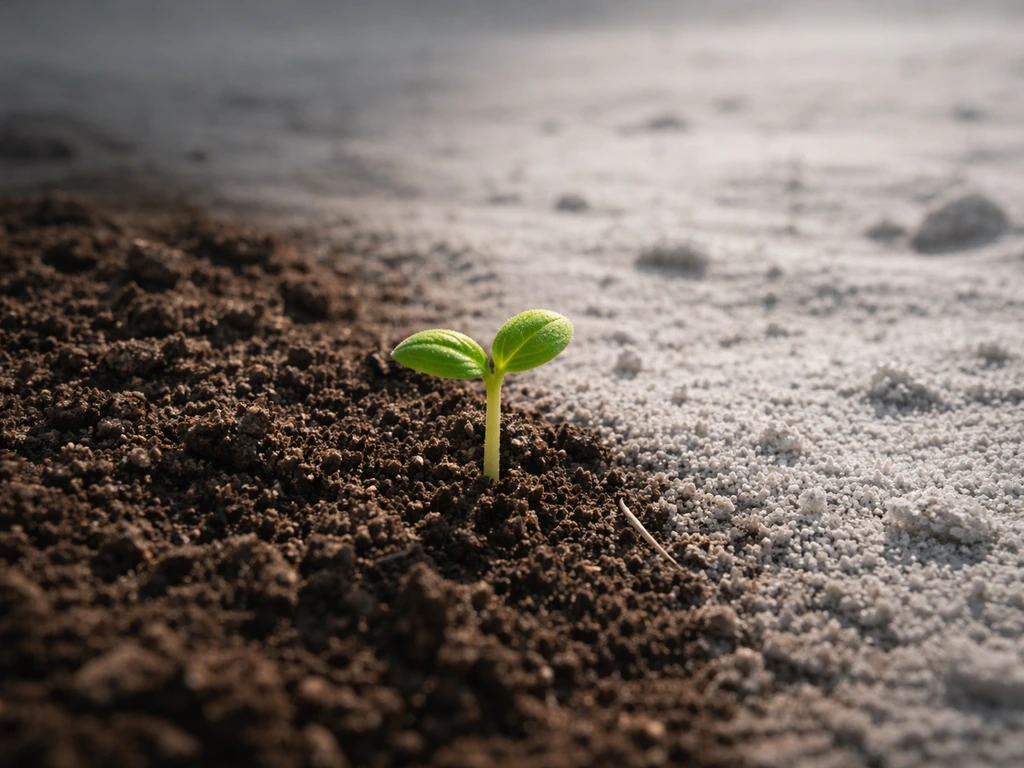
Cotton didn't grow on the Moon in the way a field crop grows in soil under open sky. It sprouted inside a small pressurized container that supplied its own air, water, and light, while sitting on the lunar surface. That distinction matters a lot when you're trying to sort out what actually happened.
What 'first plant to grow on the Moon' actually means
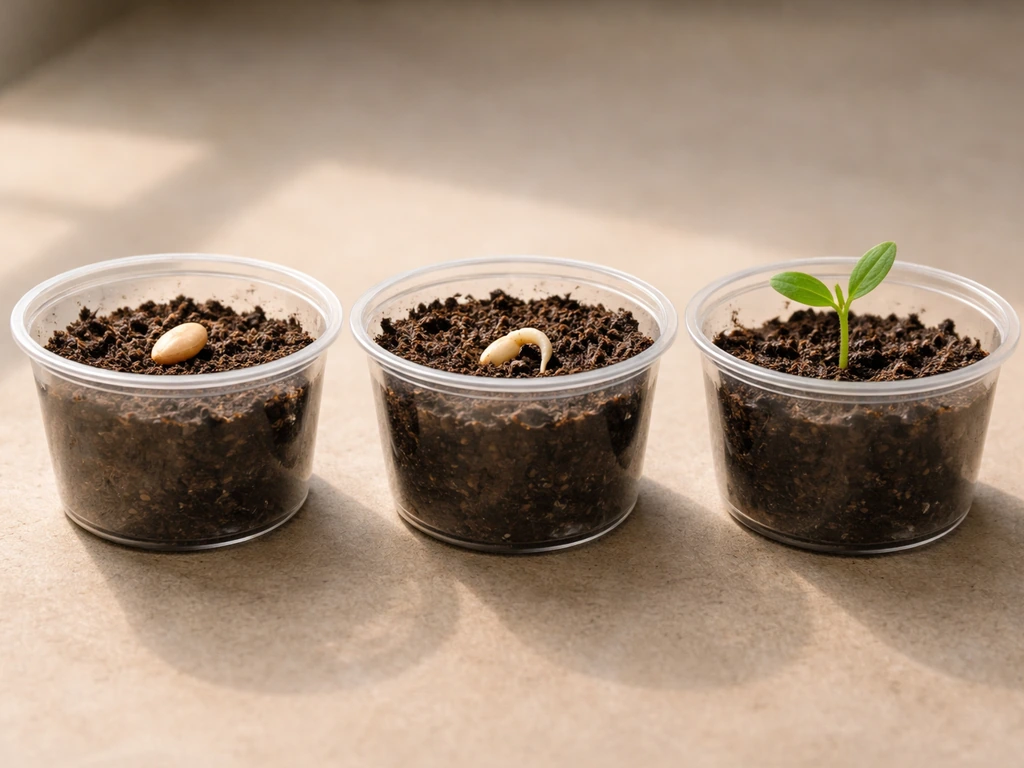
The phrase sounds simple, but it bundles together at least three different questions: Did a plant germinate in a container that was physically on the Moon? Did a plant grow in actual lunar soil (called regolith)? And did a plant complete any meaningful part of its lifecycle on the lunar surface? These aren't the same thing, and conflating them is exactly where the confusion starts.
Germination means a seed has absorbed water and begun sending out a root and shoot. That's the milestone Chang'e-4 hit. It is not the same as a plant surviving, flowering, producing seeds, or growing in lunar regolith. NASA has conducted separate Earth-based studies where plants were grown in actual Apollo lunar surface material, but those experiments happened in labs on Earth, not on the Moon.
NASA describes growing plants using collected Apollo lunar surface material in Earth-based scientific work as part of understanding whether future explorers could grow plants on the Moon. Meanwhile, mission planners use 'lunar conditions' to mean a combination of lunar gravity (about one-sixth of Earth's) and the radiation environment at the lunar surface, which is a very different set of constraints from what Chang'e-4's sealed biosphere provided.
So when someone asks whether cotton was the first plant to grow on the Moon, the most accurate answer is: cotton was the first seed confirmed to germinate while physically on the lunar surface, inside a controlled habitat. It did not grow in lunar soil, and it did not complete a growth cycle.
Where the claim comes from and why it gets muddled
The claim originates from Chang'e-4's Biological Experiment Payload (BEP), a roughly cylindrical biosphere container developed by Chongqing University. Chang'e-4 landed on January 3, 2019, and ground controllers instructed the probe to begin watering the seeds. About 22 hours after watering, the cotton seed germinated. On January 15, the China National Space Administration and Xinhua announced the result, and ABC News, Space.com, The Guardian, and Phys.org all ran headlines along the lines of 'first seed on the Moon' or 'first plant grown on the Moon.' Guinness confirmed the record, dating the germination to January 7, 2019, with the experiment running for a total of 212.75 hours before the lunar night arrived and ended it.
The confusion has a few specific sources. First, the biosphere contained multiple organisms: cottonseed, potato, rapeseed, Arabidopsis thaliana, yeast, and fruit fly eggs. Headlines often collapsed this into 'cotton grew on the Moon,' skipping the fact that only cotton had a confirmed image. The Chang'e-4 team was explicit about this: due to fixed and limited camera angles, only the cotton sprout could be visually documented. Whether any of the other organisms progressed similarly couldn't be confirmed from imagery alone.
Second, the word 'grew' in the headlines doesn't mean what most readers picture. The cotton seed germinated, meaning it sprouted. It did not grow into a plant, produce leaves, flower, or reproduce. The experiment ended when the lunar night dropped temperatures inside the canister to levels that killed the sprout. Reddit discussions spread the simplified version ('a cotton seed sprouted inside a canister on the Chinese lunar lander') and while that's broadly accurate, it often dropped the critical detail that the seed was inside a sealed, pressurized, self-contained habitat, not sitting in lunar soil.
Real plant-growth milestones in space and on the lunar surface
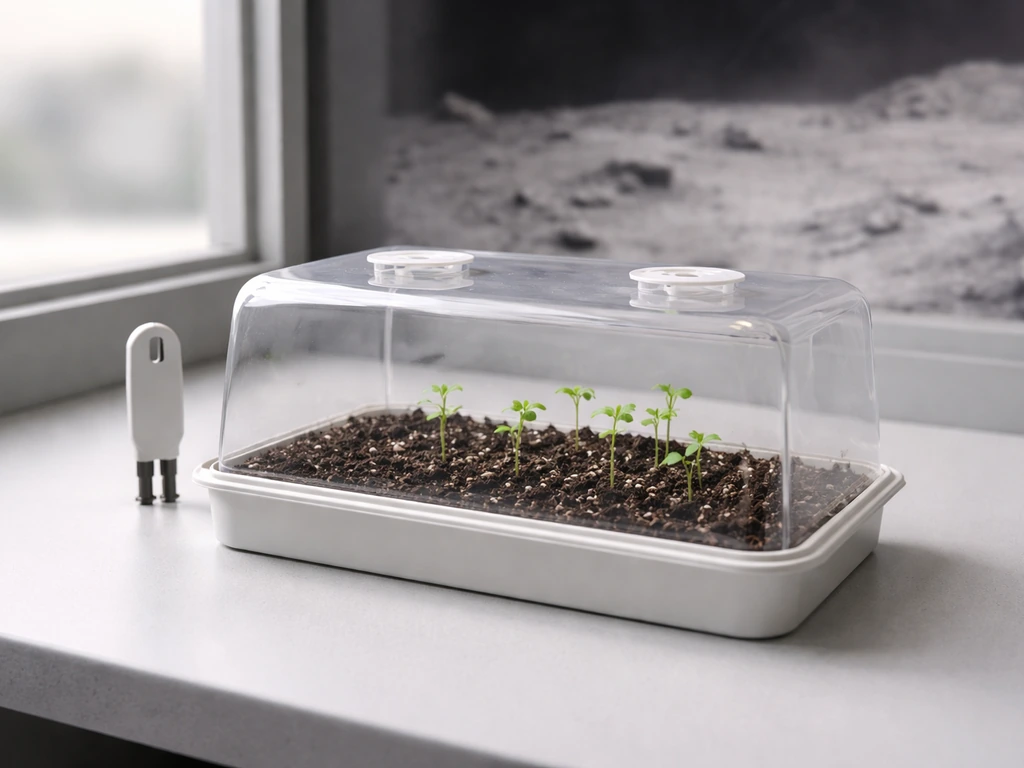
Chang'e-4 is the only mission so far to place a living plant experiment on the lunar surface, but plant growth in space has a much longer history. Here's how the major milestones stack up.
| Year | Milestone | Mission / Platform | Plant / Species |
|---|---|---|---|
| 1982 | First plant to flower in space | Soviet Salyut-7 | Arabidopsis thaliana |
| 2014 | First lettuce crop started on ISS (Veggie system) | ISS – VEG-01A | Outredgeous lettuce |
| 2015 | First on-orbit harvest of fresh produce | ISS – Veggie (Veg-01) | Lettuce |
| 2019 | First seed to germinate on the Moon | Chang'e-4 lander (lunar surface) | Cottonseed (Gossypium) |
| 2020 | Radish crop harvested on ISS | ISS – Plant Habitat-02 | Radish |
| 2021 | Genetically engineered cotton launched to ISS for research | SpaceX Dragon / ISS | GE cotton |
Arabidopsis is a recurring name in space botany because it's a small, fast-cycling plant that's well understood genetically. NASA's Seedling Growth-1 experiment on the ISS documented Arabidopsis seeds germinating and growing into seedlings in microgravity. The Soviet Union was there first with flowering in 1982, which is a frequent source of confusion when people argue about 'firsts' online. None of those ISS milestones involved the lunar surface at all. Chang'e-4 stands alone as the only mission to place organisms on the Moon.
What the Chang'e-4 experiment actually showed about cotton
The peer-reviewed paper documenting Chang'e-4's BEP (published in ScienceDirect) gives the clearest picture of what happened. A CCD camera inside the container captured the cotton seed germinating. The germination occurred about 22 hours after watering began, which was notably faster than the ground synchronization control experiment, which took about 53 hours. The experiment ran for a total of roughly 8 days, 22 hours, and 45 minutes before it was shut down to prevent damage when the lunar night began. Temperatures on the lunar surface swing from around 120°C during the day to minus 170°C at night, and the biosphere wasn't designed to survive that.
The biosphere was a closed, self-contained system. It had its own atmosphere, a water reservoir that could be triggered remotely, a light source, and insulation. Think of it less like a garden and more like a very small, sealed terrarium sitting on top of the lander. The cotton seed was not in lunar regolith. It was in a prepared growing medium inside the canister. So while it was physically on the Moon, the environment it experienced was much closer to a controlled lab chamber than anything the Moon itself provides.
Could cotton actually be grown on the Moon without a habitat?
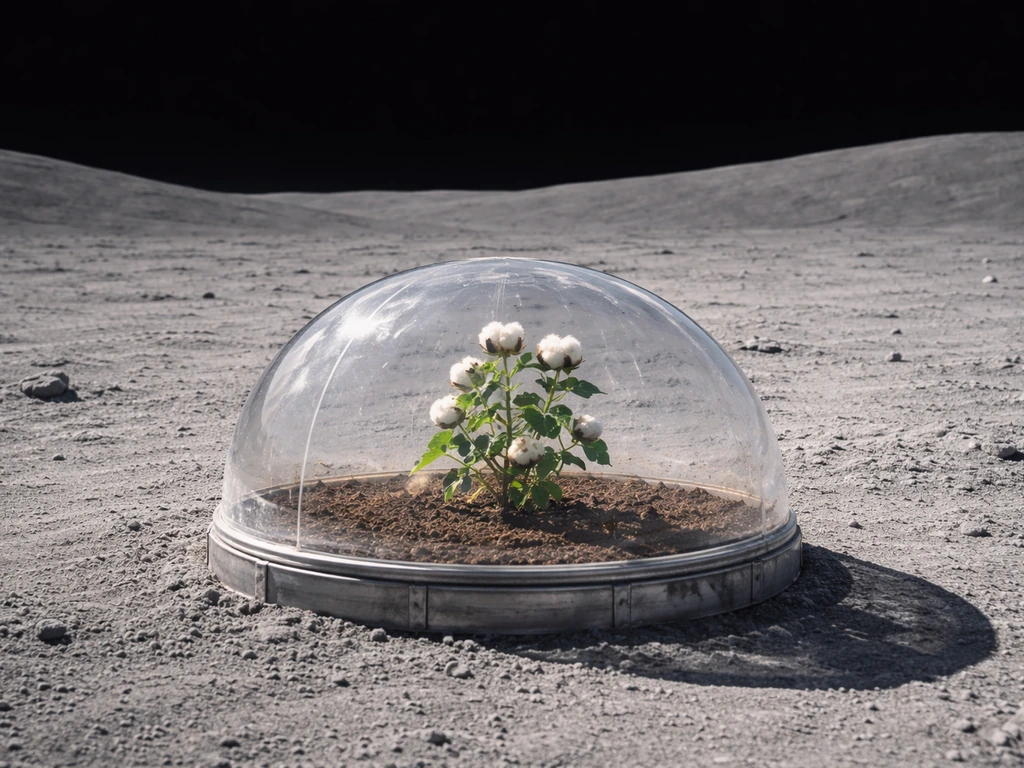
Not in any near-future scenario without major engineering around every single growth requirement. Cotton is a warm-season crop that needs consistent temperatures, reliable light cycles, water, and pollination to produce fiber. To gauge how remarkable cotton growth would be off Earth, it helps to know historical yields, like how much cotton farmers grew in 1860 how much cotton did they grow in 1860. Photo imagery helps farmers confirm where cotton seedlings have emerged and spot stress early so they can adjust water, nutrients, and management. On the unprotected lunar surface, none of those conditions exist in a usable form.
- Temperature: The lunar surface swings between roughly 120°C in direct sunlight and minus 170°C at night. Cotton's optimal growing range is about 20 to 30°C. Any cotton experiment on the Moon needs a thermally controlled habitat.
- Radiation: The Moon has no magnetic field and almost no atmosphere, so the surface receives high levels of solar and cosmic radiation. This damages plant DNA and disrupts germination. NASA's NTRS documents this as a core challenge in any lunar plant experiment design.
- Light: The lunar day lasts about 14 Earth days, followed by 14 days of darkness. Cotton needs a specific photoperiod to develop properly. Relying on natural sunlight on the Moon means either engineering light storage or accepting a completely disrupted growth cycle.
- Growing medium: Lunar regolith is not soil in any agricultural sense. NASA's Earth-based studies using Apollo lunar material found that plants can technically grow in regolith, but it's nutrient-poor, has sharp irregular particles, and lacks the microbial ecosystem that healthy soil depends on. Cotton specifically needs well-draining, fertile soil with plenty of organic matter.
- Water: There is no liquid water on the lunar surface. Any plant experiment must carry its own water supply or access ice deposits, which are only located in permanently shadowed craters at the poles.
- Pollination: Cotton flowers need to be pollinated to produce seeds and fiber. On Earth that involves insects and wind. In a sealed lunar habitat, pollination would have to be done manually.
This is why the Chang'e-4 experiment used a fully enclosed biosphere. The scientists weren't trying to demonstrate that the Moon can support cotton farming. They were testing whether germination could occur under the gravity and radiation conditions of the lunar surface with everything else controlled. Cotton was chosen partly because its seeds are relatively robust and because germination is visually easy to detect with a camera.
The broader space-agriculture research community is actively working on these constraints. ISS experiments like Veggie, Plant Habitat, and Seedling Growth have spent years understanding how microgravity affects root orientation, water uptake, and plant development.
NASA also notes that Veg-01 delivered the “first-ever on-orbit harvest and sampling of fresh produce” during the summer of 2015, providing the earliest confirmed ISS Veggie harvest milestone that later Veg-03 work builds on Veg-01 resulted in the “first-ever on-orbit harvest and sampling of fresh produce” during the summer of 2015.
Cotton's needs as a fiber crop rather than a food crop make it a lower priority for space food research, but the 2021 launch of genetically engineered cotton to the ISS showed that researchers are still studying how cotton responds to space conditions at the genetic level.
It's worth noting that this site covers cotton's cultivation history across regions and climates on Earth in detail, including where cotton first emerged as a crop and which countries became dominant cotton growers. The same kind of careful definition applies on Earth too, including which country was first to grow cotton. If you’re wondering where did cotton first grow, that terrestrial history starts much earlier than the lunar story and is tied to cotton’s origins in the Old and New Worlds. Understanding what cotton actually needs to thrive in terrestrial environments, from the right soil moisture to growing-degree days to harvest timing, gives useful grounding for understanding just how engineered any off-world cotton experiment has to be.
How to verify the cotton-on-the-Moon claim yourself
The claim is real and verifiable, but you need to check primary sources to understand exactly what it means. Here's where to look and what to search for.
- Guinness World Records: Search 'first seeds to germinate on the Moon.' The record page confirms the date (January 7, 2019), the species (Gossypium, cottonseed), the mission (Chang'e-4), and the experiment duration (212.75 hours). This is the most accessible authoritative source.
- ScienceDirect peer-reviewed paper: Search for 'first biological experiment on lunar surface Chang'e-4 BEP device results.' The paper provides the CCD camera evidence, germination timing comparisons, and a description of the biosphere hardware. It's the scientific backbone of the claim.
- NASA OSDR (Open Science Data Repository): Go to the NASA OSDR portal and search by experiment name or species to see structured records of ISS plant experiments. This lets you compare the Chang'e-4 milestone against ISS milestones like VEG-01A (lettuce, 2014) and Plant Habitat-02 (radish, 2020).
- NASA NTRS (Technical Reports Server): Search 'lunar plant germination' or 'lunar plant experiment gravity radiation' to find mission-design documents that define what 'lunar conditions' means in engineering terms, specifically the combination of lunar gravity and surface radiation.
- NASA Science pages: Search 'growing plants in lunar soil NASA' to find the Earth-based Apollo regolith studies. This helps you distinguish between 'growing in lunar soil on Earth' and 'germinating in a biosphere on the Moon,' which are two completely different things.
- Wikipedia – Chang'e 4 article: The organism list and timeline section gives a quick overview of what was in the biosphere and what was reported when. Cross-check this against Xinhua's English reporting (search 'Xinhua cotton seed sprout moon January 2019') for the original announcement.
- China SCIO (english.scio.gov.cn): Search 'Moon garden Chang'e probe' for the official statement that acknowledges the camera limitation, confirming that only cotton had photographic evidence of sprouting.
When you're reading any 'first plant on the Moon' claim, train yourself to ask four questions: Was it on the Moon or in orbit? Was it in lunar soil or a controlled medium? Did it germinate, survive, or complete a cycle? And is there photographic or sensor evidence, or just a team report? For Chang'e-4's cotton, the answers are: on the Moon, in a controlled medium, germinated only, and yes, there is a CCD camera image. That's the full picture, and it's actually impressive enough without needing any exaggeration.
FAQ
Does the cottonseed in Chang'e-4 count as “plant growth” if it only germinated and didn’t reach maturity?
Most scientific “growth” definitions require more than sprouting, so the safest wording is “first confirmed seed germination while physically on the lunar surface.” The experiment showed root and shoot emergence, but it did not complete leaf, flowering, or reproduction before the lunar night ended the run.
Was the cotton seed planted directly into lunar regolith during Chang'e-4?
No. The seed sat in a prepared growing medium inside the sealed biosphere canister. That matters because regolith handling would require separating dust, supplying nutrients, and controlling moisture, none of which were provided by lunar soil exposure in this setup.
Could any of the other organisms in the biosphere (potato, Arabidopsis, yeast, fruit fly eggs) have progressed, or was it only the cotton sprout visible?
Only the cotton sprout could be confirmed from available imagery, because the camera angles and documentation constraints limited what controllers could visually verify. The rest were part of the payload, but their development was not equally confirmable through the same direct visual evidence.
Did the biosphere provide a normal day-night cycle for the cotton seed, or was it only about temperature survival?
It provided light and an internal controlled atmosphere, but it was not a full replication of Earth-like conditions. The experiment was intentionally ended when lunar night temperatures became lethal inside the container, so the run reflects a limited window rather than a sustained photoperiod for full lifecycle completion.
Why do some people say cotton was the first “plant” on the Moon, even though the confirmed event was seed germination?
Because headlines often compress “first confirmed germination on the lunar surface” into “first plant grew,” even though “grew” implies multiple stages like leaves and reproduction. In this case, a more accurate phrasing is “first seed to germinate on the Moon with recorded imagery.”
Was Chang'e-4 actually the first mission to put living organisms on the lunar surface?
It was the first mission so far to place a living plant experiment on the Moon’s surface. Earlier milestones, like Arabidopsis on the ISS or Soviet flowering events, occurred in space but not on the lunar surface.
If astronauts someday want cotton fiber production on the Moon, what is the biggest practical hurdle beyond just planting seeds?
A reliable, long-duration environment for cotton’s full lifecycle. Cotton needs sustained warmth, stable light cycles, water management, and pollination, plus a growth medium that can supply nutrients. The Chang'e-4 canister succeeded at germination, not at meeting the long list of requirements for harvestable fiber.
How can I verify a “first plant/seed on the Moon” claim when I see it online?
Check four details: whether it occurred on the Moon versus in orbit, whether it was in lunar regolith versus a prepared medium, whether the outcome was germination versus survival or full development, and whether there is direct sensor or camera evidence rather than only summary statements.
When did the cotton germinate relative to the watering and the mission timeline?
Controllers initiated watering after landing, then germination was observed about 22 hours later. The overall experiment lasted roughly 8 days before shutdown to avoid damage when lunar night temperatures became incompatible with survival inside the biosphere.
Is Guinness’s record wording the same as scientific “firsts” in plant biology?
Guinness recognizes specific measurable events, here the first seed confirmed to germinate on the lunar surface. That does not automatically mean “first plant grown” in the biological sense of completing a lifecycle, so it helps to separate record-keeping language from biological definitions.
Next Articles
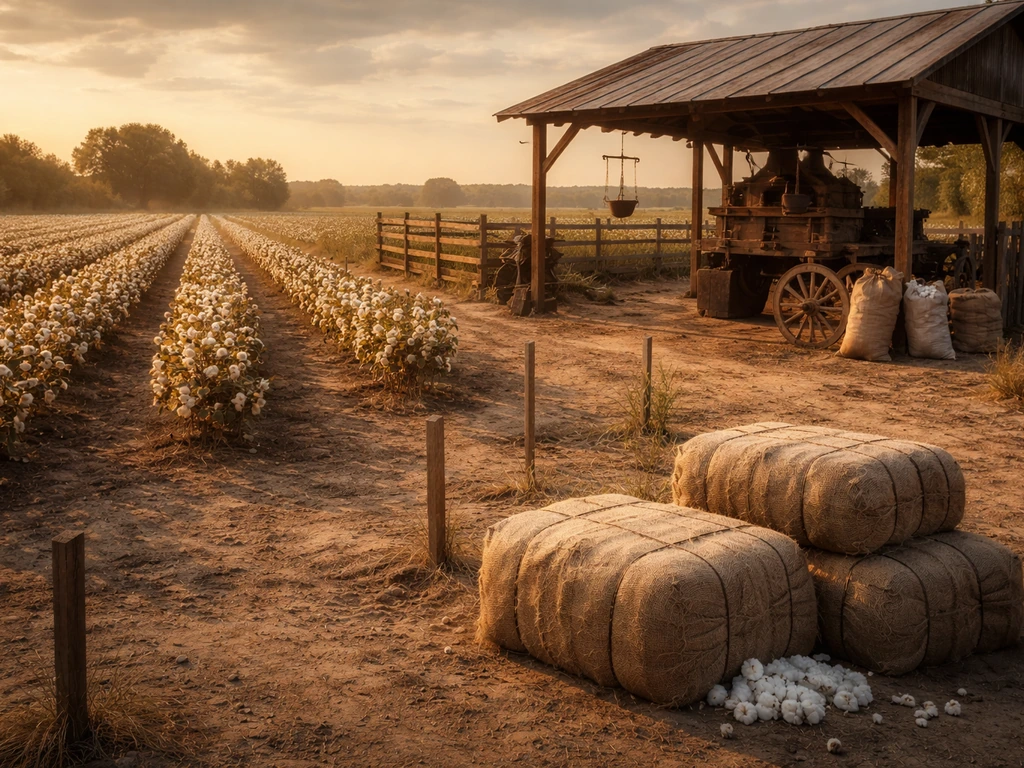
How Much Cotton Did They Grow in 1860? U.S. Census Steps
Find 1860 US cotton totals from census schedules, clarify acreage vs bales, and break results by major cotton states.
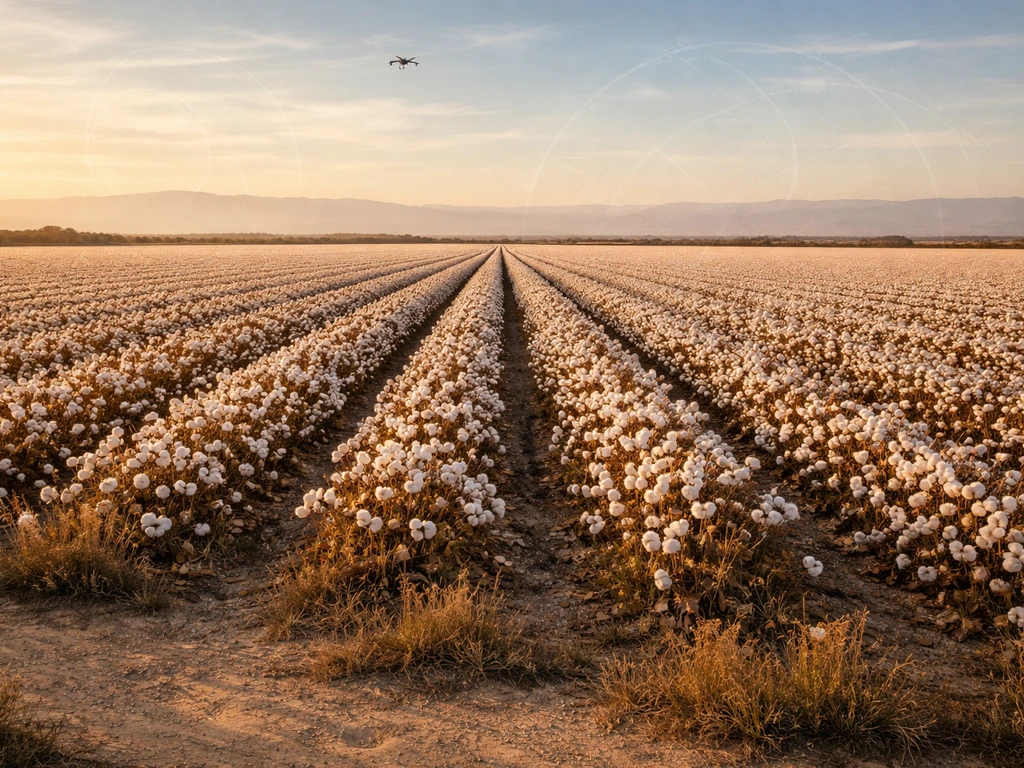
How Photo Imagery Helps California Farmers Grow Cotton
Step by step guide to use satellite, drone, and field photos to spot stress, map water needs, and boost cotton yields in
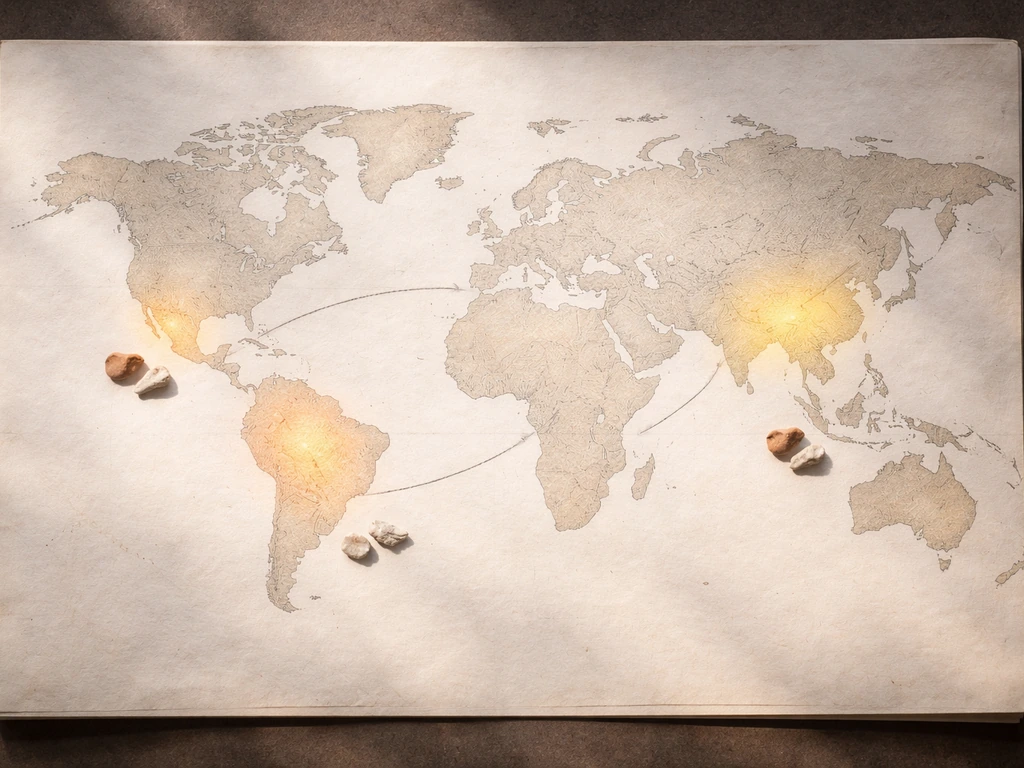
Where Did Cotton First Grow? Early Cultivation Regions
Find the first cotton cultivation regions by species, with key archaeology and a map-based method to verify origins.