The Middle Colonies, covering what we now call New York, New Jersey, Pennsylvania, and Delaware, grew primarily wheat, rye, barley, oats, and corn. Alongside those grains, farmers raised flax, hemp, buckwheat, millet, hay, and a variety of fruits and vegetables. This region became the American colonies' breadbasket, and the reasons it expanded so fast have everything to do with soil, climate, rivers, and the farming knowledge immigrants brought with them.
What Did the Middle Colonies Grow and Why It Thrived

Samuel Rourke
6 Apr 2026
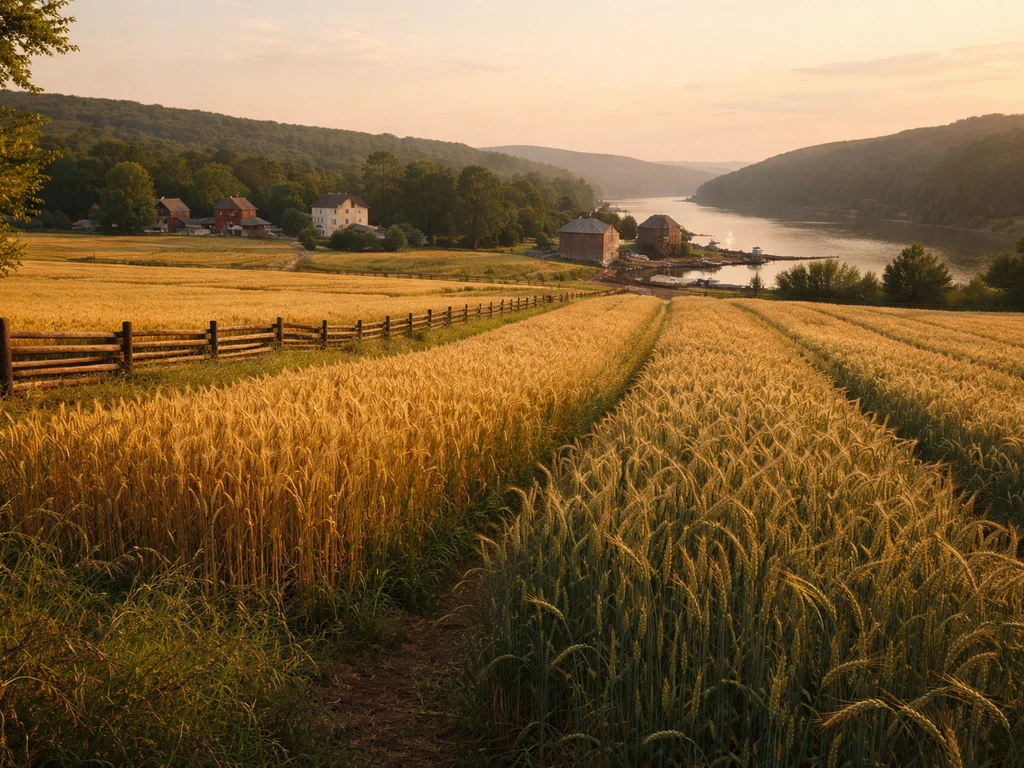
Core crops of the Middle Colonies
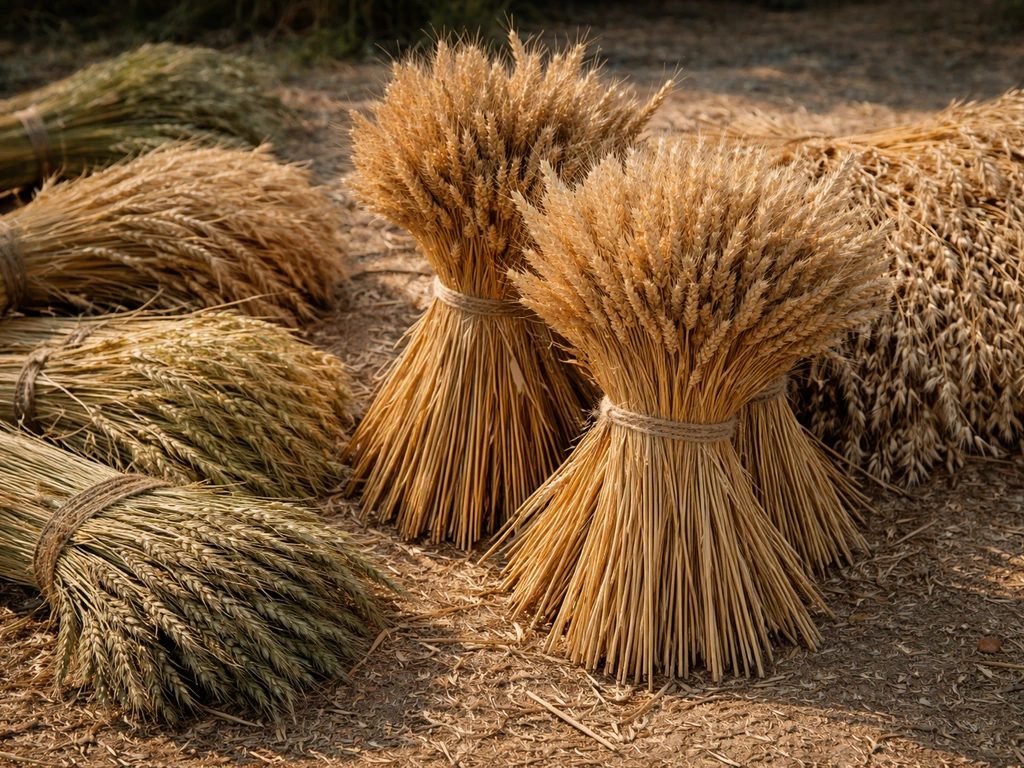
If you want the short list, here it is. Wheat was the dominant cash crop across all four colonies. Corn (sometimes called Indian corn in period records) was grown widely for both human consumption and animal feed. Rye and barley were common secondary grains, and oats were raised mainly to feed horses and livestock. Buckwheat and millet appeared in Pennsylvania farm records as rotation and feed crops. Flax and hemp were grown for fiber. Hay was essential as a fodder crop supporting the livestock side of farming. Fruit orchards, especially apples, peaches, and cherries, were part of the agricultural mix on established Pennsylvania farms. And while potatoes appeared in farm inventories, they were secondary to the dominant grain economy.
That crop list did not appear by accident. Every item on it fits a specific niche: climate length, soil chemistry, market demand, or subsistence need. Understanding why each crop ended up here is what makes the Middle Colonies story so useful for thinking about crop geography today.
Why grain farming took off: wheat, rye, barley, and oats
Wheat thrived here because the Middle Colonies had the right combination of a long enough frost-free season, reliable precipitation, and well-drained loam soils. Pennsylvania's growing season varies considerably by location: nearly 200 days in the southeastern corner but only around 90 days in the north-central highlands, according to Britannica's climate data. The Susquehanna Valley averages about 165 frost-free days, which is squarely in the sweet spot for winter wheat production. Annual precipitation across Pennsylvania runs roughly 40 inches, which is enough for grain without being so wet that disease pressure becomes overwhelming.
Rye was the backup crop when wheat struggled. It tolerates poorer, sandier soils and shorter seasons, so farmers on less-favored ground or in the northern parts of the region planted rye where wheat margins were thinner. Barley and oats filled out the grain rotation, providing both food and animal feed. Historical observations from around the New York area describe great fields sown with barley, with rye present but less dominant than wheat, and oats largely reserved for horse feed. That pattern held broadly across the region.
It is worth comparing the Middle Colonies grain picture with neighboring regions. What the New England colonies grew was quite different: shorter seasons, thinner soils, and less river-valley flat ground made wheat far less productive there. The Middle Colonies essentially filled a grain-supply gap that New England could not.
Cash crops and other important crops beyond grain
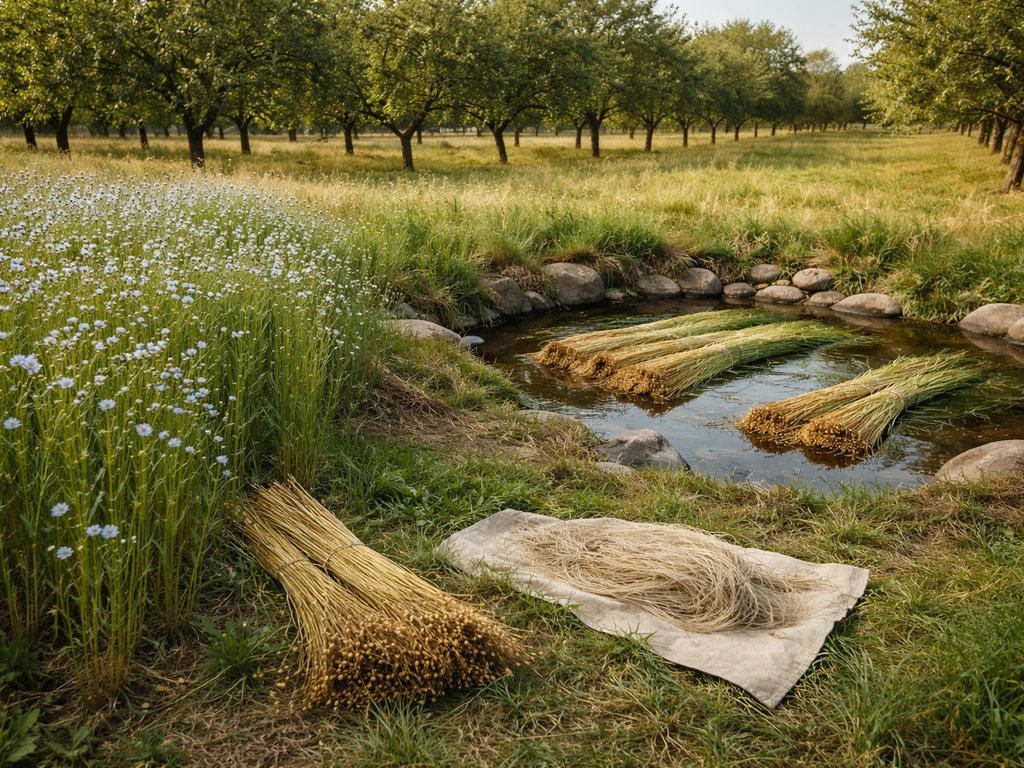
Wheat and flour were the dominant exports, but the crop mix was broader than that. Flax was one of the most important non-grain crops. Farmers processed it into linen fiber and linseed oil, both of which had steady markets. Hemp served a similar dual role: fiber for rope and cloth, and seed for oil. Both crops fit well into grain-dominated rotations because they broke pest and disease cycles and helped prepare ground for the next cereal planting.
Fruit production was more developed in Pennsylvania than in most other colonies. Orchards producing apples, peaches, and cherries appeared on established farms by the early 1700s, and they persisted as a consistent part of the agricultural economy. Buckwheat deserves a mention here too: it grows fast, tolerates acidic and low-fertility soils, and was used as both a rotation crop to break weed cycles and as a food crop. It shows up repeatedly in Pennsylvania county records alongside wheat and rye.
Delaware's crop story has an interesting trajectory. Tobacco was the early focus in Delaware's southern areas, influenced by the Chesapeake model. But by around 1770, tobacco declined in importance and Delaware's agricultural economy shifted firmly toward wheat, corn, barley, oats, and rye as grain trade expanded late in the 18th century. That transition mirrors a broader shift across the region away from single-crop dependence and toward diversified grain-plus-livestock farming.
Livestock were central to the whole system, even if animals are not technically crops. Cattle, hogs, and sheep produced meat, dairy, wool, and hides for local use and export. They also produced manure, which fed the grain fields. The livestock-grain relationship was not incidental; it was structural.
Why the Middle Colonies grew so quickly: geography, climate, and soil
The core geographic advantage was the combination of extensive river valleys, relatively flat terrain, and limestone-derived soils. Valley soils in Pennsylvania, particularly in the limestone belts running through the center of the state, are naturally fertile and well-buffered. Centre County records describe limestone soils and flat valley topography as directly supporting corn, wheat, oat, and rye production. That kind of soil environment is almost purpose-built for small-grain cereal farming.
The humid continental climate of the region provided large seasonal temperature swings that favored crops needing cold winters to vernalize (like winter wheat) and warm summers to fill grain. Precipitation was consistent and spread across the growing season, reducing the irrigation dependency that challenged drier regions. Compared to the Deep South's heat and humidity, the Middle Colonies' temperate climate had far lower disease and pest pressure on small grains.
Land availability mattered enormously. Settlers arriving in Pennsylvania especially found large tracts of workable, well-watered valley land that could be cleared and planted relatively quickly. The colony's open immigration policies and land grant system drew skilled farming families from across Europe, accelerating agricultural development faster than colonies with tighter land distribution.
How rivers, ports, and markets connected farms to buyers
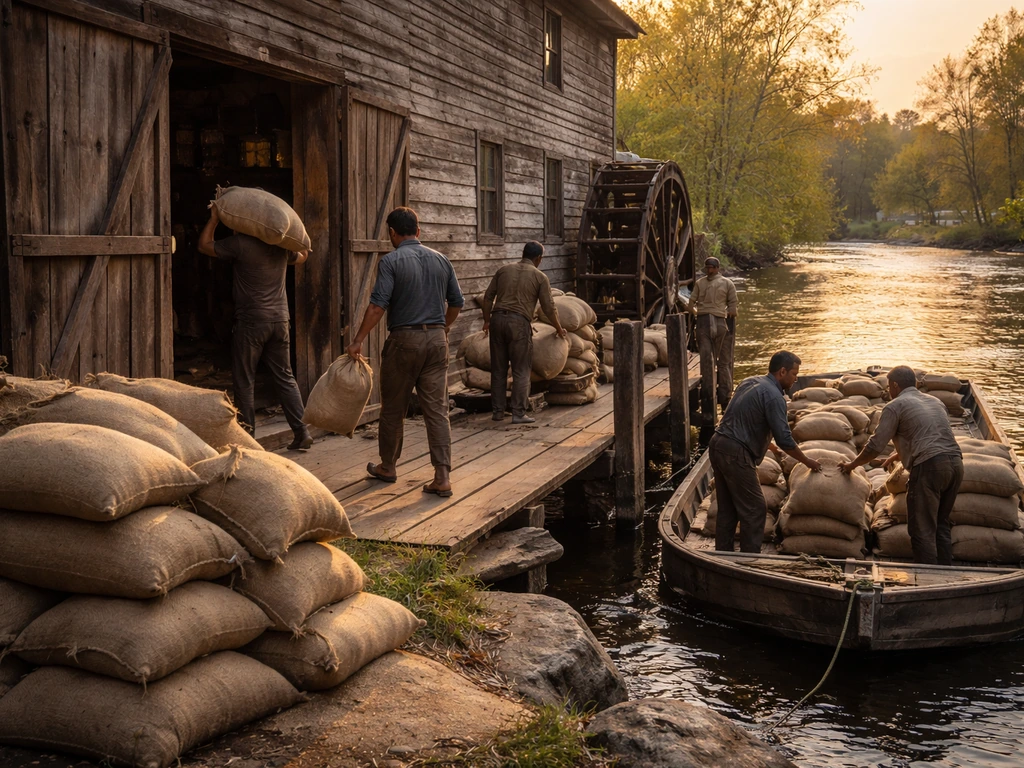
Growing surplus grain matters only if you can move it. The Middle Colonies were exceptionally well positioned for that. The Hudson River, Delaware River, and Susquehanna River all ran from interior farming regions directly to navigable harbors. Philadelphia became one of the most important grain export ports in the entire Atlantic world. The Smithsonian’s National Museum of American History describes the Port of Philadelphia as the most active harbor in colonial America and notes that processing grain was a major export around the 1760s Philadelphia became one of the most important grain export ports. New York Harbor served a similar function for Hudson Valley grain.
Grain flowed down these rivers to mill towns, then to port cities, then to markets in New England, the Caribbean, and Europe. Flour milling capacity grew rapidly alongside grain production: after the Revolution, records from the Hudson Valley describe roughly 21 operating flour mills near Croton alone, reflecting just how much milling infrastructure had been built to process regional grain. That processing capacity was what turned raw wheat into export-grade flour, which commanded higher prices and was easier to ship than whole grain.
The Caribbean connection was significant. European Caribbean colonies were focused on sugar production and needed imported food, which made them a reliable buyer for Middle Colonies flour and grain. Middle Colonies farmers were essentially feeding plantation labor forces across the Caribbean basin, which created a durable export demand that justified continued agricultural expansion.
Compare that market access to what early Virginia settlers faced. What Jamestown grew was shaped heavily by survival needs and tobacco's early dominance, with far less emphasis on export grain. The Middle Colonies' river infrastructure gave their farmers a built-in distribution network that tobacco colonies had to develop differently.
How farming systems and labor shaped production
The Middle Colonies had a significant advantage in farming knowledge, largely because of immigration patterns. German-speaking settlers, especially Pennsylvania Germans, brought sophisticated rotation and soil management practices with them. The approach documented in colonial-era farm records involves what was sometimes called a 'golden chain' of land management: linking crop rotations with lime applications, clover and grass plantings, and livestock manure returns to the soil. Natural grasses and meadows were used to restore fertility between grain cycles, and cultivated clovers were adopted to accelerate that restoration.
This rotation system was not just a nice idea; it was the reason Middle Colonies farms stayed productive decade after decade instead of wearing out their soils. Lime corrected soil acidity. Clover fixed nitrogen. Livestock returned organic matter. Grain came last in the cycle, harvesting the fertility that the previous steps had built. That kind of soil stewardship allowed sustained high yields in a way that exhaustive single-crop farming could not.
Labor in the Middle Colonies was more diversified than in the South. While enslaved people were present, particularly in New York and New Jersey, the region also relied heavily on indentured servants, free immigrant farmworkers, and family labor. This mix, combined with smaller average farm sizes compared to large Southern plantations, produced a farming culture oriented toward mixed grain-livestock operations rather than single-commodity monocultures. What the Southern colonies grew followed a fundamentally different labor and crop logic, built around tobacco, rice, and indigo on large plantation units.
How to use this today: mapping similar crops by region and conditions
The historical Middle Colonies crop pattern is essentially a template for what small-grain agriculture looks like in a humid continental climate with fertile valley soils and river access to markets. If you want to find modern analogs, or understand what might grow well in a region with similar conditions, there are a few practical tools worth knowing.
For soil, the USDA's Web Soil Survey is the starting point. It gives you detailed soil series data at a local scale, including organic matter levels, drainage class, and pH, all of which map directly to the conditions that made Middle Colonies grain farming work. If you are evaluating a site for wheat, rye, or barley production and the soil survey shows well-drained loam with moderate to high organic matter in a valley setting, you are looking at a Middle-Colonies-type agricultural environment.
For climate, the USDA Plant Hardiness Zone Map gives you winter extreme benchmarks based on 30-year climate normals, which helps identify whether a region has the cold winters that winter wheat needs to vernalize properly. Growing degree day (GDD) data from USDA Climate Hubs adds another layer, letting you check whether the warm-season length is sufficient to fill grain before first fall frost. Pennsylvania's southeastern corner runs nearly 200 frost-free days; the Middle Colonies grain belt was operating in roughly that range for its core production areas.
For watershed and river-access analysis, the EPA's Watershed Index Online allows you to compare river corridors using geographic and environmental data, which is useful if you are trying to understand why certain valleys historically supported grain export economies and whether modern counterparts exist. River access to processing and markets was as important as soil fertility in the colonial period, and it remains a real factor in regional agricultural economics today.
If you are a student working through colonial crop geography by colony, the most efficient approach is to organize by the four Middle Colonies states and track how each one's specific soil and river conditions shaped its crop mix. Pennsylvania was the wheat powerhouse. New York's Hudson Valley was a strong grain region with excellent river access. New Jersey farmed a mix of grains and vegetables feeding urban markets. Delaware started with tobacco influence from the south and shifted to grain by the late 1700s. Each colony fits the same broad template but with local variations that mirror the geographic differences within the region.
| Colony | Primary Crops | Key Advantage |
|---|---|---|
| Pennsylvania | Wheat, rye, corn, flax, hemp, oats, barley, fruit | Limestone valley soils, long southeast growing season, Philadelphia port |
| New York | Wheat, barley, rye, oats, corn | Hudson River transport, New York Harbor export access |
| New Jersey | Wheat, corn, rye, vegetables, grain for urban markets | Proximity to Philadelphia and New York markets |
| Delaware | Wheat, corn, barley, oats, rye (post-1770 shift from tobacco) | Delaware River access, transition from Chesapeake tobacco model |
The Middle Colonies grain economy did not happen by luck. It was the product of specific geographic conditions, immigrant farming knowledge, river infrastructure, and export market demand all converging in the same place at the same time. Those same factors, translated into modern soil surveys, climate maps, and watershed data, still explain where small-grain farming works best today.
FAQ
What did the Middle Colonies grow besides grains?
They also produced fiber crops like flax and hemp, plus rotation and feed crops such as buckwheat, millet, hay, and vegetables. In Pennsylvania, fruit orchards (especially apples, peaches, and cherries) were a regular part of farm production, not just small garden output.
Were corn and wheat grown at the same time, or were they seasonal crops?
They overlapped. Corn was typically planted in warm-season weather, while wheat and rye were managed around cold-season growing, with winter wheat needing a cold period before it took off in spring. Many farms paired warm-season corn with winter small grains to keep labor and land use steady.
Which crop was the most important for money, wheat or something else?
Wheat was the dominant cash crop and flour based exports were a major revenue source. However, animal feed needs kept oats and hay important on the farm even when they were not the primary export driver.
Why did rye and barley matter if wheat was the main crop?
They acted as risk management. Rye was especially useful on thinner or sandier soils and in areas where wheat yields were less reliable. Barley and oats also helped fill rotation needs by providing both food and livestock feed.
How did livestock affect what crops the Middle Colonies grew?
Livestock shaped crop choice through manure and feed demand. Manure returned nutrients to the fields, supporting sustained cereal yields, while animals increased the need for hay and feed grains like oats, which in turn stabilized the farm’s overall rotation plan.
Did farmers grow potatoes as a major crop in the Middle Colonies?
Potatoes were present, but they were usually secondary to the grain system dominated by wheat, rye, barley, oats, and corn. They show up in inventories, but the main economic and export emphasis stayed with cereals and flour.
How did Delaware’s crop shift change what it grew?
Delaware initially leaned toward tobacco in the south under Chesapeake influence, then shifted toward grain production as trade expanded in the late 1700s. By the grain-focused period, wheat and other cereals (corn, barley, oats, rye) became the core of its agricultural output.
What should I do if a region seems similar but has different rainfall patterns?
Look for whether precipitation is spread through the growing season. Even in humid continental climates, a local gap in rainfall can hurt small grains and shift outcomes toward more drought-tolerant crops. Use climate normals and growing degree days together, not just average annual rainfall.
If soil is fertile, can a farm still fail to produce Middle-Colonies-type crops?
Yes, if drainage or acidity is off. Wheat, rye, and barley depend on well-drained soils, and the nutrient balance matters for long rotations. A site with waterlogging or very low pH may require corrections (for example, liming) before yields match historical patterns.
What common mistake do students make when answering 'what did the Middle Colonies grow'?
They list only wheat and corn, ignoring the rotation and feed structure that made the system work. A complete answer should include the secondary grains (rye, barley, oats), rotation and fiber crops (buckwheat, millet, flax, hemp), and the livestock link via hay and manure.
Can I use the Middle Colonies model to predict crops today?
You can, but treat it as a framework, not a guarantee. Start with soil series, drainage, and pH, then verify winter cold enough for vernalization if growing winter wheat, and confirm that harvest-to-market logistics (roads, milling, storage, transport) are workable in your modern setting.
Next Articles
What Did the Southern Colonies Grow Main Crops Explained
What Southern colonies grew: tobacco, rice, indigo, and more, plus how climate, soil, and plantations shaped crops
Why Did Settlements Grow Near River Valleys? Causes
Discover why settlements grew in river valleys: fertile floodplains, irrigation, trade routes, and changing geography ov

How Did the Nile Floods Help Farmers Grow Crops?
Explains how Nile floods timed irrigation, deposited fertile silt, and supplied water so farmers grew more reliable crop