The main crops the Southern Colonies grew
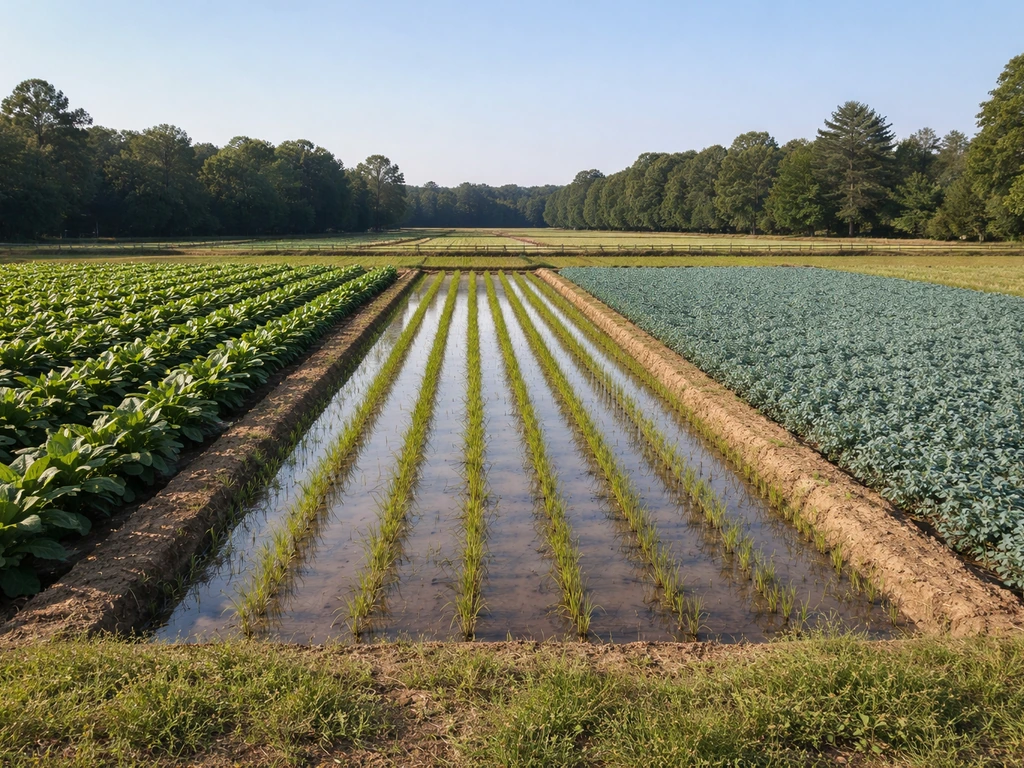
The Southern Colonies (Virginia, Maryland, North Carolina, South Carolina, and Georgia) built their agricultural identity around a short list of high-value cash crops, backed up by food staples grown for survival. The big four were tobacco, rice, indigo, and corn. Tobacco dominated Virginia and Maryland. Rice and indigo defined South Carolina and, a bit later, Georgia. Corn showed up everywhere as a subsistence crop and as feed. That is the short answer. Everything below explains the why behind it.
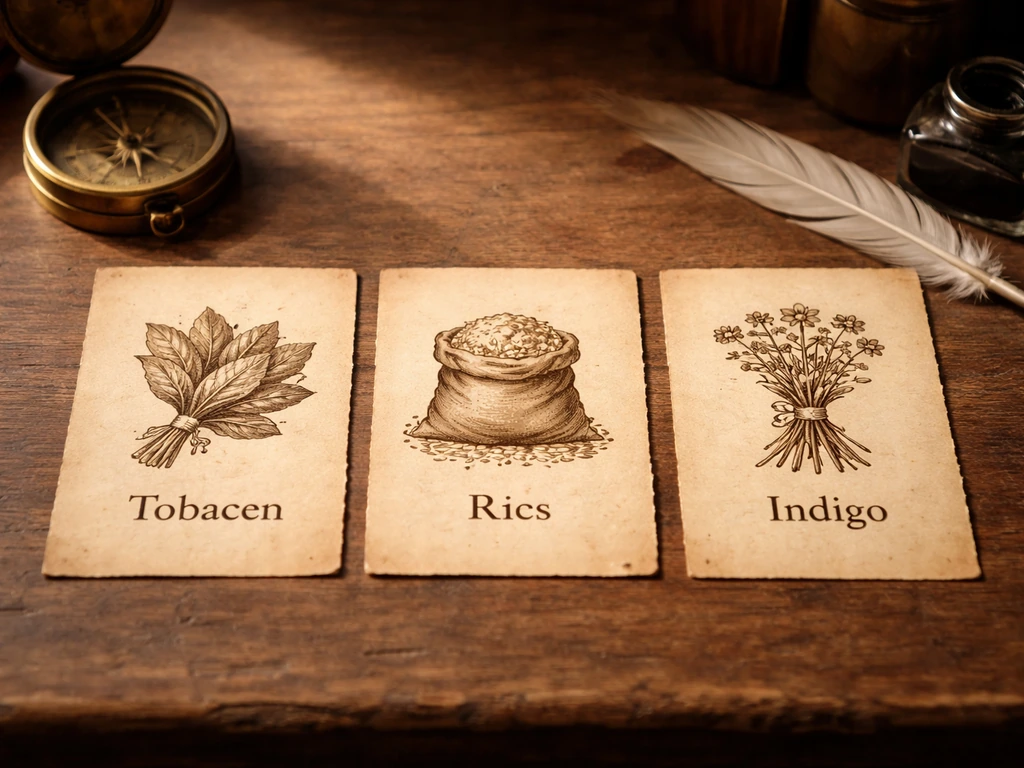
- Tobacco: the dominant cash crop of Virginia and Maryland from the early 1600s onward
- Rice: the staple export crop of the Carolinas, established in the 1690s and spreading to Georgia by the 1750s
- Indigo: a dye crop grown alongside rice in South Carolina and colonial Georgia, valued for its complementary growing season and market demand
- Corn (Indian corn): a universal staple grown across all the Southern Colonies for food and livestock
- Hemp: exported from South Carolina, documented in colonial shipping records alongside rice and indigo
- Kitchen garden crops: sweet potatoes, beans, and squash grown at a small scale for household use
Why the climate made these crops almost inevitable
The Southern Colonies had long, hot, humid growing seasons that simply could not support the mixed-grain farming that worked in New England or the mid-Atlantic. If you want to understand how different those agricultural worlds were, compare this region to what the New England colonies grew, where shorter frost-free seasons pushed farmers toward rye, wheat, and livestock rather than labor-intensive warm-weather crops. In the South, summer heat and rainfall patterns gave colonists a growing window long enough to bring tropical and semi-tropical crops to maturity.
Tobacco needs 90 to 130 frost-free days and consistent warmth through a long summer. Virginia and Maryland delivered that reliably. Rice is a semi-aquatic crop that needs heat, standing water, and reliable summer moisture, and the Carolina and Georgia lowcountry tidewater systems provided exactly those conditions. Indigo, a subtropical plant originally from Asia and Central America, needed the long warm season of the Deep South to produce viable dye yields. Corn was flexible enough to grow nearly anywhere in the region but thrived in the same warm conditions.
Soil and growing conditions varied a lot by sub-region
Not every part of the South was the same, and crop choices reflected real differences in soil type and local geography. Virginia and Maryland's Tidewater and Piedmont regions had reasonably fertile loam soils at first, but tobacco was punishing on them. Both tobacco and corn are very demanding of soil nutrients, which forced planters into long rotations to let fields recover fertility. VirginiaPlaces records that planters needed roughly 20 acres of land per laborer just to maintain tobacco and corn production in rotation, because the soil couldn't handle continuous cultivation without depleting quickly. This is a big reason why Virginia tobacco culture kept pushing westward into new land.
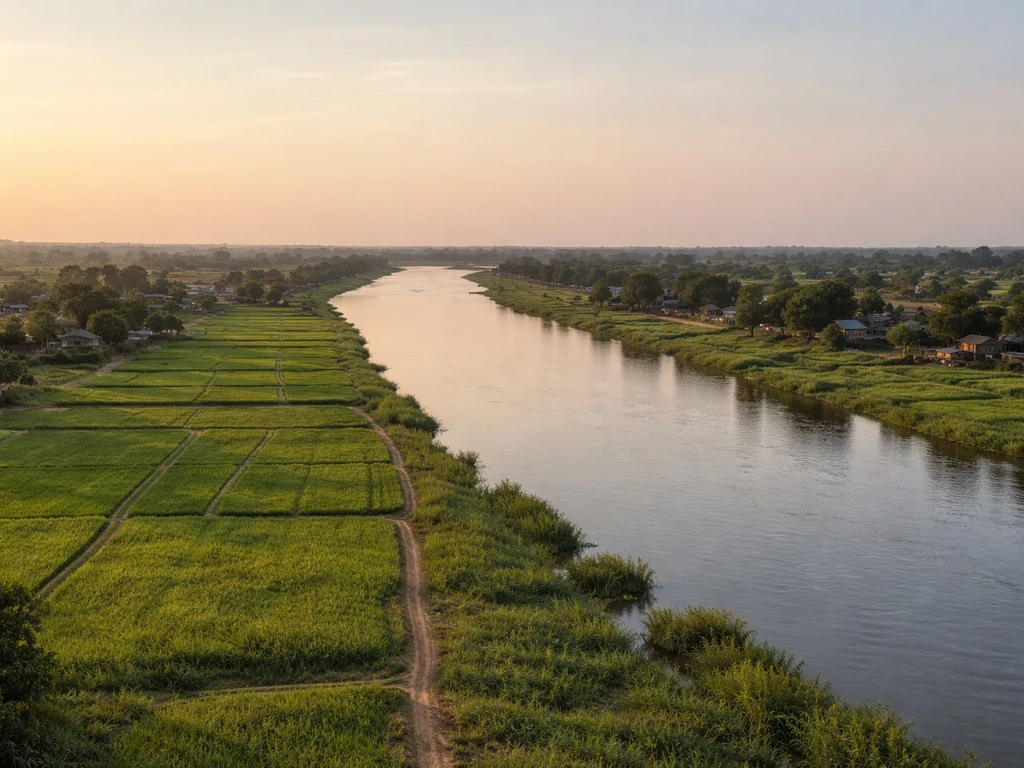
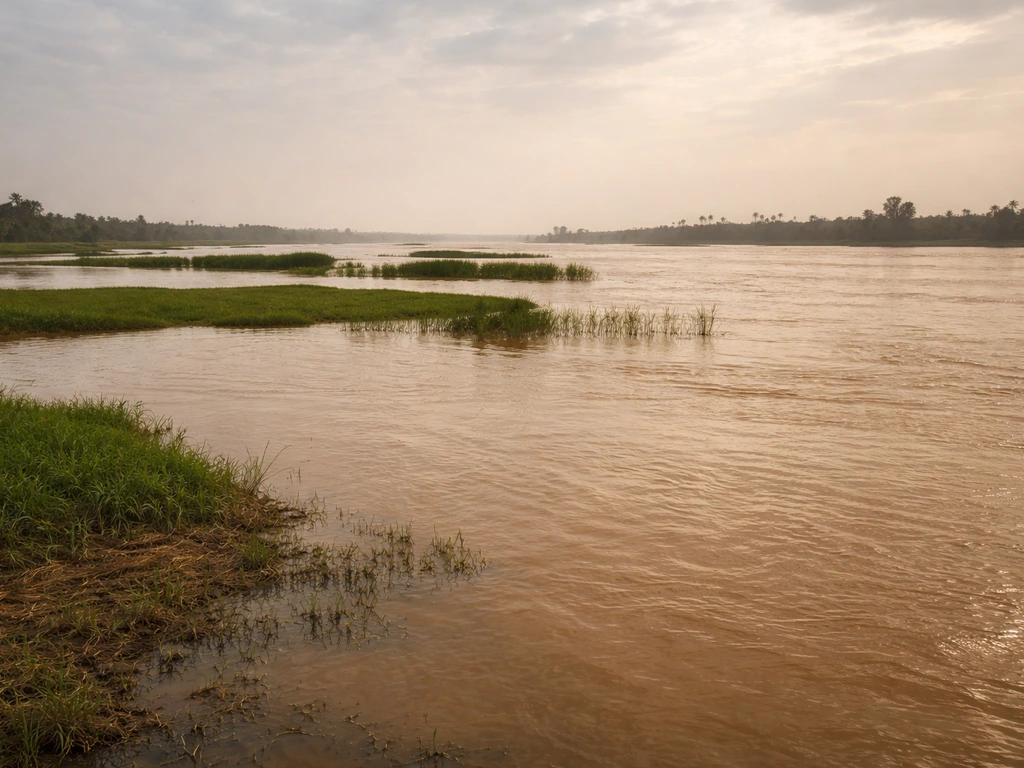
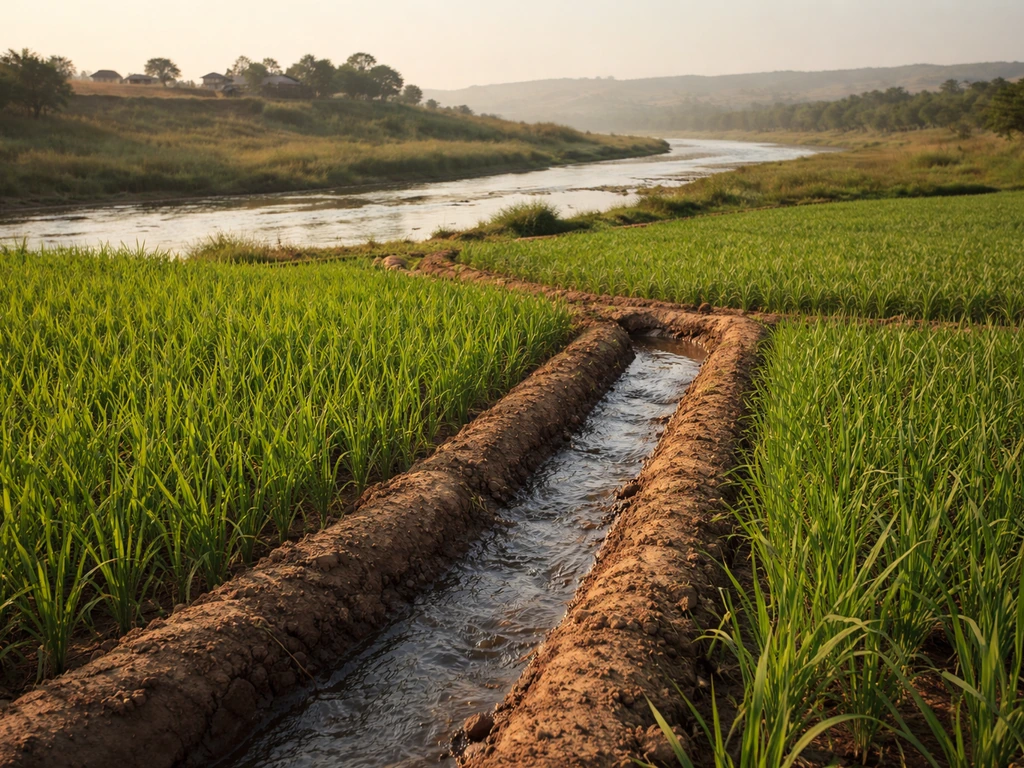
South Carolina and Georgia had a completely different soil story. The lowcountry coastal plain featured swampy, nutrient-rich alluvial soils along river flood zones, which turned out to be ideal for rice. The tidal rivers of the lowcountry, including the Waccamaw, Santee, Cooper, Ashley, Combahee, and Savannah, created a specific cultivation zone running from about 10 to 20 miles inland where colonists could harness daily river tides to flood and drain their rice fields. That tidal irrigation system was a technical innovation that reduced some labor demands and gave Carolina planters a consistent production advantage. On higher, drier ground away from the swamps, planters turned to indigo, which couldn't tolerate the waterlogged conditions rice needed. The two crops were genuinely complementary in terms of land use.
For a closer look at how a single colony navigated its specific soil and crop profile, what the Delaware colony grew offers a useful contrast, since Delaware sat right at the boundary between the Southern and Middle Colony agricultural systems, growing a mix of tobacco in some areas and grains in others depending on local soil.
How colonists actually grew these crops
Tobacco cultivation cycle
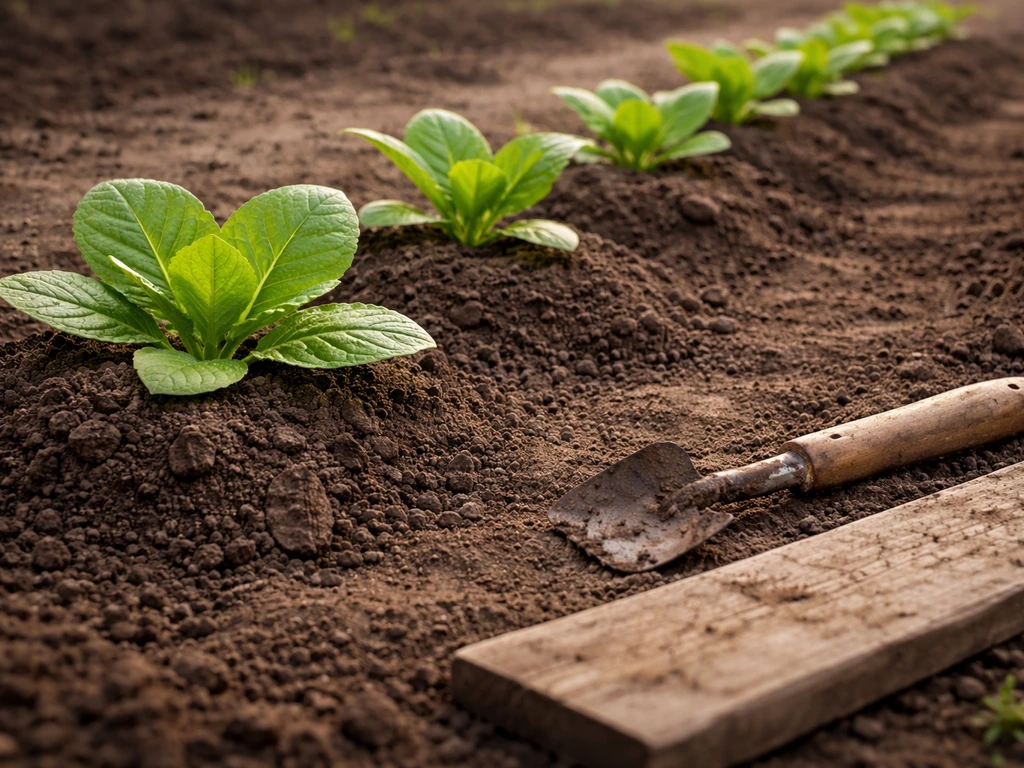
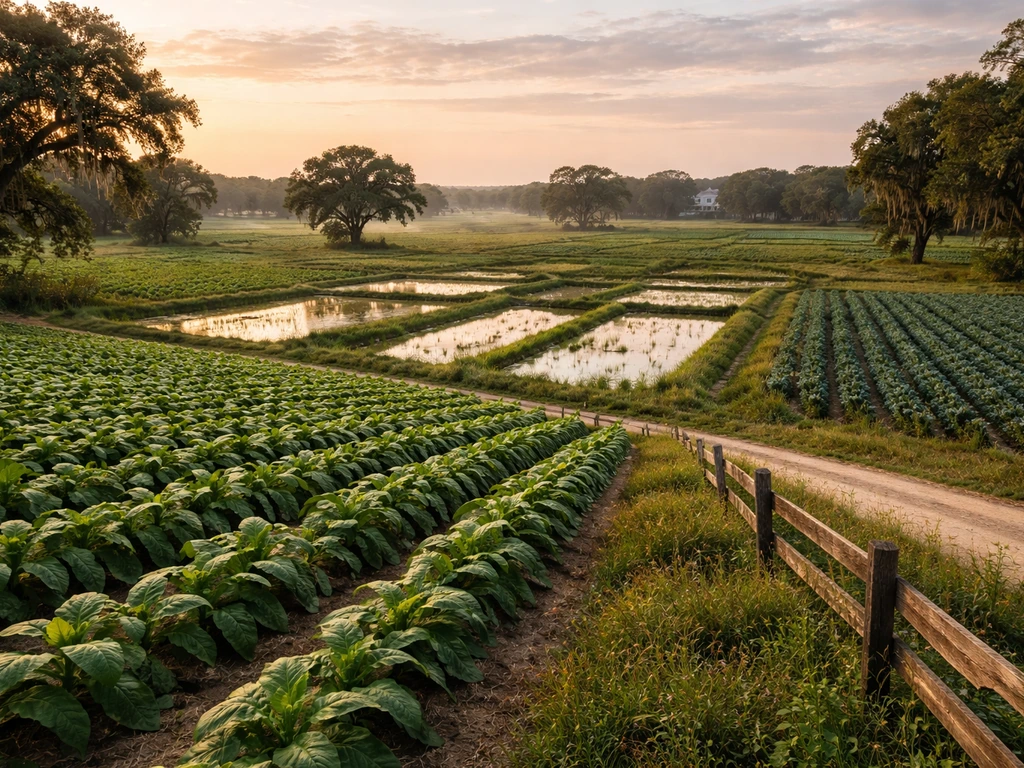
Tobacco production in colonial Virginia followed a careful multi-step cycle. Seeds were started in seedbeds in early spring, then transplanted to prepared hills in the field once seedlings were large enough. Planters waited for rain to soften the soil before moving seedlings to their final locations. Once in the ground, tobacco required constant attention: weeding, worming (removing tobacco hornworms by hand), and a process called priming, which meant removing the two to four bottom leaves early in the season to direct the plant's energy upward. What Jamestown grew is directly tied to this system, since Jamestown was ground zero for colonial Virginia's tobacco economy, and the cultivation methods refined there set the template for the entire Chesapeake region. Harvest was staggered because tobacco leaves on a single plant didn't all ripen at once, requiring multiple passes through the field.
Rice cultivation cycle
Rice was a row crop that needed considerable attention throughout the growing season. Tidal cultivation, which became the dominant method in the lowcountry by the mid-1700s, worked by using the natural rise and fall of tidal rivers to flood fields at key growth stages and drain them at others. Encyclopedia.com notes that rice plantation infrastructure for tidal rice culture required extensive systems such as canals, ditches, earthen banks, and flood gates before rice could be planted tidal cultivation. This controlled flooding suppressed weeds and provided water without full dependence on rainfall. Even with tidal systems in place, rice still demanded intense labor: field preparation, planting, flooding management, weeding, and harvest all required large and skilled workforces. A typical estate in the rice and indigo system operated about 30 working hands, who cultivated rice in the swampy lowland fields and indigo on the drier upland plots in a continuous work routine lasting nearly the whole year.
Indigo cultivation cycle
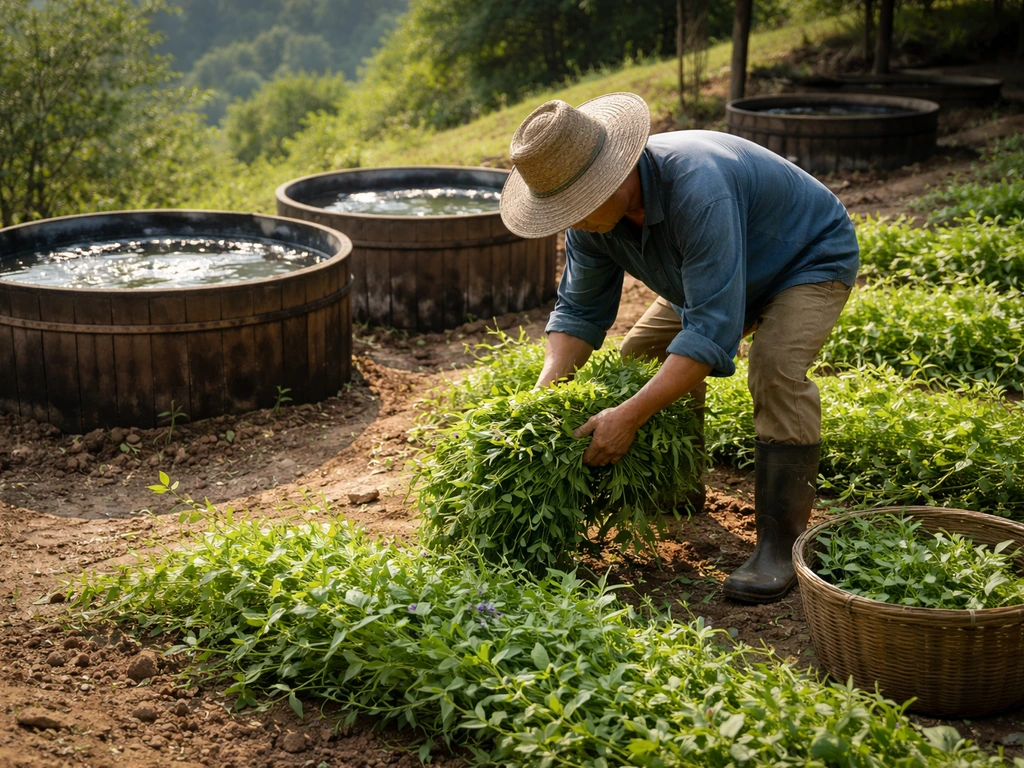
Indigo was grown on higher ground and harvested multiple times per season, with the cut plants fermented in large vats to extract the blue dye. The process was labor-intensive and required skilled management of the fermentation step. In South Carolina, indigo functioned as the cash crop that filled in the seasonal and geographic gaps left by rice, giving planters a second revenue stream from land that wasn't suited to flooding. It remained a significant crop until cotton surpassed it in the early 1800s.
How the plantation economy shaped what got grown
Crop selection in the Southern Colonies wasn't purely about climate and soil. The plantation economy and its labor system played a direct role in determining which crops colonists could actually grow at scale. Tobacco, rice, and indigo were all extraordinarily labor-intensive. Without large numbers of workers, none of these crops could be produced profitably. The forced labor of enslaved people made plantation-scale cultivation possible, and the crops that dominated the Southern economy were chosen in large part because they rewarded (and required) that kind of coordinated, large-scale labor.
In the South Carolina and Georgia lowcountry, rice and indigo plantations operated under a "task system" rather than the "gang system" used elsewhere. Under the task system, enslaved workers were assigned specific daily tasks rather than being kept in supervised groups throughout the day. This method was partly a product of the knowledge enslaved Africans brought with them, since many came from West African rice-growing regions and had direct expertise in cultivation and water management. Their technical knowledge was essential to making tidal rice cultivation work at all.
The scale of these operations also explains why cash crop monoculture dominated. Smallholders did grow corn and garden vegetables, but the big acreages went to exportable commodities. The crops Europeans grew in their Caribbean colonies followed a nearly identical logic: tropical climate plus enslaved labor plus export demand equaled plantation monoculture, and the Southern Colonies were operating inside the same Atlantic trade and labor system.
Comparing the Southern approach to the more diversified agriculture of the mid-Atlantic is instructive. What the middle colonies grew looked very different: wheat, barley, and mixed grains rather than tobacco or rice, because the climate, soils, and labor structures pointed in a completely different direction. The Middle Colonies didn't have the long, hot summers for tobacco or the tidal swamps for rice, and they didn't develop the same plantation-scale labor system.
A quick comparison of the major Southern Colony crops
| Crop | Primary Colony/Region | Key Growing Condition | Labor System | Primary Market |
|---|
| Tobacco | Virginia, Maryland | Long frost-free season, loamy soils | Gang system on large plantations | Export to Britain |
| Rice | South Carolina, Georgia | Tidal lowcountry swamps, 10-20 miles inland on tidal rivers | Task system on lowcountry plantations | Export (Britain, Caribbean) |
| Indigo | South Carolina, Georgia | Drier upland fields, warm long season | Task system, same estates as rice | Export (British textile industry) |
| Corn | All Southern Colonies | Flexible; grown on most soil types | Small farms and plantation subsistence plots | Local consumption and trade |
| Hemp | South Carolina | Varied; grown alongside other crops | Plantation labor | Export, documented in 1775 shipping records |
How to research Southern Colony crop patterns today
If you are mapping historical crop patterns or doing research for a class or project, there are some reliable source categories worth going to directly. Here is a practical sequence for building a solid picture.
- Start with colonial encyclopedia sources: the Encyclopedia Virginia and South Carolina Encyclopedia both have well-sourced articles on tobacco, rice, and indigo that cite primary documents. These are free online and consistently reliable.
- Look at export records: the Library of Congress holds an 1775 table of exports from South Carolina listing rice, indigo, hemp, and Indian corn with actual quantities. Export tables like this tell you what was actually moving at scale, not just what colonists claimed to grow.
- Use National Archives labor records: the U.S. Customs Service Slave Manifests for Charleston (Record Group 36) document inward labor flows into South Carolina. Connecting labor import records to crop expansion timelines gives you a concrete picture of how crop scale and forced labor tracked together.
- Check state archives and historical society collections: Virginia State Library and South Carolina Department of Archives and History hold plantation records, account books, and correspondence that show planting calendars and yields at the estate level.
- Cross-reference with NPS and state historic sites: Historic Jamestowne (National Park Service) publishes detailed descriptions of colonial tobacco cultivation methods that are directly grounded in archaeological and documentary evidence.
- Look for primary letters and plantation documents: the Digital Library of Georgia hosts Ulrich B. Phillips's plantation and frontier documents, which include firsthand accounts of how rice and indigo estates operated their labor and cultivation routines.
- For soil and geography context, use USDA Web Soil Survey to match historical tidewater cultivation zones to modern soil classifications. The tidal rivers named in historical sources (Waccamaw, Santee, Cooper, Ashley, Combahee, Savannah) are still geographically identifiable today.
The key verification move is triangulating between at least two source types: a narrative source (encyclopedia or plantation memoir) plus a quantitative source (export table or customs record). The National Archives provides a finding-aid page for “Slave Manifests for Charleston,” explaining that these records help document slave labor importations through customs and maritime documentation connected to Charleston. When both point to the same crop in the same region, you have a solid basis for any historical crop map. Colonial agricultural history has genuinely rich documentation once you know where to look, and these sources will take you well beyond the textbook summary level.