Farmers grow rice in paddy fields above everything else, that is the defining crop of a paddy system worldwide. But the full picture is richer than that. Depending on the season, the water regime, and the region, a paddy field might also produce taro, lotus root, water chestnuts, aquatic vegetables, short-duration pulses, and even fish or ducks alongside the grain. This guide maps out what gets grown, where, why, and how those choices change from a flooded lowland in the Mekong Delta to a rain-watered hillside terrace in Odisha or a Sacramento Valley rice district in California.
What Do Farmers Grow in Paddy Fields: Crops & Systems

Samuel Rourke
28 Jul 2026
What Is a Paddy Field?
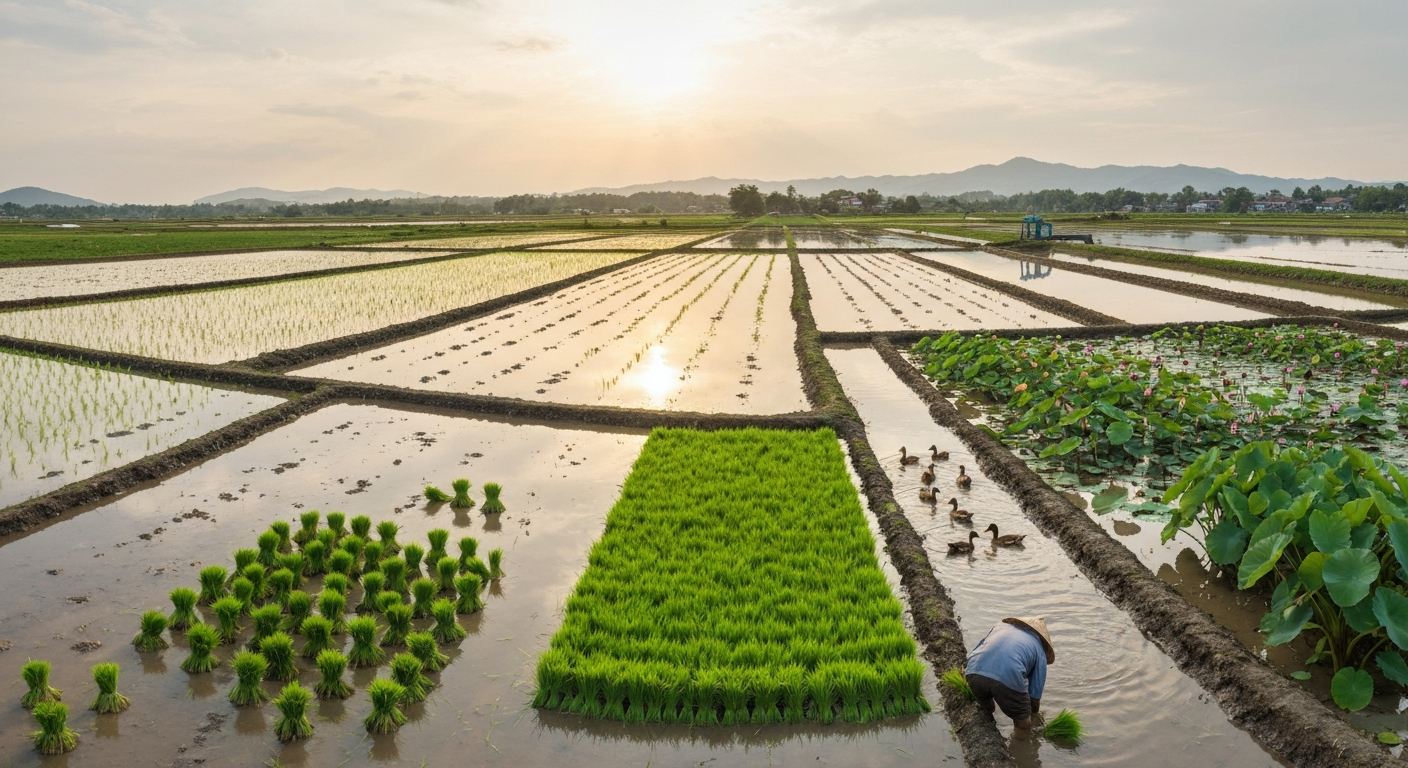
A paddy field (often just called a "paddy") is a flooded or periodically flooded area of arable land managed for the cultivation of semiaquatic crops, most commonly rice. The word "paddy" comes from the Malay padi, meaning rice in the husk, and it has become the standard term in agronomy and trade statistics worldwide. The FAO defines paddy fields in terms of their water management function: they are not simply wet fields but actively managed systems that store, distribute, and drain water to serve the crop cycle.
That water management function also produces benefits that go well beyond grain. Paddy fields buffer downstream flooding, recharge shallow groundwater, reduce soil erosion on slopes (when terraced), and support the livelihoods of hundreds of millions of smallholder families across Asia and parts of West Africa and Latin America. If you are a student trying to understand why so much of rural Asia looks the way it does, or a gardener curious about wetland cultivation, the paddy field is one of the most consequential agricultural inventions in human history.
Flooded Lowland vs. Upland: Two Very Different Systems
The IRRI (International Rice Research Institute) and the FAO classify rice-based paddy systems into four main water-regime categories. Understanding these is essential before talking about what gets grown, because the water regime shapes almost every other choice a farmer makes.
Irrigated (Flooded) Lowland Paddies
These are the classic bunded (embanked) fields kept under a shallow layer of standing water during most of the growing season. Irrigation infrastructure, canals, pumps, or gravity-fed systems from reservoirs, supplies water when rainfall is insufficient. Irrigated lowlands account for roughly 55 to 60 percent of global rice production even though they occupy a smaller share of total rice area, because water control allows for higher-yielding varieties and, in many regions, two or even three crops per year. The large contiguous paddies of the Mekong Delta, the Gangetic Plain, and California's Sacramento Valley all fall into this category.
Rainfed Lowland Paddies
Rainfed lowland fields are bunded like irrigated paddies but depend entirely on monsoon rainfall. Water depth is unpredictable, sometimes only a few centimeters, sometimes flooding deeper than expected, so farmers select more tolerant varieties and often manage only a single crop per year. Yields are typically lower and more variable than in irrigated systems, but these fields make up a huge share of rice area across eastern India, Bangladesh, Myanmar, and parts of Sub-Saharan Africa.
Upland (Dry) Paddies
Upland rice systems are not flooded at all. Fields are not bunded, receive only rainfall, and are managed more like dryland cereals. Upland rice is grown on hillsides and forest margins across Southeast Asia, parts of South Asia, West Africa, and Latin America. Yields are the lowest of any rice system, often below 1.5 tonnes per hectare, but the crop suits areas where water control is impossible. Upland systems also make it easier to rotate or intercrop with other crops such as maize, cassava, or pulses.
Deepwater and Flood-Prone Systems
A smaller but ecologically important category covers areas subject to seasonal flooding deeper than 50 centimeters, including tidal wetlands and river floodplains. Farmers here grow traditional tall-stemmed "floating rice" varieties that can elongate rapidly as water levels rise. These systems are found in parts of Bangladesh, Cambodia, and the lower Irrawaddy and Mekong deltas.
Rice: The Primary Crop and Its Production Systems
Rice (Oryza sativa for Asian rice, Oryza glaberrima for African rice) is by far the dominant paddy crop. Global paddy (rough rice) production reached roughly 800 million tonnes in 2023 according to FAOSTAT-based analyses, with China and India together accounting for close to half of that total. Within rice cultivation, farmers choose among several establishment and variety systems.
- Transplanted rice: Seedlings are raised in a nursery for 20 to 30 days and then transplanted by hand or machine into prepared, flooded fields. This is the most traditional and still the most widespread method across Asia. It gives good weed suppression because the field is flooded at transplanting, but it is labor-intensive.
- Direct-seeded rice: Seeds are sown directly into the field, either dry (before flooding) or wet (into standing water). Direct seeding is increasingly popular because it cuts labor and can reduce water use, though weed management becomes more demanding.
- Rainfed transplanted rice: The same transplanting method applied in rainfed lowland and upland-adjacent zones, with adjusted timing to match the monsoon.
- Floating/deepwater rice: Long-stemmed traditional varieties planted in flood-prone areas; the plants elongate to keep pace with rising water.
- Wild rice: Zizania species (including North American wild rice, Z. palustris) are aquatic grasses historically harvested by Indigenous peoples of the Great Lakes region and Canada, and now cultivated in Minnesota, Wisconsin, and parts of California. Wild rice requires standing, slow-moving fresh water and is technically a different genus from Asian paddy rice, but it shares the paddy-like flooded field management.
A useful and increasingly common practice in irrigated systems is ratoon cropping: after the main harvest, the stubble regrows and produces a second (ratoon) crop from the same root system, typically yielding roughly 20 to 50 percent of the main-crop harvest depending on variety, management, and season. This approach saves on seed, land preparation, and transplanting costs while squeezing additional output from the same field and the same irrigation water.
Non-Rice Crops Grown in Paddy Systems
Paddy fields are not single-crop systems everywhere or in every season. Farmers across Asia have long exploited the flooded environment for a range of aquatic and semi-aquatic vegetables, and in the dry season they switch to dryland crops as water is drained away. Here is a practical rundown of what else grows in and around paddy systems.
Taro
Taro (Colocasia esculenta) is one of the oldest paddy-associated crops. It thrives in waterlogged and flooded conditions, making it a natural fit for flooded paddy beds. In parts of the Philippines, Pacific Islands, and West Africa, taro has historically been grown in irrigated terrace systems that look almost identical to rice paddies. In China and Japan, paddy taro (suita taro in Japan) is grown in flooded fields either in rotation with rice or as a dedicated year-round crop.
Lotus
Sacred lotus (Nelumbo nucifera) is cultivated commercially in flooded paddy-like ponds and fields across China, Japan, India, Vietnam, and South Korea. The edible rhizome (lotus root) is a significant vegetable crop in East Asian markets. In parts of Hubei and Jiangxi provinces in China, lotus root cultivation occupies paddies that might otherwise grow a second rice crop, often because lotus root commands a higher market price. Lotus seeds are also harvested for food and traditional medicine.
Water Chestnut and Water Caltrop
Chinese water chestnut (Eleocharis dulcis) grows in shallow flooded beds and is widely cultivated in south China, often in rotation with rice. The FAO's Catalogue of Cultivated Aquatic Organisms, FAO thematic background documents that Chinese water chestnut (Eleocharis dulcis) and water caltrops (Trapa spp.) are cultivated in managed flooded or paddy beds, sometimes rotated with rice Catalogue of Cultivated Aquatic Organisms — FAO thematic background. It is harvested for its crisp, sweet corms and sold fresh or processed. Water caltrop (Trapa spp.) is a floating aquatic plant whose starchy seeds (water caltrops or water nuts) are eaten across East and Southeast Asia. Both crops share paddy-like management: flooded beds, careful water depth control, and hand harvesting.
Aquatic Vegetables
China has one of the most diverse traditions of cultivating aquatic vegetables in paddy or paddy-adjacent shallow water. Commercially important species include water spinach (Ipomoea aquatica, a fast-growing leafy green grown in flooded or waterlogged channels and fields), arrowhead (Sagittaria sagittifolia, harvested for its bulbs), and water shield (Brasenia schreberi). These crops are grown for local and regional fresh markets and form a nutritional bridge between rice harvests.
Pulses and Short-Duration Legumes
In rice-fallow areas across South and Southeast Asia, where a single rice crop leaves the field empty for several dry-season months, farmers commonly sow short-duration pulses into residual soil moisture after the rice harvest. Mungbean (Vigna radiata), black gram (Vigna mungo), lentils, and chickpea (in cooler zones) are the main options. These crops fix atmospheric nitrogen, improving the nitrogen status of the soil for the next rice season, and supply protein to farm households that depend heavily on rice for calories. The relationship between rice and legume rotations is why farmers grow field beans and related pulses across the rice belt, they are plugging a nutritional and soil fertility gap that monoculture rice leaves open.
Dryland Vegetables in the Dry Season
When paddy fields are drained for the dry season or between rice crops, many farmers plant short-cycle vegetables: leafy greens, cucurbits, tomatoes, onions, and mustard, depending on climate and market access. Smallholder families in the Red River Delta of Vietnam and in Bangladesh commonly produce vegetables on paddy bunds (the raised ridges between fields) year-round, treating the bund area as a permanent kitchen garden that runs alongside the flooded field.
Fodder Crops
In some South Asian and Southeast Asian systems, rice straw itself is the most important fodder output of the paddy field, fed to draft animals and dairy cattle. Some farmers also grow dhaincha (Sesbania bispinosa) or other fast-growing leguminous shrubs as green manure and fodder cover crops in the paddy, then plow them in before transplanting rice. This practice is common in parts of West Bengal, Bihar, and Bangladesh.
Integrated Enterprises: What Else Lives in a Paddy Field
Some of the most productive and ecologically sound paddy systems are not just about crops at all, they combine crops with animals in ways that reduce inputs, add income streams, and improve soil health. These integrated systems have ancient roots and are now gaining renewed scientific and policy attention.
Rice-Fish and Rice-Shrimp Co-culture
Rice-fish farming is one of the oldest integrated systems in Asia, documented for at least 2,000 years in China's Zhejiang province (the Qingtian rice-fish system is a UNESCO-recognized Globally Important Agricultural Heritage System). Farmers introduce fish, commonly common carp, crucian carp, or tilapia, into flooded paddies after transplanting. The fish eat insects and weeds, stir up nutrients from the soil, and add manure directly to the field. Research and FAO case studies consistently show that rice yields are maintained or marginally improved while fish add a significant protein and income stream. In coastal areas of Vietnam and Bangladesh, seasonal brackish-water shrimp are raised in paddies during the dry season in alternation with rice, a system that has expanded rapidly but requires careful salinity management to avoid long-term soil degradation.
Duck-Rice Systems
Integrated rice-duck farming has traditional roots in Japan, China, Korea, and Vietnam. Ducklings are introduced to flooded paddy fields after transplanting, where they swim between rice rows eating insects, weeds, snails, and fallen grains. Their feet and bills disturb the water and soil, which suppresses algae and aerates surface mud. Their manure feeds the rice plant directly. Systematic reviews of rice-duck systems report reductions in pesticide and herbicide use, lower input costs, and improvements in net farm income compared to monoculture rice, with the added output of duck meat and eggs at the end of the season. The system requires more management attention and fencing to protect ducks from predators, which makes it better suited to smallholder operations than large mechanized farms.
Azolla and Green Manure
Azolla is a tiny floating aquatic fern that hosts nitrogen-fixing cyanobacteria in its leaf cavities. It has been grown in flooded paddies across Asia, particularly in China and Vietnam, for centuries as a free or low-cost nitrogen source for rice. Farmers either let azolla grow as a green mulch before transplanting and then plow it under, or maintain it as a permanent surface cover between crop cycles. Trials combining azolla with fish and livestock manure in integrated paddy systems have shown measurable improvements in soil organic matter, nitrogen supply, and overall system productivity compared to chemical-only fertilizer approaches.
Where in the World: Regional Crop Patterns in Paddy Fields
Paddy field management and crop choices vary significantly by country, climate, and farming tradition. The table below gives a high-level regional comparison. Note that within-country variability can be large, a single country like India contains multiple distinct paddy ecosystems ranging from the deepwater fields of Assam to the triple-cropped irrigated paddies of Tamil Nadu to the rainfed uplands of Jharkhand. Always check country- or state-specific sources for precise cropping calendars and dominant varieties, as production patterns shift with policy, market prices, and climate variability.
| Region / Country | Dominant Paddy Crop(s) | Key System Type | Notable Additional Crops or Enterprises | Cropping Intensity (typical) |
|---|---|---|---|---|
| China (south) | Rice (indica and japonica) | Irrigated lowland; rice-fish and rice-duck systems widespread | Lotus root, water chestnut, aquatic vegetables, fish, duck | Double or triple crop per year in south; single in northeast |
| India (Gangetic Plain) | Rice (kharif/Aman season) | Rainfed and irrigated lowland | Wheat (rabi follow-on), short-duration pulses, mustard | Single (rainfed) to double (irrigated) |
| India (South) | Rice (multiple seasons) | Irrigated lowland (canal and tank) | Short-duration vegetables, pulses | Double to triple in some canal-irrigated zones |
| Japan | Rice (japonica) | Irrigated lowland; highly mechanized | Duck-rice in specialty/organic systems; paddy vegetables off-season | Single crop per year in most regions |
| Indonesia | Rice (indica) | Irrigated lowland (sawah system) | Maize or soybeans in dry-season rotation | Double crop in irrigated areas; single in rainfed |
| Thailand | Rice (jasmine/indica) | Rainfed lowland dominant in northeast; irrigated in central plain | Cassava, sugarcane in rotations outside paddy zone | Single (rainfed northeast) to double (central irrigated) |
| Vietnam (Mekong Delta) | Rice (indica) | Irrigated lowland; seasonal shrimp-rice in coastal zones | Shrimp (brackish rotation), fish, vegetables on bunds | Double to triple rice; shrimp-rice in coastal areas |
| Bangladesh | Rice (Aman, Boro, Aus seasons) | Rainfed and irrigated lowland; some deepwater | Jute, mustard, lentil, vegetables in dry season | Double (most areas); triple in some irrigated zones |
| California, USA | Rice (japonica medium-grain) | Irrigated lowland (Sacramento Valley) | Winter waterfowl habitat management; some crawfish | Single crop per year |
| Arkansas, USA | Rice (long-grain indica) | Irrigated lowland (Grand Prairie and Mississippi Delta regions) | Soybeans, corn, cotton in rotation outside paddy fields | Single crop per year; some ratoon cropping |
South Asia: Monsoon Rhythms and Rice-Fallow Systems
South Asia's paddy calendar is organized around the monsoon. India's main rice seasons are kharif (Aman, planted June to July, harvested October to December), a shorter Aus crop in early summer in parts of eastern India and Bangladesh, and the Boro irrigated dry-season crop (transplanted December to January, harvested April to May) which depends entirely on groundwater pumping or canal irrigation. The rice-fallow system, where the rainfed kharif paddy is followed by a fallow period because there is not enough residual moisture for a full dryland crop, is a significant agricultural challenge across eastern India, Bangladesh, and Myanmar. Development programs have worked for decades to encourage short-duration mungbean, lentil, or mustard to replace this fallow and improve both nutrition and soil fertility.
Southeast Asia: High Intensity and Diverse Systems
Southeast Asia shows the widest range of paddy intensity and diversity. Remote sensing studies published in 2025 confirm large spatial variability in cropping intensity across the region: irrigated lowland areas in Vietnam's Mekong and Red River deltas, central Thailand, and Java in Indonesia support double or triple rice per year, while rainfed areas in northeast Thailand, central Myanmar, and upland zones of Laos and Cambodia are predominantly single-cropped. The rice-shrimp rotation in coastal Vietnam's Mekong Delta has expanded significantly over the past two decades, but it requires careful management of soil salinity, once brackish water degrades a paddy's soil structure, transitioning back to rice becomes difficult and expensive.
East Asia: Japan and China
Japan's paddy system is largely single-cropped due to its temperate climate and shorter growing season, producing japonica-type medium to short-grain rice valued for its stickiness and quality. Japan has some of the world's most mechanized paddy systems but also a growing organic and specialty sector where duck-rice and traditional variety cultivation are practiced. China's paddy landscape is enormously diverse: the northeast (Heilongjiang, Jilin) produces japonica rice in a short season reminiscent of Japan, while the south and Yangtze basin support double-cropped indica rice alongside a rich tradition of aquatic vegetables, lotus, and water chestnut cultivation in and around paddy fields.
United States: California and Arkansas
Rice in the United States is concentrated in a handful of states, with California and Arkansas together accounting for the vast majority of domestic production. California's Sacramento Valley grows primarily medium-grain japonica rice, irrigated from the Sacramento River system, and harvested as a single annual crop. For more detail on what farmers grow in California, see our guide on what farmers grow in California. After the rice harvest, many California paddies are flooded for the winter to decompose straw and provide wetland habitat for migrating waterfowl, a practice that is now partly managed as a conservation program. Arkansas grows long-grain indica-type rice in the Grand Prairie and Mississippi Delta regions. Rotations with soybeans and corn are standard on upland fields adjacent to paddy areas, though strictly within the paddy zone the system is typically single-crop rice with some ratoon cropping in warmer southern parts of the state.
Why Farmers Choose Particular Paddy Crops: The Real Drivers
Understanding what grows in a paddy field is only half the story. Why farmers choose a particular crop or system comes down to a handful of recurring factors. For a focused explanation of the economic, ecological, and calendar reasons farmers grow different crops in a single field, see why do farmers grow different crops in a field.
- Water availability and control: Flooded conditions make rice and aquatic crops the only practical options during the wet season. Crop choice shifts dramatically when paddies drain.
- Climate and temperature: Japonica varieties need cooler temperatures and shorter seasons; indica varieties suit tropical heat. Upland rice tolerates drought; deepwater varieties tolerate flooding. Climate dictates variety before anything else does.
- Soil type and fertility: Heavy clay soils retain water well and suit flooded systems. Sandy or shallow soils drain too quickly for efficient paddy rice. Soil pH affects suitability for aquatic vegetables like taro.
- Labor availability and mechanization: Transplanting is labor-intensive but gives better weed control; direct seeding suits farms that have mechanized or where labor is scarce. Duck-rice and rice-fish systems add management complexity that suits smallholders better than large-scale commercial operations.
- Market access and price: Lotus root, water chestnut, and premium aromatic rices command higher prices than commodity rice, pushing farmers in well-connected areas toward these crops. Commodity rice dominates where transport links are poor and subsistence is the priority.
- Government policy and subsidies: Minimum support prices for rice in India, irrigation subsidies in Vietnam and Indonesia, and conservation programs in California all shape what gets grown. Policy can be as decisive as climate.
- Soil and environmental constraints: Salinity intrusion in coastal paddies limits rice yields and pushes farmers toward shrimp or salt-tolerant varieties. Methane emissions from flooded paddies are a growing regulatory and sustainability concern in some regions, influencing water management practices.
Double-Cropping, Rotation, and Seasonality
One of the most practical planning tools for any paddy-based farmer is the crop calendar. In irrigated double-cropped systems, the year typically divides into a wet-season rice (monsoon-timed or first irrigation season) and a dry-season rice or pulse crop. In triple-cropped systems, found in parts of Vietnam's Mekong Delta and south India's irrigated districts, a third crop squeezes in at the margins of the calendar and demands well-managed irrigation and fast-maturing varieties. High-resolution satellite-based crop mapping studies published in 2025 confirm this intensity pattern: irrigated lowland areas concentrate multiple crops per year, rainfed and upland areas are mostly single-cropped.
Crop rotation within paddy systems serves several agronomic purposes at once. Following rice with a dryland legume (mungbean, soybean, lentil) breaks pest and disease cycles that build up under continuous rice monoculture, adds nitrogen through biological fixation, and improves soil structure by allowing a drying period. Farmers who rotate rather than continuously flood their paddies also report lower weed pressure and, in some cases, lower methane emissions, since methane production in paddy soils is directly tied to the duration of anaerobic flooding.
A Note on What You Won't Find in a Paddy Field
Readers sometimes arrive at paddy field topics after searching about unusual field fungi or plants. It is worth being direct: species like liberty caps (Psilocybe semilanceata) are grassland fungi associated with grazed pastures, fertilized meadows, and grassy hillsides, not flooded paddy fields. The permanently or seasonally anaerobic conditions in a flooded paddy are hostile to the dung-enriched, freely drained grassland habitat that liberty caps require. If you are researching what grows in grazed cow fields and meadows, that is a very different environment from a paddy system.
Ancient Paddy Agriculture: A Brief Historical Note
Paddy rice cultivation has one of the longest documented histories of any crop system. Archaeological evidence from the Yangtze River basin in China dates domesticated rice cultivation to roughly 7,000 to 9,000 years ago, with bunded flooded field systems appearing at sites like Kuahuqiao and Tianluoshan from around 6,000 to 7,000 years ago. The expansion of rice paddy agriculture across Southeast and South Asia over the following millennia tracks closely with the movement of Austronesian and Austro-Asiatic-speaking peoples, bringing paddy cultivation as far as the Philippines, Indonesia, Sri Lanka, and eventually Japan (around 900 BCE) and Korea. The same basic technology of bunded, flooded fields and transplanted seedlings that those early farmers developed is still recognizable in paddies across Asia today, a remarkable continuity of agricultural practice across thousands of years.
Sustainability and Environmental Considerations
Paddy fields are productive but not without environmental costs. Flooded anaerobic soils are a significant source of methane, a potent greenhouse gas; peer-reviewed analysis published in 2026 using FAOSTAT data highlighted how international rice trade reshapes the geographic distribution of methane emissions from rice cultivation. Water use in irrigated paddy systems is also substantial, and aquifer depletion from groundwater-fed Boro rice in Bangladesh and parts of India is a recognized long-term concern. Salinity intrusion in coastal paddy areas, worsened by sea-level rise and upstream water diversion, is already reducing yields and pushing farmers toward salt-tolerant varieties or shrimp-rice alternation.
On the positive side, practices like the System of Rice Intensification (SRI), alternate wetting and drying (AWD), and integrated rice-fish or rice-duck systems have demonstrated the potential to cut water use, reduce chemical inputs, lower methane emissions, and maintain or improve yields compared to conventional flooded monoculture. These approaches are gaining ground in development programs across Asia and are increasingly relevant to discussions about how paddy agriculture needs to adapt to both a changing climate and growing sustainability expectations.
FAQ
Search-oriented title and meta description for the article
Title: What Do Farmers Grow in Paddy Fields Worldwide — Crops, Systems, and Why Meta description (≤160 chars): A clear, region-by-region guide to crops grown in paddy fields, crop systems (rice, vegetables, fish, ducks), seasonality, and why farmers choose them.
What is a paddy field and what main types exist?
A paddy (paddy field) is an arable field managed to hold standing water for part or most of the crop cycle, primarily to grow semiaquatic crops (especially rice). Major types by water regime: irrigated (controlled water supply and bunds), rainfed lowland/shallow‑flooded, deepwater/flood‑prone (including tidal wetlands), and upland (non‑bunded, rainfed; not continuously flooded). These types differ in water control, yield potential, crop choices and management.
What primary rice types and production systems are grown in paddies?
Primary rice ecologies and systems: irrigated/transplanted rice (high yields, multiple crops/year where water allows); rainfed lowland rice (single or variable crops tied to the monsoon/rain season); upland rice (non‑flooded, rainfed, lower yields); deepwater/tidal rice (adapted varieties able to survive prolonged flooding). Establishment methods: transplanted rice (nursery→transplanting) and direct‑seeded rice (dry or wet). Ratoon cropping (regrowth harvests) is also used in many systems.
Which non‑rice crops and aquatic crops are grown in or near paddy fields?
Common non‑rice and aquatic crops in paddy systems include: taro (Colocasia/Alocasia), lotus (Nelumbo), water chestnut (Eleocharis/Trapa species), water caltrop, arrowhead (Sagittaria), water spinach (Ipomoea aquatica), various leafy vegetables adapted to shallow water, short‑duration pulses (mungbean, black gram) in rice‑fallow rotations, and fodder species. In some locations, farmers plant vegetables in shallow‑puddled beds or pit systems rotated with rice.
What integrated enterprises are commonly practiced with paddy fields?
Common integrated systems: rice–fish/shrimp culture (fish in paddies for extra protein and income), rice–duck systems (ducks control weeds/pests and provide manure), azolla and other green manures (biological nitrogen supply), and multiple on‑farm mixes (fish + ducks + azolla). These can increase system productivity and resilience, though outcomes vary with management and local context.
How does what is grown in paddies vary by region (quick map)?
Comparative summary (region → typical paddy crops/uses): - South Asia (India, Bangladesh, Pakistan): irrigated/transplanted rice (boro, aman, kharif), rainfed lowland rice, rice‑fallow pulses (mung, urd), some double‑cropping where irrigated. - Southeast Asia (Indonesia, Thailand, Vietnam, Philippines): irrigated and rainfed lowlands; rice dominates, with integrated rice–fish, aquatic vegetables (water spinach), taro, and lotus in pockets. - East Asia (China, Japan, Korea): irrigated rice (highly mechanized in some regions), aquatic vegetables (water chestnut, lotus), rice rotations with vegetables or oilseed in warm regions; rice paddies also used for intensive duck/fish systems. - Indonesia/archipelagic zones: tidal wetland rice, floating or swamp cultivation, taro and aquatic crops in wetlands. - United States (California, Arkansas): California — mechanized irrigated rice (direct seeding, some wild rice/duck hunting wetlands), often rotated with winter wheat or fallowed; Arkansas — flood‑irrigated rice (transplanted historically → now often drill‑seeded), rice–duck hunting wetlands, double‑cropping with soybean or winter wheat in irrigated areas. Note: local variation is large; consult country/state crop calendars for specifics.
Next Articles
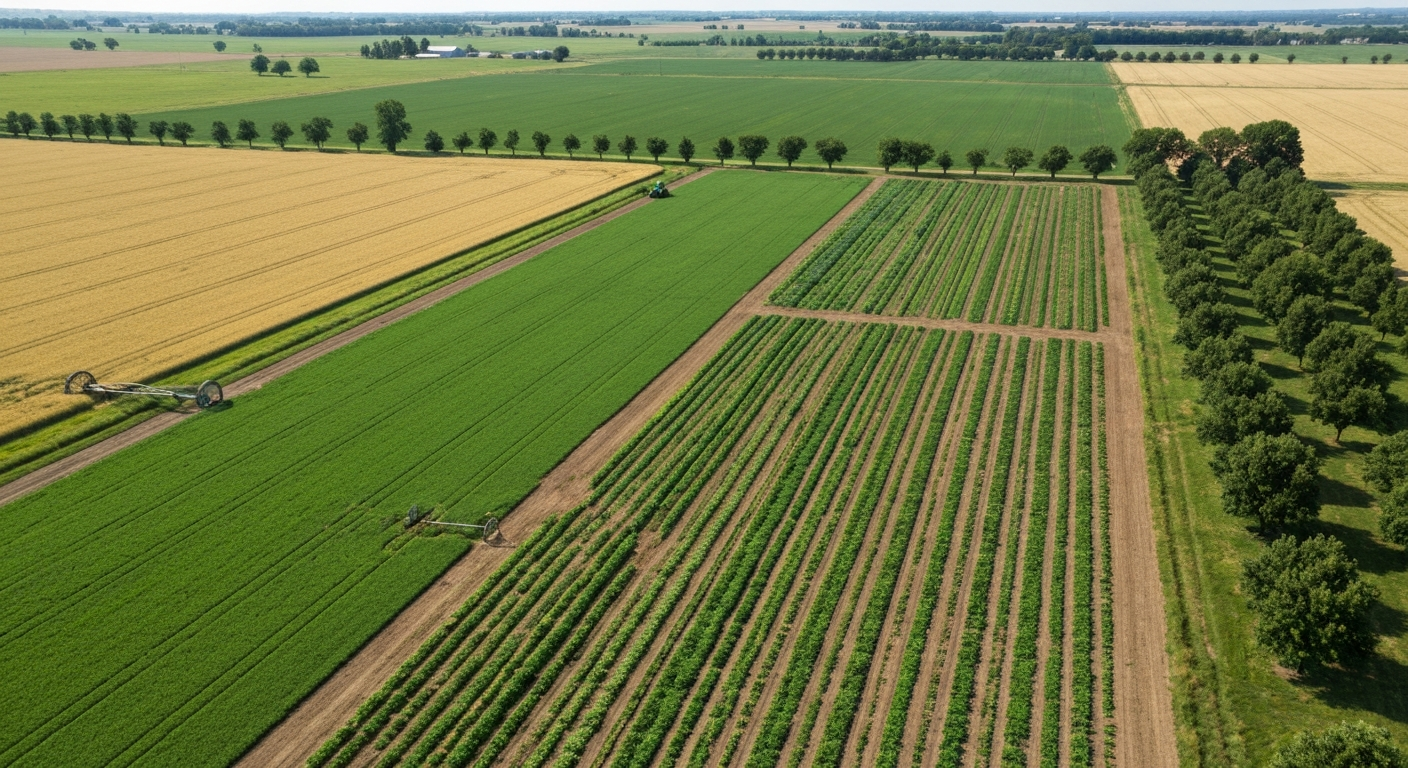
Why Farmers Grow Different Crops in a Field: Rotation & Regions
Why farmers grow different crops in a field: soil, pests, markets, rotations, examples, maps & decision framework.
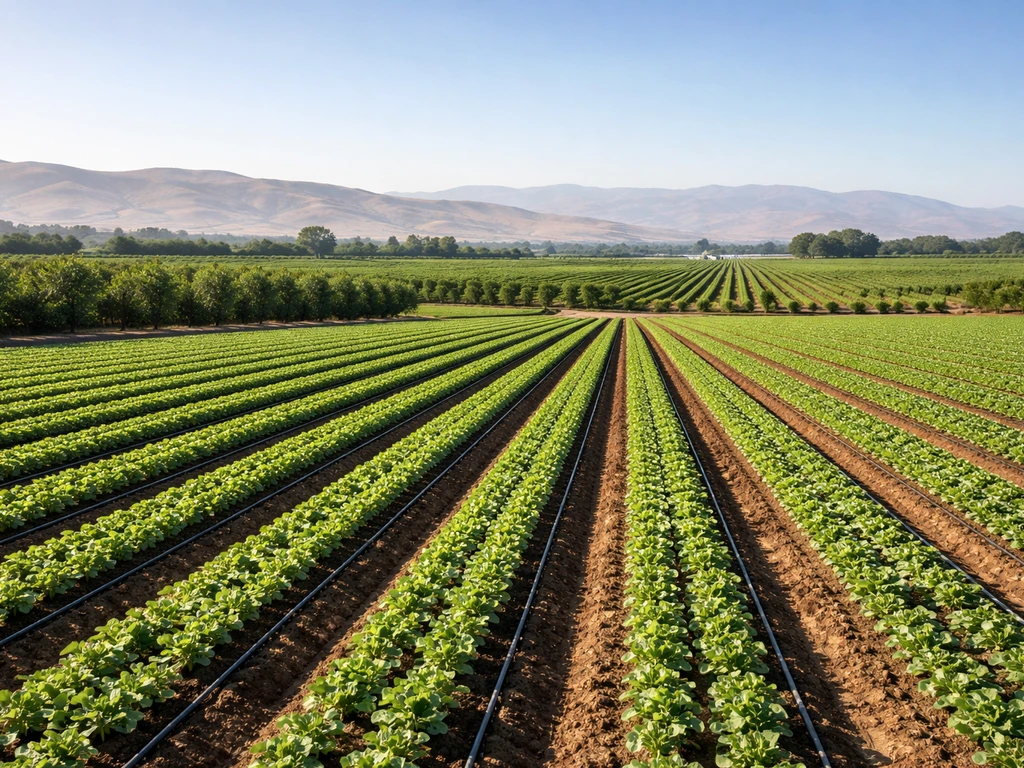
What Do Farmers Grow in California Most Common Crops
Main California crops by region, climate and season, plus how to verify what farmers grow in your county
What Did the Delaware Colony Grow: Crops, Uses & Legacy
Colonial Delaware’s main crops, grains, hay, flax, fruits, vegetables, livestock, why they thrived and how they were sold.