Vikings grew barley and rye as their most important cereal crops, along with oats, wheat, and millet. Beyond grains, they cultivated legumes like peas and beans, root vegetables, leafy greens, and flax for fiber. The exact mix depended heavily on where in Scandinavia you were farming, since Norway's rocky fjord terrain, Denmark's flatter soils, and Sweden's varied landscape each pushed farmers toward different crop choices.
What Crops Did Vikings Grow? Grain and Field Crops Explained

Samuel Rourke
30 Apr 2026
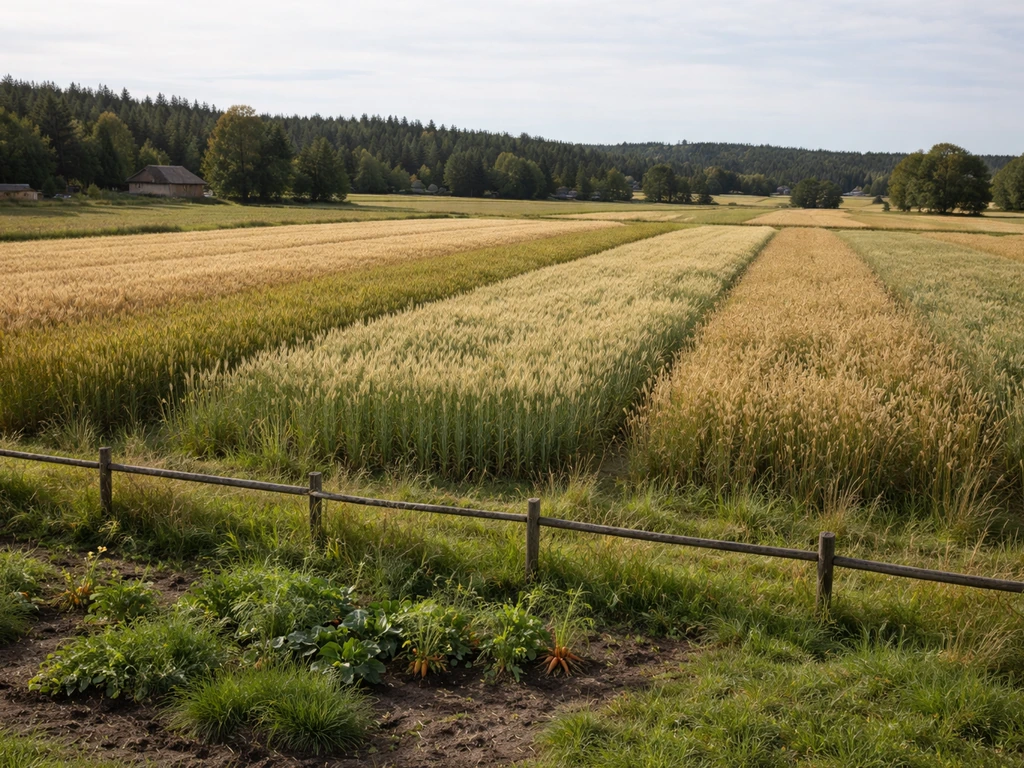
The core Viking crop list at a glance
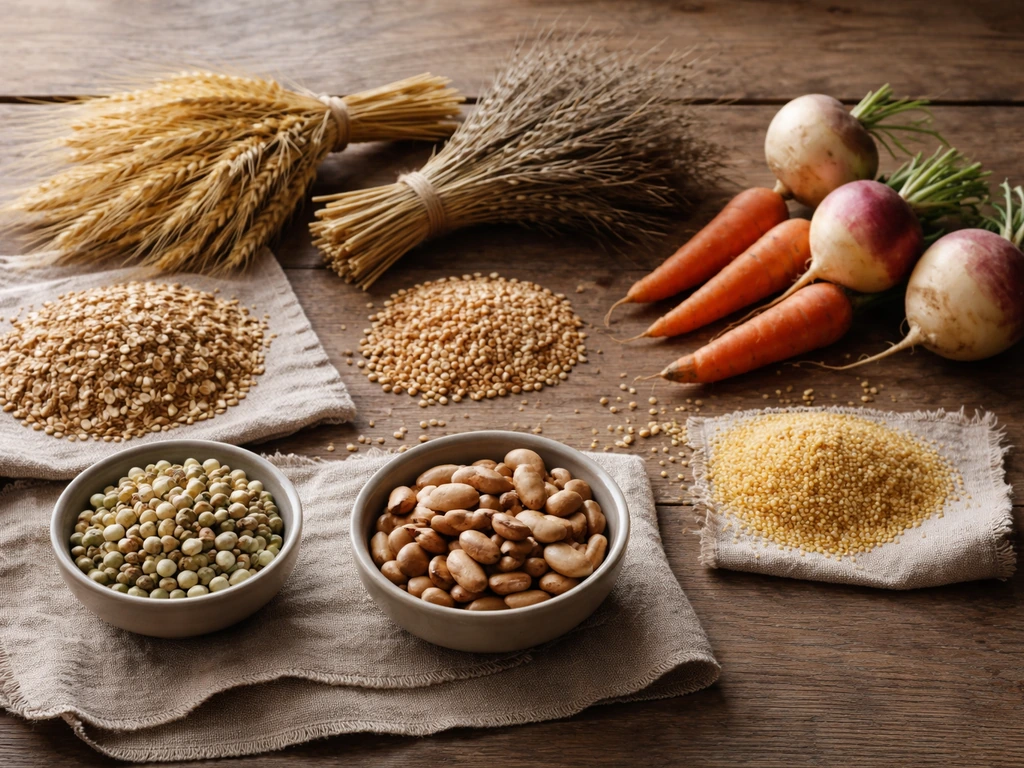
The Denmark National Museum confirms that rye and barley were the dominant cereals of the Viking Age, with oats, millet, and wheat also in regular cultivation. Archaeobotanical studies across Scandinavia have identified around 100 plant species that Viking-Age societies likely used in some capacity, covering food, fodder, fiber, and medicine. But for everyday farming and eating, the list is much shorter and more practical.
- Barley (Hordeum vulgare): the most widely grown grain across all of Scandinavia
- Rye (Secale cereale): especially important in Denmark and for bread-making
- Oats (Avena sativa): grown widely, often used for porridge and animal fodder
- Wheat (Triticum species): cultivated where soils and climate allowed, mainly in southern regions
- Millet: a minor cereal, grown in limited areas
- Peas and beans: key legumes for both people and livestock
- Cabbage, kale, and leafy greens: common kitchen garden crops
- Root vegetables: turnips and possibly parsnips
- Flax (Linum usitatissimum): grown for linen fiber and linseed oil
- Hemp: grown for fiber and rope-making
Cereal crops and grains: the backbone of the Viking diet
Barley was the workhorse. It tolerates cold, short growing seasons better than almost any other cereal, which made it ideal for the Scandinavian climate. You could turn it into porridge, flatbread, or ale, and it could be stored through the long northern winters. Barley's short growing window (roughly 60 to 90 days to maturity) was a practical advantage when your frost-free season might only last a few months.
Rye was nearly as important, particularly in Denmark where it became the foundation of a bread culture that persists to this day. Rye is more cold-hardy than wheat and will grow in sandy or poor soils that would defeat other cereals. It can be sown in autumn and overwinter as a green plant before resuming growth in spring, which gave Viking farmers a huge advantage in getting an early harvest. This winter rye strategy extended effective growing seasons in ways that spring-sown crops couldn't.
Oats occupied a slightly different niche. They are extremely well-suited to cool, wet climates, which describes coastal Norway and much of the British Isles perfectly. Oats were eaten as porridge (a staple, not a luxury) and used heavily to feed horses and cattle through the winter. Wheat was grown where conditions allowed, mostly in the more temperate southern zones, but it never dominated the way it might in Roman or medieval English agriculture, since Scandinavian summers were simply too short and cool for consistent wheat yields in most areas. Compared to what crops the Romans grew, which leaned heavily on wheat for their bread-grain, Vikings were much more barley-and-rye focused because their climate demanded it.
Root crops, legumes, and vegetables
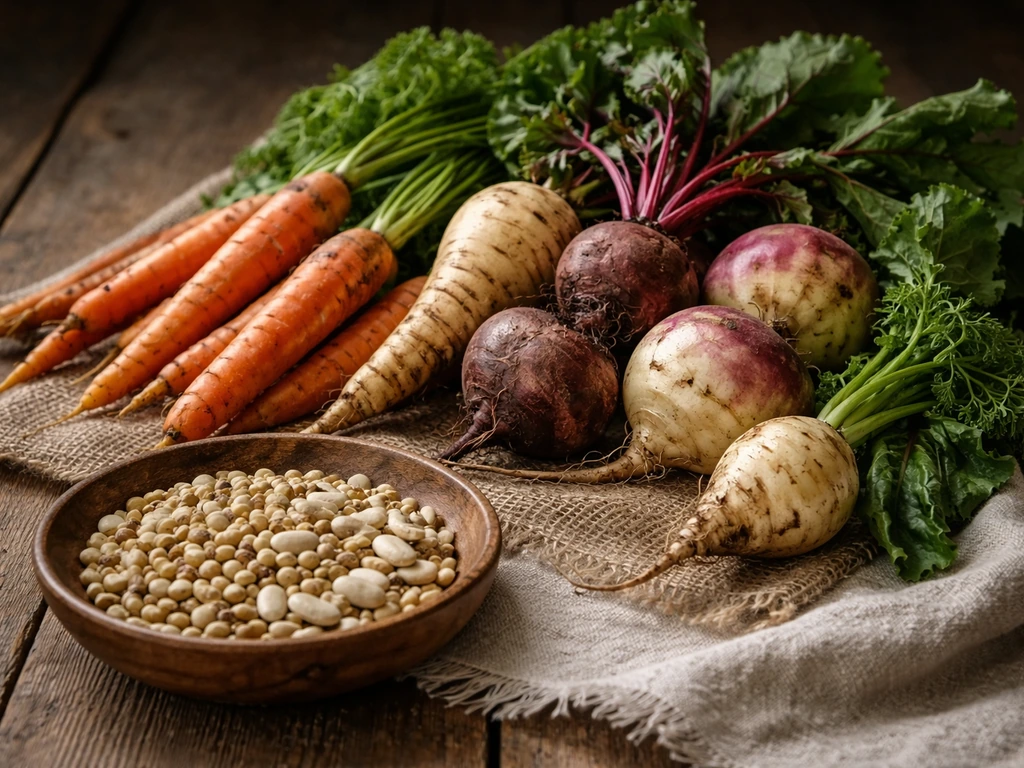
Viking farms were not just grain fields. Vegetable and legume cultivation filled out the diet in ways that cereals alone couldn't manage, providing protein, vitamins, and variety through the year. If you are wondering what crops they grew, Vikings relied heavily on cereals like barley, rye, and oats, plus legumes and garden vegetables to round out the diet. Legumes were especially valuable because they fix nitrogen in the soil, which helped maintain field fertility without modern fertilizers.
Peas and beans were the main legume crops. Archaeobotanical finds at Viking-Age sites across Scandinavia turn up pea and bean seeds regularly. These could be dried and stored for winter, cooked into thick stews, or mixed with grain to stretch a meal. Field beans (Vicia faba) in particular were cold-tolerant and could be grown even in the harder northern climates.
For vegetables, kale, cabbage, and other brassicas were likely kitchen garden staples since wild relatives grew naturally across northern Europe and the family adapts well to cold, wet conditions. Turnips provided both food and fodder. Onions and leeks appear in Norse textual and archaeological records. Herbs like dill, coriander, and caraway show up in archaeobotanical finds and were probably grown in small garden plots close to the farmhouse rather than in open field rotations.
blank" rel="noopener noreferrer">Flax deserves special mention because it served double duty. The seeds (linseed) provided oil for cooking and lamps, while the fibrous stems were retted, dried, and spun into linen. Hemp was similarly grown for fiber and cordage. These were genuine farm crops, not just wild-gathered plants, and blank" rel="noopener noreferrer">they show up in Viking-Age pollen records and seed finds across the region.
How Viking farmers worked the land
Viking-Age Scandinavia used an infield-outfield system. The infield was the permanently cultivated land closest to the farmstead, intensively managed and regularly manured with animal dung. The outfield was rougher terrain used for grazing, hay cutting, and occasional cultivation when the infield needed a rest. This wasn't a rigid crop rotation in the medieval European three-field sense, but it served a similar function of maintaining soil health.
Seasonality was tightly dictated by latitude. In southern Scandinavia (Denmark, southern Sweden), spring sowing of barley and oats could begin in March or April, with harvest coming in August and September. Winter rye would go in the ground in September after the summer crop came off, then overwinter and be harvested the following summer. In Norway and northern Sweden, the window was compressed: sowing might not begin until May, and everything had to be in before September frosts. This meant fewer crop options and a bigger reliance on the most cold-tolerant varieties.
Vikings also made extensive use of hay meadows. Keeping cattle, sheep, and horses through the winter required enormous amounts of stored fodder, and hay production was arguably as important as grain farming to the overall agricultural system. The livestock provided milk, meat, leather, wool, and crucially, manure to keep the infield productive.
Regional variation across Viking lands
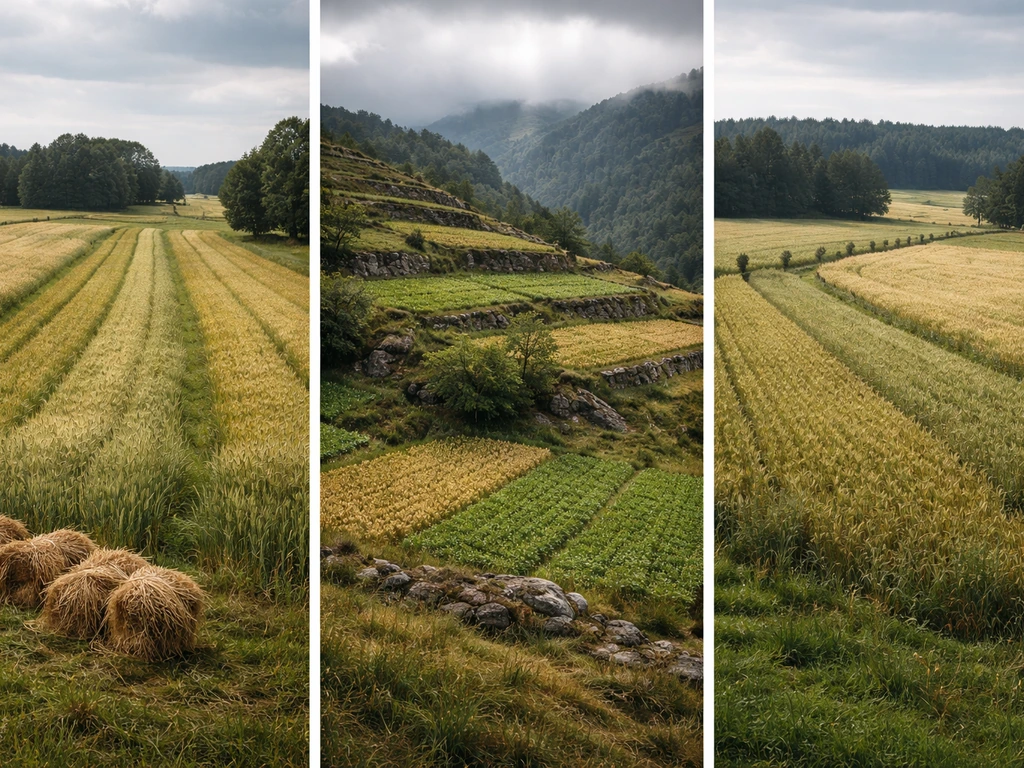
Not all of Scandinavia farmed the same way, and the differences between Norway, Denmark, and Sweden were significant enough to produce noticeably different crop emphasis.
| Region | Primary Crops | Key Constraints | Notable Features |
|---|---|---|---|
| Denmark | Rye, barley, oats, wheat, peas | Sandy soils in west, but relatively mild climate | Best conditions for rye bread; winter grain cultivation well-established |
| Southern Sweden (Skåne etc.) | Barley, rye, oats, wheat, legumes | More temperate than Norway; good arable land | Closest to European agricultural norms; broader crop range |
| Northern Sweden / Norrland | Barley, oats | Short growing season, cold winters | Barley dominates; limited crop diversity |
| Norway (coastal fjords) | Barley, oats, some rye | Rocky terrain, steep slopes, high rainfall | Barley most important; fishing and pastoralism complemented crops heavily |
| Norse colonies (Iceland, Greenland) | Barley (limited), hay, some oats | Very short seasons, volcanic/cold soils | Grain farming marginal; livestock and dairy more central |
| Norse contact zones (British Isles, Normandy) | Barley, oats, wheat, rye, legumes | Varied by local climate | Vikings adopted and influenced local agricultural practices |
Iceland is an interesting case. Norse settlers arrived in the late 800s and tried to farm as they had in Norway, but the climate and short growing seasons made grain cultivation extremely difficult. Barley could be grown in sheltered lowland spots, but the economy shifted heavily toward sheep, cattle, and dairy within a few generations. Greenland was even more marginal, with grain farming essentially impossible beyond small experimental plots. This shows how quickly Viking agricultural practice adapted to local realities rather than stubbornly sticking to home traditions.
In the British Isles, Norse settlers and raiders interacted with existing agricultural systems that grew wheat more prominently than was common in Scandinavia. In Normandy and along the Frankish coast, contact with continental European agriculture exposed Vikings to a broader range of crops and techniques. This exchange almost certainly influenced what they brought back or adapted, particularly regarding wheat cultivation in the more favorable southern Norse territories.
Viking crops versus modern Scandinavian farming
What's striking is how logically the Viking crop choices connect to what Scandinavian farmers still grow today. Barley remains a major crop across Norway, Sweden, and Denmark. Rye is still central to Danish and Swedish bread culture. Oats are produced extensively in Scandinavia for human food and animal feed. The cold-tolerance argument that made these cereals dominant 1,000 years ago still applies, because the climate hasn't changed enough to fundamentally shift those equations.
What has changed is the scale and the addition of modern crops. Potatoes arrived in Scandinavia in the 1700s and quickly became a dietary staple that turnips and other root crops never quite managed to be. Canola (rapeseed) is now a major oil crop in Denmark and southern Sweden, occupying some of the same niche that flax once held. Sugar beets are grown commercially in Denmark and southern Sweden, something completely absent from Viking agriculture.
For gardeners and small farmers interested in historically accurate or climate-appropriate northern growing, Viking-era crops are a genuinely useful starting point. Hulless barley varieties, heritage oats, winter rye, field peas, kale, and flax are all available from specialist seed suppliers and all perform well in cool, short-season climates. If you're gardening in Scotland, Scandinavia, Iceland, northern Canada, or the upper U.S. Midwest, these crops were essentially field-tested in your climate for a thousand years before modern agriculture arrived.
How Viking farming compares to other historical systems
It's worth putting Viking agriculture in context alongside other historical farming systems. Roman agriculture was built around wheat, olives, and grapes, crops suited to Mediterranean warmth that would have failed in most of Scandinavia. Medieval peasants in England or France grew wheat alongside rye and legumes in a more structured three-field rotation than Vikings typically used.
Anglo-Saxon agriculture in England had more overlap with Viking practice, particularly in the use of barley and oats, which makes sense given the similar latitudes and climate. Anglo-Saxons in England also grew barley and oats, along with rye, peas, and other hardy crops suited to cool, short seasons.
Pilgrims and pioneers in North America faced a comparable challenge to Viking colonists in Iceland: they had to figure out what actually grew in a new climate, and the answers often surprised them. Pilgrims in North America largely relied on hardy, short-season grains and legumes that could mature quickly in their new environment what crops did the pilgrims grow. Pilgrims and pioneers also relied on hardy, short-season plants like grains and legumes similar to those grown in northern regions.
In North America, that same question applies to the early pilgrims as they identified which crops could take hold and feed their settlements what actually grew in a new climate. These early pioneers also faced short growing seasons, which shaped their crop choices much like northern farmers elsewhere what crops did pioneers grow.
The consistent thread across all these northern agricultural systems is that cold tolerance, short growing seasons, and wet or thin soils always pushed farmers toward the same solutions: barley first, then oats and rye, with legumes and brassicas filling the vegetable gap. Viking farmers weren't unique in this; they were just the most northerly example of a pattern that shows up wherever people tried to farm at high latitudes.
Where to dig deeper
If you want to research Viking-Age crops further, the best starting points are archaeobotanical databases and museum resources from Scandinavia. The National Museum of Denmark has strong online resources on Viking Age food and agriculture. For academic depth, look for peer-reviewed archaeobotany papers covering Scandinavia, which analyze actual seed and pollen remains from Viking sites rather than relying on historical texts alone. These studies give you evidence-based crop lists tied to specific sites and regions, which is far more reliable than generalized historical summaries. University archaeology departments in Oslo, Copenhagen, and Stockholm also publish accessible summaries of ongoing excavation findings that regularly update our understanding of what Vikings actually grew.
FAQ
Did Vikings grow wheat as a major crop, or mainly barley and rye?
Yes. In many Viking-age settings, rye and barley were the primary “bread and ale” grains, but oats often became just as important in daily practice because they handle cool, wet conditions well and were heavily used for porridge. Wheat did appear, mainly where summers were longer and warmer, but it rarely became the dominant cereal across most of Scandinavia.
How did Vikings rotate crops, and did they use a three-field system?
Not necessarily in a modern “field rotation” sense. Viking farms used an infield-outfield system, where the infield near the farmstead was intensively managed and manured, while the outfield supported grazing, hay cutting, and occasional cultivation. That means soil fertility was managed more through placement and animal waste than through a strict multi-year schedule of different crop families.
Did Vikings ever plant crops in autumn, or was everything spring-sown?
Winter rye was the key exception to spring-only planting. Rye could be sown in autumn, overwinter (often as a green plant), and then resume growth in spring to gain a head start on the short season. Barley and oats were typically spring-sown, and the overall calendar depended on latitude and frost dates.
Was rye or oats better suited for cold winters?
Usually, oats were the “wet and cool” grain rather than the star of winter survival. Rye is the most cold-hard and flexible for overwintering, while oats are especially suited to cool, damp climates for both food and livestock feed. So the crop choice often followed both rainfall and how long winter lasted.
What Viking crops are best to grow today in a backyard garden with a short growing season?
You can, but the match is imperfect because Viking agriculture depended on varieties and farming systems that are not identical to today’s. If you want a Viking-style garden, prioritize winter-hardy crops (like winter rye) and short-season staples (like hulless barley, field peas, kale, turnips, and flax). Expect more success in sheltered spots and with frost protection farther north, especially for brassicas.
Were Viking crops grown only for human food, or also for livestock?
Because many crops were used for both food and feed. Grain straw helped with bedding and composting, legumes improved soil nitrogen, and hay meadows supplied winter fodder. If you plan for only human food, you can miss the practical balance that kept animals alive and the infield productive.
Why were peas and beans so important to Viking farms beyond adding protein to meals?
Legumes like peas and beans were particularly valuable for soil fertility because they fix nitrogen, reducing reliance on purchased fertilizers. In practice, fertility also depended on heavy infield manuring, but legumes helped keep yields more stable when growing conditions were harsh and soil recovery took time.
Did Vikings grow vegetables like kale and onions in large fields or mostly in small plots?
Likely in smaller garden plots and kitchen areas rather than large open fields. The evidence and practical logic point to brassicas, onions/leeks, and herbs being grown near the farmhouse because they needed regular attention and frequent harvesting, while the biggest field labor went to grains and hay.
How important was hay compared with grain for Viking life?
In most of Scandinavia, hay was a major “crop” in terms of land use and survival. Stored hay supported cattle, sheep, and horses through winter, and those animals provided milk, meat, fibers, and manure. Grain alone was not enough to sustain livestock and maintain soil productivity during long cold months.
Did Vikings grow the same crops in Norway, Denmark, Sweden, Iceland, and Greenland?
Yes, the crop list shifted noticeably with region. Denmark and southern Sweden tended to support rye-bread traditions more strongly, Norway faced tighter constraints from rugged terrain and a shorter, cooler window, and Sweden had more mixed possibilities depending on local soils and exposure. Iceland and Greenland illustrate the extreme case, where grain became difficult and animal husbandry dominated.
If I want to grow Viking-era crops today, what seed types should I look for?
Good seed sourcing matters. For modern growing, hulless barley, heritage oats, winter rye, and field peas are closer matches to Viking-era needs because they fit short-season or cold-hardy requirements. Aim for cultivars labeled for cold tolerance and short maturity, and consider row spacing and sowing dates aligned to your local frost window.
Next Articles
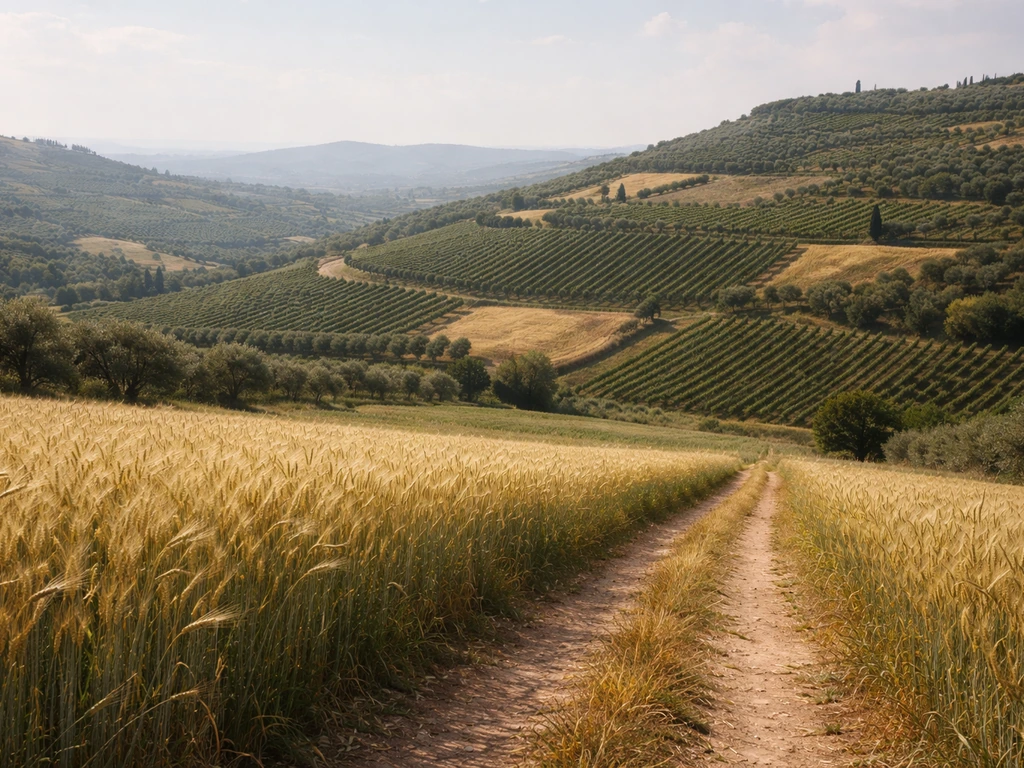
What Crops Did the Romans Grow? A Practical Guide
Discover the main crops Romans grew by region and climate, plus how to map them to today’s farms
What Crops Did They Grow? How to Identify Likely Crops
Learn how to answer what crops did they grow using climate, geography, era clues, and evidence based research steps.
What Types of Food Did Anglo-Saxons Grow? Crops by Region
Crops Anglo-Saxons grew by region: grains, legumes, vegetables, fruit and nuts, shaped by soil and climate.