Yes, cotton absolutely grows in Africa, and it does so at serious commercial scale. Sub-Saharan Africa alone has dozens of producing countries, with West Africa's Franc Zone nations (Mali, Burkina Faso, Benin, Côte d'Ivoire, Cameroon) among the continent's biggest producers. North Africa adds Egypt, one of the world's most famous cotton origins. Whether you're looking at a map of where cotton grows globally or trying to figure out whether your specific region in Africa can support a cotton crop, the answer is almost certainly yes for a wide swath of the continent.
Does Cotton Grow in Africa? Regions, Climate, and How to Check

Samuel Rourke
27 May 2026
Why Cotton Can Grow in Africa
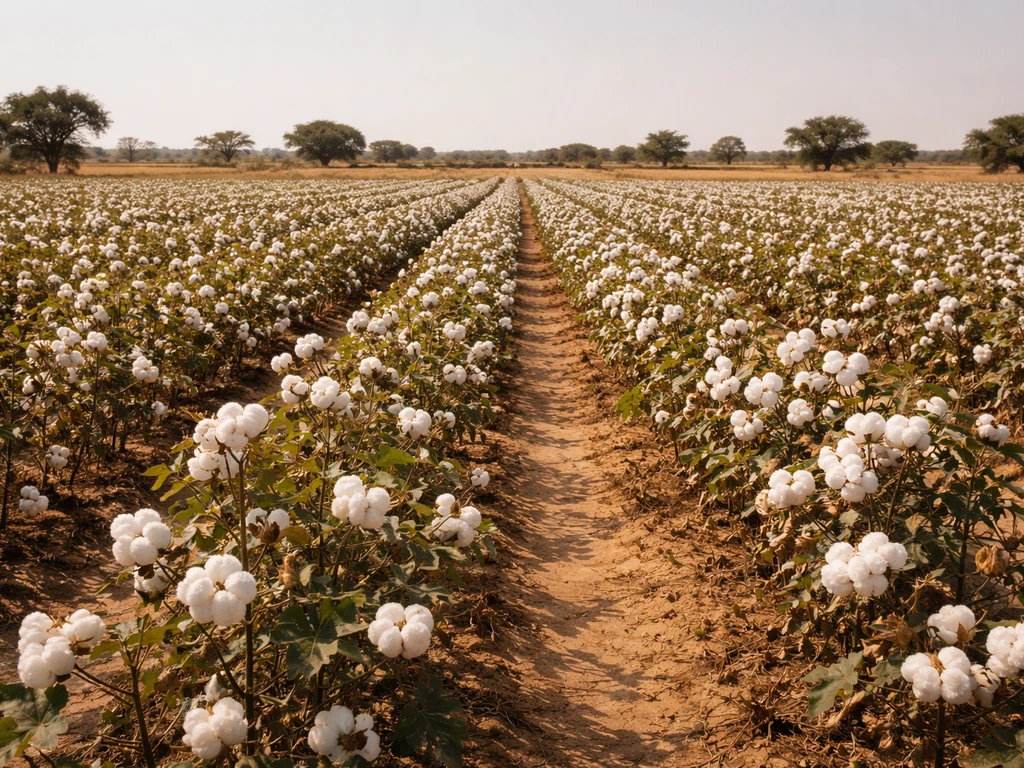
Cotton (Gossypium spp.) is a warm-season crop that needs heat, a long frost-free growing window, and reliable moisture during key growth stages. Much of Africa sits squarely in the tropical and subtropical belt that delivers exactly those conditions. The continent's broad latitudinal range means different zones suit different cotton types, but the core requirements (daily air temperatures above 15°C at a minimum, optimum air temps around 31–33°C, a 150–180 day growing season, and 500–1,300 mm of water depending on climate) are met in a huge portion of Africa. That combination of warmth, season length, and rainfall pattern is why cotton has been grown here for centuries.
Where Cotton Grows in Africa Today
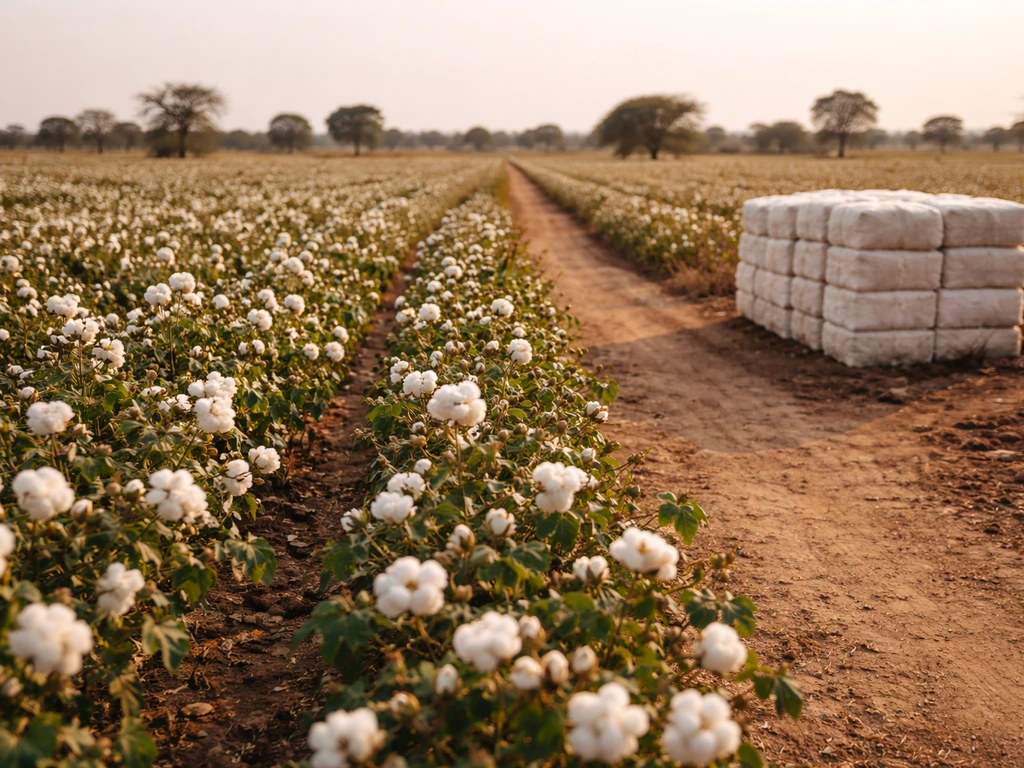
West Africa is the continent's production powerhouse. Looking at 2023/24 USDA estimates for the Franc Zone alone, Mali leads at around 1,300 thousand 480-lb bales, followed by Benin (1,045), Burkina Faso (770), Côte d'Ivoire (745), and Cameroon (660). These numbers make West Africa a globally significant cotton belt, not just a regional footnote.
Egypt stands apart as Africa's showcase for high-quality cotton. Egyptian cotton (Gossypium barbadense, the extra-long staple variety) is grown in the Nile Delta and Valley under intensive irrigation. ICAC data puts Egypt's lint yield at around 707 kg/ha, roughly double the continent's average, which reflects both the G. barbadense variety and Egypt's well-developed irrigation infrastructure. Sudan has historically grown similar ELS cotton in the Gezira irrigation scheme.
East and Southern Africa round out the picture. Tanzania, Mozambique, Zambia, Zimbabwe, and Uganda all have established cotton sectors, most of them smallholder-dominated and rainfed. Mozambique and Zambia are among the countries included in Cotton made in Africa (CmiA) sustainability programs, which is a useful indicator of active, organized production. South Africa also grows cotton, mainly in irrigated schemes in the Northern Cape and Limpopo regions. In India, cotton is grown mainly in states like Gujarat, Maharashtra, Telangana, and Andhra Pradesh South Africa.
| Country/Region | Cotton Type | Production Scale | Primary Water Source |
|---|---|---|---|
| Mali | Upland (G. hirsutum) | Very large (~202,000 t lint) | Rainfed |
| Burkina Faso | Upland (G. hirsutum) | Large (~130,000 t lint) | Rainfed |
| Benin | Upland (G. hirsutum) | Large | Rainfed |
| Côte d'Ivoire | Upland (G. hirsutum) | Large | Rainfed |
| Cameroon | Upland (G. hirsutum) | Significant (~1.54 t/ha yield reported) | Rainfed |
| Egypt | ELS Egyptian (G. barbadense) | Significant (~93,000 t lint) | Irrigated (Nile) |
| Tanzania / Zambia / Mozambique | Upland (G. hirsutum) | Moderate, smallholder | Rainfed |
| South Africa | Upland (G. hirsutum) | Smaller, commercial | Irrigated/Rainfed |
Climate and Soil: How to Tell if a Region Fits
Temperature is the first filter. Cotton needs soil temperature above 16–18°C at seed depth before you plant, and daily air temperatures should not drop below 15°C during the growing season. Optimum air temperatures sit around 31–33°C. Temperatures above 36°C start to hurt growth, especially at flowering and boll set, so high-altitude zones that moderate extreme heat (the FAO East Africa module cites altitudes of roughly 1,100–1,370 m as workable) can actually be favorable.
Water availability is the second filter. Cotton's full-season water need is about 700–1,300 mm depending on climate and season length. For practical planning, Cotton SA pegs optimal yields at a total equivalent of 500–650 mm of rainfall or irrigation. The key point for Africa: virtually all cotton in sub-Saharan Africa is rainfed. If you are asking kenshi where to grow cotton, the same rainfed timing and 500 to 650 mm target for practical planning are what to check first. That means you need a rainy season long enough and reliable enough to deliver at least 500 mm during the growing period. Arid zones outside that window need supplemental irrigation to compensate.
Soil matters too. Cotton prefers a pH in the range of roughly 5.5–8.0, with 7–8 considered optimal by FAO land and water guidance (some soil management references put the sweet spot a bit lower, around 5.0–6.5, so a neutral to slightly acidic loam is a safe target). Cotton reacts poorly to strongly acidic soils and is sensitive to waterlogging, so good drainage is essential. Heavy clay that holds water badly and very sandy soils that can't retain moisture at all are both problematic.
- Minimum daily air temperature: 15°C during the growing season
- Soil temperature at planting depth: above 16–18°C
- Optimal air temperature: 31–33°C; above 36°C causes stress
- Total water need: 700–1,300 mm (practical irrigation/rainfed target: 500–650 mm)
- Growing season length: 150–180 days frost-free
- Soil pH: 5.5–8.0 (neutral loam is ideal)
- Drainage: well-drained; cotton cannot tolerate waterlogging
- Altitude (East Africa context): roughly 1,100–1,370 m can work well
Cotton Varieties and How They Match African Conditions
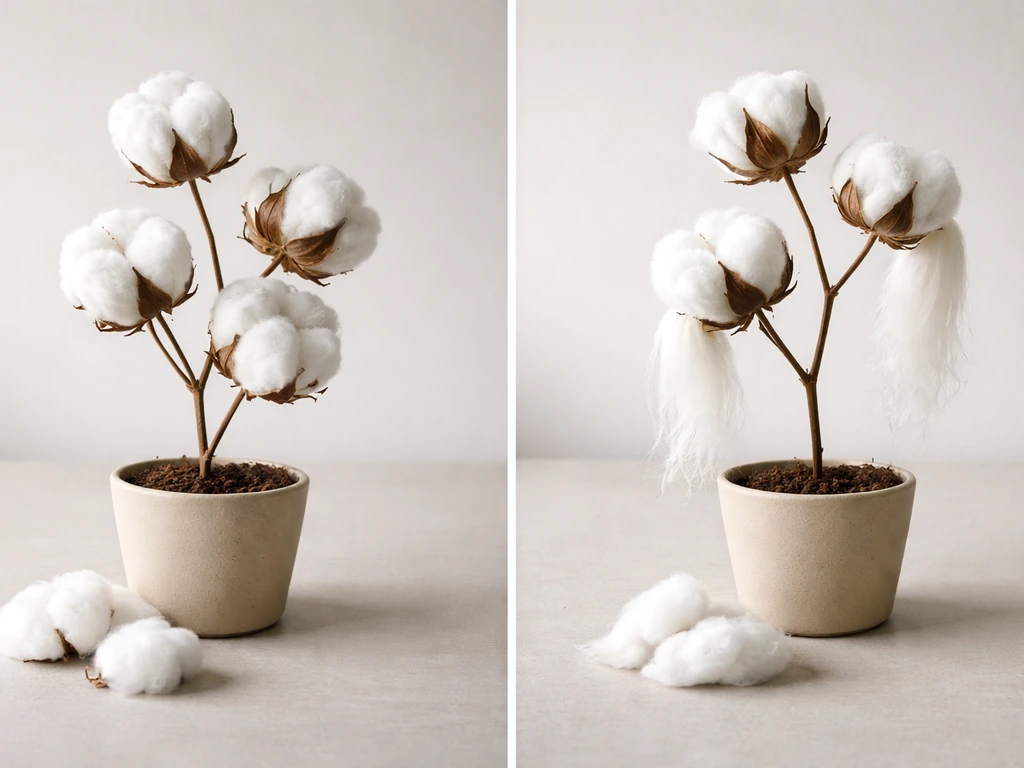
The vast majority of African cotton is upland cotton (Gossypium hirsutum). It's the dominant global cotton type, adapted to a wide range of warm tropical and subtropical conditions, and it's what drives production across West, East, and Southern Africa. Upland varieties have been bred and selected over decades for specific African growing zones, so seed companies and national research institutions in major producing countries maintain regionally adapted lines suited to local rainfall patterns, pest pressure, and season length.
Egyptian cotton (Gossypium barbadense) is the other major commercial type on the continent. It produces extra-long staple fiber prized in premium textiles, but it demands intensive water management (hence its confinement to Egypt's irrigated Nile basin) and a longer, hotter season. Sudan has also grown G. barbadense historically in the Gezira scheme. If you're anywhere in sub-Saharan Africa, upland cotton is almost certainly the variety you'll be working with.
There's also Gossypium herbaceum, one of the older cultivated species with wild origins in semi-arid Southern Africa. It's not a major commercial crop today, but its presence as a native species in arid zones is a reminder that the genus Gossypium genuinely belongs to this continent, not just as an introduced crop but as part of the native flora.
What It Actually Takes to Grow Cotton Successfully
For most of sub-Saharan Africa, successful cotton farming starts with timing the planting to match the rainy season. You need reliable soil moisture before germination, and in rainfed systems the soil should have received meaningful rain before you plant. Soil temperature at 10 cm depth should be at or above 16°C. Get that timing wrong and poor germination or early moisture stress will undermine the whole season.
Land preparation should aim for a fine seedbed with good drainage. Cotton's roots go deep, so compaction layers are a real problem. In irrigated systems like those in Egypt or South Africa, the irrigation schedule matters enormously: cotton is sensitive to both drought stress (especially at flowering and boll formation) and overwatering. Cotton SA is explicit that the crop is susceptible to over-irrigation, which can cause root suffocation and disease.
Seed sourcing is practical priority one. In most West and East African countries, national cotton companies or ginning companies (like SOFITEX in Burkina Faso or CMDT in Mali) supply seed and inputs through their outgrower networks. If you're outside those systems, contact national agricultural extension services or regional seed suppliers. Using locally adapted varieties rather than generic imported seed significantly affects yield outcomes.
The growing season runs roughly 150–180 days from planting to harvest. Boll maturity and opening signal harvest readiness. In rainfed systems, the timing of the dry season effectively sets the harvest window, which is one reason seasonal rainfall reliability is so critical for planning.
Common Challenges in African Cotton Farming
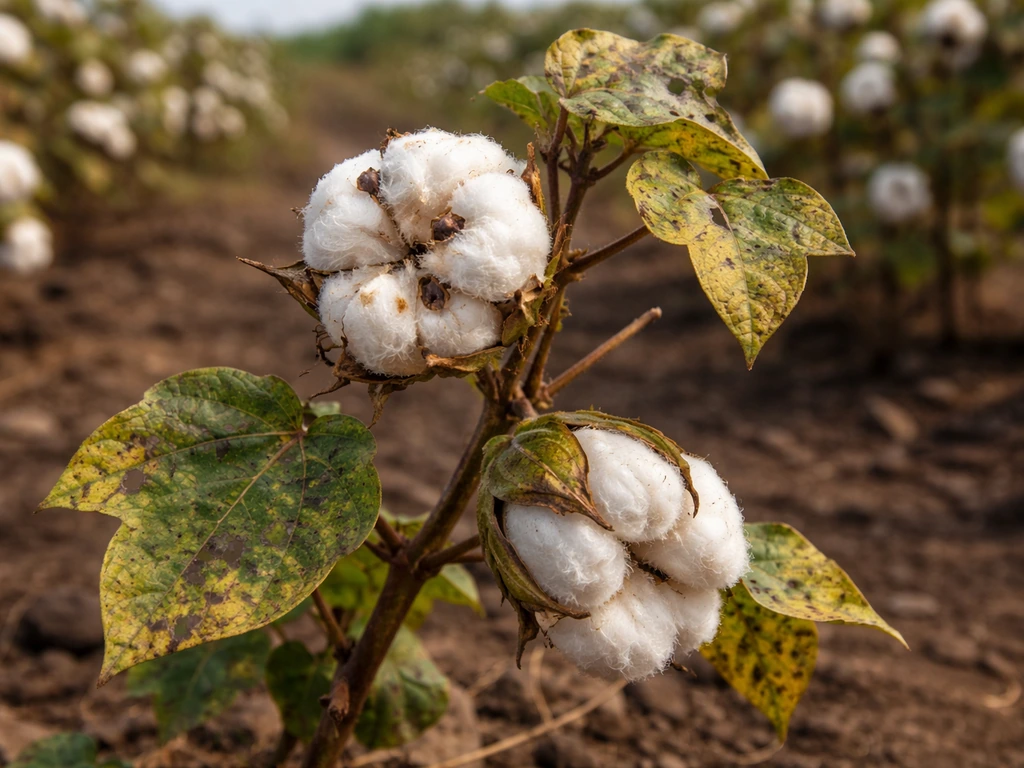
Pest pressure is the dominant agronomic challenge across most of Africa's cotton belt. Helicoverpa armigera (African bollworm) is the primary threat in West Africa. CIRAD research in Mali documents that CMDT recommends a calendar of 5–6 insecticide applications starting at flowering to manage it. On unprotected fields, insect pests including bollworms, jassids, and aphids can cause very high crop losses. Integrated Production and Pest Management (IPPM) approaches, which combine monitoring, threshold-based spraying, and cultural controls, are promoted across major producing regions including through CmiA training programs.
Disease is the second significant challenge. Bacterial blight (Xanthomonas citri subsp. malvacearum) and Fusarium wilt are both serious in tropical Africa, and they're difficult to manage because bacterial blight spreads through seed and Fusarium wilt lives in the soil. Verticillium wilt and various leaf spots and boll rots also appear. Planting disease-resistant or tolerant varieties is the most practical first line of defense, and most national breeding programs have incorporated blight resistance into recommended varieties.
Yields reflect these challenges directly. ICAC estimates Africa's average lint yield at roughly 350 kg/ha, which is among the lowest globally. The contrast with Egypt's 707 kg/ha shows what irrigation, higher inputs, and an optimized variety can achieve. Cameroon has reported yields around 1.54 t/ha of seed cotton in recent seasons, showing what's possible with better management even in rainfed systems. Closing the yield gap is the central challenge for African cotton development, and it largely comes down to pest management, input access, and water availability.
How Cotton Cultivation Has Shifted Over Time in Africa
Cotton has deep roots on the African continent. Gossypium herbaceum, one of the original cultivated species, is native to semi-arid parts of Southern Africa and was grown here long before European contact. The colonial period dramatically restructured African cotton production, with European powers actively promoting (and often coercing) cotton farming to supply home-country textile mills. West Africa's cotton belt was shaped heavily by French colonial agricultural policy, which is why French-speaking countries like Mali, Burkina Faso, and Benin remain the dominant producers today and why their cotton sectors were organized around state-linked ginning monopolies.
Egypt's ELS cotton tradition dates to the 19th century, when long-staple varieties were developed for the Nile Delta's irrigated conditions and rapidly became a premium global fiber. That reputation (and the G. barbadense variety behind it) has been maintained for well over a century, making Egyptian cotton one of Africa's most consistent agricultural exports.
Post-independence, the sector went through waves of state control and liberalization. In Burkina Faso, for example, SOFITEX held a production and marketing monopoly until 2004, when World Bank and IMF pressure led to sector liberalization and the entry of competing ginners. In the late 1990s, producer organizations became minority shareholders in SOFITEX itself, a shift that changed how input supply and pricing worked. Similar reform processes happened across West Africa's cotton belt through the 1990s and 2000s. More recently, international sustainability standards like Better Cotton (BCI, with first harvests in Mali around 2010) and Cotton made in Africa (CmiA, active in Burkina Faso, Benin, Mozambique, Zambia, and others) have reshaped how smallholder production is organized and marketed globally.
How to Check Suitability for Your Specific Location

If you want to know whether cotton will work for your exact spot in Africa, the process is straightforward. Start with your climate data: look up your location's average monthly temperatures and annual rainfall. You need a minimum of 150–180 consecutive frost-free days with daily temperatures staying above 15°C and a reliable rainfall window delivering at least 500 mm (ideally 700+ mm) during that period, or access to supplemental irrigation to make up any shortfall.
- Check your monthly temperature range against the thresholds: minimum 15°C daily, optimal 31–33°C, stress above 36°C. National meteorological service data or global climate databases can give you this.
- Tally your seasonal rainfall. If your rainy season delivers 500–700+ mm during a 5–6 month window, rainfed cotton is feasible. Below that, you'll need irrigation planning.
- Get a basic soil test to confirm pH (target 5.5–8.0) and drainage. Strongly acidic or waterlogged soils need amendment before cotton is viable.
- Contact your national agricultural extension service or cotton development authority. In major producing countries these institutions maintain variety recommendations, planting calendars, and input supply networks that take the guesswork out of adapting to local conditions.
- If you're in a country with an active CmiA or Better Cotton program, explore joining those networks. They provide agronomic training, IPPM guidance, and market access that independent smallholders often lack.
- For heat-unit estimation, look into growing degree day (GDD) tools. The principle is simple: cotton accumulates development above a base temperature, and tracking GDDs helps you predict flowering and boll maturity timing so you can align harvest with the dry season.
If you're researching where cotton grows in Africa as part of a broader comparison, it's worth noting that the same core climate logic applies globally. To answer the same question in a latitude sense, you can use cotton's heat and frost-free growing-season needs to estimate how far north it can be grown where cotton grows in Africa. The question of how far north cotton can grow, whether it works in Europe, or how production compares to India all come back to the same temperature and rainfall thresholds. Africa's tropical and subtropical belt is simply one of the most naturally suited regions on earth for meeting those requirements, which is why the continent has been a cotton-growing region for thousands of years and remains one today.
FAQ
If cotton grows in Africa, can it grow in any African country?
Not automatically. Some African countries have active cotton sectors, but your local conditions still matter. Cotton generally needs a long frost-free window, and in much of sub-Saharan Africa it is rainfed, so the timing and reliability of rainfall are usually the deciding factors.
What is the biggest reason cotton fails in otherwise “warm” African regions?
Rainfall timing and drainage. Even with warm temperatures, cotton needs enough moisture during germination, flowering, and boll formation. In poorly drained soils, waterlogging can also damage roots and increase disease pressure.
Do farmers in Africa grow cotton without irrigation, and what rainfall amount is realistic?
Yes, most sub-Saharan cotton is rainfed. For practical planning, targets mentioned in the article (about 500 to 650 mm delivered during the growing period) are a useful benchmark. If your rainfall totals are higher but come too early or stop too soon, cotton can still underperform.
Can cotton be grown in very hot or desert-edge areas using irrigation?
It can be possible, but it is not the same as “warm enough.” The article notes that temperatures above roughly 36°C can hurt flowering and boll set, and cotton is sensitive to both drought stress and overwatering. Irrigation has to be scheduled carefully to avoid root suffocation and disease, as well as to cover the most sensitive growth stages.
When should you plant cotton in Africa’s rainfed systems?
Plant when soil moisture is already available for germination, not just when the first rains begin. The article highlights that soil temperature at seed depth should be about 16°C or higher, and if planting is mistimed, early moisture stress or poor emergence can reduce stand and yield for the whole season.
Which cotton type is most likely to be grown in sub-Saharan Africa?
Upland cotton (Gossypium hirsutum) dominates most African commercial planting. Egyptian extra-long staple cotton (Gossypium barbadense) is mainly tied to irrigated Nile-area conditions, so unless you have similar irrigation infrastructure, you will usually be dealing with upland varieties.
How do I check whether cotton is “worth it” for my specific location in Africa?
Use a two-step screen: (1) temperature and frost-free season length, and (2) a rainfall window that supports at least about 500 mm during the growing period if you are rainfed. If either condition is weak, you may need irrigation, or cotton may not be the best crop choice.
Is cotton production only about climate, or do pests and diseases matter as much?
Pests often decide outcomes in Africa’s cotton belt. The article emphasizes bollworms as a dominant threat and notes that bacterial blight and Fusarium wilt can be serious and difficult to manage. Even if climate fits perfectly, weak pest management or poor disease resistance can erase the potential yield.
What is a common mistake when choosing cotton seed for an African farm?
Using generic seed instead of locally adapted varieties. The article notes that regionally bred upland lines are selected for local rainfall patterns, pest pressure, and season length, so mismatched seed can cause lower yields even when temperatures and rainfall seem suitable.
If cotton grows in Africa, why are yields often low compared with Egypt?
The gap is usually driven by management and water control. Egypt benefits from irrigated systems and intensive production conditions, while much of sub-Saharan Africa is rainfed with higher vulnerability to rainfall gaps, pests, and disease. Improving input access, pest control, and moisture reliability typically closes some of the difference.
Does soil pH alone determine whether cotton will grow?
Soil pH matters, but it is not the only limiter. The article suggests pH roughly in the 5.5 to 8 range as workable, yet even acceptable pH can fail if drainage is poor (waterlogging) or if the soil is excessively sandy and cannot retain moisture during critical stages.
Can cotton be grown in the same area every year?
Rotation still matters, especially for disease. The article notes soil-borne problems like Fusarium wilt. Continuous planting without rotation can increase disease risk, so planning a rotation with non-host crops is typically important for long-term success.
Next Articles
What Did the Delaware Colony Grow: Crops, Uses & Legacy
Colonial Delaware’s main crops, grains, hay, flax, fruits, vegetables, livestock, why they thrived and how they were sold.
What Did Jamestown Grow and How They Farmed It
Learn what Jamestown colonists grew and the methods they used to plant, harvest, and adapt crops to Virginia conditions.
What Did the New England Colonies Grow? Major Crops
Major New England colonial crops explained by climate and soil, from corn and wheat to beans and hay, plus today’s paral