In Kenshi, cotton grows best in Green and Swamp biomes, where the soil fertility for that environment type is high enough to produce a meaningful yield. The fertile zones around Fertile Lands, Floodlands, and parts of the Swamp region are your best bets. Place a Cotton Farm plot in one of those areas, keep it supplied with 6 buckets of water per day, assign workers to both farming and harvesting jobs, and your cotton will produce reliably. If you're in an Arid zone, don't bother with cotton until you've confirmed the fertility is actually workable there, which is rare.
Kenshi Where to Grow Cotton Best Regions and Setup

Samuel Rourke
28 Jun 2026
What cotton actually needs to grow in Kenshi
Kenshi's farming system ties every crop to an environment type: Arid, Green, or Swamp. Cotton is a Green and Swamp crop. The game tracks fertility as a percentage for each environment type at any given map location, and that percentage directly scales your yield. A Cotton Farm sitting at 100% Green fertility will produce far more than one scraping by at 30%. This mirrors how cotton behaves in reality: it's a warm, moisture-dependent crop that thrives in fertile, well-watered soil and struggles in dry, poor terrain.
Beyond soil type, cotton needs water. The Cotton Farm consumes 6 buckets of water per day assuming no rainfall. Rain reduces that demand, but you can't rely on it in most zones. You'll need a well or water collector feeding into your storage, and you need to make sure water is actually getting loaded into the farm plot. Fertility and water are the two levers that control everything.
Where on the map to look: best regions for cotton
The northwest and central-north areas of the Kenshi map are where Green environment fertility is strongest. If you're wondering how far north does cotton grow, use Kenshi's north and central-north Green fertility strength as a similar starting point before prospecting the exact tile. Here are the regions worth targeting:
- Fertile Lands (northwest): consistently high Green fertility, one of the most reliable farming zones in the game for cotton, hemp, and vegetables alike
- Floodlands (north-central): strong Green and some Swamp fertility, good rainfall, excellent for cotton-heavy farming operations
- Swamp (southwest of Floodlands): Swamp environment fertility is workable here, though the zone comes with its own hazards (acid rain, wildlife, hostile factions)
- Shek Kingdom borderlands: mixed Green fertility depending on the exact sub-area; use Prospecting to verify before committing to a build
- The Great Desert and surrounding Arid zones: avoid these for cotton; Arid fertility is what drives crop performance in those areas, and cotton doesn't benefit from it
One thing that trips players up: the map regions look consistent on the world view, but fertility can shift significantly within a few grid squares. A spot that looks like it's in the Fertile Lands might have patchy soil. Always Prospect the exact tile before you build. The fertility percentage shown when you hover or prospect a location is the actual number that goes into your yield calculation.
Reading the environment before you build

Prospecting is the skill that reveals a location's environment type and fertility percentages. Any character can attempt it, but higher Prospecting skill gives you more reliable and faster readings. When you Prospect a tile, you'll see values like 'Green: 85%, Arid: 10%, Swamp: 5%.' For cotton, focus on the Green and Swamp percentages. You want Green fertility above roughly 60% for a productive farm, though 80%+ is ideal. If you're in a visually green, grassy area but the Prospecting result shows low Green fertility, trust the number, not the scenery.
You can also get a quick read by dragging the farm blueprint wireframe around before placing it. The building placement preview updates its fertility display as you move it, so you can shop around within a small area to find the best tile without committing resources.
Setting up your cotton farm plot
Cotton Farms come in four sizes: Small (S), Medium (M), Large (L), and Extra Large (XL). Larger plots produce more cotton per cycle but cost more to build and consume more water proportionally. For a starter outpost, a Small or Medium plot lets you test the location before investing in infrastructure. Here's the basic setup sequence:
- Confirm fertility by Prospecting your chosen tile; aim for at least 60% Green or Swamp fertility
- Build the Cotton Farm plot using the construction menu (requires the relevant building materials)
- Build a water source nearby: a Small Water Tank or Well depending on your region's water availability
- Set up a Storage Chest or designated container near the farm to receive harvested cotton
- Assign a character to the farm using shift-right-click on the plot to set a Farming job
- Assign a second character (or the same one) to a Harvesting job so the crop gets collected when it matures
- Load water into the farm manually at first to confirm the water supply chain is working before leaving it unattended
Placement relative to other buildings matters less for cotton than for some structures, but keep your farm close to water storage to reduce hauling time. In hostile zones, placing farms inside or adjacent to defensive walls also keeps workers safer during raids.
What you need before you can start: seeds, skills, and structures
You don't plant seeds in the traditional sense in Kenshi. The Cotton Farm building itself represents the crop, and you don't need to source seeds separately. What you do need:
- Building materials: Stone, Iron Plates, and sometimes other components depending on the farm size
- Research: Basic Farming must be researched at a Research Bench before you can build farm plots
- A character with at least basic Farming skill (higher skill increases growth rate and yield)
- Access to water: 6 buckets per day per Cotton Farm, so plan your water production accordingly
- A storage container to receive the cotton output, or harvesting will stall
Farming skill levels up as your characters tend the farm. Even a low-skill farmer will produce cotton, just more slowly. Assigning your best farmer to the most demanding plots and letting newer characters tend smaller or more forgiving crops is a reasonable way to develop your team while maintaining output.
Growth timing and making sure cotton actually matures
Cotton grows on a cycle tracked by an internal growth timer that scales with fertility and the farmer's skill. There's no in-game day/night season system the way real-world agriculture works, but growth time is variable. At peak conditions (high fertility, skilled farmer, consistent water), a cycle completes relatively quickly. In poor conditions, it stretches out or stalls entirely.
The crop has a growth condition percentage that climbs toward 100% maturity. A community farming guide also notes cotton's growth timing and shows how its growth and yield scale with growth conditions, including a fertility-based 0% to 100% pattern Kenshi. Once it hits 100%, it's ready to harvest. If you leave it past maturity without harvesting, the condition can decay back toward 0%, resulting in no output even though the plant technically completed its cycle. This is one of the most common reasons players think cotton 'failed.' The fix is simple: keep a harvester assigned at all times and make sure they have a storage destination set.
There's no seasonal timing to worry about in Kenshi the way there is in real cotton agriculture, where the crop needs roughly 160 to 200 frost-free days. In the real world, cotton's geographic range is tightly bounded by growing season length, which is why it concentrates in warm-climate belts. Does cotton grow in Europe depends mostly on climate, especially whether conditions allow a long enough warm growing season cotton's geographic range is tightly bounded by growing season length. The game abstracts this into the environment fertility system, but the logic is the same: cotton needs the right conditions to complete its growth cycle.
Why your cotton won't grow (and how to fix it)
If your Cotton Farm is showing zero or near-zero output, here are the most common culprits and their fixes: If you are trying to figure out where does cotton grow in India, start by looking for warm regions with enough moisture and fertile soil zero or near-zero output.
| Problem | What's happening | Fix |
|---|---|---|
| No output despite workers and water | Crop matured but wasn't harvested in time; condition decayed back to 0% | Assign a dedicated harvesting job via shift-right-click on the farm; ensure storage is available nearby |
| Very slow growth | Low fertility at the farm tile (wrong or weak environment type) | Move the farm to a higher-fertility tile; re-check with Prospecting before rebuilding |
| Farm shows no water consumption | Water isn't loaded into the farm; the supply chain is broken | Manually assign a character to haul water to the farm; check that the water storage container is accessible |
| Crop condition stuck or regressing | Farm is in an Arid zone with near-zero Green fertility | Relocate to a Green or Swamp biome with confirmed fertility above 60% |
| Workers ignore the farm | No Farming job assigned, or character AI is interrupted by combat or other tasks | Use shift-right-click directly on the farm plot to set the job; check that the character isn't assigned to a conflicting task |
| Output disappears after harvest | No storage bin assigned or the storage is full | Place a Storage Chest near the farm and ensure it's not capped out |
The placement trick is worth repeating: if you've built in what looks like the right region but yields are poor, destroy the farm, drag the blueprint around the nearby area while watching the fertility preview, and rebuild on the best tile you can find. Even a 20-percentage-point difference in Green fertility can meaningfully change your output.
Getting more cotton and building it into your production chain
Once your farm is running, scaling up is straightforward. Adding more Cotton Farm plots in the same high-fertility area multiplies output without adding complexity to your water or worker setup, since you're already in the right zone. Upgrade to Medium or Large plots as your water production scales up, since larger plots need proportionally more water per day.
Cotton's primary use is as a fabric input. A Fabric Loom processes raw cotton into Fabric, which feeds into clothing and armor production. Plan your outpost so the Cotton Farm output flows into a nearby storage container that your Fabric Loom workers can access, reducing hauling overhead. Keeping the full chain (water source, farm, storage, loom, finished goods storage) within a compact footprint is the most efficient layout.
Cotton pairs well with Hemp on the same farm cluster since both are Green environment crops and share the same water infrastructure. Growing both gives you fiber and hemp oil simultaneously from the same fertile patch of land, which is exactly how multi-crop rotations work in real agricultural systems: you pick crops with compatible soil and climate needs and run them side by side to maximize what a good piece of land can produce. Wheat and vegetables can round out the operation if you're feeding a large squad as well.
A quick note on real-world cotton geography
Kenshi's environment system actually tracks pretty closely with how cotton works in the real world. Real cotton is a subtropical crop that needs warm temperatures, moderate to high rainfall, and fertile soil. It dominates in the U.S. Southeast and Texas, in India's Deccan Plateau, in parts of sub-Saharan Africa, and across Central Asia. It does not grow in arid deserts or cold northern climates without significant irrigation and heat. The game's restriction of cotton to Green and Swamp fertility zones reflects that logic faithfully: put it in the right environment and it thrives, put it in the wrong one and you get nothing.
FAQ
How do I tell if a specific spot is good for cotton before I build the farm?
Use Prospecting on the exact tile and focus on the Green and Swamp percentages, not how the area looks from far away. If Green is under about 60% you should expect low output, and if Swamp is extremely low too, the farm may stall even with plenty of water.
What should I do if I have high Green fertility but my cotton output is still near zero?
Check the cotton cycle and logistics, not just the location. Make sure a harvester is assigned at all times with a valid storage destination, and confirm your water storage is actually connected to the farm so daily water consumption is being loaded.
Is it worth trying cotton in an Arid zone if I use irrigation or lots of water?
Usually no, because the environment fertility system scales yield and growth timing. Even if you fully supply water, low Green and Swamp fertility can prevent consistent mature harvests, so it is better to move to a Green or Swamp-favored tile or switch to crops better matched to Arid.
How much water is enough if I build a larger cotton plot?
The commonly cited rate (6 buckets per day) is for the assumed baseline, but larger plots scale both production and water demand. When you upgrade from Small to Medium or Large, also scale your water source and transport, otherwise you will see slowed growth or irregular harvests even on good fertility tiles.
Do I need to re-prospect every time I move the blueprint wireframe around?
You should check at least a few nearby tiles, because fertility can vary significantly across grid squares. The blueprint preview fertility display can help you shortlist the best tile quickly, but confirm with actual Prospecting when you care about maximizing yield.
What is the fastest way to recover when I accidentally placed the farm on a bad tile?
Destroy the poorly performing Cotton Farm, then shop the nearby area using the blueprint fertility preview while watching for a higher Green percentage. Rebuild immediately on the best tile you can identify, even a 20-point Green improvement can make the difference between slow output and reliable harvests.
How many workers do I need for cotton, and does worker skill matter more than fertility?
Skill affects how quickly the growth cycle completes, but fertility is the stronger lever for how much you actually get per cycle. Start with at least one good farmer and a harvester role covered, then add more farming or harvesting capacity only if you notice missed harvest windows or long delays between mature states.
What causes the cotton condition to decay back down, and how can I prevent it?
If cotton reaches maturity (100% condition) but no harvester is actively assigned to collect it, the condition can drop and you will get little or no output despite a completed cycle. Assign a harvester permanently and ensure they can reach the farm and deposit into a storage container.
Should I place cotton near the water storage or near the Fabric Loom?
Near both if possible, but prioritize reducing water hauling first so daily delivery stays consistent. Then keep the farm output close to storage that the Fabric Loom can access, so you do not create a second bottleneck by forcing workers to haul raw cotton long distances.
Can I run cotton and hemp together, and what changes in setup if I do?
Yes, they are compatible because both are tied to the Green environment crop category and share the same type of water infrastructure. When you co-locate them, plan storage so both outputs land in accessible containers for looms or processing steps, otherwise you can still end up with intermittent production due to logistics.
What storage and routing setup prevents cotton from backing up?
Use a dedicated storage destination for harvested cotton that is close to the farm and within reach of the Fabric Loom workflow. If cotton has nowhere to go, harvesters can get stuck or stop unloading, which leads to the same maturity decay problem and looks like a farming failure.
Next Articles
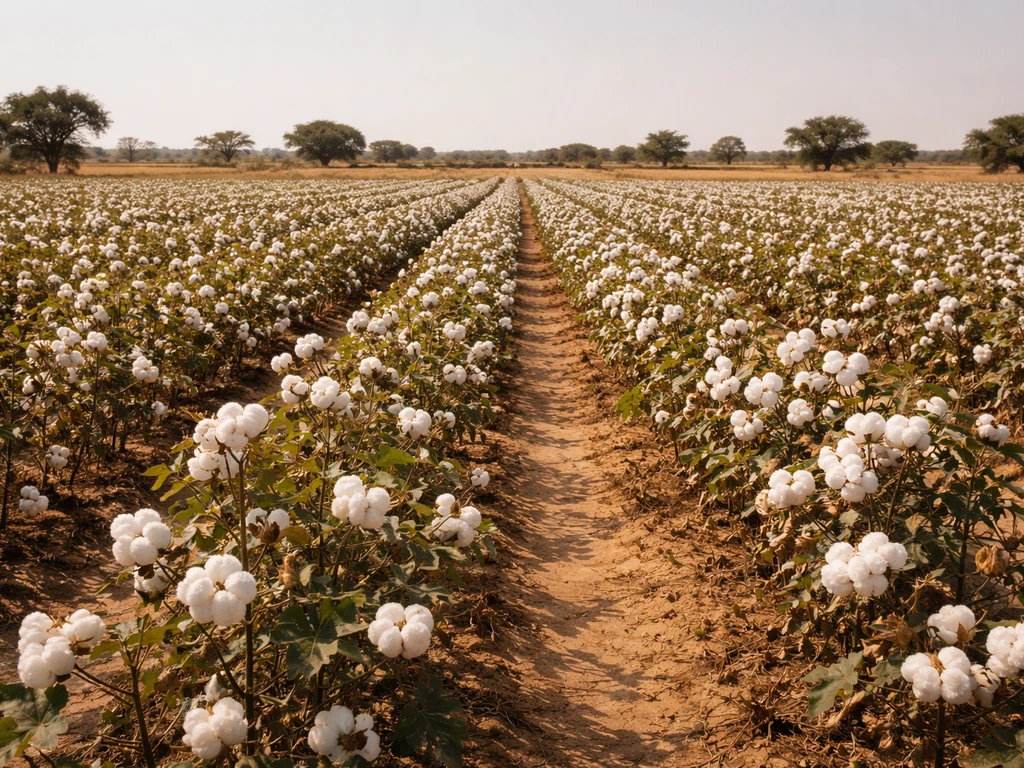
Does Cotton Grow in Africa? Regions, Climate, and How to Check
Yes, cotton grows in Africa. See regions, climate needs, cotton types, and how to check suitability for your area.
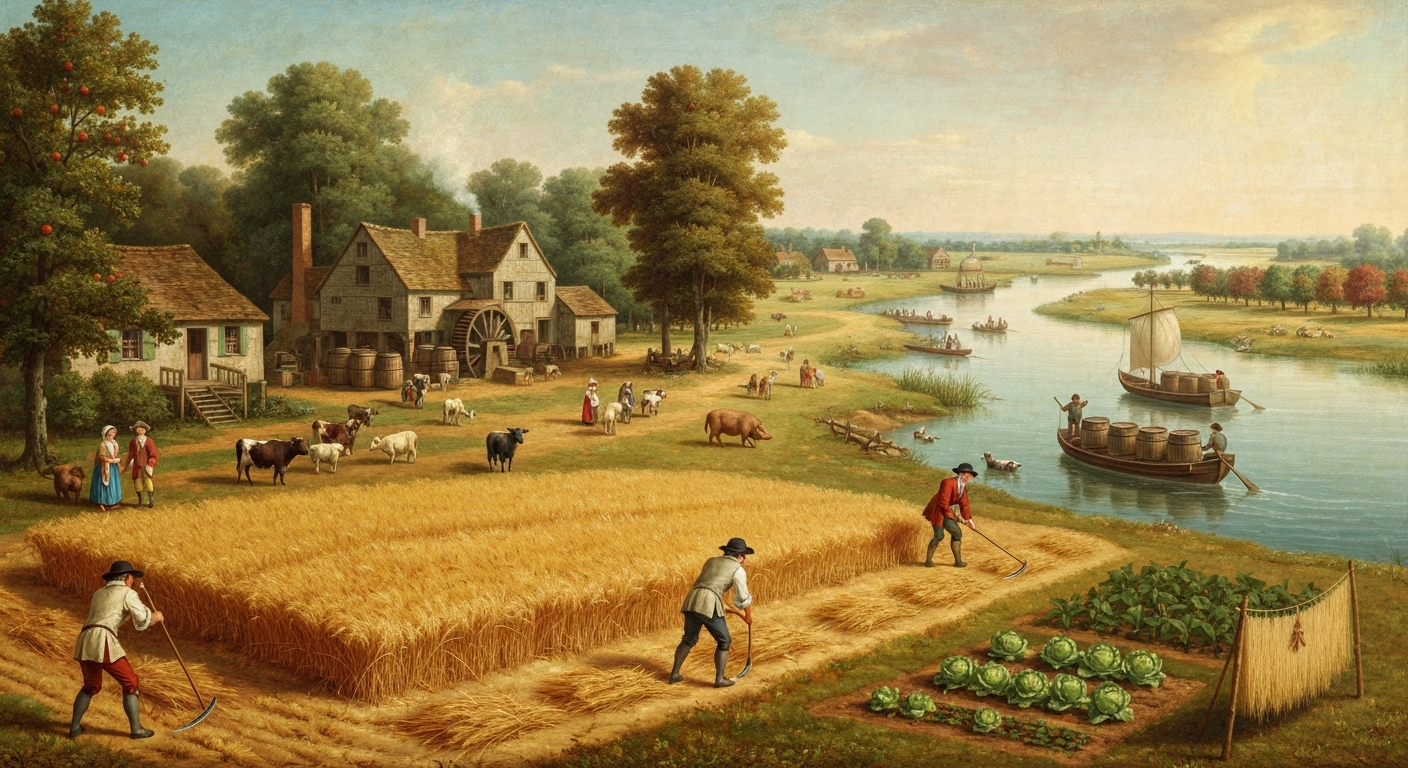
What Did the Delaware Colony Grow: Crops, Uses & Legacy
Colonial Delaware’s main crops, grains, hay, flax, fruits, vegetables, livestock, why they thrived and how they were sold.
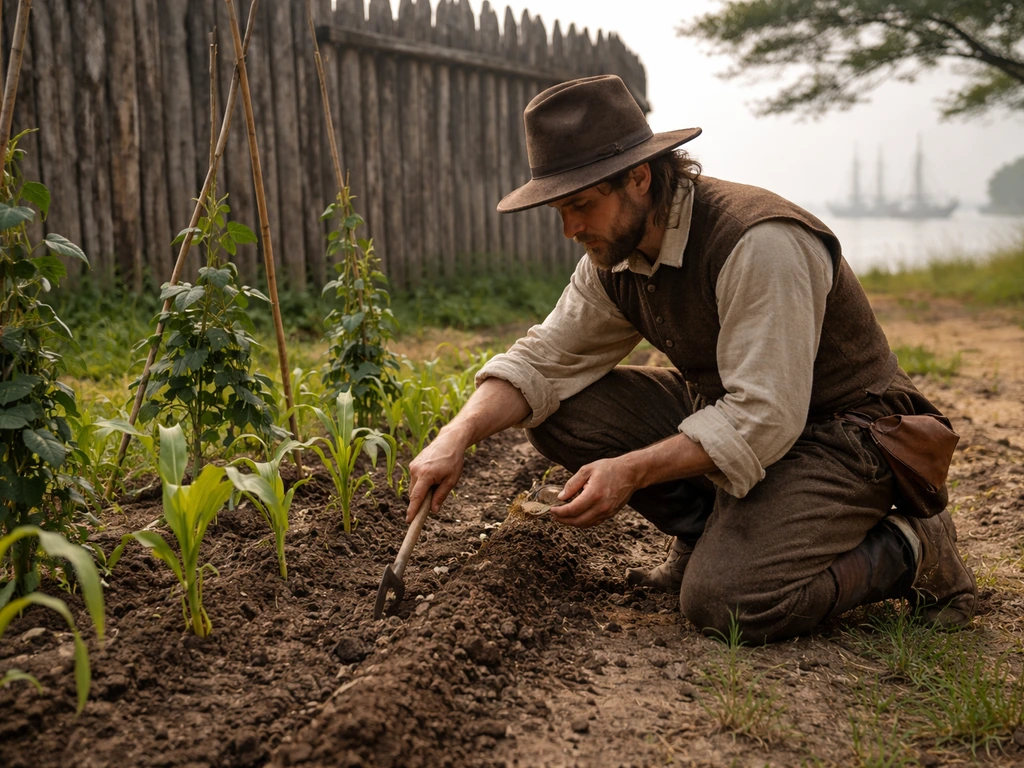
What Did Jamestown Grow and How They Farmed It
Learn what Jamestown colonists grew and the methods they used to plant, harvest, and adapt crops to Virginia conditions.