
India is one of the world's largest cotton producers, and cotton grows across a broad band of the country spanning roughly three distinct zones: the northern zone (Punjab, Haryana, Rajasthan), the central zone (Gujarat, Maharashtra, Madhya Pradesh), and the southern zone (Telangana, Andhra Pradesh, Karnataka, Tamil Nadu). In Europe, cotton is not widely grown commercially, because the climate and growing conditions are generally not well aligned with cotton’s warm, frost-free needs cotton grows. Gujarat and Maharashtra together account for the lion's share of total cotton area and production today, but you'll find cotton being grown commercially across at least ten Indian states. The crop is tightly tied to warm semi-arid to sub-humid climates, black cotton soils (Vertisols), and either reliable monsoon rainfall or irrigation access.
Where Does Cotton Grow in India? States, Regions and Seasons

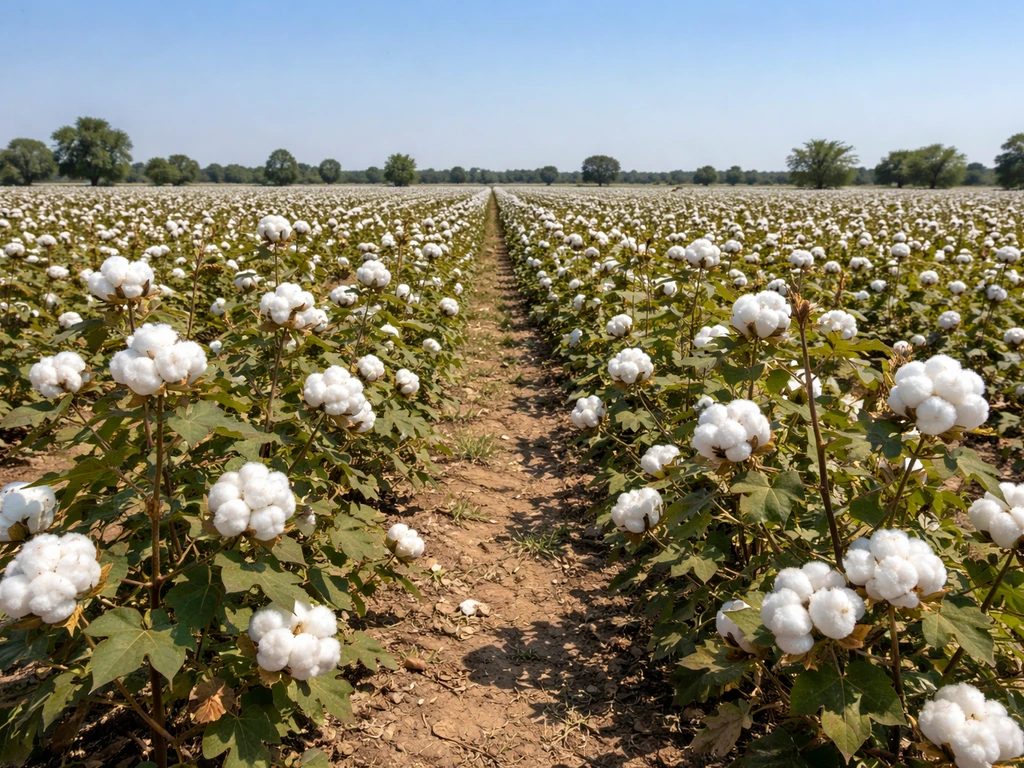
Yes, India absolutely grows cotton, here's the scale
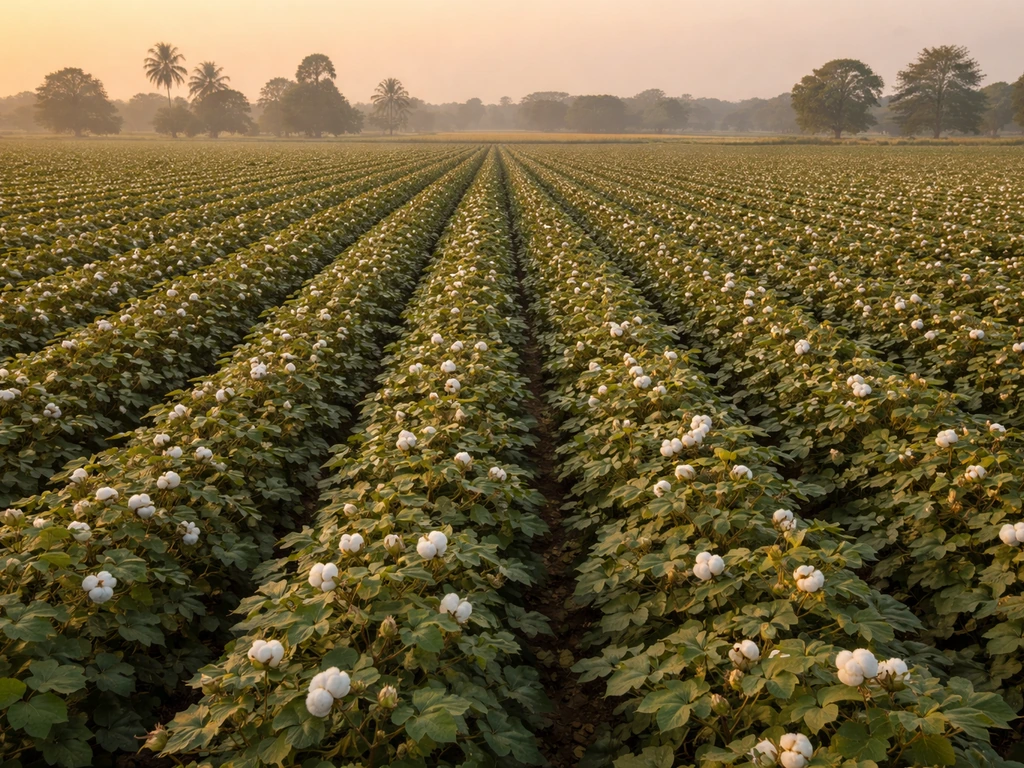
India cultivates multiple species of cotton under the genus Gossypium. The dominant commercial species today is Gossypium hirsutum (American upland cotton), which makes up most of the medium and long staple Bt hybrid production in the central and northern zones. Gossypium arboreum and Gossypium herbaceum (the 'desi' cottons) are still grown, particularly in the northern zone and on saline soils in Gujarat where they show natural tolerance to harsher conditions. Hybrid Bt cotton, regulated through ICAR-CICR and the Cotton Advisory Board (CAB), now dominates commercial cultivation in most of the major producing states.
The Ministry of Textiles treats cotton as a strategically important crop, and it's organized through formal zone-level research programs including the All India Coordinated Research Project on Cotton (AICRP-Cotton) run by ICAR-CICR. This zonal structure isn't just administrative, it reflects genuine agro-climatic differences that determine which cotton varieties work, how much irrigation is needed, and when farmers plant and harvest.
Which Indian states grow cotton (by region)
The Cotton Advisory Board groups India's cotton states into three zones. Understanding this grouping helps you immediately figure out whether a given state or district falls into a rainfed or irrigated cotton system, and which species and fiber types are typical.
Northern zone
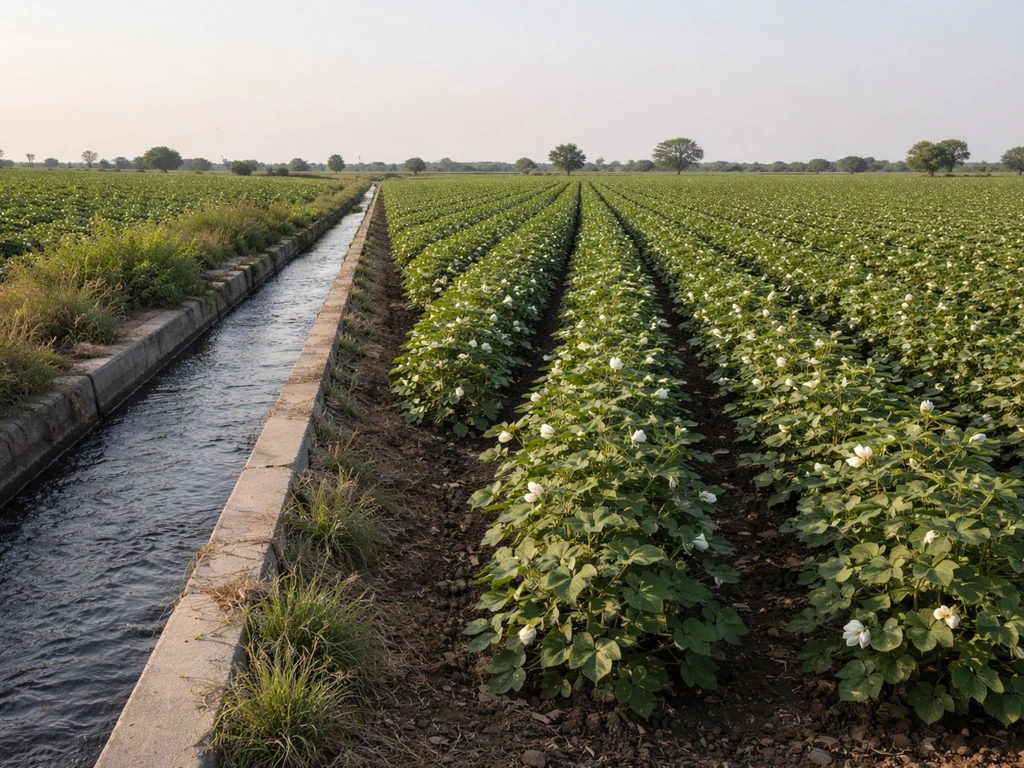
Punjab, Haryana, and Rajasthan form the northern cotton zone. This is almost entirely irrigated cotton, drawing on canal and groundwater systems. The northern zone grows both G. hirsutum hybrids and G. arboreum/herbaceum desi cotton. Punjab is notable for having a well-researched set of climate-adapted varieties, and research from ICAR highlights that sowing timing here is critical, planting outside the recommended window meaningfully reduces yields in this zone.
Central zone
Gujarat, Maharashtra, and Madhya Pradesh dominate Indian cotton production by area and output. Gujarat is consistently among the top one or two states for cotton production, and Maharashtra has the largest cotton-cultivated area in the country by some estimates. blank" rel="noopener noreferrer">Most of the central zone is rainfed, dependent on the southwest monsoon for moisture, this is the classic black-soil cotton belt. A large share of India's Bt cotton acreage sits in this zone. Madhya Pradesh is a secondary but significant producer within this grouping.
Southern zone
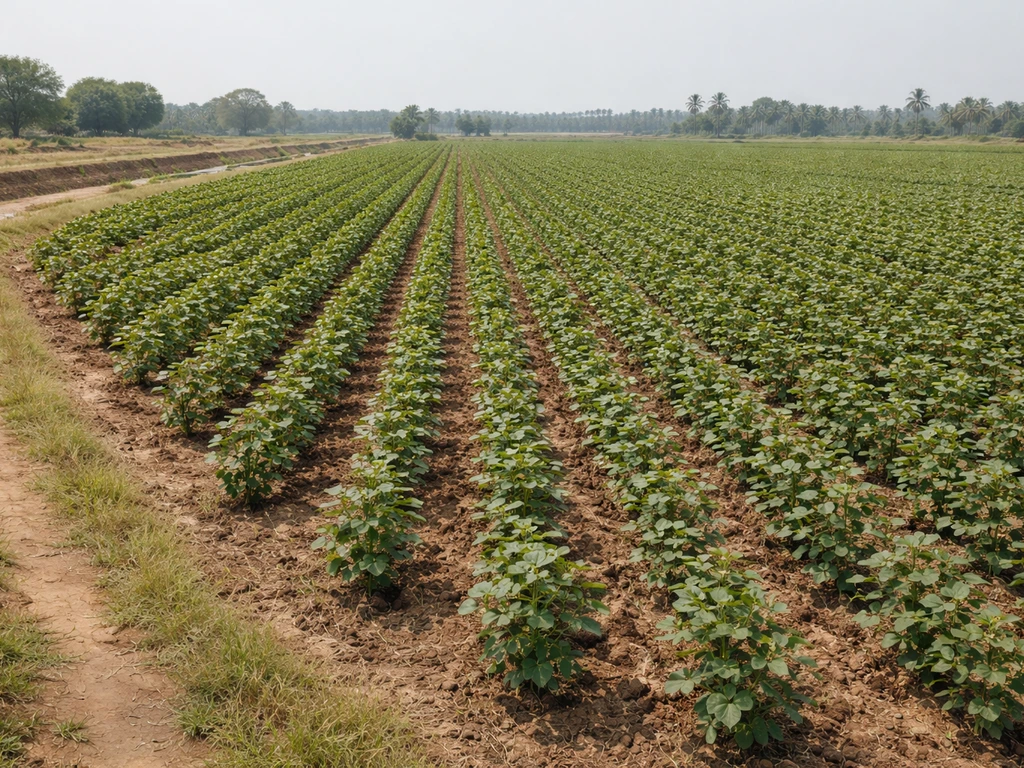
Telangana, Andhra Pradesh, Karnataka, and Tamil Nadu make up the southern cotton zone. Telangana and Andhra Pradesh are the major contributors here, with a mix of rainfed and irrigated cultivation. Tamil Nadu has a more defined district-level cotton geography, with extension departments like TNAU mapping variety recommendations and sowing calendars down to individual districts. Karnataka is a smaller but consistent producer in this zone.
| Zone | Key States | Primary Cultivation Type | Dominant Species/Types |
|---|---|---|---|
| Northern | Punjab, Haryana, Rajasthan | Irrigated | G. hirsutum hybrids, G. arboreum/herbaceum |
| Central | Gujarat, Maharashtra, Madhya Pradesh | Mostly rainfed (monsoon-dependent) | G. hirsutum Bt hybrids, some desi cotton |
| Southern | Telangana, Andhra Pradesh, Karnataka, Tamil Nadu | Mix of rainfed and irrigated | G. hirsutum Bt hybrids |
What actually makes a location suitable for cotton within these states
Cotton doesn't grow uniformly across a state, it concentrates in specific districts where the combination of soil type, rainfall, and temperature lines up. If you’re wondering kenshi where to grow cotton, start by checking whether the local soils are Vertisols (black cotton soil) and match the rainfall or irrigation pattern for your district. Here's what matters most at the ground level.
Soil: black cotton soils are the key signal

The classic home for Indian cotton is the Vertisol, locally called black cotton soil or regur. These deep, dark, clay-heavy soils are remarkable for cracking when dry (which aerates roots) and swelling when wet (which retains moisture through dry spells). You'll find them across the Deccan plateau, covering large parts of Maharashtra, Madhya Pradesh, Telangana, Andhra Pradesh, and parts of Gujarat and Karnataka. When you see black cracking clay soils in these states, you're looking at the core cotton geography. ICAR-CRIDA's rainfed cotton work specifically maps these Vertisol districts as the backbone of rainfed cotton production systems.
Gujarat also has saline Vertisols where standard varieties struggle, but ICAR-CSSRI has developed salt-tolerant desi cotton genotypes (like CSC-025, a G. herbaceum line that tolerates soil EC up to about 9.0 dS/m) specifically for these areas. So even within Gujarat, soil salinity determines which cotton type is viable, regular black soils get Bt hybrids, saline patches get desi varieties.
Rainfall and irrigation requirements
Rainfed cotton in the central zone typically needs around 500–900 mm of annual rainfall distributed reasonably through the growing season. A district rainfall figure of roughly 781 mm, for example, is consistent with productive rainfed cotton on black cotton soils, this kind of district-level rainfall check is a practical first step for feasibility. In the northern zone, where rainfall is lower and less reliable, irrigation is non-negotiable. TNAU's cotton irrigation guidelines for the southern irrigated belt recommend irrigating immediately after sowing and applying a blank" rel="noopener noreferrer">life irrigation on the fifth day after sowing, which tells you that even in irrigated systems, precise water timing from day one matters.
Temperature and climate
Cotton is a warm-season crop that needs consistent heat. It performs best with daytime temperatures in the 25–35°C range during the growing season, and it doesn't tolerate frost. This is why cotton fades out as you move into cooler northern elevations or wetter northeastern India. To answer how far north cotton can grow, focus on the frost-free, warm-season window and the point at which nighttime temperatures start to limit growth. The semi-arid to sub-humid climatic belt that runs from Gujarat through the Deccan plateau and into peninsular India is naturally aligned with what cotton needs, long frost-free growing seasons with warm nights.
Growing conditions and practical guidance for farmers
If you're trying to assess whether a specific location is cotton-suitable today, work through these factors in order:
- Check your soil type first. Black Vertisols or similar clay-heavy dark soils are your strongest indicator of natural suitability. Sandy or laterite soils without irrigation infrastructure are poor candidates for rainfed cotton.
- Look up your agro-climatic zone through your local Krishi Vigyan Kendra (KVK). KVK zone pages list the crops grown in your agro-climatic zone and the relevant soil and rainfall parameters — if cotton appears in that list, you're in a viable belt.
- Match your district rainfall to the requirement. For rainfed cotton, you want at least 500 mm and ideally 700–900 mm during the kharif season (June–October). Below 500 mm without irrigation access, cotton becomes risky.
- Verify the frost-free period. Cotton needs at least 150–180 frost-free days to complete its growth cycle. In the northern zone, the growing window is tighter and early planting (late April to May under irrigation) is standard.
- Check variety recommendations for your zone. ICAR-CICR and state agricultural universities publish zone-specific variety lists. Using a variety developed for another zone often underperforms regardless of your soil and rainfall.
One thing worth knowing: cotton cultivation has expanded into non-traditional areas, including short-duration varieties now being tested in the rice-fallow saline fields of the Sundarbans in West Bengal, where KVK guidance and ICAR support have made it viable at small scale. So the belt isn't entirely fixed, but straying far from the core Vertisol, semi-arid zone without institutional support and variety matching carries real risk.
When cotton is planted and harvested across India's regions
Cotton is primarily a kharif crop across India, meaning it follows the monsoon growing season. But sowing and harvest windows shift noticeably across zones.
| Zone / Region | Typical Sowing Window | Harvest Period | Notes |
|---|---|---|---|
| Northern (Punjab, Haryana) | Late April – May | October – November | Irrigated; early sowing under canal/tubewell water before monsoon |
| Central rainfed (Maharashtra, MP) | June – early July | November – January | Monsoon-onset dependent; delayed sowing hurts yields |
| Central irrigated (Gujarat) | May – June | October – December | Mix of pre-monsoon irrigated and kharif rainfed |
| Southern (Telangana, AP) | June – July | November – January | Mostly kharif; some late-season irrigated crops |
| Tamil Nadu (district-specific) | June – August (varies by district) | November – February | TNAU maps variety-specific sowing windows per district |
The ICAR journal literature on Punjab cotton makes a point that's worth repeating for any zone: planting outside the recommended sowing window, even by a few weeks too early or too late, correlates with compromised crop establishment and reduced productivity. The window is tight by design, tied to soil temperature, moisture availability at sowing, and the length of the warm growing season before temperatures drop. If you're planning a planting calendar, anchor it to the zone-specific recommendations from your state agricultural university or KVK, not just the general kharif season.
How India's cotton geography has shifted over time
Cotton has been grown on the Indian subcontinent for thousands of years, G. arboreum and G. herbaceum are Old World species native to this region, and cotton textiles were a cornerstone of Indian trade long before industrialization. The geographic footprint of cotton cultivation, however, has changed meaningfully over the past few centuries and especially in the last 50 years.
Historically, the Deccan plateau and the black soil belt of central India were the natural heart of Indian cotton. During the British colonial era, cotton production was actively expanded to supply textile mills in Britain, and the American Civil War disruption to U.S. cotton exports in the 1860s triggered a short-lived but intense expansion of Indian cotton cultivation area. Maharashtra, Gujarat, and the Berar region (now part of Vidarbha in eastern Maharashtra) became defined cotton-producing regions during this period, a pattern that persists today.
The introduction of hybrid cotton in the 1970s and 1980s began shifting production dynamics, pulling cultivation toward more irrigated areas and higher-input systems. The biggest transformation came with Bt cotton adoption after 2002, which spread rapidly through Maharashtra, Gujarat, Andhra Pradesh (then undivided), and into the northern zone. By the mid-2000s, Bt cotton hybrids based on G. hirsutum dominated commercial production in most of these states, largely displacing the older desi varieties except in specific niches (saline soils, organic systems, or where seed cost is a constraint). The NFSM status papers document this variety-mix transition clearly.
More recently, irrigation expansion has allowed cotton to move into areas that were previously too dry or seasonally unreliable. Gujarat's rise as a top cotton state owes a great deal to irrigation infrastructure, not just natural soil advantages. At the same time, areas like Vidarbha in Maharashtra remain heavily rainfed and have faced agrarian stress when monsoon timing or intensity underperforms, the geographic and economic vulnerability of rainfed cotton in the central belt is an ongoing policy concern.
It's worth noting the contrast with cotton geography in other parts of the world: India's cotton belt is driven by Vertisols and monsoon seasonality in a way that's quite different from, say, the irrigated desert systems of the American Southwest or the savanna cotton belts of sub-Saharan Africa. Cotton does grow in parts of Africa, especially in regions where warm temperatures and reliable moisture support cultivation savanna cotton belts of sub-Saharan Africa. If you're interested in global cotton geographies and how India's pattern fits into the broader picture, the same zone-and-soil logic applies across continents, cotton follows warm temperatures, specific soil drainage characteristics, and reliable water access wherever it grows.
Your next steps for verifying local cotton suitability
If you're a farmer or student trying to pin down whether a specific district or village falls within a viable cotton zone, the most practical verification path in India today looks like this:
- Contact your local KVK (Krishi Vigyan Kendra) — they publish agro-climatic zone profiles that list cotton among viable crops if your district qualifies, along with soil type and rainfall context.
- Check the Cotton Advisory Board (CAB) or COCPC data for your state — state-level area and production figures give you a quick read on how significant cotton is in your state's agricultural economy.
- Look at the ICAR-CICR zone maps — they divide India into North, Central, and South cotton zones with associated agronomy packages, and finding your zone tells you which variety recommendations and sowing calendars apply.
- If you're in a non-traditional area (like a coastal saline belt or an eastern state), look for ICAR KVK bulletins or Sundarbans-style feasibility work before committing area to cotton.
- For Tamil Nadu specifically, TNAU's district-level season and variety tables are among the most granular public resources available for matching variety to location and timing.
FAQ
Does cotton grow in every district inside a cotton-producing state like Gujarat or Maharashtra?
No, cotton concentrates in specific districts because suitability depends on local Vertisol (black cotton soil) presence, rainfall pattern, and frost-free temperature timing. Two districts in the same state can differ, especially if one has lighter soils, different monsoon reliability, or higher salinity pockets that make certain cotton types fail.
Which is easier to grow, rainfed cotton or irrigated cotton, and what’s the biggest risk for each?
Rainfed cotton is more sensitive to monsoon timing and distribution, even when annual rainfall totals look adequate. Irrigated cotton is usually more controllable but depends on reliable water access, timely irrigation scheduling, and good drainage. Inadequate irrigation at sowing or late water starts can reduce establishment even if the season ends up wet.
Can cotton be grown on saline soils in India, and does it change which cotton type is planted?
Yes, saline patches can support cotton, but the crop choice matters. In Gujarat’s saline Vertisols, salt-tolerant desi genotypes are used more than standard Bt hybrids because salinity raises stress and can reduce germination and fiber performance. The same logic applies in any saline pocket outside Gujarat: test salt tolerance and do not assume a hybrid that works in non-saline black soils will perform.
Is cotton only a kharif crop, or is there any second-season planting?
Cotton is primarily grown in the kharif season aligned with the monsoon in most Indian regions. Some short-duration trials and niche adjustments can happen outside the typical window, but they are not the default. If you deviate from kharif timing, you must re-check frost-free conditions, soil moisture at sowing, and the local recommended sowing window for your district.
What happens if I sow cotton slightly early or late in the recommended season?
Even small shifts can hurt establishment because cotton’s performance is tied to soil temperature and available moisture at sowing. The common failure mode is weak stand establishment, which then cascades into lower boll set and reduced productivity. Use the zone-level sowing window from your state agriculture university or KVK, not only the broad kharif label.
How far north can cotton be grown in India, and what temperature limits matter most?
The practical limit is not just latitude but frost-free duration and night temperatures during the crop stage. Cotton needs warm conditions, daytime warmth, and no frost. As nighttime temperatures start to drop and frost risk increases, growth slows and yields fall, even if daytime feels warm during parts of the season.
If my field is not black cotton soil (Vertisol), can I still grow cotton?
It’s possible, but risk goes up because Vertisols provide the moisture buffering and clay structure cotton relies on. If your soil is different (lighter textures, poor moisture retention, or drainage issues), you may need different variety choice and tighter irrigation management. A practical step is to confirm soil texture and water-holding behavior, not just soil color.
What rainfall number should I use to judge cotton feasibility in a district?
Use the district’s rainfall distribution during the growing season, not only yearly totals. Rainfed cotton in the central zone is often feasible around the mid-hundreds mm range when rain arrives across key growth stages. If rainfall is concentrated or unreliable, you may need irrigation support, because cotton depends on consistent moisture during establishment and boll development.
What is a quick on-the-ground checklist to verify cotton suitability for a village or district?
Check (1) whether the local soils match Vertisol (black cotton soil) or have known limitations like salinity, (2) the monsoon reliability or irrigation availability for that district, and (3) whether local sowing and harvest fit a frost-free warm window. Then confirm the appropriate cotton type and sowing dates with local KVK or extension guidance, since variety and timing are tightly linked in practice.
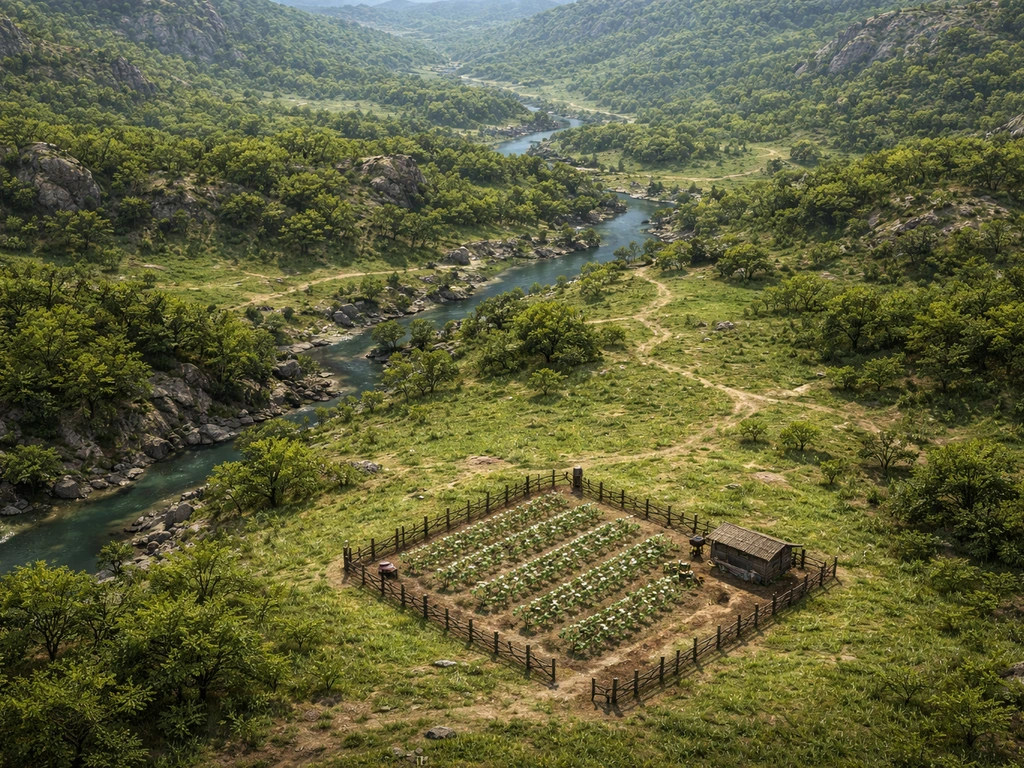
Find the best Kenshi cotton regions and exact map areas, with setup steps, placement tips, and troubleshooting for faile
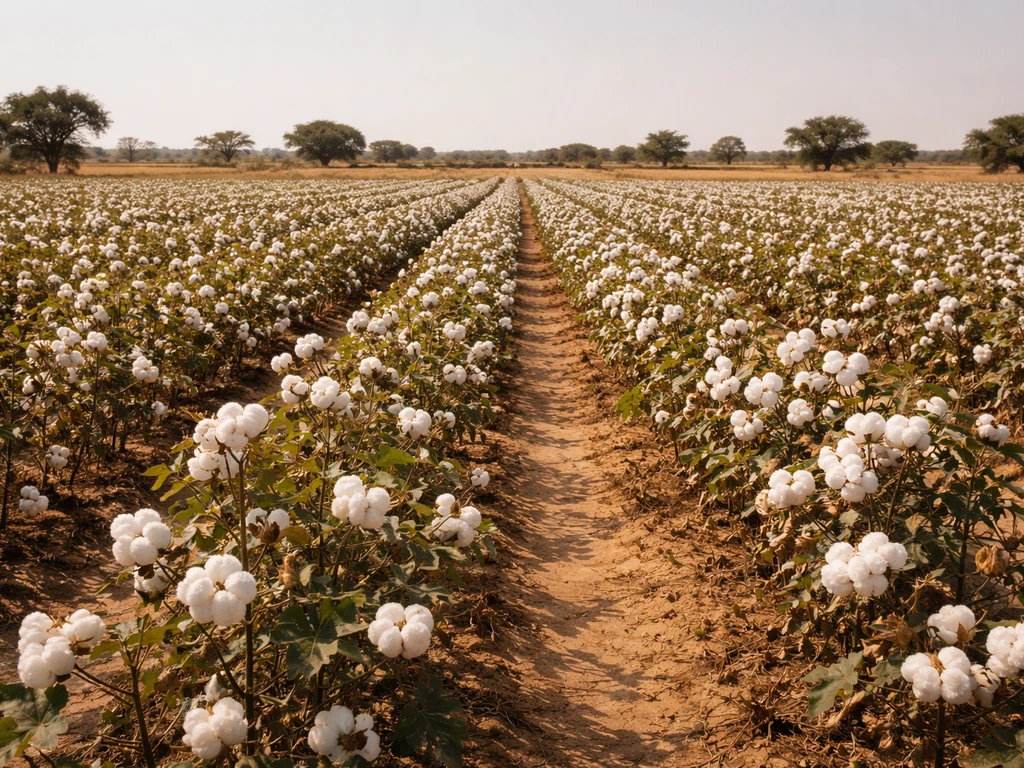
Yes, cotton grows in Africa. See regions, climate needs, cotton types, and how to check suitability for your area.
Colonial Delaware’s main crops, grains, hay, flax, fruits, vegetables, livestock, why they thrived and how they were sold.