
Yes, cotton does grow in Europe, though it is confined to the warmest southern regions. Greece and Spain are the only two countries with significant commercial production inside the European Union, together farming around 290,000 hectares as of 2024. Beyond the EU, Turkey is by far the largest cotton producer on European or transcontinental soil. Further pockets of small-scale and experimental cultivation exist across the Mediterranean basin, the Balkans, and parts of the Caucasus region. If you are a student, farmer, or gardener wondering whether cotton could work in a European context, the honest answer is: yes, but only if you have the right climate, the right variety, and enough heat units in your growing season.
Does Cotton Grow in Europe? Regions, Tips, History & Map

Samuel Rourke
29 Jul 2026
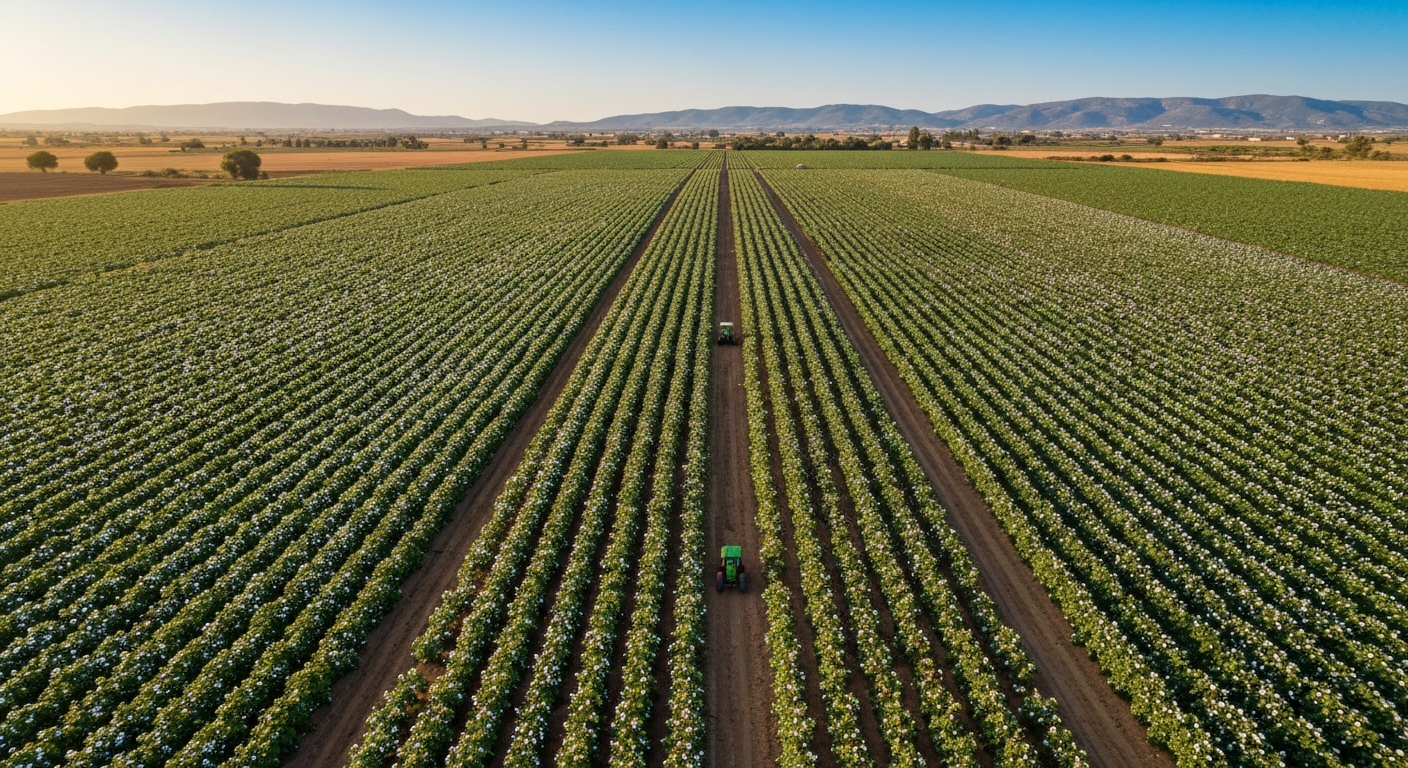
Where cotton grows in Europe today
Commercial cotton in Europe is heavily concentrated. Greece consistently ranks as the EU's largest producer, accounting for the majority of EU output in most years. USDA Foreign Agricultural Service data placed Greece's 2023/24 marketing-year production at roughly 970,000 bales, though that figure dropped sharply after severe storms in September 2023 damaged standing crops. See the USDA FAS report 'blank" rel="noopener noreferrer">Greece: Cotton and Products Annual (USDA FAS report)' for the 2023/24 production estimate and sector details. Spain, mainly in Andalusia, is the second EU producer. Portugal has produced cotton in smaller quantities historically but is largely inactive commercially today. Outside the EU, Turkey is in a different league altogether, with hundreds of thousands of hectares under cotton cultivation in its Aegean, Mediterranean (Çukurova), and southeastern Anatolian regions.
Beyond those headline producers, there is a thin scatter of smaller-scale activity. Bulgaria and other Balkan countries have hosted experimental or minor commercial plots where climate conditions permit. Parts of southern Italy, including Sicily, have seen field research and trial plots that produced commercially competitive lint yields. Cyprus has a historical connection to cotton cultivation that faded economically but occasionally surfaces in heritage and small-farm contexts. Caucasus-adjacent areas near the Black Sea coast also fall within zones where cotton can technically mature with appropriate irrigation.
| Country / Region | Production Status | Primary Growing Area | Approximate Scale |
|---|---|---|---|
| Greece | Commercial (EU's largest producer) | Thessaly, Central Macedonia, Eastern Macedonia & Thrace | ~250,000–290,000 ha (recent years) |
| Spain | Commercial (second EU producer) | Andalusia (Guadalquivir valley) | Tens of thousands of hectares |
| Turkey | Commercial (large-scale) | Aegean coast, Çukurova (Adana), SE Anatolia | Hundreds of thousands of hectares |
| Bulgaria / Balkans | Experimental / minor | Southern lowlands | Small plots to limited commercial trials |
| Southern Italy / Sicily | Experimental / research | Sicily, Calabria | Field trials; lint yields ~1.6 t/ha recorded |
| Portugal | Historically commercial, now minimal | Alentejo and southern regions | Effectively inactive commercially |
| Cyprus | Historical / heritage | Inland valleys | Very small scale or none commercially |
| Georgia / Caucasus fringe | Minor / historical | Lowland irrigated areas | Negligible commercial output |
How to read a map of European cotton
If you are trying to visualize where cotton sits across Europe, it helps to think in three layers. The first layer is commercial production, which maps almost exactly onto Mediterranean and sub-Mediterranean lowlands below roughly 40–41°N latitude, with access to irrigation water and at least 200 frost-free days. On a map, this layer covers the Greek plains, Andalusia, and Turkey's western and southern coasts in a nearly unbroken band along the northern Mediterranean shore.
The second layer is experimental and trial-plot cultivation, which extends that band slightly northward and inland wherever researchers or progressive farmers test early-maturing varieties. Sicily is a good example: two-year field trials published in 2020 showed lint yields averaging 1.60 t/ha and peaking near 1.99 t/ha, which is genuinely competitive. These plots do not show up in national statistics but they are real and worth mapping if you want a complete picture.
The third layer is hobbyist and garden cultivation, which is scattered and informal. Individual growers in southern France, northern Italy, and even parts of central Europe occasionally grow a few plants for novelty or seed saving. Remote-sensing methods using tools like Google Earth Engine and Copernicus satellite data can now identify cotton fields at the field scale across Mediterranean Europe, which is useful for researchers and policymakers tracking where the crop actually appears on the ground, not just in agricultural surveys.
Regional notes: who grows cotton and how
Greece and the Balkans
Greece's cotton belt runs across the country's northern and central plains, including Thessaly and the Macedonia regions. Farmers there use fully mechanized systems with drip or furrow irrigation, supported by EU Common Agricultural Policy (CAP) subsidies that have historically made Greek cotton competitive despite relatively high production costs. The Balkan neighbors immediately north of Greece, particularly Bulgaria in its southern river valleys, have the theoretical climate but lack the established infrastructure, variety pipelines, and market linkages that Greece has built over decades.
Spain and Iberia
Andalusia in southern Spain is Europe's other main commercial cotton region. The Guadalquivir River valley provides the flat, irrigated terrain that large-scale cotton farming needs. Spanish production has fluctuated with water policy, subsidy levels, and competition from other profitable crops like olives and cereals. Portugal historically participated at a small scale but effectively withdrew from commercial cotton production as economics shifted.
Southern France and northern Mediterranean fringe
Southern France sits at the very edge of where cotton can reliably mature outdoors. The Languedoc and Provence regions occasionally see hobbyist plants grown in sheltered gardens, and there have been small-scale trial efforts. But the season length is tight, and without selecting the earliest-maturing upland varieties and starting plants under cover, reliable boll production is uncertain. Treat southern France as enthusiast territory rather than a practical farming zone.
Turkey: transcontinental but critical to the picture
Turkey straddles Europe and Asia, and its cotton production is almost entirely on the Asian side. But Turkey's scale matters when discussing European cotton as a whole because it is the dominant cotton producer in the broader region. The Aegean lowlands around Izmir, the Çukurova plain near Adana, and the Southeast Anatolian plains together produce lint output that dwarfs all EU production combined. Turkish industry data (from TÜİK and the National Cotton Council of Türkiye) track production province by province, making it a useful reference for understanding what a productive warm-climate Mediterranean system looks like at scale.
Caucasus and Black Sea fringe
Georgia and Azerbaijan have histories of Soviet-era cotton cultivation, particularly in irrigated lowland valleys. Post-Soviet economic disruption largely ended commercial production, though small-scale cultivation persists in the warmest lowlands. The Black Sea coastal climate in parts of Georgia and Turkey's eastern Black Sea region is generally too humid and cloudy for cotton, which prefers dry, sunny conditions at maturity. The semi-arid inland valleys are a better fit, and that is where any surviving cultivation tends to concentrate.
Climate and soil: what cotton actually needs
Cotton is a heat-demanding crop, and understanding exactly how much heat it needs helps explain why European production clusters where it does. The standard thermal framework uses Growing Degree Days calculated with a base of 60°F (about 15.6°C), often called DD60. From planting to first open boll, cotton typically needs somewhere between 1,575 and 1,925 DD60. That is a lot of accumulated heat, and it explains immediately why northern and central European climates cannot reliably produce mature cotton outdoors without protected cultivation.
The optimum temperature range for cotton's vegetative and reproductive growth is roughly 28–32°C. Below about 15°C, growth slows sharply. Frost kills young cotton outright and aborts reproductive structures at any growth stage. Above approximately 35°C for sustained periods, pollen viability drops and boll set suffers. This means the ideal cotton climate is warm, sunny, and reliably frost-free for a long stretch, with occasional but not extreme heat peaks. Mediterranean summers typically fit that description well.
| Parameter | Requirement / Threshold | Notes |
|---|---|---|
| Frost-free period | Minimum ~180–200 days | Longer seasons support better yields and more reliable maturity |
| GDD to first open boll | ~1,575–1,925 DD60 | Base 60°F (15.6°C); shorter-season cultivars target the lower end |
| Optimum air temperature | 28–32°C | Vegetative and reproductive stages both benefit |
| Minimum soil temperature for sowing | ~15–18°C at 5 cm depth | Cold soils slow germination and invite damping-off pathogens |
| Rainfall / irrigation need | 500–1,200 mm equivalent across season | Supplemental irrigation essential in most European cotton areas |
| Soil texture | Deep loam to sandy loam preferred | Good drainage critical; waterlogging causes root rot |
| Soil pH | 5.8–8.0 (broadly neutral to slightly acidic preferred) | Tolerates a wide range but performs best near neutral |
| Soil depth | 30+ cm workable depth | Deep ploughing (30–35 cm) used in Mediterranean trials |
Rainfall patterns matter almost as much as temperature. Greece and Spain both rely heavily on supplemental irrigation because Mediterranean summers are dry precisely when cotton needs water most, during flowering and boll fill. The Sicilian trials used four to six irrigation events per season, which is typical for Mediterranean dryland cotton converted to irrigated production. Soil drainage must be excellent; cotton's deep taproot is sensitive to waterlogging, and even brief periods of standing water can reduce yield significantly.
How far north can cotton grow?
Practically speaking, reliable outdoor cotton cultivation in Europe runs out of steam north of roughly 41–42°N latitude under normal conditions. For a concise answer to how far north does cotton grow, see the section 'How far north can cotton grow?' which summarizes latitude limits and edge cases. That puts Athens (37.9°N) and Seville (37.4°N) comfortably inside the viable zone, while Rome (41.9°N) and Barcelona (41.4°N) are at the outer edge. North of that, the accumulated GDD simply falls short in most years for standard upland varieties to reach first open boll before autumn frosts arrive.
There are documented exceptions. Southern France, parts of northern Italy's Po Valley, and sheltered microclimates in the northern Balkans have all produced cotton plants that reached maturity in unusually warm years or with early-maturing cultivars started indoors. Urban heat islands can push growing conditions slightly, and south-facing walls or raised beds can add meaningful degree days for a single plant or small plot. But these are edge cases for gardeners and enthusiasts, not farming propositions.
The northern limit question connects directly to the broader topic of how far north cotton grows globally. Across the United States, for example, Kansas and Virginia mark approximate northern commercial limits, both sitting around 37–39°N latitude, very similar to southern Europe's viable belt. The physiological constraint is the same everywhere: not enough accumulated heat to carry bolls from set to full opening before the season ends.
Choosing the right variety for a European microclimate
Almost all commercial and trial cultivation in Europe uses Gossypium hirsutum, upland cotton, which is by far the most widely grown species globally and offers the best selection of early-maturing cultivars. Gossypium barbadense (extra-long staple or Pima cotton) is slower to mature and demands even more heat, making it unsuitable for most of Europe outside the very warmest areas of Greece and Turkey.
Within G. hirsutum, the key trait to prioritize for European conditions is earliness: specifically, a short time from planting to first open boll. The Sicilian trials used cultivars named 'Elsa' and 'Juncal', both selected for early maturity, and achieved lint harvests in September and October when sown in April. That timing matters enormously; every week of delay in sowing pushes harvest later into autumn, when days shorten and temperatures drop. Photoperiod sensitivity is another trait worth checking because some cotton varieties are triggered to flower only by specific day-length conditions, which can cause problems at European latitudes where summer days are longer than in the tropics where most cotton genetics originated.
- Choose upland cotton (Gossypium hirsutum) for all European climates; avoid G. barbadense unless in the warmest Mediterranean zones
- Prioritize cultivars with the shortest published days-to-maturity or lowest GDD requirements
- Look for varieties bred or trialed in Mediterranean Europe, Spain, Greece, Italy or southern France
- Check photoperiod sensitivity; day-neutral or quantitative short-day varieties perform more predictably at higher latitudes
- For hobby growers in marginal climates (above ~42°N), start seeds indoors 4–6 weeks before last frost to extend the effective season
- In commercial contexts, consult seed suppliers in Greece or Spain who stock varieties adapted to the EU's cotton belt
Step-by-step guide for hobby and small-scale growers
Site selection and soil preparation
Pick the warmest, most sheltered spot available, ideally south-facing with good air drainage to avoid frost pockets. Cotton needs full sun all day; even partial afternoon shade will noticeably reduce boll production. Prepare the soil by deep-ploughing or digging to at least 30–35 cm, as done in Mediterranean research trials. Incorporate a balanced N-P-K fertilizer at the base before sowing, and confirm your soil pH sits between 5.8 and 8.0. If drainage is suspect, raise beds or add organic matter to improve structure.
Seed sourcing and sowing
Source seeds from reputable agricultural suppliers in Greece, Spain, Italy, or Turkey, where early-maturing upland varieties are commercially available. For hobby growers in northern or marginal areas, specialty seed companies that supply short-season vegetable and flower seeds sometimes carry ornamental or open-pollinated cotton varieties. Sow after your last frost date once soil temperature at 5 cm depth reaches at least 15–18°C. In Mediterranean Europe, this typically falls between late March and late April. In marginal northern sites, start seeds in biodegradable pots indoors 4–6 weeks early and transplant carefully, as cotton dislikes root disturbance.
Spacing, fertilisation and irrigation
In the Sicilian trials, row spacing of around 0.9–1.0 m was used with appropriate in-row spacing to allow full canopy development and airflow. For a garden plot, a spacing of 60–90 cm in all directions works reasonably well. Apply a balanced starter fertilizer at planting and follow up with two to four nitrogen top-dressings through the growing season, timed to coincide with active vegetative growth and then the beginning of flowering. Keep soil moisture consistent during germination and boll fill; a dry spell during flowering can cause boll drop. Drip irrigation, if available, is more efficient than overhead watering and keeps foliage drier, which reduces fungal disease pressure.
Monitoring, harvest and post-harvest handling
Check plants regularly through the season for pest damage and disease symptoms (see the section below on pests and diseases). Bolls will begin to open from the bottom of the plant upward as the season progresses. Harvest by hand once bolls are fully open; in a small garden you can pick every few days to prevent fiber exposure to autumn rain. For simple home processing, pick the seed cotton (the fluffy fiber with seeds still attached) and store it dry. Separating the lint from the seed (ginning) at home is slow by hand but possible with a simple roller gin or even by pulling fibers gently away from seeds. Store cleaned lint in a dry, sealed container away from moisture and pests.
- Select warmest, sunniest site with well-drained, deep loam or sandy loam soil
- Test and adjust soil pH to 5.8–8.0; deep-dig or plough to 30–35 cm
- Source early-maturing upland (G. hirsutum) cultivars from regional suppliers
- Sow after last frost when soil temperature reaches 15–18°C (or start indoors 4–6 weeks early in marginal climates)
- Space plants 60–100 cm apart; apply balanced N-P-K fertilizer at planting
- Irrigate consistently, especially during flowering and boll fill; drip irrigation preferred
- Apply two to four nitrogen top-dressings during vegetative and early reproductive growth
- Monitor weekly for bollworm, aphids, and fungal symptoms; act early if detected
- Hand-harvest open bolls progressively through September–October
- Dry harvested seed cotton immediately; gin by hand or simple roller gin; store lint dry and sealed
Pests, diseases and protecting your crop
The most significant insect pest in European cotton contexts is Helicoverpa armigera, the cotton bollworm (also called the old-world bollworm). EFSA has formally assessed it as a major polyphagous pest that overwinters in southern Europe and can migrate northward through the season. Larvae bore into bolls and squares, causing direct yield loss that can be severe if populations are not controlled early. EU-funded research projects, including work supported through the CAP network, have been developing volatile-based detection systems and integrated pest management (IPM) protocols specifically aimed at reducing chemical inputs while maintaining effective control.
Other common insect concerns include cotton aphids (Aphis gossypii), which build up rapidly in warm conditions and can transmit viruses; whiteflies (Bemisia tabaci and Trialeurodes species), which are particularly problematic in greenhouse or sheltered settings; and thrips at seedling stage. Spider mites become an issue during hot, dry spells, which are common in Mediterranean summers.
On the disease side, seedling damping-off caused by Pythium and Rhizoctonia species is the main risk at planting, especially in cool, wet soils; this is another reason to wait for warm soil temperatures before sowing. Later in the season, Verticillium wilt and Fusarium wilt can affect plants in infected soils. Grey mould (Botrytis) can damage opening bolls during humid autumn conditions.
| Pest / Disease | Key Symptom | IPM / Control Approach |
|---|---|---|
| Helicoverpa armigera (cotton bollworm) | Bored bolls and squares; frass inside boll | Pheromone traps for monitoring; Bacillus thuringiensis (Bt) sprays; targeted pyrethroid if threshold exceeded |
| Cotton aphid (Aphis gossypii) | Sticky honeydew; curled leaves; sooty mold | Encourage natural enemies (parasitoid wasps, ladybirds); insecticidal soap; systemic insecticide if severe |
| Whitefly (Bemisia tabaci) | Yellowing leaves; sticky honeydew | Yellow sticky traps; reflective mulch; neonicotinoids as last resort (regulatory restrictions apply in EU) |
| Spider mites (Tetranychus urticae) | Fine webbing; bronzed leaves in hot dry periods | Increase irrigation to raise humidity; predatory mites (Phytoseiidae); miticides if severe |
| Seedling damping-off (Pythium / Rhizoctonia) | Collapsed seedlings at soil line | Sow into warm soil; seed treatment fungicides; well-drained beds |
| Verticillium / Fusarium wilt | Wilting; yellowing; vascular discoloration | Crop rotation (minimum 3-year break); resistant varieties where available |
| Botrytis grey mould | Fuzzy grey mold on opening bolls in wet autumn | Harvest promptly when bolls open; improve airflow; fungicide if widespread |
Irrigation and water management across European regions
Water management is arguably the single biggest operational challenge for cotton farming in Europe. The Mediterranean climate delivers rain in winter and spring but goes almost completely dry during summer, which is exactly when cotton needs water most for flowering and boll fill. This means virtually all commercial Greek and Spanish cotton is irrigated, typically via drip systems or furrow irrigation depending on field infrastructure and water availability.
For small-scale or hobby growers, a practical approach is to monitor soil moisture at root depth (roughly 20–40 cm) and irrigate whenever it drops to around 50 percent of field capacity during the critical flowering to boll-fill window. In the Sicilian trials, four to six irrigation events per season were sufficient, typically spaced according to crop stage rather than a fixed calendar schedule. Drip irrigation is strongly preferred over overhead watering because it reduces foliar disease pressure, conserves water, and can be combined with fertigation (dissolving fertilizers in irrigation water) to simplify nutrient management.
In the Black Sea fringe regions or parts of the northern Balkans, summer rainfall is slightly more reliable, which can reduce the irrigation burden. But even in these areas, any dry spell during flowering will cause boll drop, so having supplemental water available is essential for consistent yields rather than an optional upgrade.
Economics: what to expect from European cotton farming
For commercial growers in Greece and Spain, cotton farming is viable but heavily tied to EU CAP support payments. Without those subsidies, production costs in Europe would struggle to compete with major global producers like the United States, India, or the African francophone zone. EU cotton area peaked at around 362,000 hectares in 2020 and had declined to about 290,000 hectares by 2024, reflecting both weather events and ongoing economic pressures. Lint yields in Mediterranean Europe under irrigation typically run in the range of 1.0–1.6 t/ha, which is modest compared to top US or Australian irrigated cotton but reasonable for the input level used.
Labor costs are the other major challenge. Mechanized harvesting requires spindle or stripper harvesters that represent significant capital investment, and maintenance of irrigation infrastructure adds to fixed costs. Small-scale growers cannot spread those fixed costs across large areas, which is why commercial production has always tended to concentrate in specific plains with established infrastructure rather than spreading across the entire Mediterranean zone.
For hobby growers, the economics are entirely different. A few cotton plants in a garden cost almost nothing beyond the seed and some water, and the appeal is educational, decorative, or historical rather than financial. Small-scale niche production for specialty fiber markets (organic, heritage, or local-source cotton) is an emerging concept in parts of Europe, but market channels for this are thin and still developing. Anyone considering small commercial cotton production in Europe should research available market linkages carefully before committing significant land or capital.
Cotton in Europe through history
Cotton's history in Europe is older and richer than most people realize. The Mediterranean world had contact with cotton through ancient trade routes from India and the Middle East long before organized cultivation took hold locally. By the medieval period, cotton cultivation was established in parts of Sicily, Cyprus, Spain (under Moorish influence), and parts of the Ottoman-controlled eastern Mediterranean. Sicily in particular was a significant cotton producer during the Arab and Norman periods, with output traded across the Mediterranean basin.
The industrial revolution fundamentally reshaped European cotton geography. As cheap raw cotton flooded in from the American South through the 18th and 19th centuries, domestic European cultivation became economically unviable in most areas. Europe's role shifted from grower to processor: Lancashire in England, Catalonia in Spain, and northern Italy became major textile manufacturing centers, all running on imported American and later Indian and Egyptian cotton. Domestic cultivation in Sicily, Cyprus, and parts of southern Spain declined sharply or disappeared entirely.
In the 20th century, deliberate policy decisions revived cotton farming in Greece and Spain within the then-EEC framework, partly for strategic self-sufficiency and partly to support agricultural incomes in poorer Mediterranean regions. EU accession for Greece (1981) and Spain (1986) brought cotton under CAP support mechanisms, which stabilized production in those countries. The late 20th and early 21st centuries have seen gradual consolidation to fewer hectares but more efficient production, with periodic revivals of interest in Italy and the Balkans driven by research programs and niche market interest.
How Europe compares with Africa and India
Comparing European cotton with major global producers like Africa and India puts the European context in sharp relief. Africa's cotton belt spans the Sahel and sub-Saharan zone, where long, hot growing seasons, abundant solar radiation, and in many cases lower labor costs create fundamentally different production economics. Cotton is a critical cash crop for smallholder farmers across francophone West Africa, with planting seasons that benefit from reliable monsoon rainfall patterns and GDD accumulation that dwarfs what Mediterranean Europe can offer. You can read more about those dynamics in coverage of cotton in Africa on this site.
India is the world's largest cotton producer by area, growing both upland and extra-long staple varieties across a range of agro-climatic zones from semi-arid Gujarat and Rajasthan to the humid black-soil regions of Maharashtra and Telangana. Indian cotton seasons are driven by the southwest monsoon, with sowing in May-June and harvest from October through February depending on region and variety. Season lengths and heat accumulation in India's cotton zones are generally far greater than anything achievable in Europe, which is why India can support multiple cotton types and photoperiod-sensitive varieties that would fail at European latitudes. More detail on where cotton grows within India is worth exploring for anyone comparing regional systems.
| Factor | Mediterranean Europe (Greece, Spain) | Sub-Saharan Africa (Sahel) | India (major cotton states) |
|---|---|---|---|
| Growing season length | ~180–220 frost-free days | ~200–270 days | ~180–240 days (varies by monsoon pattern) |
| Typical annual heat accumulation | Moderate; limits variety choice | High; supports long-season varieties | High to very high in key zones |
| Primary water source | Irrigation essential (dry summers) | Rainfed dominant in Sahel | Rainfed (monsoon) with some irrigation |
| Typical lint yield | ~1.0–1.6 t/ha under irrigation | ~0.3–0.8 t/ha (smallholder rainfed) | ~0.4–0.7 t/ha national average |
| Production scale | 290,000 ha (EU total, 2024) | Millions of ha across multiple countries | ~12–13 million ha |
| Labor cost | High (EU wage standards) | Low | Low to moderate |
| Policy / subsidy context | EU CAP support significant | Limited; price floor programs vary | Government MSP; input subsidies |
Planting dates, GDD targets and practical reference tables
The tables below consolidate the key planning information for cotton growers and researchers working across European contexts. Planting windows vary significantly between the commercial Mediterranean core and marginal northern sites.
| Region | Approximate Sowing Window (outdoor) | GDD Target (DD60) to Maturity | Expected Harvest Window |
|---|---|---|---|
| Southern Greece (Thessaly, Macedonia) | Late March – Late April | 1,575–1,925 | September – October |
| Andalusia, Spain | Early April – Early May | 1,575–1,925 | September – October |
| Sicily / Southern Italy | Early to Late April (trial data) | 1,575–1,800 (early cultivars) | September – October |
| Bulgaria / Northern Balkans (marginal) | Late April – Mid May | 1,575–1,700 (very early cultivars only) | October (uncertain in cool years) |
| Southern France / N. Italian fringe (hobbyist) | Mid May (or transplant after indoor start) | 1,575–1,700 (shortest-season cultivars) | October (variable; frost risk late season) |
| Turkey (Aegean / Çukurova) | March – April | 1,575–2,000+ (longer-season types used) | September – November |
For gardeners and researchers wanting to track GDD through the season, the calculation is straightforward: add up daily values of ((max temp + min temp) / 2) minus 15.6°C (the base temperature), dropping any negative daily values to zero. Running that total from your sowing date forward gives a cumulative GDD figure you can compare against the 1,575–1,925 DD60 target range to judge whether your season is on track for maturity before first autumn frost.
Notes for students, farmers, historians and gardeners
Students researching European agriculture will find the EU's annual cotton sector reports (published by the European Commission's DG Agriculture) the most authoritative source for area, production, and yield statistics. USDA Foreign Agricultural Service country reports (especially for Greece and Turkey) are freely available online and provide detailed annual production estimates with context. FAO and ICAC data portals allow you to download time-series production data to compare European countries against global benchmarks over decades.
Farmers considering cotton should start by contacting the relevant national agricultural research institute: ELGO-DEMETER in Greece, INIA in Spain, or CREA in Italy. These organizations maintain variety trial data, pest management guidance, and regional agronomic recommendations that are far more precise than any general guide can be. EU CAP advisory services in Greece and Spain are also worth engaging early, especially to understand the subsidy and crop insurance landscape before committing area.
Historians and heritage researchers will find medieval Arabic, Norman, and Ottoman agricultural records illuminating on early European cotton cultivation. The history of Sicilian and Cypriot cotton is particularly well-documented in Mediterranean economic history scholarship. For a broader global perspective on how cotton cultivation mapped onto trade and empire, the late 19th-century survey literature (some of which is available through Project Gutenberg) provides a fascinating primary-source window into how the crop was understood before the full industrialization of global fiber markets.
Gardeners in Mediterranean climates can simply try it: buy a packet of upland cotton seeds, find the warmest corner of your garden, and sow after your last frost. You will likely get plants to flowering and at least partial boll set without much trouble. In northern Europe, starting plants indoors, using a cold frame, or growing in large containers on a south-facing terrace gives the best chance of seeing at least a few open bolls by autumn. Cotton plants are genuinely beautiful in flower and striking when bolls open, which is reason enough for most gardeners regardless of yield.
A note on game queries: Kenshi and similar
If you landed here searching for where to grow cotton in the video game Kenshi, this is not the right place for that information. Kenshi is a post-apocalyptic open-world survival game with its own internal map, climate zones, and crop mechanics that have nothing to do with real-world agronomy. The Kenshi wiki (kenshi.fandom.com) is your best starting point for in-game farming guides, including where crops like cotton can be cultivated based on the game's zone fertility system. Reddit communities such as r/Kenshi and dedicated Discord servers are active with player knowledge on crop placement, modding, and survival strategies. This site focuses exclusively on real-world crop geography, so questions about in-game mechanics are genuinely outside its scope. If you want in-game advice, check a Kenshi-specific guide, search for 'Kenshi where to grow cotton' on the Kenshi wiki or community forums for maps and zone fertility tips.
FAQ
Does cotton grow in Europe (yes or no)?
Yes. Cotton (primarily upland cotton, Gossypium hirsutum) is grown in Europe today both commercially and on small scales—mainly in southern/Mediterranean regions where climate, irrigation and season length allow maturity.
Which European countries/regions produce cotton commercially?
Commercial production is concentrated in Mediterranean Europe. The main producers are Greece and Spain within the EU; non‑EU Turkey is a large producer (hundreds of thousands of hectares). Smaller commercial or contract production occurs in parts of Portugal, southern Italy (Sicily), and historically in areas such as Cyprus and parts of the southern Balkans. EU cotton area has varied (about 290,000 ha in 2024 after a recent peak), with field‑scale maps available from remote‑sensing studies for up‑to‑date local distribution.
Where is small‑scale or hobby cotton growing feasible in Europe?
Hobby or small‑scale cotton is feasible in most Mediterranean microclimates (southern Spain, Greece, southern Italy, coastal Portugal), warm Atlantic microclimates (very mild sites in southwestern France, Portugal), and sheltered urban/greenhouse situations further north. Success north of the Mediterranean typically requires protected culture (greenhouse, polytunnel), early planting, short‑season cultivars and careful frost protection.
What climate and season‑length does cotton need to mature? (GDD/frost guidance)
Cotton requires a long, frost‑free growing season and warm temperatures. Typical heat‑unit requirements from planting to first open boll are roughly 1575–1925 DD60 (growing‑degree‑days with base 60°F ≈15.6°C), so regions that do not accumulate those heat units before autumn frost will struggle to reach maturity. Optimum daytime temperatures for growth are near 28–32°C; prolonged temperatures above ≈35°C can reduce reproduction, and any frost kills young plants and aborts bolls.
What soils and drainage conditions are best for cotton in Europe?
Cotton prefers deep, well‑drained loam to sandy‑loam soils with good tilth. Avoid waterlogging and shallow compacted soils. In Mediterranean trials, soils were ploughed to 30–35 cm, with basal fertilization; uniform moisture (via drip irrigation) during establishment and reproductive stages improved yields.
Which cotton varieties are suitable for European conditions?
Upland cotton (Gossypium hirsutum) is the usual choice. In Mediterranean Europe choose short‑season, early‑maturing cultivars bred for earliness/short thermal requirements. European trials (e.g., Sicily) used early varieties such as 'Elsa' and 'Juncal' with early sowing to reach harvest by September–October. Variety choice should prioritize earliness, local pest resistance and suitability for available irrigation and harvest method.
Next Articles
Where Does Cotton Grow in India? States, Regions and Seasons
Find where cotton grows in India by region and top states, plus best planting and harvest seasons.

Kenshi Where to Grow Cotton Best Regions and Setup
Find the best Kenshi cotton regions and exact map areas, with setup steps, placement tips, and troubleshooting for faile
Does Cotton Grow in Africa? Regions, Climate, and How to Check
Yes, cotton grows in Africa. See regions, climate needs, cotton types, and how to check suitability for your area.