Cotton grows best in warm, humid to semi-arid climates with long frost-free seasons, well-drained soils, and plenty of sunshine. In the United States, that means the South and Southwest, think Texas, Georgia, Mississippi, and California's San Joaquin Valley. Globally, the biggest producers are India, China, the United States, Brazil, and Pakistan. If you're trying to figure out whether cotton can grow in your area, the single most important factor is season length: cotton needs at least 200 consecutive frost-free days to reach full maturity.
Where Cotton Grows: Best Regions to Grow Cotton in the US and World

Samuel Rourke
24 Mar 2026
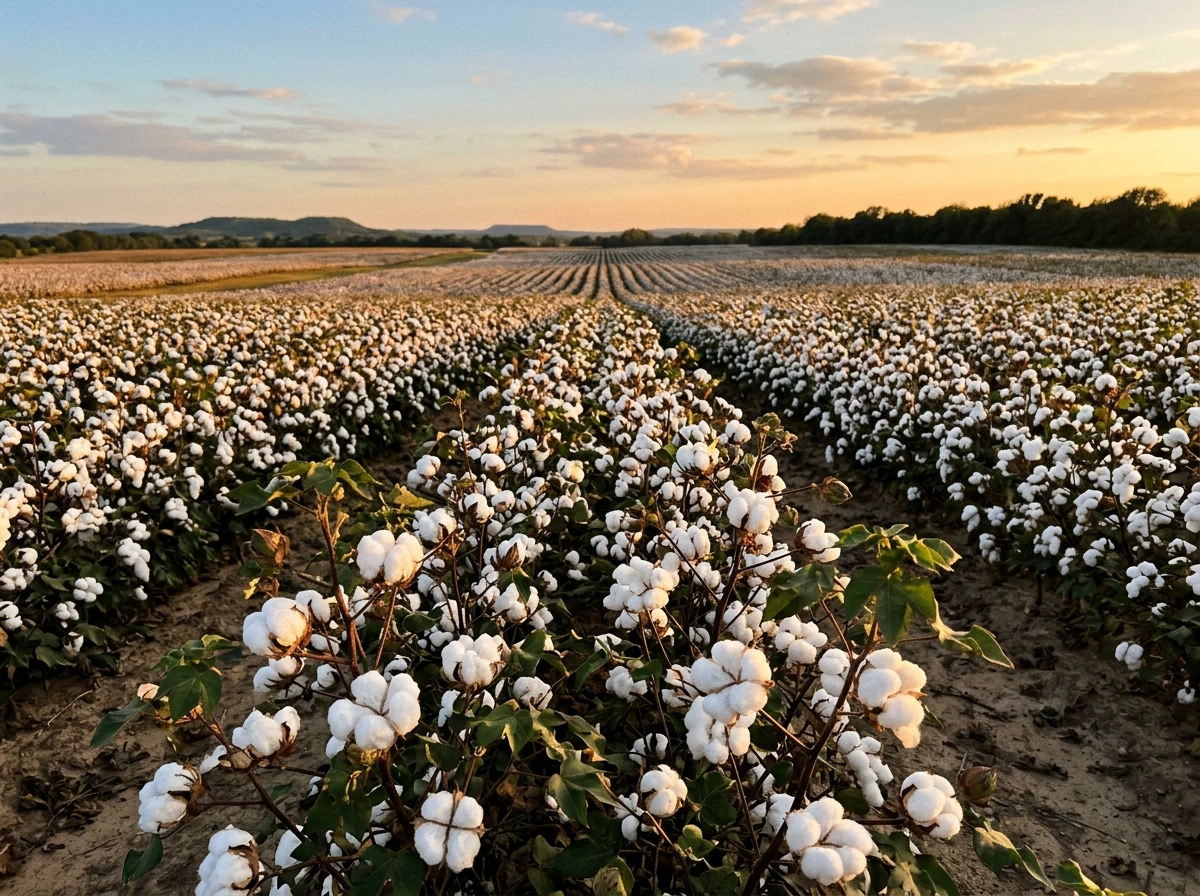
Cotton's natural range and where it grows on its own
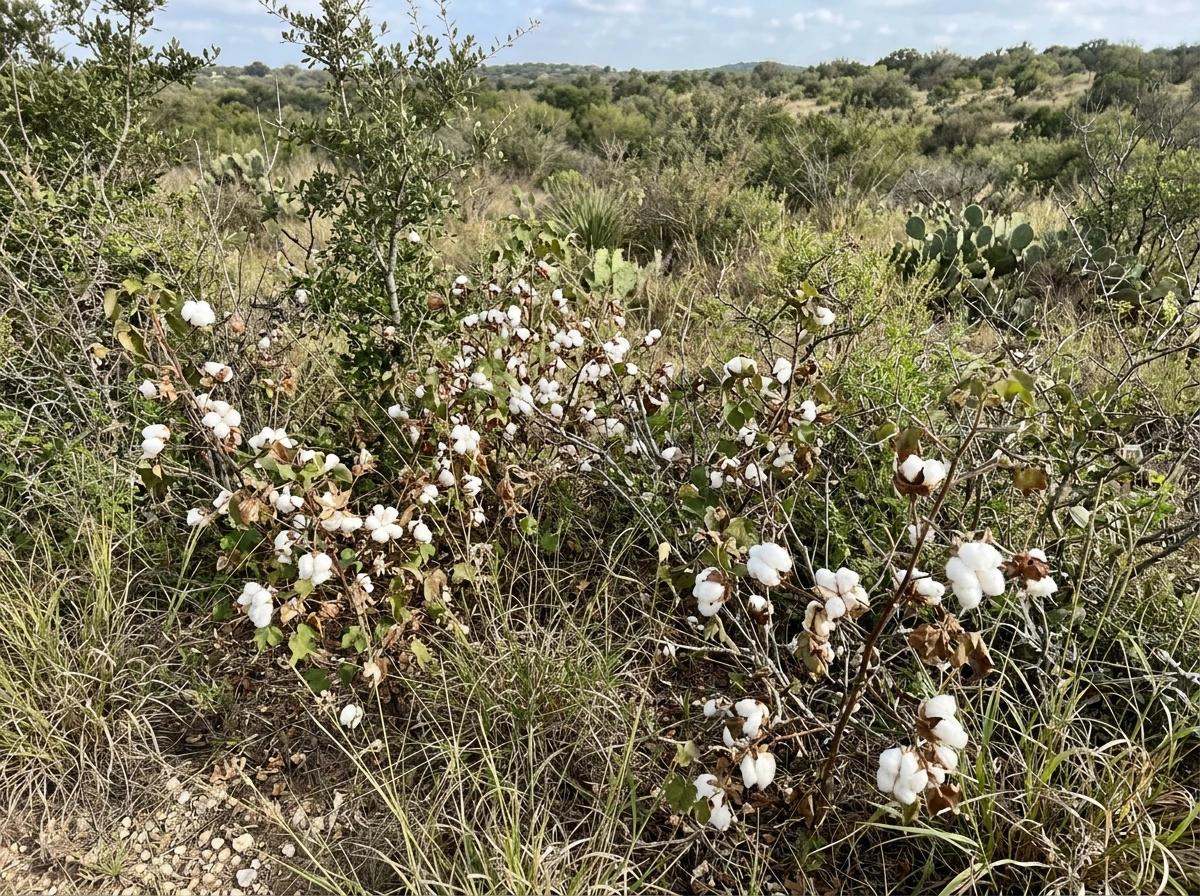
Cotton (genus Gossypium) originated in tropical and subtropical regions across multiple continents. Wild species are native to parts of Africa, Arabia, Australia, Mexico, and South America, places that share long warm seasons, moderate rainfall, and open, sunny terrain. The plant is naturally a perennial shrub in those environments, growing for several years in frost-free zones rather than being replanted each season the way commercial farmers do it today.
The two species grown commercially almost everywhere today are Gossypium hirsutum (upland cotton, native to Mexico and Central America) and Gossypium barbadense (Pima or extra-long staple cotton, native to South America). Both evolved in warm, relatively dry climates near the tropics. That origin story explains a lot about where cotton thrives: it wants heat, sun, and a long growing window, but it doesn't love waterlogged soils or prolonged cold.
What cotton needs to thrive: climate and soil conditions
Getting cotton to grow well comes down to a few non-negotiables. Temperature is the biggest one. Cotton is frost-sensitive at every stage of its life, a late spring frost can kill seedlings, and an early fall frost will stop boll development cold. The FAO puts the minimum at around 200 frost-free days, and that's a hard floor, not a comfortable target. Most successful commercial production regions have 210 to 250+ frost-free days.
Beyond just avoiding frost, cotton needs accumulated heat. Agronomists track this using degree days with a base temperature of 60°F, called DD60s. Cotton needs approximately 2,600 DD60s from planting through to harvest. Every day the temperature stays above 60°F contributes to that total. That's why a warm climate with a long summer matters so much: cool-summer regions just can't bank enough heat units even if they technically avoid frost.
Soil-wise, cotton is fairly adaptable but has clear preferences. It grows in soils with a pH range of 5.5 to 8.0, with the sweet spot sitting between 7.0 and 8.0, slightly neutral to mildly alkaline. That's one reason cotton does well in the alkaline soils of West Texas and parts of the southwestern U.S. Cotton also needs good drainage. It tolerates periods of dry weather better than it tolerates waterlogged roots. On the water side, irrigation often fills the gap in drier regions, and in some traditional Near East farming systems, growers have historically used pre-season flood irrigation to store water in the soil before planting.
- Minimum 200 consecutive frost-free days (more is better)
- Approximately 2,600 DD60s (degree days above 60°F base) from planting to harvest
- Soil pH between 5.5 and 8.0, ideally 7.0 to 8.0
- Well-drained soils — cotton does not tolerate standing water
- Full sun exposure throughout the growing season
- Moderate to low rainfall during boll development (too much moisture promotes disease and boll rot)
- Irrigation available in drier regions to supplement natural rainfall
Where cotton grows in the United States
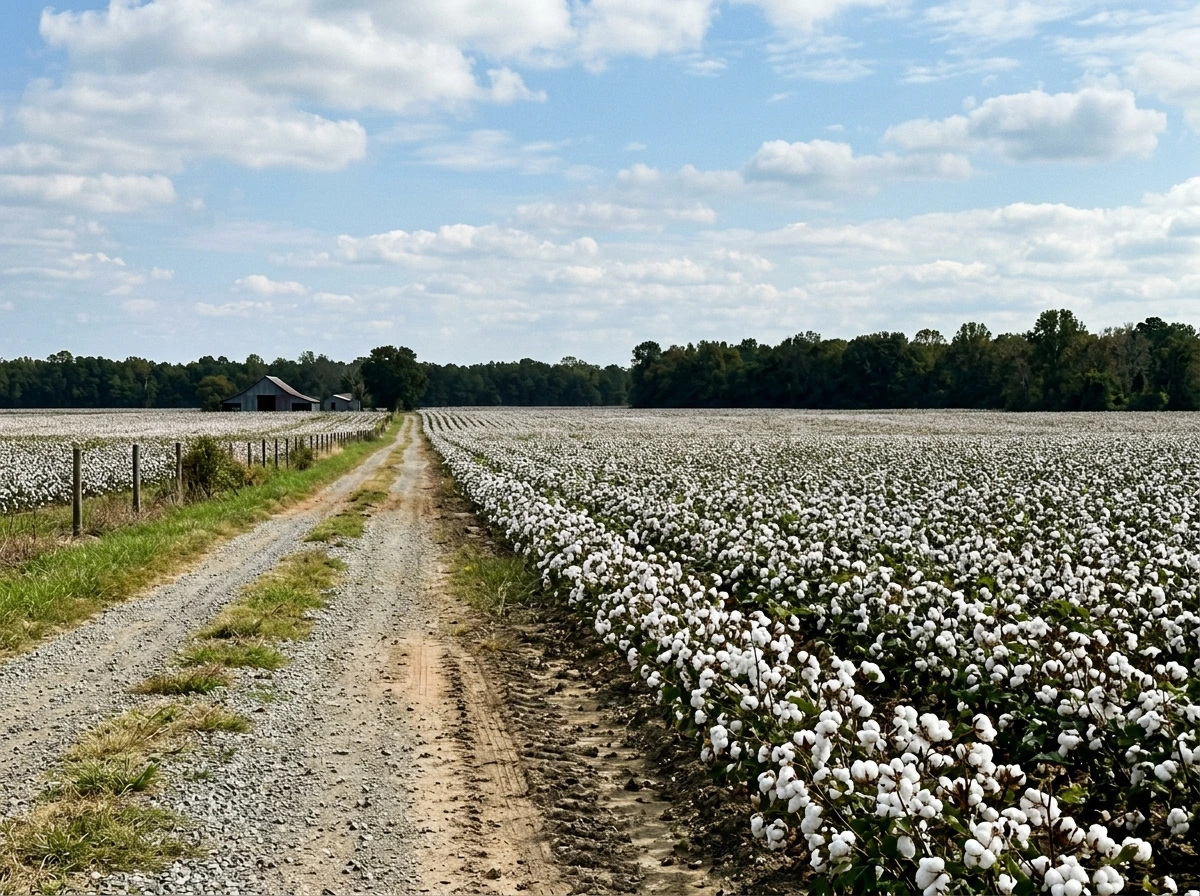
The U.S. Cotton Belt is the core growing region, stretching from the Carolinas in the east all the way to California in the west. It developed historically in the Southeast and has since expanded into Texas and the Southwest as irrigation became widespread. Today, Texas alone produces more cotton than any other state, it accounts for roughly 40 to 50 percent of total U.S. cotton production in most years. The state's combination of flat plains, alkaline soils, and intense summer heat makes it ideal, particularly on the High Plains around Lubbock.
The Southeast remains important, with Georgia consistently ranking as a top producer. Mississippi, Alabama, and North and South Carolina all have long cotton traditions and still produce significant volumes, particularly of upland cotton. Arkansas and Tennessee fill in the mid-South portion of the Belt. Moving west, Oklahoma and Kansas grow cotton in their southern regions. California's San Joaquin Valley is notable for Pima (extra-long staple) cotton production, made possible by irrigation and intense summer heat despite the arid climate.
| State / Region | Primary Cotton Type | Key Conditions |
|---|---|---|
| Texas (High Plains, South Texas) | Upland | Alkaline soils, intense heat, irrigation-dependent in west |
| Georgia, Alabama, Mississippi | Upland | Humid subtropical climate, long growing season, rain-fed or irrigated |
| North & South Carolina | Upland | Coastal plain soils, warm summers, moderate rainfall |
| Arkansas, Tennessee | Upland | Mississippi Delta soils, humid summers, irrigation common |
| California (San Joaquin Valley) | Pima / Upland | Arid, very high summer heat, fully irrigated |
| Oklahoma, Kansas (south) | Upland | Semi-arid, warm summers, shorter season than Deep South |
One practical note if you're evaluating your own location: look up your USDA hardiness zone and, more importantly, your average last and first frost dates. If you have fewer than 200 frost-free days, commercial cotton production isn't viable. If you're in a zone with marginally enough frost-free days but a cool summer, check whether your region accumulates 2,600 DD60s, that heat unit requirement often rules out areas that seem borderline based on frost dates alone.
Where cotton grows around the world
Cotton is grown on every inhabited continent except Europe (and even there, some southern countries have dabbled). The global Cotton Belt runs roughly between 37°N and 30°S latitude, a wide band that captures most of the world's subtropical and warm-temperate zones. According to OECD-FAO projections, global cotton production is expected to continue growing steadily through 2034, driven more by yield improvements than by expansion of harvested area.
India and China together account for well over half of global cotton production by volume. India has surpassed China in harvested area and frequently leads in raw production, growing cotton across Maharashtra, Gujarat, Andhra Pradesh, Telangana, and Punjab. China concentrates production in Xinjiang in the northwest, which produces the vast majority of Chinese cotton thanks to its dry, sunny climate and irrigation from snowmelt. Brazil has become a major player, with the Cerrado region (particularly Mato Grosso state) growing into one of the most productive cotton zones in the world using modern, large-scale mechanized farming.
Pakistan and Uzbekistan are major Central Asian producers, with the Indus River Valley and the Aral Sea basin historically being foundational cotton regions. West Africa, including Burkina Faso, Mali, Benin, and Côte d'Ivoire, is the center of African production, where smallholder farmers grow cotton as a primary cash crop. Australia produces relatively small volumes but punches above its weight in quality, with the Murray-Darling Basin in New South Wales and Queensland producing high-grade cotton under fully irrigated, mechanized systems.
| Country / Region | Key Growing Areas | Production Scale |
|---|---|---|
| India | Maharashtra, Gujarat, Andhra Pradesh, Punjab | World's largest or second-largest producer by volume |
| China | Xinjiang (dominant), Yellow River Basin | Major producer; Xinjiang grows ~85% of Chinese cotton |
| United States | Texas, Georgia, Mississippi, California | Top-3 global producer; highly mechanized |
| Brazil | Mato Grosso (Cerrado region) | Fast-growing major exporter |
| Pakistan | Indus River Valley (Punjab, Sindh) | Major producer; cotton is central to economy |
| Uzbekistan | Fergana Valley, Amu Darya basin | Historic Soviet-era cotton region; still significant |
| West Africa | Burkina Faso, Mali, Benin, Côte d'Ivoire | Smallholder-dominated; important regional cash crop |
| Australia | New South Wales, Queensland (Murray-Darling) | Small volume, very high quality and efficiency |
The best places to grow cotton: what separates success from struggle
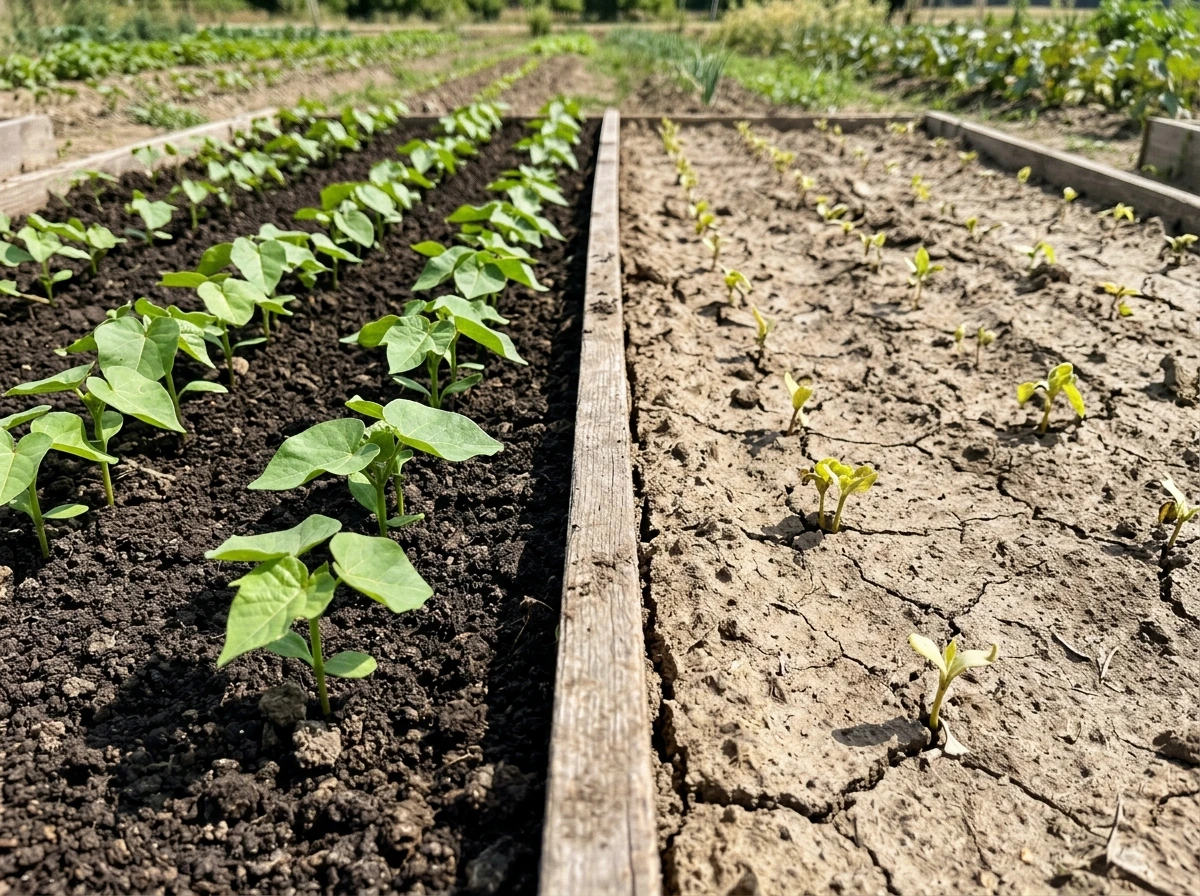
The best cotton-growing locations share a specific combination of factors rather than any single magic trait. Season length and heat accumulation are the foundation, without 200+ frost-free days and enough summer heat to rack up those DD60s, you're always fighting the calendar. But water availability is equally critical in the places that get the most production per acre, which is why many people ask how much water cotton needs to grow. Texas's High Plains, California's San Joaquin Valley, and Australia's Murray-Darling Basin all prove that arid climates can be world-class cotton regions as long as reliable irrigation is in place.
Soil quality matters too, but cotton is more forgiving there than many crops. The slightly alkaline, well-drained loam and clay-loam soils of west Texas and the fertile alluvial soils of the Mississippi Delta are both excellent for cotton, even though they're quite different. What they share is good drainage and enough depth for roots to chase moisture downward during dry spells. The FAO notes that when surface water is limited, cotton roots will extend into deeper soil layers to maintain uptake, a useful survival trait, but one that works better in deep soils than shallow, rocky ones.
For anyone doing a site comparison, here's the practical hierarchy: first, confirm your frost-free window and heat unit accumulation. Second, assess water availability (rainfall plus irrigation access). Third, check soil pH and drainage. If all three boxes check out, you're in realistic cotton-growing territory. If any one is a serious problem, especially frost-free season length, the others can't compensate.
A brief history: where cotton was grown and how cultivation spread
Cotton has one of the longest and most geographically complex cultivation histories of any crop. Archaeological evidence shows that people in the Indus Valley (modern Pakistan) were growing and spinning cotton as far back as 3000 BCE. Simultaneously and independently, cotton was being cultivated in ancient Mesoamerica (Mexico and Peru) and parts of sub-Saharan Africa. These weren't connected developments, cotton was simply useful wherever it naturally grew, and multiple civilizations figured that out on their own.
Trade routes spread cotton knowledge and fiber across the ancient world. By around 500 BCE, cotton textiles were traded across the Arabian Peninsula and into the Mediterranean. Arab merchants and traders carried cotton cultivation techniques westward into North Africa and eventually into Spain during the Moorish period. By the medieval era, cotton was known across Europe even if it wasn't widely grown there.
The shift that changed everything was European colonization of the Americas. British colonists brought cotton cultivation to the American South in the 1600s, planting Gossypium hirsutum in Virginia and the Carolinas. The crop spread south and west as settlers moved, and the invention of the cotton gin in 1793 made large-scale production economically explosive. By the mid-1800s, the American South was supplying the majority of the world's cotton, feeding the textile mills of England and New England. That concentration of production, and the brutal labor system that underpinned it, left a geographic imprint that still shows up in where U.S. cotton is grown today.
The Soviet Union dramatically expanded cotton cultivation in Central Asia through the 20th century, diverting Aral Sea tributaries for irrigation and turning Uzbekistan and Tajikistan into major cotton states. That effort succeeded in growing vast amounts of cotton but came at enormous environmental cost, nearly draining the Aral Sea entirely. In Asia, British colonial policy encouraged cotton production in India as a raw material supply for UK mills, shaping India's agricultural geography in ways that persist today. Brazil's ascent as a modern cotton powerhouse is more recent, the country only became a major exporter in the early 2000s, after agricultural research institutions developed varieties suited to the Cerrado's conditions.
Who actually grows cotton and where those operations are
Cotton is grown by two very different types of producers depending on where you look. In the United States, Brazil, and Australia, production is dominated by large-scale commercial farms using full mechanization, planting, harvesting, and ginning all done by machine. A single Texas farm might operate thousands of acres. These operations are capital-intensive, often irrigated, and tied directly into global commodity markets. The OECD-FAO outlook notes that production growth in leading countries is driven primarily by yield improvements on existing land rather than by bringing new land into production, meaning the big commercial growers are constantly investing in better varieties and practices.
In contrast, India and West Africa's cotton is grown primarily by smallholder farmers, families working plots of just a few acres each. In West Africa, cotton is often the only reliable cash crop available, meaning millions of small farms collectively produce significant national outputs. India's cotton sector is enormous by volume but fragmented across tens of millions of small holdings across multiple states. These smallholder systems face very different challenges than large commercial operations: access to quality seed, fertilizer, and pest management is less reliable, and yields per acre are often much lower than in mechanized systems.
China's production sits somewhere in between, a mix of smaller family farms in some regions and larger state-coordinated operations in Xinjiang, where production is highly mechanized and centrally managed. Pakistan's sector is also large but plagued by yield gaps compared to global leaders, partly due to pest pressure and inconsistent input access.
If you're a small-scale grower or gardener wondering whether you fit into this picture: yes, cotton can be grown on a small plot for educational or craft purposes almost anywhere with a long enough warm season. The plant is genuinely fascinating to watch develop from seedling through boll opening. For production purposes at any meaningful scale, though, you'll want to research your regional extension resources, your state's land-grant university (Texas A&M, University of Georgia, NC State, and UC Davis all have strong cotton programs) is the best starting point for region-specific variety selection, planting windows, and pest management.
FAQ
Can I grow cotton at a small home-garden scale in a marginal climate (or mainly for the experience)?
Yes, but only if you’re willing to treat cotton as a warm-season crop and plan around the frost clock. For craft or small educational planting, the main question is whether you can keep seedlings alive until the plants can set bolls, which requires a frost-free window and warm enough summer temperatures to reach the degree-day target, even if you don’t grow for maximum commercial yield.
What if my area has around 200 frost-free days, but summers aren’t that hot, does cotton still have a chance?
For production viability, you should use both counts together: frost-free days tell you whether the crop can survive long enough, while DD60s tell you whether it can mature. A location can clear 200 frost-free days but still fail the heat accumulation requirement if summers are cool, cloudy, or short.
Does cotton behave like a perennial where I can leave it in the ground year-round?
Cotton is usually grown as an annual in commercial systems, so winter exposure matters differently than with a perennial plant. If you have any frost, expect damage or death to seedlings and later growth, and you’ll need to replant each warm season rather than relying on overwintering plants.
How should I use my USDA zone information to estimate whether cotton will succeed?
Start with your USDA hardiness zone and, more importantly, your average last spring frost and first fall frost dates. Then calculate frost-free days from those averages, because averages hide risk. If your growing season is close to the threshold, plan for a safety margin (planting early enough, harvesting before early cold snaps) rather than counting on “average” weather.
If my climate is dry, how do I know whether irrigation will be enough to grow cotton?
In many regions, irrigation is what makes cotton workable despite arid conditions. For a practical decision, check whether you have reliable water access during key stages (establishment and boll development), and confirm your local water rules and delivery reliability, not just annual rainfall totals.
What drainage problems can quietly ruin cotton even if frost-free days and heat look okay?
Cotton doesn’t like waterlogged roots, so drainage is not just a “nice to have.” In poorly drained areas, compaction or shallow bedrock can limit how far roots can go to find moisture during dry spells. If you can’t improve drainage, you may lose plants even in otherwise suitable heat and frost conditions.
How strict is cotton’s soil pH range, and what happens if my soil is slightly outside it?
Soil pH matters, but the bigger practical issue for many growers is uniformity across the field and fertility management. If pH is outside roughly the 5.5 to 8 range, nutrient availability can become imbalanced, which can translate into poor stand establishment or weak fruiting.
Can seasonal weather variability (like cloudy, cool weeks) make cotton fail even when frost dates look right?
Cotton typically performs better in conditions with strong sun and sustained warmth. If your area has frequent cool spells or heavy cloud cover during the main fruiting period, DD60s won’t accumulate fast enough. That can delay or reduce boll opening even if first and last frosts suggest you’re on track.
Do upland cotton and Pima (extra-long staple) differ in where they can be grown successfully?
Yes. In climates that are borderline on either frost-free days or heat accumulation, choosing the right type matters. Upland cotton and extra-long staple cotton have different growth habits and typical adaptation, so you should compare the variety maturity timing against your local last and first frost dates, not just the general crop requirement.
What non-climate factors most commonly explain why cotton doesn’t perform as expected?
For production planning, pest and input access can be as limiting as climate. Regions with high pest pressure often require more consistent scouting and timely control, and smallholders or first-time growers can lose yield quickly if they cannot access quality seed, fertilizer, and pest management at the right times.
How does planting date affect cotton outcomes when my growing season is short?
Yes, but within limits. Many growers select a planting window designed to reach fruiting and harvest before cold weather. If you plant too late to reach enough DD60s, or too early into cold nights that slow growth, you can end up with immature bolls that won’t open before frosts.
Next Articles
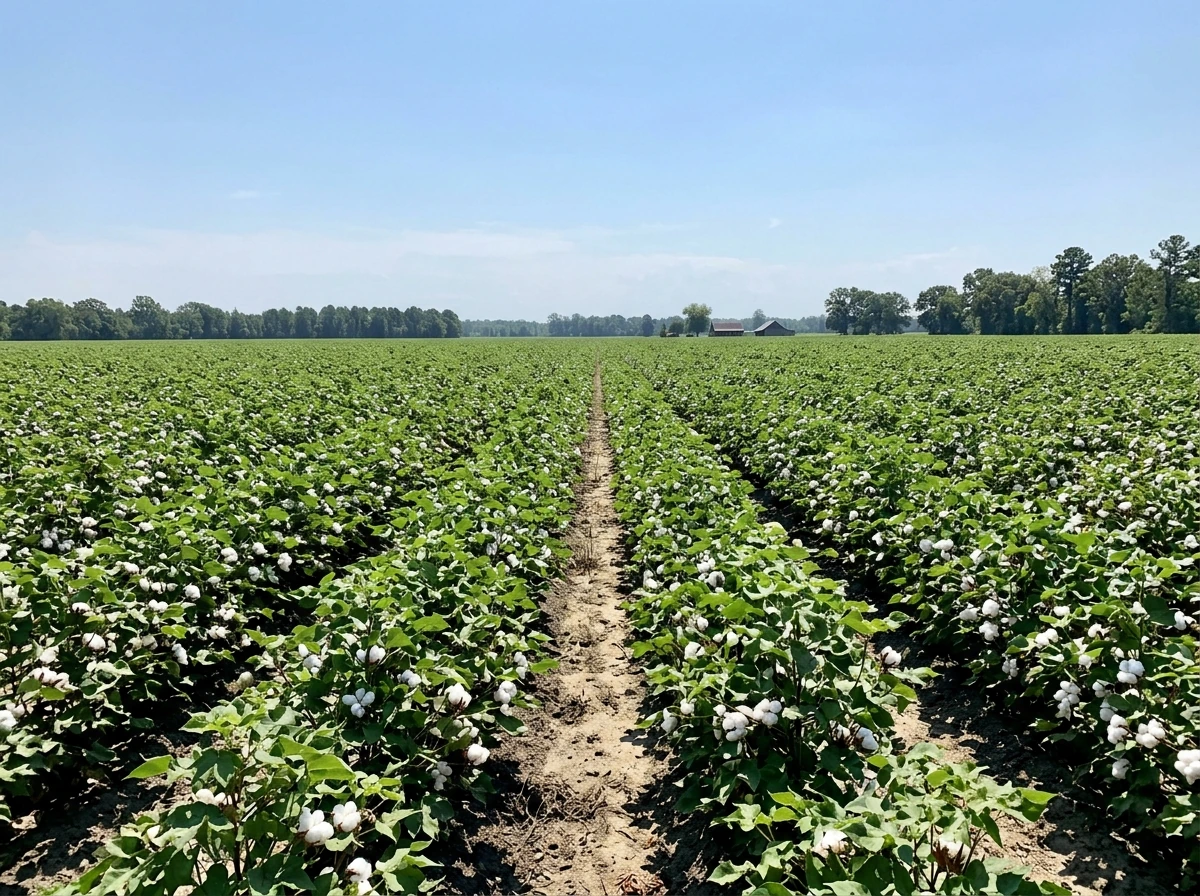
Why Does Cotton Grow Well in the South? Climate, Soil, Water
Learn why the South’s heat, frost-free season, sunlight, drainage, and water timing help cotton thrive, plus key risks.
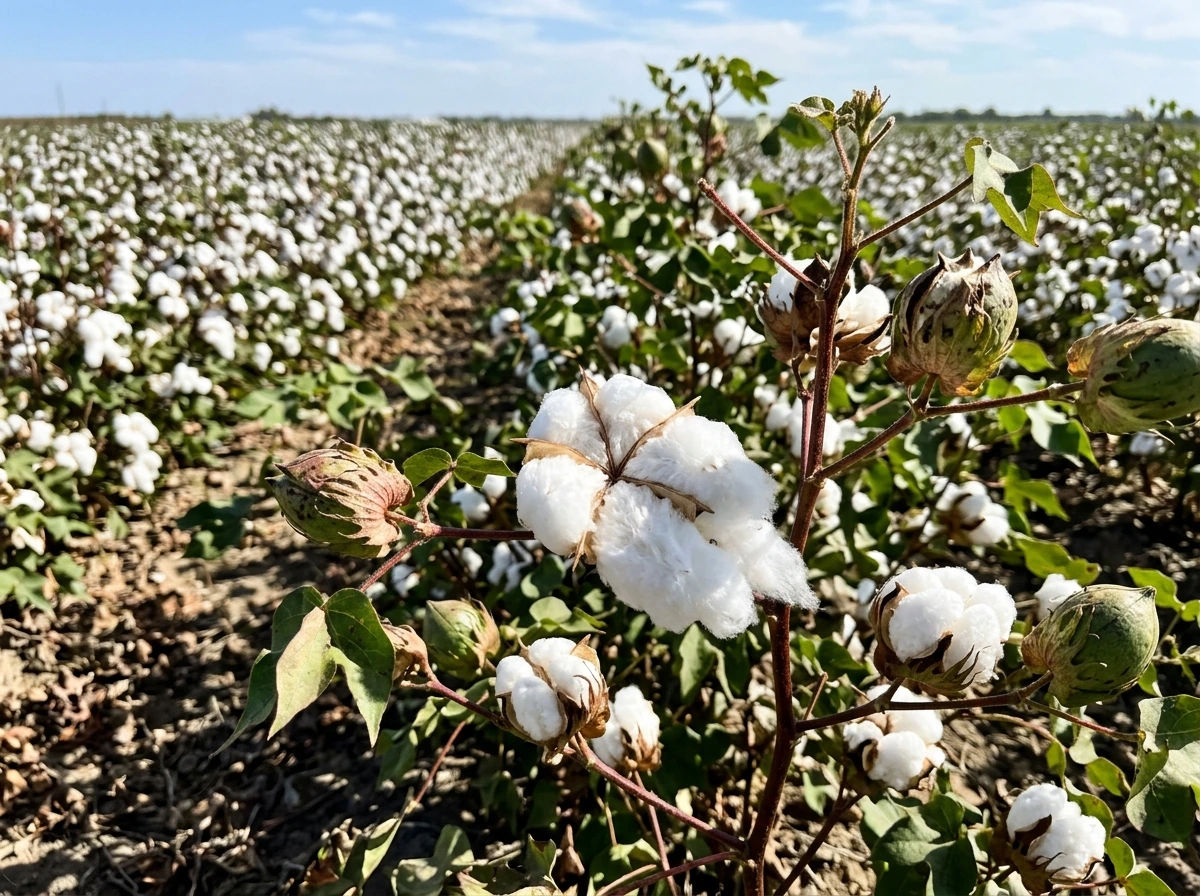
How Does Cotton Grow on Plants From Seed to Harvest
See how cotton grows on plants from seed to harvest, forming bolls, lint fibers, and seeds in warm, frost free condition
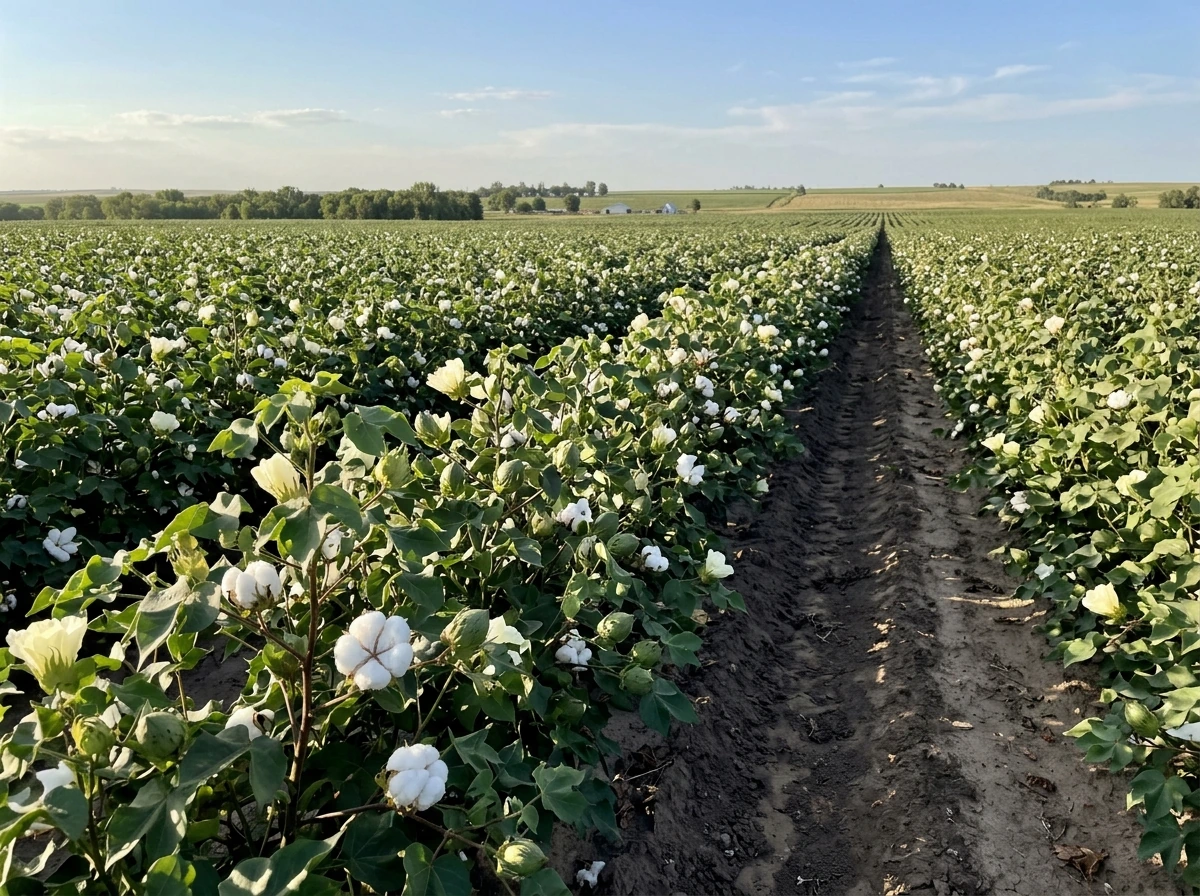
How Cotton Grow: Step-by-Step Planting, Care, Timing
Learn how cotton grows and get step-by-step planting care, timing, climate and soil needs, plus troubleshooting for begi