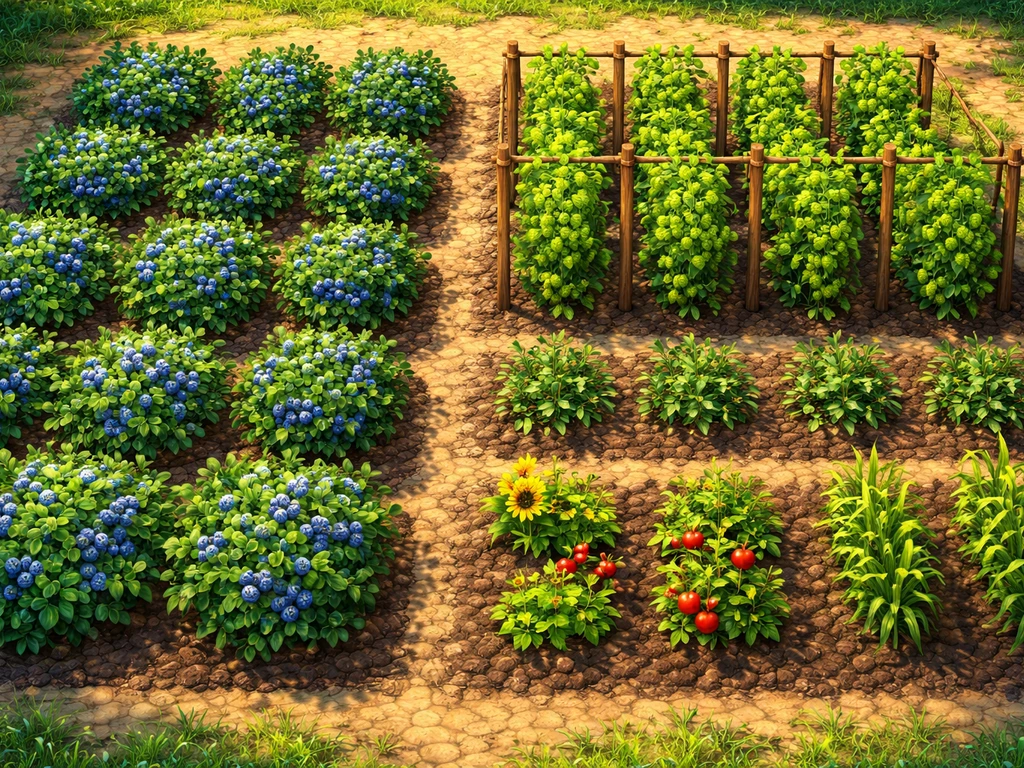
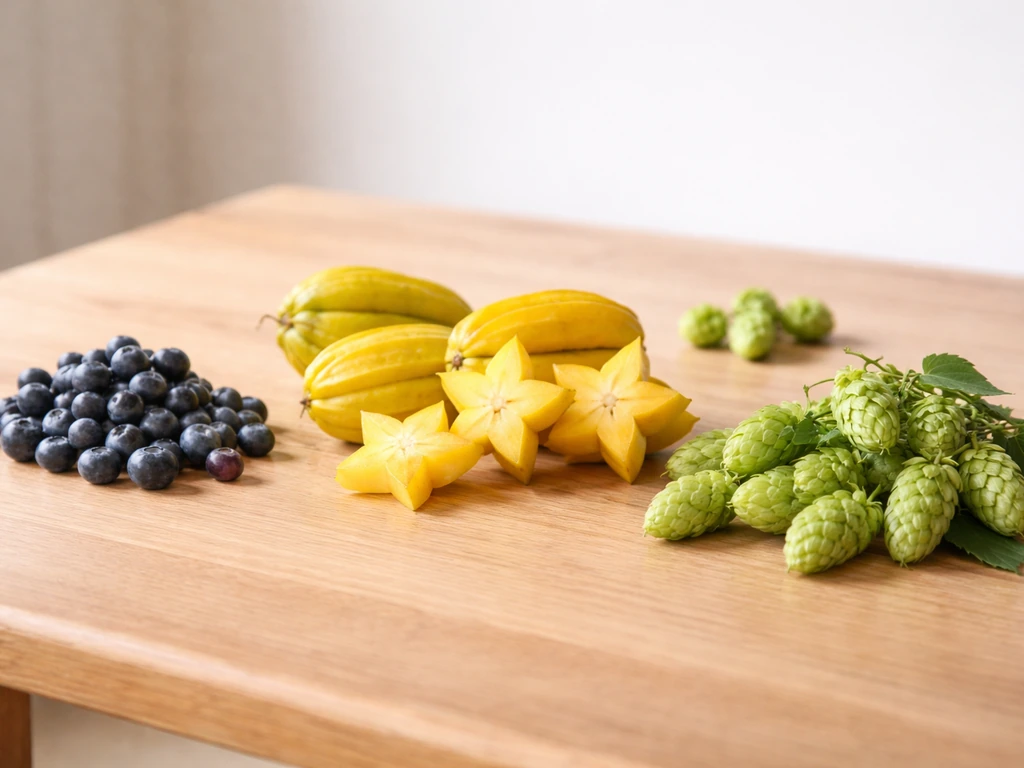
The best crops to grow in Summer in Stardew Valley are Blueberries, Hops, and Starfruit. Those three cover the full range of what you want from a summer field: Blueberries give you reliable multi-harvest income with low maintenance, Hops become a money printer once you have a keg, and Starfruit is the single highest base-value crop in the season. Everything else is situational. If you're newer to the game or just want a clean, low-stress summer, plant a field of Blueberries on Day 1 and let them do the work.
Best Crops to Grow in Summer Stardew Valley

Samuel Rourke
4 Apr 2026
Quick answer: top summer crops at a glance
Summer runs 28 days. Most crops planted early in the season will give you between two and several harvests depending on their regrow cycle. Here's the shortlist with the numbers that matter most:
| Crop | Days to Mature | Regrow Cycle | Sell Price (base) | Best Use |
|---|---|---|---|---|
| Blueberry | 13 days | 4 days | 50g each (3+ per harvest) | Volume profit, artisan |
| Hops | 11 days | 1 day (daily) | 25g raw / 300g Pale Ale | Kegs, max harvests |
| Starfruit | 13 days | No regrow | 750g | Artisan wine, raw sell |
| Melon | 12 days | No regrow | 250g (giant crop bonus) | Giant crops, bundles |
| Tomato | 11 days | 4 days | 60g | Steady mid-tier income |
| Summer Squash | 7 days | 3 days | 65g | Fast, frequent harvests |
| Corn | 14 days | 4 days (into Fall) | 50g | Cross-season coverage |
| Coffee Bean | 10 days (Spring→Summer) | 2 days | 15g each (5 per harvest) | Speed buff, cross-season |
Best fruits and how they compare to regular crops
Summer has a strong lineup of fruit crops, and they behave differently from standard vegetables in a few important ways. Fruit crops like Blueberry and Melon can trigger giant crop formation, they count toward the Community Center bundles, and they tend to have higher artisan value. If you're chasing the best crop to grow in summer purely by gold per day, Blueberries win for most players at most stages of the game.
Blueberries mature in 13 days and then produce at least 3 Blueberries every 4 days after that. In a standard Summer with no fertilizer, you get 3 harvests from a Day 1 planting. Add Speed-Gro fertilizer and you can squeeze in an extra harvest before Fall ends, which meaningfully pushes your total earnings. Melons take 12 days, don't regrow, and need a full 3x3 block of the same crop to have a chance at forming a giant crop worth triple the normal value. They're worth growing, especially for the bundle, but Blueberries will almost always outpace them on raw profit per tile.
Starfruit is the outlier. At 750g per fruit with no regrow, it feels like a one-shot deal, but when you put Starfruit into a Keg to make Starfruit Wine, the value multiplies dramatically. If you have kegs set up, Starfruit is arguably the best use of Summer tiles for experienced players. Without kegs, Blueberries are the safer, more consistent earner. Hot Pepper also deserves a mention as a solid mid-tier fruit that regrows every 3 days and is easy to manage, though it won't come close to Blueberry or Starfruit numbers.
What to plant for peak profit vs easiest growth
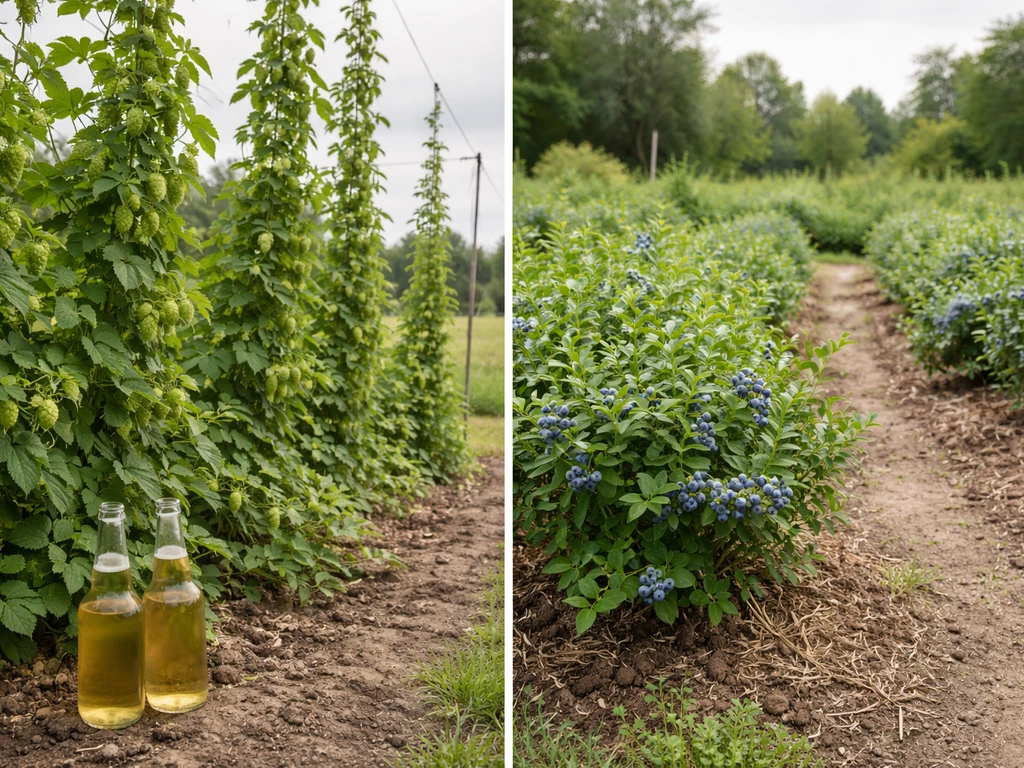
These two goals pull in slightly different directions, and it's worth being honest about that. Peak profit in Summer almost always points to Hops processed into Pale Ale (300g per keg cycle) or Starfruit Wine. But both of those require infrastructure, kegs, preserve jars, or at minimum the Artisan profession, and a lot of upfront seed cost. Hops seeds run 60g each, and if you're filling a large field, that's a real investment early on.
For easiest growth with solid returns, Blueberries are the clear winner. The seeds are affordable (80g from Pierre's), the crop is forgiving on timing, and each plant keeps producing with minimal effort. Summer Squash is another low-effort option with a 7-day growth time and a 3-day regrow cycle, so you're harvesting frequently from a single plant all season. Tomatoes fall in between: they mature in 11 days and regrow every 4 days, giving you a dependable mid-tier harvest without the big swings of Hops or Starfruit.
- Peak profit (with infrastructure): Hops into Pale Ale, or Starfruit into Starfruit Wine
- Peak profit (raw sell, no artisan): Starfruit or Blueberry with quality fertilizer
- Easiest management: Blueberry, Summer Squash, or Tomato
- Best early-game option: Blueberry — reliable, regrows, affordable seeds
- Best for Community Center: Melon (Summer Crops bundle requires it)
Seed selection and planting timing
Timing in Summer is straightforward compared to other seasons because most crops stay entirely within Summer's 28 days. The key exception is crops that bridge into Fall, which changes your strategy significantly. Corn and Coffee Beans are the two crops you'll want to think about carefully for that reason.
Summer-only crops: plant early
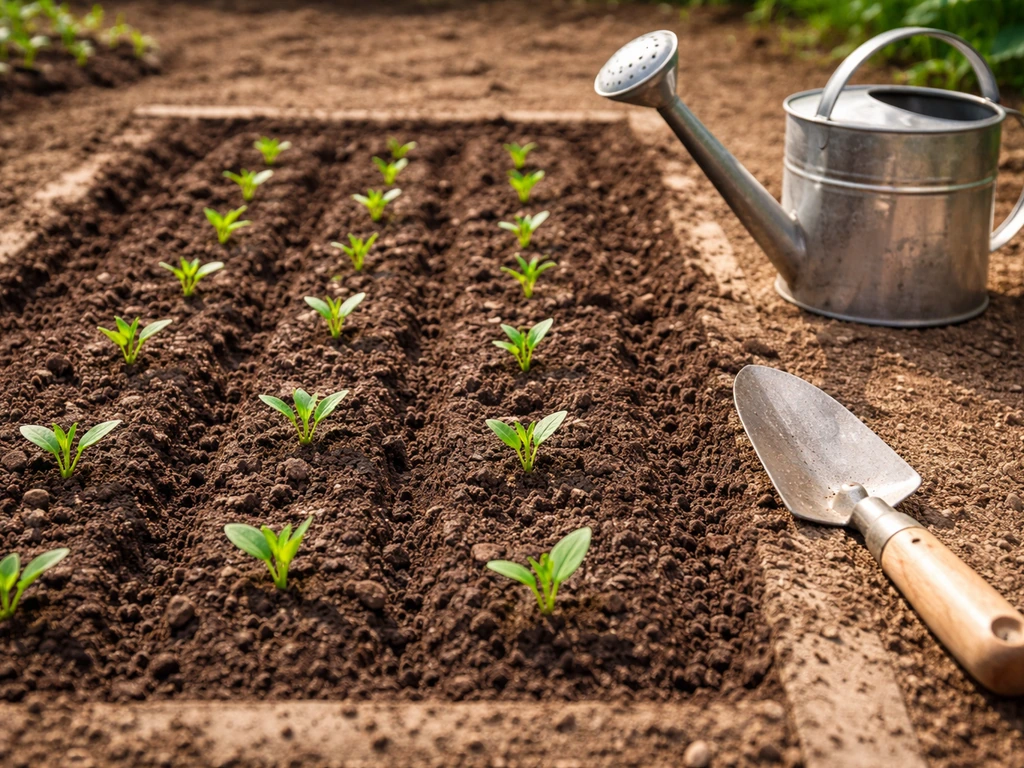
Any crop that doesn't regrow and doesn't cross into Fall needs to be planted by roughly Day 15 at the latest to complete one full harvest. Crops that do regrow (Blueberry, Hops, Tomato, Summer Squash) need to be planted even earlier to maximize the number of harvest cycles. Day 1 is always the target. If you miss Day 1, Day 2 or 3 is still fine for most regrow crops; you'll lose one harvest cycle at most. Miss Day 7 or later and Hops become much less valuable because their power comes from daily harvesting after Day 11.
Crops that carry into Fall: Corn and Coffee Bean
Corn is a Summer crop that also grows in Fall, meaning a plant that's in the ground when Fall starts will not wither and will keep producing every 4 days straight through Fall 28. If you're thinking about what crops grow in the fall, Corn planted in Summer is one of the simplest answers, you get continuous production across both seasons without replanting. Plant it on Day 1 of Summer and it matures by Day 14, then produces through the end of Fall. That's potentially 9 to 10 harvests across both seasons from a single planting.
Coffee Beans are even more interesting for cross-season players. A Coffee Bean plant that's in the ground on Day 28 of Spring will continue growing into Summer without resetting, so you can start a Coffee plant in late Spring and have it producing in Summer. Each plant gives 5 Coffee Beans per harvest on a 2-day cycle, and Coffee beans stack to brew into Coffee, which grants a speed buff that's genuinely useful for farm efficiency. If you're curious about maximizing a specific month, what is the best crop to grow in August (Summer Day 8 equivalent) also comes back to these same fast-regrow crops.
Fertilizer and Speed-Gro timing
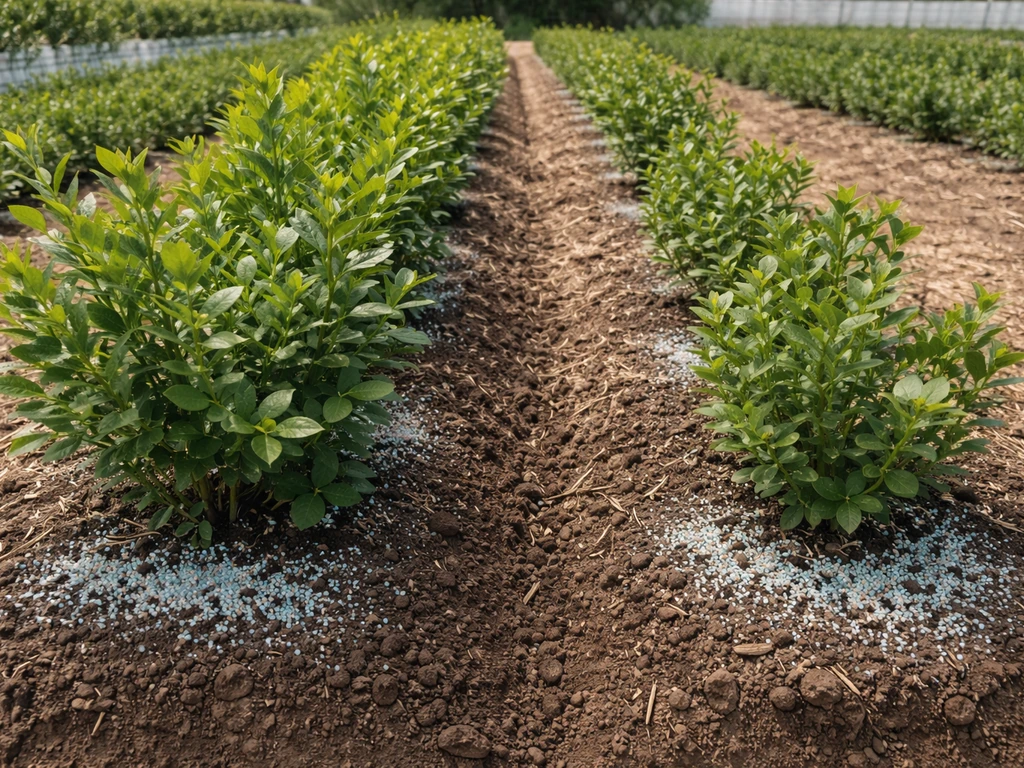
Speed-Gro fertilizer is most valuable on crops where shaving off a day or two of growth unlocks an extra full harvest cycle. Blueberries planted on Day 1 with Speed-Gro can get an additional harvest before the season ends. Quality Fertilizer is generally better for high-value single-harvest crops like Starfruit, since improving quality directly raises the sell price. For Hops and other daily-regrow crops, focus on Speed-Gro first to bring maturity forward as much as possible.
Fruit trees: summer planting and what to expect
Fruit trees in Stardew Valley work on a completely different system from regular crops. They take 28 days to fully mature from sapling, they don't need to be planted seasonally, and they produce fruit year-round depending on tree type rather than on seasonal planting windows. A Peach Tree or Apricot Tree only bears fruit during Summer, regardless of when you planted it. So if you plant a Peach Sapling in Summer, it matures in Fall but won't produce fruit until the following Summer.
The practical takeaway: if you want fruit tree income during Summer, plant the sapling in any prior season. The tree grows through seasons and doesn't wither. Once a tree reaches full maturity, it produces one fruit per day during its designated season (Summer for Peach and Mango). A fully mature tree in Summer basically runs itself, since each day's fruit just sits on the tree until you collect it. Trees never need watering and don't take up tillable soil, so they work well around the edges of your crop layout without competing for field space.
If you're deep into the game and want passive seasonal income, a row of Peach or Mango trees along the border of your farm is a solid move. If you're in your first Summer, focus your energy on field crops first. Trees are a later-game quality-of-life addition, not an early priority. Tea Bushes also deserve a mention here: Tea Saplings grow into bushes that produce Tea Leaves during the last week of every season except Winter, including Summer, giving you a small but consistent passive harvest with no watering needed.
Field planning: rotation, spacing, and layout
Good field planning in Summer mostly comes down to two decisions: how much space to dedicate to your top earner, and whether to set aside tiles for cross-season crops. A common efficient layout uses the bulk of your tilled land for Blueberries or Hops, with a smaller dedicated section for Corn or Starfruit.
For Hops specifically, keep in mind that they grow on trellises, which means you can't walk through them the way you can with ground crops. This forces you to leave aisle rows, typically a 1-tile gap every other row so you can harvest manually. If you're later in the game and have a Junimo Hut placed, Junimos can actually pass through trellis tiles to harvest, which lets you plant Hops in denser patterns than you could manage by hand. This is one of those mechanics that genuinely changes how you design a Hops field once you have access to it.
For Melon, if you're going for giant crops, plant them in 3x3 blocks with nothing else mixed in. Giant crops form when a fully grown 3x3 group of the same crop is watered, yielding triple the normal produce from nine tiles. It's a nice bonus but not reliable enough to plan your entire income around. Treat it as a happy accident rather than a core strategy.
For rotation into Fall, dedicate one section of your field specifically to Corn or Sunflowers (Sunflowers also span Summer and Fall). This lets that section keep producing after Day 28 without any replanting effort, while you transition the rest of your field to Fall-specific crops. Think of it as a bridge zone, maybe 20 to 30 percent of your tilled space, that keeps generating income while you reorganize.
A simple efficient layout template
- Rows 1-6 (bulk zone): Blueberries or Hops planted Day 1 with Speed-Gro, standard 1-tile aisle if manually harvesting Hops
- Rows 7-8 (high-value zone): Starfruit with Quality Fertilizer for maximum sell price or keg input
- Rows 9-10 (cross-season zone): Corn or Sunflowers planted Day 1 to bridge into Fall
- Border tiles (passive zone): Fruit trees and Tea Bushes for no-water income
This layout scales up or down depending on how much land you've cleared. The key principle is keeping your cross-season zone intentional and separate so you don't accidentally destroy Corn when you're clearing out Summer crops at the end of the season.
Build your simple Summer planting schedule
Here's how to actually run Summer from Day 1 through the transition into Fall. This schedule assumes you're buying seeds from Pierre's shop, which opens each day and stocks all standard Summer seeds.
- Summer Day 1: Till your field, apply fertilizer, and plant Blueberries, Hops, Starfruit, and Corn in their designated zones. Water everything.
- Summer Days 2-10: Water daily. No harvests yet. Check your energy budget and prioritize watering over other tasks.
- Summer Day 11: Hops mature. Begin daily Hops harvests from this point forward.
- Summer Day 12-13: Melon, Starfruit, and Blueberry mature around now depending on fertilizer. First big harvest wave.
- Summer Days 14-28: Harvest Blueberries every 4 days, Hops daily, Tomatoes and Summer Squash on their cycles. Ship or process crops as they come in.
- Summer Day 28: Harvest everything that isn't a cross-season crop. Leave Corn and any cross-season plants in the ground.
- Fall Day 1: Your Corn keeps growing. Begin planting Fall crops in the tiles you cleared. Your Junimo Hut (if you have one) can start handling harvests automatically.
If you enjoy planning across game seasons in Stardew and want to think further ahead, the same crop logic applies when looking at other farming sims. For instance, vintage story best crops to grow follows a similarly season-aware framework where timing and climate matter above all. And if you've ever played with crop mechanics in other game worlds, the Skyrim best crops to grow guide shows how a completely different in-game agricultural system prioritizes crop selection in its own way.
The bottom line for Summer in Stardew: plant Blueberries on Day 1, add a block of Starfruit or Hops if you have the gold and the artisan infrastructure, keep a cross-season Corn strip for Fall continuity, and let the season run. You don't need to complicate it. Consistent early planting and good fertilizer use will carry you through to a very profitable summer without overthinking the details.
FAQ
What should I do if I can’t plant on Day 1 of Summer?
Use the “harvest cycle” rule: for regrow crops like Blueberry, Tomato, Hops, and Summer Squash, Day 2 or Day 3 usually still preserves most of your yield. If you miss closer to Day 7 for Hops, you lose a major portion of the later daily-harvest window, so consider switching some tiles to Blueberries or Squash instead.
Do I really need to use Speed-Gro, or is regular planting fine?
Regular planting works, especially for Blueberries. Speed-Gro is most valuable when it creates an extra full harvest before the season ends. For Starfruit specifically, fertilizer choice matters less for “extra harvest timing” since it doesn’t regrow, so you generally prioritize Quality Fertilizer to raise sell price instead of trying to force additional cycles.
Is Quality Fertilizer worth it on Blueberries and Hops?
It can be, but in most cases Speed-Gro has the bigger impact on profit per tile for daily-regrow crops because earlier maturity gives more total harvests. Quality Fertilizer mainly helps the value of each individual harvest, so if you are short on fertilizer or space, start with Speed-Gro for regrow crops.
When is it smarter to use Starfruit versus Blueberries?
Choose Starfruit when you have artisan processing (kegs) or you are already set up to convert harvests into higher-value goods. If you are still selling raw, or you have limited processing capacity, Blueberries are more forgiving because their multi-harvest pattern produces consistent returns without needing a fully running production chain.
How many kegs do I need before committing heavily to Starfruit Wine?
Plan backward from your harvest rate. Starfruit is a one-time harvest per plant in Summer (no regrow), so you need enough keg throughput to handle the initial wave, otherwise overflow and delays reduce effective profit. If you do not have surplus keg capacity, keep Starfruit to a smaller field portion and use Blueberries for the steady stream.
What’s the best way to handle Hops trellis spacing if I don’t have a Junimo Hut?
Assume you cannot walk through trellises, so your design should leave harvest aisles. A practical approach is to keep a 1-tile gap between rows (or every other row depending on your layout) so you can reach each plant without stepping on trellis tiles. With a Junimo Hut, you can densify because Junimos can path through trellis areas to collect.
Can I mix Melon with other crops and still get giant crop benefits?
Not if giant crop formation is your goal. Giant Melons require a pure 3x3 block of the same crop, with nothing else mixed in. If you want Melons only as a secondary bonus, mixing is fine, but then treat giant-crop formation as a bonus you are not planning your income around.
Should I plant Corn or Sunflowers for Summer-to-Fall bridging if I’m also growing other Fall crops?
Yes, but keep it organized. Corn and Sunflowers act like a “bridge zone” because they keep producing after Summer ends, so you can transition the rest of your field to Fall crops without leaving empty tilled space. The key is separating the bridge section so you do not accidentally clear your Corn when prepping for Fall.
I’m worried about losing harvests to clearing at the end of Summer. What’s the safest strategy?
Dedicate one section to cross-season crops (Corn or Sunflowers) and leave it untouched while you harvest and clear the rest. This reduces the common mistake of demolishing a production-ready patch during end-of-season replanting and ending up with fewer Fall harvest cycles.
Do fruit trees compete with crop profitability during Summer?
They can, but they are “space-efficient” rather than “soil-efficient” in the usual sense. Fruit trees take no tilled soil and do not need watering, so they often fit on borders without disrupting field crop layouts. If you are early game, focus on field crops first because trees have longer payoff timelines before they begin producing reliably.
How do Tea bushes fit into a Summer planting plan?
Tea bushes are low-effort passive income, and they do not require daily attention like standard field crops. The tradeoff is that they use space that could be tilled for higher-peak profit crops, so consider them as a perimeter or secondary section crop rather than the bulk of your Summer tilled field.
If I’m doing Community Center bundles, which Summer fruit should I prioritize first?
Prioritize fruit crops that both fit Summer timing and give you multiple harvests or can be reliably processed or sold. Blueberries are usually the easiest “bundle plus profit” choice because they mature in the season and keep producing. Starfruit is excellent when you have processing capacity, but it is more sensitive to your keg availability and timing.
Next Articles
What Did the Delaware Colony Grow: Crops, Uses & Legacy
Colonial Delaware’s main crops, grains, hay, flax, fruits, vegetables, livestock, why they thrived and how they were sold.
What Did Jamestown Grow and How They Farmed It
Learn what Jamestown colonists grew and the methods they used to plant, harvest, and adapt crops to Virginia conditions.
What Did the New England Colonies Grow? Major Crops
Major New England colonial crops explained by climate and soil, from corn and wheat to beans and hay, plus today’s paral