The easiest crop to grow for most people is radishes, followed closely by leaf lettuce, spinach, and green beans. Some crops take much longer, including ones that can take almost a year to grow, so timing matters when you choose what to plant which crop takes almost a year to grow. These four crops show up at the top of nearly every beginner list because they are forgiving with soil, fast to harvest, and resilient enough to recover from common beginner mistakes. That said, "easiest" depends heavily on where you live, what you want from the crop, and whether you are growing a backyard garden row or managing acres for profit. That said, "easiest" depends heavily on where you live, what you want from the crop, and whether you are growing a backyard garden row or managing acres for profit, and it is also useful to consider what crop takes the longest to grow when planning your season. This guide breaks all of that down so you can pick one crop today and actually get it in the ground.
What Is the Easiest Crop to Grow Plus Easiest Cash Options

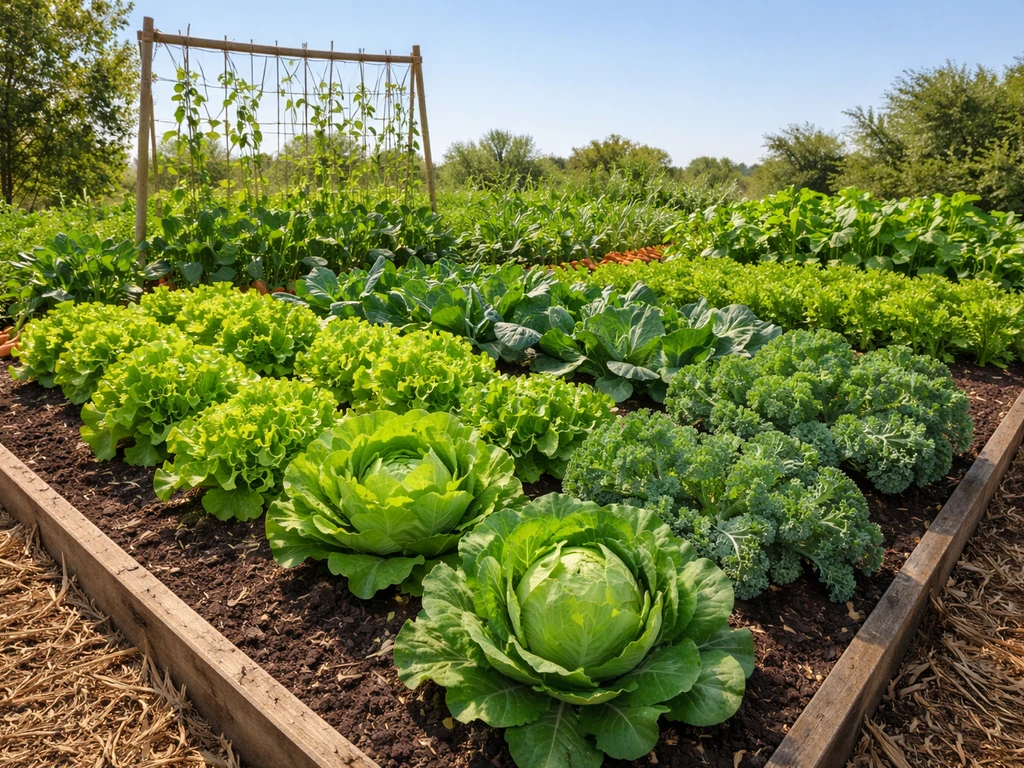
What "easiest" actually means in practice
Ease is not just about how simple a crop is to plant. It is a combination of five real factors that determine whether you succeed or fail, especially in your first season.
- Time to harvest: Faster crops reduce your exposure to weather, pests, and disease. Radishes mature in about 26 days. Baby lettuce can be ready in 30 days. Green beans take around 55 days. The shorter the window, the less that can go wrong.
- Input requirements: Easy crops need minimal fertilizer, water, and chemical treatment to perform. They are not fussy about perfect soil as long as the basics are in place.
- Climate tolerance: Cold-tolerant crops like spinach, leaf lettuce, radishes, and peas can handle frost, which extends your growing window and reduces the risk of losing everything to a late cold snap. Heat-tolerant crops like green beans can handle summer heat without bolting or wilting immediately.
- Pest and disease pressure: Some crops are magnets for problems; others are relatively trouble-free. Radishes and beans consistently have lower pest complexity than crops like brassicas or cucumbers.
- Germination reliability: A crop that germinates poorly under common conditions is not an easy crop. Peas, for example, will emerge in as little as 7 to 10 days when soil temperature is between 55 and 65 degrees Fahrenheit. Green beans, by contrast, are vulnerable to cold-soil rot, so timing matters more.
Soil pH also plays a quiet but important role in ease. Most vegetables perform best at a soil pH between 6.0 and 7.0, with 6.5 being the sweet spot most extension services target. When pH falls outside that range, nutrients become unavailable no matter how much you fertilize, and crops struggle for no obvious reason. Getting a basic soil test and adjusting pH before you plant is probably the single most effective low-effort action you can take to make any crop easier.
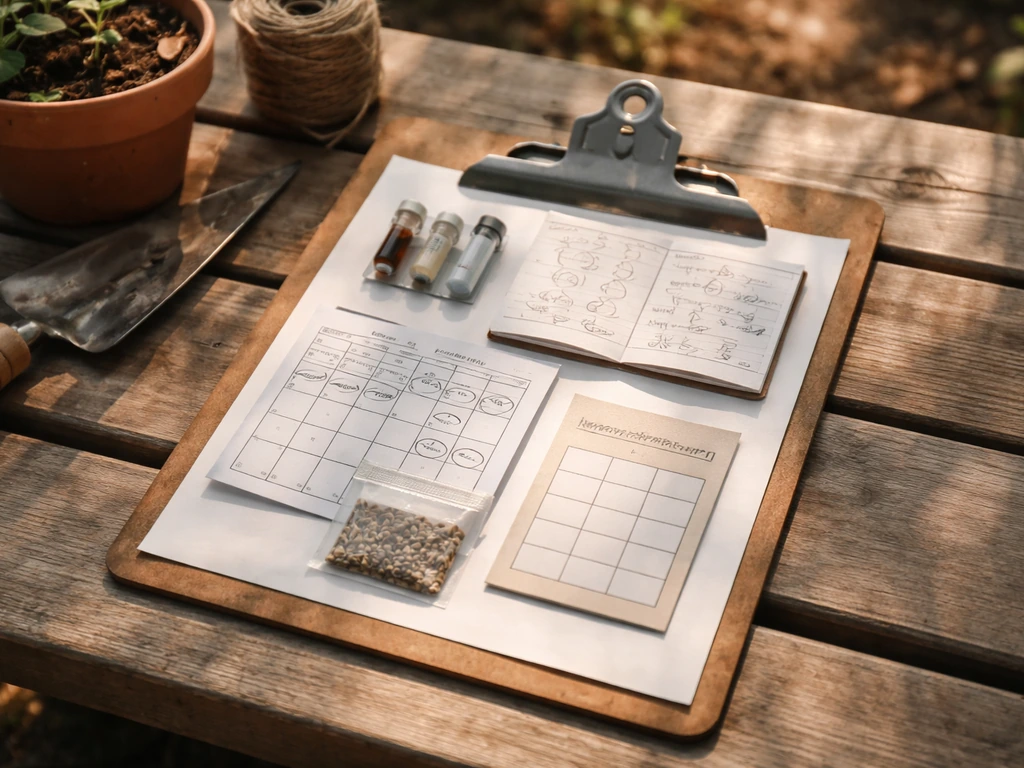
Planning uncertainty is also a major source of beginner failure that rarely gets mentioned. One common mistake: the "days to maturity" number printed on seed packets starts from the transplant date, not the day you seed indoors. If you count from the wrong date, you will harvest at the wrong time and miss your window. North Carolina Extension also notes that leaf lettuce is typically ready about 50, 60 days after seeding or about 30, 45 days after transplanting, so you can plan harvest windows accordingly blank" rel="noopener noreferrer">leaf lettuce can be ready about 50–60 days after seeding (and about 30–45 days after transplanting). Using crop planning tables that include planting dates, days to maturity, and harvest windows eliminates most of this guesswork.
The easiest crops for most people
If you are a home grower or new gardener and you just want something that will actually work this season, here is where to start. These crops are beginner-friendly across a wide range of climates and soil types.
| Crop | Days to Maturity | Cold/Heat Tolerance | Direct Seed or Transplant | Why It's Easy |
|---|---|---|---|---|
| Radish | ~26 days | Frost-tolerant | Direct seed | Fastest harvest, minimal inputs, very forgiving |
| Leaf lettuce | 30–45 days (baby) | Cold-tolerant | Direct seed or transplant | Quick, multiple harvests possible, low pest pressure |
| Spinach | 30–50 days | Cold-tolerant | Direct seed | Thrives in cool weather, minimal care needed |
| Peas | 55–70 days | Cold-tolerant | Direct seed | Reliable germination at low soil temps, self-supporting on a trellis |
| Green beans | ~55 days | Heat-tolerant | Direct seed | High yield, easy harvest, few diseases if soil is warm at planting |
Radishes are genuinely the easiest starter crop in most situations. MSU Extension also notes that radishes typically mature in about 35 to 40 days at 60 to 70°F and in about 20 to 25 days when temperatures are above 80°F Radishes are genuinely the easiest starter crop in most situations.. You plant them directly in the soil, they ask for almost nothing, and you are harvesting in under a month. They also act as a natural indicator of your soil health and bed preparation quality, which makes them a useful first crop before you commit to something slower. Leaf lettuce is a close second because you can harvest outer leaves repeatedly rather than waiting for a full head, and baby lettuce can be ready in as little as 30 days.
Spinach is the right pick if you are planting in early spring or fall, as it handles frost well and produces quickly in the 30 to 50 day range. Green beans are the easiest warm-season option once soil temperatures are reliably above 60 degrees Fahrenheit. Plant them too early in cold soil and germination stalls and seeds rot, which is the most common beginner failure with this crop. Wait until the soil is genuinely warm and they become one of the most productive and manageable crops you can grow.
For pest management on leafy greens, row covers installed from emergence until about 30 days before harvest significantly reduce pressure from aphids and leafhoppers without any spraying. This is one of the simplest, most effective low-input tools available and it makes greens even more beginner-friendly. Crop rotation from season to season also reduces insect pests, plant diseases, and the need for pesticide use over time, which compounds the ease factor across multiple growing seasons.
Easiest cash crops for profit-focused growing
"Easiest" shifts when you are thinking about money. The easiest crop to cultivate is not always the easiest crop to profit from. For cash crop purposes, ease has to account for cost structure, market access, and return per square foot or per acre, not just how simple it is to grow.
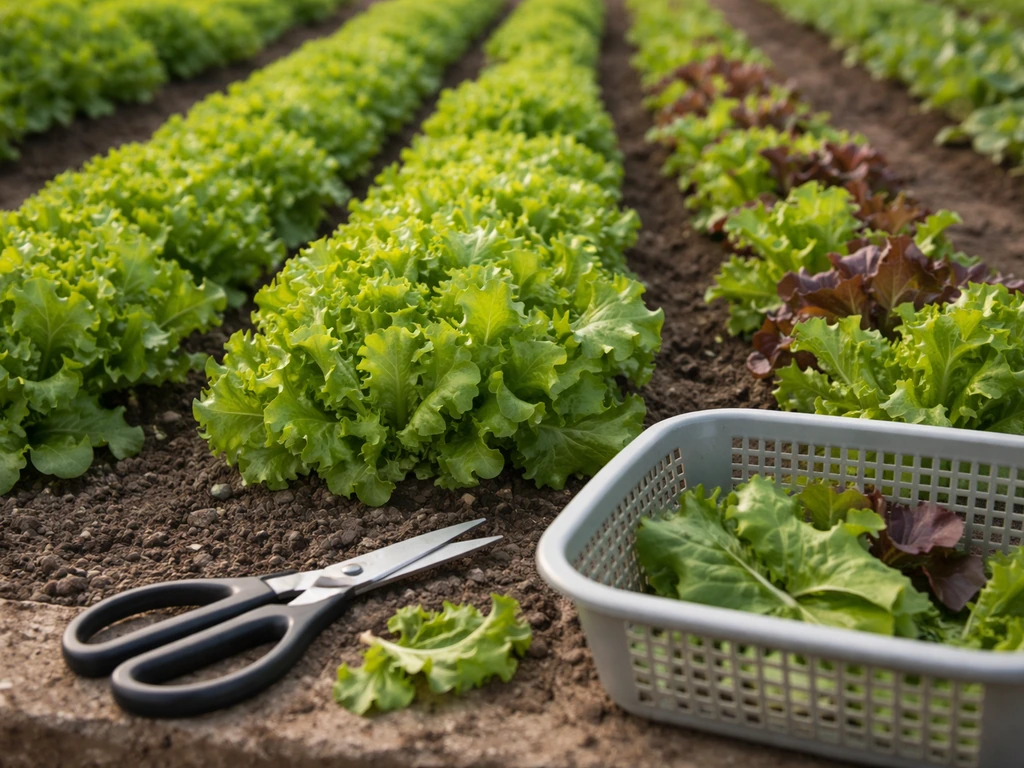
Leaf lettuce and salad greens consistently score well on the cash crop ease scale because they have low input costs, fast turnover, high per-pound market prices at farmers markets and through direct sales, and multiple cuts per planting. Enterprise budgets from land-grant universities show that lettuce and beans have a relatively manageable cost structure compared to crops like tomatoes or peppers, which require more labor, more inputs, and longer seasons before any return.
Green beans are another strong option for small-scale cash production because they produce high volumes with relatively little per-acre input and have an established market both fresh and processed. Summer squash and zucchini are also worth considering: they produce prolifically, come to market fast, and require minimal specialized equipment. The trade-off is that squash has more pest pressure (squash vine borers and cucumber beetles in many regions) than lettuce or beans, so it requires more active monitoring.
When evaluating any cash crop for ease, run the numbers before you plant. Enterprise budgets, which lay out seed costs, input costs, labor, land, and expected market price per unit, are the most reliable way to compare crop profitability on a common basis. The easiest crop to grow at a loss is not easy at all. Crops with long production histories in your specific area, meaning established local demand, known variety performance, and available buyers, are consistently easier to make profitable than novelty crops regardless of how high the claimed margins are.
What easiest looks like at farm scale
Farmers thinking about ease at scale have to weight factors that barely matter in a backyard garden. Labor requirements, equipment compatibility, market infrastructure, and the ability to direct-seed efficiently all become major variables.
Direct seeding is generally simpler and cheaper at scale than starting transplants, but it does require more seed and gives you less control over timing and plant spacing. When damping-off disease is a consistent problem in your soil, starting seedlings indoors and transplanting can significantly reduce early-season losses, even if it adds labor. For large-scale operations, this trade-off has to be calculated against your specific disease history and available equipment.
At farm scale, the easiest crops to grow tend to be those with established regional production history, because the local knowledge base, pest management resources, and market infrastructure are already developed. Green beans, for example, have a well-documented commercial production pathway in most of the eastern and midwestern United States, including established buyers, known yield expectations, and available harvesting equipment. Lettuce at commercial scale requires more specialized cooling and postharvest handling, which adds complexity even though the crop itself is easy to grow.
For farmers evaluating scale decisions, the three easiest crops to start with are typically green beans (direct seeded, mechanically harvestable, established markets), summer squash (high volume, fast, minimal equipment), and salad mix or leaf lettuce (very fast turnover, high value per pound at local markets, low input costs). The right answer depends heavily on whether you have cold storage, direct market access, or an existing wholesale buyer relationship.
Choosing the easiest crop based on where you live
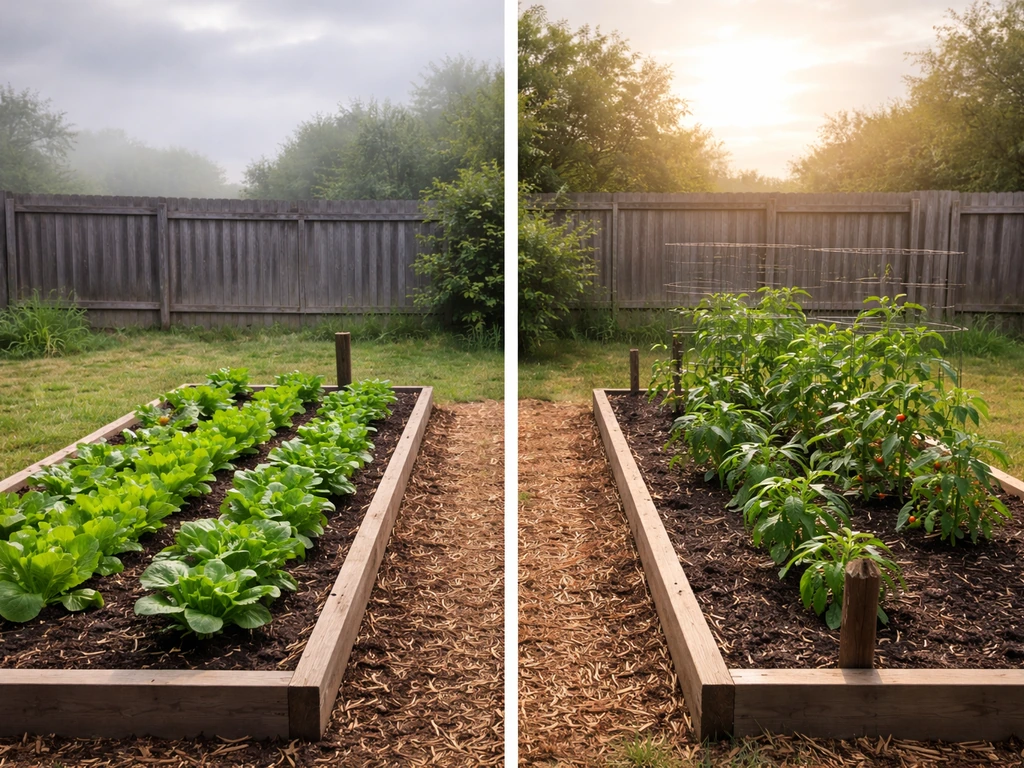
Climate is probably the biggest single determinant of which crop will be easiest for you. A crop that is effortless in coastal Oregon can be a struggle in South Dakota, and vice versa. The USDA Plant Hardiness Zone Map is the standard framework for matching plants to location, and it is a good starting point for understanding your frost risk and growing window. Growing degree day tools add another layer by tracking heat accumulation, which is especially useful for crops like beans and squash that need actual warmth rather than just frost-free days.
| Region / Climate | Easiest Crops | Why They Work Here |
|---|---|---|
| Cool/northern states (MN, WI, SD, northern New England) | Radishes, spinach, peas, leaf lettuce | Short seasons favor fast cold-tolerant crops; these mature before fall frosts hit |
| Mid-Atlantic and Southeast (VA, TN, NC, MD) | Green beans, summer squash, leaf lettuce (spring/fall) | Long warm seasons suit beans and squash; lettuce works well in shoulder seasons |
| Pacific Northwest (OR, WA) | Spinach, leaf lettuce, peas, brassicas | Mild, moist climate is ideal for cool-season crops year-round; established production history |
| Southwest and Mountain West (UT, CO, AZ) | Beans, radishes, lettuce (with shade in summer) | High altitude and heat require fast-maturing crops; cool nights extend growing window |
| Midwest (IA, MO, IL, IN) | Green beans, summer squash, spinach (spring/fall) | Hot summers favor warm-season crops; spring and fall windows suit cool-season greens |
| Temperate Europe (UK, France, Germany) | Leaf lettuce, spinach, peas, radishes | Cool, reliable moisture suits cold-tolerant crops with long growing windows |
| Tropical and subtropical regions | Beans, squash, sweet potatoes | Heat-tolerant, fast-growing crops that match long frost-free seasons |
The pattern that holds across regions is this: cool-season crops like spinach, radishes, and leaf lettuce are the easiest option wherever you have a spring or fall window with temperatures between 40 and 75 degrees Fahrenheit. Warm-season crops like green beans and summer squash take over as the easiest choice once soils are reliably warm and frost risk is behind you. Most regions in the continental United States have at least one good window for each category, which means most growers can run two easy crop cycles per year if they plan the timing correctly.
Historical agricultural patterns reinforce this logic. Regions that have grown specific crops for generations usually have the soil conditions, local knowledge, and market infrastructure that make those crops genuinely easier to produce. In the southeastern United States, snap beans have a centuries-long production history and thrive in the climate. In New England, cool-season greens have deep roots in local food culture and climate. Leaning into those regional patterns, rather than fighting them, is one of the most practical strategies for choosing an easy crop.
How to pick, plant, and manage your first crop
Here is a practical decision and action sequence you can work through today. It takes the advice above and turns it into specific steps.
- Check today's date against your last frost date. If you are within 6 weeks of your last frost or already past it, start with radishes or leaf lettuce for a quick win. If you are solidly into warm weather, go with green beans. If you are heading into fall, spinach or peas are your easiest options.
- Get a basic soil test if you have not done one recently. Most county extension offices offer them for a small fee. You are looking for a pH between 6.0 and 7.0, with 6.5 being ideal for most vegetables. If your pH is below 6.0, add lime according to the test recommendation before planting.
- Choose a spot with at least 6 hours of direct sun. Leafy greens tolerate partial shade, but most crops do better with more light. Good drainage matters more than perfect soil quality for early success.
- For radishes or lettuce, direct seed into prepared soil about 1/4 to 1/2 inch deep. Thin seedlings once they emerge so plants are not crowded. For green beans, wait until soil temperature is above 60 degrees Fahrenheit, then direct seed 1 inch deep in rows about 18 inches apart.
- Water consistently but do not overwater. Most beginner crop failures from "bad luck" are actually overwatering combined with poor drainage. The soil should feel moist about an inch down, not soggy.
- Install row covers over leafy greens at planting and leave them in place until about 30 days before harvest. This single step reduces aphid, flea beetle, and leafhopper pressure without any spraying.
- Scout your plants every few days. Walk the row, flip a few leaves, and look for insects or disease spots. Catching problems early, before populations build, is the core of low-input pest management. You do not need a spray program; you need to look regularly.
- Harvest on time. Radishes left in the ground too long get pithy and hot. Lettuce that bolts becomes bitter. Green beans picked young stay tender and keep producing. Timely harvest is as important to success as anything you do at planting.
If you are thinking beyond a single season, consider how crop rotation fits in. Rotating the location of your crops each season reduces the buildup of soil-borne diseases and insect pests that target specific plant families, which makes every subsequent season easier than the last. Start simple: move your beans to where the lettuce was, and put your lettuce where the beans were.
One last point on time expectations: the topics of which crops take the shortest time, which take the longest, and which grow the fastest are closely related to this question of ease. If you are wondering which crop takes almost a year to grow, that is usually a much longer-season vegetable or fruit crop than the quick starters mentioned earlier which crops take the shortest time, which take the longest. If you are also asking medieval dynasty how long for crops to grow, use the same idea of days to maturity plus your local timing constraints to estimate your harvest window. If you are asking how long it takes for crops to grow, focus on days to maturity and your local planting timing to estimate harvest how long for crops to grow. Fast-maturing crops are generally the easiest because they give you less time to fail and more opportunities to try again in a single season. Radishes at 26 days and baby lettuce at 30 days are hard to beat on that dimension. If you want to understand how different crops compare on harvest timing, looking at that topic alongside this one gives you a fuller picture of how to sequence your growing year.
The bottom line: pick radishes or leaf lettuce today if you are a beginner or if it is early in the season. Switch to green beans once the soil is warm. Match your choice to your climate using the regional guide above, fix your soil pH before anything else, and use row covers and regular scouting to keep pest pressure low without spending money on sprays. That combination gives you the highest probability of a successful first crop regardless of where you live. If you are curious about the hardest crop to grow, the best approach is to pick based on your climate, soil, and time horizon.
FAQ
What should I plant if I only have a short time window this season?
If you only have one planting window, start with radishes or leaf lettuce because they mature in under 30 to 35 days, which lets you replant if something goes wrong. If you also need warmth to harvest, wait for the soil to actually be warm for beans, use a soil thermometer, and only then sow so you do not lose the batch to cold-stall and rot.
How do I interpret days to maturity so I harvest at the right time?
The “days to maturity” on seed packets usually assumes a specific starting point, often transplanting or direct seeding at typical temperatures. To avoid harvesting too early or too late, count forward from your actual seeding date for direct-sown crops, and use your local weather to adjust if cool spells or heat waves are expected during the first couple of weeks.
What are the most common mistakes that make “easy crops” fail?
For radishes, thin promptly when seedlings are small, crowded plants stay small and can get woody or bitter. For lettuce, focus on harvesting outer leaves or baby heads before it bolts, and avoid letting the plant stay too long in heat because quality drops faster than many beginners expect.
Can I grow these easiest crops indoors or in containers?
Yes, but only if you match the crop to light and temperature. If your space is cold, lettuce and spinach can do better than radishes, and you should plan to harden off before transplanting outdoors. For best results, expect slower growth indoors in winter, so choose varieties labeled for containers and use a timer and strong grow light if natural light is limited.
How much should I water radishes and lettuce so they stay sweet and usable?
For radishes and lettuce, aim for consistent moisture rather than frequent deep watering. Uneven watering often shows up as misshapen roots for radishes and tip burn or bitterness for lettuce. A simple check is to keep the top layer slightly moist, then water when it starts to dry 1 to 2 inches down.
Do row covers guarantee pest-free leafy greens, and when should I remove them?
Row covers help most with young plants, but they are not a substitute for proper airflow later. Plan to remove or vent covers as plants approach harvest timing, and make sure you can still control pests by scouting underneath regularly because some problems move from the air onto the plants even under fabric.
What if my soil test shows pH is off, can I still plant the easy crops?
If your soil pH is out of range, fertilizing can worsen the situation by increasing nutrient availability problems. Get a soil test first, then correct pH before planting the bed you want to use for “easy” crops. If you cannot wait, consider container growing with fresh potting mix as a faster workaround.
How do I choose the easiest crop if my weather keeps changing (heat waves or cool snaps)?
Yes, but some “easy” crops are more forgiving than others. Lettuce and spinach can be risky in hot weather because bolting reduces quality quickly, while beans and zucchini depend on warmth and can fail if you sow too early. The practical approach is to choose by temperature, not just by calendar, and stagger plantings by 1 to 2 weeks so a single heat or cold spell does not wipe out your harvest.
Which of the easiest crops is best for selling if I do not have a ready buyer?
If you cannot direct-market, prioritize crops with longer shelf life or that work with processors. Leaf lettuce can sell well, but it often requires fast handling. Green beans and some squash types are usually easier to move through farmers markets and farm stands or to sell to buyers because buyers expect predictable volume and fewer quality-compromising transport issues.
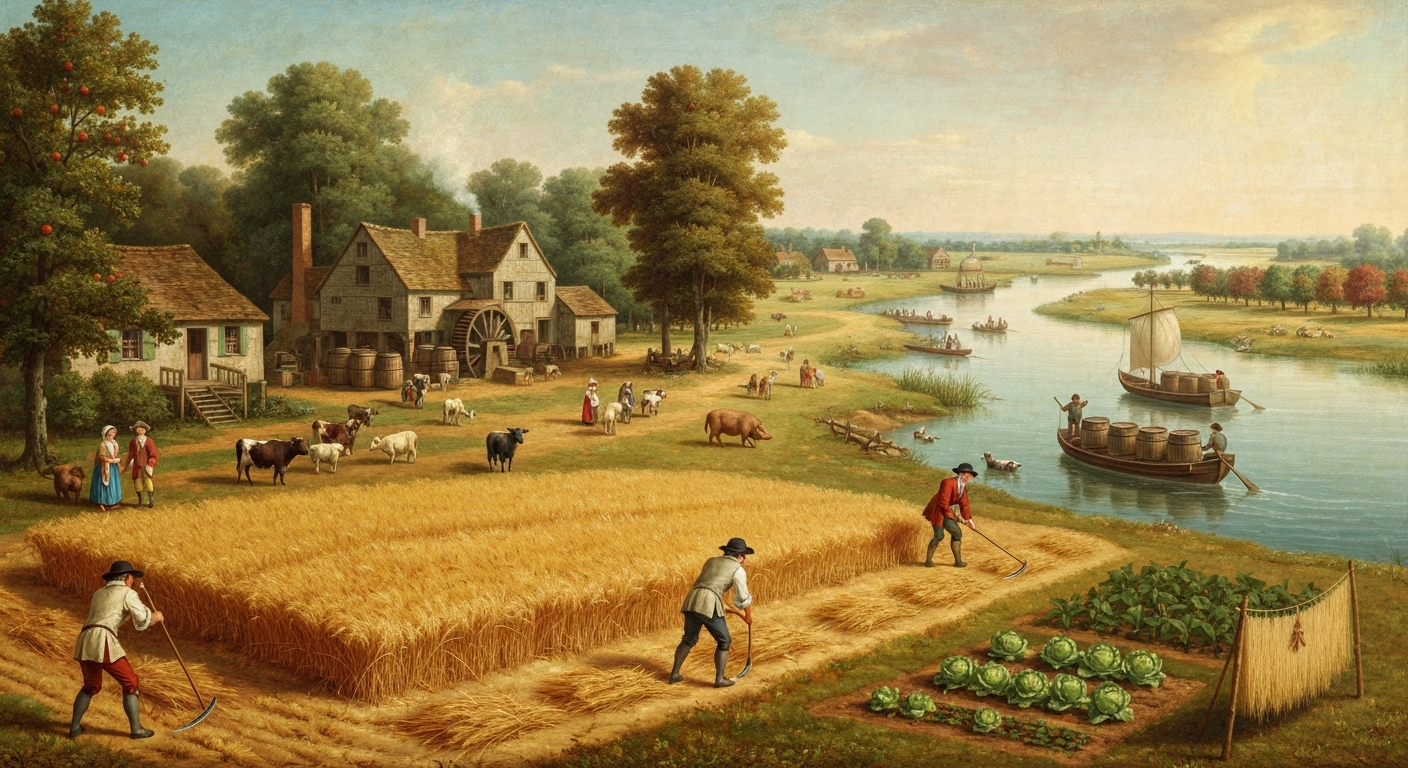
Colonial Delaware’s main crops, grains, hay, flax, fruits, vegetables, livestock, why they thrived and how they were sold.
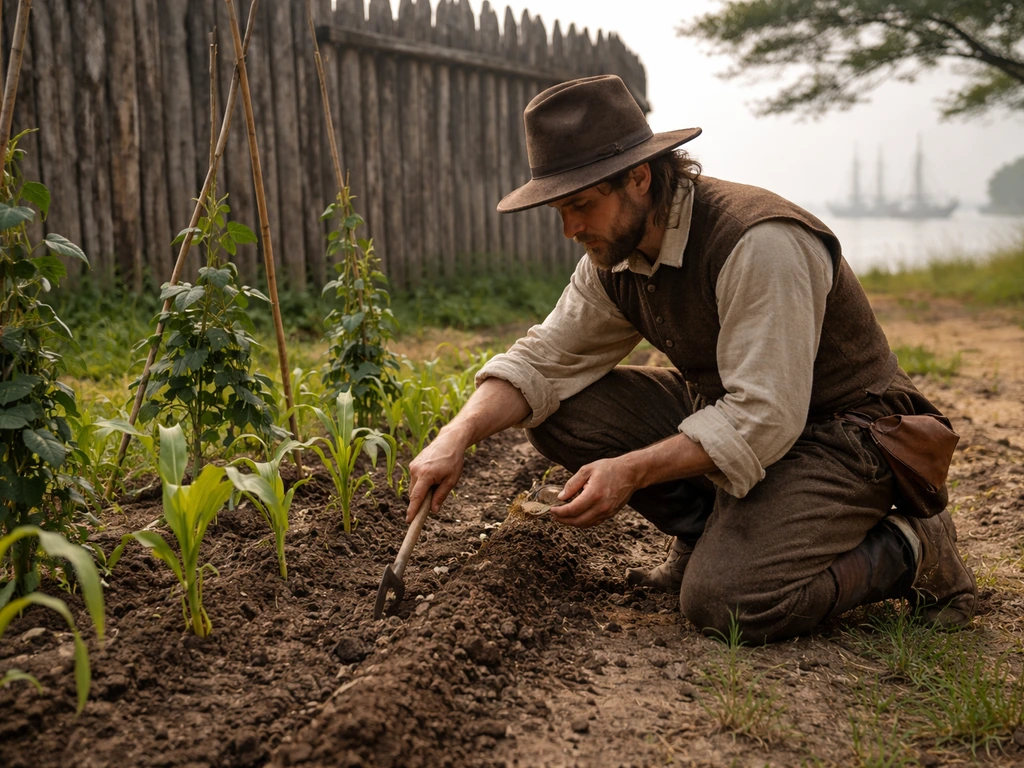
Learn what Jamestown colonists grew and the methods they used to plant, harvest, and adapt crops to Virginia conditions.
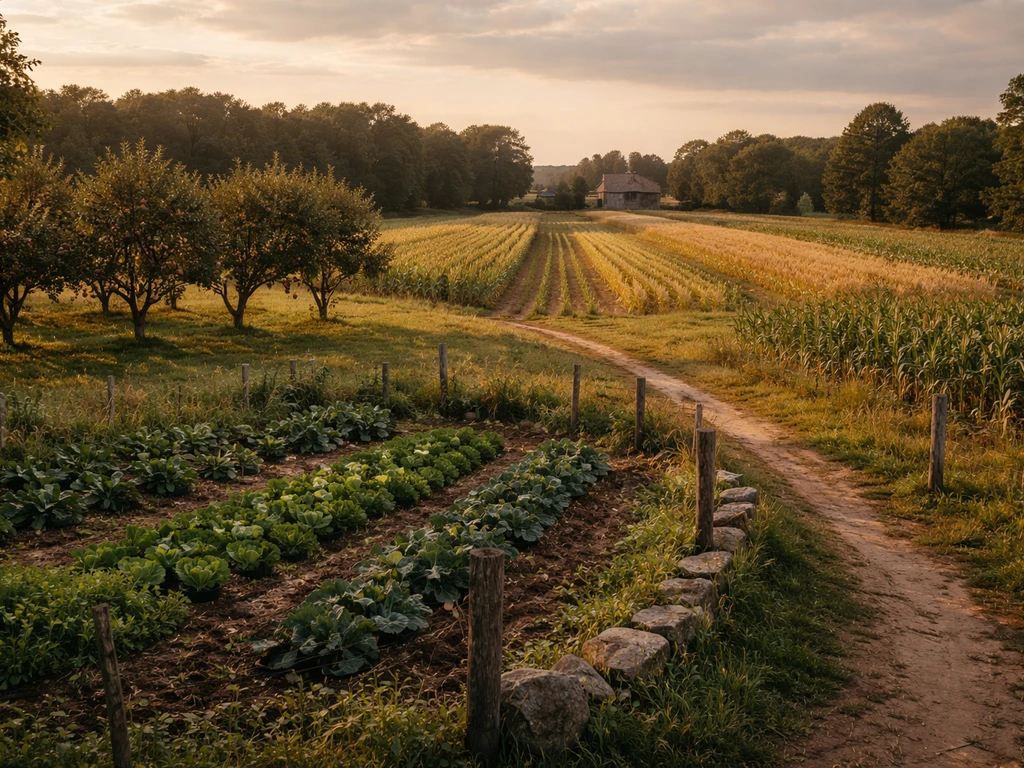
Major New England colonial crops explained by climate and soil, from corn and wheat to beans and hay, plus today’s paral