
Enslaved people were the primary engine of colonial agricultural economies. They cleared land, planted and harvested export crops, built irrigation and processing infrastructure, transferred crop knowledge from Africa and the Caribbean, and performed the skilled trades that kept plantations running. Without that forced labor, the tobacco, rice, indigo, sugar, and cotton that made colonial merchants and planters wealthy would not have reached Atlantic markets in the volumes that shaped the modern world.
How Enslaved Labor Grew Colonial Economies: Crops & Regions

Samuel Rourke
20 Jul 2026
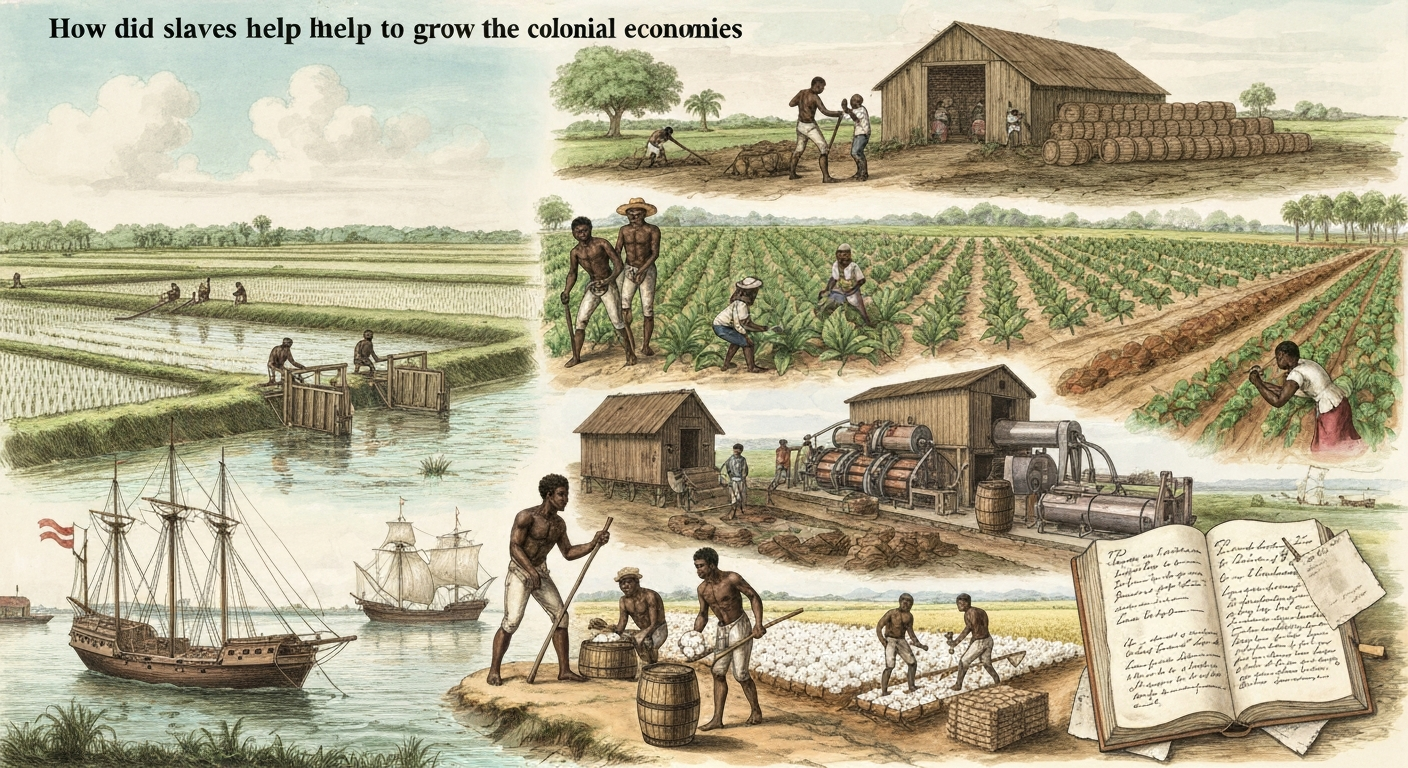
How enslaved labor directly and indirectly fueled colonial economic growth
The economic contribution of enslaved people operated on at least three levels simultaneously. First, their field labor produced the export staples that generated cash, credit, and colonial tax revenue. Second, their skilled work as coopers, blacksmiths, millers, carpenters, and drivers reduced overhead costs that would otherwise have eaten into planter margins. Third, and often underappreciated, they brought agricultural knowledge, particularly about rice cultivation, water management, and tropical crop processing, that planters either did not possess or learned from them. Plantation account books, including the Bailey family plantation account book covering 1759 to 1819 (now held at the Library of Congress), record line-by-line labor assignments, cash payments, store credit, and yields. These documents make it possible to put hard numbers on what enslaved labor contributed and what it cost planters per unit of output.
Indirectly, the plantation system anchored colonial credit networks. Planters borrowed against future crops and against the appraised value of enslaved workers themselves. South Carolina estate inventories and probate records enumerate enslaved persons by name, estimated age, and skill level, each assigned a monetary valuation. A skilled rice driver or blacksmith might be appraised at two to three times the value of an unskilled field hand. This capitalization of human beings backed loans from London and Bristol merchants, allowing planters to expand acreage, purchase more enslaved people, and increase export volumes in a self-reinforcing cycle that fattened both colonial and British imperial revenues.
Colonial agricultural regions, climates, and market contexts
Colonial North America and the Caribbean were not a single agricultural zone. They were a series of distinct climate envelopes, each suited to different export crops and each drawing on different labor arrangements. Understanding the geography matters because it explains why certain crops concentrated in certain places and why the demand for enslaved labor was so unevenly distributed across the colonies.
- Chesapeake region (Virginia, Maryland): humid subtropical climate, sandy loam and clay soils, long frost-free growing season. Primary export: tobacco. Secondary crops: wheat, corn.
- Carolina Lowcountry (coastal South Carolina, Georgia): hot, humid, tidal river systems with rich alluvial soils. Primary exports: rice (from the 1690s) and indigo (peak 1740s–1770s).
- Caribbean (Barbados, Jamaica, Saint-Domingue): tropical climate with year-round warmth, heavy rainfall, and volcanic soils. Primary export: sugar. Secondary: coffee, rum, cotton.
- Deep South interior (Georgia upcountry, Alabama, Mississippi, Texas): warm temperate to subtropical, well-drained upland soils. Primary export from the late 18th century onward: short-staple cotton.
- Mid-Atlantic and New England: cooler, shorter seasons. Mixed farming, livestock, grain. Enslaved labor present but less dominant; indentured and tenant farming more common.
Each region connected to Atlantic markets through merchant-planter networks. British Board of Trade correspondence and London customs port returns (the CO 5 series) preserve periodic shipment returns for tobacco, rice, indigo, and other staples, allowing researchers to reconstruct export volumes and destinations. The pattern is consistent: high-value export crops clustered in warm, long-season zones where the labor required to grow them was met by enslaved Africans and, later, their American-born descendants.
Economic mechanics that made commercial cropping profitable
Several forces combined to make plantation agriculture extraordinarily profitable for planters and merchants, even when commodity prices fluctuated. See why it was more profitable to grow commercial crops for a focused explanation of the economic mechanisms that made plantation agriculture so lucrative.
Market access and credit
Planters sold staple crops on consignment through London and Bristol merchants who advanced credit against anticipated harvests. Merchant account books, bills of lading, and bills of exchange (such as those in the Vernon family mercantile papers at Winterthur) document these flows in detail. A planter could borrow to buy land, enslaved workers, and equipment in the spring, ship tobacco or rice in the autumn, and square accounts with the London factor after the sale. George Washington's Series 5 Financial Papers at the Library of Congress contain invoices, slave names, business correspondence, and plantation accounts that link labor records directly to market receipts for tobacco and wheat in the Chesapeake, illustrating exactly how this system worked at a major estate.
Labor cost structures
The critical economic advantage of enslaved labor over wage labor was not simply that it was cheaper per day. It was that it was a capital asset. Planters paid wages to overseers but not to the workers who generated the revenue. Clothing, rations, and basic medical care were costs, but they were far below market wages, and they could be found in ledger entries as relatively small line items. The William Massie account book from Nelson County, Virginia (held at the University of Virginia Special Collections) archives entries for clothing, rations, overseer wages, and purchases for enslaved people that allow researchers to reconstruct micro-level plantation accounting. Because enslaved people could also be hired out, sold, or used as collateral, their labor produced returns both as production inputs and as financial instruments.
Price signals and crop specialization
Planters responded to Atlantic price signals quickly. When tobacco prices fell in the Chesapeake during the mid-18th century, some planters shifted toward wheat and provisioning crops. When indigo prices rose after the 1748 Bounty Act, Carolina planters rapidly expanded production. Cotton's price surge after Eli Whitney's cotton gin (1793) triggered a westward expansion into Georgia, Alabama, Mississippi, and eventually Texas. In each case, the ability to rapidly redeploy enslaved labor across crops was itself an economic advantage over systems dependent on hired workers who could choose their employer.
Labor organization on plantations
How work was organized on a plantation shaped both productivity and the daily lives of enslaved people. Two primary systems dominated, and the choice between them often depended on the crop.
Gang labor
Gang labor grouped workers into supervised units that moved through fields together under the direction of an overseer or enslaved driver. It was the dominant system for tobacco and cotton because those crops required continuous attention across long growing seasons. Productivity was monitored by the overseer, and pace was set collectively. WPA Federal Writers' Project slave narratives (1936–1938, Library of Congress) contain vivid testimony about gang labor rhythms: the pre-dawn assembly, the long midday hours in the field, the seasonal intensity of harvest.
Task system
The task system, most fully developed on South Carolina rice plantations, assigned each worker a defined daily task. Once the task was completed, any remaining time was, in practice, the worker's own. This system gave enslaved people a degree of autonomy that made it possible for them to grow provision crops, trade informally, and accumulate small savings. It also transferred some supervisory burden to workers themselves and allowed for specialization. Runaway slave advertisements in the Virginia Gazette and the North Carolina Runaway Slave Advertisements project frequently describe escaped workers by their specific skills (rice driver, cooper, blacksmith, miller, carpenter), demonstrating how deeply specialized the plantation labor force had become.
Skilled agricultural and artisan work
Plantations were largely self-sufficient manufacturing units as well as farms. Enslaved workers built and maintained the infrastructure: they constructed dikes and canals for rice cultivation, operated water-powered rice mills, made barrels to ship tobacco and rice, shod horses, repaired tools, wove cloth, and processed raw crops into export-ready commodities. Probate inventories and cotton plantation record books (such as Thomas Affleck's Cotton Plantation Record and Account Book, which overseers used on large estates) formally categorized enslaved workers by function: field hand, house servant, blacksmith, cooper, miller, seamstress. Each category carried a different appraised monetary value, reflecting the economic premium placed on skill.
Seasonal rhythms
Plantation labor was not uniform across the year. Tobacco required transplanting in spring, constant weeding and suckering through summer, and intensive curing in autumn. Rice demanded flooding, drainage, and precise timing around tidal cycles. Cotton picking ran from late summer through autumn, and the cotton gin then had to process the harvest before moisture damaged the fiber. Slave narratives describe the seasonal intensification clearly, including the near-total elimination of rest during harvest weeks and the relative slack of winter months devoted to clearing new land, repairing equipment, and producing subsistence food.
Tenant and indentured farming compared to enslaved labor
Colonial agriculture used multiple labor forms, and comparing them explains why planters shifted toward enslaved labor over the course of the 17th century.
| Labor type | Cost structure | Planter control | Term of service | Legal status | Predominant regions |
|---|---|---|---|---|---|
| Enslaved labor | Capital purchase plus subsistence costs; worker is an asset | Very high; near-total legal authority | Lifetime (heritable) | Property; no contract rights | Chesapeake, Lowcountry, Caribbean, Deep South |
| Indentured servitude | Passage cost plus subsistence; freedom dues at term's end | High during indenture | 4–7 years fixed | Contractual; legal person with term rights | Early Chesapeake, Mid-Atlantic |
| Tenant farming | No purchase cost; planter receives rent or crop share | Moderate; tenant retains some bargaining power | Seasonal or multi-year lease | Free person under lease agreement | Mid-Atlantic, backcountry South, New England |
| Wage labor | Cash wages per day or season | Low; worker can leave | At will | Free person | New England, Mid-Atlantic, some frontier areas |
Indentured servants had been the dominant labor supply in the early Chesapeake. After Bacon's Rebellion in 1676, when armed ex-servants proved politically dangerous, planters increasingly preferred enslaved labor whose legal status prevented collective political action and whose children were also enslaved, perpetuating the labor supply without ongoing recruitment costs. The Trans-Atlantic Slave Trade Database (SlaveVoyages) provides voyage counts showing the sharp rise in slave imports to the Chesapeake and Carolina in the decades after 1680. The blank" rel="noopener noreferrer">Trans‑Atlantic Slave Trade Database (SlaveVoyages) provides standardized voyage counts and origin/destination data that researchers use to quantify the supply of enslaved labor by region and decade. By 1700 the shift was structural and largely irreversible. Tenant farming continued in backcountry regions where land was cheaper and export crops less dominant, a pattern explored more fully in related discussions of what tenant farmers grew and how they organized production.
Tobacco: the crop that built the Chesapeake
Regions, climate, and soils
Tobacco thrives in a humid subtropical climate with 100 to 130 frost-free days, well-drained sandy loam soils, and moderate rainfall between 40 and 50 inches annually. The Tidewater and Piedmont zones of Virginia and Maryland met all of these requirements. The James, York, Rappahannock, and Potomac river systems provided easy water transport to ocean-going vessels. By the 1620s, Virginia colonists were exporting commercial quantities; by 1700, tobacco dominated the Chesapeake economy entirely.
Labor roles and economic effects
Tobacco is extremely labor-intensive relative to most crops. Seedbeds must be prepared in late winter under forest-canopy cover. Seedlings are transplanted in spring. Through the summer, workers top, sucker (remove axillary shoots), and worm (hand-pick caterpillars from) every plant. Harvesting involves cutting, spearing leaves onto sticks, and curing in tobacco barns. Prizing (packing) into hogshead barrels required skilled coopering. George Washington's financial papers itemize labor assignments and tobacco receipts, showing how this crop generated cash that planters recycled into land purchases and more enslaved workers. By the late 18th century, some planters shifted toward wheat and corn as tobacco exhausted Tidewater soils, but tobacco remained central in the Piedmont and later in Virginia's Southside and North Carolina.
Rice: African knowledge and tidal engineering in the Lowcountry
Tidal systems and infrastructure
Rice cultivation in South Carolina and Georgia depended on an elaborate system of tidal dikes, floodgates (called trunks), and canals built by enslaved workers. Tidal rice fields could be flooded and drained using the natural rise and fall of coastal rivers, eliminating the need for pumps. Building and maintaining this infrastructure required thousands of hours of heavy earthmoving labor, and operating it required judgment about tidal timing, water depth, and drainage cycles. This was not unskilled work: it was hydraulic engineering performed under duress.
African knowledge transfer
Judith Carney's scholarship (Black Rice: The African Origins of Rice Cultivation in the Americas, Harvard University Press) documents that the knowledge to cultivate and process tidal rice in the Carolina Lowcountry was transferred in large part by enslaved Africans from rice-growing regions of West Africa, particularly present-day Sierra Leone, Guinea-Bissau, and Senegal. They brought knowledge of specific rice varieties, water management techniques, and harvesting and processing methods. South Carolina planters explicitly sought enslaved people from these regions, a fact documented in the Trans-Atlantic Slave Trade Database's voyage records showing port origins. The economic consequence was enormous: rice became South Carolina's dominant export by the 1720s, and the colony's per-capita wealth surpassed that of every other mainland colony by the mid-18th century.
Processing and regional economic importance
Jonathan Lucas's tidal-powered rice mill, patented around 1793, dramatically reduced the labor needed to hull rice after harvest, but enslaved workers operated and maintained that machinery. Before the mill, rice was pounded by hand using mortars and pestles, a technique also brought from West Africa. The Digital Library of Georgia's agricultural heritage documentation references Lucas's invention alongside the tidal dike systems as twin pillars of the Lowcountry rice economy. Rice exports moved through Charleston, the wealthiest colonial port south of Philadelphia, and generated the credit and capital that made South Carolina's planter class extraordinarily rich.
Indigo: skilled processing and Atlantic markets
Indigo cultivation and processing required a different and highly specialized skill set. The plant (Indigofera tinctoria and related species) grows in hot, well-drained soils and requires precise timing at harvest. The real complexity was in processing: cut plants were soaked in fermentation vats, the liquid was drained and beaten to oxidize the dye pigment, and the resulting blue sediment was pressed into cakes for export. The chemistry is temperamental: wrong fermentation timing destroyed a batch. Skilled enslaved workers managed this process, and their expertise was essential to consistent quality.
Eliza Lucas Pinckney's successful experiments with indigo cultivation in South Carolina in the early 1740s are often cited as the crop's breakthrough moment, but the processing knowledge came from experienced workers, including an enslaved man named Quash who managed the vat system. The British Bounty Act of 1748 subsidized indigo by offering a guaranteed payment per pound, triggering rapid planting expansion across the Carolina Lowcountry. By the 1770s, indigo was South Carolina's second most valuable export after rice, generating roughly 500,000 pounds (weight) of dye annually. British Board of Trade port returns from the CO 5 series track this volume decade by decade.
Sugar: capital intensity and tropical labor demands
Sugar cane requires a tropical climate: year-round temperatures above 65°F, 60 or more inches of annual rainfall, and rich volcanic or alluvial soils. These conditions existed in Barbados, Jamaica, Saint-Domingue (present-day Haiti), and other Caribbean islands. Sugar was not just a field crop; it was a manufacturing operation. After cutting, cane had to be crushed in a mill within hours to prevent juice fermentation. The juice was then boiled in a series of open coppers, clarified, and cooled into crystallized sugar. The boiling house required skilled enslaved workers who could judge the precise point at which sugar would crystallize rather than burn. Plantation studies of Caribbean sugar estates confirm that enslaved workers held roles across the entire production chain: field gangs cutting cane, mill operators managing the crushing rollers, and skilled sugar boilers controlling the heat and timing of crystallization.
The capital cost of a sugar plantation (mill, boiling house, curing warehouse, and labor force) was far higher than for tobacco or rice, which meant only wealthy planters or merchant-backed syndicates could enter the industry. The returns, however, were exceptional: British Caribbean sugar colonies generated more export revenue per acre than any other crop system in the Atlantic world during the 18th century, and that revenue flowed directly into British port cities, financial institutions, and imperial tax coffers.
Cotton: climatic expansion and labor demands
Short-staple cotton grows across a broad swath of warm temperate and subtropical North America: roughly below the 37th parallel, with at least 200 frost-free days, 20 to 25 inches of rainfall during the growing season, and well-drained upland soils. Before the cotton gin (1793), separating seeds from short-staple fiber by hand was so slow that cotton was not a major export crop. The gin changed the processing equation overnight: one gin could do the work of 50 hand-processors. But the field work of planting, hoeing, and picking was not mechanized, and cotton picking is one of the most labor-intensive harvest operations in temperate agriculture. Each cotton boll opens at a different time, requiring multiple passes through the field. Planters in Georgia, then Alabama, Mississippi, Louisiana, and eventually Texas, expanded cotton acreage rapidly because the gin resolved the bottleneck on their end while leaving the field labor entirely to enslaved workers.
The 1850 and 1860 U.S. Census slave schedules, which recorded enslaved persons by owner with age, sex, and color counts, show the dramatic geographic expansion of the enslaved population westward into the cotton belt during this period. Texas planters in the 1850s are a useful case study of this expansion, explored below.
Mixed subsistence cropping alongside export agriculture
Export crops get most of the historical attention, but subsistence and mixed-market cropping was equally important to plantation viability. Plantations needed corn, sweet potatoes, beans, and squash to feed their labor forces and hogs. Enslaved people grew much of this food, both in plantation provision fields and in the small personal gardens that the task system allowed. WPA slave narratives describe in detail the cultivation of kitchen garden crops, the raising of poultry, and the fishing and hunting that supplemented plantation rations. This was not incidental: planters calculated ration costs as a real expense, and a plantation that could grow much of its own food reduced cash outlays and improved annual margins.
In the Carolina Lowcountry, enslaved workers under the task system sometimes produced market surpluses of corn, vegetables, and crafts that they sold at local markets. Colonial Williamsburg's research on Chesapeake provisioning (using merchants' account books) documents how planters and their enslaved workers both participated in local provisioning networks, creating small but real economic activity beyond the export staple. Colonial Williamsburg's report Provisioning Early American Towns: The Chesapeake digitized merchant and merchant‑store daybooks and uses those account books to reconstruct planter purchases, factor accounts, and the role of credit and coastal shipping in provisioning Provisioning Early American Towns: The Chesapeake (Colonial Williamsburg Research Reports). This dynamic complicates any simple picture of plantation agriculture as purely export-oriented and hints at the economic agency that enslaved people exercised within severe constraints.
Crop-by-crop regional comparison
| Crop | Primary regions | Climate requirements | Soil preferences | Primary labor roles | Peak export period |
|---|---|---|---|---|---|
| Tobacco | Virginia, Maryland Tidewater and Piedmont | Humid subtropical; 100–130 frost-free days | Sandy loam, well-drained | Transplanting, suckering, worming, curing, coopering | 1620s–1780s (Chesapeake peak) |
| Rice | Carolina Lowcountry, coastal Georgia | Hot, humid; tidal river access | Rich alluvial, tidal flats | Dike/canal construction, flooding/drainage, harvesting, milling | 1720s–1860s |
| Indigo | South Carolina, Georgia coastal plain | Hot, well-drained uplands | Sandy loam to clay loam | Planting, cutting, fermentation vat management, cake pressing | 1748–1790s |
| Sugar | Barbados, Jamaica, Saint-Domingue | Tropical; year-round warmth, high rainfall | Volcanic or alluvial, deep soils | Cane cutting, mill operation, boiling house, curing | 1650s–1800s (Caribbean peak) |
| Cotton | Georgia, Alabama, Mississippi, Louisiana, Texas | Warm temperate to subtropical; 200+ frost-free days | Well-drained upland soils | Planting, hoeing, picking (multiple passes), ginning | 1793–1865 and beyond |
| Corn/provision crops | All plantation regions | Variable; broad climatic tolerance | Variable | Planting, cultivation, harvest, kitchen garden tending | Year-round, all periods |
Quaker regions where enslaved labor was used
The Quakers are often associated with early abolitionism, and by the late 18th century the Society of Friends had formally condemned slaveholding. But in the late 17th and early 18th century, some Quaker planters in Pennsylvania, New Jersey, and the Carolina backcountry did hold enslaved people and used them to grow grain, raise livestock, and tend orchards. Chester County, Pennsylvania probate records and estate inventories from the 1680s through the 1750s include enslaved persons in Quaker estates, appraised alongside livestock and tools. The crops grown on these holdings were typically wheat, corn, flax, and mixed orchard fruits rather than the tobacco and rice of Southern plantations. The economic motivations were the same as those of non-Quaker planters: access to labor that reduced production costs on market-oriented farms. Quaker antislavery sentiment hardened progressively through the 18th century, partly driven by figures like John Woolman, whose journals document moral arguments against slaveholding that eventually prevailed within the Society. The documentary record of Quaker slaveholding is a useful reminder that the institution was not geographically limited to the plantation South in its early decades.
Texas planters in the 1850s: cotton expansion and labor
Texas after statehood in 1845 became one of the fastest-growing cotton frontiers in North America. By 1860, the U.S. Census slave schedule for Texas recorded over 182,000 enslaved people, up from roughly 58,000 in 1850. That growth tracks almost perfectly with cotton acreage expansion into the Brazos, Colorado, and Trinity river valleys, where rich bottomland soils and a 240-to-280-day frost-free growing season made cotton yields among the highest in the South. Planters who had exhausted soils in Georgia or Alabama relocated with their enslaved workforces to Texas, often going into debt to merchant lenders in Galveston and New Orleans to purchase additional enslaved workers before their first crop was harvested. The returns could be spectacular: in the late 1850s, cotton prices were high, Texas land was cheap relative to older plantation states, and a skilled gang of enslaved workers could pick 150 to 200 pounds of cotton per person per day. Texas planters grew wealthy very quickly through this combination of soil fertility, favorable climate, cheap land, and the full labor cost suppression that enslaved labor provided. This expansion represents the final major geographic phase of the cotton-slavery economy before the Civil War.
Enslaved people's agency, knowledge, and resistance
Enslaved people were not passive inputs into a colonial agricultural machine. They brought knowledge, exercised judgment, and resisted in ways that shaped the economics of the plantation system from within. The transfer of rice cultivation knowledge from West Africa is the clearest example of enslaved technical expertise driving plantation profitability. Skilled enslaved workers commanded higher appraised values in probate inventories and hiring markets precisely because their knowledge was economically irreplaceable: a trained sugar boiler who misjudged the heat could destroy an entire day's production, and replacing that expertise was expensive.
Resistance took multiple forms. Covert resistance included work slowdowns, tool breakage, feigned illness, small-scale theft of food or produce, and arson. Overt resistance included running away, individual violence against overseers, and organized rebellion. Runaway slave advertisements in the Virginia Gazette and the North Carolina Runaway Slave Advertisements project (digitized at UNC-Greensboro) are a remarkable primary source: they describe not only the physical appearance of escaped individuals but their skills, likely destinations, and social networks, demonstrating that enslaved people had detailed knowledge of regional geography and calculated their escape routes carefully. Every successful escape, every tool broken, every deliberately slow workday represented a small economic cost to the planter. At scale, these acts of resistance were a persistent drag on plantation productivity that planters tried to suppress through violence, incentive systems, and surveillance.
Some enslaved people also negotiated informal economic arrangements within the plantation system: selling surplus garden produce, hiring their own time for wages that they partly retained, or bartering skills with neighbors. These activities were legally precarious and depended on individual planter tolerance, but they existed throughout the colonial and antebellum South and constitute evidence that enslaved people acted as economic agents even under conditions of extreme coercion.
Ecological, technological, and social legacies
Soil and landscape impacts
Intensive monoculture farming, particularly tobacco cultivation, depleted soil nutrients rapidly. Tobacco exhausted nitrogen and potassium from Tidewater soils within a decade of continuous cropping. This drove the westward expansion of tobacco production into the Piedmont and eventually into North Carolina and Kentucky. The abandoned Tidewater fields were often left to erode or were converted to lower-value uses, a pattern that permanently altered the soil landscape of eastern Virginia and Maryland. Rice cultivation in the Lowcountry created a different kind of landscape transformation: the tidal dike systems built by enslaved workers remain partly visible in satellite imagery today, a physical legacy of their labor that outlasted the plantation system by more than 150 years.
Crop diffusion and agricultural knowledge
Enslaved Africans introduced or refined the cultivation of several crops beyond rice. Okra, black-eyed peas, sorghum, and various leafy greens came to the American South through the Atlantic slave trade, carried as food provisions on slave ships and then grown in enslaved communities. These crops became integral to Southern foodways and agriculture. The transmission of knowledge about seed selection, soil preparation, and intercropping from West and Central African agricultural traditions also influenced Southern farming practices in ways that plantation records rarely acknowledged but that material archaeology and oral history document clearly.
Labor institutions and their persistence
The plantation system created labor institutions that persisted long after emancipation in modified forms. Sharecropping and tenant farming in the post-Civil War South reproduced many of the crop-debt and labor-control dynamics of the plantation era, applying them to nominally free Black and white tenant farmers. The geography of cotton, tobacco, and rice production changed relatively little after emancipation: the same soils, the same climates, and the same crop systems continued, but with labor organized through tenancy, crop liens, and debt peonage rather than ownership. Understanding this continuity requires understanding the original plantation system, which is why the agricultural geography of the antebellum South remains directly relevant to anyone studying or farming in those regions today.
Suggested illustrations and map ideas
- A regional map of colonial North America and the Caribbean showing crop zones overlaid on climate bands (humid subtropical, tropical, warm temperate), with icons marking primary export crops by region.
- A digitized plantation plat (survey map) from a South Carolina rice estate showing tidal dike systems, field layouts, and slave quarters in relation to processing buildings.
- A soil texture map of the Chesapeake Tidewater and Piedmont showing sandy loam tobacco soils versus heavier clay soils unsuitable for tobacco.
- Archival images of pages from the Bailey family plantation account book or the William Massie account book, illustrating how labor assignments and crop yields were recorded alongside names of enslaved workers.
- A reproduction of a page from Thomas Affleck's Cotton Plantation Record and Account Book showing the labor classification columns (field hand, blacksmith, carpenter, etc.) and weekly task records.
- A map of the Trans-Atlantic Slave Trade routes overlaid on colonial crop production zones, showing how labor supply routes aligned with plantation expansion.
- Photographs or illustrations of tidal rice dike systems in coastal South Carolina or Georgia, ideally showing surviving earthworks alongside historical engravings of functioning fields.
Primary sources, plantation records, and further research
Anyone researching this topic in depth will find the following categories of primary sources especially productive. Plantation account books and daybooks are the most granular evidence for labor organization, crop yields, and economic returns. The Bailey family plantation account book (1759–1819) and the William Massie account book from Nelson County, Virginia are both accessible through the Library of Congress and the University of Virginia Special Collections respectively. George Washington's Series 5 Financial Papers at the Library of Congress connect Chesapeake labor records directly to market receipts.
For trade and export volumes, the British CO 5 series and related Board of Trade port returns (accessible through Adam Matthew's Colonial America digital collection) are the primary imperial record. For labor supply, the Trans-Atlantic Slave Trade Database at slavevoyages.org provides standardized voyage data that researchers can filter by decade, origin port, and destination. For individual enslaved people's skills and valuations, South Carolina probate and estate inventory records (guided by the South Carolina Department of Archives and History) and the 1850 and 1860 U.S. Census slave schedules are essential. For the human texture of plantation labor, the WPA Born in Slavery narratives at the Library of Congress and the runaway slave advertisement collections at the Digital Library on American Slavery (UNC-Greensboro) provide irreplaceable first-person and documentary evidence.
Merchant records, particularly bills of lading, bills of exchange, and factor correspondence (such as the Vernon family collection at Winterthur Museum Library), reconstruct the credit and marketing systems that made plantation agriculture financially viable. For broader ecological and technological context, the Digital Library of Georgia's agricultural heritage documentation covers tidal rice systems and the Jonathan Lucas mill patent in detail. Judith Carney's Black Rice (Harvard University Press) remains the essential scholarly account of African knowledge transfer in rice cultivation. Related Crops By Region content on tenant farming, Quaker agricultural practices, and Texas cotton expansion provides further regional and comparative context for the topics introduced here.
What this history means for understanding agricultural geography
The agricultural geography of the American South, the Caribbean, and parts of Central and South America cannot be understood without accounting for enslaved labor as both the economic mechanism and the source of crucial crop knowledge. The crop zones that appear on regional maps today, the soils that were built up or exhausted, the drainage systems still visible in tidal wetlands, and the cultural foodways centered on rice, cotton, tobacco, and cane all carry the physical and cultural imprint of people who were forced to build them. That is not a historical footnote; it is the explanation for why crops grow where they do across a large portion of North America. Any honest account of crop geography in these regions has to start there.
FAQ
Clear answer — How did enslaved people contribute directly and indirectly to the growth of colonial economies?
Enslaved people fueled colonial economic growth by producing the export staples and subsistence crops that generated colonial export revenue and local provisioning; by supplying skilled agricultural, processing and crafts labor (field gangs, rice drivers, blacksmiths, mill operators, coopers, carpenters); by transferring and adapting crop‑specific ecological and technical knowledge (e.g., rice water‑management, cane processing, tobacco curing); and by enabling labor organization and scale (gang/task systems, seasonally disciplined labor) that reduced per‑unit labor costs and supported plantation capitalization. Indirect contributions included maintaining infrastructure, domestic provisioning that freed planter capital for commercial cropping, and creating local markets and networks (labor hiring/sales, credit relations with merchants). Primary documentary evidence for these roles comes from plantation account books, probate inventories, merchant ledgers, port returns and first‑person narratives (see Library of Congress plantation account books and Born in Slavery WPA narratives).
Regional, crop‑by‑crop examples: What roles did enslaved labor play for tobacco, rice, indigo, sugar, cotton, and mixed subsistence crops?
Tobacco (Chesapeake): Enslaved workers cleared, planted, topped and cured tobacco; plantation accounts and George Washington’s financial papers document seasonal labor routines and curing costs. Rice (Lowcountry Carolinas & Georgia): Enslaved Africans provided varieties, tidal water‑management skills, dike/trunk construction, planting and milling expertise (see Judith Carney, Black Rice). Indigo (South Carolina/Georgia): Enslaved labor performed dye vat processing, maceration, and drying—skilled, seasonal processing linked to export markets. Sugar (Caribbean, some mainland planters): Required intensive field cutting plus skilled onsite processing in mills and boiling houses; enslaved artisans ran and maintained mills. Cotton (Deep South): Enslaved labor expanded with short‑staple cotton; gang labor and long hours increased output, while artisans maintained gins and tools. Mixed subsistence (household gardens, corn, beans, provision grounds across regions): Supported plantation food security and local economies; enslaved-managed provision grounds reduced planters’ food purchases and stabilized labor capacity. Sources: plantation ledgers, probate inventories, runaway ads, and WPA narratives document these crop‑specific roles.
How was enslaved labor organized on plantations, and how did that compare to tenant or indentured farming?
Organization: Planters used a mix of gang systems (groups working under an overseer for synchronized tasks), task systems (individual quotas, more common on rice and some Carolina plantations), and specialized skilled labor assignments (blacksmiths, millers, coopers). Planter accounting categorized enslaved workers by function and value in ledgers and account books. Comparison: Tenant and indentured farmers typically worked their own plots for a share or wage and retained more autonomy over smallholdings, while enslaved labor was coerced and commodified, with owners extracting labor without contractual wage obligations. Economically, slaveholding allowed planters to internalize labor costs and coordinate large, capital‑intensive cropping systems (e.g., tidal rice or sugar mills) at scales tenants or indentured labor often could not sustain because of capital, skill concentration, or market orientation. See probate inventories and merchant ledgers for documented distinctions.
What economic mechanics made commercial cropping profitable using enslaved labor?
Key mechanics: 1) Market access — coastal shipping, port networks and merchant factors provided routes to Atlantic markets; port returns and Board of Trade records document exports. 2) Credit and merchant networks — merchant advances and consignment credit financed seed, tools and equipment (merchant account books and bills of lading show flows). 3) Price signals and staple demand — global demand and imperial tariffs shaped crop choices (customs returns/port abstracts). 4) Reduced per‑unit labor accounting — forced labor reduced explicit wage bills and allowed planters to amortize fixed capital (mills, dikes, curing houses) over larger outputs (plantation account books show input and labor cost entries). 5) Internal labor markets — sale, hiring out, and valuation of enslaved skilled labor extracted economic rent from human property. Primary sources include plantation daybooks and George Washington’s financial papers.
Short case studies: Quaker regions and Texas planters (1850s). What do primary records show?
Quaker regions: Although Quaker doctrine opposed slavery, in some Quaker‑influenced areas and border regions enslaved labor was used by non‑Quaker neighbors and by some Quakers earlier in the colonial period; Quaker meeting records and county probate inventories document gradual manumission trends and local variations. Records show smaller scale mixed farming with fewer large plantations, demonstrating different economic structures. Texas planters in the 1850s: Planter papers, census slave schedules, and merchant records document rapid expansion of short‑staple cotton using enslaved labor, large land grabs, and heavy reliance on credit and inland transport to Gulf ports. These case studies illustrate how local institutions, law and migration shaped the scale and profitability of slave‑based agriculture. See state archives, county probate records and 1850/1860 slave schedules for evidence.
Can you provide a compact mapping of crops to regions, climate, and typical labor roles?
Compact mapping (text format): - Tobacco: Chesapeake (VA, MD) — temperate, fertile uplands — labor roles: field hands for planting/topping/curing, skilled coopers for hogsheads. - Rice: Carolina Lowcountry & coastal Georgia — tidal marshes, subtropical/estuarine climates — roles: rice drivers, ditch/dike builders, tidal gate operators, millers. - Indigo: South Carolina/Georgia coastal & piedmont — warm season, well‑drained soils — roles: vat operators, processors, field cutters. - Sugar: Caribbean & some Gulf regions — tropical/subtropical, high rainfall — roles: cane cutters, mill operators, boiler house workers, coopers. - Cotton: Deep South & upland South — humid subtropical to warm temperate — roles: field pickers, gin maintenance artisans, teamsters. - Mixed subsistence (corn, beans, garden crops): widespread — varied climates — roles: provision ground managers, gardeners, seed savers. Sources: regional agrarian studies, plantation account books, archaeological reports.
Next Articles
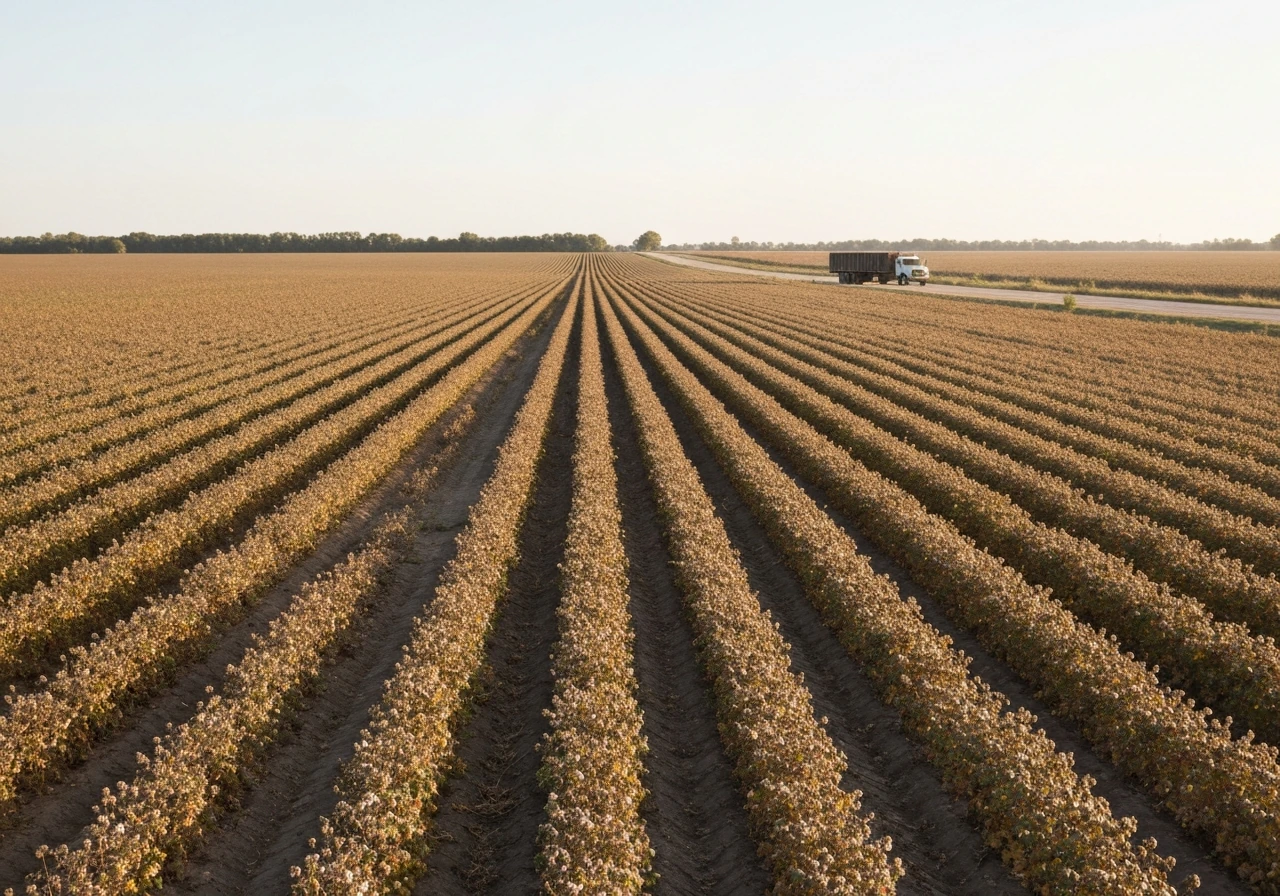
Why Commercial Crops Were More Profitable Than Subsistence Farming
Commercial crops often paid more due to market demand, better yields, scale, lower unit costs, storage and infrastructur
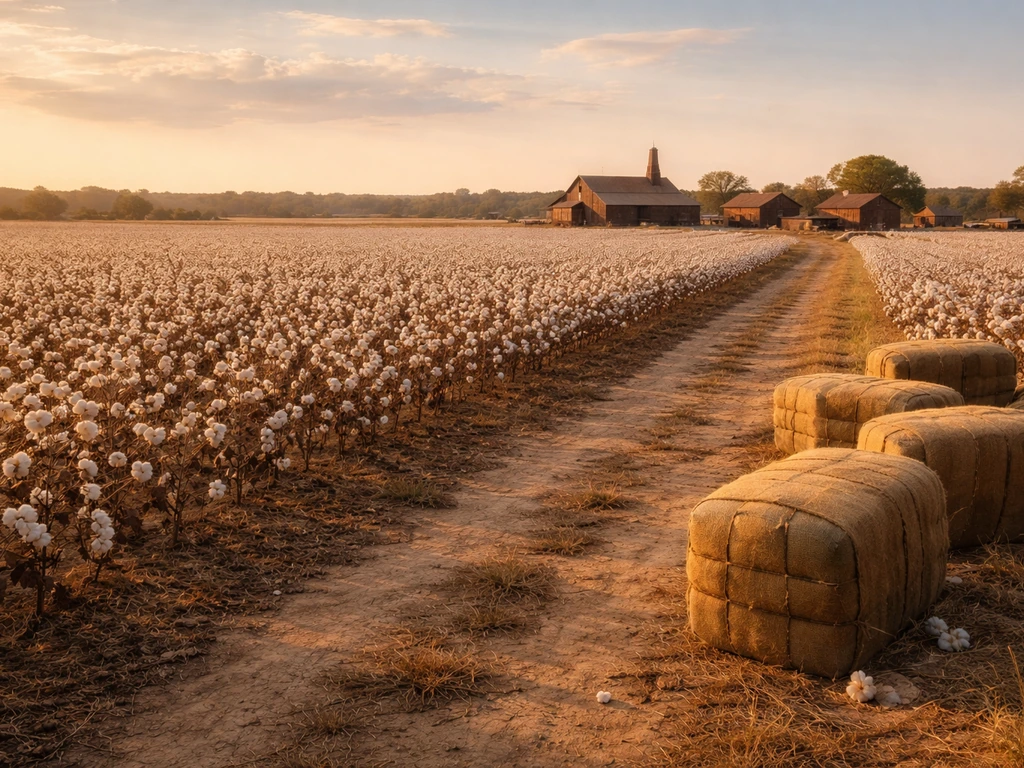
Why Texas Planters Grew Wealthy in the 1850s
Why Texas planters got rich in the 1850s: cotton boom, land and labor systems, financing, markets, and evidence sources.
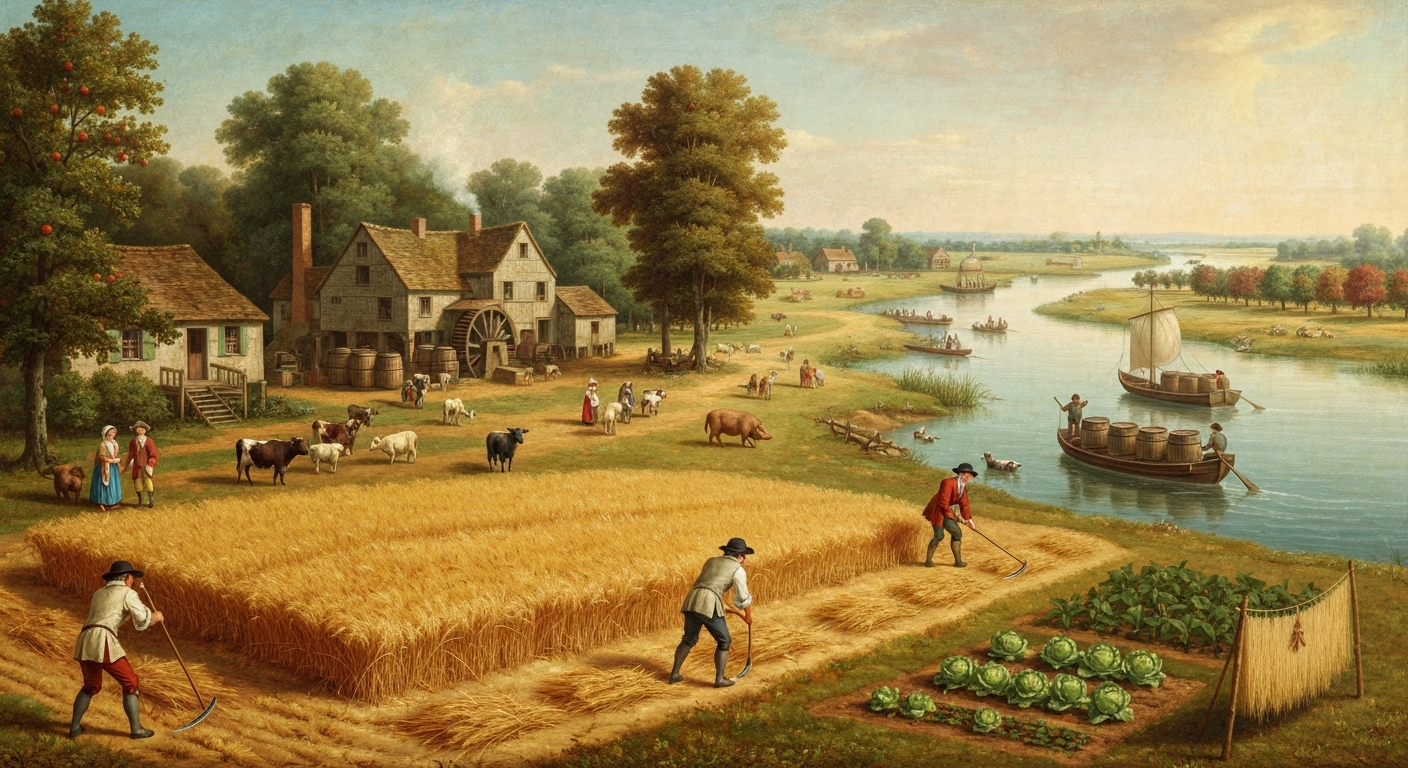
What Did the Delaware Colony Grow: Crops, Uses & Legacy
Colonial Delaware’s main crops, grains, hay, flax, fruits, vegetables, livestock, why they thrived and how they were sold.