The Plymouth Colony Pilgrims grew maize (Indian corn) as their most important crop, alongside beans, pumpkins, barley, oats, rye, wheat, and peas. Maize quickly became the backbone of their food supply after Wampanoag teaching, while the English grains they brought from home had mixed results in New England's rocky, acidic soils and short growing seasons. If you need a quick answer for a school project or research question, that list covers the core of what Plymouth settlers actually put in the ground.
What Crops Did the Pilgrims Grow in Plymouth Colony

Samuel Rourke
5 May 2026
The core crops at a glance
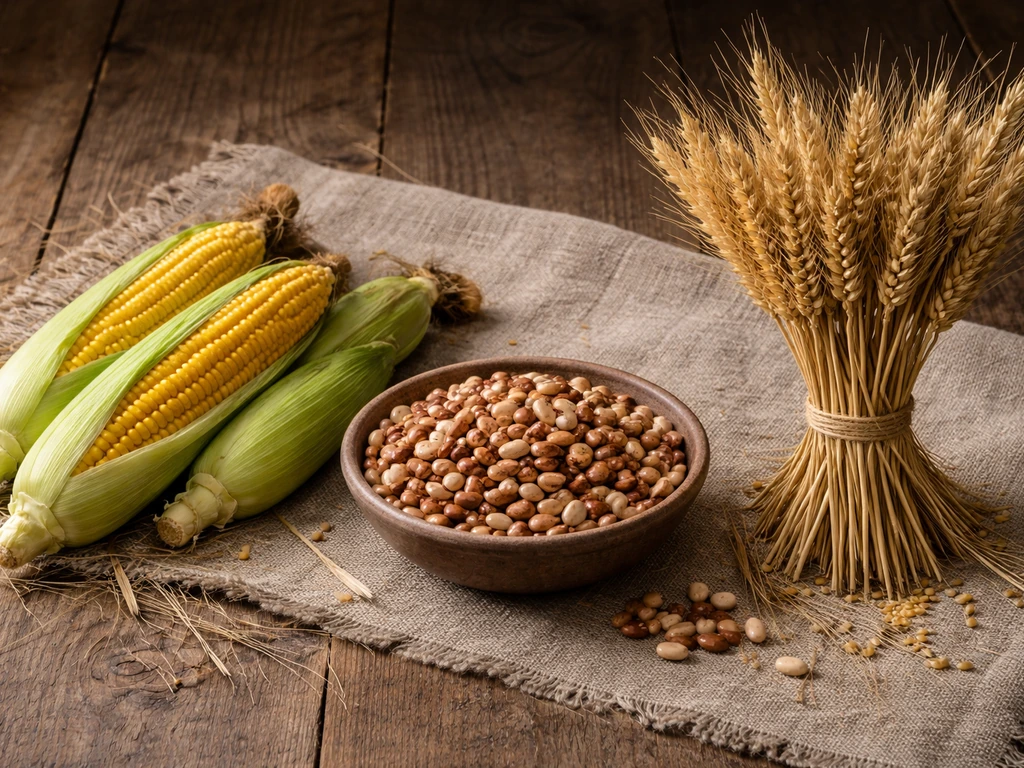
| Crop | Origin | How it performed at Plymouth |
|---|---|---|
| Maize (Indian corn) | Native American / Wampanoag | Excellent — became the primary staple |
| Beans | Native American / also English | Good — grew well alongside corn |
| Pumpkins / gourds | Native American | Good — reliable warm-season crop |
| Barley | English | Reasonable after early failures; useful for beer and bread |
| Oats | English | Reasonably good in New England conditions |
| Rye | English | Good — more cold and acid-soil tolerant than wheat |
| Wheat | English | Inconsistent — results debated through the early decades |
| Peas | English | Poor early results; did not establish well initially |
What they brought from England: the original field plan
The Pilgrims arrived in late 1620 with the agricultural knowledge and seed stock of English yeoman farmers. Their mental model was a northern European grain farm: fields of wheat and barley for bread and ale, peas and oats for livestock and supplemental food, and a kitchen garden of familiar vegetables and herbs. This was the same basic template that Anglo-Saxon and medieval English farmers had been using for centuries, and it's worth knowing that context because it explains why the colonists didn't arrive as blank slates. They had a plan.
That plan ran into trouble almost immediately. In 17th-century English usage, 'corn' was a catch-all term for grains, including wheat, rye, barley, peas, and oats. Colonial letters and records use 'corn' in this broad sense, which can make primary sources confusing to read today. When early Plymouth accounts talk about their 'corn' failing, they often mean English grain crops, not maize. Keeping this vocabulary distinction in mind is essential if you're reading original documents.
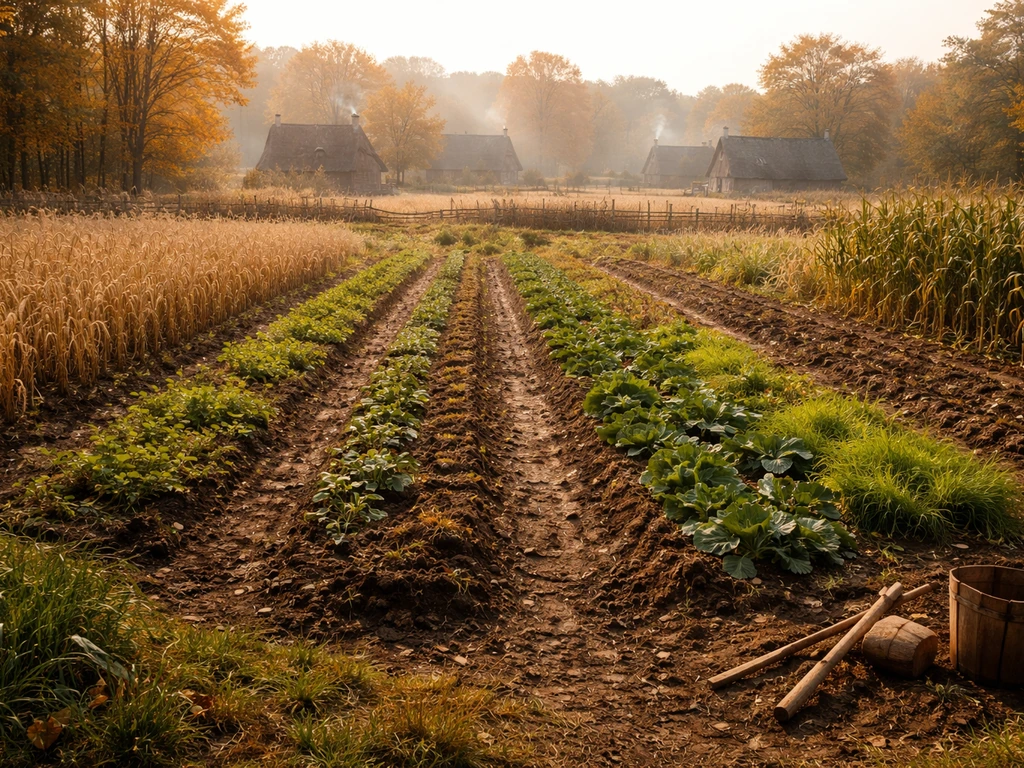
The seasonal field plan they would have known called for autumn planting of winter wheat and rye, and spring planting of barley, oats, and peas once ground thawed. Harvest ran from late summer into fall. They would have expected to rotate fields or leave some fallow, and to maintain a small kitchen garden close to the house for herbs, root vegetables, and greens. That's the English template they arrived with.
What actually changed in New England
New England's soils around Plymouth are characteristically thin, stony, and on the acidic side. That's a significant departure from the heavier, more fertile soils of lowland England. The climate brought cold winters, a compressed growing season, and spring frosts that could arrive late. These changes also explain what crops did pioneers grow in the Plymouth region as they adapted to local conditions What actually changed in New England. Peas, which need cool but not harsh conditions and decent soil fertility, fared poorly in early attempts. Barley also struggled at first. Historical accounts from the Colonial Society of Massachusetts confirm this directly: early peas and barley 'neither of which did well' in the first years at Plymouth.
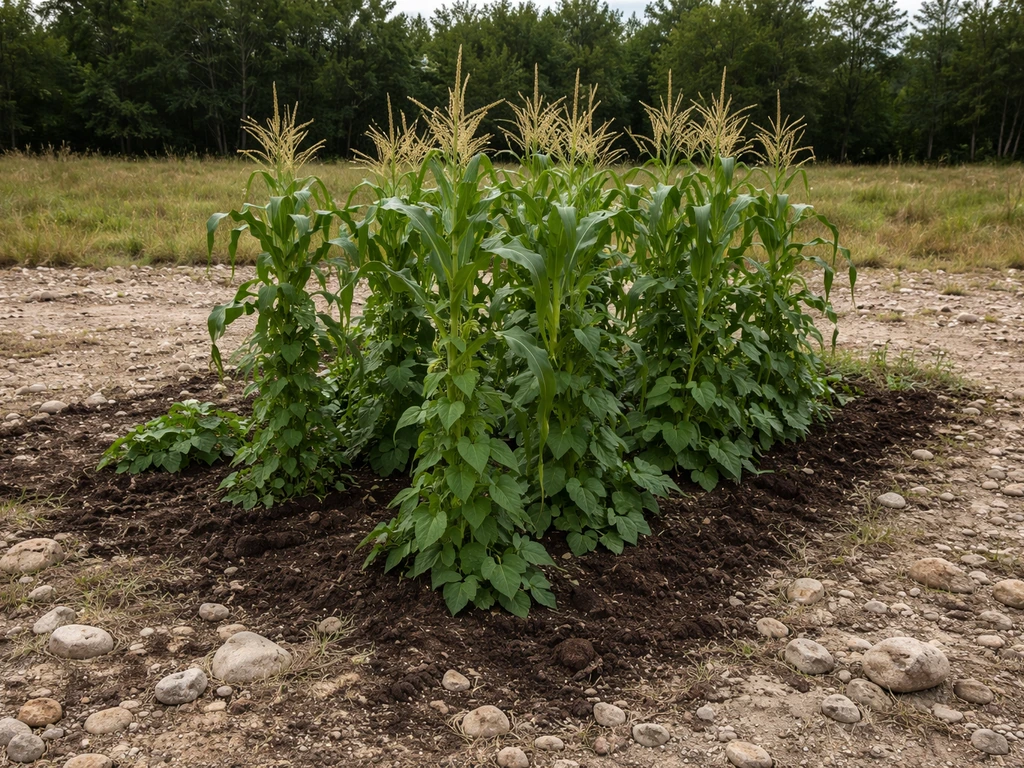
What saved the colony was maize. Squanto (Tisquantum) and other Wampanoag people shared knowledge of how to plant and tend corn in New England conditions, including the well-known practice of planting fish alongside the seed as fertilizer to compensate for poor soil. Maize is a high-yield, adaptable crop that thrives in the warm summers of coastal Massachusetts even when soils are lean. Beans and pumpkins planted in the same hills (the 'Three Sisters' method, though the Pilgrims likely adopted only parts of this system) helped shade weeds and added food variety.
By the end of the first decade of Plymouth Colony, the grain picture had stabilized somewhat. Barley, oats, and rye gained ground as workable crops. Rye in particular is notably tolerant of acidic, sandy soils and shorter growing seasons, which made it a better fit for New England than wheat. Wheat remained a complicated crop at Plymouth, with colonists reporting inconsistent results throughout the early period. The colony's bread economy ended up being a blend: corn flour, rye flour, and whatever wheat could be produced, rather than the pure wheat-loaf economy of England.
Where the Pilgrims farmed and why it mattered
Plymouth Colony was established at the site of the former Wampanoag village of Patuxent (now Plymouth, Massachusetts), on the western shore of Cape Cod Bay. The location wasn't chosen at random. The land had already been cleared and partially cultivated by the Wampanoag before epidemic disease had devastated the population. The colonists were essentially settling on pre-cleared agricultural land, which made early farming more feasible than starting in dense forest.
The climate of coastal Plymouth sits in USDA hardiness zones 6b to 7a today, with a last spring frost typically around mid-April and first fall frost in mid-to-late October. That gives a growing season of roughly 150 to 180 days, which is adequate for maize, beans, and squash, but tight for some English grains that want a longer maturation window. The Atlantic coast moderates temperatures somewhat compared to inland Massachusetts, which helped, but winter cold and spring unpredictability were still significant factors shaping what could be grown reliably.
Early Plymouth farming was done in common fields close to the settlement, with individual house lots also holding kitchen gardens. After Governor Bradford's famous reassignment of private plots in 1623, households farmed their own allotments more directly, and productivity improved. The physical terrain, the proximity to the coast, and the quality of available cleared land all shaped which crops got prioritized season by season.
How historians actually know this: the evidence
The evidence for Pilgrim crops comes from several overlapping sources, and it's worth understanding what each one can and can't tell you.
Primary written records

William Bradford's 'Of Plymouth Plantation' is the most important firsthand account. Bradford was governor of Plymouth Colony for most of its early years and recorded crop successes and failures directly. Edward Winslow's 'blank" rel="noopener noreferrer">Mourt's Relation' (1622) and 'Good News from New England' (1624) also contain specific references to planting and harvests. These documents mention maize, barley, peas, and English grain in ways that make the early struggles and adaptations clear. Roman farmers grew a mix of grains like wheat and barley, along with legumes and vegetables, depending on the region Roman farmers grew wheat and barley.
Estate inventories from Plymouth Colony probate records are another rich source, listing stored grain, seed stocks, and farm tools that reveal what colonists were actually growing by mid-century.
A Mayflower Society PDF includes a section listing crops such as barley, beans, peas, and other items from Plymouth, offering a consolidated educational reference for the settlers’ crop mix Estate inventories from Plymouth Colony probate records are another rich source, listing stored grain, seed stocks, and farm tools that reveal what colonists were actually growing.
Archaeological evidence
Archaeological work at Plymouth and surrounding sites has recovered botanical remains including maize cobs, bean seeds, and evidence of ground preparation consistent with the crops described in written records. Plimoth Patuxent Museums' living history program draws on both textual and archaeological research to reconstruct the farm fields visitors see today, which include maize, beans, pumpkins, and English grains planted in historically documented ways.
Secondary scholarship
Historians such as those writing for the Colonial Society of Massachusetts have synthesized the primary records with climate data and regional soil science to build a more complete picture of early New England agriculture. This scholarship confirms the pattern: English grain attempts were difficult and uneven, maize adoption was rapid and critical, and the colony's food supply never settled into a single-crop dependence but rather a mixed grain and vegetable economy.
Narrowing your answer: which Pilgrims and which period?
If you need a more specific answer than the general list above, the timeframe and exact group matter quite a bit. 'The Pilgrims' most commonly refers to the Mayflower passengers who established Plymouth Colony starting in 1620, but the colony grew significantly through the 1620s and 1630s as additional settlers arrived. Crop practices in 1621 looked different from those in 1640, as the colonists got more experienced, expanded cleared land, and imported more seed stock.
- Specify the decade: 1620-1630 farming at Plymouth looks different from 1630-1650. Bradford's 'Of Plymouth Plantation' is your best primary source for the earlier period.
- Check if you mean Plymouth Colony specifically or early New England more broadly. The Massachusetts Bay Colony (Boston area, founded 1630) had somewhat different agricultural conditions and resources.
- Look at probate inventories from Plymouth Colony for the specific year range you care about — these are available through the Mayflower Society and digitized historical archives and give granular data on what individual households were growing and storing.
- For gardening or growing your own 'Pilgrim crops,' consult Plimoth Patuxent Museums' published educational materials, which specify the exact cultivar types used in their historically reconstructed gardens.
- If your research involves a different group of early colonial settlers sometimes loosely called 'Pilgrims,' double-check whether you mean Plymouth (Separatists, 1620) or a later Puritan settlement, since their crop records differ.
The Pilgrims' crop story is really a story about adaptation under pressure: a farming community that arrived with one set of assumptions, ran into hard realities of soil and climate, learned from the Indigenous people already farming that land, and pieced together a mixed agricultural system that kept them alive.
To answer what types of food Anglo-Saxons grew, you can start with grains, legumes, and vegetables that fit their farming calendar and local land conditions what types of food did anglo-saxons grow. That same pattern of testing, failing, and adapting shows up in the histories of pioneer farmers moving west, and in the records of other historical groups facing unfamiliar growing conditions.
If you find the Pilgrim agricultural story interesting, the same questions about crop adaptation are worth exploring for medieval peasant farmers, Viking settlers, and early Roman colonists in northern Europe, all of whom faced similar challenges of transplanting a known farming system into a new and unforgiving landscape. Medieval peasants faced similar growing-condition challenges, so their crop choices can help you see what changed and what stayed consistent over time.
Romans also relied on a mix of grain crops, including wheat and barley, rather than a single crop medieval peasant farmers, Viking settlers, and early Roman colonists. Those Viking settlers also grew a mix of cereals and hardy vegetables suited to their northern climate. But Vikings were also known for growing hardy grains like barley and oats, along with root crops Viking settlers.
FAQ
Did the Plymouth Pilgrims grow wheat, or did they mostly switch to maize?
They did grow wheat, but early results were inconsistent. By practice, their bread economy relied on a blend, mainly maize (corn) flour plus rye flour, with wheat contributing unevenly when conditions and yields allowed.
What does “corn” mean in Plymouth records, and how do I avoid a school-project mistake?
In the 1600s, “corn” could refer broadly to grains such as wheat, rye, barley, oats, and even peas, not only maize. When you read a primary source, treat “corn” as a category unless the source context clearly distinguishes maize (often “Indian corn”).
If peas and barley struggled at first, should I leave them out of my crop list?
You should include them, but with a caveat. Peas and barley were among the early English grain attempts that “didn’t do well” initially, then later improved somewhat as the colony gained experience and adjusted to local conditions.
Which crops were most reliable in Plymouth’s short, frost-prone growing season?
Rye was especially well suited because it tolerates acidic, sandy soils and shorter seasons. Maize also proved dependable in warm summers, while winter wheat and other longer-maturing English grains were more vulnerable to timing and climate variability.
Did Plymouth settlers grow vegetables besides grains, and how were they planted?
Yes. They maintained kitchen gardens near the house for familiar greens, root vegetables, and herbs, and they also planted pumpkins and beans. The article notes beans and pumpkins could be grown together in hills, shading weeds and adding food variety.
Were the crops the same throughout the 1620s and 1630s, or did they change over time?
Crop choices shifted. Early 1620s plantings reflected initial assumptions and limited experience, while later decades saw more workable balances as cleared land expanded, seeds were imported or adapted, and households improved cultivation methods.
How did soil quality affect which crops were prioritized?
Thin, stony, acidic soils made some English grains harder to grow, which helps explain why rye and maize became more important. Peas and barley needed better fertility and conditions than they initially received, so they struggled before practices and expectations caught up.
What’s the easiest way to write a “just the answer” response to the question for an assignment?
Use the core list: maize (Indian corn), beans, pumpkins, barley, oats, rye, wheat, and peas. If you want one extra line for accuracy, mention that English grains had uneven results early, while maize became the backbone after Indigenous knowledge and soil-fertility techniques were applied.
Next Articles
What Crops Did Vikings Grow? Grain and Field Crops Explained
Discover key Viking crops by region: barley, oats, wheat or rye, plus legumes and roots, and why they fit Scandinavia.
What Crops Did the Romans Grow? A Practical Guide
Discover the main crops Romans grew by region and climate, plus how to map them to today’s farms
What Crops Did They Grow? How to Identify Likely Crops
Learn how to answer what crops did they grow using climate, geography, era clues, and evidence based research steps.