
If you searched 'best crops to grow Palia,' you could mean three very different things: the popular online farming game Palia, the real-world town of Palia Kalan in Uttar Pradesh, India, or simply a local climate region where someone has heard the name. Each of those needs a completely different answer, so this guide covers all three with practical, specific recommendations for each.
Best Crops to Grow Palia: Game & Palia Kalan Farming Guide

Samuel Rourke
7 Aug 2026
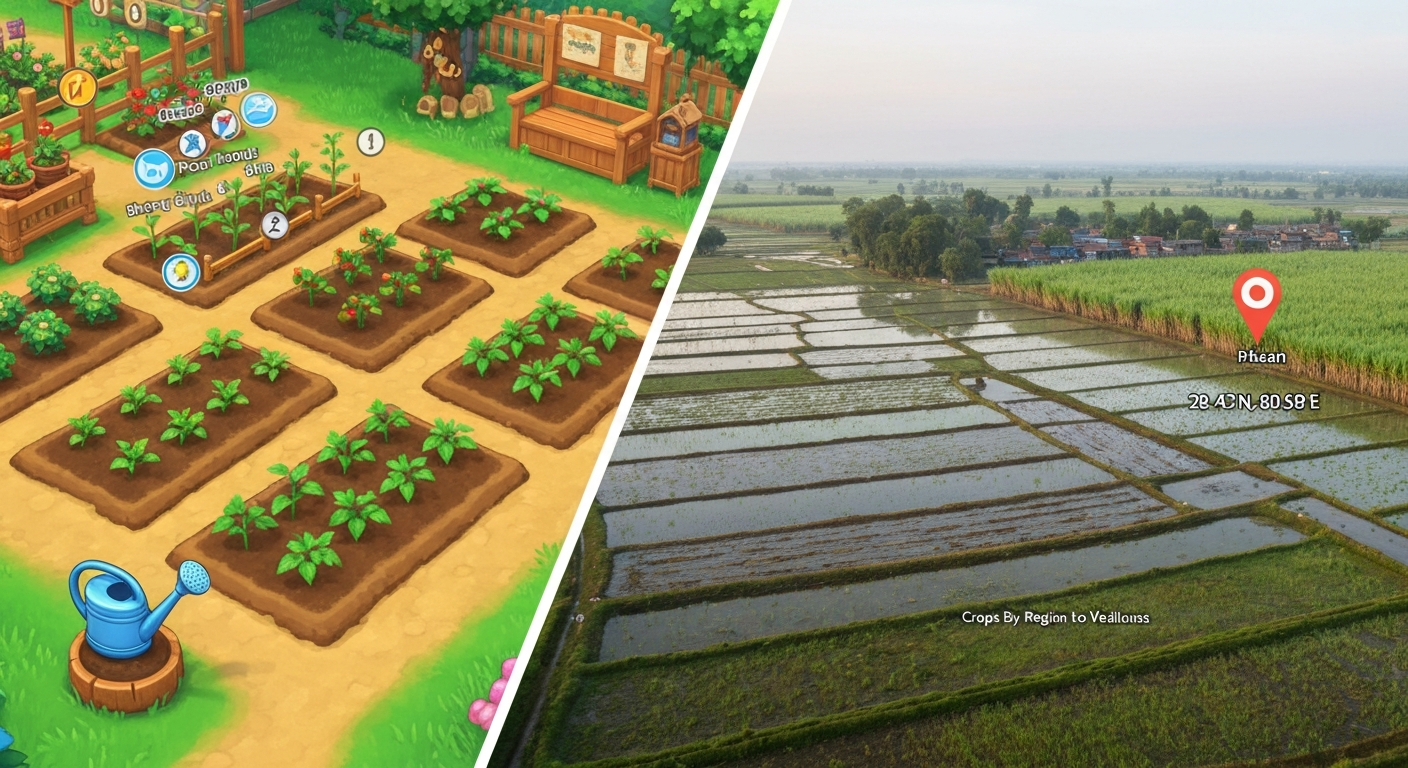
What 'Palia' actually means, getting the intent right
The word Palia shows up in two very distinct contexts. First, there is the video game Palia, a free-to-play online life-sim with a gardening and farming system that players regularly search for crop guides. Second, there is Palia Kalan, a market town in Lakhimpur Kheri district, Uttar Pradesh, India (coordinates 28.43°N, 80.58°E), which sits on the edge of the Terai, a humid subtropical agricultural belt running along the base of the Himalayas. A third, smaller group of users may simply mean a local area or smallholding where the word Palia is used colloquially. This article covers the game and the real-world Indian location in full, and touches on what the Terai climate means for any smallholder in that general geography.
Quick guide, where to go first depending on what you need
Here is a fast orientation so you can jump to the section that matters most to you.
| Your intent | Who this helps | Jump to |
|---|---|---|
| Palia the farming game — crop mechanics | Gamers, new players | Game mechanics and crop overview |
| Palia game — best crops for profit and leveling | Players optimizing coin/hour or XP | Best crop categories and planting checklist |
| Palia Kalan, Uttar Pradesh — real-world farming | Farmers, students, agronomists | Palia Kalan climate and crop recommendations |
| June planting checklist for Palia Kalan / Terai | Smallholders, seasonal planners | June Kharif planting checklist |
How farming works in the Palia game
In Palia the game, gardening is a discrete skill you level independently from other activities. For a comparable guide on crop choices and timing in another survival game, see icarus best crops to grow for practical selection tips. Crops are planted on dedicated farming plots and must be watered each in-game day to advance one growth stage. One Palian day corresponds to roughly one real-world hour, so a crop listed as taking five in-game days will be harvest-ready in about five real hours under normal conditions. That timing is the core mechanic everything else builds on.
Growth stages, base yield, and adjacency buffs are documented per crop on the official Palia Wiki crops page, which is the most reliable source for raw numbers. Adjacent crops can provide harvest-boost and water-retention buffs, which means garden layout genuinely affects how much you harvest and how often you need to log in to water. Getting your layout right is not just theory, it changes the math on coins and XP earned per hour.
Fertilizers also matter. The Worm Farm produces compost outputs (QualityUp and HarvestBoost types) that reduce effective growth time or increase the chance of bonus harvests. The official wiki's fertilizer and Worm Farm pages explain which combinations work best for specific crops. See Gardening - Official Palia Wiki for the official fertilizer and Worm Farm guidance. Separately, the Seed Maker and Preserves Jar run on real-time craft timers, not in-game-day timers, so processing throughput is a separate bottleneck that community spreadsheets track carefully when calculating true profit per hour.
Before committing to a large layout in-game, it is worth using the Palia Garden Planner or the layout generator on Palia Database (Paliapedia) to simulate adjacency buffs across your plot. These tools encode growth times, buff zones, and irrigation interactions, saving you a lot of trial and error.
Best crop categories in Palia, early progress, fast scaling, and profit
Rather than listing every crop with raw numbers (the official wiki does that better than any guide can), it is more useful to understand the three roles crops play in the game, then match your current situation to the right category.
Early-game crops, build gardening XP fast
In the early game, prioritize crops with short growth cycles. Faster turnover means more harvest events, and more harvest events mean more gardening XP. Even if a short-cycle crop pays less per harvest than a longer one, the XP-per-hour math usually favors the faster option at low gardening levels. Focus on filling every plot, watering consistently, and using whatever fertilizer you have available to boost quality.
Mid-game crops, multi-harvest plants for stable coin
Once you have enough plots and a reliable Worm Farm output, shift toward multi-harvest crops that regrow after each pick without needing replanting. Tomatoes are the most cited example in community benchmarking threads, they regrow repeatedly and, with harvest-boost adjacency and fertilizer, produce a strong coin-per-hour rate once the farm is set up. The setup cost in time and resources is higher, but the return is much more passive. Many experienced players run these as semi-AFK farms, logging in just often enough to harvest and water.
Late-game scaling, layout optimization and processing
At higher gardening levels, the biggest gains come from layout efficiency rather than crop choice alone. A well-optimized plot where every crop receives adjacency buffs from neighbors can dramatically outperform a larger, unoptimized farm. Community-tested patterns that maximize harvest-boost adjacency across the entire grid are documented in Reddit's farming community and in the Palia Garden Planner. Pair that with stacked Preserves Jars processing high-value crops and you have the closest thing to a full profit-per-hour system the game supports.
New player planting and leveling checklist for Palia
If you are just starting out, work through these steps in order. They reflect what community testing has consistently shown to be the most efficient early path.
- Unlock your first farming plots as early as possible — gardening XP only accrues when you are actively harvesting crops, so delayed plot access delays leveling.
- Plant the fastest-growing crops available at your current seed tier and water them every real-hour cycle without skipping.
- Build the Worm Farm as soon as it unlocks — compost and fertilizer outputs compound your harvest quality and growth efficiency across every future planting.
- Check the official Palia Wiki crops page for the exact growth time and base yield of each crop you are considering before committing seeds.
- Use the Palia Garden Planner or Palia Database layout tool to place crops so that each plant has at least one buff-providing neighbor — even one adjacency buff per crop adds up across a full grid.
- Once you have multi-harvest crops available (like tomatoes), transition at least half your plots to them and set up Preserves Jars to process surplus harvests into higher-value goods.
- Track your Seed Maker queue separately — seed production is real-time, not in-game-day-based, so a bottleneck in seeds will stall expansion faster than anything else.
- Join or check community spreadsheets on Reddit for current coin-per-hour rankings, which update as the game receives patches and new crop types.
Palia Kalan, Uttar Pradesh, climate, soils, and what shapes crop choices here
Palia Kalan sits at the southern edge of the Terai, the low-lying belt of humid subtropical land that runs along the base of the Himalayas across Uttar Pradesh and into Nepal. The town is the administrative and market hub for Lakhimpur Kheri district, which is the largest district in Uttar Pradesh by area, and it serves as the gateway to Dudhwa National Park. Farming here is shaped almost entirely by the monsoon, the alluvial soils, and the proximity to wetland areas that keep the water table relatively high in low-lying patches.
The climate is humid subtropical (a Terai variant). The monsoon runs from June through September, with the heaviest rainfall in July and August, climatological normals put July around 217 mm and August around 207 mm of monthly rainfall. By October, rainfall drops sharply and the landscape transitions from the waterlogged Kharif season to the drier Rabi season. Winters are mild by North Indian standards: average overnight lows in December and January sit around 9 to 12°C, so hard frost is rare but cold stress for tender crops is possible on the coldest nights. Local station data and climate summaries (Palia Kalan climate, Weather Atlas) show average overnight lows in December–January around 9–12 °C, so hard frost is rare but cold stress for tender crops is possible on the coldest nights Palia Kalan climate — Weather Atlas.
The soils are fine alluvial deposits from the Indo-Gangetic plain, variable in drainage depending on elevation. Low-lying patches can have a high water table through the monsoon, making them excellent for paddy and sugarcane. Better-drained alluvial soils support a wider range of crops. Understanding which micro-zone of the district a particular field sits in, well-drained alluvial upland versus poorly drained lowland, is the most important factor in choosing what to plant and when.
Historically, this district built its agricultural identity around sugarcane and paddy. Sugarcane has been a dominant cash crop across Lakhimpur Kheri for generations, supported by proximity to sugar mills in the region. Paddy (rice) dominates the Kharif season on flooded or poorly drained land. Wheat takes over in the Rabi season. These three crops still form the backbone of the farming calendar for most smallholders in and around Palia Kalan.
Recommended crops for Palia Kalan and similar North Indian Terai zones
The recommendations below are organized by season and soil type, which is how practical cropping decisions get made in this region. Variety selection, irrigation access, and pest management details are included where they make a material difference to outcomes.
Kharif season (June to October), rain-fed and irrigated options
| Crop | Soil suitability | Key variety notes | Approx. duration |
|---|---|---|---|
| Paddy (rice) | Poorly to moderately drained alluvial; flooded fields | Pusa Basmati 1121, Swarna Sub1 for flood-prone patches | 90–150 days depending on variety |
| Sugarcane (ratoon or new planting) | Deep alluvial, well-drained preferred | CoSe 92423, CoSe 01434 common in Terai UP | 10–12 months for plant crop; ratoon shorter |
| Maize (kharif) | Well-drained alluvial, slightly elevated fields | Pioneer 3401, Vivek Hybrid 9 for early sowing | 80–95 days |
| Arhar / Pigeon pea | Well-drained, not waterlogged; moderately fertile | UPAS 120 (early), Asha (medium-duration) | 120–180 days |
| Soybean | Well-drained alluvial, pH 6–7 | JS 335, NRC 37; avoid waterlogged patches | 90–100 days |
| Moong (Green gram) | Light to medium alluvial, good drainage | Samrat, Pusa Vishal; also useful as a short gap crop | 60–70 days |
| Urad (Black gram) | Medium alluvial, moderate drainage | Pant U-31, Azad Urad 1 | 70–80 days |
| Vegetables (okra, brinjal, bitter gourd) | Well-drained alluvial; raised beds on heavier soils | Local selections plus hybrid okra (Arka Anamika) | 45–70 days per flush |
Rabi season (October/November to March), the dry cool-season window
| Crop | Soil suitability | Key variety notes | Approx. duration |
|---|---|---|---|
| Wheat | Deep alluvial, well-drained; pH 6–7.5 | HD 2967, DBW 187, K 0307 for eastern UP/Terai | 110–120 days |
| Mustard / Rapeseed | Light to medium alluvial, good drainage | Pusa Bold, Varuna; sow in October for best yield | 90–110 days |
| Potato | Sandy loam to loam alluvial; avoid heavy clays | Kufri Jyoti, Kufri Sindhuri; early planting (Oct) best in Terai | 70–90 days |
| Pea | Well-drained loam to clay loam | Arkel (early), Matar Ageta (winter) | 60–90 days |
| Lentil (Masoor) | Light to medium alluvial, well-drained | Pant L-406, L-4076 | 100–120 days |
| Gram (Chickpea) | Medium alluvial, well-drained, low moisture stress | Pusa 362, Avrodhi; less common in high-rainfall Terai pockets | 100–110 days |
| Sugarcane (spring planting begins Feb/Mar) | Deep alluvial; pre-irrigated field before planting | CoSe varieties dominant in Lakhimpur Kheri | Planted Feb–Mar, harvested following Oct–Feb |
Crop rotation and what to grow after canola (mustard)
After a mustard or canola crop (which occupies the field from October through February or March), the field typically goes into a summer or early Kharif crop. The best options in the Palia Kalan context are moong (green gram) as a short-duration gap crop that also fixes nitrogen, or a direct transition to paddy or maize once the monsoon arrives in June. Moong after mustard is especially recommended because it improves soil nitrogen levels, suppresses weeds, and its residue can be incorporated before the Kharif main crop. This mirrors broader advice on crop rotation after canola-family crops, where legumes are the standard follow-on choice to restore nitrogen and break pest and disease cycles from the preceding brassica.
A common full-year rotation in this belt looks like: sugarcane (long cycle) or paddy (Kharif, June–October) → wheat (Rabi, November–March) → moong or summer vegetables (April–June). For mustard-based sequences: mustard (October–February) → moong or summer maize (March–June) → paddy (June–October). These rotations balance soil health, market access, and water availability across the year.
June Kharif planting checklist for Palia Kalan and similar Terai zones
June is the pivot month in the Palia Kalan farming calendar. The pre-monsoon heat breaks, the first rains arrive (typically by mid-June in the Terai), and the Kharif planting window opens. Acting on the right crops at the right time in June determines most of the season's outcome. See the guide on best crops to grow in June for targeted, season-specific recommendations. Here is what to do, roughly in order.
- Soil preparation (early June): Deep-plow fields that came out of a Rabi wheat or mustard crop. Incorporate any residue and apply 10–15 tonnes per hectare of farmyard manure or compost before the first rains soften the ground.
- Paddy nursery raising (first week of June): For transplanted paddy, sow nursery beds in the first week of June so seedlings are 25–30 days old and ready for transplanting by early July when water availability peaks. Use flood-tolerant varieties like Swarna Sub1 on low-lying fields prone to waterlogging.
- Direct-seeded paddy or maize (mid-June): On well-drained alluvial fields, direct seed maize (rows 60 cm apart, seed spacing 20–25 cm) or direct-seeded rice as the monsoon establishes. Apply a basal dose of nitrogen, phosphorus, and potassium per state agricultural university recommendations.
- Arhar / pigeon pea sowing (mid-June): Sow arhar in rows 60–75 cm apart on well-drained fields. Do not plant arhar on low-lying patches where water stagnation is likely — waterlogging will kill the crop within 48 hours.
- Soybean and pulse sowing (mid to late June): Sow soybean (rows 45 cm apart) or urad/moong (rows 30–45 cm apart) once soil moisture is adequate after the first good rain. Use seed treatment with rhizobium inoculant to maximize nitrogen fixation.
- Irrigation planning: Even in a monsoon month, early June is often dry before the monsoon arrives. Have a light pre-sowing irrigation ready for fields being sown in the first two weeks of June. Once the monsoon establishes, shift focus to drainage on low fields rather than irrigation.
- Pest and disease scouting: Set up pheromone traps for stem borers in maize and paddy fields. Begin monitoring for blast in nursery paddy (apply fungicide if humidity stays high and temperatures are between 20–30°C for extended periods).
- Weed management: First post-emergence weeding or herbicide application in maize and direct-seeded rice should happen 15–20 days after sowing, before weeds compete for the nitrogen basal dose. Pre-emergence herbicides (pendimethalin) can be applied at sowing on well-prepared seedbeds.
- Sugarcane management (existing crop): June is a critical tillering and early growth period for ratoon or plant sugarcane. Apply the second split dose of nitrogen and ensure furrow irrigation if pre-monsoon dry spells extend beyond two weeks.
- Record and review: Note sowing dates, variety names, and field conditions in a simple log. This data is directly useful for planning the Rabi sequence in October and comparing season-to-season outcomes.
October transition, from Kharif harvest to Rabi planting
October is the transition month in Palia Kalan. Rainfall drops sharply from the July–August peak (from over 200 mm per month down to roughly 30–40 mm or less), paddy harvest begins on early-maturing varieties, and the window to prepare Rabi crops opens. Wheat sowing in this region ideally starts in November, but October is when you finish harvesting Kharif crops, incorporate or remove residue, conduct a soil test if you have not done one recently, and apply pre-sowing irrigation to fields going into wheat, mustard, or potato. For a concise list of what crops grow in October in similar Terai and Rabi-transition zones, see our guide on what crops grow in October. Potato planting itself can start in October in the Terai where frost risk is low enough, giving an advantage over higher-latitude districts where October planting would be too cold.
For anyone tracking crop cycles across seasons and regions more broadly, the pattern here, monsoon Kharif crops followed by dry-cool Rabi crops, with pulses and vegetables filling short windows, is characteristic of the broader Indo-Gangetic plain and echoes agricultural systems studied across North Indian states. The same climate logic that determines what to grow in Palia Kalan in June applies to a wide band of similar Terai and alluvial plain districts across Uttar Pradesh and Bihar.
Soil health, irrigation, and practical management notes
The single most useful action any farmer in the Palia Kalan area can take before the Kharif season is a soil pH and organic carbon test. The alluvial soils in this belt are typically in the pH 6.5 to 7.5 range, which is fine for most crops, but organic carbon is often low after years of intensive paddy-wheat rotations without adequate manure application. Low organic carbon limits water-holding capacity on lighter soils and reduces the efficiency of fertilizer applications. Incorporating green manure (dhaincha or sunn hemp, which can be sown in May–June and incorporated before paddy transplanting) is the most cost-effective way to build organic matter over two to three seasons.
Irrigation access in this district is mixed. Canal irrigation from the Sharda Canal system covers parts of the district, but coverage is uneven and many smallholders rely on tube wells. During the monsoon, drainage is often the bigger challenge than irrigation, particularly on low-lying fields. Investment in shallow field drains or raised-bed planting for vegetable crops pays dividends in years with heavy or erratic monsoon rainfall.
Historical crop context for the Palia Kalan region
The Terai belt around Palia Kalan has been cultivated for centuries, but large-scale settled agriculture expanded significantly in the nineteenth and early twentieth centuries as the land was cleared and canal irrigation developed under British colonial administration. Sugarcane and paddy became dominant not just because the soil and climate suited them, but because sugar mills were established in the district and created a reliable market structure that persists today. The cropping system in Lakhimpur Kheri is, in many ways, a product of that infrastructure as much as it is of the soil and rainfall. Understanding that history helps explain why sugarcane still commands such a large share of cultivated area even when market prices fluctuate, the milling infrastructure and farmer familiarity with the crop create inertia that purely agronomic analysis misses.
Traditional varieties of paddy and pulses were historically diverse in this region, with local landraces selected over generations for tolerance to waterlogging, late monsoon, and specific soil types. Modern high-yielding varieties have largely replaced these, though some farmers in the district maintain traditional aromatic rice types that still fetch premium prices in local and regional markets.
FAQ
What does “best crops to grow Palia” mean — how do I disambiguate intent?
There are two common meanings: 1) the video game Palia — players asking which in‑game crops give the best growth rate, yields, XP or coin/hour; and 2) the real place(s) named Palia (primarily Palia Kalan, Lakhimpur Kheri, Uttar Pradesh, India) — farmers, gardeners or students asking which real crops suit the local climate, soil and seasons. Decide which you mean and read the relevant sections: game mechanics and top in‑game crops, or real‑world crop lists for Terai/alluvial soils and seasonal calendars.
Which crops are best to grow in the Palia game (mechanics and top in‑game choices)?
Key mechanics: crops progress one growth stage per in‑game day (community testing ~1 real hour per Palian day); watering each day advances growth; fertilizers/compost/worm‑farm outputs affect growth time and harvest quality; garden adjacency (buffs) and layout reduce watering and increase harvest. Top practical choices (community‑backed): multi‑harvest vegetables like tomato (repeat harvests), fast short‑cycle crops used for XP/coin spikes, and crops used as inputs to preserves/preserved goods for higher per‑hour value. Use the official Palia Crops and Gardening wiki pages for exact growth times and fertilizer interactions, and community spreadsheets (Reddit/Palia databases) for profit/hour lists and recommended farm layouts.
How should I plan a Palia (game) farm layout to minimize work and maximize yield?
Common community approach: cluster same‑type crops to get adjacency buffs, leave access paths for harvesting/watering, and build layouts that maximize across‑crop harvest boosts while preserving space for seed makers/preserves. Use garden planners (Palia Database / Paliapedia tools) to simulate adjacency and growth times. Run an ‘AFK boosted’ layout if you can only check intermittently: choose crops with longer multi‑harvest windows and place acceleration fertilizers where most impactful.
What fertilizers and worm‑farm products matter in Palia (game) and how do they change growth?
Official wiki documents fertilizer types that reduce growth time or raise quality/harvest chance. Worm‑farm/compost outputs produce QualityUp or HarvestBoost items; apply where growth reduction is most valuable (long cycles or high‑value crops). Community spreadsheets list crop‑specific best fertilizer combos. For exact numbers check the Palia Gardening and Crops wiki pages and in‑game descriptions.
What are the best crops to grow in real‑world Palia Kalan (Terai, Uttar Pradesh) by season and soil?
Terai/alluvial soils in Palia Kalan are fertile with variable drainage. Typical recommendations: - Kharif (monsoon, June–September): paddy (transplanted or direct‑seeded rice), maize, soybean, short‑duration pulses (urd/black gram), pearl millet in drier pockets, and vegetables (okra, brinjal/eggplant, bhindi). - Rabi (post‑monsoon, Oct–Mar): wheat, mustard/canola (rapeseed), gram/chickpea, barley, potato, and vegetables (onion, cabbage). - Short‑season/vegetable rotations: tomato, cucumber, leafy greens where irrigation exists. Choose rice on heavier, poorly drained lowlands and wheat/mustard on raised/drier areas. Adjust choice to local drainage and irrigation availability.
What should I plant in June in Palia Kalan or similar Terai locations (concise checklist)?
June checklist (start of monsoon window): - Prepare puddled beds for rice transplanting or sow direct‑seeded rice as monsoon establishes. - If you grow short‑duration Kharif crops: plant maize, soybean, pigeon pea (if early), and cowpea. - Sow fast‑maturing vegetable transplants (okra, eggplant, hot pepper) after rains begin. - Soil test and top up P and K if needed before heavy rains; adjust basal N for rice/maize. - Ensure seedbeds and irrigation/drainage paths are ready; order inputs (seeds, fertilizers, seedlings) now.
Next Articles
What Crops Grow in October: Regional Harvests & Plantings
What crops grow in October: harvests vs plantings, regional calendars, climate cues, storage & quick tips.
Best Crops to Grow in June: What to Plant Now by Region
Region-by-region June planting guide with best crops, what to sow now, and care tips for frost, heat, pests, and harvest
What Did the Delaware Colony Grow: Crops, Uses & Legacy
Colonial Delaware’s main crops, grains, hay, flax, fruits, vegetables, livestock, why they thrived and how they were sold.