When crops won't grow, the cause almost always falls into one of six categories: bad soil conditions, water problems, wrong temperature or timing, planting mistakes, pest or disease pressure, or simply growing the wrong crop for your climate. Most of the time you can figure out which one it is within a day or two using a few simple tests, and most fixes are straightforward once you know what you're actually dealing with.
Crops Will Not Grow: Diagnose Causes and Fix Steps

Samuel Rourke
9 Jul 2026
Start here: diagnose the problem fast
Before spending money on fertilizer or pesticides, run through this checklist. Each item points to a section below where you can dig deeper.
- Seeds never emerged? Check soil temperature, planting depth, seed viability, and whether a soil crust formed over the bed.
- Seedlings emerged but died quickly? Look for damping-off (rotted stem at the soil line), slugs, or cutworms.
- Plants are stunted or yellowing? Suspect a nutrient deficiency, pH problem, waterlogging, compaction, or salinity.
- Growth stopped after transplanting? Transplant shock, overwatering, and root rot are the most common culprits.
- Patchy germination across the bed or field? Uneven soil moisture, compaction in spots, or variable seed depth.
- Plants look fine but are just slow? Check if the soil temperature matches what the crop actually needs, and tally your growing degree days.
- Everything else looks okay but weeds are taking over? Weed competition at the seedling stage can suppress crops more than most gardeners realize.
Soil problems: pH, nutrients, structure, and salt
pH and nutrient availability
A soil test is the single most useful thing you can do when crops refuse to grow. It costs around $15–30 through your local cooperative extension lab and tells you pH, phosphorus (P), potassium (K), organic matter, and often several micronutrients. Most vegetable crops want a pH between 6. One Reddit thread on raised bed soil amendments also debates whether gypsum alone helps texture versus compost and longer-term soil building, and it mentions contacting a county extension office for guidance Most vegetable crops want a pH between 6.. 0 and 7.0. Outside that range, nutrients lock up in the soil and become unavailable even if they're physically present, which is why plants can look starved even in freshly fertilized ground.
Nitrogen is one nutrient you won't see on a standard soil test because it's too mobile to measure reliably. Extension recommendations for N are instead based on what crop you're growing, what grew there before, and your expected yield. Phosphorus and potassium interpretations are also crop- and lab-specific, so always use the recommendations that come with your specific test results rather than generic charts.
Learning to read nutrient deficiency symptoms saves a lot of guesswork. Nitrogen deficiency shows up as stunted growth with yellowing that starts on the older, lower leaves and moves upward. Iron deficiency looks different: young leaves turn yellow between the veins while the veins themselves stay green. Manganese deficiency and toxicity can look similar, so OSU Extension recommends combining soil pH data with tissue testing to tell them apart. If you spot these patterns, they point directly to what your soil test should confirm.
Compaction and structure
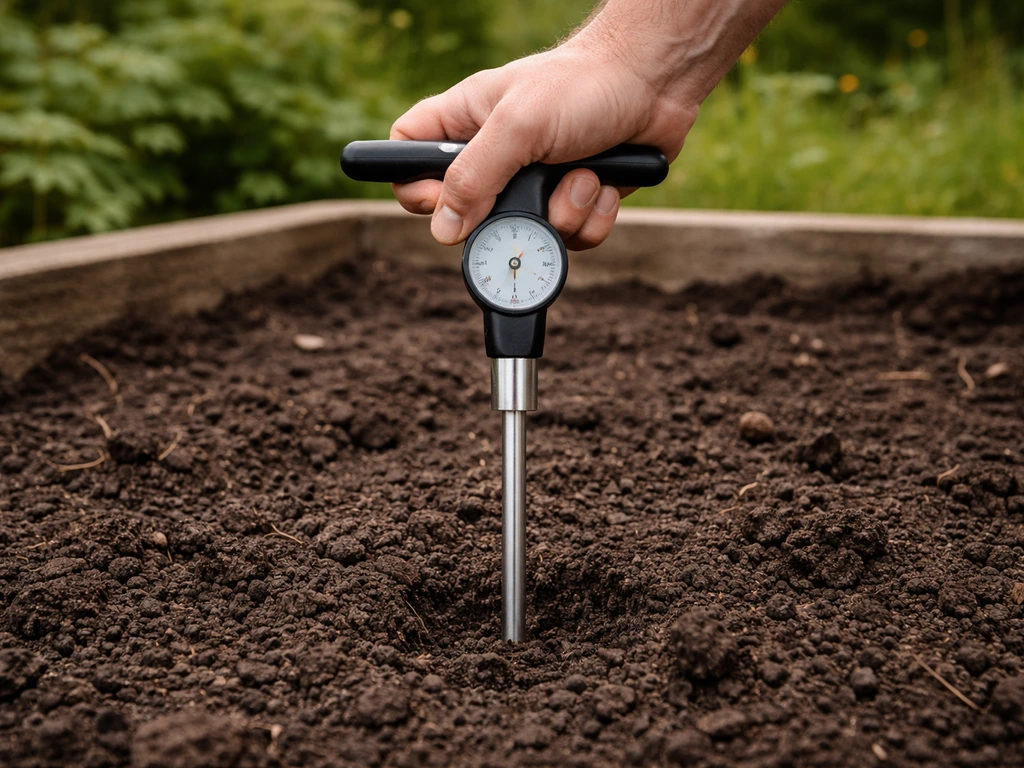
Compacted soil stops roots from penetrating, which cuts off water and nutrient uptake even when the surface looks fine. The best field test is a penetrometer. Push it into the soil at field capacity (not bone dry, since dry soil always reads harder) and note the depth and pressure reading. Resistance above about 300 psi (roughly 2,000 kPa) signals a zone where roots will struggle. For raised beds, the equivalent test is just pushing a pencil or screwdriver into moist soil: it should slide in easily to 6 inches or more.
A sneaky form of compaction called sidewall compaction forms when planters run in wet soil conditions. The seed furrow walls get smeared into a glazed, hard surface that restricts early root growth even after the plant germinates. Nebraska and Purdue Extension both note that using spiked closing wheels and adjusting planter downforce can break this up. For garden beds, blank" rel="noopener noreferrer">avoid working or walking on wet soil, and add compost or cover crops over time to improve structure from the top down.
Soil surface crusting is another overlooked barrier. A crust as thin as half an inch can seal the surface tightly enough that seedlings exhaust their stored energy pushing against it and never emerge. If you see seedlings arched just below the surface, or a hard layer you can scrape off with your finger, that's your problem. A light cultivation, a thin mulch layer, or even gentle overhead irrigation to soften the crust can fix it.
Salinity
If you're in an arid region, using recycled or well water with high mineral content, or have been fertilizing heavily for years, salinity could be limiting germination and growth. Soil salinity is measured as electrical conductivity (EC) in deciSiemens per meter (dS/m). Colorado State University Extension places the general threshold for saline soils at 4.0 dS/m, but many sensitive crops like beans, strawberries, and carrots can show reduced germination and yield at EC levels of 2–4 dS/m. A soil test that includes EC is the way to confirm this. The fix is leaching: applying enough water to push salts below the root zone, then addressing the source (irrigation water quality, over-fertilization, or poor drainage) so they don't accumulate again.
Water, drainage, and irrigation
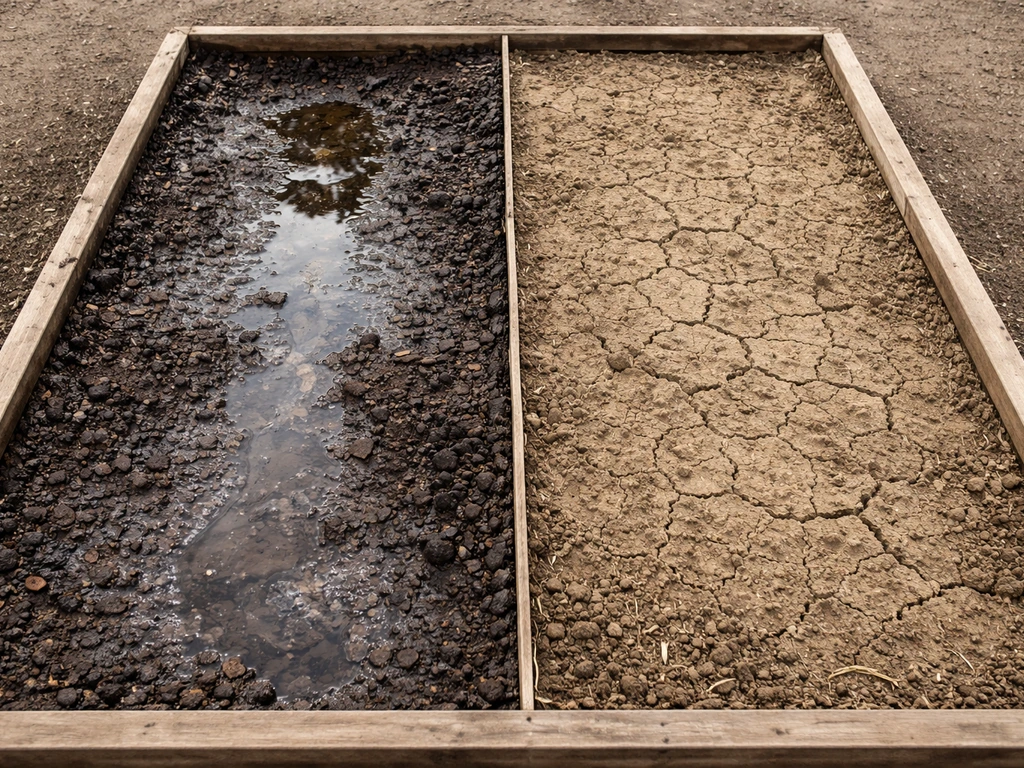
Both too much and too little water can stop crops from growing, and they sometimes look the same from above. Wilting in the morning is usually drought. Wilting that persists even after watering, combined with yellowing older leaves, often means roots are waterlogged and suffocating. Dig down 6 inches: if the soil is soggy or has a gray or bluish color (a sign of oxygen-depleted conditions), drainage is your problem.
For irrigation scheduling, UF/IFAS recommends combining crop water requirement estimates with actual soil moisture monitoring using sensors or tensiometers rather than guessing from surface appearance. Penn State Extension makes a practical point that's easy to forget: if it rains, reduce your next irrigation run accordingly. Drip systems in particular are easy to over-run because you can't see the water pooling underground.
Drainage fixes range from simple to involved. Raised beds are the easiest solution for garden-scale problems. For field crops, tile drainage or breaking up a hardpan layer below the root zone may be needed. Cover crops with deep taproots (like daikon radish or tillage radish) can help break up compacted layers over time without heavy machinery.
Temperature, light, and season timing
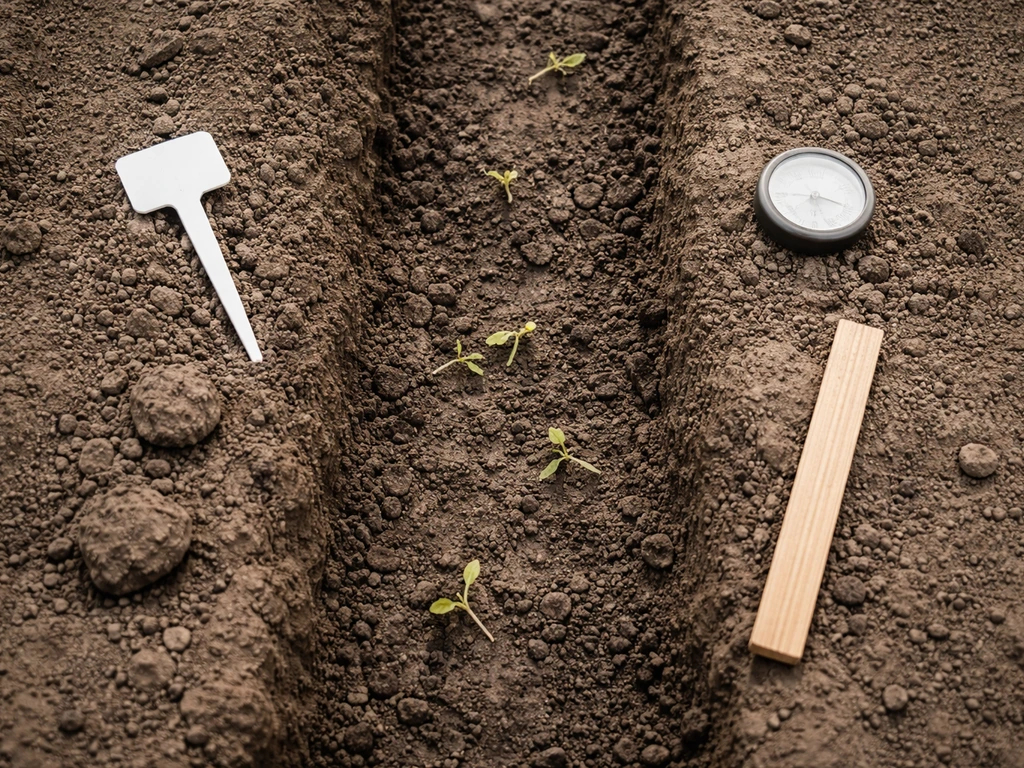
Planting before the soil is warm enough is one of the most common reasons crops fail to germinate. Warm-season crops like beans, tomatoes, squash, and sweet corn need soil temperatures of at least 60°F for reliable germination and early growth. Many gardeners go by calendar date instead of soil temperature and end up with seeds that rot in the ground before they sprout. A cheap soil thermometer (about $10) tells you what you actually need to know.
Oregon State University Extension publishes a reference table of soil temperature ranges for vegetable seed germination that's worth bookmarking. Cool-season crops like spinach, peas, and lettuce can germinate in soil as cold as 35–40°F, while basil and sweet potatoes want 65°F or above. If your soil is too cold, options include black plastic mulch to warm the bed, starting seeds indoors and transplanting, or simply waiting.
For tracking crop progress once plants are established, growing degree days (GDD) give you a much more accurate picture than days-after-planting. GDD accumulates the daily average temperature minus a crop-specific base temperature. Corn uses a base of 50°F; many small grains use 32°F or 40°F. NOAA's Climate Prediction Center provides GDD calculation tools online. If your GDD accumulation is behind the expected value for your crop stage, slow growth is normal and expected, not a sign something is wrong.
Don't overlook light. Most food crops need 6–8 hours of direct sun daily. Partial shade from trees, buildings, or even tall companion plants can dramatically reduce yields or prevent heading in crops like garlic and onions. If you've ruled out soil and water issues and the plants are just weak and pale, track the actual sun hours hitting the bed on a clear day.
Seed and planting problems
Is your seed still alive?
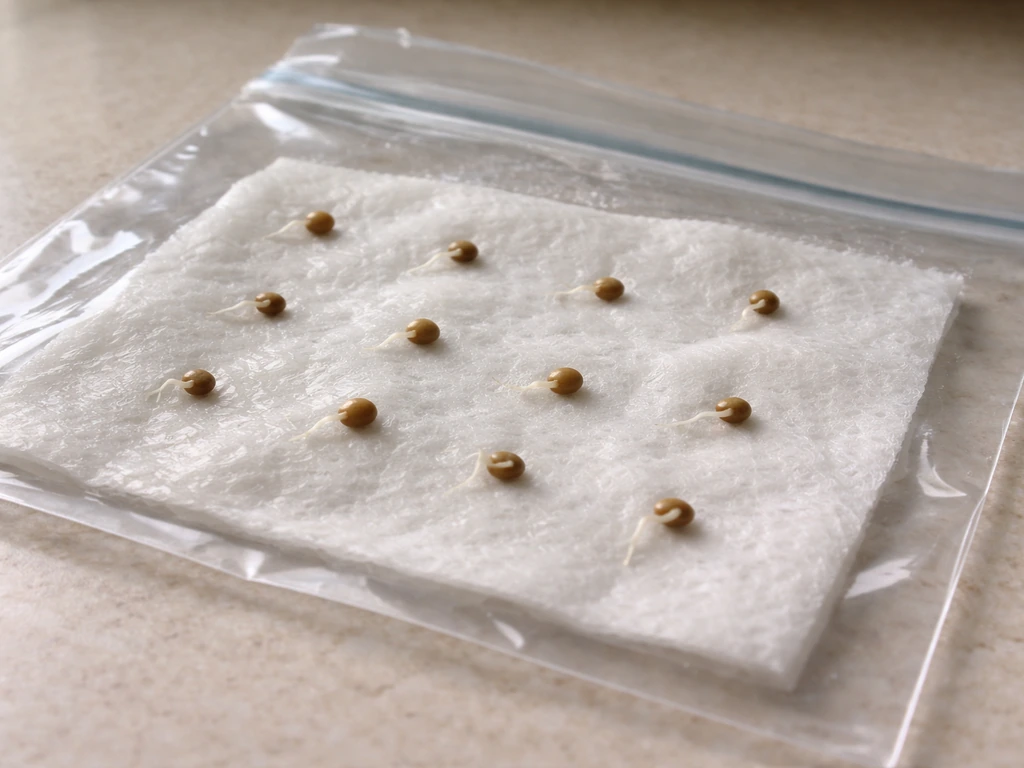
Old or poorly stored seed is a very common and easily overlooked cause of failure. University of Alaska Fairbanks Extension describes a simple wet paper towel germination test: dampen a paper towel, lay out 10 seeds, fold it over, seal it in a plastic bag, and keep it at room temperature for the number of days listed on the seed packet. Count how many develop both a visible root and shoot. If fewer than 7 out of 10 germinate (70%), germination rates in the field will be poor. Below 50%, buy fresh seed. Seed viability drops every year the seed is stored, especially if it got warm or damp.
Depth and spacing
Planting too deep is just as damaging as planting too shallow. Small seeds like carrots, lettuce, and basil should be sown at about 1/4 inch depth. Larger seeds like corn, beans, and squash do well at 1–2 inches. Seeds planted too deep run out of stored energy before they reach the surface. Seeds planted too shallow dry out before the root can establish. Spacing matters too: overcrowding increases humidity around seedlings, which promotes the fungal conditions that cause damping-off, and creates root competition that stresses plants from the start.
Transplant handling
Transplants that are planted too deep, too shallow, in overly cold soil, or right before a heat spike often show decline that looks like disease or deficiency. A common Reddit gardening observation is that what people call 'transplant shock' is actually overwatering combined with root rot or nutrient issues. Harden transplants off gradually over 7–10 days before planting out, and avoid transplanting into soil colder than the crop's germination minimum. Water in with plain water at transplant time, and hold off on fertilizing for the first week while roots reestablish.
Pests, disease, and weeds
Damping-off
If seedlings were up and then suddenly collapsed and died with a pinched, water-soaked stem at the soil line, damping-off is the likely cause. It's caused by fungi and oomycetes including Pythium and Rhizoctonia, and it can kill seeds before they even emerge (pre-emergence damping-off) or take out seedlings right after sprouting (post-emergence). Both UC IPM and Penn State Extension emphasize the same set of controls: improve drainage, don't overwater, plant at the right soil temperature, use correct depth and spacing to reduce humidity around seedlings, and consider fungicide seed treatments in high-risk situations. Soil temperatures above 25°C (77°F) after emergence can increase Pythium risk. Soil solarization before planting can reduce pathogen loads in garden beds.
Slugs and cutworms
Slugs do the most damage under cool, wet conditions and are especially bad when seed slots remain open after planting, creating a sheltered, moist tunnel they use as a path straight to seedlings. Penn State Extension specifically calls this out as a high-risk scenario. Cutworms, on the other hand, clip stems of newly emerged seedlings at or just below the soil line, usually at night. UC IPM recommends scouting by checking for multiple wilted plants with cut stems in a row. Remove weeds and mow close to field edges before planting in spring, since cutworm moths lay eggs in tall vegetation in fall.
Weed competition
Weeds at the seedling stage are a more serious problem than most people think. UC IPM notes that dense weed pressure around lettuce seedlings reduces vigor and uniformity and makes thinning much harder. The recommended approach is a stale seedbed: irrigate before planting to trigger weed germination, then cultivate shallowly to kill those seedlings before sowing your crop. Mulching after emergence also suppresses later flushes. With transplants, get them in the ground large enough to compete, and don't let weeds establish in the first two to three weeks after planting.
Matching crops to your region and climate
Sometimes crops won't grow not because anything went wrong, but because the crop and the environment are a fundamental mismatch. This is where thinking about what historically grew in your region, and what climate zone you're actually in, pays off more than any fertilizer or irrigation adjustment. In Mexico, many regions can support a wide range of traditional crops, so it's helpful to start with a local foods list for your specific climate what foods grow in Mexico.
The USDA Plant Hardiness Zone Map (updated in 2023) lets you look up your exact zone by ZIP code. It reflects average annual extreme minimum temperatures and is the standard reference for perennial plant suitability. For annual vegetables, your frost dates matter more: find your last spring frost and first fall frost, then count the days between them. In parts of Mexico, the mix of heat, seasonal rainfall, and regional frost-free or cool highland conditions can make choosing the right frost dates and crop varieties especially important why is it hard to grow crops in mexico. That's your growing window, and any crop whose days-to-maturity exceeds it won't reach harvest before frost kills it.
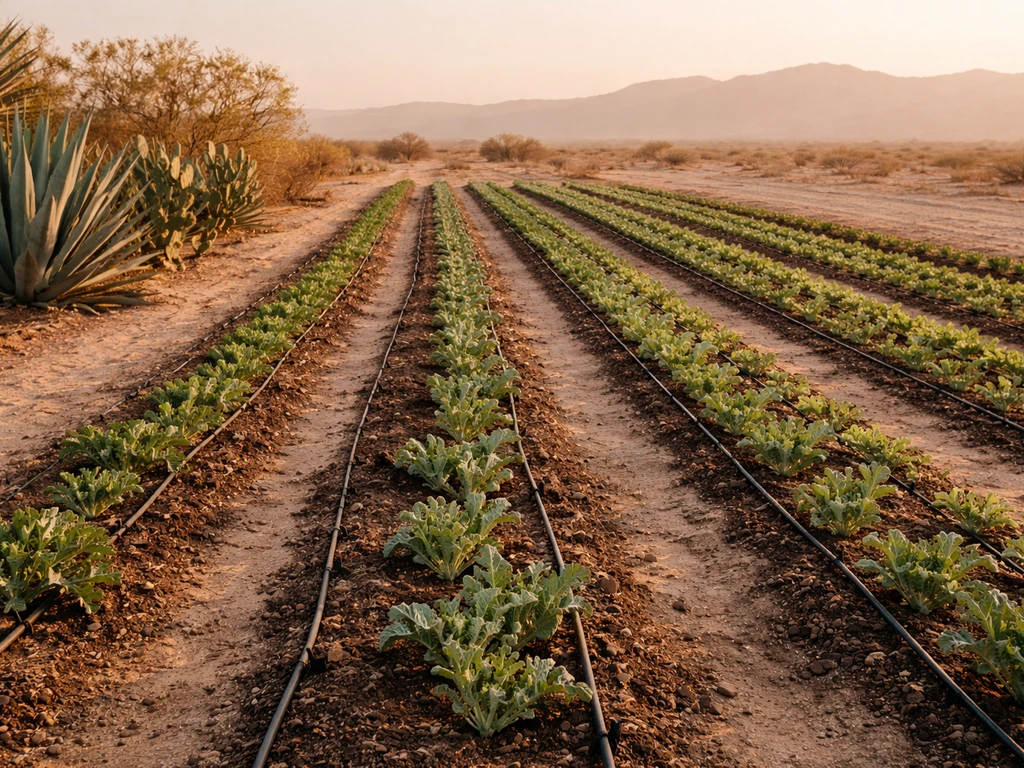
This is a real constraint in challenging environments. Growing crops in desert climates, for example, involves a completely different set of crop choices and timing strategies than temperate zones. Desert agriculture historically centered on heat-tolerant staples like sorghum, millet, figs, dates, and drought-adapted legumes precisely because they match what the environment can actually sustain. Trying to grow water-hungry crops like cucumbers or melons in low-water, high-heat environments without reliable irrigation is a setup for failure regardless of how good your soil is. The same logic applies in reverse for trying to grow warmth-demanding crops in short-season northern climates.
The table below gives a quick overview of how climate zone characteristics map to realistic crop choices, which can help you decide whether to adjust your growing practices or adjust your crop list. In desert regions, heat, intense sunlight, and limited water often combine to make the conditions much harder for crops to establish why is it difficult to grow crops in the desert.
| Climate/region type | Common limiting factor | Historically adapted crops | Modern practical alternatives |
|---|---|---|---|
| Arid/desert (low rainfall, high heat) | Water availability, salinity, extreme heat | Dates, sorghum, millet, drought-tolerant legumes | Drip-irrigated melons, okra, heat-tolerant tomato varieties |
| Short-season northern/mountain | Frost, cool soil temperatures, short GDD | Rye, oats, cold-hardy brassicas, root vegetables | Fast-maturing varieties, cold frames, row covers |
| Humid subtropical (hot summers, mild winters) | Disease pressure, humidity, summer heat stress | Cotton, sweet potatoes, peanuts, collards | Heat-tolerant greens, fall/winter vegetable gardening |
| Temperate continental (cold winters, hot summers) | Late spring frost, periodic drought | Corn, wheat, soybeans, sunflowers | Wide variety of summer annuals with good frost-date planning |
| Tropical/equatorial | Year-round heat, seasonal rainfall variation | Cassava, yams, plantains, rice | Most warm-season vegetables grown year-round with water management |
Historical agriculture is a surprisingly practical guide here. Civilizations and farming cultures figured out, through centuries of trial and error, which crops survive and thrive in their specific conditions. The crops that dominated ancient Mesoamerican agriculture, the crops that persisted in North African drylands, the grains that built northern European farming systems: they all reflect the actual limits and opportunities of those environments. If you are wondering where crops can grow in the Sahara, the realistic answer is limited to areas with reliable water, such as oases and irrigated river or groundwater regions grow crops in the Sahara. If a crop has a long track record in a region similar to yours, that's a strong signal it can work for you too. If a crop has never historically been grown in a climate like yours, there's usually a good reason.
If you've worked through the soil, water, temperature, seed, and pest checks above and everything looks reasonable, take a hard look at whether your crop choice fits your actual window and zone. If you are seeing this kind of slow growth specifically in bedrock or very stony ground, the bedrock itself can be limiting root depth and water holding why do crops grow so slow in bedrock. Switching to a better-adapted variety or a crop that naturally suits your conditions will get you further than trying to force the wrong plant through the wrong climate.
FAQ
Why do my seeds rot or never sprout even though I planted the right seed for the season?
Check soil temperature at planting depth, not air temperature. If you are using mulch or black plastic, wait until the bed has actually warmed, and if nighttime lows dip a lot, cover seedlings temporarily with row cover to prevent cold injury that can look like “no growth.”
How can I tell whether my problem is drainage versus overwatering?
Do a quick “two-step” drainage test: dig a hole, fill it with water, and time how long it takes to drain. Then repeat after a day, if the second fill drains much slower, you likely have a persistent drainage or compaction issue rather than a one-off watering error.
What should I do if my plants wilt but the soil stays wet?
If plants wilt yet the soil looks wet, assume oxygen shortage. Look for gray, bluish, or smell of rotten eggs in the top 6 inches, and avoid further irrigation until it dries enough to reintroduce air, then consider raised beds or improving drainage.
How do I know if the seed itself is the reason crops won’t grow?
Use a germination rate check on a small batch from the same bag lot. Even if the seed packet claims viability, storage conditions vary, and poor lots often show up as weak, uneven emergence that later looks like nutrient or pest problems.
My leaves look yellow. How do I avoid guessing the wrong fertilizer?
Don’t treat nutrient symptoms as a definitive diagnosis by themselves. For example, yellowing can come from nitrogen deficiency, iron-related issues, or root damage, so confirm with pH and (when available) leaf tissue testing before applying targeted amendments.
How do I fix salt buildup without washing fertilizer salts into the wrong place?
For salinity, watch for crusting and poor emergence in spots near the emitter or where water first contacts the soil. When leaching, apply water slowly enough to move salts below the root zone without creating runoff, then reassess EC because repeated light irrigations can fail to push salts down.
I installed soil moisture sensors, but my watering still seems wrong, what’s usually going on?
If using sensors or tensiometers, calibrate and verify placement depth (root zone, not just near-surface). Also account for rainfall adjustments and crop-stage changes, since a system that’s “correct” early can become overwatering later as roots grow deeper.
Why don’t fertilized plants respond, even when the soil test says nutrients are present?
Check that the fertilizer or amendment actually reaches the root zone. In beds with crusting, compaction, or heavy mulch, nutrients can sit in surface layers while roots struggle below, so repeat the basics first (crust, compaction, rooting depth) before escalating fertilizer rates.
How can I tell if bedrock or hardpan is limiting my crops rather than soil fertility or watering?
Hardpan and shallow bedrock can cause uneven growth, especially in dry spells and then after heavy irrigation. Measure rooting depth by removing a plant and inspecting the root length, if most roots stop at a shallow layer, consider breaking the barrier or switching to crops/varieties with better rooting habits.
How do I distinguish damping-off from other reasons seedlings stop growing?
Separate “no emergence” from “growth stalling.” Damping-off shows up as seedlings collapsing at the soil line, while stalling after emergence is more often cold stress, oxygen-limited watering, crusting, or nutrient root uptake problems.
Could lack of sun be the real reason, even if the plants are in a sunny yard?
When seedlings are weak, measure light in a practical way: mark the bed and observe sun hours for several clear days, shade can shift quickly with plant height. If you use taller companion plants or trellises, ensure airflow and that the crop still receives full direct sun during its critical growth phase.
Should I replant right away when nothing seems to be growing?
If you must replant, change one variable at a time: soil temperature, sowing depth, and seed freshness. Repeated sowing into the same wet, cool conditions often doubles disease pressure and makes the stand look like it has “bad soil,” even when it is mainly a timing and moisture problem.
What’s the biggest mistake people make when weeds are competing with seedlings?
For weeds, the goal is competition-free establishment for the first 2 to 3 weeks. In practice, use a stale seedbed and keep after-thinning clean, because dense early weed growth can permanently reduce vigor and uniformity even if you later remove the weeds.
Next Articles
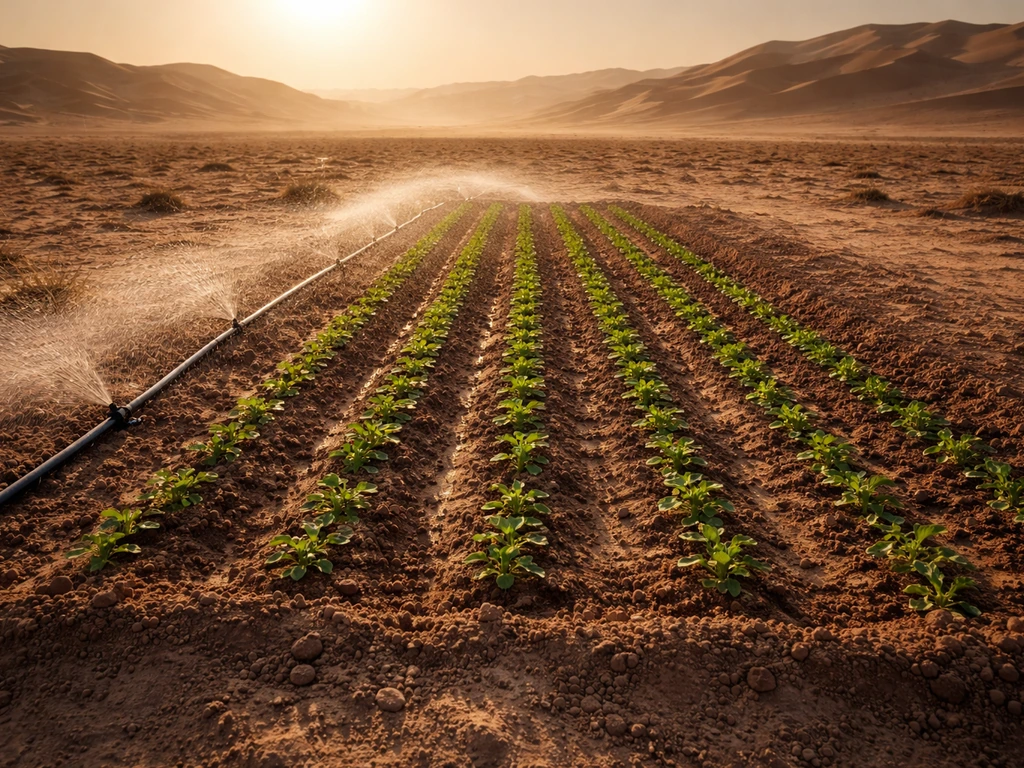
Why It Is Difficult to Grow Crops in the Desert and What to Do
Desert farming fails from scarce water, harsh heat swings, salty nutrient-poor soils, and erosion, plus fix-first steps.
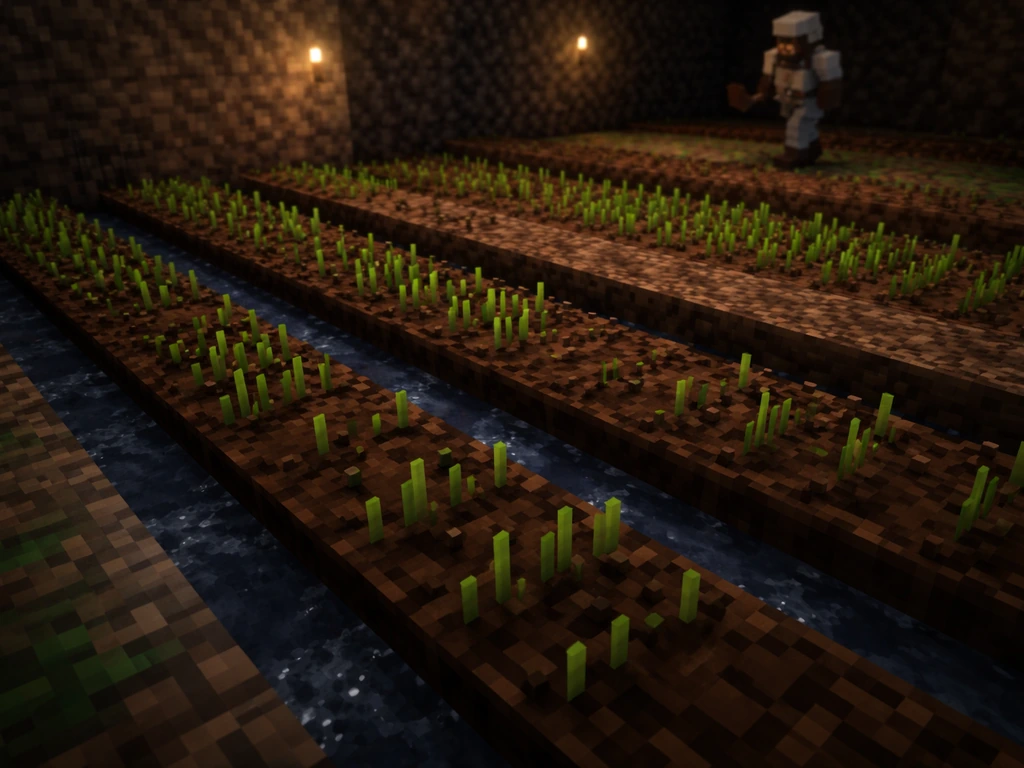
Why Crops Grow So Slow in Bedrock and How to Fix It
Troubleshoot slow crop growth in Minecraft Bedrock with light, hydration, farmland setup, spacing, and a fast checklist
What Crops Grow in the Desert: Planting Guide and List
Curated list of desert-tolerant crops plus traits and step-by-step soil and drip irrigation guidance to grow them.