
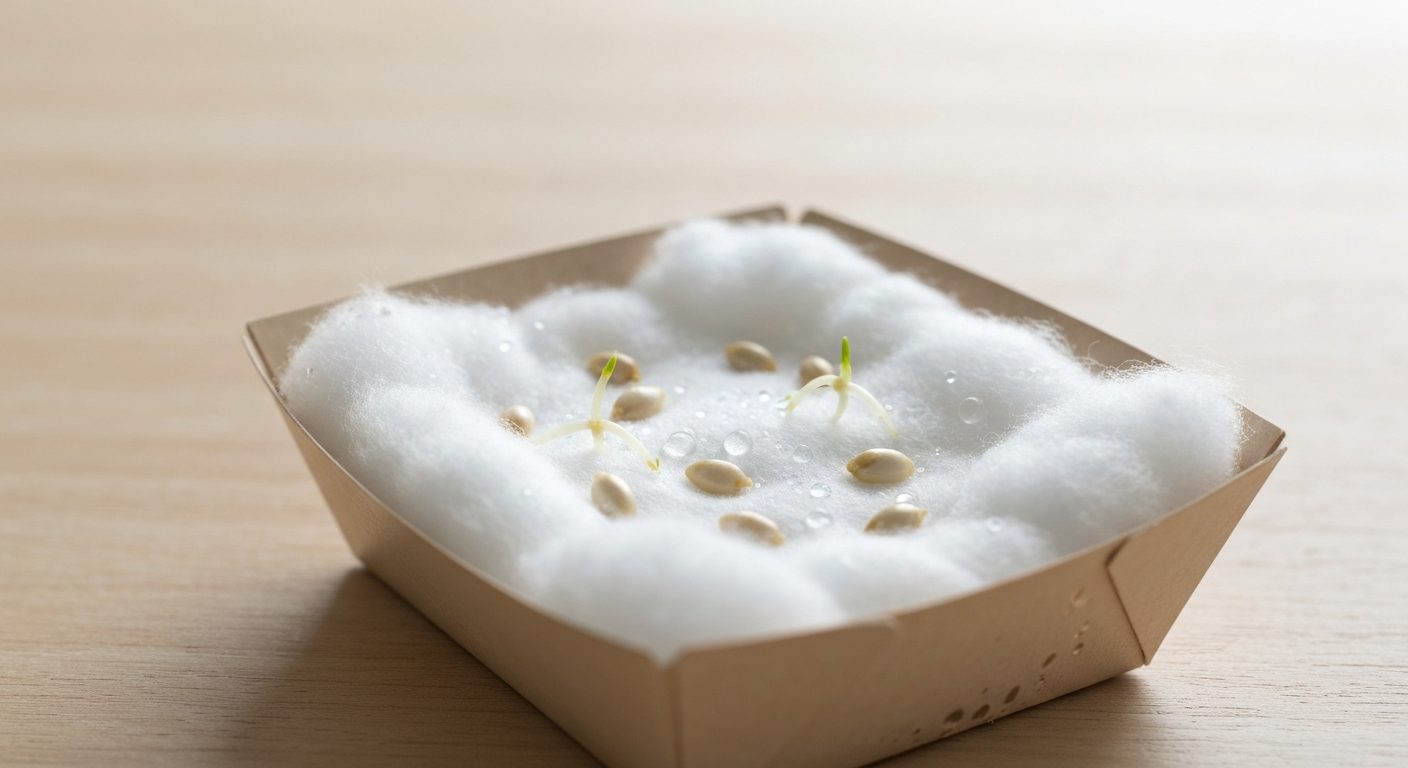
Seeds germinate in cotton wool because cotton fibers are naturally hydrophilic, meaning they absorb and hold water readily, and that retained moisture triggers imbibition, the rapid water uptake that kick-starts germination. Once a seed soaks up enough water, its metabolism reactivates and a radicle (the embryonic root) pushes out. Cotton wool also holds the seed in place, keeps it dark if covered, and allows enough air exchange around loosely packed fibers to supply the oxygen respiring seeds need. The catch is that cotton provides zero nutrients, can compact when wet, and turns moldy fast if over-saturated, so it works as a short-term germination medium, not a growing medium.
Why Do Seeds Grow in Cotton? Simple Science & Experiment

Samuel Rourke
17 Jul 2026
What this article is about and why it matters
This guide covers everything you need to understand and demonstrate seed germination in cotton wool, from the underlying biology to a step-by-step classroom or home protocol. It also clears up a question that trips up a lot of people: what does cotton wool (the processed fiber used in labs and first-aid kits) have to do with the cotton plant (Gossypium) grown as a field crop across the American South, India, and sub-Saharan Africa? The answer is that they share a fiber but operate in completely different agricultural contexts, and that distinction matters both for the science experiment and for understanding crop geography.
Who this guide is for
If you are a student or teacher setting up a seed-germination experiment, this article gives you the science behind why cotton wool works, a tested protocol, and honest guidance on its limits. Gardeners and small-scale growers will find the transplanting and potting-media section useful before moving seedlings into beds or containers. Agricultural historians and geography students will appreciate the section connecting this experiment to the actual cultivation of Gossypium cotton as a regional crop, since that context links a classroom activity to centuries of agricultural trade, climate dependency, and soil selection. By the end you should be able to run a reproducible germination trial, troubleshoot mold and failed germination, choose the right seeds for the job, and explain why cotton wool works biologically.
Why cotton wool supports germination: the biology and the limits
The physical mechanisms
Germination begins with imbibition, a three-phase process of water uptake driven by matric forces and seed-coat permeability. In phase one, water rushes into the dry seed rapidly. Phase two is a metabolic plateau where the seed chemistry reactivates. Phase three is post-germinative uptake as the radicle elongates and growth begins. For any of this to happen the seed must sit in contact with a consistently moist material. Cotton wool is naturally hydrophilic: its cellulosic fibers wick water through capillary action and can hold a volume of moisture several times their dry weight. Research into cotton-fiber porous media confirms rapid capillary impregnation and high saturation volumes compared with hydrophobic synthetics, which is exactly why it outperforms a plastic tray or a dry paper towel. A 2025 experimental and simulation study of capillary impregnation and wettability in cotton fiber porous media reports that cotton fibres are intrinsically hydrophilic and support rapid capillary wicking and high saturation volumes compared with hydrophobic synthetics.
Warmth also plays a role. A loosely placed layer of damp cotton wool over seeds acts as mild insulation, buffering temperature fluctuations. Most vegetable seeds germinate best between 18°C and 25°C (65°F and 77°F), and a covered cotton-wool setup on a warm windowsill can hold that range reasonably well. Federal guidance on minimum germination standards notes that warm germination tests for many vegetable seeds are commonly run at 25°C with a 7–10 day test window, reflecting standard U.S. seed-testing practice (see 7 CFR Part 201) warm germination tests often run at 25°C for 7–10 days.
The critical limits
Cotton wool has three serious weaknesses as a germination medium. First, it contains no nutrients whatsoever. Seeds carry their own energy reserves (endosperm or cotyledon storage) sufficient for germination and the first few days of growth, but once those run out the seedling must reach soil or a nutrient solution. Second, wet cotton fibers swell, and as they do the pore space between fibers shrinks. A tightly packed or over-watered cotton layer becomes waterlogged, cutting off the oxygen supply that germinating seeds need for respiration. Research on fiber swelling in cotton fabrics confirms that permeability drops significantly once the fiber mass is fully saturated. Third, a warm, moist, poorly ventilated cotton layer is an ideal environment for Pythium, Rhizoctonia, and Fusarium, the fungal and oomycete pathogens responsible for damping-off and seed rot. Keeping the cotton moist but not soaking, using untreated cotton, and allowing some air exchange are the primary controls.
One more practical point on cotton type: commercial cotton wool is often scoured and bleached with hydrogen peroxide or other oxidants during processing. For classroom use, choose plain, unbleached, or explicitly food/medical-grade 100% cotton, and check supplier information if chemical residue is a concern, especially when working with young children.
Cotton wool as a germination medium versus cotton as a crop: not the same thing
This is where a lot of confusion starts. Cotton wool is the processed fiber harvested from Gossypium plants, cleaned, carded, and sold in pads or rolls. When you use it to germinate seeds you are using a processed cellulosic material, essentially a soft, absorbent fiber mat. You are not recreating the conditions in which cotton itself grows. For a detailed explanation of how does cotton grow from the ground, see our article on how does cotton grow from the ground. Gossypium species are warm-season perennial crops (grown as annuals in most commercial settings) that need deep, well-drained loam or sandy loam soils, a frost-free growing season of 160 to 200 days, and full sun in USDA hardiness zones 8 through 11. For a focused summary of the crop's requirements, see what cotton needs to grow. The American Cotton Belt, stretching from Texas through Georgia, works because of long hot summers, low frost risk, and specific soil profiles, conditions that have nothing to do with the damp cotton pad on your desk. The fiber in that pad happens to be an ideal short-term germination substrate because of its physical properties, but the plant it came from has strict regional climate and soil requirements that have shaped agricultural geography for centuries.
Seeds that work well in cotton wool and seeds to avoid
The best candidates for cotton-wool germination are fast-germinating, small-to-medium seeds that do not need a long dark dormancy period and are tolerant of slightly variable moisture. For a quick list of suitable species and classroom-ready options, see what seeds grow in cotton wool. Garden cress (Lepidium sativum) is the classic classroom choice: radicles emerge in one to three days at room temperature. Radish germinates in two to five days under warm conditions and produces a visible root quickly. Sunflower seeds germinate in three to seven days and show dramatic growth that appeals to younger students. Broad beans and garden peas germinate in five to ten days and are robust enough to handle, making them popular for longer classroom observation windows. For more details and a quick list of bean varieties suited to this method, see what beans grow in cotton wool.
Poor choices include very small or dust-like seeds (like carrot or many herbs) that slip between fibers and dry out unevenly, and seeds with hard or thick coats that need scarification or stratification before they will germinate reliably, such as many tree seeds. Tomato and pepper seeds can germinate on cotton wool in six to twelve days, but they are temperature-sensitive and more prone to mold in a cool or damp classroom setting, so they are better started in a heated propagator with a seed-starting mix. Maize and large squash seeds are workable but can compress and waterlog the cotton layer under their weight.
Quick reference: germination times and cotton wool suitability
| Seed | Typical germination time | Optimal temperature | Moisture level needed | Suitability in cotton wool |
|---|---|---|---|---|
| Garden cress (Lepidium sativum) | 1–3 days | 15–20°C (59–68°F) | Moist, not wet | Excellent |
| Radish (Raphanus sativus) | 2–5 days | 18–25°C (65–77°F) | Moist, not wet | Excellent |
| Sunflower (Helianthus annuus) | 3–7 days | 20–25°C (68–77°F) | Moist, not wet | Good |
| Garden pea (Pisum sativum) | 5–10 days | 10–18°C (50–65°F) | Moist, not wet | Good |
| Broad bean / runner bean | 5–10 days | 18–25°C (65–77°F) | Moist, not wet | Good (soak seed 12h first) |
| Tomato (Solanum lycopersicum) | 6–12 days | 21–27°C (70–81°F) | Moist, not wet | Fair (mold risk in cool rooms) |
| Maize / corn (Zea mays) | 5–10 days | 21–30°C (70–86°F) | Moist, not wet | Fair (weight can compress cotton) |
| Carrot (Daucus carota) | 10–20 days | 15–22°C (59–72°F) | Consistently moist | Poor (seeds too small, uneven moisture) |
| Pepper (Capsicum annuum) | 7–14 days | 24–30°C (75–86°F) | Moist, not wet | Poor (needs consistent heat, mold risk) |
Step-by-step experiment: germinating seeds in cotton wool
Materials
- Unbleached or food/medical-grade 100% cotton wool pads or rolls
- Clear plastic or glass containers with lids (small takeaway containers work well; the lid retains humidity without sealing airtight)
- Seeds: garden cress or radish recommended for beginners
- Room-temperature tap water or distilled water
- A spray bottle or dropper for controlled watering
- Labels and a permanent marker
- A thermometer (optional but useful for classroom records)
- A ruler for measuring radicle and shoot growth
Setup
- Place a single layer of cotton wool, roughly 1 to 2 cm deep, in the base of each container. Do not pack it tightly; loose fiber allows better air exchange.
- Moisten the cotton wool with water until it is damp throughout but no free water pools at the bottom. A useful benchmark from seed-testing protocols is to target roughly 2 to 2.5 times the dry weight of the cotton in added water. In practice, squeeze a piece gently: a couple of drops should come out, not a stream.
- Place five to ten seeds on the surface of the cotton in a single layer, spacing them so they do not touch each other. For beans or peas, pre-soaking seeds in room-temperature water for 12 hours improves uptake speed.
- Rest the lid loosely on the container (not sealed) to maintain humidity while allowing gas exchange. If using a zip-lock bag, leave it slightly open.
- Label each container with seed type, date, and any experimental variables (e.g., light vs. dark, warm vs. cool).
- Place the container in a warm location at roughly 18–25°C (65–77°F). A windowsill out of direct hot sun or a shelf near a heat source works well. Avoid cold surfaces like stone benches in winter.
- Check moisture daily. Use the spray bottle to re-dampen if the surface feels dry. If condensation is heavy on the lid, briefly ventilate the container for a few minutes.
- Record observations daily: date of radicle emergence, root length, shoot appearance, any discoloration or mold.
Expected timeline
Garden cress should show visible radicles within 24 to 48 hours at 18–20°C. Radish typically follows at day two to three. Beans and peas take five to eight days for reliable radicle emergence. A shoot emerging from the seed is confirmation of successful germination; at that point the seedling is depleting its seed reserves and needs to be moved into soil or a nutrient medium within two to four days. Do not wait until roots have tangled through the cotton layer.
Light or dark?
Most seeds do not need light to germinate; they respond to water and temperature. Covering the container or keeping it in a dim spot during the germination phase is fine. Once shoots appear, the seedling needs light to begin photosynthesis, so move it to a bright location or under a grow lamp as soon as green growth is visible.
Troubleshooting: mold, rot, and failed germination
White or gray fuzzy growth on the cotton or seeds means mold, almost certainly from over-saturation combined with poor ventilation. Discard the affected materials, clean the container with dilute soap and water, and start again with drier cotton and a slightly more open lid. If you see slimy, brown, or collapsed seeds after five or more days, the seed lot may have poor viability, or the seeds may have rotted from excess moisture and pathogen pressure. For classroom settings the CDC recommends discarding porous materials like cotton wool that have been wet and contaminated for more than 24 to 48 hours rather than trying to salvage them.
If germination simply fails after the expected window, check three things: water (is the cotton actually moist?), temperature (is the location consistently warm enough?), and seed age (old seed has lower viability; check the packaged-on or use-by date). For seeds requiring darkness, confirm the container is not in direct bright light during the germination phase. As an alternative medium, plain paper towels or unbleached coffee filters work on the same principle and are the substrate used in formal ISTA-accredited seed tests. They are easier to keep at a precise moisture level and give comparable or better results for most vegetable seeds. Sand or a light seed-starting mix is more appropriate for seeds prone to damping-off.
Moving seedlings out of cotton wool: when and how
Transplant as soon as the primary root is 1 to 3 cm long and a shoot is visible but before roots weave through the cotton fiber. Waiting too long makes removal messy and risks root damage. To extract: gently tease the cotton fibers apart with your fingers or a blunt pencil rather than pulling the seedling. If roots have already anchored into the fiber, carefully tear small sections of cotton away from the root rather than pulling the root free. A little cotton left on the roots will not harm the seedling and breaks down in soil.
Plant into a peat-free seed-starting mix or a general-purpose compost mixed 50:50 with perlite for drainage. Place the seedling at the same depth it sat in the cotton, firm gently, and water lightly. Keep newly transplanted seedlings out of direct sun for 24 to 48 hours while they recover from the transition. Avoid fertilizing immediately: seedling roots fresh from a zero-nutrient medium are sensitive, and a full-strength fertilizer can cause root burn. Wait until the plant has produced its first true leaves.
From lab bench to cotton field: connecting the experiment to real crop geography
The cotton fiber you just used in your germination tray came from a Gossypium plant grown in conditions radically different from a damp classroom container. Commercial cotton cultivation requires a specific combination of climate and soil that confines it to defined global regions. In the United States, the Cotton Belt runs from eastern Texas and Oklahoma through Mississippi, Alabama, and into Georgia and the Carolinas, states with long frost-free seasons (at least 160 to 200 days), summer temperatures regularly exceeding 30°C (86°F), and well-drained, moderately fertile loams. Globally, the leading producers (China, India, the United States, Brazil, and Pakistan) all share the same climate signature: hot summers, adequate moisture during boll development, and a dry harvest period.
Cotton is planted in spring once soil temperatures reach at least 15°C (60°F), typically April through May in the American South. It is harvested mechanically in autumn after the bolls open and the fiber dries. The raw fiber is then ginned (separated from the seed), cleaned, carded, and processed into the cotton wool or textile you might buy in a store. That processing chain, from a tropical or subtropical field to a pad used in a northern classroom, is itself a piece of agricultural geography worth exploring alongside the science experiment.
For students and agricultural historians looking at the broader picture, the experiment on your desk is a small window into a crop with deep historical and geographic significance: cotton shaped the economies of the antebellum American South, drove British industrial textile mills, and transformed irrigation patterns across Central Asia. Understanding what the plant actually needs to grow, and why it is tied to specific latitudes and climates, adds a layer of real-world relevance to an otherwise simple biology demonstration.
Cotton wool vs. other germination substrates: a quick comparison
If you are deciding whether to use cotton wool or an alternative, this comparison covers the main options at a practical level. Paper towels and filter-paper blotters are the ISTA-accepted standard substrates for formal seed testing because they provide reliable moisture distribution and predictable gas exchange. For classroom use they are cheaper, easier to source, and just as effective as cotton wool for most seeds. Sand or a seed-starting mix is better for seeds prone to damping-off or for trials that will run longer than a week, because they drain more effectively and support a more natural root environment. Cotton wool has the visual advantage: it is white, the seeds and roots are clearly visible, and it is tactile and easy for children to handle, which makes it a good pedagogical choice even if it is not the most technically precise substrate.
| Substrate | Moisture retention | Gas exchange | Nutrient supply | Mold risk | Best use case |
|---|---|---|---|---|---|
| Cotton wool | High | Moderate (depends on packing) | None | Moderate-High | Short classroom demonstrations, visual observation |
| Paper towel / filter paper | Moderate-High | Good | None | Low-Moderate | Formal seed testing, reliable classroom trials |
| Sand (washed horticultural) | Low-Moderate | Excellent | Minimal | Low | Seeds prone to damping-off, longer trials |
| Seed-starting mix (peat-free) | Moderate | Good | Low (buffered) | Low | Seedlings that will be grown on; direct sowing |
Putting it all together
Seeds grow in cotton wool because the fiber's physical properties, high water retention through capillary action and hydrophilic cellulose, deliver the consistent moisture that triggers imbibition and restarts seed metabolism. The loose fiber structure allows enough oxygen around the seeds to support the respiration that germination requires, at least when the cotton is kept moist rather than soaking wet. Those two factors, water and oxygen, are the biological essentials. The limits are equally clear: no nutrients, real mold risk from over-saturation, and a narrow window before roots become entangled. Use fast-germinating seeds like cress or radish, keep the cotton just damp, ventilate lightly, and transplant promptly. The experiment works reliably when those conditions are met, and it connects in a surprisingly direct way to the geography and history of the actual cotton crop, a plant whose fiber we use in the lab but whose cultivation spans continents and centuries.
FAQ
Why do seeds germinate when placed in cotton wool?
Seeds germinate in cotton wool because cotton provides rapid water uptake (imbibition) through capillary wicking and high water‑holding capacity. Imbibition rehydrates tissues and restarts metabolism and respiration, allowing the radicle to emerge. Cotton can also retain warmth and, if loosely packed, allow some gas exchange (oxygen) needed for respiration. However cotton supplies no nutrients and can become poorly aerated when saturated, which limits longer‑term growth.
What are the physical and biological mechanisms that make cotton suitable for germination?
Physical: cotton fibers are hydrophilic and wick water by capillarity, creating a moist microenvironment around seeds. Biochemical/biological: moisture triggers imbibition (three phases: rapid uptake, plateau, post‑germinative uptake), reactivates enzymes, and permits respiration needed for radicle protrusion. Adequate oxygen and moderate temperature are also required; too much standing water or tight packing reduces oxygen and raises disease risk.
What important limits and risks should users know about cotton as a germination medium?
Limits/risks: cotton contains no mineral nutrients for seedling growth; saturated cotton can become poorly aerated, slowing germination and encouraging damping‑off pathogens (Pythium, Rhizoctonia, Fusarium); compacted cotton reduces gas exchange; commercial cotton may have processing residues—use plain 100% cotton or medical/food‑grade if chemical residue is a concern. Remove/transfer seedlings to soil or starter mix once roots and shoots are established.
How does using cotton wool differ from germinating seeds in soil or paper towels?
Compared with soil: cotton lacks nutrients, microbial communities, and physical structure for root anchoring — it is only a temporary germination substrate. Compared with paper towel/blotter: cotton often holds more free water but can reduce permeability when saturated; paper towels are standard in seed testing because they provide defined absorbency and easier aeration. Substrate choice affects moisture dynamics, oxygen availability, and pathogen risk.
Which seeds reliably germinate in cotton wool and which are poor choices?
Good choices (fast, reliable on moist cellulosic substrate): garden cress, radish, bean (mung/pea), sunflower, lettuce (some varieties), and many large vegetable seeds. Poor choices: very small dust seeds that may stick and drown (some orchids), seeds needing cold stratification or light/dark cues that cotton alone won’t provide, and seeds that require a fungal symbiont or scarification (some native wild species). Very oil‑rich or aged seeds may require special conditions.
What materials do I need for a classroom or at‑home cotton germination experiment?
Materials: plain 100% cotton wool or medical/food‑grade cotton pads, clean shallow trays or Petri dishes or clear plastic bags, seeds (fresh and viable), measured water (tap water is fine unless sterilization is required), thermometer or warm location (20–25°C typical for many vegetable seeds), labels, tweezers, and paper towels for cleanup. Optional: a spray bottle to moisten without over‑saturating, magnifier, and small heat mat for consistent warmth.
Next Articles
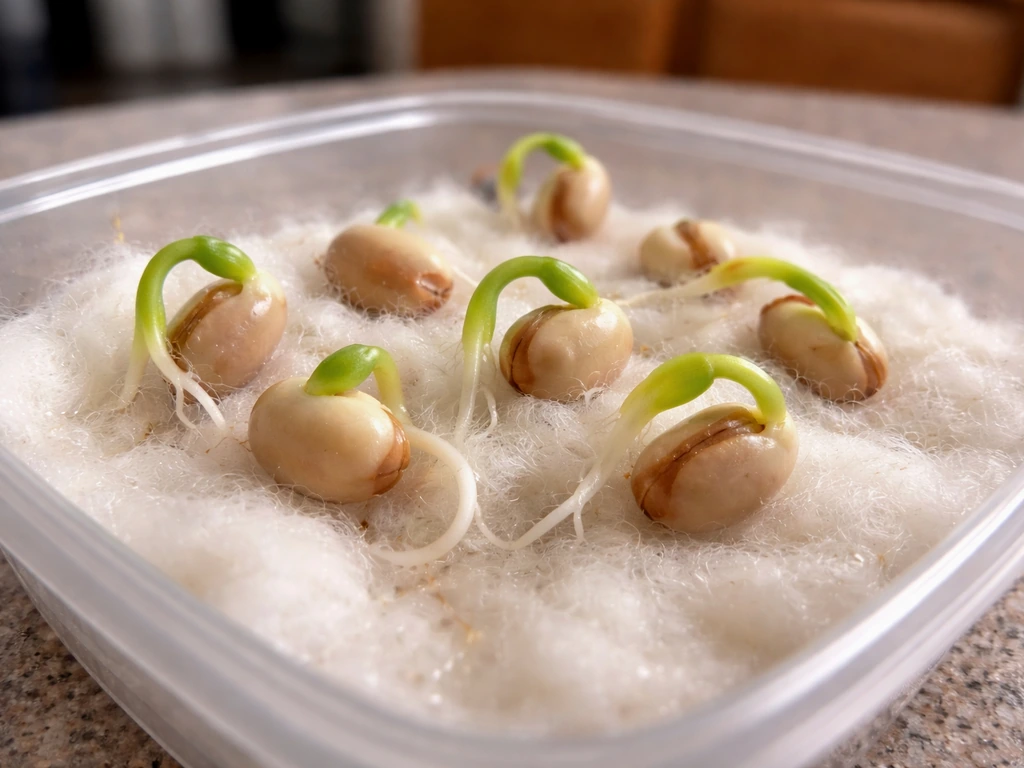
What Beans Grow in Cotton Wool? Easy Indoor Sprouting Guide
Learn what beans sprout in cotton wool, plus step-by-step indoor method, timing, and fixes for mold, drying, and rot.
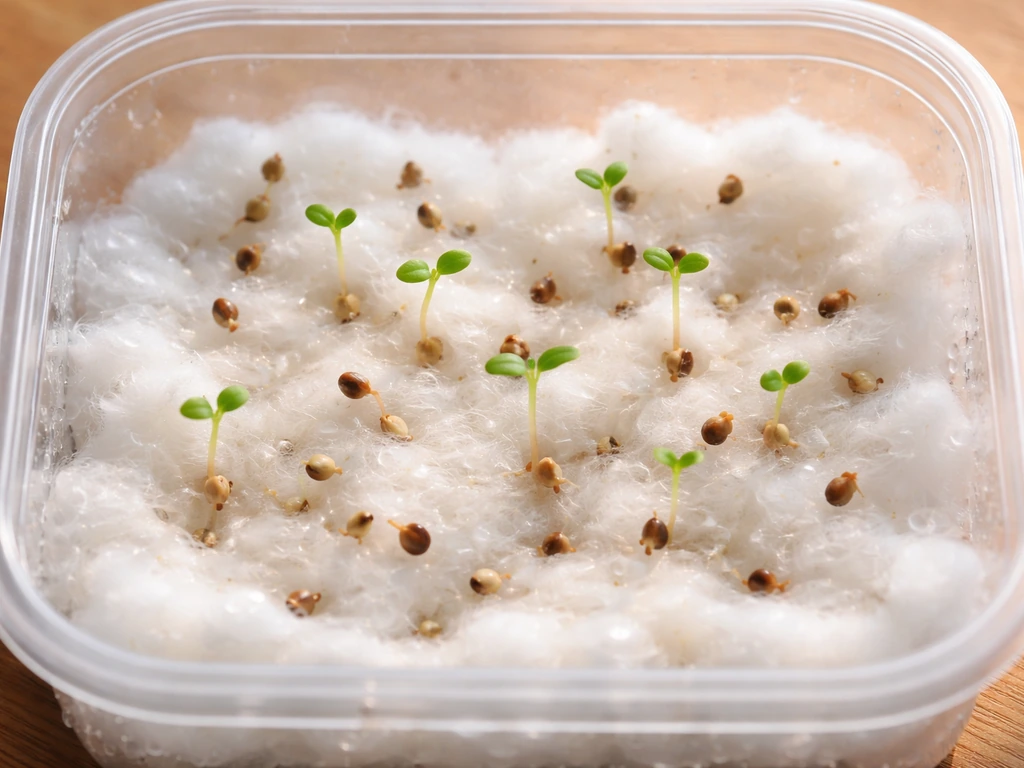
What Seeds Grow in Cotton Wool Best Options and How To
Best seeds to sprout in damp cotton wool, plus step-by-step germination, timing, transplanting, and mold troubleshooting
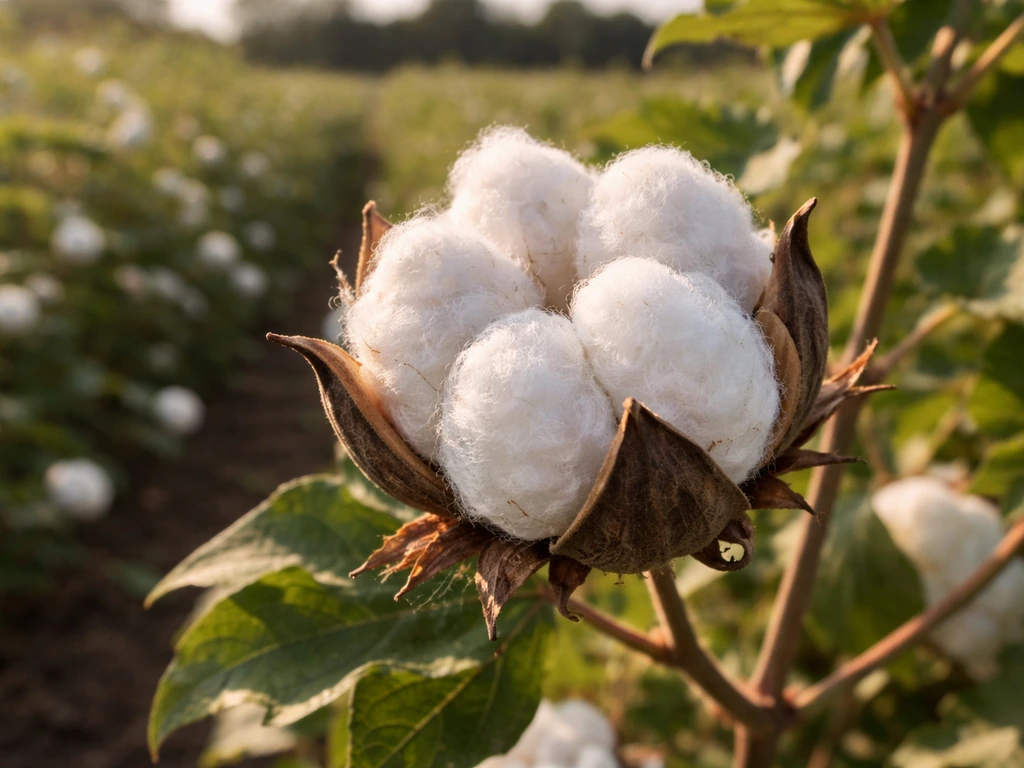
How Does Cotton Grow From the Ground to Harvest
Learn how cotton grows from planting to bolls and harvest, including climate needs and what affects yield by region.