Title: What Can I Grow on Agricultural Land? A Complete Crop Selection Guide
What Can I Grow on Agricultural Land: Crops by Climate & Region

Samuel Rourke
12 Jul 2026
Meta description: Discover what crops you can grow on agricultural land by climate, soil, region, and scale, with U.S. regional lists, a crop table, and a step-by-step decision framework.
Agricultural land can support an enormous range of crops, from staple grains and vegetables to orchards, vineyards, and specialty cash crops, but what actually works on your land depends on your climate zone, soil type, water access, slope, scale, and local market. Start with those five factors, and the list of viable crops narrows quickly to a practical shortlist you can act on.
Who this guide is for and how to use it
This guide is written for anyone trying to figure out what belongs in the ground on a given piece of land. That covers a wide range of people: a beginning farmer evaluating a newly purchased parcel, a student researching agricultural systems for a class, a backyard gardener scaling up to a market garden, or a historian trying to understand what ancient civilizations grew and why. Whatever your starting point, the structure here is the same: define the land, understand its constraints, match crops to those conditions, and check the practical details around market and legality before you plant anything.
The article moves from definitions outward to specifics. It covers soil, water, climate, and topography as decision filters, then provides candidate crop lists by climate type and U.S. region, a compact reference table, country-level and historical examples, and a practical checklist for your first-season planting plan. Skip to the section most relevant to your situation, or read straight through to build a complete picture.
What agricultural land actually means
The FAO defines agricultural land as the total of arable land, land under permanent crops, and permanent meadows and pastures. That broad definition includes almost any land managed for food, feed, or fiber production. For crop-planning purposes, it helps to break this into three tighter categories. See area of land where farmers grow crops for a clear definition and examples.
- Arable land (cropland): land tilled or otherwise prepared for annual crops such as grains, vegetables, and pulses. This is the classic "field crop" context most people picture when they say agricultural land.
- Permanent cropland: land occupied by long-term crops that are not replanted every year — orchards, vineyards, olive groves, and similar perennial systems. The investment in establishing these crops is higher, and land use decisions are longer-term.
- Permanent meadows and pastures: land used for grazing livestock, whether cultivated or natural. This land is technically agricultural but is not typically cropped directly; however, it can be converted to cropland under the right conditions.
The USDA Economic Research Service uses a similar framework and goes further by producing quality-adjusted land measures that weight irrigated land more heavily than rainfed and distinguish productive pasture from marginal rangeland. The practical takeaway: not all agricultural land is equal in crop-production potential, and the label itself tells you less than the underlying soil class, water availability, and climate do.
Weeds: the unwanted plants sharing your field
Any discussion of what you can grow on agricultural land needs to address what grows there whether you want it to or not. Weeds are unwanted plants that establish themselves alongside or instead of your intended crops, competing for light, water, nutrients, and space. Left unmanaged they reduce yield, harbor pests and diseases, and can become persistent problems that take multiple seasons to resolve.
Weed management generally draws on four overlapping approaches. Prevention means using certified weed-free seed, cleaning equipment between fields, and avoiding introducing weed seed through contaminated compost or hay. Cultural control uses crop competition itself as a tool: choosing vigorous, well-adapted varieties, maintaining optimal plant spacing and fertility so the crop canopy closes quickly, and rotating crops to break weed cycles. Mechanical control covers tillage (primary and secondary), cultivation between rows, and hand-weeding or hoeing at small scale. Chemical control uses herbicides, either pre-emergent (applied before the weed germinates) or post-emergent (applied to growing weeds); selection depends on the crop, the weed species present, and whether the operation is certified organic. Most successful weed programs layer all four approaches rather than relying on any single method.
What all crops humans grow have in common
Despite the extraordinary diversity of cultivated plants, from rice paddies to apple orchards to cotton fields, every crop humans grow shares a set of defining characteristics. All crops are domesticated or at minimum deliberately selected from wild relatives, meaning humans have shaped them over generations for traits that serve agricultural purposes. Every crop produces a harvestable yield, whether that is grain, fruit, fiber, forage, oil, or some other useful product. Crops are managed rather than simply gathered; cultivation involves intentional acts like planting, watering, fertilizing, and pest control. And all crops respond to inputs: they perform better under favorable conditions and worse under stress, which is exactly why soil, water, climate, and management matter so much to the practical question of what you should grow on a particular piece of land.
How to decide what to grow: the decision framework
Choosing crops for a piece of agricultural land is a filtering process, not a single decision. You start with the hard constraints imposed by climate and soils, things you cannot change, and work outward to the softer constraints of scale, market, and regulation. A useful workflow looks like this: first establish your climate zone and frost-free season length; second evaluate soil texture, depth, drainage, and pH; third confirm your water supply (rainfall, irrigation rights, or both); fourth assess slope and drainage; fifth decide on your production scale and available equipment; and sixth check local zoning, water rights, and any crop restrictions before committing to a planting plan.
Each filter eliminates some options and highlights others. A heavy clay soil with poor drainage rules out root crops and favors rice or wetland crops. A short 90-day frost-free season rules out long-season corn varieties but opens the door to fast-maturing brassicas, potatoes, and small grains. A small irrigated parcel near a farmers market opens up high-value specialty crops that would never pencil out on a dryland commodity farm. The sections below walk through each filter in detail.
Climate and growing zones
Climate is the most fundamental constraint on what you can grow. The global Köppen-Geiger classification system, available at roughly 1-km resolution, divides the world into five major climate groups, tropical, dry, temperate, continental, and polar, each with subcategories that map closely to which crops are agronomically viable. Within the U.S., the USDA updated its Plant Hardiness Zone Map in 2023; that map divides the country into zones based on average annual minimum winter temperatures and is the standard tool for selecting perennial crops and cold-sensitive varieties.
Temperature matters in two directions. Winter minimum temperatures determine which perennials survive (citrus dies below 28°F; peaches need a cold period to fruit; olives survive only in Zones 8 and above). Summer heat drives photosynthesis and ripening: corn and cotton need accumulated heat units that the upper Midwest and northern New England simply cannot provide for full commercial yields. Season length, the frost-free period between last spring frost and first fall frost, is often the binding constraint for annual crops. A 120-day season can support winter wheat, spring barley, potatoes, and many vegetables but not full-season soybeans or upland cotton. A 200-plus-day season in the Deep South or California Central Valley opens up nearly all annual crops.
Decision checks: climate
- What is your USDA Plant Hardiness Zone? (Relevant for all perennial crops and cold-sensitive annuals.)
- What is your average first and last frost date? (Determines season length for annuals.)
- What is your average summer high temperature and humidity? (Filters heat-loving vs. cool-season crops.)
- Do you experience drought periods, monsoon cycles, or reliable year-round rainfall? (Shapes irrigation needs and crop timing.)
Soil: what's under your feet shapes what can grow
Soil quality and type filter crop choice almost as sharply as climate does. The NRCS Land Capability Classification (LCC) ranks soils from Class I (few or no limitations, suitable for nearly any crop) through Class VIII (not practical for crop production at all). Classes I through IV are generally cultivable with increasing levels of management; Classes V through VIII are progressively less suited to row cropping and more appropriate for pasture, forestry, or wildlife use. You can look up your field's LCC through NRCS's Web Soil Survey, which draws on the SSURGO database and provides soil map units with tabular data on texture, pH, organic matter, drainage class, available water capacity, and depth to restrictive layer.
Texture affects drainage and water-holding capacity: sandy soils drain fast and need more frequent irrigation but warm up early in spring and suit root crops; clay soils hold water and nutrients but drain slowly, compact easily, and are difficult to work when wet. Soil pH drives nutrient availability, most crops prefer pH 6.0 to 7.0; blueberries and potatoes want it lower (4.5 to 5.5), and alfalfa prefers it near 7.0 or slightly above. Organic matter content affects both fertility and soil structure. Depth to a restrictive layer (hardpan, rock, or seasonal high water table) limits root zone and drainage. Most of these factors can be amended over time: lime raises pH, sulfur lowers it, organic matter builds with cover cropping and compost, and some drainage issues can be addressed with tile drainage or raised beds.
Decision checks: soil
- Have you run a soil test for pH, macronutrients (N, P, K), and organic matter? (Get one before planting anything.)
- What is the soil texture (sand, loam, clay) and does it drain adequately after heavy rain?
- What is the LCC class for your field? (Available via NRCS Web Soil Survey.)
- Is there a restrictive layer within the top 24 inches that would limit root depth or drainage?
- What amendments does your soil need before the first planting, and what will that cost per acre?
Water and irrigation
Water availability is non-negotiable. Every crop has a minimum seasonal water requirement, and if rainfall cannot meet it, you need irrigation, or a different crop. Annual rainfall below about 20 inches almost always requires irrigation for field crops, though drought-tolerant crops like sorghum, millet, and some pulse crops can survive on less. Between 20 and 35 inches per year, the timing of rainfall matters as much as the total: a wet spring and dry summer creates very different conditions than evenly distributed rain.
If you are irrigating, method choice has real consequences for cost and water efficiency. FAO guidance notes that surface irrigation (flood or furrow) remains the most common method worldwide but is the least efficient. Sprinkler systems including center-pivot equipment run at 75 to 90 percent application efficiency. AgriMet Irrigation Guide, U.S. Bureau of Reclamation lists typical application efficiencies: center‑pivot sprinklers about 75–90% and drip/row‑crop drip about 85–90% AgriMet Irrigation Guide — U.S. Bureau of Reclamation lists typical application efficiencies: center‑pivot sprinklers about 75–90% and drip/row‑crop drip about 85–90%.. Drip systems achieve 85 to 90 percent efficiency and are the preferred choice where water is scarce or expensive, particularly for vegetables, tree fruits, and vineyards. Before investing in irrigation infrastructure, check your water rights, in many western U.S. states, the right to divert water from a stream or pump from an aquifer is a legally separate property right from the land itself, and those rights can be limited, seasonally restricted, or already fully allocated.
Decision checks: water
- What is the average annual precipitation, and how is it distributed across the growing season?
- Does your land have existing irrigation infrastructure, or will you need to install it?
- Do you hold water rights sufficient for the crops and acreage you are planning?
- What is the cost per acre-inch of water, and does your intended crop generate enough revenue to justify irrigation?
Topography and drainage
Slope affects erosion risk, equipment access, water management, and microclimate. Gently sloping land (0 to 2 percent) is generally ideal for row crops and most field crops, allowing machinery to operate efficiently and water to drain without ponding or running off too fast. Steeper slopes increase erosion risk significantly; on slopes above 8 to 10 percent, NRCS conservation practices like contour buffer strips, grassed waterways, and terraces become important tools for keeping topsoil in place while still growing crops. Very steep land (15 percent and above) is usually impractical for annual row crops without extensive terracing and is better suited to perennial systems like orchards, vineyards, or pasture.
Topography also creates microclimates worth mapping before you decide on crops. North-facing slopes are cooler and hold moisture longer, useful in hot, dry climates but potentially frost-prone in cold ones. South-facing slopes warm up earlier in spring and accumulate more heat units through the season. Low-lying areas collect cold air at night and are frost pockets that can kill sensitive crops even when nearby higher ground escapes frost. Knowing your field's topography at this level of detail is the kind of information that separates good planting decisions from costly mistakes.
Decision checks: topography
- What is the average slope across your field, and are there steep areas that need conservation practices?
- Are there low areas that pond after rain or that are frost pockets?
- Are there slope-facing differences that create distinct microclimates within a single field?
- Is your slope compatible with the equipment you plan to use?
Scale, equipment, and labor
Scale changes almost everything about which crops make sense. The 2022 USDA Census of Agriculture counted 1.9 million U.S. farms covering 880 million acres, with an average farm size of 463 acres, but that average masks an enormous range from tiny market gardens under an acre to commodity grain operations spanning thousands. At garden scale (under 1 acre), hand labor is practical, high-value crops like salad greens, herbs, and specialty vegetables pencil out even at small volumes, and equipment investment is minimal. At market garden scale (1 to 10 acres), a two-wheel tractor or small tractor opens more options, but the premium on crop value per square foot remains important. At commercial scale (50 acres and up), machinery investment drives a shift toward crops that can be mechanically planted, cultivated, and harvested: grains, oilseeds, hay, and large-acreage vegetables.
Labor availability is often the true binding constraint at small to medium scale. Crops like strawberries, asparagus, and tobacco are extremely labor-intensive at harvest; crops like winter wheat or soybeans require very little labor once planted. If you are farming with family labor alone, a labor-intensive specialty crop may not be realistic above a few acres without hired help. Match crop choice to your realistic labor supply, not just your land and capital.
Decision checks: scale and equipment
- How many acres are you planning to cultivate this first season?
- What equipment do you own or can you realistically access or rent?
- How many labor hours per week can you dedicate, and do you have access to seasonal hired labor?
- Does your intended crop require specialized equipment (a combine, a transplanter, a hop harvester) that you would need to purchase or contract?
Market, storage, legal limits, and zoning
A crop that grows well on your land still fails if you cannot sell or store it profitably. USDA ERS publishes annual cash receipts by commodity at the state level, which is a useful starting point for understanding which crops actually generate farm income in your region. But local market intelligence, farmers market demand, wholesale buyer relationships, proximity to processing infrastructure, matters more at small scale than state-level averages do.
Storage infrastructure shapes timing and crop choice. Grains and dry beans store for months with minimal investment. Fresh vegetables and fruits require cold storage or must move quickly to market. Hemp and hops need specific drying and processing equipment. Understanding your post-harvest path before planting is as important as any agronomic consideration.
On the legal side, zoning laws in some counties restrict what can be grown commercially on land classified as residential or mixed-use even if the underlying soil is excellent. Some states and counties require permits for specific crops (hemp requires a state license in every U.S. state where it is legal; some states restrict certain high-risk weed-host crops near sensitive neighbors). Organic and food-safety certification, if relevant to your market, adds additional record-keeping and input restrictions. Check all of these before you spend money on seed and inputs.
Decision checks: market and legal
- Is there a reliable local or regional market for the crop you are considering?
- Do you have storage infrastructure or a post-harvest plan for the crop's shelf life?
- Does your land's zoning allow commercial crop production?
- Does the crop require a state or federal license or permit?
- Are there organic or food-safety certification requirements for your target market?
Which lands are best for easy crop production
The easiest land to farm is Class I or Class II soil on level to gently sloping ground, with a deep, fertile loam or silt-loam profile, good natural drainage, adequate rainfall (or existing irrigation), and a frost-free season of at least 120 days. Think of the corn-and-soybean belt of Iowa and Illinois, the Willamette Valley of Oregon, the Sacramento Valley of California, or the Red River Valley of the North. On land like this, almost any crop suited to the climate can be produced with standard equipment and moderate management.
If you are looking for low-effort, quick-win crops on good land, the generally reliable choices across most temperate regions are: summer squash and zucchini (fast, productive, and hard to kill), bush beans (minimal care, no staking, fast turnaround), potatoes (highly productive per square foot on loose, well-drained soil), sunflowers (drought-tolerant, minimal fertility needs, market for seeds and cut flowers), and small grains like oats or spring wheat (low input, mechanizable even at small scale with custom harvesting). These are starting points, not a complete list, but they are crops with a wide tolerance window for imperfect conditions.
Can you convert pasture to cropland?
Yes, in most cases pasture can be converted to cropland, and it is done routinely, but it takes planning, time, and often significant input investment. If you’re asking whether you can grow crops on pasture land, the short answer is yes, with proper sod removal, weed control, and soil testing most pastures can be converted to productive cropland can you grow crops on pasture land. Pasture soils are sometimes surprisingly good: years of perennial root growth and lack of tillage can build organic matter and good soil structure. But they also typically have a thick sod layer, established perennial weed and grass populations, and uncertain fertility for crop production.
Here is a practical step-by-step checklist for a pasture-to-cropland conversion:
- Check zoning and permits: some jurisdictions restrict conversion of permanent pasture or grassland, particularly if it is enrolled in a conservation program (like CRP in the U.S.), environmentally sensitive, or designated as wetland buffer.
- Conduct a comprehensive soil test: test for pH, macronutrients (N, P, K), micronutrients, and organic matter. Pasture soils often have adequate potassium but may be low in phosphorus and need pH adjustment.
- Map drainage and topography: identify any areas that pond seasonally, slope above 6 to 8 percent, or show signs of erosion. Address drainage before tillage.
- Kill the existing sod: options include repeated mowing followed by tillage, a burndown herbicide application (glyphosate is the most common), or a rotational intensive grazing program that weakens sod over one to two seasons.
- Primary tillage: deep tillage (subsoiling or moldboard plowing) breaks up the sod layer and any plow pan that has developed. Time this for when soil is dry enough to work without compaction.
- Fertility rebuilding: apply lime if pH is below target, then incorporate phosphorus, potassium, and any micronutrient deficiencies identified in your soil test. Organic matter may be built with a cover crop the first year rather than a cash crop.
- Weed pressure management: expect a large weed seed bank and persistent perennial weeds from the former pasture. Plan for aggressive first-year weed management using mechanical, cultural, and where appropriate chemical methods.
- Plan a multi-year rotation: do not expect maximum yields in year one. A common approach is a cover crop or small grain in year one to stabilize the soil, followed by a higher-value cash crop in year two once soil tilth and fertility are established.
Land-use intensity: which foods require the most land to grow
Not all food production is equally land-efficient. Livestock production, particularly beef, requires dramatically more land per unit of food energy or protein than plant crops do. Grazing beef requires land both for the pasture directly and, where grain-fed, for the feed crops, the combined land footprint per gram of protein from beef is roughly 20 times that of pulses like lentils or chickpeas. This is one reason that globally, roughly 80 percent of agricultural land is devoted to livestock (grazing and feed crops) even though livestock provides only about 20 percent of global caloric supply.
Among crops themselves, there is also meaningful variation. Calorie-dense staple crops like corn, wheat, and rice produce very high food energy per acre and are among the most land-efficient crops when measured purely by calories. High-value specialty crops (wine grapes, herbs, saffron) occupy tiny acreages but generate high revenue per acre. Forage and hay crops occupy large acreages with moderate output. Tree nuts are moderately land-intensive but produce high-protein, high-calorie yields once orchards mature. If your goal is maximizing food production per acre, staple grains, root crops, and legumes are consistently high performers across most temperate and subtropical climates. For a quick comparison of land requirements across food types, see our note on what would require more land to grow food crops, which contrasts livestock (especially beef) with pulses and staple grains.
Candidate crops by climate type
Tropical (hot year-round, frost-free, high rainfall or monsoon)
- Staple crops: rice, cassava, sweet potato, yam, plantain, banana
- Cash crops: sugarcane, coffee, cacao, rubber, oil palm, vanilla
- Vegetables: okra, eggplant, amaranth, bitter melon, long beans
- Fruits: mango, papaya, pineapple, jackfruit, coconut, durian
Subtropical (mild winters, hot summers, humid or semi-humid)
- Staple crops: corn, rice, sweet potato, soybeans
- Cash crops: cotton, tobacco, citrus, sugarcane (in frost-free areas)
- Vegetables: tomatoes, peppers, sweet corn, squash, cucumber
- Fruits: peaches, figs, persimmons, muscadine grapes, blueberries
Temperate (four seasons, moderate rainfall, frost winters)
- Staple crops: winter wheat, corn, soybeans, oats, barley, potatoes
- Cash crops: apples, pears, cherries, wine grapes, hops, hemp
- Vegetables: brassicas (cabbage, broccoli, kale), carrots, onions, beets, beans
- Legumes: alfalfa, clovers, field peas
Arid and semi-arid (low rainfall, high evaporation, irrigation-dependent)
- Staple crops (irrigated): wheat, corn, cotton, sorghum
- Drought-tolerant crops: millet, sorghum, chickpeas, lentils, peanuts
- Fruits and nuts (irrigated): almonds, pistachios, dates, olives, pomegranates
- Vegetables (irrigated): lettuce, spinach, onions, melons, peppers
Cold and short-season (sub-boreal, high altitude, frost possible any month)
- Small grains: spring wheat, barley, oats, rye
- Root and tuber crops: potatoes, turnips, rutabaga, beets
- Brassicas: kale, cabbage, kohlrabi (cold-tolerant and improved by frost)
- Forage crops: timothy, orchard grass, red clover, annual ryegrass
Candidate crops by U.S. region
The U.S. covers nearly every climate type on earth, which is part of why American agriculture is so diverse. Here is a region-by-region overview of common crops and the conditions that drive those choices.
Northeast (New England, New York, Pennsylvania, New Jersey)
Seasons are 120 to 180 days frost-free in most areas; soils range from rocky glacial till in New England to deep, fertile soils in the Hudson Valley and Lancaster County, Pennsylvania. Apples are a signature crop across the region, along with dairy (hay, corn silage, alfalfa), maple syrup production, market vegetables, potatoes (Maine), and increasingly wine grapes in New York's Finger Lakes and Hudson Valley. Cover crops and rotations with small grains are common for soil health.
Southeast (Georgia, the Carolinas, Virginia, Florida, Alabama, Mississippi, Louisiana)
Long growing seasons (200-plus days in much of the Deep South), hot summers, and humid conditions suit cotton, peanuts, tobacco, soybeans, sweet potatoes, and corn. Florida's subtropical climate supports citrus, tomatoes, strawberries, and sugarcane. The region's warm winters allow two-crop seasons in some areas and year-round production of cool-season vegetables in Florida. Pest and disease pressure is high and weed management is a constant challenge.
Midwest (Ohio, Indiana, Illinois, Iowa, Minnesota, Wisconsin, Michigan)
This is the heart of U.S. commodity agriculture: corn and soybeans dominate the rotation across deep, fertile Mollisols (prairie soils) with excellent water-holding capacity. Wheat, oats, and hay are important in the northern and eastern parts of the region. Michigan's Lake Michigan shoreline moderates temperatures enough to support a major tart cherry, apple, and blueberry industry. Wisconsin is a major dairy and vegetable-processing state. The Midwest also produces a growing share of the U.S. hemp crop.
Great Plains (Kansas, Nebraska, the Dakotas, Oklahoma, Texas Panhandle)
Winter wheat is the dominant crop across Kansas, Oklahoma, and the Texas Panhandle. Corn, sorghum, soybeans, and sunflowers dominate Nebraska and the Dakotas. Much of the southern and central Plains relies on the Ogallala Aquifer for irrigation; declining water tables are a long-term constraint on irrigated corn and cotton in parts of western Kansas and the Texas Panhandle. Dryland farming is prevalent in lower-rainfall areas, favoring drought-tolerant varieties and summer fallow rotations.
Mountain West (Colorado, Utah, Idaho, Wyoming, Montana)
Elevation creates tremendous climate variability within this region. Valley floors with irrigation support potatoes (Idaho is the largest U.S. potato producer), sugar beets, alfalfa, barley, and specialty vegetables. Montana's Hi-Line produces spring wheat, barley, and pulses like lentils and chickpeas in one of the most important dryland small-grain regions in the country. High-altitude areas above 6,000 feet are largely limited to hay and pasture.
Pacific Northwest (Oregon and Washington)
The Willamette Valley of Oregon and the Columbia Basin of Washington are among the most productive agricultural areas in the country. Hazelnuts, wine grapes, hops, grass seed, strawberries, blueberries, pears, cherries, and wheat are all major crops. Eastern Washington's Columbia Plateau is one of the top wheat-producing areas in the country. The mild maritime climate west of the Cascades extends growing seasons and supports a wide range of specialty crops with minimal frost risk.
Southwest (California, Arizona, New Mexico, Nevada)
California's Central Valley is arguably the most agriculturally productive land on earth per acre, producing almonds, pistachios, tomatoes, grapes, strawberries, lettuce, stone fruits, cotton, and rice under extensive irrigation. Arizona's Salt River Valley produces cotton, alfalfa, citrus, and winter vegetables under desert irrigation. Water availability and water rights are the dominant constraints across the entire Southwest; without irrigation, this region produces very little.
Crops by climate type and U.S. region: a reference table
| Region / Climate | Primary Crops | Key Constraints |
|---|---|---|
| Tropical | Rice, cassava, banana, sugarcane, cacao, coffee | Heat management, pest/disease pressure, monsoon timing |
| Subtropical | Cotton, corn, soybeans, citrus, tobacco, sweet potato | Humidity, pest pressure, occasional frost |
| Temperate | Wheat, corn, soybeans, apples, potatoes, brassicas | Season length, winter hardiness for perennials |
| Arid/Semi-arid | Wheat, sorghum, millet, chickpeas, dates, almonds (irrigated) | Water availability, salinity, heat stress |
| Cold/Short-season | Spring wheat, barley, rye, potatoes, kale, turnips | Frost risk, short season, cool soils |
| U.S. Northeast | Apples, potatoes, corn, hay, market vegetables, wine grapes | Rocky soils, short season in north, humidity |
| U.S. Southeast | Cotton, peanuts, tobacco, soybeans, sweet potatoes, citrus (FL) | High humidity, pests, hurricanes |
| U.S. Midwest | Corn, soybeans, wheat, oats, tart cherries, blueberries | Commodity price volatility, spring flooding |
| U.S. Great Plains | Winter wheat, sorghum, corn, sunflowers, soybeans | Drought, wind erosion, Ogallala depletion |
| U.S. Mountain West | Potatoes, barley, alfalfa, sugar beets, lentils, spring wheat | Elevation variability, irrigation access |
| U.S. Pacific Northwest | Wheat, hops, hazelnuts, wine grapes, grass seed, berries | Dry summers east of Cascades, irrigation needed |
| U.S. Southwest | Almonds, tomatoes, lettuce, grapes, cotton, strawberries | Water scarcity, heat, irrigation dependency |
Country-level examples and historical notes
Understanding what grows on agricultural land today makes more sense when you see how deeply geography has shaped crop choices over centuries. A few country-level examples illustrate the pattern.
India is the world's largest producer of pulses (lentils, chickpeas, pigeonpeas) and a top producer of rice, wheat, cotton, and sugarcane, a reflection of the subcontinent's enormous climate range from the arid northwest to the humid northeast and tropical south. Brazil's agricultural expansion over the past 40 years has transformed the Cerrado savanna into one of the world's leading soybean and corn regions, while the traditional sugar and coffee belt of São Paulo State remains productive. China leads global production of wheat, rice, sweet potatoes, and vegetables, driven by intensive cultivation on relatively limited arable land per capita. In the Nile Delta and Valley of Egypt, the combination of reliable irrigation from the Nile and exceptional alluvial soils has supported continuous cropping for more than 5,000 years.
The historical dimension matters here. Ancient Mesopotamia (modern Iraq) built the first large-scale irrigated agriculture in the alluvial plains of the Tigris and Euphrates, growing emmer wheat and barley as staple crops as early as 8,000 BCE. The annual Nile floods deposited a fresh layer of fertile silt each year, allowing Egyptians to grow wheat, barley, flax, and vegetables with minimal soil amendments for millennia. Mesoamerican civilizations, the Maya, Aztec, and their predecessors, developed the milpa system, a rotation of corn, beans, and squash (the Three Sisters) that sustainably managed soil fertility without external inputs. The Indus Valley civilization (present-day Pakistan and northwestern India) grew wheat, barley, sesame, and cotton in one of the world's earliest examples of planned urban agriculture around 2500 BCE. In every case, the crops chosen reflect the same fundamental logic that applies today: match the plant to the climate, the soil, and the water supply available.
Decision checks and planting-plan checklist
Before you finalize your first-season planting plan, work through these checks in order. Skipping steps here is where most new growers lose money.
- Soil test: submit samples to a certified lab (your state's land-grant university extension service has low-cost options). Test for pH, N, P, K, organic matter, and secondary nutrients. Get results before ordering amendments.
- Slope and drainage map: walk your field after a heavy rain or use USGS topographic data and NRCS Web Soil Survey drainage class ratings to identify problem areas.
- Water budget: calculate seasonal water requirement for your target crops and compare against expected rainfall plus any irrigation you can realistically supply.
- Climate zone confirmation: look up your USDA Plant Hardiness Zone (2023 map) and average frost dates for your county.
- LCC check: pull your NRCS soil map unit data and verify that your land falls in LCC Classes I through IV for any intended row or field crop.
- Market check: identify at least two buyers, markets, or processing outlets for your crop before you plant. Prices and demand can be verified through USDA ERS cash receipts data and local market research.
- Seed sources: confirm seed availability, variety selection, and seed costs for your target crop in your region. Order early, especially for organic or specialty varieties.
- Rotation and cover crop plan: plan at least two years ahead. Identify what you will grow after your cash crop and whether a cover crop fits between seasons to build soil health and suppress weeds.
- Legal and permit check: verify zoning, water rights, any crop-specific licensing requirements, and food-safety or organic certification obligations.
- Input and equipment budget: estimate cost per acre for seed, fertilizer, amendments, weed management, and any equipment needed. Compare against expected revenue to confirm the enterprise makes financial sense.
Practical next steps
The most valuable action you can take right now, before anything else, is ordering a soil test. Contact your state's land-grant university cooperative extension service (available in every U.S. state) or a private certified lab. Results typically take one to two weeks and cost $15 to $40 per basic test. Those results tell you more about what you can profitably grow than almost any other single piece of information.
While you wait for soil test results, use NRCS Web Soil Survey to pull your field's soil map units and Land Capability Class. The tool is free, requires only a basic browser, and lets you draw a field boundary and download tabular soil data. Cross-reference that data with your USDA Plant Hardiness Zone on the 2023 USDA ARS hardiness zone map. Together, these two free resources answer most of the basic crop-suitability questions for U.S. growers.
For mapping climate and crop suitability at a global scale, useful for researchers, students, or growers in other countries, the WorldClim database provides free high-resolution temperature and precipitation grids that can be used with any GIS software. The Köppen-Geiger climate classification dataset (Beck et al., 2018) layers neatly on top of these grids to give you a global framework for identifying which climate type matches your location.
On the zoning and water rights side, start with your county's agricultural extension office or planning department. For water rights in western states, contact your state engineer's office or department of water resources. Do not assume that owning land means you have the right to divert surface water or drill an irrigation well without a permit.
For building out a first-season planting plan, the USDA's own Crop Explorer and FAOSTAT tools can help you benchmark expected yields and understand regional production norms. From there, the Crops By Region mapping tools and regional crop pages on this site let you drill into specific states, countries, and historical periods to understand what has historically grown, and why, in locations similar to yours. That regional context is often exactly the shortcut you need when you are evaluating an unfamiliar crop or a new piece of land.
Image suggestions
- USDA 2023 Plant Hardiness Zone Map: a color-coded national map showing Zones 1 through 13 across the U.S. — ideal as a visual anchor for the climate section.
- Köppen-Geiger climate classification world map: a global map showing tropical, arid, temperate, continental, and polar zones — useful alongside the climate-type crop lists.
- NRCS soil profile photo: a cross-section photograph showing topsoil, subsoil, and parent material layers in a productive agricultural soil — illustrates the depth and texture discussion.
- NRCS Web Soil Survey screenshot: a map interface showing soil map units and LCC ratings for a sample field — helps readers understand how to use the tool.
- Topography/slope map: a DEM-derived slope map of a mixed-topography agricultural area — illustrates the relationship between slope and crop suitability discussed in the topography section.
- Historical agriculture illustration: an illustration or photograph of ancient Mesopotamian irrigation canals, Egyptian floodplain agriculture, or the Mesoamerican milpa system — supports the historical examples section.
- Regional crop photos: one photograph each of a representative crop from at least four U.S. regions (for example, winter wheat in Kansas, apple orchard in New York, almond grove in California, potato field in Idaho).
Where to go next on Crops By Region
This site is built around exactly the kind of geographic and climatic crop matching this article describes. If you want to go deeper on a specific region, the regional crop pages map what grows where across U.S. states, global countries, and historical agricultural systems, with supporting context on soils, climate, and historical trade patterns. The mapping tools let you filter by climate zone, crop type, and time period to build a customized picture of agricultural potential in any location.
Related topics worth exploring from here: understanding what types of land can be used to grow crops in the first place; the specific characteristics of land where crops grow easily and with minimal intervention; the question of whether pasture land can be converted to crop production and what that process involves; and a closer look at which foods require the most land to produce, which has significant implications for both farm planning and food-system sustainability. For definitions and suitability criteria, see our guide on land that can be used to grow crops.
Putting it all together
Agricultural land can support almost anything from an annual vegetable garden to a commercial orchard, but the right crop is always the one that matches your climate, soil, water, scale, and market, not the one that simply sounds appealing or profitable in the abstract. Start with the soil test, confirm your climate zone and frost dates, map your water supply, and then narrow the field using the decision checks in this guide. The list of crops that fit your land well is almost always shorter and more actionable than the overwhelming universe of possibilities feels at first. Use the regional crop pages and mapping tools here at Crops By Region to sharpen that shortlist further, and you will go into your first planting season with a plan grounded in the actual conditions your land presents.
FAQ
Search-oriented title for the article
What Can I Grow on Agricultural Land? A Practical Guide to Choosing Crops by Climate, Soil, Water and Market
160-character meta description
Practical guide to what to grow on agricultural land: definitions, crop decision framework (climate, soil, water, scale, market), regional crop lists, and next steps.
Core question: What can I grow on agricultural land?
You can grow any crop suited to the land’s classification and conditions: annual arable crops (cereals, vegetables), permanent crops (orchards, vineyards), and forage/pasture. The right choice depends on climate, soils, water, slope, farm scale, market access and legal limits (zoning, conservation rules). Use a decision framework (below) to narrow options for your site.
Definitions: agricultural land, arable/cropland, and pasture
Agricultural land (FAO): the total of cropland plus permanent meadows and pastures; cropland includes arable land (rotated annual crops) and permanent crops (orchards, vineyards). Pasture and rangeland are land used primarily for grazing. These categories determine what cropping systems are legally and practically feasible on a parcel.
Short definition of weeds and basic management notes
Weeds: unwanted plants that compete with crops for light, water and nutrients; they may also host pests/diseases. Basic management: prevent with clean seed and crop rotation, reduce seedbank with timely tillage or mowing, suppress with mulches/cover crops and targeted herbicides when necessary, and restore competitive crop stands via fertility and planting density. Adapt methods to crop type, soil and local regulations.
Full decision framework to choose crops (step-by-step checks)
1) Climate: determine Köppen class, growing-season length, frost dates and heat accumulation (GDD/CHU) or USDA hardiness zone for perennials. 2) Water: evaluate rainfall, irrigation availability and irrigation method suitability (drip, sprinkler, surface). 3) Soils: test texture, pH, organic matter, depth, drainage and available water capacity (use Web Soil Survey or local soil maps). 4) Topography: check slope and erosion risk; use terraces/contours for steeper land. 5) Scale and labor: match crop to area and labor intensity (vegetables vs grain vs tree crops). 6) Market and economics: check local demand, price volatility and required infrastructure. 7) Legal and environmental limits: zoning, conservation easements, wetland rules and crop restrictions. 8) Risk and rotation: plan rotations to manage pests, fertility and soil health. 9) Implementation: make a planting plan, seed/variety selection and irrigation schedule.
Next Articles
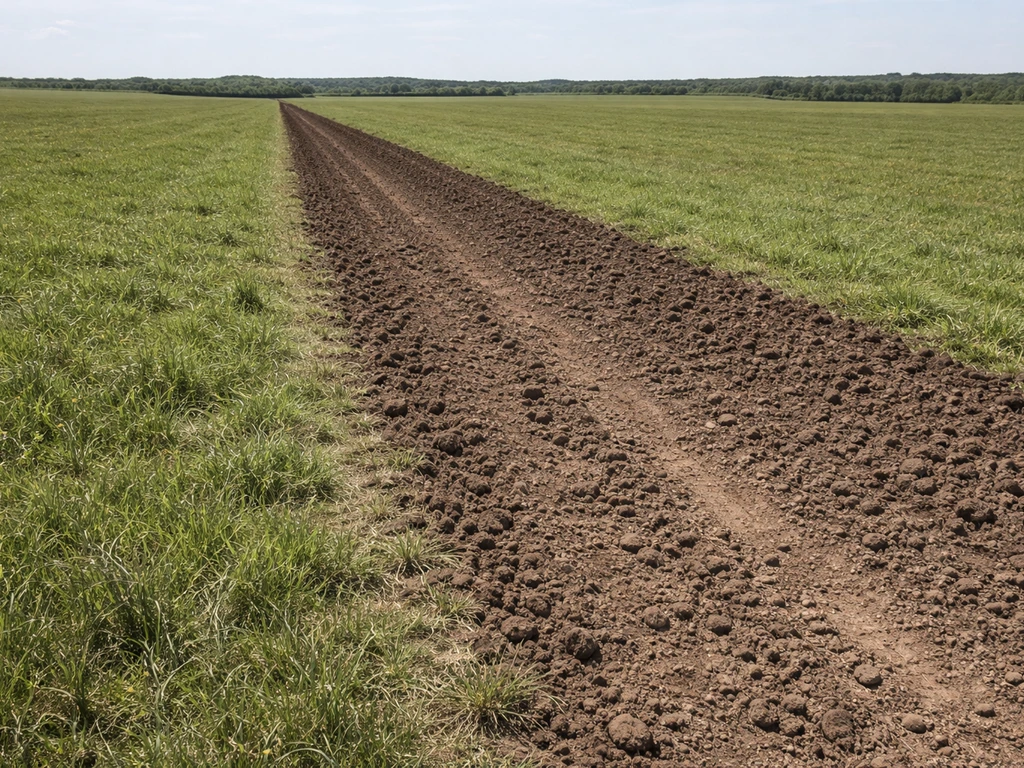
Can You Grow Crops on Pasture Land? Practical Guide
Learn if and how to grow crops on pasture land, including crop picks, soil prep, conversion steps, and common pitfalls.
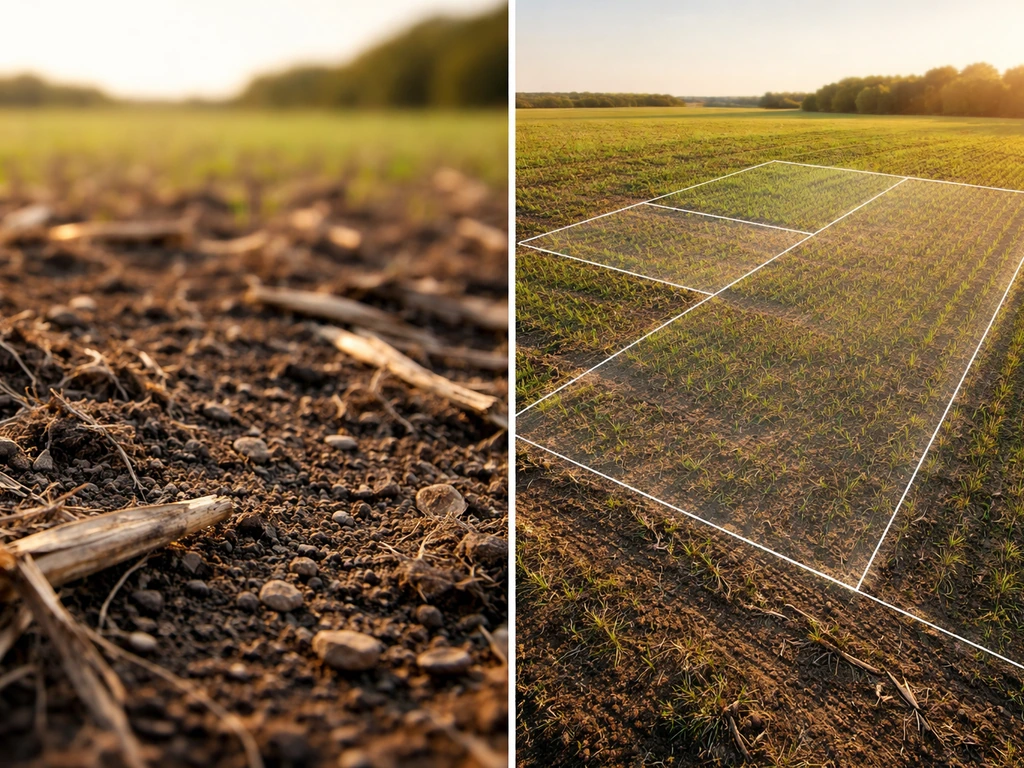
Land Where Crops Grow Easily: A Crop Mapping Guide
Use crop mapping to find land where crops grow easily by matching climate, soil, drainage, and sunlight to the right cro
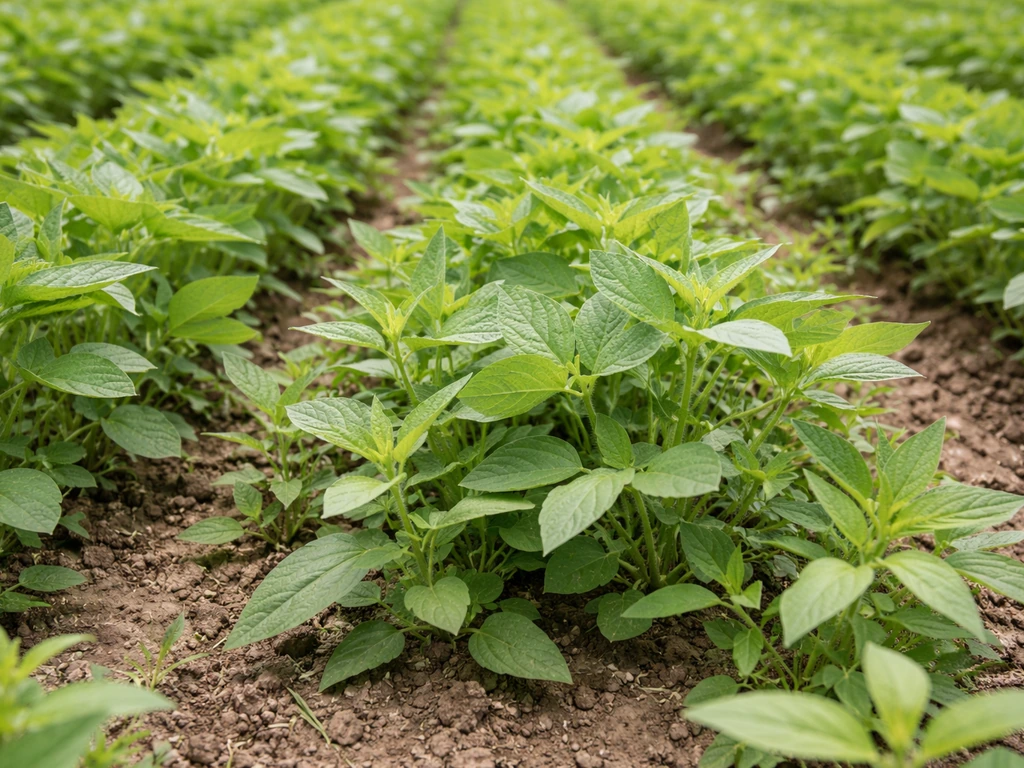
Unwanted Plants That Grow Along With Crops Are Called Weeds
Get the definition of weeds and how to identify common types, then choose fast, safe control methods for your crops.