
The three Spanish tree crops you're most likely looking for are olives, citrus (oranges and lemons), and almonds. All three grow on trees, all three are deeply woven into Spain's agricultural history, and all three thrive in Spain's Mediterranean climate today. If you're a student, gardener, or farmer trying to nail down which tree crops define Spanish agriculture, these are the right three.
Which 3 Spanish Crops Grow on Trees: Olive, Fig, Citrus

Samuel Rourke
19 Jun 2026
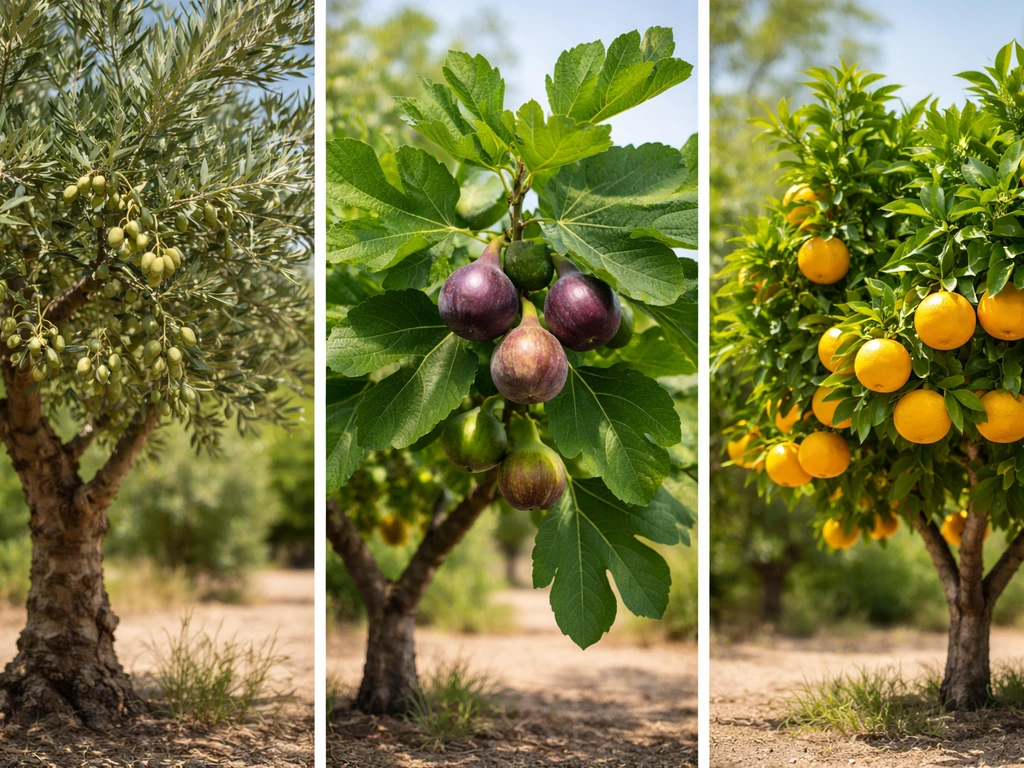
The three crops, quickly identified
Spain is one of the world's leading producers of all three of these crops, and that's not a coincidence. Each one is a tree crop (not a shrub, vine, or annual), each one has centuries of cultivation history in the Iberian Peninsula, and each one still dominates significant acreage across Spain today.
| Crop | Tree type | Main Spanish region | Key stat |
|---|---|---|---|
| Olive | Evergreen tree (Olea europaea) | Andalusia (Jaén province) | ~2.5 million hectares nationally |
| Citrus (orange, lemon, etc.) | Evergreen fruit trees (Citrus spp.) | Comunitat Valenciana | 302,850 ha as of end 2024 |
| Almond | Deciduous nut tree (Prunus dulcis) | Castilla-La Mancha / Andalusia | Largest almond producer in Europe |
One quick note on the word 'Spanish': it can mean crops grown in Spain, or crops that originated from Spanish-language agricultural traditions (like those introduced to California missions). If you're researching Spain itself, the three above are your answer. If you're studying Spanish mission agriculture in the Americas, the overlap is real: Spanish missionaries brought olives and almonds to California specifically because those were familiar crops from home. You can also look at what crops grow in California by considering which of these tree crops were brought over and adapted to the state’s climate California missions. Mission San Diego de Alcalá and Mission San Luis Obispo, for example, both cultivated crops tied to this same Spanish agricultural tradition.
Why these three grow on trees in Spain
Spain's climate is the short answer. Most of the country sits in a Mediterranean or semi-arid zone with hot, dry summers, mild winters, and most rainfall concentrated in cooler months. That pattern is almost perfectly matched to what olives, citrus, and almonds need. All three evolved in or around the Mediterranean basin, and all three tolerate drought better than most crops once they're established. Annual crops struggle with Spain's summer heat and dry spells. Tree crops, with deep root systems and thicker bark, handle it far better.
There's also a soil angle. Spain's interior has thin, rocky, calcium-rich soils that aren't great for row crops but suit olives and almonds well. The coastal east and south have better water access and warmer winters, which is exactly what citrus needs. Historically, this alignment between climate, soil, and crop type is why these three dominated Spain's landscape for centuries rather than just decades.
The Romans recognized this early. During the Roman era, olive trees became one of the main plants grown in Hispania Baetica (what is now southern Spain), and the region was exporting olive oil across the Roman Empire. That's roughly 2,000 years of continuous olive cultivation in Andalusia, which explains why the infrastructure, knowledge, and landscape are all so deeply shaped by the olive tree.
How to recognize each crop
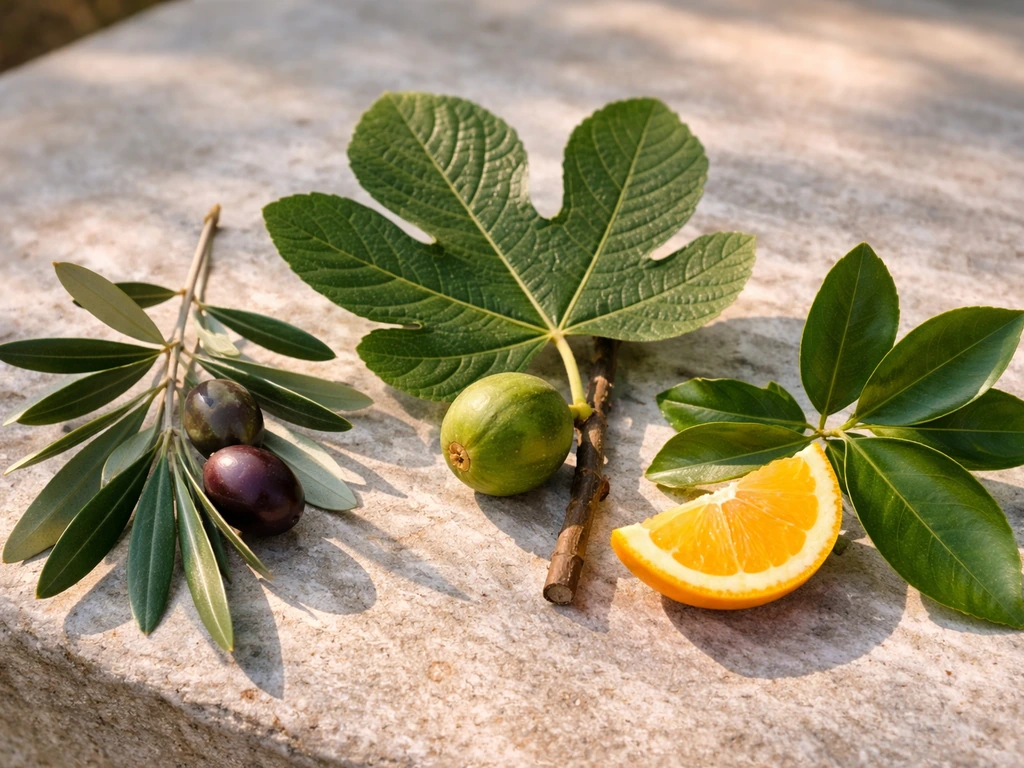
Olive (Olea europaea)
The olive tree is evergreen, slow-growing, and can live for hundreds (sometimes thousands) of years. The leaves are narrow, gray-green on top and silvery underneath. The fruit starts green, ripens to purple-black, and hangs in small clusters. In Spain, the most common cultivated varieties include Picual (dominant in Jaén, accounting for a huge share of Spanish olive oil), Hojiblanca, Arbequina (a smaller tree with excellent oil yield, popular in Catalonia and Aragón), and Cornicabra (central Spain, especially Toledo and Ciudad Real). 'Spanish olive' in a grocery store most often refers to large, brined green table olives, but the tree itself produces both table olives and oil olives depending on harvest timing.
Citrus (Citrus spp.)
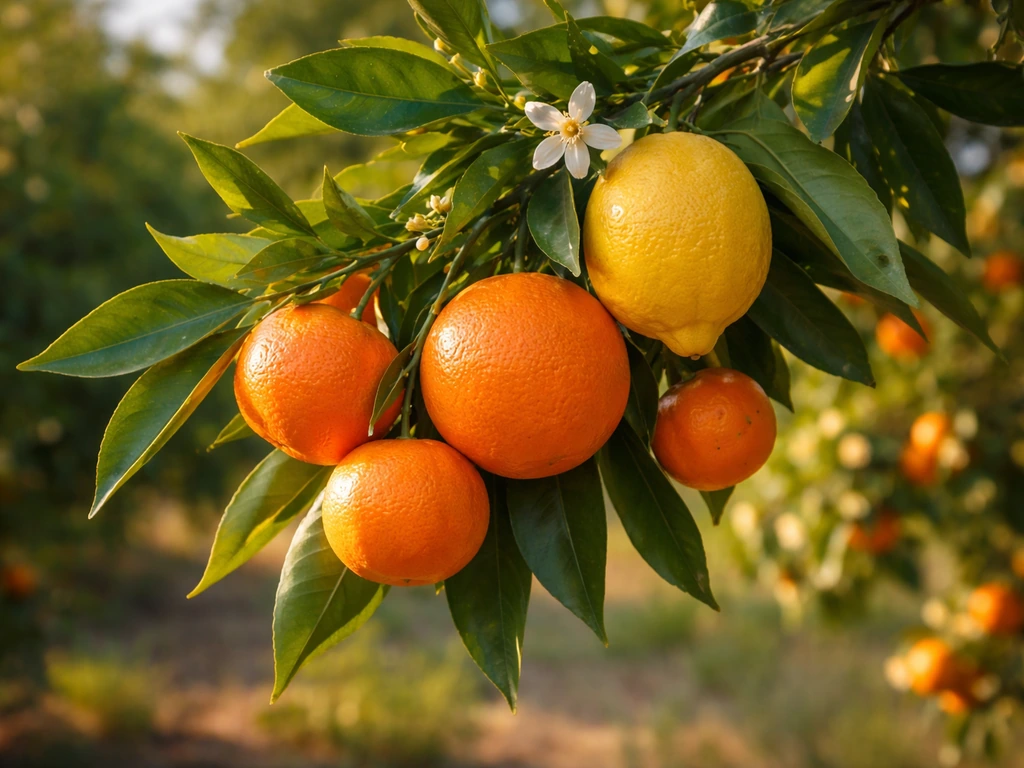
Citrus in Spain covers several species: sweet oranges (Citrus sinensis), mandarins and clementines (Citrus reticulata), lemons (Citrus limon), and grapefruits. When most people say 'Spanish citrus,' they mean Valencia oranges, which became so associated with the region that the name stuck globally. Citrus trees are evergreen, glossy-leafed, and fragrant when flowering. The main Spanish commercial varieties you'll encounter are Navel and Valencia oranges, Clemenules clementines, and Fino or Verna lemons. Don't confuse citrus with other fruiting trees in Spain; stone fruits like peaches and apricots are also grown but are deciduous and in a different crop category.
Almond (Prunus dulcis)
The almond tree is deciduous, flowering in late winter (January to March in Spain) with white or pale pink blossoms before the leaves appear. That early bloom is both its charm and its risk: late frosts can damage the flowers. The nuts develop inside a green, leathery hull that splits open when ripe. Common Spanish almond varieties include Marcona (the round, soft, buttery almond you see in Spanish food and tapas), Largueta (elongated, with a stronger flavor), and newer commercial varieties like Lauranne and Soleta that were developed partly to reduce frost risk by blooming later. Marcona almonds in particular are a product strongly associated with Spanish food culture.
Where in Spain each crop is grown
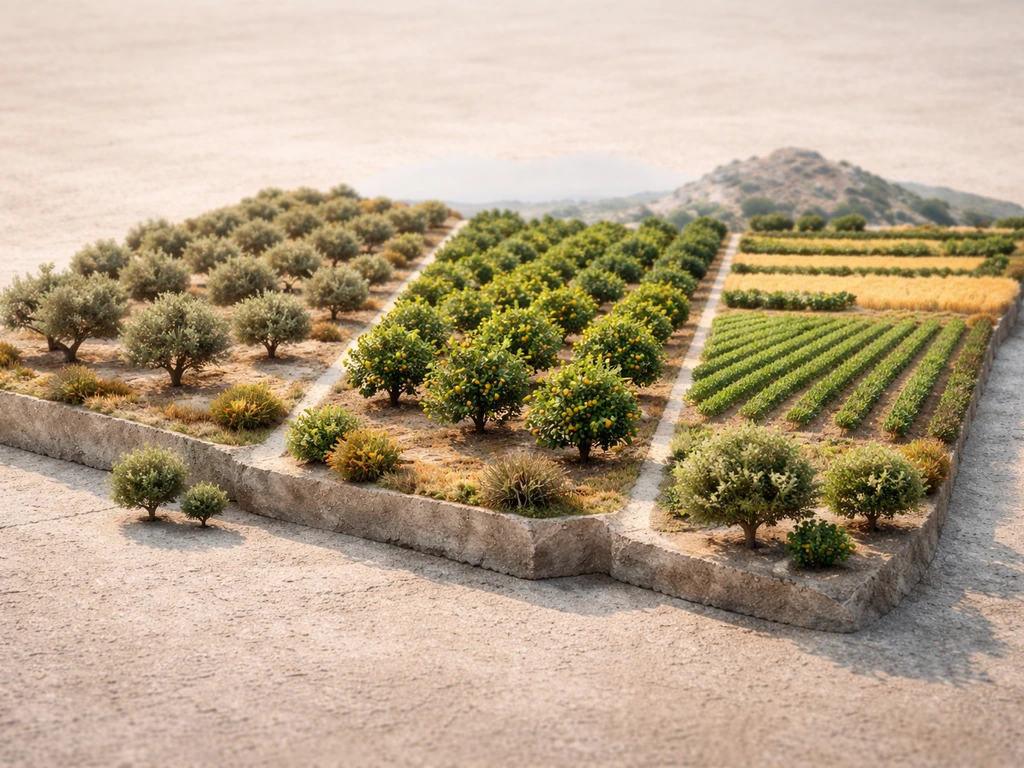
Geography matters a lot here. Each of these three crops has a clear regional heartland within Spain, driven by climate and soil differences. Mission Santa Inés, like much of the Spanish mission farming system in California, relied on olives, grapes, and other orchard crops rather than large-scale grain these three crops has a clear regional heartland.
| Crop | Primary region | Secondary regions | Notes |
|---|---|---|---|
| Olive | Andalusia (~80% of national production) | Castilla-La Mancha, Extremadura, Aragón, Catalonia | Jaén province alone accounts for ~37% of total Spanish olive production |
| Citrus | Comunitat Valenciana (~60% of national area) | Andalusia (~25%), Murcia (~10%), Catalonia (~3%) | East and southwest coasts; requires milder winters and irrigation |
| Almond | Castilla-La Mancha (~27% of registered surface) | Andalusia (~26%), Aragón, Murcia | Grown in drier interior and southeastern zones; drought-tolerant once established |
Andalusia shows up for both olives and almonds, which makes sense given its large land area and range of elevations and soil types. The Valencian coast dominates citrus because it gets enough winter warmth to prevent frost damage to the trees and fruit, combined with reliable irrigation from the Turia and Júcar river systems. By end of 2024, Mercasa reports that Spain had 302,850 hectares dedicated to citrus, concentrated along the Spanish east and southwest coasts, especially in Comunitat Valenciana (60%), Andalucía (25%), Murcia (10%), and Cataluña (3%) blank" rel="noopener noreferrer">302,850 hectares dedicated to citrus by end of 2024. Castilla-La Mancha's large almond share reflects its vast, dry interior plains where almonds outcompete most other commercial tree crops. MAPA’s 2020 provincial analysis table for almond (FRUTALES DE FRUTO SECO-ALMENDRO: Análisis provincial…) reports those regional almond figures for areas including Castilla-La Mancha Castilla-La Mancha's large almond share.
Planting and harvesting basics
Olive: long-term investment, low-maintenance once established
Olive trees are planted in autumn or early spring in Spain. They need well-drained soil (they will not tolerate waterlogged roots), full sun, and minimal irrigation once established, though commercial groves use drip irrigation to improve yield. Olives take 3 to 5 years to start producing and reach full production around year 10 to 15. Harvest timing depends on the intended use: green table olives are harvested from mid-September onward, with harvest ending as the fruit changes color. Oil olives are typically harvested from October through January, with earlier harvest (green-stage) giving fruitier, more pungent oil and later harvest (black-stage) giving milder, higher-volume oil. Pruning every two to three years is standard practice to manage canopy density and light penetration.
Citrus: warmth, water, and the right rootstock
Citrus in Spain is almost entirely irrigated, and water management is one of the most critical decisions a citrus grower makes. Water requirements vary significantly with climate, ground cover, the specific citrus species, and the rootstock used. Most commercial Spanish citrus is grafted onto disease-resistant rootstocks. Trees are planted in spring in frost-free zones and need temperatures that stay above about -3°C (27°F) even in winter, since hard freezes will damage or kill them. Navel oranges harvest from October to February; Valencia oranges run later, from March to June. Lemons can produce nearly year-round in the right conditions. If you're gardening in a region that gets hard frosts, citrus will need protection or a sheltered microclimate.
Almond: early bloomer with a frost catch
Almond trees are planted in late autumn to early winter as dormant bare-root stock, or in spring as container-grown plants. They need good drainage, full sun, and a certain number of winter chill hours (typically 200 to 400 hours below 7°C depending on variety) to break dormancy properly. The big risk in Spain is late frost hitting the early blossoms, which is why later-blooming varieties like Lauranne have become increasingly popular commercially. Almonds are harvested in late summer, typically August to September in Spain, when the hull splits open. Most commercial harvest is mechanized with trunk shakers. For a gardener or small farmer, the key things to get right are: choose a late-blooming variety if you're in a frost-prone area, ensure your soil drains well, and plan for cross-pollination (most almond varieties need a compatible pollinator planted nearby, though self-fertile varieties like Lauranne reduce this dependency).
Common mix-ups and what to do if you meant something different
The phrase 'Spanish crops' creates a few common points of confusion worth clearing up. Mission San Luis Obispo was known for the kind of drought-tolerant crops that thrived in California’s Mediterranean climate, including olives and grapes Spanish crops.
- Tree crops vs. vine/shrub crops: Grapes (Vitis vinifera) are a massive Spanish agricultural product, but they grow on vines, not trees. Same with tomatoes, peppers, and saffron, which are ground-level crops. If your question is specifically about tree crops, olives, citrus, and almonds are the right answer.
- Spain vs. Spanish-language agriculture: If you're researching Spanish mission agriculture in California or Latin America, the answer overlaps heavily. Missions brought olives and almonds from Spain precisely because missionaries were familiar with those crops. California's agricultural history, including what missions like San Diego de Alcalá or San Luis Obispo cultivated, connects directly back to these Spanish tree crops.
- Fig trees: Figs (Ficus carica) are another legitimate Spanish tree crop and worth mentioning as an honorable fourth. Spain has around 12,000 hectares of cultivated fig, concentrated in Extremadura, and produces about 30,000 tonnes per year. The fig tree produces two harvests annually in Spain: brevas (the first, early-summer crop from the previous year's wood) and higos (the main late-summer/autumn crop). If your question comes from a historical or educational context, figs may well be the 'third' crop depending on the source you're using.
- Carob trees: Carob (Ceratonia siliqua) is another Mediterranean tree crop grown in Spain, particularly in the southeast. It's less commercially dominant today but historically important and sometimes included in lists of traditional Spanish tree crops.
- The 'Spanish crops' label in U.S. agricultural contexts: In some U.S. textbooks and curricula, 'Spanish crops' refers specifically to what Spanish colonists grew, which often includes wheat and livestock alongside tree crops. If you're working from a specific textbook or curriculum, check whether they mean Spain itself or the Spanish colonial system.
How to verify which crops fit your specific situation
If you're trying to figure out whether these crops work for your location or your research context, here are the most practical next steps. For gardeners and farmers, check whether your USDA hardiness zone or climate zone matches the Mediterranean pattern: olives need Zone 8 or warmer, citrus typically Zone 9 or warmer (depending on species), and almonds are the most cold-tolerant of the three, surviving down to Zone 5 or 6 in dormancy but needing frost-free conditions at bloom time. For students and historians, cross-reference your source's definition of 'Spanish': if it's about Spain the country, stick with olives, citrus, and almonds. For a specific colony like San Diego de Alcalá, you can trace its crop mix back to the Mediterranean tree crops that were common in Spanish colonial farming what crops did san diego de alcala grow. If it's about Spanish colonial agriculture in the Americas, the crop list may shift to include wheat, corn, beans, and livestock alongside these tree crops. Either way, the three trees covered here are the right anchor point to start from.
FAQ
Are olive, citrus, and almond trees evergreen or do they lose their leaves?
Only one tree crop in the set is truly evergreen, olives and citrus both stay green year-round. Almonds are deciduous, they drop leaves and bloom in late winter, so you will see a “bare branches” period in winter before spring foliage returns.
Can you grow one of these trees for both fruit-for-eating and oil or processing?
Yes, but the timing matters. Olives are evergreen trees that can be managed for either table olives or oil by harvesting at different stages, green-stage for a fruitier, more pungent oil or black-stage for milder oil. Citrus fruit maturity also controls harvest windows, like Valencia later in the season compared with Navel.
Do almond trees always self-pollinate, or do I need another variety planted nearby?
Almonds often need a nearby compatible variety for reliable yields because many cultivars are not fully self-fertile. The exception is that some newer commercial types are self-fertile, but you still should confirm pollination compatibility for the specific variety you plan to plant.
What’s the biggest soil mistake for olives and almonds, and how do I fix poor drainage?
Olives and almonds are most sensitive to waterlogged soil, not to normal dry summers. If your garden is prone to standing water, prioritize raised beds, deep tilling to break up compacted layers, and drainage tests before planting, because both crops will struggle with roots that stay wet.
If my winters get cold, does irrigation make citrus safer, or is freezing still the main risk?
For citrus, hard freezes are the limiting factor even though the trees are grown using irrigation. If your area gets temperatures well below the typical winter tolerance band, you will need a protected microclimate (like a sheltered yard against a warm wall) or a frost-protection plan, because established irrigation alone does not prevent freeze injury to trees and fruit.
How can I estimate frost risk for almonds if my winter weather varies year to year?
Almond bloom time drives frost risk, not just your average winter temperature. A late cold snap that hits January to March bloom can damage flowers even in regions where the rest of winter seems mild, so choosing later-blooming varieties is often more important than relying on general climate averages.
Do all three crops need the same irrigation intensity, or does it vary a lot by crop?
Yes. Olive trees can be established with minimal irrigation after they root, but commercial groves often use drip systems to stabilize yields. Citrus, in contrast, is usually almost entirely irrigated, and water needs change with rootstock and the orchard floor management you choose (for example, bare soil versus ground cover).
What does “winter chill hours” mean for almonds, and what happens if my area doesn’t get enough chill?
Not necessarily. Almonds grow best when you meet winter chill needs for dormancy break, typically within a few hundred hours below a threshold temperature depending on variety. If you live somewhere too warm in winter, you may get poor bloom or weak nut set even if summers are suitable.
Why might the “three crops” list change if my research is about Spanish missions in the Americas rather than Spain?
If you are asking “which three Spanish crops grow on trees” for Spain itself, the intended answer is olives, citrus, and almonds, but the list can expand for Spanish colonial agriculture in the Americas. Mission plantings often shifted because local climate, labor, and market needs changed what could succeed beyond these Mediterranean anchors.
How do I choose the right harvest window for olives and citrus if I’m aiming for best flavor versus best volume?
Your timing plan should match your end use. For olives, green table olives are harvested earlier in the season than oil olives, which are often harvested across fall into winter depending on desired oil character. For citrus, plan around species-specific windows (for example, Valencia later than Navel) so you harvest when fruit quality matches your goal.
Next Articles
What Did Mission San Luis Obispo Grow Crops and Plants
Direct list of crops and plants grown at Mission San Luis Obispo, with climate reasons and research tips.
What Crops Grow in California Best Picks by Region
Learn which crops grow best in California by region, climate, and water so you can choose and plant wisely.
What Did the Delaware Colony Grow: Crops, Uses & Legacy
Colonial Delaware’s main crops, grains, hay, flax, fruits, vegetables, livestock, why they thrived and how they were sold.