Middle Colony farmers were able to grow cash crops because the region combined deep, fertile soils, a moderate climate with a long enough growing season, reliable rainfall, and direct access to major rivers and ports that made selling surplus grain fast and profitable. That combination, which you simply did not find in rocky New England to the north or the exhausting heat of the southern colonies, turned New York, New Jersey, Pennsylvania, and Delaware into what historians called the "breadbasket of British North America."
Middle Colony farmers grew cash crops because fertile soil and ports

Samuel Rourke
2 Jun 2026
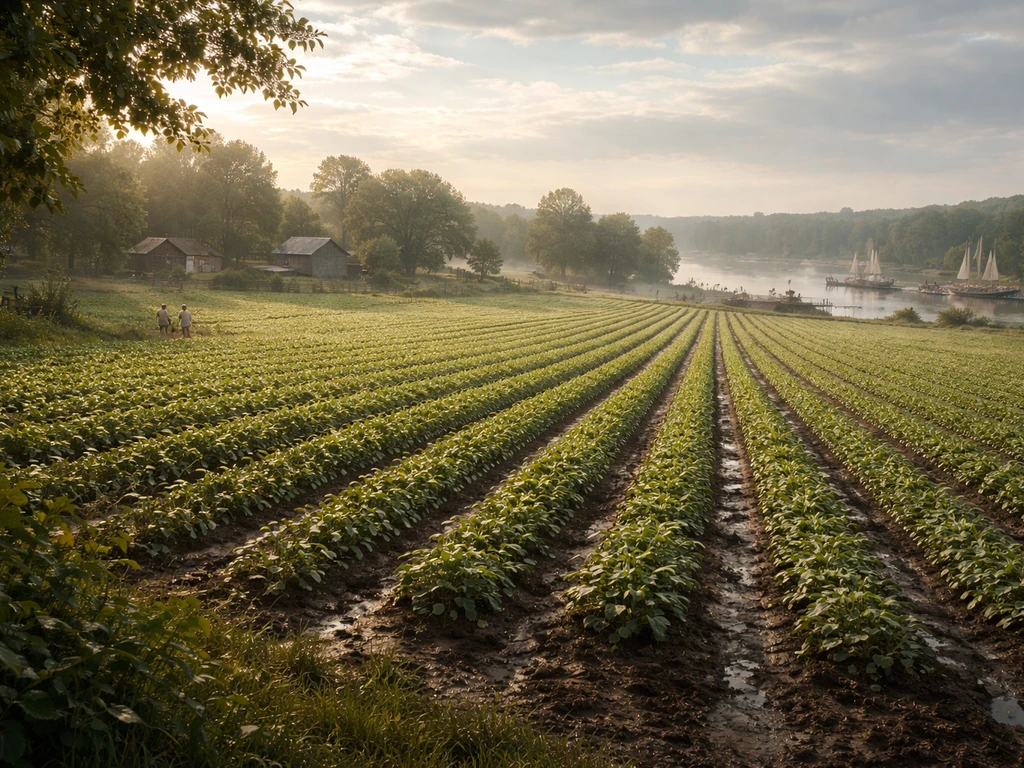
Why the Middle Colonies were built for cash crops
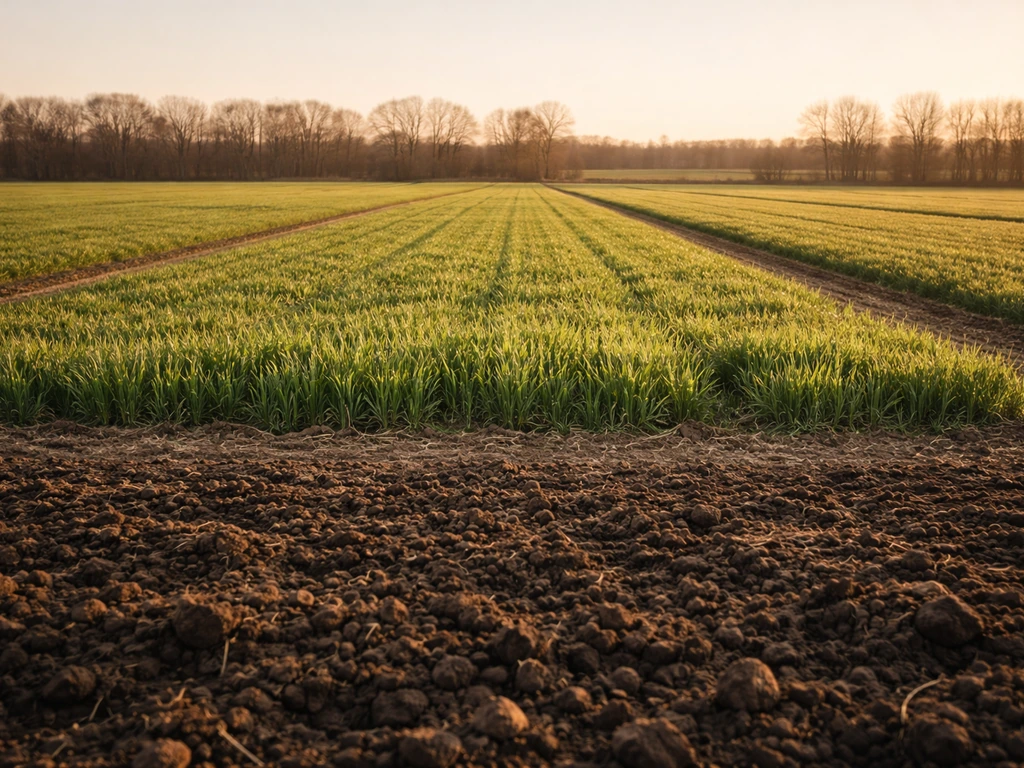
Three things have to line up for a farmer to produce cash crops consistently: the soil has to support high yields, the climate has to be reliable enough to count on those yields year after year, and there has to be a practical way to get the surplus to a buyer. The Middle Colonies checked all three boxes in ways that neighboring regions simply could not match. New England farmers, by contrast, were largely stuck with thin, rocky soils and a shorter growing season that made large-scale grain farming impractical, which is why their agricultural economy looked so different. This is also why New England farmers were unable to grow cash crops on the same scale.
The result was a regional agricultural identity built around grain. Farmers grew more than their families needed, milled the surplus into flour, sent it downriver, and collected cash or credit in return. That loop, soil to crop to port to profit, is what "cash crop farming" actually means in practice, and the Middle Colonies had every link in the chain.
The soil, rainfall, and climate that made it work
Soil quality: why fertile matters
The most important single factor was soil. The Middle Colonies sat on rich, loamy alluvial soils, the kind deposited over centuries by glacial meltwater and river flooding along valleys like the Hudson and Mohawk in New York and the Delaware River corridor in Pennsylvania and New Jersey. These soils were deep, nutrient-dense, and well-drained, which is exactly what cereal crops need. Cornell's guidance on wheat production is specific: maximum wheat yields come from moderately well-drained to well-drained soils with a pH above 6.0. The valley soils of the Middle Colonies hit that target naturally, without the lime amendments and drainage work that farmers on less fortunate land would have needed.
Compare that to New England's glacially scraped, rocky, acidic terrain and the difference is stark. Good drainage matters because waterlogged roots lose access to oxygen and become disease-prone. Neutral-to-slightly-acidic pH matters because it controls nutrient availability for the plant. A University of Delaware extension fact sheet also provides target and critical soil pH values for small grains in Delaware, such as wheat and rye aiming for about 6.0 with a critical pH around 5.5 Neutral-to-slightly-acidic pH matters because it controls nutrient availability for the plant.. Middle Colony alluvial soils delivered both, which translated directly into higher, more reliable bushel yields per acre.
Climate: the right temperature window and enough rain

The Middle Colonies sat in a temperate zone that gave farmers a growing season long enough for grain crops but cool enough to avoid the relentless heat stress that plagued crops further south. Wheat and rye thrive in exactly this kind of moderate climate. Corn needs soil temperatures around 50 to 55°F before it establishes well and grows best when daytime temperatures run between 75 and 86°F, conditions the mid-Atlantic region supplied through most of the summer months. The region also received consistent rainfall through the growing season, reducing the drought risk that could wipe out a cash-crop harvest and the income that depended on it.
Growing season length, measured from the last spring frost to the first fall frost, was long enough to mature wheat, rye, corn, and flax without the compressed window New England farmers faced. That reliability was not a minor detail. A cash-crop economy only works if farmers can count on a marketable harvest most years. One failed season in three is a subsistence problem; one failed season in ten is manageable risk.
The cash crops themselves: what grew and why
| Crop | Why it thrived in the Middle Colonies | Key soil/climate requirement |
|---|---|---|
| Wheat | Deep, well-drained alluvial soils and neutral pH; moderate temperatures; became the region's top export grain | Well-drained loam, pH 6.0–7.0 |
| Rye | More tolerant of acidic or poorly drained soils than wheat; winter-hardy across the region's variable terrain | Tolerates pH as low as 5.5; cold-hardy |
| Corn (maize) | Warm summers with reliable moisture; productive on valley soils; used locally and exported | Soil temp 50–55°F+ at planting; moisture at germination |
| Flax | Needed deep, rich soil that the Middle Colonies supplied; used for fiber (linen) and linseed oil | Deep fertile loam; depletes nutrients quickly |
| Hemp | Pennsylvania exported hemp alongside grain; grows well in rich bottomland soils | Fertile, well-drained soil; moderate climate |
Wheat was the undisputed king. Pennsylvania alone exported more than 350,000 bushels of wheat and more than 18,000 tons of flour annually by 1700, and that volume climbed sharply through the eighteenth century. The region's farmers planted rye on the slightly more acidic or wetter fields where wheat underperformed, making rye a practical backup that still commanded a market. Corn fed livestock and people locally but also moved through export channels. Flax and hemp rounded out the mix, both requiring the deep, rich soils the Middle Colonies had in abundance, though flax in particular was known to exhaust soil nutrients quickly and required rotation or resting fields.
It is worth noting that while tobacco and indigo defined the southern plantation economy, the Middle Colonies largely skipped those crops. In the southern plantation economy, enslaved people were brought from Africa to grow cash crops like tobacco and indigo. Ryots in the south were reluctant to grow indigo because it could be unpredictable to cultivate and hard to profit from for many small farmers.
By contrast, on many southern slave plantations, enslaved people were made to grow labor-intensive row crops like cotton and rice, alongside other cash crops southern plantation economy. The climate was not warm or long enough for tobacco to reach the quality levels Virginia and Maryland produced, and the region's comparative advantage was clearly in grain, which suited the soil and the season far better.
Rivers, mills, and ports: how surplus became cash
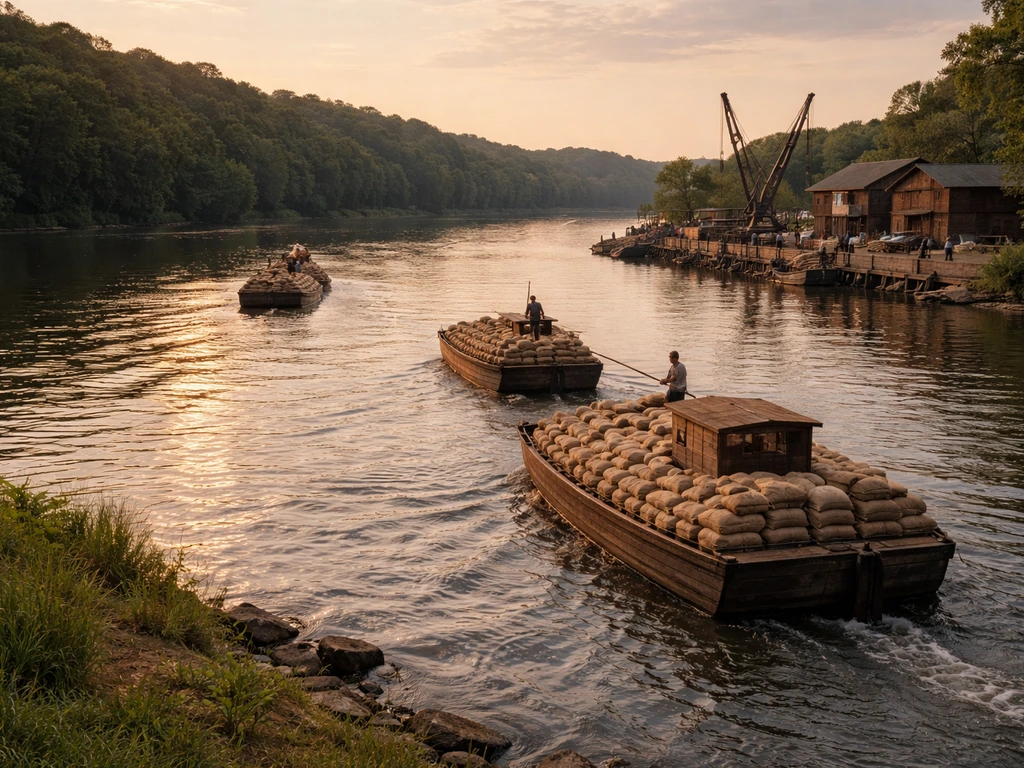
Fertile soil and good weather can produce a great harvest, but if you cannot move that harvest to a buyer, it does not make you any money. This is where the Middle Colonies had one more huge advantage: a dense network of navigable rivers connecting inland farms directly to Atlantic port cities.
The Delaware River carried grain from Pennsylvania farms down to Philadelphia, where it was milled into flour and loaded onto ships. The Hudson connected New York's inland farms to the port of New York City. Grist mills sat along these waterways at key points, converting raw grain into flour, which was more compact and valuable per unit of weight to ship overseas. By the late eighteenth century, Philadelphia was exporting roughly 400,000 barrels of flour per year, making it one of the most important flour-milling and export centers in the Atlantic world.
The destinations for all that grain and flour were diverse: the West Indies (where sugar plantations needed to import food), Southern Europe, Great Britain, and Nova Scotia. New York merchants ran an Atlantic export network that sent flour and grain across multiple ocean routes. This access to multiple markets gave Middle Colony farmers pricing resilience. If one market softened, another absorbed the surplus. That commercial infrastructure is inseparable from the cash-crop story: good land produced the crops, but navigable rivers and deep-harbor ports converted bushels into income.
Apply this today: a region-to-crop suitability checklist
The logic the Middle Colony farmers benefited from, even if they never spelled it out, is exactly the same framework modern farmers and agricultural planners use to match crops to regions. Whether you are a student trying to understand why crop choices vary by geography, a gardener evaluating what to grow for market, or a farmer assessing a new piece of land, here is a practical checklist built from the same factors that made the Middle Colonies work.
- Check soil drainage class. Target moderately well-drained to well-drained soils for wheat, corn, and most grains. Chronically wet or poorly drained fields will limit yield and increase disease pressure. A USDA Web Soil Survey lookup for your parcel gives you this for free.
- Measure or estimate soil pH. Wheat and rye target a pH of 6.0–7.0 for strong yields. Rye tolerates down to about 5.5, making it a fit for slightly more acidic fields. If your soil tests below 6.0 for wheat, budget for lime before planting.
- Find your frost dates and growing season length. Use NOAA Climate Normals or the National Weather Service for your location. Count the days between your average last spring frost and first fall frost. Wheat needs roughly 90–120 frost-free days to mature; corn needs more warmth and a longer window.
- Assess seasonal rainfall. Crops like corn are particularly sensitive to moisture at germination and during ear fill. If your region has dry summers, plan for irrigation or choose drought-tolerant varieties. Match expected rainfall patterns to crop water needs before committing to a cash crop.
- Evaluate your soil texture and depth. Deep, loamy soils (like the alluvial valley soils of the Middle Colonies) outperform shallow or rocky soils for grain crops. Flax and hemp specifically need deep, fertile loam. A simple field observation, or a soil pit, tells you whether you have depth to work with.
- Map your route to market. Cash crops only generate cash if you can move them. Identify the nearest grain elevator, mill, farmers market, or export facility and calculate your transport cost per bushel or barrel. The Middle Colonies succeeded partly because river transport made that cost very low. Your equivalent today is road access, storage, and proximity to a buyer.
- Consider crop rotation and soil depletion. Flax and tobacco deplete nutrients fast. If you are growing nutrient-demanding crops, build a rotation plan (corn, small grain, legume is a classic) to maintain the soil productivity that makes cash-crop farming sustainable long-term.
The historical pattern holds up perfectly when you apply it to modern decisions. Fertile, well-drained soil plus a reliable temperate climate plus market access equals a viable cash-crop region. That is what the Middle Colonies had in the 1700s, and it is what makes certain agricultural regions profitable today. Understanding why crops grow where they do, from the Middle Colony breadbasket to current grain belts, always comes back to those same three pillars: soil, climate, and the ability to sell what you grow.
FAQ
If the Middle Colonies had fertile soil and ports, why did the article say three pillars had to line up?
A farmer could produce cash crops even if one factor was weaker, but not if two failed at the same time. For example, good soil could not fully compensate for unreliable rainfall, and strong weather would not generate profit without a way to reach buyers quickly before grain spoiled or prices shifted.
Did middle colony farmers need ports specifically, or would rivers alone have worked?
Ports mattered, but the article’s real point is that rivers and downstream milling let farmers sell surplus quickly. Without dependable river transport, crops could still be grown for subsistence, but turning them into consistent cash income would have been much harder due to delays, spoilage risk, and weaker bargaining power.
How did middle colony farmers decide what to plant if not every field was equally fertile?
Yes. The region’s reliable climate and long enough season helped, but the choice of which crop to plant depended on field conditions. Wheat performed best on well-drained, higher pH ground, while farmers could shift to rye or other crops on fields where wheat output dropped.
What happens to cash-crop farming if rivers exist, but buyers or milling are limited?
A cash-crop system depends on more than growing, it depends on predictable profitability. If transportation was available but milling capacity or buyer demand was limited, farmers could still sell, but price swings would be larger and “consistent cash crops” would be harder to maintain across years.
Could middle colony farmers grow any cash crop, or were they limited by soil needs and rotation?
The article focuses on land suited for cereal crops, but it also notes that flax and hemp required specific soil richness and often nutrient management, especially flax. That means profitability could drop if farmers did not rotate crops or rest fields, even when the climate and transport were favorable.
If the soil was fertile, why did drainage still matter so much?
Even in a well-suited region, repeated wet conditions or poor drainage could reduce oxygen availability in roots and increase disease, lowering yields. That is why the article highlights drainage and soil structure, not just “fertile” land in general.
How did the Middle Colonies handle the risk of a bad harvest when cash crops were the goal?
Crop failures were not eliminated, but risk was reduced because rainfall was more consistent and the growing season longer. In practical terms, farmers could survive an occasional bad year, since surplus from better years helped carry them through when yields fell.
Why couldn’t New England or the southern colonies just copy the middle colony approach?
The Middle Colonies’ advantage is partly comparative, not just absolute. New England had less suitable land and a shorter season for large-scale grain, and the South had a climate that favored different labor and cash-crop patterns, so each region’s “best fit” differed even if all had some market access.
How did selling to multiple markets affect middle colony farmers’ income stability?
Market access influenced pricing, because exporting to multiple destinations reduced the chance that one market slump would wipe out the value of the harvest. With more than one outlet, farmers were less likely to be stuck selling at the worst time or to a single buyer.
What is a practical modern checklist to decide whether a region can support cash crops like the Middle Colonies did?
If you are assessing a modern “cash crop” opportunity using the same logic, start by checking soil drainage and pH, then verify that temperatures and frost dates match the crop calendar, and finally confirm you have an off-take channel that is reliable (not just available) during harvest.
Next Articles
What Crops Did Slaves Grow on Plantations by Region
See which crops enslaved people grew by region: sugar, cotton, rice, tobacco, plus processing tasks and how to verify lo
Why New England Farmers Couldn’t Grow Cash Crops Reliably
New England farmers struggled with warm-season cash crops due to frost, short seasons, poor soils, rain, and distant mar
What Did Colonial Farmers Grow by Region and Crop Type
Regional breakdown of colonial crops, from staple grains and gardens to cash crops, plus how to find exact crops by colo