Enslaved people on plantations were forced to grow a handful of major export crops depending on where the plantation was located: sugarcane in the Caribbean and Louisiana, tobacco in the Chesapeake, rice and indigo along the South Carolina and Georgia coasts, and cotton across the Deep South. OpenStax notes that European slave systems in the Americas produced export commodities including sugar, rice, indigo, tobacco, and coffee 5.4 The Atlantic Slave Trade. Those five crops account for the overwhelming majority of enslaved agricultural labor across the Atlantic plantation system, though food crops, livestock, and craft production were woven into the work as well. The crop was almost always dictated by climate and soil, not by choice.
What Crops Did Slaves Grow on Plantations by Region

Samuel Rourke
27 May 2026
The main plantation crops, listed directly
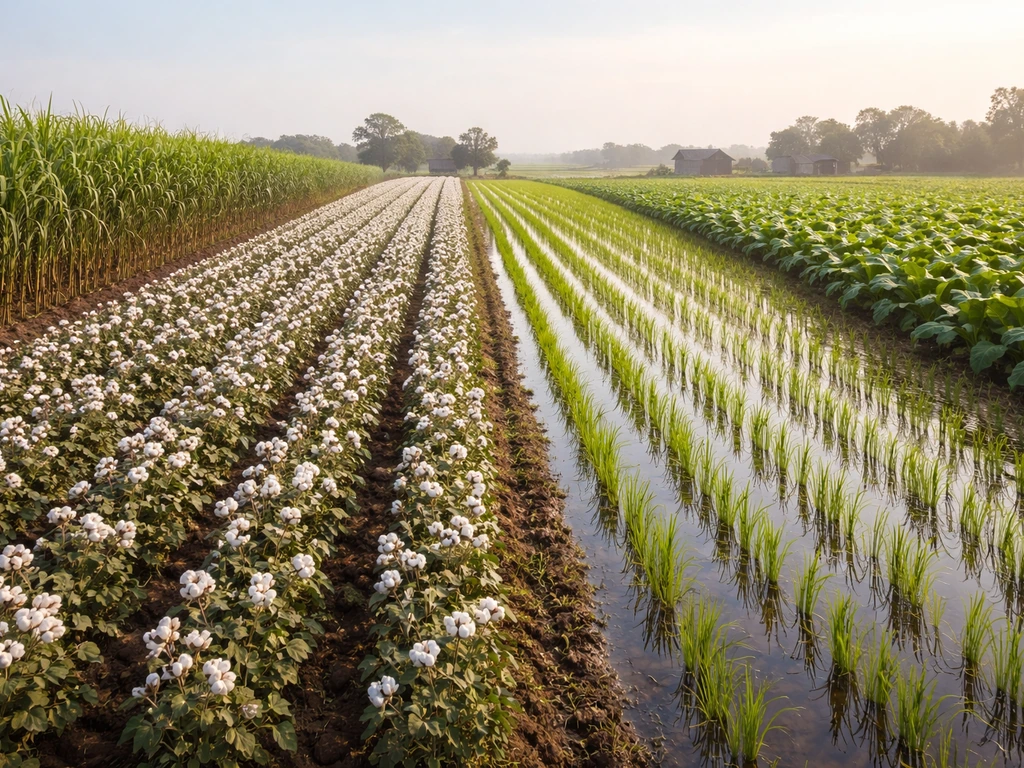
Here are the core staples enslaved people cultivated across the Atlantic plantation world, from the 1600s through the Civil War era:
- Sugarcane: The dominant crop of the Caribbean (Jamaica, Barbados, Saint-Domingue, Cuba) and later Louisiana. Sugar drove the largest volume of the transatlantic slave trade.
- Tobacco: The first major plantation staple in British North America, centered in Virginia, Maryland, and North Carolina (the Chesapeake region) from the early 1600s onward.
- Rice: Cultivated intensively in the South Carolina and Georgia Lowcountry, especially in tidal river systems. Enslaved West Africans brought crucial rice-cultivation knowledge with them.
- Indigo: Grown alongside or in rotation with rice in the Carolina Lowcountry and parts of Georgia, producing a blue dye for the British textile trade. It declined sharply after American independence cut off British subsidies.
- Cotton: Became dominant across the Deep South (Georgia, Alabama, Mississippi, Louisiana, Texas) after Eli Whitney's cotton gin in 1793 made short-staple cotton commercially viable. By the 1800s, 'King Cotton' defined the plantation economy of the U.S. South.
- Coffee: Important in Caribbean colonies, especially Saint-Domingue (Haiti) and Cuba, during the 18th and 19th centuries.
- Hemp: Grown in Kentucky and parts of Missouri; enslaved laborers processed hemp fiber for rope and cloth.
Subsistence and provision crops (corn, sweet potatoes, beans, garden vegetables) were also grown on nearly every plantation to feed the enslaved workforce, but these were not the export staples the system was built around.
How region and climate determined the crop
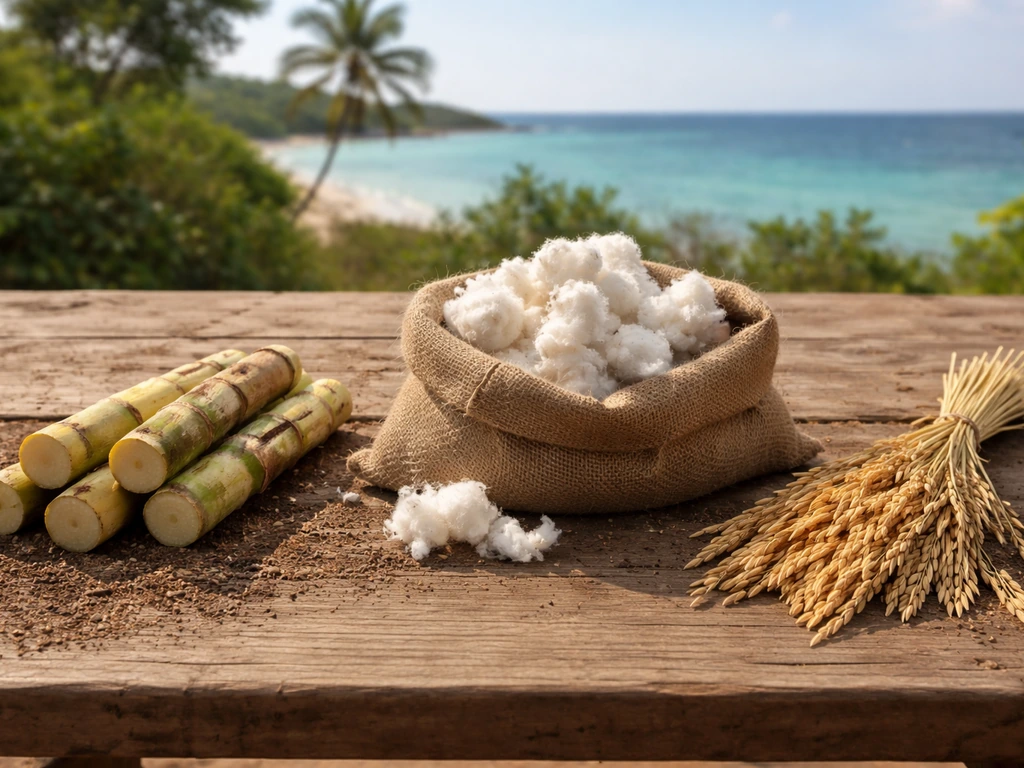
This is one of the clearest examples of climate shaping agricultural history. The plantation system didn't pick a crop and then find land, it worked the other way around: the available land and climate selected which crop made economic sense, and then the labor system (enslavement) was intensified to maximize that crop's output.
| Region | Primary Crop(s) | Key Climate/Soil Factor |
|---|---|---|
| Caribbean islands (Jamaica, Barbados, Saint-Domingue, Cuba) | Sugarcane, coffee | Tropical heat, high rainfall, volcanic/alluvial soils |
| Louisiana (especially the Mississippi delta) | Sugarcane, cotton | Subtropical heat, long growing season, rich delta soil |
| Chesapeake (Virginia, Maryland, N. Carolina) | Tobacco | Warm summers, moderate humidity, well-drained loam soils |
| South Carolina & Georgia Lowcountry | Rice, indigo | Tidal rivers, swampy coastal plains, high humidity |
| Deep South (Georgia, Alabama, Mississippi, Texas) | Cotton | Long frost-free season, rich black prairie soils |
| Kentucky, Missouri | Hemp, tobacco | Temperate climate, fertile bottomlands |
| Caribbean (18th century) | Coffee | Highland elevations with tropical rainfall patterns |
Tobacco needs a long warm season but is sensitive to excessive rain and does poorly in waterlogged soils, which is why it thrived in the rolling hills of the Chesapeake rather than the swampy Lowcountry. Rice is the opposite: it requires standing water and the tidal rice fields of coastal Carolina were engineered specifically to flood and drain fields using tidal action. Sugarcane demands intense tropical heat and rainfall that simply doesn't exist in most of North America, which is why Caribbean sugar production dwarfed everything else in raw volume and drove more of the slave trade than any other single crop.
Sugar vs. cotton vs. rice vs. tobacco: how the crop systems compared
These weren't just different crops, they were fundamentally different labor systems. Understanding those differences matters if you're researching a specific plantation or trying to understand what enslaved people's daily lives actually looked like.
Sugar plantations
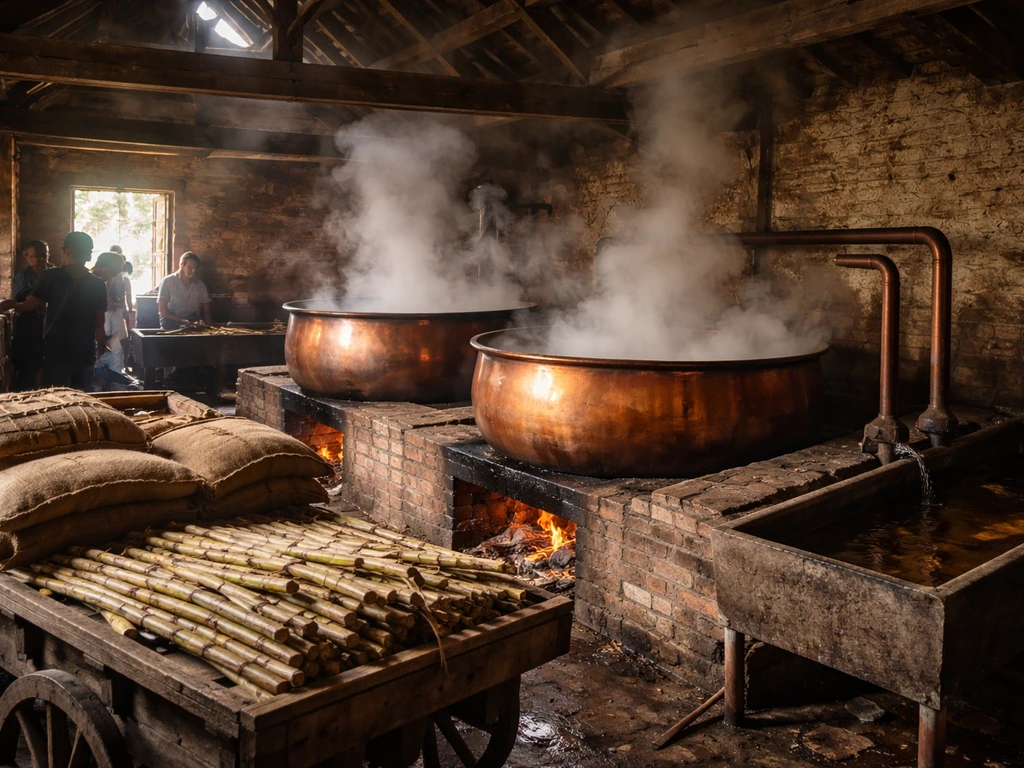
Sugar was by far the most brutal and capital-intensive system. Sugarcane must be processed within hours of cutting or the sucrose content drops, so mills, boiling houses, and curing facilities had to sit right on the plantation. Enslaved workers cut cane during a harvest season that ran nearly continuously, fed cane into crushing mills, boiled the juice through a series of large copper kettles (called the 'Jamaica train'), and managed the curing of raw sugar into muscovado.
Rum production from molasses was a parallel operation on the same site. The pace was relentless, injuries were common at the mills, and mortality rates among the enslaved in sugar colonies were catastrophic, which is why Caribbean sugar islands constantly imported enslaved Africans rather than having growing local populations. This exploitation helped drive the transatlantic slave trade, since enslaved people were brought from Africa to grow export crops.
Tobacco plantations
Tobacco required year-round skilled labor but in a more varied rhythm: seeding beds in late winter, transplanting seedlings, topping (removing flower heads to redirect growth to leaves), worming (picking tobacco hornworms by hand), harvesting individual leaves as they ripened, then curing the leaves in tobacco barns. Curing methods evolved over time from air-curing to fire-curing and later flue-curing. The cured leaves were then prized (pressed) into hogshead barrels right on the plantation and rolled to a riverbank for shipment. Chesapeake plantations, especially smaller ones, often had diversified operations, raising grain and livestock alongside tobacco.
Rice plantations
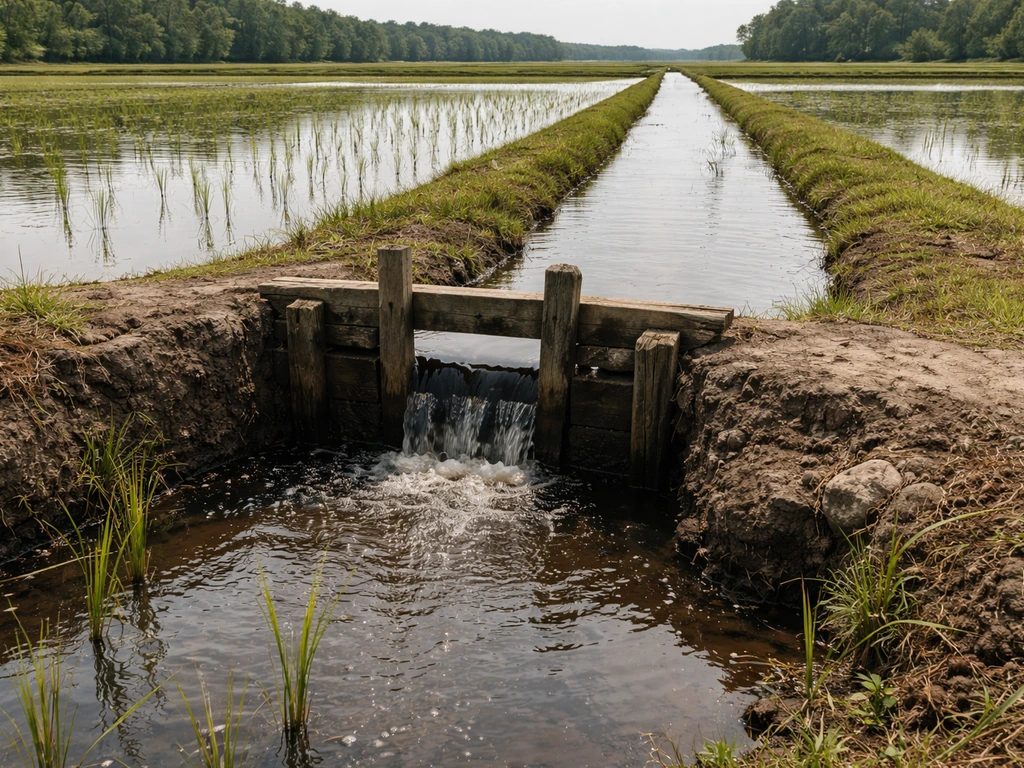
Rice cultivation in the Carolina and Georgia Lowcountry required extraordinary engineering: enslaved workers built and maintained elaborate systems of dikes, floodgates (called trunks), and canals to control tidal flooding of rice fields. Many historians credit the success of Lowcountry rice cultivation directly to the agricultural knowledge that enslaved West Africans brought from rice-growing regions of the Upper Guinea coast (present-day Sierra Leone, Guinea-Bissau, and Senegal). After harvest, the rice was threshed and then milled to remove husks, using a mortar-and-pestle technique also largely attributed to African practice. Rice plantations often operated under a 'task system' where enslaved workers were assigned a specific daily task rather than working in gang labor from sunup to sundown.
Cotton plantations
Cotton became the defining crop of 19th-century American slavery after the cotton gin made processing short-staple cotton economical. Enslaved workers planted, chopped (weeded), and picked cotton almost entirely by hand. Picking season ran from late summer through early winter, and enslaved people were pushed to meet daily weight quotas that increased over time. While the cotton gin itself was a mechanical innovation, nearly every other step from field preparation to picking to baling was done by hand under gang labor conditions. Cotton gins were installed on larger plantations so that ginning and baling happened on-site before the cotton was shipped to market.
What was grown vs. what was processed on the plantation
One thing often overlooked is that plantations weren't just farms, they were also processing facilities. The gap between 'what grew in the ground' and 'what left the plantation gate' involved significant labor that's easy to miss in a simple list of crops.
- Sugar: Raw sugarcane was crushed, boiled, and cured into muscovado sugar and molasses on-site. Rum was distilled from the molasses at the plantation distillery.
- Tobacco: Leaves were cured in plantation barns, then stripped, sorted, and packed into hogsheads on-site.
- Rice: Grain was threshed and pounded or milled on the plantation to remove hulls and produce white rice.
- Cotton: Seed cotton was ginned (seeds removed) and then pressed into bales for shipping.
- Indigo: The plant was fermented in large vats, the sediment drained and dried into indigo cakes on-site before export.
- Hemp: Stalks were water-retted (soaked) and then broken and scutched to separate the fiber.
Enslaved people also built and maintained the infrastructure for all of this: the mills, dike systems, barns, distilleries, and cotton gins. That labor was just as central to the plantation economy as field cultivation, even though it doesn't show up in a simple list of 'crops grown.'
How to research what a specific plantation actually grew
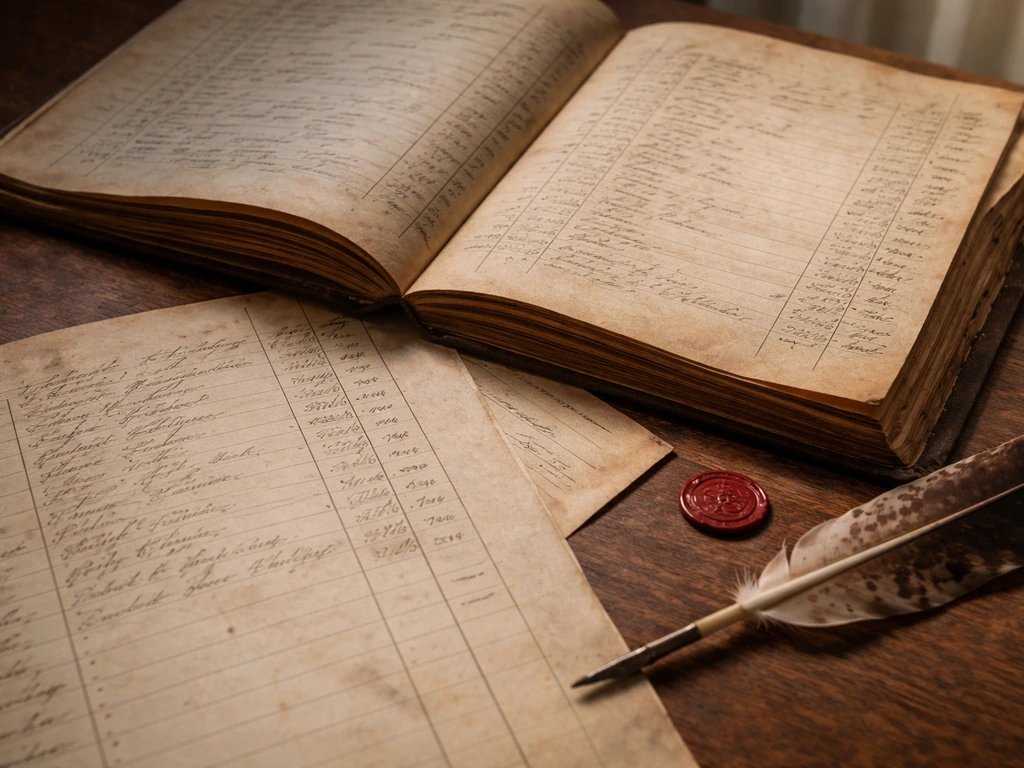
If you need to verify what a particular plantation grew (for a history project, genealogical research, or a local history inquiry), you're not stuck guessing based on region alone. There are several concrete record types and repositories where this information tends to survive.
Start with plantation records and estate inventories
Plantation account books, ledgers, and journals often list specific acreages of each crop, harvest quantities, and sale records. Probate inventories (filed when a plantation owner died) frequently list crop stores in barns, processing equipment, and fields under cultivation. These are often held at county courthouses, state archives, or historical societies. The Southern Historical Collection at the University of North Carolina at Chapel Hill holds one of the largest collections of plantation records in the country. The Virginia Historical Society (now the Virginia Museum of History and Culture) is another major repository for Chesapeake plantation records.
U.S. agricultural censuses
The U.S. agricultural census, introduced in 1840 and substantially expanded in 1850 and 1860, lists individual farm and plantation production by county, including acreage of specific crops and bushels or bales produced. The 1850 and 1860 slave schedules can be cross-referenced with the agricultural schedules to link enslaved population size to crop output for a given property. Both are accessible through Ancestry.com, FamilySearch, and directly from the National Archives.
Shipping and merchant records
Port records, customs entries, and merchant correspondence frequently specify which plantation shipped how much of which commodity. The UK National Archives holds extensive records from the British colonial period documenting the flow of plantation produce (sugar, tobacco, cotton, and more) into British ports, which can be traced back to specific colonial producers. American port records are available through the National Archives in Washington, D.C., and regional branches.
Tax lists and land records
Colonial and antebellum tax lists sometimes specify the type and value of crops on a property. Land grants and surveys occasionally note the agricultural character of land (e.g., 'rice land' or 'tobacco ground'). These are usually held at state archives or the Library of Congress.
Freedmen's Bureau records
For the post-Civil War transition period (1865 to 1872), Freedmen's Bureau labor contracts specify which crops formerly enslaved people were contracted to produce on specific properties. These can provide a clear snapshot of what a plantation had been growing in its final years of enslaved labor. These records are available through the National Archives and are increasingly indexed on FamilySearch.
Quick research checklist
- Identify the state and county of the plantation and the approximate time period you're researching.
- Search that county's holdings at the relevant state archive for probate records, estate inventories, and deed books.
- Pull the 1850 or 1860 agricultural census schedules for that county (Ancestry.com or FamilySearch).
- Cross-reference with the slave schedules from the same year to match enslaved population to specific operators.
- For colonial-era plantations (pre-1790), check the relevant state colonial records and the UK National Archives for British-period plantation and shipping records.
- Contact the local historical society or university special collections for manuscript plantation records.
Common myths and oversimplifications worth correcting
A few misconceptions come up constantly when this topic is discussed, and they're worth addressing directly.
The biggest one: enslaved labor was not just about cotton. Cotton dominates popular memory of American slavery partly because it defined the final and largest phase of the slave economy in the U.S. South, and partly because the cotton economy is tied to industrialization and the Civil War narrative. But tobacco came first and remained enormously important through the entire period. Rice was the primary crop for generations of enslaved people in coastal Carolina and Georgia. Sugar drove a larger share of the total transatlantic slave trade than cotton ever did. Reducing 'plantation crops' to cotton erases the full picture.
A second misconception is that plantations were purely single-crop operations. blank" rel="noopener noreferrer">The 'monoculture' model is real in the sense that one export staple dominated the economics, but nearly every plantation also grew corn, kept livestock, maintained kitchen gardens, and relied on a range of skilled trades (blacksmithing, carpentry, coopering) performed by enslaved workers. Larger plantations were often close to self-sufficient villages. This is especially true for tobacco plantations in the Chesapeake, which commonly grew grain crops alongside tobacco.
A third point worth making: enslaved people were not passive participants in crop cultivation. In the case of rice especially, the system only worked because of agricultural expertise that enslaved Africans brought from West Africa. Because of that knowledge, middle colony farmers were able to grow cash crops because it helped them manage the climate and soils more effectively agricultural expertise that enslaved Africans brought from West Africa. The same is true for indigo processing techniques. Treating the crop history as purely a story of what European planters decided to grow misses the technical knowledge that enslaved workers contributed, often involuntarily and without any credit or compensation.
If you're exploring related threads, the experience of colonial farmers who weren't part of the plantation system tells a very different agricultural story, and the reasons why New England farmers couldn't replicate cash-crop plantation agriculture help clarify just how climate-dependent the whole system was. The question of why laborers like Indian ryots were reluctant to grow indigo for colonial powers is another dimension of the same global story of coerced agricultural production. This broader question of what colonial farmers grew, and why, helps explain how different regions adapted to cash-crop demands what colonial farmers grow.
FAQ
Did plantations only grow one cash crop, or did they also grow food?
Not always. Even when a region’s export staple is clear, many plantations also grew local food crops (corn, sweet potatoes, beans, vegetables) and kept livestock, both to feed enslaved people and to supply laborers and field operations. For some tobacco regions, the plantation economy could include substantial grain production alongside tobacco rather than relying on one crop alone.
Was the work on plantations just planting and harvesting, or did processing matter too?
Yes. Rice plantations depended heavily on water control (dikes, floodgates, canals), and tobacco relied on specialized curing and handling, sugar required on-site milling and rapid processing, and cotton involved ginning and baling before shipment. So the main export crop might stay consistent, but the plantation’s day-to-day work centered on processing tasks and maintenance tied directly to that crop.
If I know the plantation’s region, can I assume exactly which crop it grew?
You can often narrow it down, but you cannot assume the crop from location alone. County boundaries, soil patches, and microclimates affected what could be grown, and plantation owners sometimes shifted production as market conditions changed. The most reliable approach is to verify with plantation account books, probate inventories, agricultural schedules, or port/shipping records.
How can I connect the enslaved population numbers to crop output for a specific property?
They often did. In the U.S. context, the 1850 and 1860 slave schedules list enslaved people by household and sometimes by age categories, while the agricultural schedules list crop acreages and output by county. Linking those together by property or nearby holdings can help you estimate how enslaved labor size related to production levels, but it requires careful matching because not every record uses the same unit of ownership.
What should I do if plantation account books are missing for the plantation I’m researching?
Record survival varies a lot by colony, state, and time period. If you are not finding plantation ledgers, probate files can still be useful because they list stored crops, processing equipment, and field preparation. Tax lists and land surveys can also confirm whether land was described as suited for specific crops like “tobacco ground” or “rice land.”
Do Freedmen’s Bureau records help identify what crops were produced late in the plantation era?
Yes, but it is important to use the right time window. Freedmen’s Bureau labor contracts (for 1865 to the early 1870s) can show what crops were being worked on at the end of slavery, yet they may reflect a transition in who controlled production and how contracts were structured. Treat them as evidence of late-stage practices rather than a complete record of earlier plantation history.
If sources mention exports like sugar or rice, should I verify the crop beyond the commodity name?
The crop label can be misleading if you focus only on the export commodity. For example, sugar processing required mills and boiling houses, and rice involved milling to remove husks after harvest. When you are assessing “what they grew,” it helps to also check what the records mention about processing equipment or stored product types.
Why did enslaved plantation crops change over time or between nearby areas, even within the same state?
Yes. Many regions were shaped by rainfall and soil, but crop choices were also constrained by infrastructure and expertise. For instance, rice required engineering and specific water-management practices, tobacco depended on curing methods and seasonal labor, and sugar required tropical heat plus rapid processing capacity. When you see crop adoption patterns, the underlying driver is often not just climate but the ability to build and operate the required system.
Next Articles
Why New England Farmers Couldn’t Grow Cash Crops Reliably
New England farmers struggled with warm-season cash crops due to frost, short seasons, poor soils, rain, and distant mar
What Did Colonial Farmers Grow by Region and Crop Type
Regional breakdown of colonial crops, from staple grains and gardens to cash crops, plus how to find exact crops by colo
What Did the Delaware Colony Grow: Crops, Uses & Legacy
Colonial Delaware’s main crops, grains, hay, flax, fruits, vegetables, livestock, why they thrived and how they were sold.