Mesopotamia grew barley and emmer wheat as its two dominant staple crops, and built one of the ancient world's most productive farming systems around them. Beyond cereals, farmers also cultivated lentils, chickpeas, peas, sesame, flax, onions, garlic, leeks, dates, figs, and grapes. The full list shifts a bit depending on which part of Mesopotamia you're looking at and which century, but those core crops show up consistently across cuneiform tablets, archaeobotanical remains, and agricultural texts stretching from roughly 3000 BCE through the first millennium BCE.
What Crops Did Mesopotamia Grow? List and Why It Worked

Samuel Rourke
8 Apr 2026
Where Mesopotamia was and why geography shaped everything
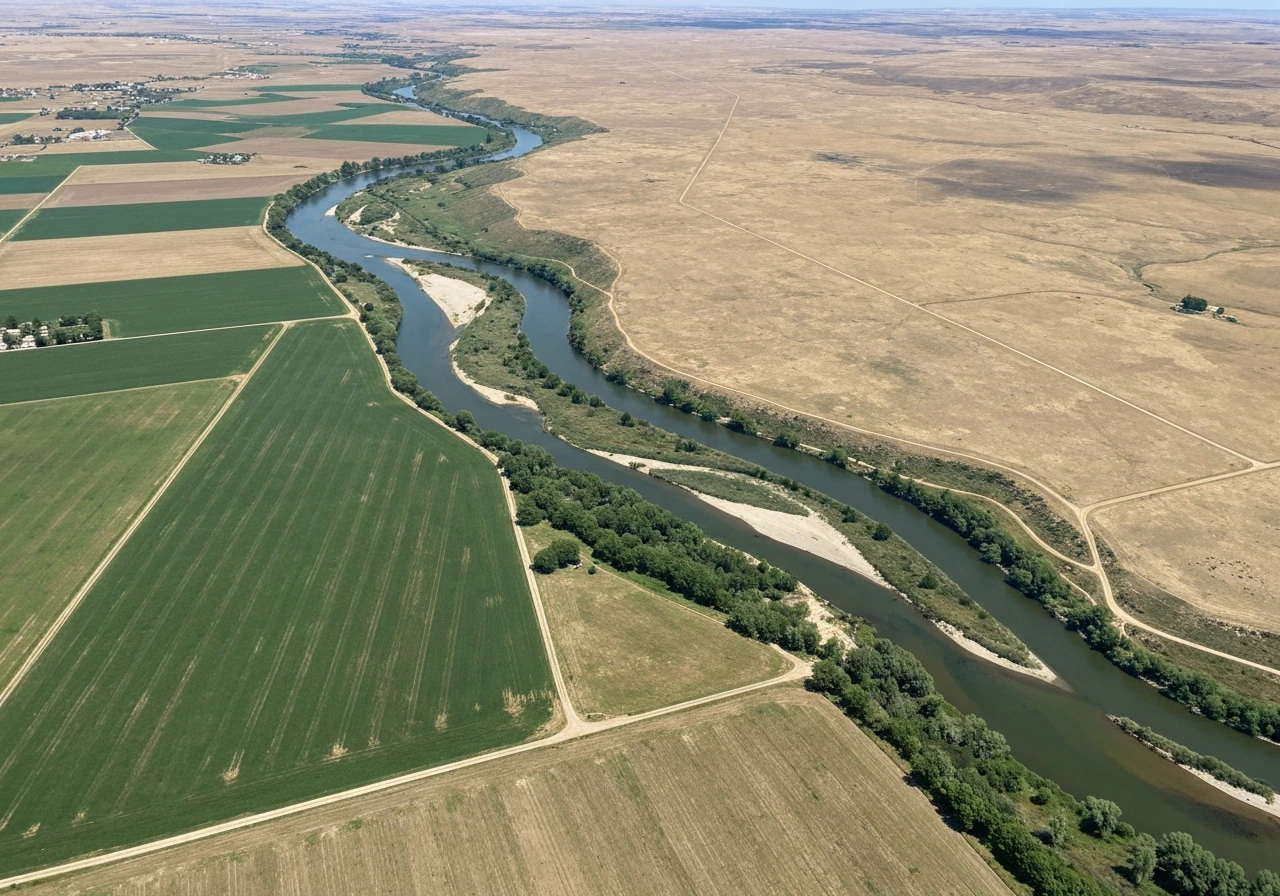
Mesopotamia sat in what is now Iraq and parts of Syria, Turkey, and Iran, centered on the valleys of the Tigris and Euphrates rivers. The name itself means "land between the rivers" in Greek, which is a reasonable one-line description of why farming worked there at all. Two major rivers running through an otherwise arid landscape meant that water was available even when rainfall was not.
The region breaks into two quite different agricultural zones. Northern Mesopotamia (roughly modern Iraqi Kurdistan and northern Syria) received enough seasonal rainfall to support dryland farming, at least in good years. Southern Mesopotamia, the area historically known as Sumer and later Babylonia, was drier and flatter, with minimal annual rainfall. Down south, farming was essentially impossible without deliberate irrigation. That geographic split matters a lot when you're reading about Mesopotamian crops, because the two zones grew overlapping but not identical lists, and they managed water in completely different ways.
The main crops, broken down by type
Cereals: the foundation of everything
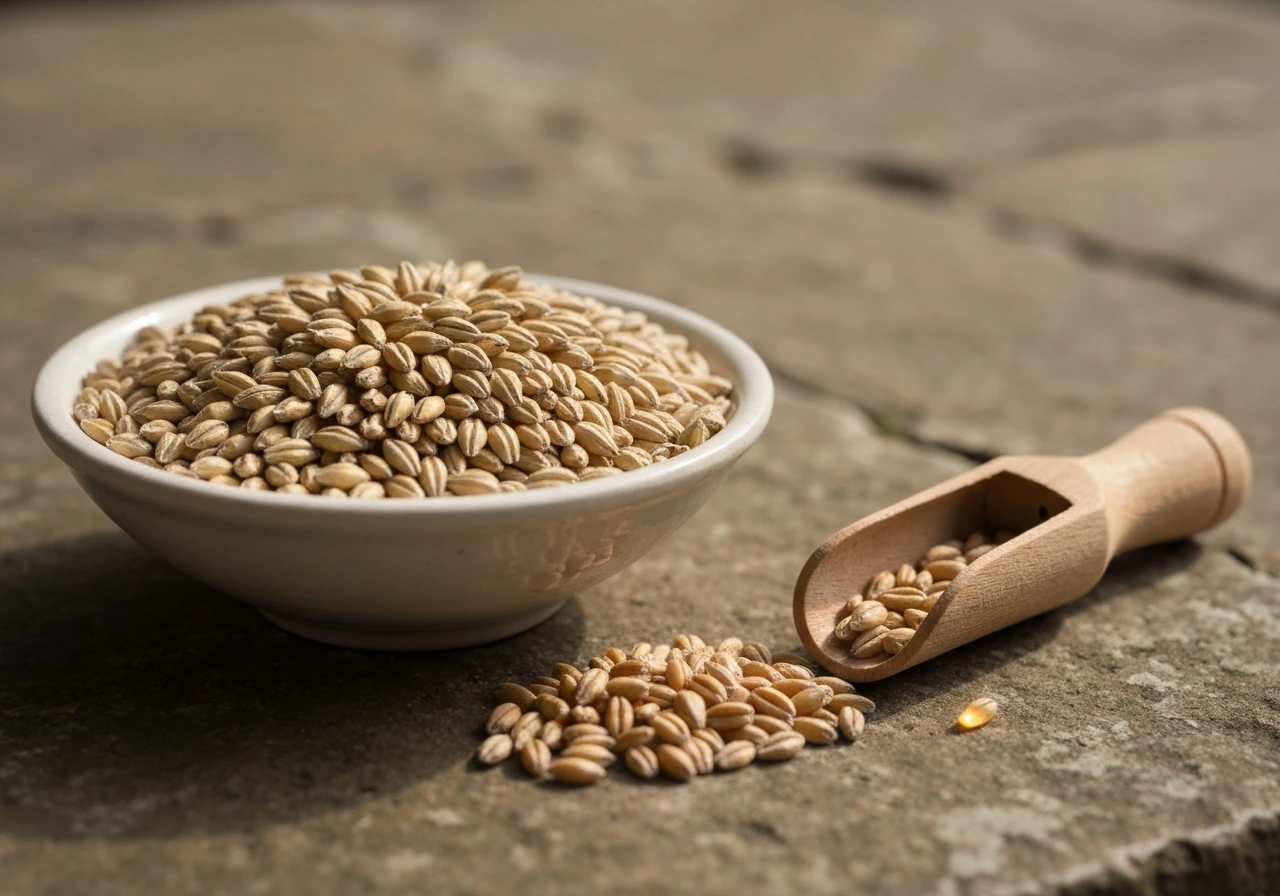
Barley was the single most important crop in Mesopotamia, especially in the south. It tolerates saline soils better than wheat does, which made it invaluable in Lower Mesopotamia where long-term irrigation gradually pushed salt levels up in fields. Emmer wheat was the other major cereal, documented in administrative tablets from as far back as the Uruk period. A cuneiform tablet from Jemdet Nasr (in the Uruk region) records distributions of both barley and emmer wheat, showing these two were being tracked and managed at scale by the late fourth millennium BCE. Millet appears later in the record: the Akkadian term for it (duḫnu or tuḫnu) shows up explicitly in cuneiform texts dated to the mid-second millennium BCE at sites including Nippur and Nuzi, though it can be tricky to detect in charred plant remains because of preservation challenges.
Legumes: the crop rotation partners
Lentils, chickpeas, and peas were all part of the Mesopotamian agricultural toolkit. Archaeobotanical work at Kani Shaie, an Early Bronze Age site in Iraqi Kurdistan, identified all three alongside barley and emmer wheat in the same assemblage. Legumes mattered not just as food but as nitrogen-fixing plants that helped maintain soil fertility when rotated with cereals. The Sumerian Farmer's Almanac, a practical agricultural handbook dated to around 1700 BCE, reflects an awareness of fallowing and rotation strategies that would have kept legume cultivation integrated into broader field management.
Oilseeds and fiber crops
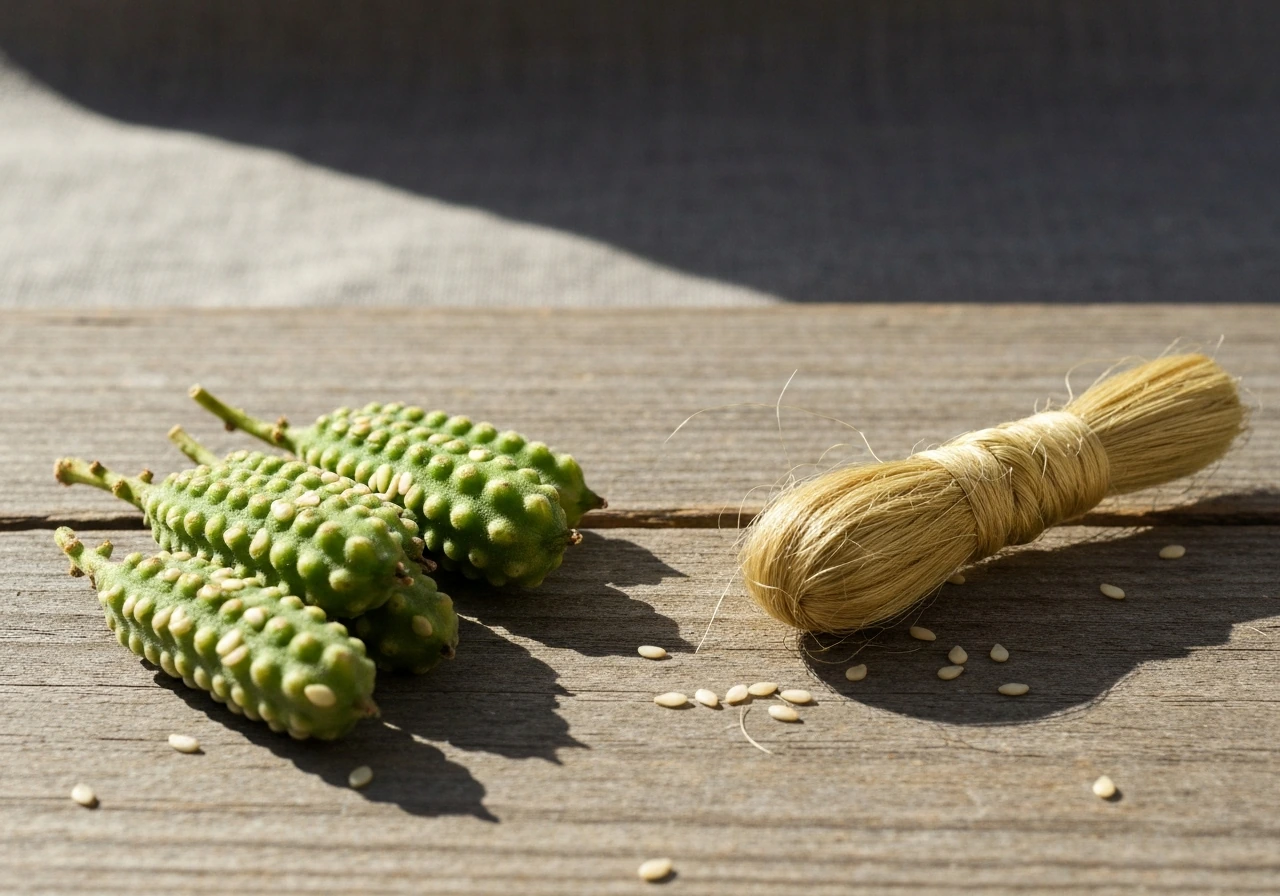
Sesame was grown for its oil, which was used for cooking, lamp fuel, and trade. Flax was cultivated for both linseed oil and its fiber, which was spun into linen. These crops appear in textual records and are consistent with the broader agricultural economies of the ancient Near East. If you want to compare how neighboring civilizations handled similar oilseed crops, what crops did ancient Egypt grow covers flax and sesame use in that parallel river-valley context.
Vegetables and alliums
Onions, garlic, and leeks were common vegetables documented in Mesopotamian texts. Cucumbers and various leafy greens appear in records as well. These were grown in garden plots near settlements and along canal edges where access to water was more immediate and manageable than in large open fields.
Fruit: dates above all
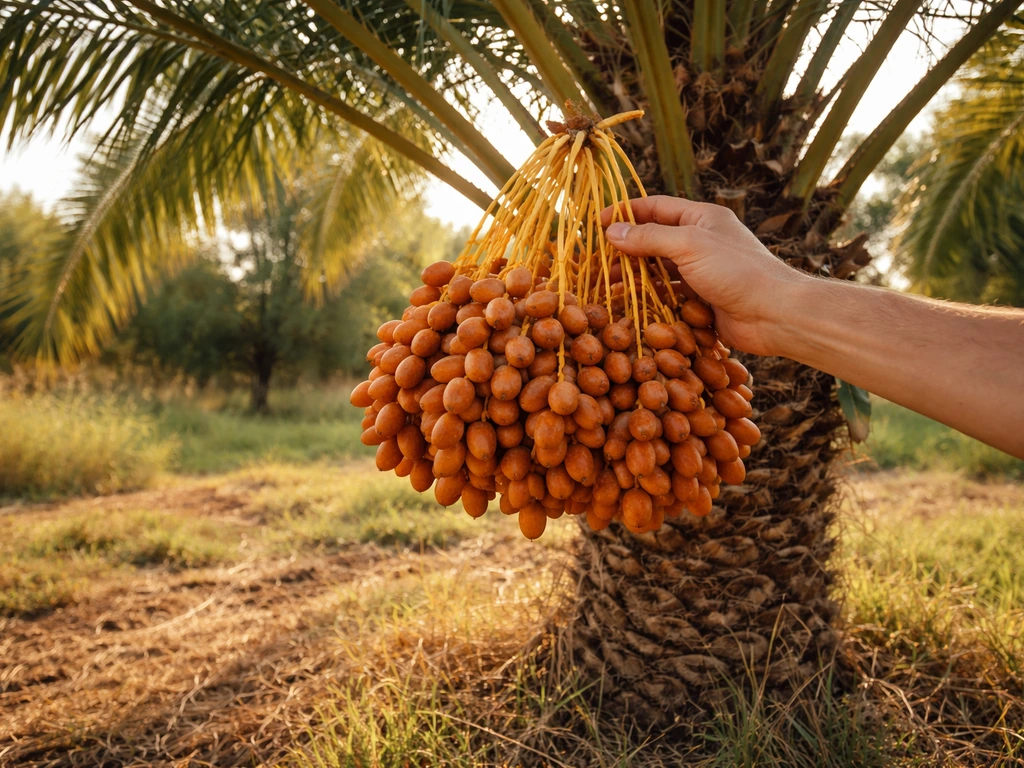
The date palm was arguably Mesopotamia's most culturally and economically significant fruit crop. Dates provided calories, sweetener (date syrup), and trade goods. Date palms also tolerated saline soils and intense heat, which made them well adapted to the conditions of southern Iraq. Figs and grapes were grown in suitable areas, particularly in the north where the climate was slightly cooler and wetter.
Irrigation and water management: how they made it work
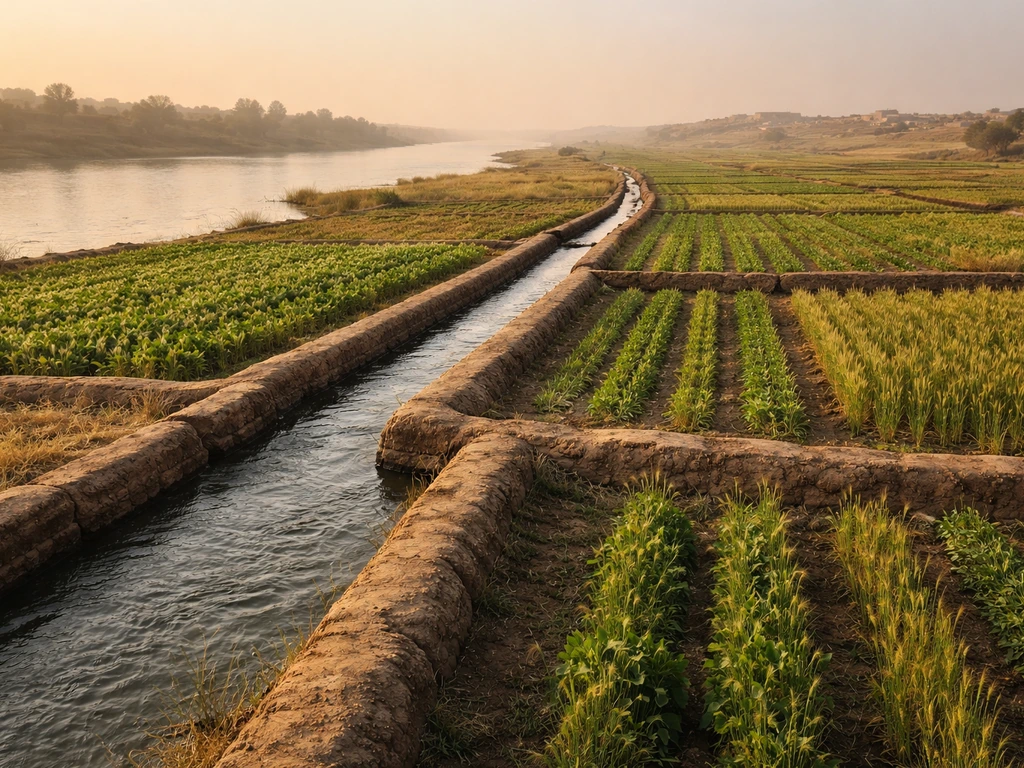
In southern Mesopotamia, irrigation was not optional. The region received very little annual rainfall, so the entire agricultural economy ran on water diverted from the Tigris and Euphrates via a network of canals and ditches. This was large-scale, coordinated infrastructure, not just a few individual farmers digging channels. The canal systems required ongoing labor to build, maintain, and manage water distribution across thousands of fields.
The Euphrates and Tigris flooded seasonally, which was both a benefit and a challenge. The floods deposited silt that refreshed soil nutrients, but the timing was awkward for cereal crops. Unlike the Nile, which flooded in summer and receded in time for autumn planting, the Mesopotamian rivers peaked in spring, after winter grain was already in the ground. Farmers had to use basin flooding and canal diversions carefully to capture water without drowning crops at the wrong moment.
Salinization was a slow-moving but serious long-term problem. When irrigation water evaporates, it leaves behind dissolved salts. Over decades and centuries, those salts accumulated in fields and reduced yields. Archaeological and textual evidence shows that Mesopotamian farmers understood this to some degree. The shift toward barley dominance in the south (at the expense of wheat, which is less salt tolerant) is partly read as a response to rising soil salinity. Mitigation strategies included improving drainage, periodically leaching salt through heavy watering, and leaving fields fallow for a season or more. Canal bank microtopography and field layout also played a role in controlling wetting patterns and preventing waterlogging, which accelerates salt buildup.
Why crops actually thrived there (the real drivers)
The Tigris-Euphrates floodplain had genuinely rich alluvial soils in its early agricultural phase. Repeated flooding deposited fine silt that was naturally fertile and easy to work. Combined with a long, hot, sunny growing season and reliable (if artificially delivered) water, the conditions for cereal farming were excellent. The climate in the south was arid but predictable, which made irrigation planning more reliable than in regions with erratic rainfall.
Labor organization was also a factor. The large-scale canal systems, and the grain storage and distribution networks that went with them, required coordinated social structures. The administrative tablets recording barley and emmer distributions are evidence that these agricultural systems were managed institutionally, not just household by household. Temple and palace estates coordinated planting, harvesting, and redistribution at scale, which meant resources could be allocated to maintain infrastructure and respond to localized failures.
The Sumerian Farmer's Almanac reflects practical agronomic knowledge, including timing of plowing and planting, irrigation scheduling, and pest management. Farmers were advised when to flood fields, when to let them drain, and how to space seed. This kind of accumulated know-how, passed down and eventually written down, was part of what made the system productive over centuries. It is worth comparing how similarly structured crop knowledge developed elsewhere: what crops did ancient India grow explores how the Indus Valley and later Indian agricultural traditions handled comparable irrigation challenges in a hot, seasonally variable environment.
Crop selection itself was adaptive. Barley's salt tolerance, the date palm's heat and salinity resilience, and the inclusion of legumes for soil health all suggest that Mesopotamian farmers, over generations, were choosing crops that matched the constraints of their landscape rather than fighting against them.
Crops by region and time period: what varied and why
The broad crop list above represents Mesopotamia as a whole, but the details shifted by location and century. Northern Mesopotamia in the Early Bronze Age supported a mixed cereal-pulse economy on rain-fed land, as confirmed archaeobotanically at sites like Kani Shaie. Southern Mesopotamia in the same period was more heavily reliant on irrigation and leaned harder on barley as salinization increased over time. By the mid-second millennium BCE, millet had appeared as a documented crop in cuneiform texts from central Mesopotamia. Date palms were concentrated in the south where conditions suited them. Grapes and figs were more at home in the cooler, hillier north.
The Sumerians in particular left a detailed agricultural record through their administrative texts and the Farmer's Almanac. For a closer look at that specific culture's crop practices, what crops did the Sumerians grow goes deeper on their particular cereal-focused economy and how they documented it. Separately, if you want the full Mesopotamian picture with a broader cultural lens, what crops did the Mesopotamians grow approaches the same question from a slightly different angle.
Comparing Mesopotamia to neighboring ancient farming civilizations
It helps to see Mesopotamian crops alongside what was growing in neighboring ancient civilizations. Similar river-valley conditions produced overlapping crop lists, but with notable differences based on climate, soil, and culture.
| Crop type | Mesopotamia | Ancient Egypt | Ancient Greece |
|---|---|---|---|
| Primary cereal | Barley (dominant), emmer wheat | Emmer wheat (dominant), barley | Barley, emmer and einkorn wheat |
| Legumes | Lentil, chickpea, pea | Lentil, fava bean | Lentil, fava bean, chickpea |
| Oilseeds | Sesame, flax | Flax, castor | Olive (primary), sesame |
| Key fruit crop | Date palm | Date palm, grape, fig | Olive, grape, fig |
| Vegetables | Onion, garlic, leek, cucumber | Onion, garlic, leek, lettuce | Onion, garlic, cabbage |
| Water source | Irrigation canals from Tigris/Euphrates | Nile flood basin irrigation | Rain-fed with some terracing |
The Mesopotamian list sits closest to Egypt's in terms of cereals and legumes, which makes sense given the shared river-valley irrigation model. The key divergence is the olive, which dominated Greek and Mediterranean agriculture but was not a significant crop in Mesopotamia's hotter, more arid interior. What crops did ancient Greece grow covers how the olive-barley-grape triad shaped a very different agricultural economy despite Greece drawing on some of the same cereal domestication origins.
How to verify which crops a source is actually talking about
This is genuinely worth thinking about because Mesopotamia spans thousands of years and a large geographic area, and not every claim about its crops is equally well supported. There are two main evidence types: ancient texts (cuneiform tablets) and archaeobotanical remains (charred seeds, phytoliths). Both are valuable but have different blind spots.
Cuneiform tablets are fantastic for showing what was being administered and traded, but they have interpretive limits. Early texts from the Uruk period often lack verbs, which means scholars have to infer what the recorded quantities actually represent. Later texts like the Sumerian Farmer's Almanac are more readable but may idealize practices. When a source cites a cuneiform text, it is worth checking whether that text is from the south (Sumer/Babylonia) or north (Assyria/Upper Mesopotamia), and roughly what period it dates to.
Archaeobotanical evidence is more direct (actual plant remains from the ground) but has its own issues. Some crops like millet leave phytoliths rather than distinctive seeds, and charred remains can be uneven depending on what happened to burn. A crop that is hard to detect archaeobotanically might still have been widely grown, as the millet case shows: textual evidence from Nippur and Nuzi confirms millet cultivation even where phytolith evidence is harder to find.
When you're reading about Mesopotamian crops, ask these questions: Is the source citing textual evidence, archaeobotanical remains, or both? Which specific region of Mesopotamia does it refer to? What time period? A crop list sourced from northern Early Bronze Age sites will look different from one assembled from southern Babylonian texts of the first millennium BCE. Both are correct for their context. For a parallel example of how these same source questions apply in a neighboring civilization, what did the ancient Egyptians grow walks through the evidence types used to reconstruct Egyptian crop history and how to read them critically.
What Mesopotamian farming can actually teach modern growers
The practical lessons from Mesopotamian agriculture are more relevant than you might expect, especially if you farm or garden in a dry climate with irrigation dependence or soil salinity issues.
- Match your staple crop to your soil's real constraints. Mesopotamian farmers shifted from wheat toward barley as salinity increased, not out of preference but out of necessity. If your soil has drainage or salinity issues, barley and salt-tolerant crops like date palms are genuinely better choices than fighting to grow wheat.
- Rotate cereals with legumes. The barley-lentil-chickpea pattern in Mesopotamian assemblages was not accidental. Legumes fix nitrogen and break pest and disease cycles. A cereal-followed-by-legume rotation is as sound today as it was in 2500 BCE.
- Fallow fields deliberately. The Sumerian Farmer's Almanac and later agricultural texts show an awareness of fallowing as a tool for soil recovery and salt management. Even a one-season fallow can help leaching and reduce salt accumulation in irrigated systems.
- Manage drainage as carefully as irrigation. Mesopotamia's long-term salinization problem came partly from irrigating without adequate drainage. If you irrigate, plan for how water (and dissolved salts) will move out of the field, not just in.
- Use garden plots for high-value, water-intensive crops. Mesopotamians grew onions, garlic, leeks, and cucumbers in smaller irrigated garden plots rather than large open fields. This is a sensible allocation of limited water to high-yield, high-value crops.
- Think in multi-year timescales. The canal systems that made Mesopotamian farming possible required decades of investment and maintenance. Long-term thinking about soil health, water infrastructure, and crop rotation is what sustained those yields over centuries.
These patterns also connect to how early farming evolved before Mesopotamia reached its peak complexity. If you're curious about how Neolithic farmers first developed the cereal-legume combinations that Mesopotamia later scaled up, what crops did they grow in the Neolithic age traces those origins back to the earliest domestication of barley, wheat, and pulses in the broader Fertile Crescent region.
The bottom line is that Mesopotamia's agricultural success was not magic or luck. It was barley and emmer wheat as the workhorses, legumes as the soil partners, date palms as the resilient perennial, and a massive coordinated irrigation system managed by people who understood their landscape's strengths and limits well enough to farm it productively for millennia. That combination of pragmatic crop selection, water management, and institutional organization is worth studying, whether you're growing food today or just trying to understand how ancient civilizations fed themselves.
FAQ
What crops were the most important staples in Mesopotamia overall?
Barley and emmer wheat were the core staples across most of Mesopotamia, with barley becoming especially dominant in the south over time as soils became more saline due to long-term irrigation.
Did Mesopotamia grow the same crops in the north and the south?
No. Northern Mesopotamia relied more on seasonal rainfall and typically had a more mixed cereal-pulse profile, while southern Mesopotamia depended heavily on irrigation and leaned more strongly on salt-tolerant crops, especially barley.
Why does barley matter more than wheat in later southern Mesopotamia?
Barley tolerates higher salt levels better than wheat, so as irrigation caused salinization to build up over decades, barley yields and reliability held up better, making it a safer long-term staple.
Were legumes grown mainly for food, or also for soil health?
Both. Lentils, chickpeas, and peas provided protein, and they also helped maintain soil fertility by fixing nitrogen, which supported cereal-based rotations rather than exhausting fields.
What vegetables and garden crops were commonly grown?
Onions, garlic, and leeks were documented, along with cucumbers and leafy greens. These were likely grown in smaller, water-accessible garden plots near settlements and along canals rather than in the largest dry-field rotations.
Which non-grain crops were most economically important?
Date palms were the standout, since dates supplied calories and sweetener and were also central to trade. Flax mattered too because it provided both oil and fiber for linen production.
Did millet grow in Mesopotamia, and when does it show up?
Yes, but later. Millet appears in cuneiform texts from the mid-second millennium BCE in central and other parts of Mesopotamia, and it can be harder to confirm archaeobotanically because some varieties leave less distinctive seed evidence.
How did irrigation affect what crops Mesopotamia could grow?
Irrigation made farming possible in the drier south, but it also created a long-term risk of waterlogging and salt buildup. Crop selection and field management, like drainage and periodic leaching, helped farmers keep yields stable enough to keep growing cereals and pulses.
What evidence is more reliable for a specific crop list, texts or seeds?
They complement each other. Texts show what was administered, stored, and traded, but may not describe every crop grown. Plant remains are direct but can miss crops due to preservation or detection limits, so the strongest lists use both evidence types when possible.
If a source says a crop was grown, how can I tell if it is a strong claim?
Check the location and time period. A crop list built from northern Early Bronze Age material may differ from one based on southern first-millennium BCE tablets, and the best-supported claims are those that appear across multiple sites or evidence types.
What was tricky about timing floods and growing crops?
Unlike Egypt’s more regular seasonal flood cycle, the Tigris and Euphrates typically peaked in spring, after winter planting. Farmers had to use careful basin flooding and canal diversion so they captured water without drowning crops at the wrong growth stage.
Did Mesopotamians always farm fields continuously, or did they use fallowing?
They likely used fallowing at least sometimes, especially as salinity worsened. Leaving fields resting for a season or more could help reduce stress, improve drainage, and slow salt accumulation compared with nonstop irrigation.
Next Articles
What Did the Ancient Egyptians Grow and Why
Ancient Egypt crops: grains, vegetables, legumes, fruits and non-food plants, and how Nile floods and irrigation shaped
What Crops Did Ancient Egypt Grow Along the Nile
Top crops ancient Egyptians grew along the Nile, with staples, fruits, fiber, and why irrigation enabled them.
What Did the Delaware Colony Grow: Crops, Uses & Legacy
Colonial Delaware’s main crops, grains, hay, flax, fruits, vegetables, livestock, why they thrived and how they were sold.