The Mesopotamians grew a surprisingly broad range of crops, but their agriculture was anchored by two cereals above everything else: barley and emmer wheat. Around those staples, they built a full farming system that included sesame, lentils, chickpeas, dates, onions, garlic, and a handful of orchard fruits. If you want a quick answer, barley was the single most important crop across the entire civilization, from the earliest Sumerian city-states through the Babylonian and Assyrian empires. Everything else in Mesopotamian agriculture makes more sense once you understand why barley dominated, and that comes down to the soil and the irrigation system they built to survive in it.
What Crops Did the Mesopotamians Grow? Staple List and Evidence

Samuel Rourke
10 Apr 2026
Core crops of Mesopotamia
Mesopotamian farmers were not working with an enormous crop portfolio by modern standards, but what they grew, they grew at scale and tracked obsessively. Cuneiform administrative tablets from sites like Jemdet Nasr (likely connected to Uruk) document distributions of both barley and emmer wheat with measured quantities and field assignments. Those same record-keeping patterns show up across every major period, from Old Akkadian clay tablets detailing land allocations and barley distribution to Ur III estate records logging receipts of barley grain, right through to Neo-Assyrian administrative accounts. The bureaucratic consistency tells you something important: these were not casual crops. They were the economic backbone of the entire civilization.
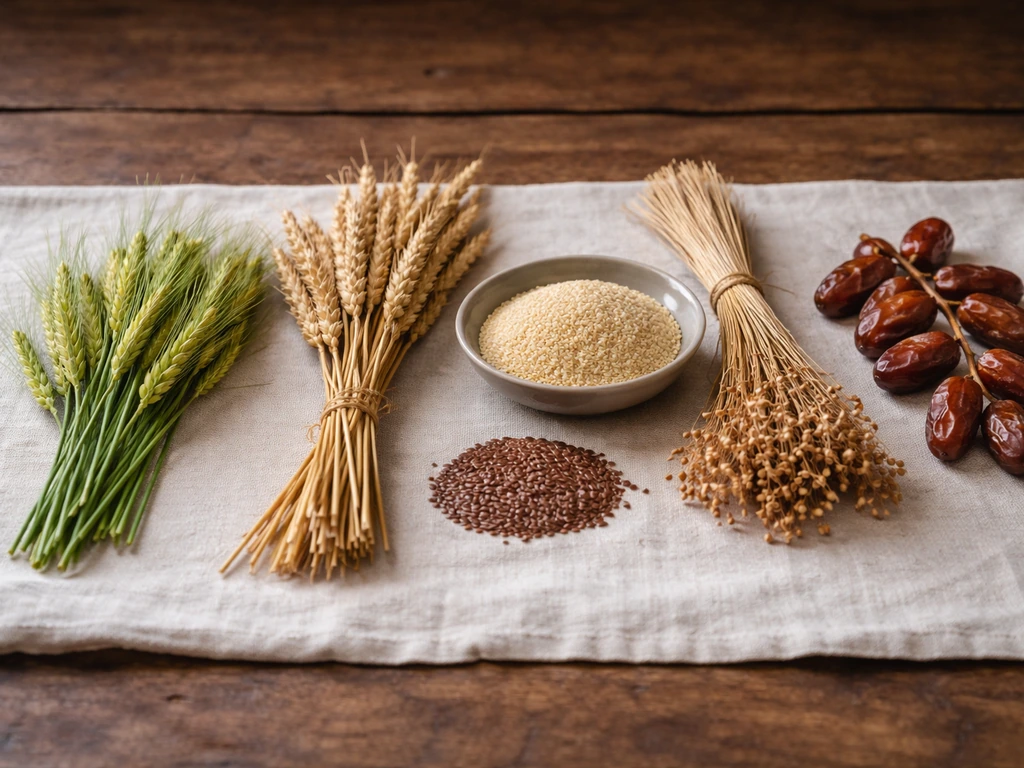
The core crop list looks like this. Barley and emmer wheat dominated the grain supply. Sesame was the primary oil crop. Dates were the dominant orchard fruit and a caloric staple in southern regions. Lentils, chickpeas, and peas provided protein. Flax supplied both oil and fiber. Onions, garlic, leeks, and cucumbers filled the vegetable garden. If you are researching Mesopotamian agriculture for a class or a historical project, these are the categories you need, and the evidence for all of them is solid.
Staple grains and how they were used
Barley was the workhorse crop of Mesopotamia. It fed people directly as bread and porridge, it was fermented into beer (which was both a dietary staple and a form of worker payment), and it served as the currency-equivalent for wages and rations recorded on thousands of administrative tablets. Babylonians and Assyrians depended on it more than any other single food source. The reason barley held that position is not complicated: it tolerates salt. And salt was a serious problem in Mesopotamian fields.
Emmer wheat was grown alongside barley throughout much of Mesopotamian history, but it was a secondary crop in terms of volume and institutional importance. Cuneiform records frequently list both together, with barley quantities generally outpacing emmer. At northern Mesopotamian sites like Kani Shaie in Iraqi Kurdistan, archaeobotanical assemblages actually show emmer wheat predominating in certain storage contexts while barley dominates others, suggesting the two grains were managed separately and served different functions in redistribution networks.
Emmer was less salt-tolerant than barley, which is why over time, as irrigation-driven soil salinity built up across southern fields, farmers progressively shifted their land toward barley.
That shift is archaeobotanically visible: across northern Mesopotamia, there is a measurable pattern of increasing barley reliance as conditions became more arid and salty.
Bread wheat (a harder, free-threshing wheat) also appeared in the archaeological record but was less dominant than emmer in the early periods. For practical growing purposes, if you are trying to replicate Mesopotamian grain agriculture, emmer is the more historically authentic choice for the earlier periods, with barley as the constant throughout every era.
Oilseeds, legumes, and fiber crops
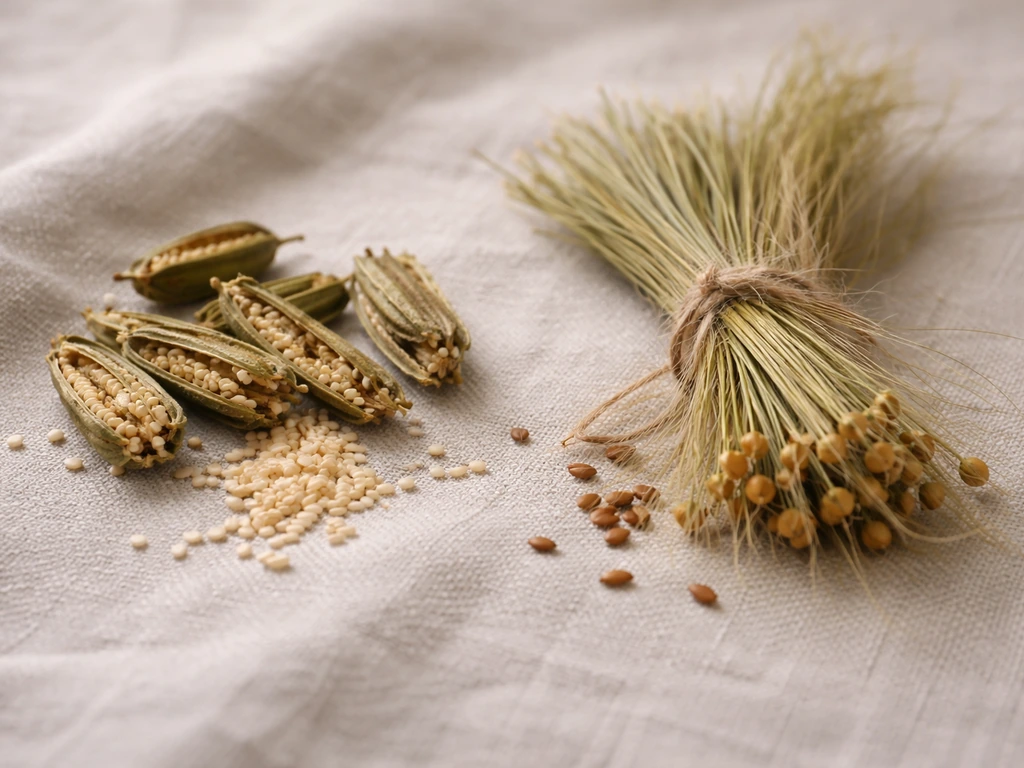
Sesame was Mesopotamia's primary oil crop, and it was economically significant enough to appear in royal inscriptions alongside barley fodder as a quantified commodity. Cuneiform texts document sesame's name, cultivation methods, and uses in enough detail that researchers have been able to reconstruct its role across multiple periods. It was pressed for cooking oil and lamp oil, and sesame oil appears in institutional accounts as a traded good and a rationed product in much the same way barley was tracked. The Babylonians, in particular, were heavily dependent on sesame alongside barley, emmer, and dates as their core agricultural staples.
Flax was grown for two purposes: linseed oil and linen fiber. It was especially important in the earlier periods and in northern regions where the climate suited it better. Legumes, including lentils, chickpeas, and peas, show up clearly in archaeobotanical assemblages from multiple sites. Plant remains from Kani Shaie, for example, include barley, emmer, lentil, chickpea, and pea together, which reflects the mixed farming strategy that would have been common across Mesopotamia. Legumes served the same function they serve in any pre-industrial farming system: protein for people, and nitrogen for the soil when rotated with cereals.
Fruits, vegetables, and orchard crops
Dates were arguably the most calorie-dense and economically important non-grain crop in Mesopotamia, particularly in the south. Date palm gardens are documented in cuneiform texts with striking specificity, including a Metropolitan Museum tablet recording the outright purchase of a date-palm orchard, and a Detroit Institute of Arts tablet recording both palm trees and date harvests. These are not vague references: they describe commercial transactions and productive accounting around date cultivation. Scholarly analysis of this textual record shows that organized date palm garden cultivation became explicit in the southern Mesopotamian archaeological and written record around or after 3000 BCE, though date consumption almost certainly predates formal orchard management.
Orchards in ancient Mesopotamia were not just food sources. Sumerian and Babylonian texts describe large orchard areas within and around cities as part of deliberate urban planning, and ancient inscriptions tie orchards to both economic and religious life. This was not a few scattered trees: it was organized landscape management. If you want to understand what crops Mesopotamia grew in its full complexity, the orchard component is easy to underestimate.
Vegetables common in Mesopotamian fields and gardens included onions, garlic, leeks, cucumbers, and various herbs. These appear in textual and archaeological sources and were part of everyday diet. Olives were present in some parts of the broader Fertile Crescent but were regionally limited in Mesopotamia proper, less prominent in the diet than cereals, and ecologically constrained by the climate of the river valley lowlands. Grapes were grown in northern Mesopotamia and the surrounding highlands but were not a major crop in the hot, flat southern alluvium. Figs also appear in the record, more commonly in northern and upland contexts.
Irrigation-linked crop choices (why they could grow there)
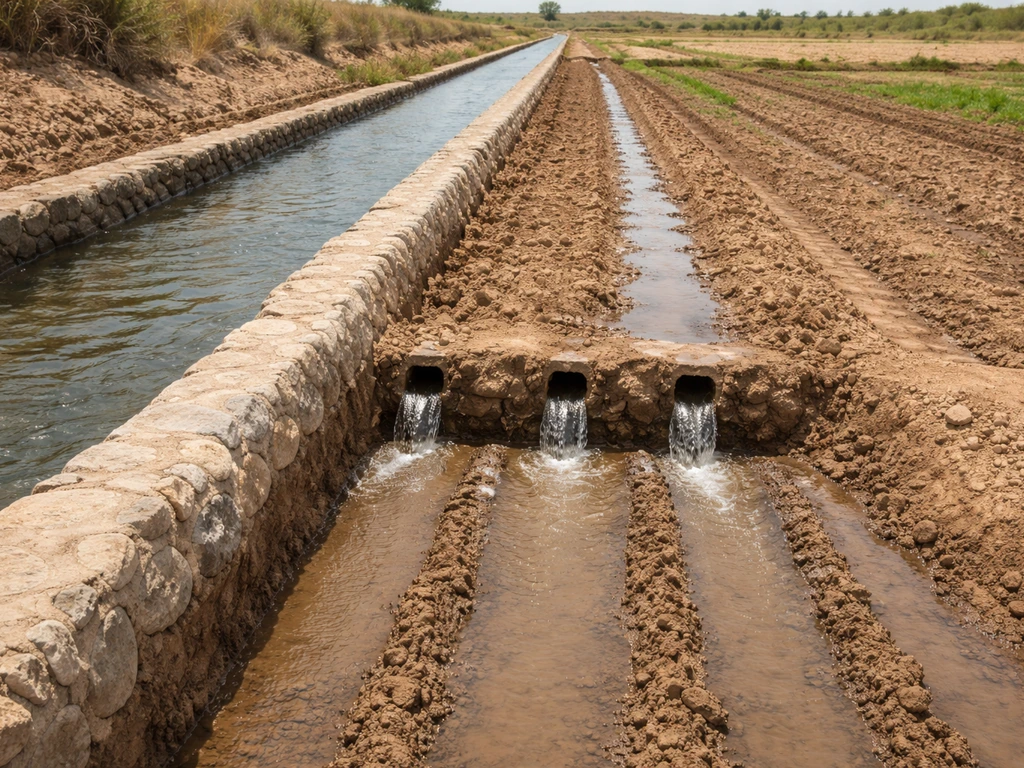
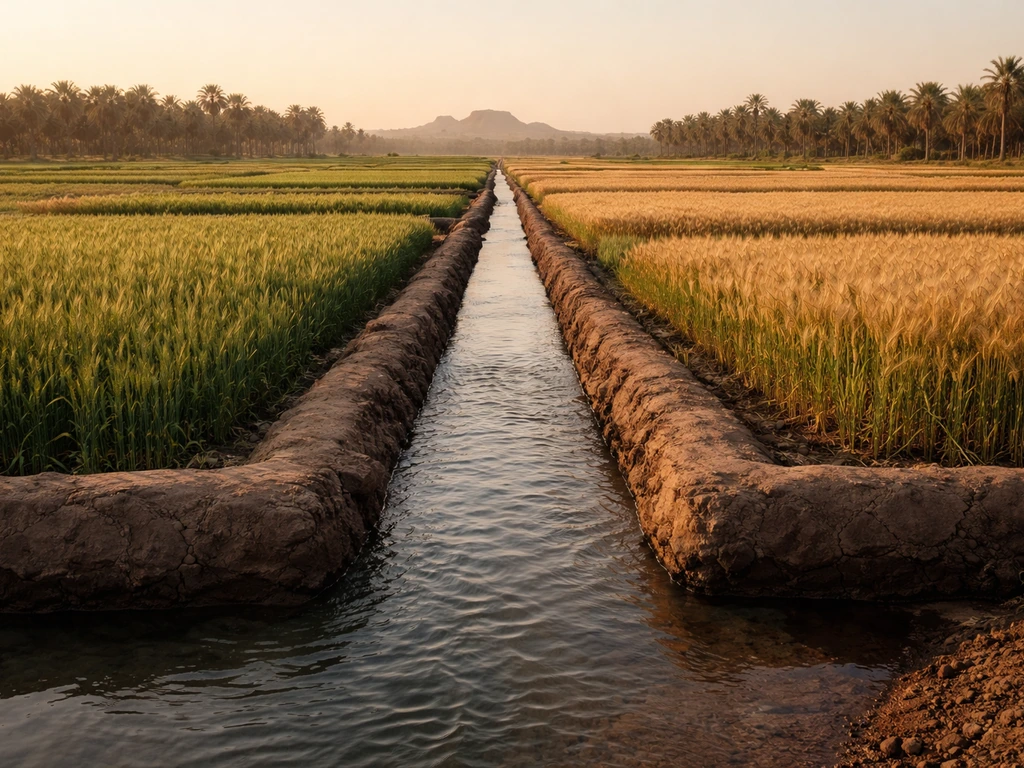
Mesopotamia is essentially a river-fed desert. Without the Tigris and Euphrates, and without the canal systems that Mesopotamian farmers built to distribute that water, large-scale agriculture in the region would have been impossible. The Smithsonian describes how organized farming relied on the two rivers to bring water to arid plains, and that environmental pressure was the direct driver of crop selection. When irrigation water evaporates from soil in a hot, low-humidity climate over many growing seasons, it leaves behind dissolved salts. Over time, this salinizes fields. Wheat is sensitive to salt. Barley is not. That is the core reason barley became dominant: it was the crop that could survive what the irrigation system inevitably did to the soil.
Canal maintenance was not optional, it was the foundation of agricultural management. Harvard course materials on Babylonian agriculture are explicit about this: canal upkeep was directly tied to the ability to grow and distribute barley, emmer, sesame, and dates. Fields located along the edges of irrigation networks faced the sharpest salinity gradient, and those fields could fall out of cultivation entirely if salt accumulated too fast. This created a real geography of crop viability: better-watered, better-drained fields near functioning canals could support wheat and legumes, while stressed or marginal fields defaulted to barley.
It is also worth noting that Mesopotamian agriculture was not purely irrigated. Winter-season crops, particularly wheat and barley, were grown during the cooler, wetter months and harvested in late spring or early summer, which aligns with the natural rainfall pattern of the Fertile Crescent. This mixed rainfed-and-irrigated system gave farmers some flexibility, but the summer season was entirely dependent on artificial water management.
Where in Mesopotamia each crop grew best
Mesopotamia was not one uniform farming environment. The region ran from the Persian Gulf marshlands in the south to the foothills of the Taurus and Zagros mountains in the north, and crop patterns shifted substantially across that range.
| Region / Zone | Primary Crops | Key Conditions |
|---|---|---|
| Southern alluvium (Babylonia, near Ur, Uruk, Nippur) | Barley, dates, sesame, onions | Flat, hot, heavily irrigated; high salinity risk; date palms thrive |
| Central Mesopotamia (middle Euphrates and Tigris) | Barley, emmer wheat, sesame, legumes | Better-drained fields; canal systems well-developed; mixed crop portfolio |
| Northern Mesopotamia / Upper Tigris (Assyria, Kurdish foothills) | Emmer wheat, barley, lentils, chickpeas, flax | Rain-fed agriculture possible; lower salinity; wheat more viable; cooler temperatures |
| Euphrates corridor (dry-farming margin) | Barley (drought-tolerant), standing barley in dry years | Near the dry-farming limit; barley used flexibly in marginal years |
| City orchard belts (around major urban centers) | Dates, figs, pomegranates, orchard trees | Urban management; textually documented as deliberate planting zones |
The clearest divide is north versus south. In the northern rain-fed zone, emmer wheat held its own and legumes were common. In the southern irrigated lowlands, barley and dates dominated because they could tolerate the salt-heavy, waterlogged conditions that came with centuries of intensive irrigation. Research on sites along the Euphrates margin also shows that some communities operated near the boundary between irrigated farming and dry-land grazing strategies, using barley as a flexible crop that could survive years when rainfall was too low for wheat. If you are trying to map crop geography across ancient Mesopotamia, that north-south and irrigated-versus-rain-fed axis is the most useful framework.
Comparing Mesopotamian agriculture to neighboring civilizations can also sharpen your understanding. What crops did ancient Egypt grow shows a parallel river-dependent system where emmer and barley also dominated, but with flax, papyrus, and different orchard crops reflecting Egypt's distinct ecology. And if you want to trace how early crop domestication spread across the region before formal civilization, what crops were grown in the Neolithic age gives you the deeper prehistory behind why these particular cereals ended up in Mesopotamian fields in the first place.
How to verify these crops today: sources and evidence
If you want to go beyond a general crop list and actually verify which crops are historically attested, there are three main lines of evidence, and they are increasingly accessible online.
Cuneiform administrative texts
The most direct evidence comes from cuneiform tablets. Mesopotamian scribes recorded grain distributions, field allocations, ration payments, and commodity accounts in extraordinary detail. Administrative tablets routinely list barley quantities line by line with associated labor and processing periods, and they frequently name emmer, sesame, and dates alongside barley in institutional accounts. The Sumerian crop record is particularly well-documented through this administrative tradition, since Sumerian scribal practice was meticulous about quantifying agricultural outputs.
To search these tablets yourself, the Cuneiform Digital Library Initiative (CDLI) provides a searchable online portal with transliterations and metadata for thousands of tablets, many of which include agricultural references. You can search for terms like 'barley' or 'emmer' and pull up actual tablet records with context. The ORACC platform (Online Resources for the Ancient Near East) hosts lexical databases that help cross-check which cuneiform signs correspond to specific crops, though it is worth knowing that some entries carry uncertainty markers, which is a sign of honest scholarship rather than a flaw in the record.
Archaeobotanical plant remains
Plant remains recovered from archaeological sites, including charred seeds, grain impressions in ceramics, and phytoliths (microscopic silica bodies from plant cells), provide a physical check on what the texts say. Archaeobotanical assemblages from sites across Iraq and the surrounding region have confirmed the presence of barley, emmer, lentils, chickpeas, peas, flax, and sesame. One important caveat: preservation is uneven. Millet, for example, is underrepresented in the macrobotanical record from Iraq simply because its small grains preserve poorly, and researchers have had to rely on phytolith evidence as a complementary data source to track crops that do not survive as well in charred form.
How plant remains are interpreted also depends heavily on depositional context. A storage room full of charred emmer tells a different story from a midden deposit with scattered fruit remains. This is why serious archaeobotanical work treats assemblage context as a primary variable, not an afterthought. The Archive of Mesopotamian Archaeological Reports (AMAR) at Stony Brook University is a digitization project making hundreds of Iraqi site reports more accessible, which is genuinely useful for tracking down archaeobotanical data from excavations that might otherwise be buried in old print publications.
Cross-referencing with neighboring civilizations
Comparing Mesopotamia's crop record with neighboring ancient civilizations is a useful validation strategy. What the ancient Egyptians grew overlaps significantly with Mesopotamia in cereals and legumes but diverges in orchard crops and industrial plants, which reflects ecological differences rather than agricultural ignorance. Looking at what crops ancient Greece grew and what crops ancient India grew can help you understand which crops were widely shared across the ancient world versus which ones were region-specific adaptations. When the same crop shows up in textual records, archaeobotanical assemblages, and multiple neighboring cultures, you can treat its presence as very well established.
For students writing research papers, the most defensible approach is to cite at least two lines of evidence for any crop you claim was grown in Mesopotamia: a textual source (preferably a cuneiform tablet reference accessible through CDLI or a published translation) and an archaeobotanical source from a site within the relevant region and period. That combination is what professional historians and archaeobotanists use, and it is well within reach for anyone willing to spend an hour on CDLI or a university database. The crop list in this article meets that standard for its core items, and the sesame, date, barley, emmer, lentil, and chickpea entries in particular are among the best-attested crops in the entire ancient world. Ancient India also grew a range of cereals, legumes, and oilseeds, with cultivation shaped by regional climate and river systems best-attested crops.
FAQ
Were barley and emmer wheat grown everywhere in Mesopotamia, or did that change by region?
They were widespread, but relative volume differed. The south, especially the intensively irrigated lowlands, skewed more toward barley, while the north more often retained emmer as a major grain (with legumes common). If you are mapping crops for a specific city or period, use the north-south divide as your first filter.
Does “wheat” in Mesopotamian sources mean the same thing as modern bread wheat?
Not always. The earlier and more historically characteristic wheat in the region is typically identified as emmer, while other wheat forms (including bread wheat types) appear but are less dominant early on. For research, treat “wheat” as an umbrella term and confirm whether the source specifies emmer or another variety.
What crops were most important economically, not just as food?
Barley stands out as both food and the ration or wage equivalent in administrative records, meaning it mattered to the economy directly. Sesame also shows strong economic importance because it appears as a quantified commodity tied to oil production and exchange, and dates are prominent in orchard accounting in the south.
Were vegetables and herbs grown at large scale, or were they mostly small garden crops?
Vegetables like onions, garlic, leeks, and cucumbers appear as garden crops, meaning they were likely produced locally in managed plots rather than at the same civilization-wide scale as cereals. A good check is whether records tie them to rationing and processing, since large-scale staples show up more consistently in administrative accounting.
Were olives, grapes, and figs part of Mesopotamia’s main diet?
They were more regionally constrained. Olives were limited by local climate in the river-valley lowlands, grapes were more relevant in northern or upland settings, and figs appear more often in northern contexts. For an accurate answer, separate “Mesopotamia broadly” from the hot, irrigated south.
Why did barley become more dominant over time, was it only about irrigation and salt?
Salt tolerance is the core driver described for the shift, because long-term irrigation leaves salts behind as evaporation concentrates dissolved minerals. A practical way to think about it is that fields on the edges of irrigation networks were the first to become marginal, so those areas were more likely to “default” to barley.
Did Mesopotamian agriculture rely exclusively on irrigation?
No. Winter-season cultivation included rainfed growth in cooler, wetter months, especially for grains like barley and wheat, while summer depended on artificial water management. If you are deciding when a crop could be grown, you need to factor in seasonal water availability, not just crop type.
If preservation is uneven, how can I avoid over-interpreting archaeobotanical absences?
Treat “not found” as “not reliably preserved,” especially for tiny grains. Millet is a common cautionary example, because it can be underrepresented in charred seed assemblages. Using multiple plant evidence types, such as charred remains plus phytoliths, helps reduce this bias.
How should I interpret evidence from a storage room versus a midden deposit?
Context matters because different deposit types reflect different activities. A storage room filled with charred grains can reflect kept inventory, while middens may represent cooking waste with a different crop mix. When building a crop list for a site, record context type first, then interpret what the plant remains likely indicate.
If I want to verify a crop claim for a paper, what is the safest approach?
Use at least two independent evidence lines: a cuneiform-related textual reference for the relevant period and an archaeobotanical record from a site in the same region and timeframe. If either line is missing or out of sync, label your crop as “attested” with the appropriate confidence level rather than stating it as certain.
Next Articles
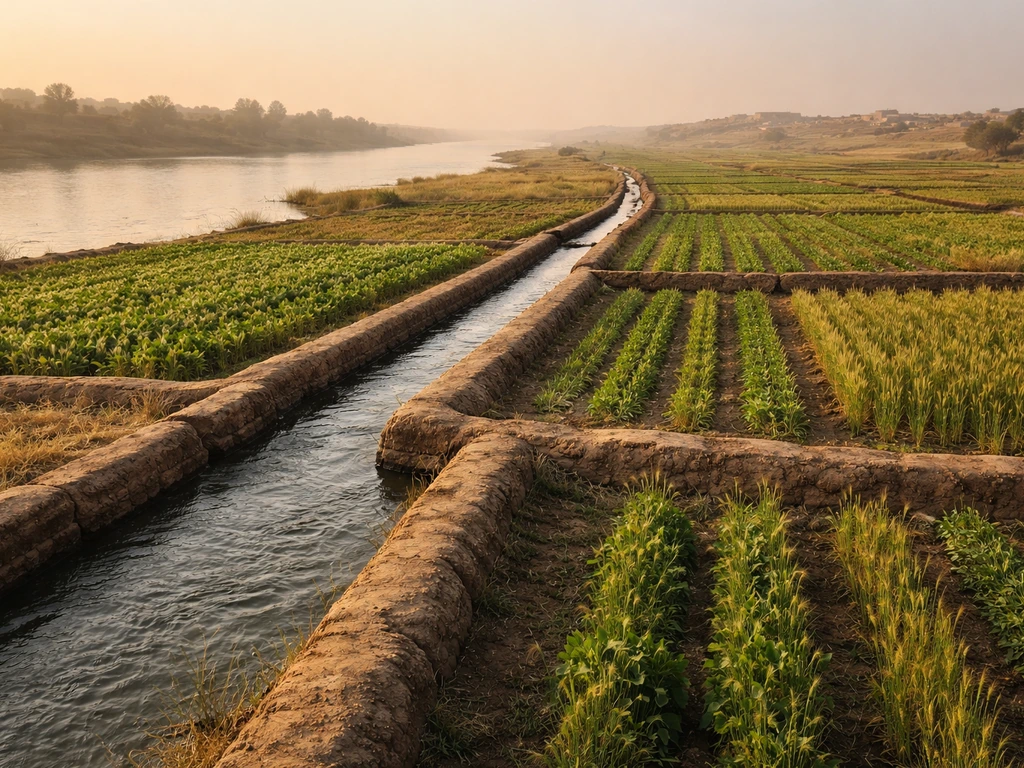
What Crops Did Mesopotamia Grow? List and Why It Worked
Mesopotamia crop list plus why they grew: irrigation, fertile river soils, cereal-legume mix, and regional differences.
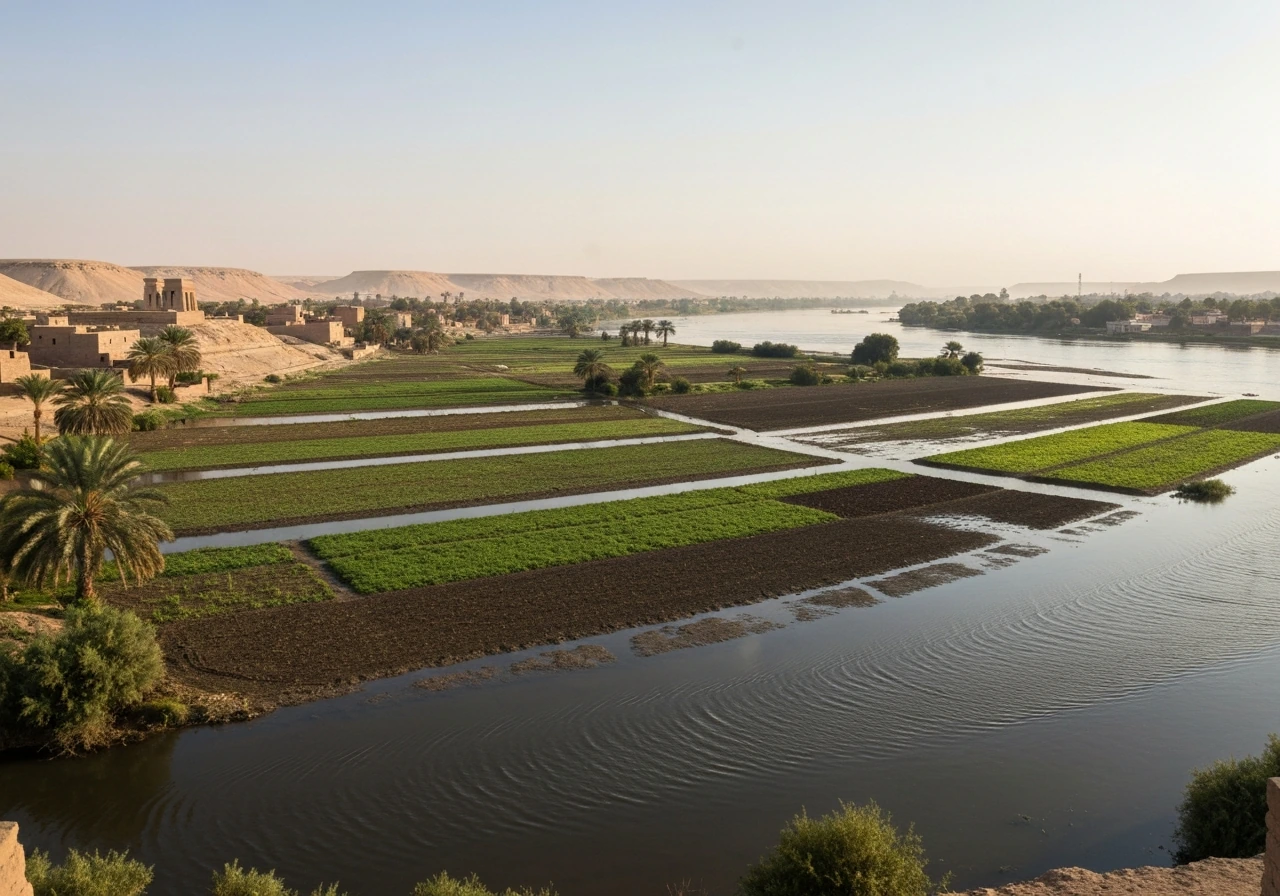
What Did the Ancient Egyptians Grow and Why
Ancient Egypt crops: grains, vegetables, legumes, fruits and non-food plants, and how Nile floods and irrigation shaped
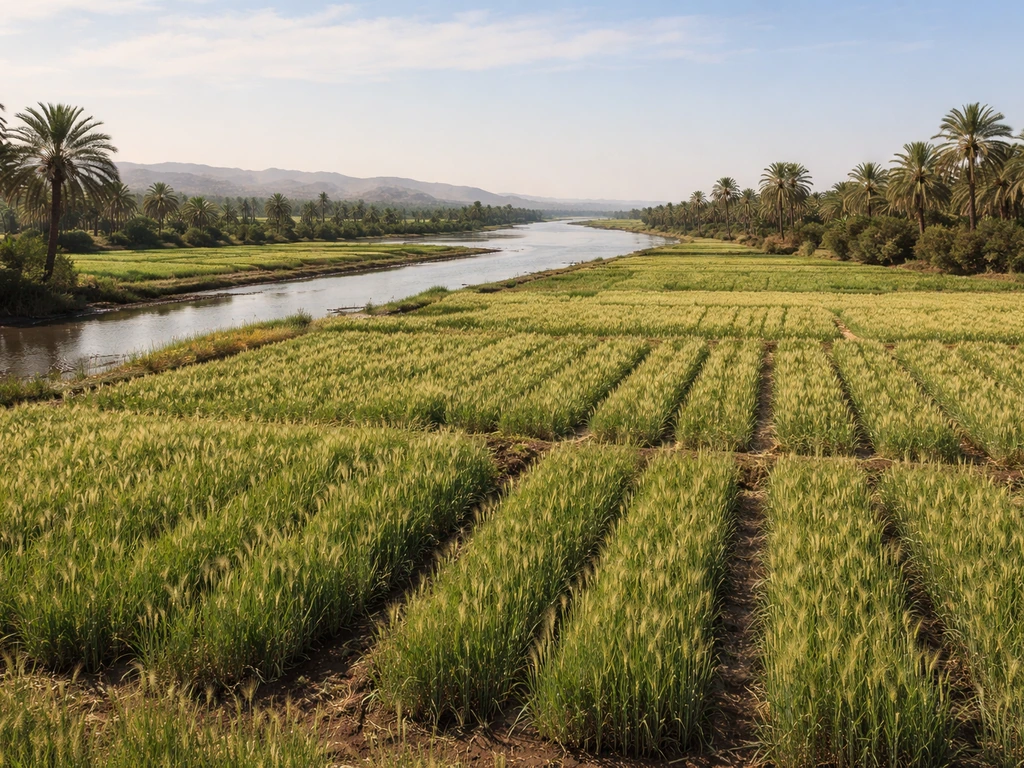
What Crops Did Ancient Egypt Grow Along the Nile
Top crops ancient Egyptians grew along the Nile, with staples, fruits, fiber, and why irrigation enabled them.