The ancient Egyptians grew a surprisingly diverse range of crops, but two dominated everything else: emmer wheat and barley. From there, the list expands into vegetables, legumes, fruits, and non-food plants like flax and papyrus that were just as economically important as the grain. If you want the short answer, Egypt's agriculture was built on grain for bread and beer, supplemented by a wide garden of onions, lentils, figs, dates, and grapes, and supported by fiber crops that fueled an entire textile and writing-material economy.
What Did the Ancient Egyptians Grow and Why

Samuel Rourke
7 Apr 2026
Core crops Egyptians cultivated
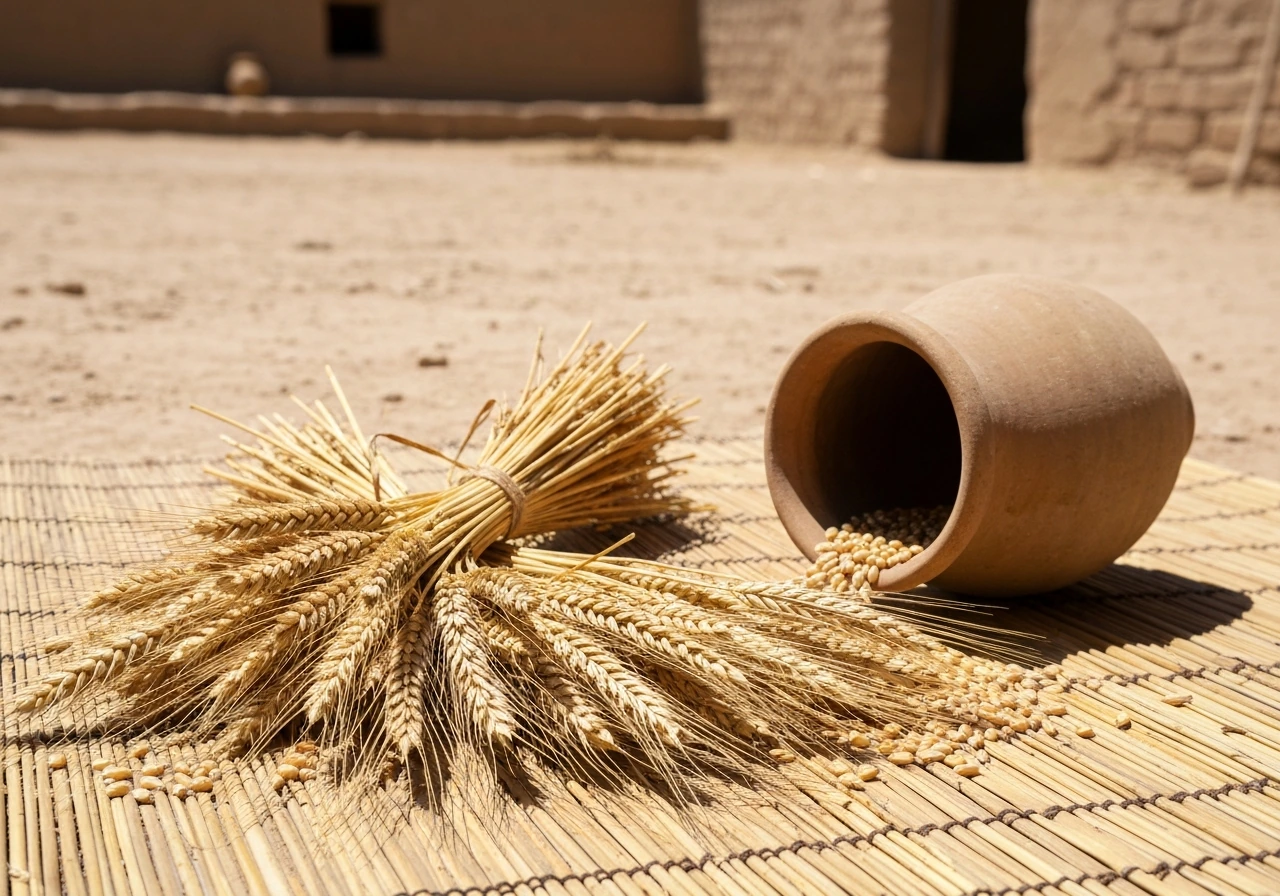
Emmer wheat (Triticum dicoccum) and barley were the backbone of Egyptian agriculture for thousands of years. Archaeobotanical evidence from Predynastic Hierakonpolis shows emmer wheat was the predominant crop, with barley playing a secondary but still critical role. A genome sequenced from a 3,000-year-old Egyptian emmer wheat accession held at UCL's Petrie Museum confirms just how central this grain was to the material record. Barley gained ground over time partly because it tolerates drought, poorer soils, and even some salinity better than emmer, which made it more reliable in the trickier agricultural zones of the Delta and desert margins.
Beyond the two dominant grains, Egyptian fields produced flax, sesame, papyrus, and a wide range of vegetables and fruits. What crops did ancient Egypt grow goes beyond just the staples, and the full picture is genuinely impressive for a civilization operating 5,000 years ago. Grain was stored in large granaries and treated as both food and currency, which tells you how central it was to the entire economy, not just the dinner table.
Staples and everyday foods: grains, bread, and beer
Bread and beer were not luxuries in ancient Egypt. They were daily dietary staples consumed by every class of person, from laborers building monuments to priests performing rituals. The British Museum describes ancient Egyptian beer as essentially a form of food, consumed in large quantities every day and served at festivals. Making it required processing emmer wheat through dehusking before fermentation, a labor-intensive step that was just part of the daily grind, literally.
Residue analysis from Egypt's oldest known beer production sites confirms the main ingredient was emmer wheat, with barley mixed in. Granary reliefs from Egyptian tombs show massive storage infrastructure built around wheat and barley, and museum collection descriptions make clear these grains functioned as a form of currency in addition to food. If you've ever wondered why ancient Egyptian workers were sometimes "paid" in bread and beer, it's because those two things were the most essential commodities in the entire economy.
Vegetables, legumes, and fruits from Egyptian fields
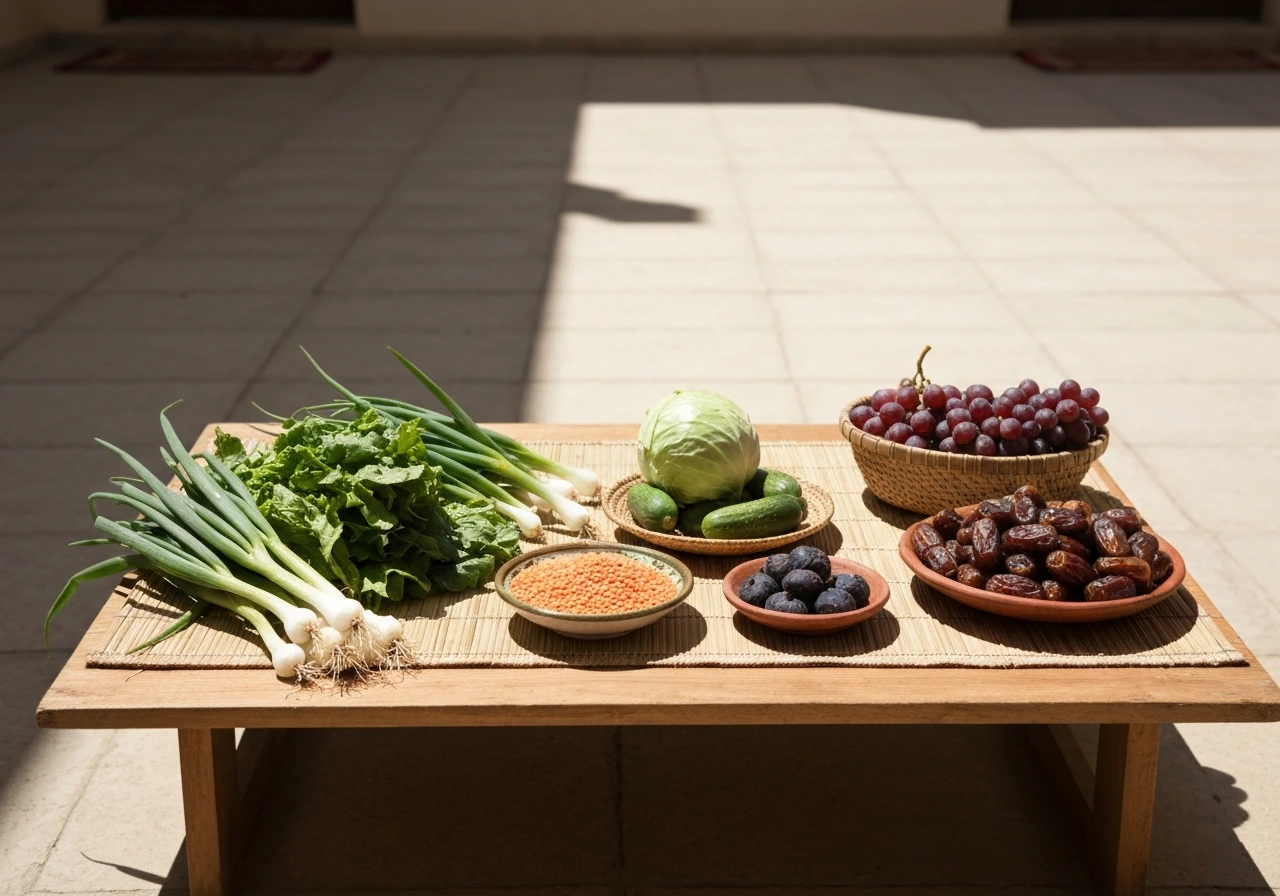
Egyptian gardens were remarkably well stocked. Tomb scenes and funerary offerings give us a solid inventory of what people actually ate, and the list is longer than most people expect. Vegetables included onions, garlic, leeks, lettuce, cucumber (including a variety called the "chate' cucumber"), radish, celery, parsley, purslane, broad beans, peas, and lentils. Herbs and aromatics like coriander, cumin, and fennel show up in both garden depictions and tomb contents. Minced and seasoned greens accompanied by garlic and onion bundles appear in detailed tomb records like those from the Tomb of Kha and Merit, giving us a window into actual meal preparation.
On the fruit side, dates, figs, and grapes were the most widely cultivated. Pomegranates and persea fruit (a now-obscure Egyptian fruit) appear regularly in funerary offerings. Watermelon is a notable addition to the list: National Geographic has reported evidence that Egyptians were cultivating watermelon by around 4,000 years ago, with tomb paintings providing some of the earliest visual records of melon agriculture. Grapes were grown extensively for wine production, which was itself a major part of religious and elite culture.
| Category | Key Crops | Primary Use |
|---|---|---|
| Grains | Emmer wheat, barley | Bread, beer, currency |
| Legumes | Lentils, broad beans, peas | Everyday protein source |
| Vegetables | Onion, garlic, leek, lettuce, cucumber, radish | Daily diet, offerings |
| Herbs/Spices | Coriander, cumin, fennel, parsley | Seasoning, medicine |
| Fruits | Dates, figs, grapes, pomegranate, watermelon | Fresh eating, wine, offerings |
| Fiber crops | Flax | Linen textiles, rope |
| Non-food crops | Papyrus, sesame | Writing material, oil, medicine |
Oil, fiber, and cash crops: flax, papyrus, and sesame
Flax was one of Egypt's most economically important non-food crops. Research published in Nature Plants analyzed a 4,000-year-old Egyptian flax yarn associated with mortuary linen, confirming that Egypt was cultivating flax specifically for fiber production at a very early date. Linen made from flax was the dominant textile in ancient Egypt, used for clothing, mummy wrappings, sails, and rope. A 2023 Springer Nature article notes that Egypt was renowned for linen production, with the earliest evidence for flax cultivation in Egypt traced to the Faiyum region. Flax grown for fiber required different harvesting timing than flax grown for seed oil, and Egyptian farmers clearly understood the distinction.
Papyrus deserves its own mention because it was practically a monopoly crop. The plant grew so densely in Egypt's wetlands that large-scale production was only practical there, and papyrus manufacturing for writing material persisted for roughly four millennia. Britannica describes papyrus as used "above all" for paper, and the Met notes that even state involvement in papyrus production is likely given its economic importance. The expertise required, from cultivating and harvesting through manufacturing the final sheets, made it a specialized industry.
Sesame rounds out this group. It appears in Egyptian records under the name "sesemt" and is referenced in the Ebers Papyrus, one of the oldest known medical texts. Sesame was cultivated for its oil, which had both culinary and medicinal uses. If you're curious how Egyptian crop patterns compare to those of neighboring civilizations, the crops grown in Mesopotamia show interesting parallels, particularly around sesame, barley, and flax cultivation in similarly river-dependent agricultural systems.
Regional and environmental differences within Ancient Egypt
Egypt was not a single uniform agricultural environment. The Nile Valley, the Delta, and the desert margins each produced different crops under different conditions, and understanding those zones helps explain why certain crops dominated in certain periods.
The Nile Valley and Delta
The Nile Delta was Egypt's most productive agricultural zone, benefiting from rich alluvial soils deposited by annual flooding. Emmer wheat was dominant in Predynastic Delta agriculture, but barley became increasingly important as farming pushed into areas with saltier or drier soils. Archaeobotanical work at Tell el-Iswid in the Delta documents exactly this shift, with emmer playing a major role early and barley's relative advantages in less ideal conditions driving its adoption over time.
Oasis and desert-margin agriculture
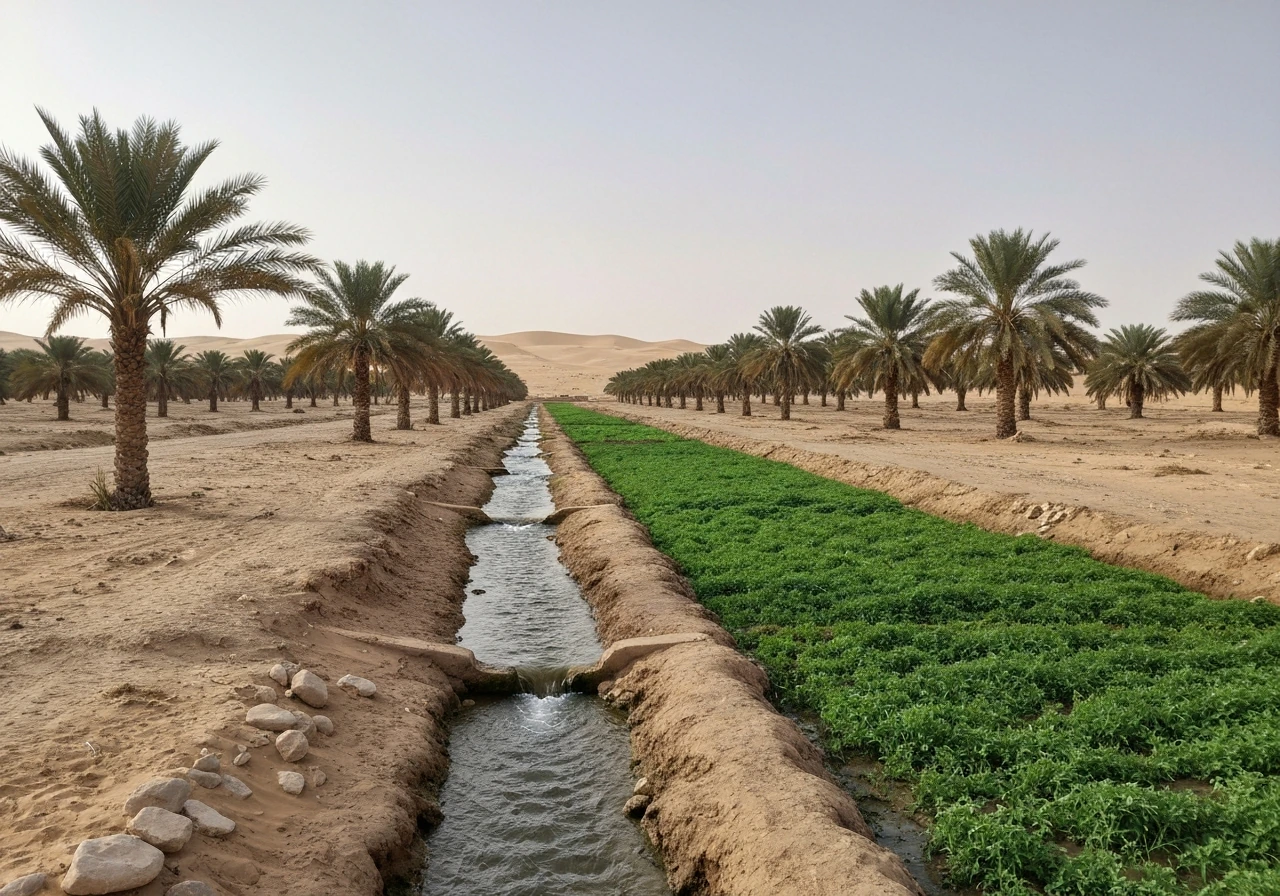
Away from the Nile, Egyptians cultivated crops in oases using well and spring water rather than floodwater. Date palms were the signature crop of oasis agriculture because they tolerate extreme heat and dry conditions that would kill most other crops. The FAO describes Siwa Oasis today as a date-palm-based agricultural system, and the ancient pattern was similar: dates as the foundation crop, with vegetables and other fruits grown in the shade and shelter the palms provided. National Geographic's reporting on oasis farming highlights that irrigation development through wells and cisterns was the key enabler, a practice that goes back to antiquity in Egypt's western desert oases.
This kind of regional agricultural differentiation isn't unique to Egypt. If you look at what crops the Mesopotamians grew, you see similar zone-based patterns, with flood-plain grain agriculture dominating the river corridors and date palms becoming critical in the drier southern zones around the Persian Gulf.
How Egyptians grew crops: irrigation, seasons, and farming methods
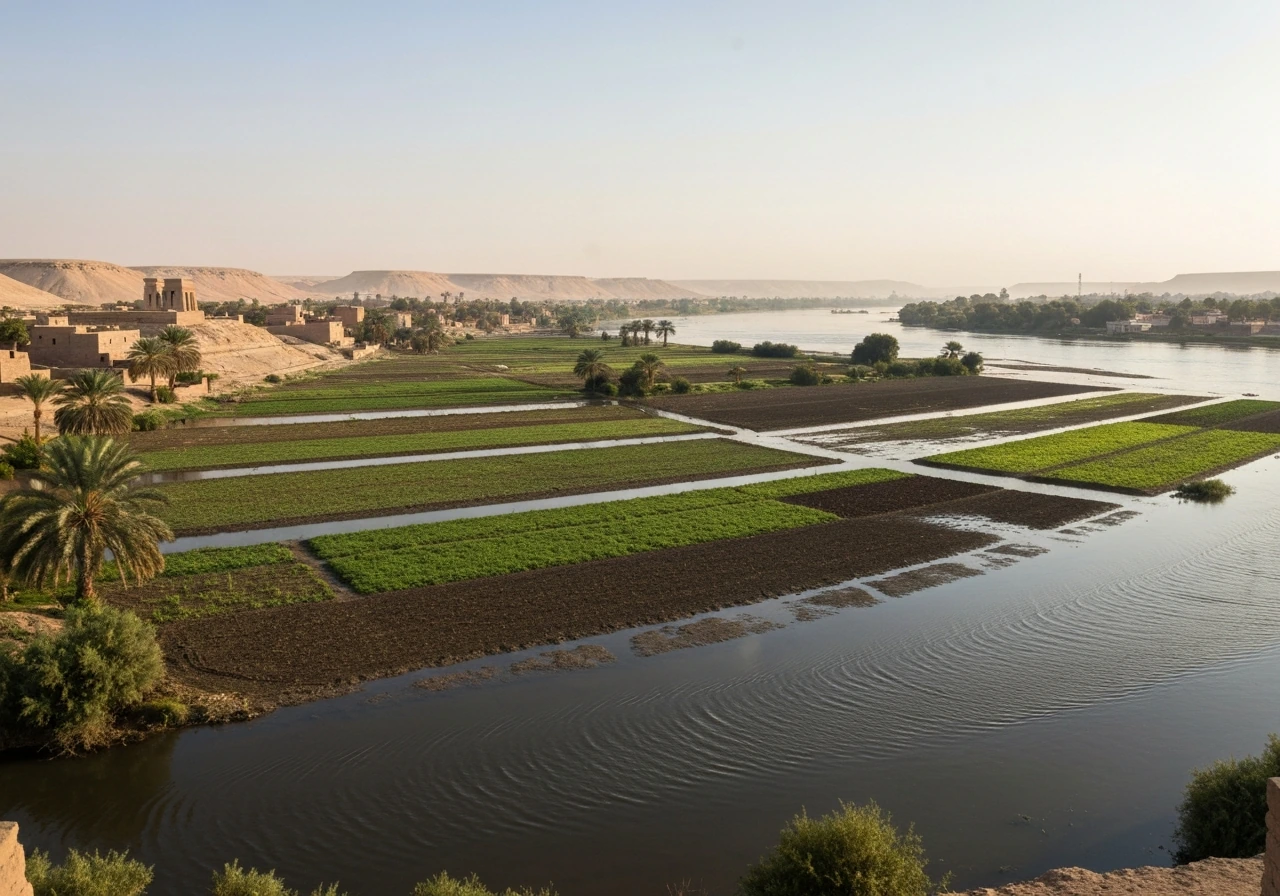
Egyptian agriculture was organized around three seasons tied directly to the Nile's flood cycle. Akhet (roughly July through October) was the flooding season, when the Nile inundated the fields and deposited the rich silt that made Egyptian soil so productive. Peret, the season of emergence, followed as floodwaters receded and farmers planted into the wet, fertile soil during the cooler months. Shemu was the harvest season, completed before the hottest and driest part of the year arrived. The whole system was essentially basin irrigation: floodwater was captured in field basins, allowed to soak in and deposit silt, then drained, leaving behind naturally fertilized, moisture-rich soil ready for planting.
When natural flooding wasn't enough, or when farmers wanted to cultivate fields further from the river, they used water-lifting technology. The shaduf, a hand-operated counterweighted pole and bucket device, was a key tool for lifting water from canals into fields. Britannica describes it as still in use in parts of Egypt today, which is a testament to how effective the design is. Later Egyptian farmers also used water screws and waterwheels to move larger volumes of water. These technologies extended the cultivable zone beyond what the flood alone could support.
Comparing this system to other ancient agricultural civilizations is instructive. What crops the Sumerians grew and how they managed irrigation shows both similarities and key differences, particularly around the more active canal-building infrastructure that Mesopotamia required versus Egypt's more passive basin system. The Neolithic roots of this kind of flood-based farming also go back much further than Egypt's dynastic period, and understanding what crops they grew in the Neolithic age gives useful context for how emmer wheat and barley came to dominate the ancient world's breadbaskets.
Modern takeaways: what to try growing today (and where)
If you're a gardener or farmer curious about growing any of these historically important crops today, the climate match is your starting point. Most of what ancient Egypt grew thrives in hot, dry climates with reliable irrigation, which maps well onto Mediterranean climates, the American Southwest, and similar zones with warm springs and low summer humidity.
- Emmer wheat: Available through heritage grain suppliers. It grows well in zones with cool, wet winters and dry summers, similar to the Mediterranean. Excellent for making dense, flavorful bread.
- Barley: One of the most climate-adaptable grains you can grow. It handles poor soils, drought, and even light salinity, making it a practical crop for gardeners in challenging climates.
- Flax: Grows in cool, moist conditions in spring. If you're in the northern U.S. or similar temperate zones, flax is a realistic garden crop. Harvest timing determines whether you get fiber or seed oil.
- Lentils and broad beans: Both are cool-season legumes that do well in spring or fall plantings in most temperate climates. They also fix nitrogen, which makes them excellent for crop rotation.
- Onions, garlic, and leeks: Among the easiest ancient Egyptian crops to grow anywhere today. All three thrive in a wide range of climates with basic irrigation.
- Dates: Only practical in USDA zones 9-11 (desert Southwest, Southern California, Florida). If you're in the right zone, a date palm is a long-term investment that pays off for decades.
- Watermelon: Grows easily in most of the southern and central U.S. with plenty of heat and water. Varieties descended from African watermelons are increasingly available through specialty seed companies.
- Sesame: Needs heat, a long growing season, and well-drained soil. Southern U.S. states are the best bet; sesame is grown commercially in Oklahoma and Texas today.
For historical context on how other ancient civilizations shaped the crop map, it's worth looking at what crops ancient Greece grew and what crops ancient India grew. Both civilizations were cultivating many of the same plant families around the same period, and tracing how crops like sesame, lentils, and wheat moved across ancient trade routes explains a lot about why certain crops ended up where they did in the modern world.
The practical lesson from Egyptian agriculture is that a relatively small number of crops, matched precisely to the local water and climate cycle, can sustain an entire civilization for millennia. Emmer and barley for calories, flax for fiber, legumes for protein and soil health, and date palms for the desert margins. That's a tight, functional crop system, and most of those plants are still available and growable today with minimal specialized equipment.
FAQ
If I only remember one answer, what crop did the ancient Egyptians rely on most for food?
In daily life, bread and beer were the central outputs of farming, and they relied most heavily on emmer wheat plus barley. Other crops mattered a lot, but if you are asking what kept the general population fed on a routine basis, grain was the priority.
Did emmer wheat and barley always dominate everywhere in ancient Egypt?
You will see emmer wheat and barley mentioned as core crops, but their dominance was not uniform across all regions and periods. In the Delta and other areas with saltier or drier conditions, barley tended to become more reliable over time.
Was papyrus grown just for writing, or did it have broader agricultural importance?
Many readers assume papyrus was just used for writing, but it was also a specialized economic industry because it required expertise from wetland harvesting to manufacturing sheets. That specialization meant it was more like a managed supply chain than a simple wild plant collection.
Why do different sources list different “Egyptian crops” even when they seem to refer to the same time period?
The biggest mistake is mixing up “crops grown” with “foods recorded.” Egypt also produced non-food plants like flax, and it relied on careful timing for flax harvested for fiber versus flax harvested for seed or oil. So the crop list depends on whether you focus on diet, industry, or both.
How did the ancient Egyptians farm in places outside the Nile floodplain?
Egypt’s desert margins were not mainly “rain-fed farming.” Instead, oasis cultivation depended on wells, springs, or stored water, with date palms as the foundation crop because they tolerate heat and dryness better than most alternatives.
What determined when Egyptians planted their crops, beyond what crops they chose?
Even when irrigation existed, farmers still organized planting and harvest around the Nile’s flood cycle (Akhet, Peret, Shemu). That means planting timing, not just the crop choice, was crucial for getting reliable yields.
Why did barley become more important than emmer wheat in some areas?
Barley’s reputation for hardiness is not just a general claim, it mattered for reliability in poorer soils and areas affected by salinity. That is one reason barley gained ground as agriculture pushed into less ideal zones.
Were ancient Egyptian vegetables grown like modern garden crops, or was it a different system?
Another common mix-up is assuming ancient Egyptian “vegetables” were all similar to modern greenhouse gardening. Tomb scenes often reflect what was actually eaten and prepared, and many of the listed greens and aromatics were grown outdoors and seasonally, then stored or used quickly after harvest.
Did Egyptians grow flax only for cloth, or did it serve other purposes too?
Linen depended on flax harvested for fiber, not harvested for seed oil. Timing and processing differ, so “flax production” can mean different things depending on the goal, textile fiber versus other uses.
What is the most important factor to consider if I want to grow Egyptian crops today?
If you want to grow these crops today, the key practical constraint is water reliability. Most matches to Egyptian agriculture work best in hot, dry climates if you can provide dependable irrigation, since the historic success was tied to capturing and managing water through flood basins or lifting devices.
Next Articles
What Crops Did Ancient Egypt Grow Along the Nile
Top crops ancient Egyptians grew along the Nile, with staples, fruits, fiber, and why irrigation enabled them.
What Did the Delaware Colony Grow: Crops, Uses & Legacy
Colonial Delaware’s main crops, grains, hay, flax, fruits, vegetables, livestock, why they thrived and how they were sold.
What Did Jamestown Grow and How They Farmed It
Learn what Jamestown colonists grew and the methods they used to plant, harvest, and adapt crops to Virginia conditions.